
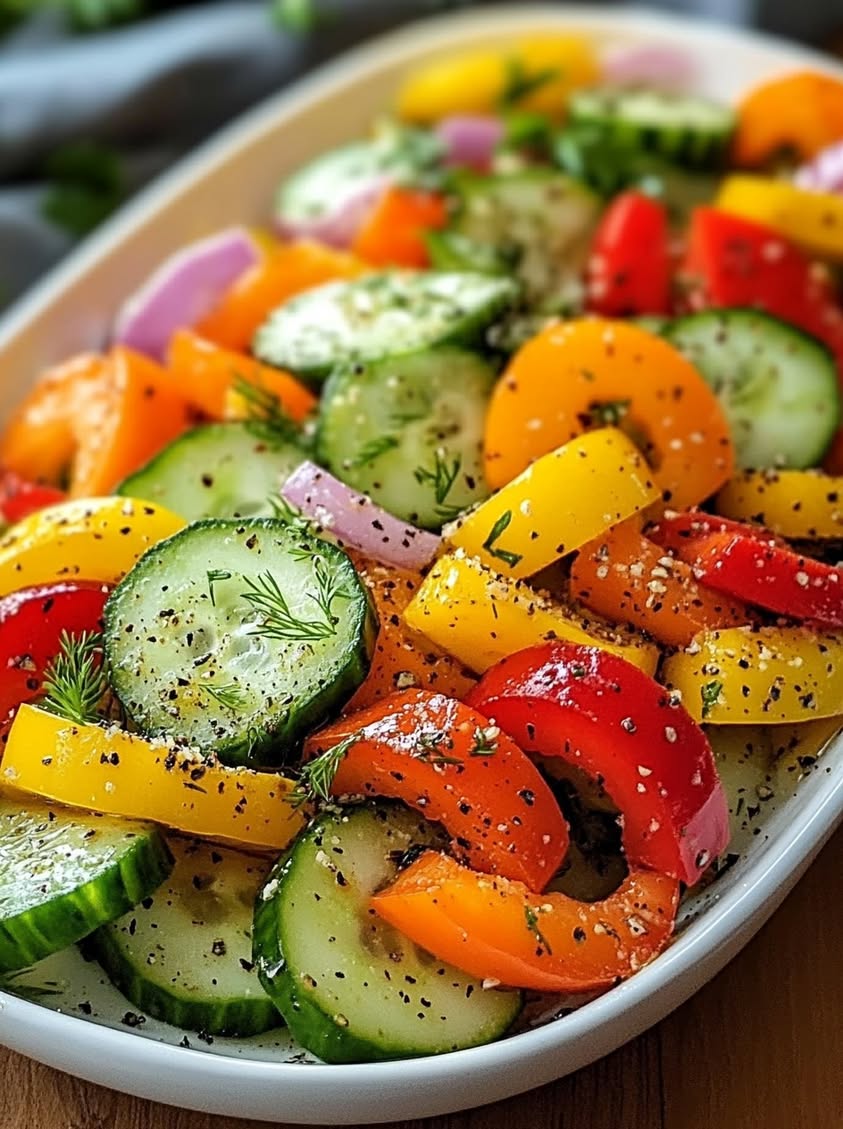
Crunchy Cucumber Pepper Salad: A Refreshing Summer Side Dish
When the summer heat arrives, you need a dish that cools you down and wakes up your taste buds. This Crunchy Cucumber Pepper Salad is exactly that. It is a vibrant, no-cook side dish bursting with fresh garden flavors and a tangy, herbaceous dressing. Moreover, it comes together in mere minutes, making it the perfect last-minute addition to any barbecue, picnic, or weeknight dinner. Ultimately, this salad celebrates the best of summer produce in every crisp, refreshing bite.
The magic of this Crunchy Cucumber Pepper Salad lies in its beautiful simplicity and contrasting textures. You get the cool, watery crunch of cucumber paired with the sweet, juicy snap of bell peppers. Then, a simple dressing of olive oil, red wine vinegar, and fresh dill ties everything together with a bright, aromatic punch. This salad is not just a side dish; it is a celebration of color and health on a plate. Consequently, it pairs wonderfully with grilled meats, hearty sandwiches, or can even be enjoyed all on its own as a light lunch.
Everyone needs a reliable, go-to summer salad recipe, and this one is destined to become a staple in your kitchen. It requires absolutely no cooking, which is a major bonus on hot days. Furthermore, it is incredibly versatile, allowing you to swap herbs or add different vegetables based on what is in your garden or fridge. This Crunchy Cucumber Pepper Salad is more than just food; it is a refreshing experience that makes summer eating an absolute joy.
Quick Recipe Highlights
- Flavor Profile: This salad delivers a perfect balance of fresh, tangy, and slightly sweet notes. The red wine vinegar provides a sharp acidity, while the olive oil and fresh dill add a smooth, aromatic finish. Additionally, the natural sweetness of the bell peppers perfectly complements the mild flavor of the cucumber.
- Texture: The texture is all about the satisfying crunch. The cucumbers and peppers remain wonderfully crisp, offering a refreshing mouthfeel. Meanwhile, the thin slices ensure each forkful is easy to eat and perfectly coated in the light dressing.
- Aroma: The aroma is clean and herbaceous, dominated by the fresh, grassy scent of chopped dill. Furthermore, the subtle sharpness of the red wine vinegar and the fruity note of extra virgin olive oil create an inviting fragrance that hints at the salad’s bright flavor.
- Visual Appeal: This salad is a rainbow on a plate. The deep green of the cucumber, the vibrant red and orange of the peppers, and the flecks of green dill create a stunning, colorful presentation. It looks as fresh and vibrant as it tastes, making it a beautiful centerpiece for any table.
- Skill Level Needed: This recipe is perfect for absolute beginners. It involves no cooking, only simple knife skills for slicing. Essentially, if you can chop vegetables and whisk ingredients together, you can master this Crunchy Cucumber Pepper Salad with ease.
- Special Equipment: You need only basic kitchen tools: a sharp knife, a cutting board, a large mixing bowl, and a small bowl or jar for whisking the dressing. A mandoline slicer can speed up the process, but it is completely optional.
Recipe Overview
- Difficulty Level: This recipe earns its “Easy” rating because it eliminates all complex techniques. There is no heat application, no precise timing, and no finicky steps. You simply prepare fresh vegetables and whisk a straightforward dressing. Therefore, it is virtually foolproof and accessible to cooks of every skill level.
- Category: This dish fits perfectly into several categories: Side Dishes, Salads, No-Cook Recipes, and Summer Recipes. It is also ideal for Picnics, Potlucks, and Barbecues. Primarily, it serves as a refreshing accompaniment to heavier main courses.
- Cuisine: While not tied to one specific tradition, this Crunchy Cucumber Pepper Salad draws inspiration from Mediterranean and American picnic cuisine. The use of olive oil, vinegar, and fresh herbs is classically Mediterranean. However, its preparation and role as a cool summer side are staples of American outdoor dining.
- Cost: This is an extremely budget-friendly recipe. Cucumbers and bell peppers are typically inexpensive, especially in season. The dressing uses pantry staples like oil and vinegar. Overall, you can make a large, impressive bowl of this Crunchy Cucumber Pepper Salad for just a few dollars, making it fantastic for feeding a crowd.
- Season: This salad is unquestionably a summer recipe. It showcases peak-season cucumbers and bell peppers at their sweetest and most affordable. Moreover, its no-cook, cooling nature is specifically designed to provide relief and refreshment during the hottest months of the year.
- Occasion: It is perfect for any casual warm-weather gathering. Think Fourth of July barbecues, backyard potlucks, weekend picnics, or simple weeknight dinners on the patio. It also makes a great make-ahead lunch for busy weeks.
Why You’ll Love This Recipe
First and foremost, you will adore the incredible taste and texture of this Crunchy Cucumber Pepper Salad. Each bite delivers a symphony of crispness from the fresh vegetables, followed by the tangy, herby punch of the dressing. The flavors are clean and bright, never heavy or overwhelming. This salad genuinely tastes like summer in a bowl, refreshing your palate and leaving you feeling satisfied yet light. It is the kind of dish you crave when the temperature rises.
Next, consider the sheer convenience. This recipe comes together in about fifteen minutes with zero cooking required. You can whip it up while your main course is on the grill or right before guests arrive. Furthermore, it travels beautifully without wilting, making it the ultimate potluck or picnic champion. You get maximum flavor and visual impact with minimal effort and time investment, which is a win for any busy cook.
From a health perspective, this Crunchy Cucumber Pepper Salad is a nutritional powerhouse. Cucumbers are hydrating and contain antioxidants, while bell peppers are loaded with vitamins A and C. The dressing uses heart-healthy olive oil. This salad is naturally low in calories, fat, and carbohydrates, yet high in water content and essential nutrients. It is a guilt-free way to add volume, color, and vital vitamins to any meal.
For entertaining, this salad is a social superstar. Its vibrant colors make it a beautiful addition to any buffet table, and its crowd-pleasing flavor appeals to both adults and children. It is a safe choice for gatherings where dietary preferences vary, as it is naturally vegetarian, gluten-free, and easily adaptable. Serving this Crunchy Cucumber Pepper Salad shows thoughtfulness and a love for fresh, wholesome food.
Finally, its cost-effectiveness and accessibility are major benefits. The ingredients are humble, easy to find year-round, and very affordable, especially during the summer months. You do not need any special equipment or exotic items. This recipe demonstrates how simple, accessible ingredients can be transformed into something extraordinary. It proves that delicious, healthy eating does not have to be complicated or expensive.
Historical Background and Cultural Significance
The concept of combining cucumber and vinegar stretches back centuries across many cultures. In ancient times, civilizations from Rome to China prized cucumbers for their cooling properties and often preserved them in brines or vinegars. The specific combination of cucumber and sweet pepper, however, feels more modern, emerging from the home gardening and farm-to-table movements where using up a summer bounty was essential. This Crunchy Cucumber Pepper Salad is a contemporary homage to that timeless practice of creating refreshing dishes from the garden’s yield.
Culturally, salads featuring crisp, raw vegetables hold significant importance in warm climates around the Mediterranean and Middle East. Dishes like Greek horiatiki salata or Israeli salad share a DNA with this recipe, emphasizing freshness, simplicity, and the natural flavors of the ingredients. In America, the “cucumber salad” became a picnic and church supper staple, often dressed with sour cream or vinegar. This version leans into the lighter, oil-and-vinegar tradition, making it a cross-cultural celebration of summer.
The evolution of this recipe mirrors the evolution of home cooking itself. Earlier versions might have relied on heavier dressings or longer marination times. The modern take, as seen in this Crunchy Cucumber Pepper Salad, prioritizes quick preparation, vibrant color retention, and a light hand with the dressing to keep the vegetables perfectly crisp. It reflects today’s preference for meals that are fast, healthy, and visually appealing.
Regional variations of this concept are endless. In the American South, you might find a similar salad with a touch of sugar in the dressing. In parts of Europe, they might add onions or swap dill for mint or parsley. Some Asian variations incorporate rice vinegar, sesame oil, and a sprinkle of sesame seeds. This beautiful adaptability is a testament to the foundational appeal of crisp vegetables with a tangy dressing, a combination that resonates globally.
Ingredient Deep Dive
Let us start with the cucumber, the star of this Crunchy Cucumber Pepper Salad. Cultivated for over 3,000 years, cucumbers originated in India and were spread by ancient traders. They are over 95% water, making them incredibly hydrating and low in calories. They also provide vitamin K and antioxidants like cucurbitacins. For the best texture, choose firm, dark green cucumbers without soft spots. English or Persian cucumbers are ideal as they have fewer seeds and thinner skins. Store them in the refrigerator’s crisper drawer. If you only have standard cucumbers, you may want to peel them and scoop out the seeds for a less watery result.
Bell peppers bring sweetness and brilliant color to this salad. Technically fruits, they are native to Central and South America and were introduced to Europe in the 15th century. Red and orange peppers are simply ripe green peppers, which is why they are sweeter and higher in vitamins A and C. They are an excellent source of antioxidants, particularly carotenoids. Select peppers that feel heavy for their size with taut, glossy skin and no wrinkles. Store them in a plastic bag in the fridge. For a different flavor profile, you could substitute with milder poblano peppers or even add a finely chopped jalapeño for heat.
The fresh dill is the aromatic soul of the dressing. This feathery herb has been used since ancient Egyptian times for both culinary and medicinal purposes. It offers a unique, grassy flavor with subtle anise notes. Nutritionally, dill provides small amounts of vitamin C, manganese, and flavonoids with anti-inflammatory properties. Choose bunches with bright green, perky fronds, avoiding any that look wilted or yellow. Store it stem-down in a glass of water in the fridge, loosely covered with a bag. If fresh dill is unavailable, you can use fresh parsley, tarragon, or even a much smaller amount of dried dill, though the flavor will be less vibrant.
The dressing relies on two key pantry staples: extra virgin olive oil and red wine vinegar. High-quality olive oil, a cornerstone of the Mediterranean diet, provides healthy monounsaturated fats and a fruity, peppery base. Red wine vinegar adds sharp acidity without the sweetness of balsamic, which helps keep the salad tasting light and crisp. For the best flavor, use a vinegar you enjoy tasting on its own. You can substitute with white wine vinegar, champagne vinegar, or even fresh lemon juice for a different acidic profile. The olive oil can be swapped with another neutral oil like avocado oil, though you will lose some characteristic flavor.
Common Mistakes to Avoid
- Using watery cucumbers: Standard cucumbers with large seeds can make your salad soggy. To avoid this, either use seedless English/Persian cucumbers or take a moment to halve your cucumber lengthwise and scrape out the watery seed core with a spoon before slicing.
- Over-marinating the vegetables: This Crunchy Cucumber Pepper Salad is best served shortly after tossing. Letting it sit for hours in the dressing will cause the vegetables to lose their signature crispness and become limp. For optimal texture, dress it just before serving.
- Neglecting to season the dressing properly: A simple dressing needs proper seasoning to shine. Always taste your dressing and adjust the salt and pepper before adding it to the vegetables. Underseasoned dressing will result in a bland salad.
- Cutting the vegetables too thick: Thick slices of cucumber and pepper can be harder to eat and do not absorb the dressing as well. Aim for thin, uniform slices, about 1/8-inch thick, to ensure every piece is flavorful and easy to fork.
- Using dried herbs as a direct substitute: Dried dill is much more potent and lacks the fresh, bright quality of the fresh herb. If you must substitute, use only about one-third the amount of dried dill, and be aware the flavor profile will change significantly.
- Skipping the resting time for the dressing: While the salad itself should not sit long, allowing the chopped dill to infuse in the oil and vinegar for even 10 minutes before dressing the salad will create a more cohesive and flavorful result.
- Not adjusting for vegetable moisture: If you prep your vegetables ahead of time, pat them very dry with a clean kitchen towel before adding the dressing. Any excess surface water will dilute your carefully balanced vinaigrette.
- Using low-quality olive oil or vinegar: Since the dressing has so few ingredients, the quality of each one is paramount. A harsh, low-quality vinegar or a rancid olive oil will ruin the entire dish. Invest in good staples for the best flavor.
Essential Techniques
The most important technique for this Crunchy Cucumber Pepper Salad is achieving uniform, thin slicing. Consistent slices ensure even coating of dressing and a pleasant texture in every bite. To master this, use a sharp chef’s knife and steady, controlled motions. Alternatively, a mandoline slicer set to a thin setting (use the guard!) guarantees perfect uniformity and speed. The visual cue for success is a pile of slices that are all roughly the same thickness, which will marinate evenly and look beautiful on the plate.
Another key technique is properly emulsifying the vinaigrette. While this is a simple dressing, taking a moment to whisk it vigorously helps temporarily combine the oil and vinegar into a cohesive mixture. This ensures the flavors distribute evenly across the vegetables instead of pooling separately. To do this, combine the vinegar, salt, and pepper in your bowl first, then slowly stream in the olive oil while whisking constantly. The dressing should look slightly thickened and unified. If it separates, simply give it another good whisk before dressing the salad.
Pro Tips for Perfect Crunchy Cucumber Pepper Salad
Chill your serving bowl in the freezer for 10 minutes before assembling the salad. This extra step helps keep everything refreshingly cool from the first bite to the last, especially on a hot day.
For an extra flavor dimension, add a tiny pinch of sugar or a teaspoon of honey to the dressing. This is not to make it sweet, but to perfectly balance the acidity of the vinegar and enhance the natural sweetness of the peppers.
If you have time, salt your cucumber slices lightly and let them drain in a colander for 10-15 minutes before assembling. This draws out excess water, guaranteeing the crunchiest possible texture and preventing a watery salad bowl.
Toast your sesame seeds if using them. A quick toast in a dry pan over medium heat until fragrant dramatically improves their nutty flavor and adds another layer of texture to your Crunchy Cucumber Pepper Salad.
Use a vegetable peeler to create long, thin ribbons of cucumber instead of rounds. This creates an elegant, different presentation and provides a lovely, delicate texture that holds dressing well.
Add your fresh herbs in two stages: mix most into the dressing, but reserve a small handful of the prettiest fronds to sprinkle over the top of the finished salad just before serving for a burst of fresh aroma and color.
Variations and Adaptations
For regional variations, consider a Greek twist by adding crumbled feta cheese, Kalamata olives, and oregano. An Asian-inspired version could use rice vinegar, a dash of sesame oil, and a garnish of toasted sesame seeds and chopped cilantro. A Southern take might include a pinch of sugar in the dressing and some thinly sliced sweet onion.
Seasonal adaptations are simple. In late summer, add halved cherry tomatoes or kernels of fresh sweet corn. For a fall version, use crisp apples or pears in place of the peppers and a apple cider vinegar dressing with thyme. The basic formula of crisp + sweet + tangy is endlessly adaptable.
Dietary modifications are straightforward. The recipe is naturally gluten-free and vegetarian. To make it vegan, ensure no honey is used in the dressing. For a keto or low-carb diet, this salad is already an excellent choice. To increase protein, add chickpeas, grilled chicken strips, or flaked tuna.
Flavor variations can come from changing the herb or acid. Swap dill for fresh mint, basil, or parsley. Replace red wine vinegar with fresh lemon juice, lime juice, or white balsamic vinegar. A teaspoon of Dijon mustard whisked into the dressing adds complexity and helps with emulsification.
Texture modifications could include adding toasted nuts like slivered almonds or walnuts for crunch, or creamy elements like avocado slices or goat cheese crumbles for contrast. You could also finely chop the vegetables for a salsa-like consistency to serve with chips.
Presentation alternatives are fun. Serve the salad in hollowed-out bell pepper halves as individual cups. Layer it in a clear glass trifle dish to show off the colorful stripes. Or, skewer alternating slices of cucumber and pepper on small sticks for a crunchy, salad-on-a-stick appetizer.
Serving and Presentation Guide
Plating this salad is all about showcasing its vibrant colors. Use a wide, shallow bowl or a platter instead of a deep bowl. This allows the colorful slices to spread out and be seen. Gently mound the salad, letting some slices tumble naturally for an inviting, abundant look. Avoid pressing or packing it down, as that can bruise the vegetables and make them look less fresh.
Garnishing is simple but effective. A final drizzle of extra virgin olive oil over the top adds a lovely sheen. Sprinkle with extra fresh dill fronds, cracked black pepper, or the optional sesame seeds. For a special touch, add edible flowers like nasturtiums or borage, which complement the fresh flavors beautifully.
Traditional accompaniments for this Crunchy Cucumber Pepper Salad include anything from the grill: burgers, hot dogs, grilled chicken, steak, or kebabs. It also pairs wonderfully with fried chicken, quiche, or hearty sandwiches like pulled pork or club sandwiches. It cuts through rich, fatty foods perfectly.
Modern serving suggestions might include using it as a topping for grilled fish like salmon or halibut. Spoon it over a bowl of quinoa or farro for a hearty grain bowl. Or, serve it alongside other Mediterranean mezze like hummus, pita, and olives for a light, grazing-style meal.
Temperature considerations are key. This salad must be served cold. After assembling, you can let it chill in the refrigerator for no more than 15-30 minutes before serving to allow the flavors to meld slightly without sacrificing crunch. Never serve it warm or at room temperature if it has been sitting out.
Portion control is easy because the salad is so low in calories. A standard serving is about one cup. When serving as a side at a barbecue, plan for each person to have about 3/4 to 1 cup. If serving as part of a larger salad bar or potluck spread, you can stretch it further as people will take smaller portions of multiple dishes.
Wine and Beverage Pairing
Wine pairings for this salad should focus on crisp, high-acid whites that mirror the salad’s freshness. A Sauvignon Blanc, with its grassy and citrus notes, is a classic and perfect match. A dry Riesling or a Pinot Grigio also works wonderfully. If you prefer rosé, choose a dry Provençal style. The key is to avoid oaky or buttery whites, as they will clash with the salad’s clean, sharp flavors.
Non-alcoholic alternatives are plentiful. Sparkling water with a squeeze of lime or a few cucumber slices is refreshing and thematic. Iced herbal teas, like mint or lemon verbena, complement the garden-fresh vibe. A classic lemonade, or better yet, a lavender lemonade, provides a sweet-tart counterpoint that is incredibly satisfying on a summer day.
While not a typical coffee or tea dish, if serving this salad for a brunch or lunch, a glass of iced tea is the ideal companion. A unsweetened black tea or a green tea with lemon would be refreshing. For coffee, a light, cold brew would be acceptable, though the flavors are not a direct pairing.
Temperature considerations for beverages are straightforward: everything should be well-chilled. Iced, frosty glasses for non-alcoholic drinks and properly chilled white wine or rosé are non-negotiable. The cold beverages will enhance the cooling effect of the Crunchy Cucumber Pepper Salad.
Serving suggestions include offering a self-serve beverage station with a pitcher of infused water (cucumber-mint or lemon-basil), a cooler of assorted sparkling waters, and a bucket of ice with the white wine options. This allows guests to choose what best suits their taste and the meal.
Storage and Shelf Life
Storage methods for this salad are time-sensitive. Due to the high water content of the vegetables, it is best enjoyed immediately. However, if you have leftovers, store them in an airtight container in the refrigerator. The key is to minimize the vegetables’ exposure to the dressing while stored. If possible, store any leftover undressed vegetables and dressing separately.
Temperature requirements are simple: always refrigerate. Do not leave this salad sitting out at room temperature for more than two hours, and only one hour if the temperature is above 90°F. Bacteria can grow rapidly on cut, moist vegetables.
Container recommendations include glass or BPA-free plastic containers with tight-fitting lids. A wide, shallow container is better than a deep one, as it allows for more even cooling and prevents the bottom layers from getting crushed and soggy.
Signs of spoilage include a slimy texture on the vegetables, an off or sour smell (beyond the vinegar), or any visible mold. The vegetables will also become unappealingly limp and lose all crispness. When in doubt, throw it out.
Reheating instructions are not applicable, as this is a cold salad. Do not attempt to reheat it. If it has become too cold from the fridge and tastes muted, let it sit at room temperature for 5-10 minutes before serving to allow the flavors to wake up slightly.
Freezing guidelines: Do not freeze this salad. Freezing will completely destroy the cellular structure of the cucumbers and peppers, turning them into a mushy, watery mess upon thawing. This recipe is strictly for fresh preparation and consumption.
Make Ahead Strategies
Your prep timeline can save you time at the last minute. You can wash and dry the cucumbers, peppers, and dill up to a day in advance. Store the whole vegetables in the crisper drawer and the herbs in a damp paper towel in a bag. Do not slice them until you are ready to assemble, as pre-slicing leads to moisture loss and wilting.
Storage between steps is best done separately. The dressing can be made up to 3 days ahead and stored in a jar in the refrigerator. Let it come to room temperature and shake vigorously before using. The vegetables should be sliced no more than 2-3 hours ahead, stored in separate containers or a colander in the fridge, and patted dry before dressing.
Quality impact assessment is crucial. Pre-slicing vegetables more than a few hours ahead will result in a significant loss of crunch. Making the dressing ahead, however, actually improves its flavor as the herbs infuse. The best make-ahead strategy is component prep, not full assembly.
Assembly tips for a make-ahead plan: Have all your components (sliced, dried veggies, dressing, garnishes) ready in separate containers. Just before serving, combine the vegetables in your serving bowl, give the dressing a final whisk, pour it over, and toss gently. This takes less than a minute and guarantees perfect texture.
Reheating guidelines do not apply. For the freshest taste, simply ensure your prepped components are chilled. If the dressing has solidified in the fridge, let it sit at room temperature for 15 minutes or place the jar in a bowl of warm water for a few minutes to liquefy the oil.
Fresh element additions are your secret weapon. Even if you pre-slice the vegetables, add a final handful of freshly chopped herbs right at the end of tossing. This gives the salad a burst of fresh aroma that pre-mixed herbs lose over time.
Scaling Instructions
Halving the recipe is simple for smaller households. Use half of each vegetable and halve all dressing ingredients. The preparation time remains the same, but you will have less slicing to do. Use a smaller mixing bowl for tossing. All other techniques and timing stay identical.
Doubling or tripling the recipe is easy for a crowd. Simply multiply all ingredients by your desired factor. The only adjustment is to use an extra-large bowl for mixing, or mix in batches to ensure even coating. You may need to whisk the dressing in a larger container or make multiple batches of dressing to ensure proper emulsification.
Equipment adjustments for scaling up might include using a mandoline slicer to handle the higher volume of vegetables efficiently. For a very large batch, consider using a clean, food-safe storage tub for mixing instead of a bowl. Ensure you have enough serving platters or bowls.
Timing modifications are minimal. Slicing more vegetables will naturally take more time, so budget accordingly. The actual dressing and tossing time increases only slightly. The key is to still dress the salad close to serving time, even for a large batch, to preserve crunch.
Storage considerations for large batches are important. If you must make a huge batch hours ahead, store the dressed salad in multiple smaller, shallow containers instead of one enormous deep one. This promotes faster, more even cooling in the fridge and prevents the weight of the top layers from crushing the bottom.
Nutritional Deep Dive
The macro breakdown of this Crunchy Cucumber Pepper Salad is excellent for those watching their intake. A serving is very low in calories (approximately 70-90), with most calories coming from the healthy fats in the olive oil. It is low in carbohydrates (about 5-7g per serving) and contains a minimal amount of protein (1-2g). It is essentially a nutrient-dense, low-energy-density food, meaning you can eat a satisfying volume for very few calories.
Micronutrient analysis reveals a wealth of vitamins. Bell peppers, especially red ones, are loaded with Vitamin C (over 150% of the RDI in one pepper) and Vitamin A. Cucumbers provide Vitamin K, important for blood clotting. The olive oil contributes Vitamin E, a powerful antioxidant. Together, they offer a broad spectrum of antioxidants that combat oxidative stress in the body.
Health benefits are significant. The high water and fiber content promote hydration and digestive health. The monounsaturated fats from olive oil support heart health. The antioxidants in the vegetables help reduce inflammation. This salad is a perfect example of food as medicine, contributing to overall wellness with every crunchy bite.
Dietary considerations are minimal, which is a major plus. The recipe is naturally gluten-free, dairy-free, nut-free, soy-free, and vegetarian. It fits into Mediterranean, Paleo, and Whole30 dietary patterns with no modifications. It is also low-FODMAP if you stick to a moderate serving size and use only the green parts of spring onions if adding them.
Portion analysis shows that a standard one-cup serving is very filling due to its high volume and water content, despite being low in calories. This makes it an ideal tool for weight management, as it can help fill you up before or during a meal, potentially reducing the intake of higher-calorie foods.
Weight management tips include making this salad the largest component on your plate. Use it as a base and add a lean protein like grilled chicken or fish on top. Its high satiety factor helps control hunger, and its low calorie count allows for flexibility in the rest of your daily eating plan.
Dietary Adaptations
Gluten-free: This recipe is naturally gluten-free as it contains no grains, soy sauce, or other gluten-containing ingredients. Always check your specific vinegar brand if you have celiac disease, as some vinegars can be derived from gluten grains, but red wine vinegar is typically safe.
Dairy-free: The recipe contains no dairy. It is perfect for those with lactose intolerance or a dairy allergy. For a creamy variation without dairy, you could blend a quarter of an avocado into the dressing.
Vegan: The base recipe is vegan. Ensure that if you use a sweetener in the dressing, you choose maple syrup or agave instead of honey. All other ingredients are plant-based.
Low-carb & Keto: This salad is an excellent low-carb and keto-friendly choice. The net carbs per serving are very low (around 4-5g). Just be mindful of portion size if you are on a strict keto diet, as the carbs do add up from the vegetables.
Paleo: The recipe is Paleo-compliant. It uses whole, unprocessed ingredients—vegetables, herbs, olive oil, and vinegar—all of which are within Paleo guidelines.
Low-FODMAP: To make this Low-FODMAP, ensure your serving is limited to ½ cup of cucumber (with peel) and ½ cup of red bell pepper per sitting. Avoid adding onion or garlic. The dressing ingredients (oil, vinegar, dill) are low-FODMAP in typical serving sizes.
Other specific diets: For a Whole30, ensure your vinegar has no added sugar and that you use no sweetener in the dressing. For a Mediterranean diet, this salad is a perfect fit. For a low-sodium diet, simply reduce or omit the added salt in the dressing.
Troubleshooting Guide
If your salad becomes soggy, you likely dressed it too early or used vegetables with too much internal moisture. Solution for next time: salt and drain cucumbers, pat vegetables very dry, and dress at the last minute. For current salvage, drain off any pooled liquid in the bottom of the bowl and serve immediately—it will still taste good but lack perfect crunch.
If the flavor is bland, the dressing is underseasoned or the vegetables are out of season. Solution: Always taste and adjust the dressing before adding it. Season aggressively, as vegetables need a fair amount of salt. If produce is bland, add a pinch of sugar to the dressing to enhance natural sweetness and a bit more acid (vinegar or lemon) for brightness.
If the dressing separates and pools, it was not emulsified properly or the salad sat too long. Solution: Whisk the dressing again vigorously before adding. To fix a dressed salad, drain the separated dressing from the bowl, re-whisk it, and drizzle a little back over, tossing to combine. Do not add all the pooled liquid back.
If you lack a sharp knife or mandoline, your slices may be uneven and thick. Solution: Take your time and focus on steady, controlled cuts. Uneven slices are not a flavor problem, only a textural and visual one. The salad will still be delicious. Consider investing in a good knife or a simple V-slicer for future recipes.
If you are missing dill, do not simply omit it. The herb provides a key flavor. Solution: Substitute with another fresh herb like parsley, tarragon, chives, or mint. The profile will change but will still be delicious. Avoid using dried dill at the full fresh quantity—use one-third the amount.
If you need to prepare it hours in advance, component prep is your friend. Solution: Slice vegetables, lay them on a tray lined with paper towels, cover, and refrigerate. Make the dressing separately. Combine just before serving. This is the single best way to guarantee success for a make-ahead Crunchy Cucumber Pepper Salad.
Recipe Success Stories
Community feedback on this Crunchy Cucumber Pepper Salad has been overwhelmingly positive. Many home cooks report it becoming their “most requested” dish for summer potlucks. One reader shared that her children, who typically avoid vegetables, devour this salad because of its sweet crunch and tangy dressing. Another noted that it was the perfect light side for her diabetic husband, fitting seamlessly into his meal plan. These stories highlight its broad appeal and versatility.
Variation successes from readers are inspiring. One person added grilled corn and black beans for a Southwestern twist that was a hit at a Cinco de Mayo party. Another substituted the dill with fresh basil and added mozzarella pearls for a Caprese-inspired version. A keto follower added sliced radishes and avocado for extra fat. These adaptations show how the basic framework is a springboard for creativity.
Adaptation stories often focus on dietary needs. A vegan reader used it as a filling for lettuce wraps with quinoa. Someone with IBS followed the low-FODMAP modifications and reported no digestive issues while still enjoying a flavorful salad. A cook on a tight budget used green peppers instead of red and orange and said it was still fantastic. This proves the recipe’s core integrity is strong enough to withstand changes.
Reader suggestions have improved the recipe over time. The tip about salting and draining cucumbers came from a community comment. Another suggested adding a clove of minced garlic to the dressing for those who love it. The idea for the optional sesame seeds was also a reader contribution. This collaborative spirit makes the recipe a living, evolving favorite.
Photography tips from successful makers include using natural light near a window to capture the salad’s glistening freshness. Shooting from above (flat lay) beautifully showcases the colorful patterns. Several readers have won “best dish” at potlucks simply because their presentation was so vibrant and inviting, proving we eat with our eyes first.
Frequently Asked Questions
I’m Billy, a classically trained culinary school graduate from The Culinary Institute of America with over 12 years in the restaurant industry and over 19 years of cooking experience.