
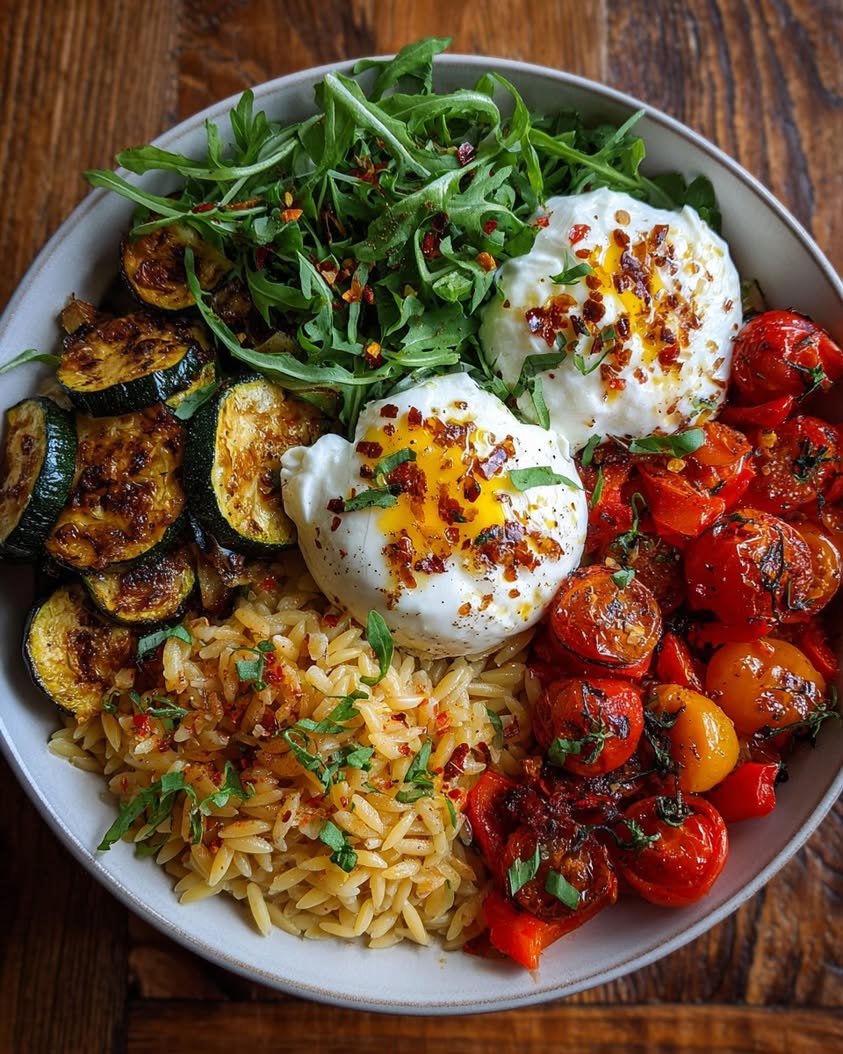
Deconstructed Lemon Garlic Orzo Bowl with Roasted Vegetables & Burrata: A Bright, Elegant Feast
Imagine a dish that feels like a special occasion but comes together with simple, weeknight ease. This Deconstructed Lemon Garlic Orzo Bowl with Roasted Vegetables & Burrata is exactly that kind of magic. It’s a vibrant, satisfying meal that celebrates fresh ingredients in their purest form. Moreover, it’s a feast for the eyes as much as the palate, featuring colorful roasted vegetables, creamy orzo pasta, and the star of the show: a luxurious ball of burrata cheese.
The beauty of this deconstructed lemon orzo burrata bowl lies in its elegant simplicity. Each component is prepared to highlight its unique texture and flavor. For instance, the vegetables roast until caramelized and sweet, the orzo cooks in a fragrant lemon garlic broth, and the burrata adds a cool, rich creaminess. When you combine them, you get a symphony of contrasting yet harmonious elements in every single bite. Ultimately, this dish proves that impressive meals don’t require complicated techniques, just quality ingredients and thoughtful pairing.
This recipe is a celebration of Mediterranean-inspired flavors. Bright lemon, pungent garlic, and earthy herbs create a backbone that feels both fresh and comforting. The roasted vegetables add depth, while the burrata provides an indulgent, creamy contrast. Whether you’re looking for a stunning vegetarian main course or a spectacular side dish for a dinner party, this deconstructed bowl delivers on every level. It’s a versatile, crowd-pleasing recipe that you’ll return to again and again.
Quick Recipe Highlights
- Flavor Profile: This dish bursts with bright, sunny flavors from fresh lemon and aromatic garlic, perfectly balanced by the savory sweetness of roasted vegetables and the rich, milky creaminess of burrata cheese. It’s a vibrant and sophisticated taste experience.
- Texture: You’ll enjoy a wonderful contrast of textures: tender, slightly chewy orzo pasta, soft and caramelized roasted vegetables, and the unforgettable moment of breaking into the creamy, liquid center of the burrata. It’s a truly satisfying mouthfeel.
- Aroma: As it cooks, your kitchen will fill with the irresistible scents of roasting vegetables, toasting garlic, and zesty lemon. The fresh herbs added at the end provide a final, fragrant lift that makes the dish smell as good as it tastes.
- Visual Appeal: This bowl is a rainbow on a plate. The vibrant colors of the roasted red peppers, zucchini, and cherry tomatoes pop against the pale yellow orzo and the snowy white burrata. It’s a visually stunning dish that’s perfect for sharing on social media or impressing guests.
- Skill Level Needed: This is an accessible recipe for cooks of all levels. The techniques involved—chopping, roasting, and simmering—are fundamental. If you can boil water and use an oven, you can absolutely master this deconstructed lemon orzo burrata bowl.
- Special Equipment: You only need basic kitchen tools: a good baking sheet for roasting, a medium saucepan for the orzo, and a chef’s knife. A microplane for zesting the lemon is helpful but not required; you can use a fine grater instead.
Recipe Overview
- Difficulty Level: We rate this Deconstructed Lemon Garlic Orzo Bowl as “Easy.” The steps are straightforward and largely hands-off. For example, the vegetables roast unattended, and the orzo cooks in one pot. The assembly requires no special skill, just an eye for beautiful plating. Consequently, it’s a fantastic recipe for beginner cooks wanting to create something impressive or for seasoned cooks needing a reliable, elegant meal.
- Category: This dish is wonderfully versatile. It stands proudly as a complete vegetarian main course, packed with vegetables, carbs, and protein from the burrata. Alternatively, it serves as a spectacular side dish alongside grilled chicken, fish, or lamb. It’s also perfect for potlucks and buffet-style meals where its visual appeal really shines.
- Cuisine: The flavors are firmly rooted in Mediterranean and Italian culinary traditions. Orzo pasta, the use of garlic and lemon, and the focus on fresh, high-quality ingredients like burrata cheese are all hallmarks of these cuisines. However, the “deconstructed” presentation gives it a modern, chef-inspired twist that feels contemporary and fresh.
- Cost: This is a moderately priced meal that delivers restaurant-quality appeal. The main cost drivers are the burrata cheese and fresh vegetables. Orzo and pantry staples like olive oil, garlic, and lemon are typically inexpensive. You can easily adjust the cost by choosing seasonal vegetables on sale or using a different fresh cheese like mozzarella if needed.
- Season: This deconstructed lemon orzo burrata bowl is truly a year-round champion. It’s particularly excellent in late spring and summer when zucchini, peppers, and tomatoes are at their peak sweetness and affordability. However, you can adapt it for fall and winter by using hardier vegetables like butternut squash, Brussels sprouts, and red onion.
- Occasion: This recipe is incredibly versatile for different events. It’s elegant enough for a date night at home or a dinner party with friends. Simultaneously, it’s simple enough for a flavorful weeknight family dinner. It also makes excellent next-day leftovers for lunch, as the flavors meld and deepen overnight.
Why You’ll Love This Recipe
First and foremost, the taste and texture combination is absolutely divine. Each forkful of this deconstructed lemon orzo burrata bowl offers a new experience. You get the bright, acidic punch from the lemon, the deep umami from roasted vegetables, and the sudden, luxurious creaminess from the burrata. This interplay keeps your palate engaged and delighted from the first bite to the last. It’s a dish that feels indulgent and gourmet without being heavy or overly rich.
From a convenience standpoint, this recipe is a dream. The preparation is simple and the cooking process is largely hands-off. While the vegetables roast in the oven, you can prepare the orzo on the stovetop. This parallel cooking makes efficient use of your time, resulting in a beautiful meal in under an hour. Furthermore, the “deconstructed” nature means there’s no fussy layering or precise assembly; you simply arrange the components in a bowl. It’s stress-free cooking with a stunning payoff.
Nutritionally, this bowl is a powerhouse. It’s loaded with a variety of colorful vegetables, providing a wide spectrum of vitamins, minerals, and antioxidants. The orzo offers satisfying carbohydrates for energy, and the burrata provides protein and healthy fats. Using olive oil as the primary fat source adds heart-healthy monounsaturated fats. Therefore, this meal is not only delicious but also nourishing and balanced, supporting a healthy lifestyle without sacrificing flavor.
For entertaining, this deconstructed lemon garlic orzo bowl is a true superstar. Its visual appeal is immediate and impressive, making guests feel special. Because it’s served family-style or plated individually, it encourages sharing and conversation. Additionally, it caters beautifully to vegetarians and can be easily adapted for other dietary needs, which takes the stress out of menu planning. It’s a dish that says you care, without requiring you to spend the whole party in the kitchen.
Finally, this recipe is wonderfully cost-effective and accessible. Most ingredients are pantry staples or easily found at any grocery store. You can swap vegetables based on what’s seasonal or on sale, making it a flexible option for any budget. Compared to ordering a similar dish at a restaurant, making this deconstructed lemon orzo burrata bowl at home saves significant money while allowing you to control the quality of every ingredient. It’s a win-win for your wallet and your taste buds.
Historical Background and Cultural Significance
The story of this dish begins with its individual components, each with a rich history. Orzo, for instance, despite its rice-like shape, is a form of pasta. Its name means “barley” in Italian, a nod to its resemblance to the grain. Pasta-making has been central to Italian cuisine for centuries, with each region developing its own shapes and sauces. The use of lemon and garlic with pasta is classic in Southern Italian cooking, particularly in coastal regions like Sicily and Amalfi, where citrus grows abundantly and flavors are bright and fresh.
Burrata cheese, the crowning jewel of this bowl, has a more recent but equally fascinating origin. It was created in the early 20th century in the Puglia region of Italy as a way to use up the ritagli (clippings) of mozzarella. Cheesemakers would envelop these fresh curds in stretched mozzarella, creating a pouch filled with stracciatella and cream. The result was burrata, meaning “buttered,” describing its incredibly rich, creamy interior. Its inclusion transforms a simple pasta dish into something luxurious and special.
The concept of “deconstructing” a recipe is a modern culinary technique popularized by chefs like Ferran Adrià. It involves taking a classic dish, breaking it down into its core components, and presenting them in a new, often more elemental way. This approach allows each ingredient to shine individually while still creating a cohesive flavor experience. Applying this idea to a lemon orzo burrata bowl elevates a comforting pasta meal into a contemporary, chef-inspired presentation that highlights texture and contrast.
While this specific deconstructed lemon garlic orzo bowl is a modern creation, it sits firmly within a tradition of Mediterranean “bowl” meals. From Greek grain bowls to Italian pasta salads, the practice of combining grains, vegetables, protein, and a flavorful dressing in one vessel is timeless. This recipe honors that tradition by using authentic ingredients—orzo, lemon, garlic, olive oil, burrata—but presents them with a fresh perspective. It’s a beautiful fusion of historical culinary practice and modern plating sensibility.
Ingredient Deep Dive
Orzo: Often called “pastina” or little pasta, orzo is a staple in Greek and Italian kitchens. Traditionally, it’s used in soups, pilafs, and salads. Nutritionally, it’s a good source of carbohydrates for energy and, if you choose whole wheat orzo, provides extra fiber. When selecting orzo, look for a brand with a smooth, even shape. You can store it in your pantry indefinitely in a sealed container. For a gluten-free version of this deconstructed bowl, substitute with a gluten-free rice-shaped pasta or even cooked quinoa.
Burrata Cheese: As mentioned, burrata hails from Puglia, Italy. It’s a fresh cheese meant to be consumed within a few days of making for the best texture and flavor. It’s rich in protein and calcium. Always select burrata that is stored in liquid and feels soft and supple. Keep it refrigerated and use it by the date on the package. If you cannot find burrata, fresh mozzarella (mozzarella di bufala is excellent) or even a dollop of ricotta mixed with a touch of cream can be a good, though different, substitute.
Fresh Lemon: The lemon is non-negotiable for the bright flavor in this deconstructed lemon orzo burrata bowl. We use both the zest and the juice. The zest contains potent aromatic oils, while the juice provides sharp acidity. Lemons are packed with vitamin C and antioxidants. Choose lemons that are heavy for their size with bright, smooth skin. They can be stored at room temperature for a week or in the fridge for longer. In a pinch, bottled lemon juice can work for the liquid, but you’ll miss the fragrance from the fresh zest.
Garlic: Garlic has been used for both culinary and medicinal purposes for thousands of years. It adds a pungent, savory depth that forms the flavor foundation of this dish. It contains allicin, a compound with noted health benefits. Select firm, plump heads of garlic without green sprouts. Store in a cool, dark place. For this recipe, fresh minced garlic is essential for its potent flavor. Do not substitute with garlic powder for the sautéing step, as it won’t provide the same aromatic base.
Vegetables (Zucchini, Bell Pepper, Cherry Tomatoes): This colorful trio represents the best of summer produce. Roasting concentrates their natural sugars, creating a caramelized sweetness that balances the lemon and garlic. They provide essential vitamins like A and C, fiber, and hydration. Choose vegetables that are firm, brightly colored, and without blemishes. Store them in the refrigerator’s crisper drawer. The beauty of this deconstructed bowl is its adaptability; you can use almost any roast-able vegetable like eggplant, red onion, asparagus, or broccoli.
Common Mistakes to Avoid
- Overcrowding the Baking Sheet: If you pile all the vegetables onto one pan, they will steam instead of roast. This results in soggy, rather than caramelized, veggies. Always use a large enough sheet and spread them in a single layer. If necessary, use two sheets to ensure proper browning and texture for your deconstructed bowl.
- Underseasoning the Vegetables: Vegetables need a generous amount of salt and pepper before roasting to enhance their natural flavors. Don’t be shy. Toss them thoroughly with oil, salt, and pepper to ensure every piece is well-coated. This step is crucial for building layers of flavor in the final dish.
- Boiling the Orzo in Too Much Water: Cooking orzo like regular pasta in a huge pot of water dilutes its flavor. Instead, cook it in a measured amount of broth or water so it absorbs all the liquid, much like risotto. This technique makes the orzo itself incredibly flavorful, a key component of a great lemon orzo burrata bowl.
- Adding the Lemon Juice Too Early: If you add the fresh lemon juice to the hot orzo at the beginning of cooking, the bright flavor will cook out and become muted. Always stir in the lemon zest and juice at the very end, off the heat, to preserve its vibrant, sunny character.
- Not Toasting the Garlic: Simply adding raw minced garlic to the orzo can leave a harsh, pungent taste. Instead, sauté it gently in olive oil for just 30-60 seconds until fragrant. This quick toasting mellows the garlic’s bite and infuses the oil with a beautiful, savory flavor base.
- Serving the Burrata Straight from the Fridge: Ice-cold burrata mutes its creamy texture and flavor. For the best experience, take the burrata out of the refrigerator about 15-20 minutes before serving. This allows it to come closer to room temperature, making it impossibly soft and luscious when you break into it.
- Neglecting to Reserve Pasta Water: Before draining your orzo (if using the pasta method), always save a cup of the starchy cooking water. This liquid is gold for adjusting the consistency of your dish. If the orzo seems dry or you want a saucier texture, a splash of pasta water helps bind everything together beautifully.
- Chopping Vegetables Inconsistently: Cutting your zucchini, peppers, and tomatoes into wildly different sizes means they will cook unevenly. Some pieces will burn while others remain undercooked. Aim for uniform, bite-sized pieces to ensure they all roast to perfect tenderness at the same time.
Essential Techniques
Roasting Vegetables for Maximum Flavor: Roasting is a transformative technique that caramelizes the natural sugars in vegetables. The key is high heat (around 425°F), ample space on the pan, and a good coating of oil. The oil conducts heat and promotes browning. Don’t stir too often; letting the vegetables sit allows for those delicious, crispy browned edges. The visual cue for success is tender vegetables with spotted, golden-brown caramelization on the edges.
Toasting Garlic to Perfection: This quick step builds the foundational flavor for your deconstructed lemon garlic orzo bowl. Heat olive oil over medium heat, then add minced garlic. Stir constantly for just 30-60 seconds. The moment it becomes fragrant and just starts to turn a very pale gold, it’s done. The common pitfall is walking away, which leads to burned, bitter garlic in seconds. If it burns, you must start over, as the bitter flavor will permeate the entire dish.
Cooking Orzo the Pilaf Way: Instead of boiling in excess water, we cook orzo like a pilaf or risotto. Sauté the dry orzo in the garlic oil for a minute to toast it slightly, then add hot broth or water. Simmer, covered, until the liquid is absorbed and the orzo is al dente. This method allows the orzo to absorb all the seasoned cooking liquid, making every bite flavorful. The success cue is tender pasta with no hard center and a creamy, starchy sauce clinging to it.
Zesting a Lemon Without the Bitter Pith: The yellow zest contains the flavorful oils, while the white pith underneath is bitter. Use a microplane or the finest holes on a box grater. Gently rub the lemon against the grater, rotating it frequently. You only want the bright yellow surface. Zest the lemon before you juice it, as it’s much easier to handle a whole fruit. This technique ensures you get pure lemon fragrance without any bitterness in your bowl.
Pro Tips for Perfect Deconstructed Lemon Garlic Orzo Bowl
First, preheat your baking sheet in the oven while it comes to temperature. Consequently, when you add the oiled vegetables, they immediately start to sizzle and sear, promoting better caramelization and preventing sticking.
For an extra layer of flavor, use vegetable or chicken broth instead of water to cook your orzo. The orzo will absorb this savory liquid, becoming incredibly tasty from the inside out.
Add a pinch of red pepper flakes to the garlic while it toasts. This infuses the oil with a subtle, warming heat that complements the bright lemon and rich burrata beautifully.
After roasting, toss the warm vegetables with a small splash of balsamic vinegar or a drizzle of good-quality extra virgin olive oil. This adds a final punch of acidity and richness that elevates the entire dish.
Let the cooked orzo sit off the heat, covered, for 5 minutes after adding the lemon juice and zest. This allows the flavors to meld and the orzo to absorb the lemon essence fully.
Garnish with more than just basil. Try adding toasted pine nuts or walnuts for crunch, or a sprinkle of fresh mint or dill for a different herbal note that pairs wonderfully with lemon.
If serving for a dinner party, prepare all components ahead of time. Then, gently reheat the orzo and vegetables, and assemble the bowls just before your guests sit down. This ensures the burrata is fresh and creamy at the moment of serving.
Variations and Adaptations
Regional Variations: To give this deconstructed lemon orzo burrata bowl a Greek twist, add Kalamata olives and crumbled feta cheese alongside the burrata. For a more Provençal feel, incorporate herbes de Provence with the roasting vegetables and use a touch of Dijon mustard in the orzo. An Italian-American version might include sautéed Italian sausage or roasted meatballs arranged on top for a heartier meal.
Seasonal Adaptations: Embrace seasonal produce. In fall, use cubed butternut squash, Brussels sprouts, and red onion. In winter, try roasted cauliflower, carrots, and parsnips. For spring, asparagus, peas, and artichoke hearts are lovely. This adaptability makes the deconstructed bowl a year-round staple in your recipe rotation.
Dietary Modifications: For a vegan deconstructed bowl, omit the burrata. Instead, finish with a dollop of vegan ricotta or a creamy cashew cheese. You can also add marinated tofu or chickpeas for protein. Use vegetable broth to keep the orzo vegetarian/vegan friendly.
Flavor Variations: Experiment with different citrus. Meyer lemon provides a sweeter, more floral note. Blood orange juice and zest offer a stunning color and berry-like flavor. You can also incorporate sun-dried tomatoes or a tablespoon of pesto stirred into the orzo for a deeper, herbaceous profile.
Texture Modifications: If you love crunch, sprinkle the finished bowl with homemade garlic breadcrumbs, crispy shallots, or seeds like pumpkin or sunflower. For extra creaminess without more cheese, stir a tablespoon of mascarpone or cream cheese into the hot orzo just before serving.
Presentation Alternatives: Instead of a deconstructed presentation, you can toss everything together in a large serving bowl for a more traditional pasta salad. Alternatively, serve it family-style on a large platter with the burrata placed proudly in the center for guests to break into themselves.
Serving and Presentation Guide
Plating Techniques: For individual servings, start with a base of the warm lemon garlic orzo. Then, artfully arrange the roasted vegetables around the perimeter or in small piles on top. Place the whole ball of burrata in the center. Finally, drizzle with a little extra virgin olive oil, a crack of black pepper, and a sprinkle of fresh herbs. The goal is to show off each beautiful component.
Garnishing Ideas: Fresh basil is classic, but don’t stop there. Try microgreens for a peppery note, edible flowers for a special occasion, or finely chopped chives for a mild onion flavor. A final dusting of flaky sea salt like Maldon over the burrata and vegetables adds both texture and a burst of salinity.
Traditional Accompaniments: In the Italian tradition, a simple dish like this would be served with a crisp, green salad dressed with lemon vinaigrette and perhaps some crusty bread to soak up any remaining creamy sauce and olive oil. A glass of chilled white wine completes the experience perfectly.
Modern Serving Suggestions: For a casual gathering, serve all the components in separate bowls and let everyone build their own deconstructed lemon orzo burrata bowl. This is fun, interactive, and allows guests to customize their ratios. It also keeps the burrata from getting mixed in too early.
Temperature Considerations: This dish is best served warm, with the orzo and vegetables just slightly above room temperature. The burrata should be cool but not cold. The contrast between the warm elements and the cool, creamy cheese is part of the magic. Avoid serving any component piping hot, as it will melt the burrata too quickly.
Portion Control Tips: This recipe generously serves four as a main course. If serving as a side dish, it can easily stretch to six people. To make it more substantial for hungry appetites, consider adding a protein like grilled shrimp or chicken on the side, or simply offer more crusty bread.
Wine and Beverage Pairing
Wine Pairings: The bright acidity and creamy elements of this deconstructed lemon garlic orzo bowl call for wines with good acidity and body. A crisp Italian Pinot Grigio or Vermentino mirrors the citrus notes beautifully. Alternatively, a Sauvignon Blanc, especially from New Zealand, with its grassy and grapefruit characteristics, is an excellent match. For a lighter red option, a chilled Beaujolais or Frappato works surprisingly well with the roasted vegetables and cheese.
Non-Alcoholic Alternatives: Sparkling water with a twist of lemon or a few muddled basil leaves is a refreshing and complementary choice. For something more crafted, try a homemade lemonade infused with rosemary or thyme. An iced herbal tea, like peppermint or chamomile, can also provide a lovely, soothing contrast to the savory dish.
Coffee/Tea Pairings: While not a typical pairing for the meal itself, an after-dinner espresso is a classic Italian way to finish. A cup of herbal tea, such as lemon ginger or a mild green tea, can also be a pleasant digestif that doesn’t overpower the delicate flavors you’ve just enjoyed.
Temperature Considerations: White wines should be served well-chilled, around 45-50°F. Any non-alcoholic sparkling beverages should also be served cold to provide a refreshing counterpoint to the warm food. Iced teas or lemonades are best with plenty of ice.
Serving Suggestions: Always offer water on the table. For wine, consider decanting even white wines for a few minutes before serving to allow them to open up. Present non-alcoholic options in a nice pitcher with glasses, making them feel just as special as the alcoholic selections.
Storage and Shelf Life
Storage Methods: Store the components separately for best results. Place the cooled lemon garlic orzo and roasted vegetables in airtight containers in the refrigerator. Keep the burrata in its original liquid in its container. This prevents the burrata from becoming soggy and the orzo from absorbing all the vegetable juices.
Temperature Requirements: All components must be refrigerated at or below 40°F. The burrata is a fresh dairy product and is particularly perishable. Never leave the assembled dish or its parts at room temperature for more than two hours.
Container Recommendations: Use glass or BPA-free plastic containers with tight-fitting lids. For the orzo, a shallow container helps it cool quickly and evenly, which is important for food safety. For the vegetables, any airtight container will suffice.
Signs of Spoilage: Discard any component that develops an off smell, visible mold, or significant sliminess. The burrata should smell fresh and milky; if it smells sour or ammoniated, it has spoiled. The orzo may dry out but shouldn’t smell foul.
Reheating Instructions: Reheat the orzo and vegetables separately in the microwave or in a skillet over medium-low heat with a splash of water or broth to prevent drying out. Reheat only the portion you plan to eat. The burrata should never be reheated; add it cold or at room temperature to the warmed components.
Freezing Guidelines: Freezing is not recommended for this deconstructed lemon orzo burrata bowl. The orzo can become mushy upon thawing, the vegetables will lose their texture and become watery, and the burrata will completely separate and become grainy. This is a dish best enjoyed fresh.
Make Ahead Strategies
Prep Timeline: You can prep this dish up to 24 hours in advance. Chop all the vegetables, store them in a bag or container in the fridge. Measure out your orzo, broth, and other pantry ingredients. Zest and juice the lemon, storing the juice in an airtight container and the zest wrapped in plastic on the counter (refrigeration can dull its flavor).
Storage Between Steps: Pre-chopped vegetables can be kept in the fridge. The lemon juice should be refrigerated. Keep everything else at room temperature. Do not cook the orzo or roast the vegetables more than a few hours ahead, as their textures are best when fresh.
Quality Impact Assessment: Pre-chopping vegetables has minimal impact. However, pre-cooking the orzo and vegetables will result in some texture loss upon reheating. The orzo may absorb more liquid and become softer, and the vegetables may lose their crisp-edged caramelization. The flavor, however, will still be excellent.
Assembly Tips: For the best make-ahead meal, roast the vegetables and cook the orzo up to 4 hours before serving. Let them cool, then store separately at room temperature if within 2 hours, otherwise refrigerate. Gently reheat before assembling. Add the fresh lemon juice and zest during the reheating step for the orzo to revive the bright flavor.
Reheating Guidelines: Reheat the orzo in a saucepan with a splash of broth or water over low heat, stirring frequently. Reheat the vegetables on a baking sheet in a 350°F oven for 5-10 minutes until warmed through. This method helps restore some of their roasted texture better than microwaving.
Fresh Element Additions: The burrata, fresh herbs, and any crunchy garnishes (like nuts or breadcrumbs) must always be added fresh at the moment of serving. This ensures the perfect contrast of temperatures and textures that defines a great deconstructed bowl.
Scaling Instructions
Halving the Recipe: Halving this deconstructed lemon garlic orzo bowl is straightforward for a smaller meal. Simply divide all ingredient quantities by two. Use a smaller baking sheet for the vegetables to ensure they still roast properly without steaming. The orzo cooking time will remain roughly the same, but keep a close eye on it as smaller volumes of liquid can evaporate more quickly.
Doubling or Tripling: For a crowd, doubling or tripling works well. Use multiple baking sheets for the vegetables, and rotate them in the oven halfway through cooking for even roasting. Cook the orzo in batches to avoid overcrowding the pot, which can lead to gummy pasta. Alternatively, use a very large Dutch oven. You may need to source multiple balls of burrata or use smaller ones for individual servings.
Equipment Adjustments: Scaling up requires planning. Ensure you have enough baking sheets and large pots. If roasting multiple trays, consider using convection bake if your oven has it, for more even air circulation. For large batches of orzo, a wide, heavy-bottomed pot is better than a tall, narrow one for even cooking.
Timing Modifications: Prepping vegetables for a double or triple batch will take longer. However, the actual roasting and cooking times will not increase significantly. The oven may take slightly longer to recover heat when you add multiple cold sheet pans. Factor in extra time for assembly when serving a large group.
Storage Considerations: Leftovers from a scaled-up batch will be more plentiful. Plan your storage containers accordingly. Remember that the quality is best within 2 days, so scale according to how many leftovers you are comfortable with or willing to serve again.
Nutritional Deep Dive
Macro Breakdown: This deconstructed lemon orzo burrata bowl provides a balanced mix of macronutrients. The orzo and vegetables offer complex carbohydrates for sustained energy. The olive oil and burrata contribute healthy fats, including monounsaturated fats from the oil. The burrata also provides a significant amount of protein and fat, making the dish satiating. It’s a well-rounded meal that covers all your macro needs in one delicious bowl.
Micronutrient Analysis: This dish is a micronutrient powerhouse. The colorful vegetables are rich in vitamins A (from peppers), C (from tomatoes, zucchini, lemon), and various B vitamins. They also provide minerals like potassium and magnesium. The olive oil contains vitamin E, an antioxidant. Burrata adds calcium for bone health. Using a variety of vegetables ensures you get a broad spectrum of these essential vitamins and minerals.
Health Benefits: The combination of ingredients supports overall health. The fiber from vegetables and whole wheat orzo (if used) aids digestion. The antioxidants in the vegetables and lemon help combat oxidative stress. The healthy fats from olive oil support heart health. Furthermore, the protein from burrata helps with muscle repair and keeps you feeling full longer, which can aid in weight management.
Dietary Considerations: As written, this recipe is vegetarian. It contains gluten (from the orzo) and dairy (from the burrata). It is not suitable for vegan, gluten-free, or dairy-free diets without modifications. However, as outlined in the adaptations section, it can be easily modified to fit many of these dietary needs with simple ingredient swaps.
Portion Analysis: One serving as a main course is satisfying without being overly heavy. The portion provides ample vegetables, a moderate serving of carbohydrates, and a rich but controlled amount of cheese. If you are monitoring calorie intake, you can slightly reduce the amount of olive oil used for roasting or choose a smaller portion of burrata per bowl.
Weight Management Tips: This bowl is excellent for weight management due to its high volume of low-calorie vegetables and satisfying protein and fat. To make it even lighter, increase the ratio of vegetables to orzo in your bowl. You can also use a low-fat broth for cooking the orzo and be mindful of the amount of added olive oil during the roasting process.
Dietary Adaptations
Gluten-Free: To make a gluten-free deconstructed lemon orzo burrata bowl, simply substitute the wheat-based orzo with a certified gluten-free rice-shaped pasta or another gluten-free small pasta like those made from corn or quinoa. Ensure your broth is also gluten-free. All other ingredients are naturally gluten-free. The cooking method remains identical.
Dairy-Free: For a dairy-free version, omit the burrata. You can add creaminess with a dollop of dairy-free ricotta (made from almonds or tofu) or a drizzle of a creamy tahini-lemon sauce. Nutritional yeast can be sprinkled on top for a cheesy flavor. Use a plant-based butter or extra olive oil for cooking the orzo if needed.
Vegan: Follow the dairy-free adaptations and also ensure you use vegetable broth. To replace the protein and richness of the burrata, consider adding marinated and baked tofu cubes, crispy chickpeas, or a hearty sprinkle of toasted nuts and seeds. A cashew-based “cream” sauce flavored with lemon and garlic would also be a fantastic topping.
Low-Carb/Keto: This recipe is naturally higher in carbs due to the orzo. For a low-carb or keto adaptation, replace the orzo entirely with cauliflower rice. Sauté the cauliflower rice in the garlic oil until tender. The rest of the recipe can remain similar{“success”:true,”message”:”Recipe created successfully”,”post_id”:9072,”tasty_recipe_id”:9072,”shortcode”:”“}

I’m Billy, a classically trained culinary school graduate from The Culinary Institute of America with over 12 years in the restaurant industry and over 19 years of cooking experience.