
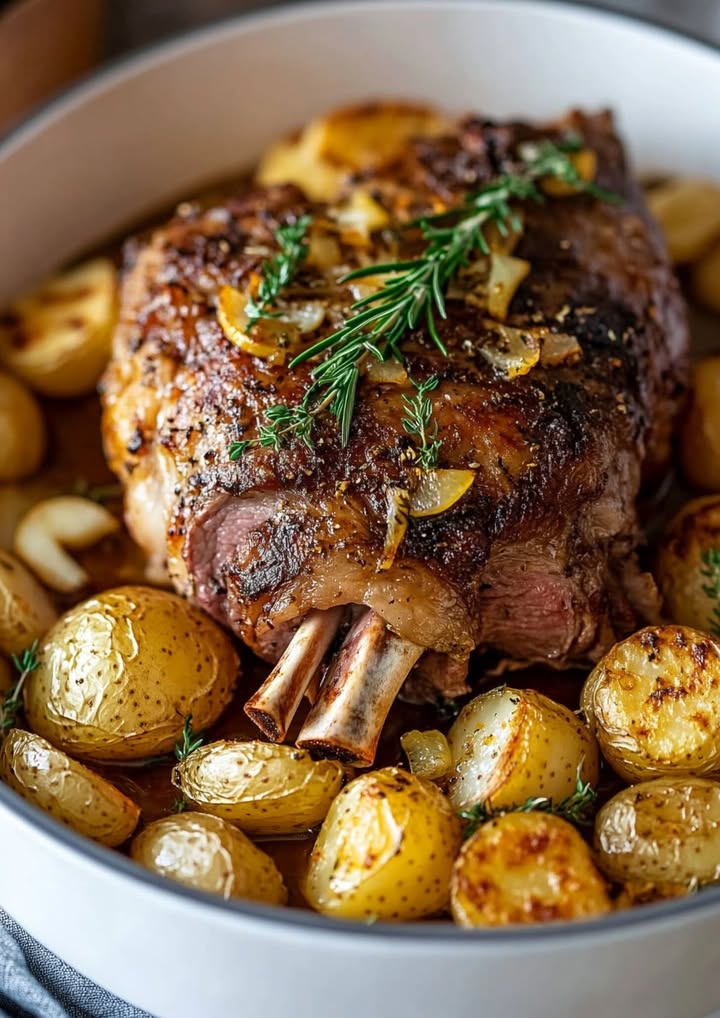
Fall-Apart Greek Roasted Lamb with Lemon, Garlic, and Herbs: The Ultimate Celebration Centerpiece
Imagine a dish so tender it practically carves itself, with meat that falls off the bone at the slightest touch. This Fall-Apart Greek Roasted Lamb with Lemon, Garlic, and Herbs delivers exactly that experience. Moreover, it fills your home with an intoxicating aroma of rosemary, garlic, and roasting meat for hours. Consequently, this recipe transforms a simple leg of lamb into a spectacular, unforgettable feast.
The magic of this Fall-Apart Greek Roasted Lamb with Lemon, Garlic, and Herbs lies in its patient, slow roasting method. This technique breaks down tough connective tissues, resulting in incredibly juicy and flavorful meat. Additionally, the bright, zesty marinade of lemon juice and olive oil cuts through the richness perfectly. Ultimately, you achieve a beautiful balance of savory, herbal, and citrus notes in every single bite.
This dish is perfect for special occasions, from Easter dinner to a festive Sunday family gathering. Surprisingly, it requires very little hands-on effort despite its impressive presentation. You simply prepare a vibrant herb paste, rub it all over the lamb, and let your oven do the rest of the work. Therefore, you can spend time with your guests while this stunning centerpiece cooks to perfection.
Quick Recipe Highlights
- Flavor Profile: This Fall-Apart Greek Roasted Lamb with Lemon, Garlic, and Herbs boasts a robust, savory taste from the garlic and rosemary, beautifully balanced by the tangy brightness of fresh lemon. The olive oil and slow roasting process create a deeply rich, succulent flavor that permeates every fiber of the meat.
- Texture: The slow roasting technique is key to achieving a truly fall-apart texture. The connective tissues and collagen melt away over the long cook time, leaving you with lamb so tender you can pull it apart with forks. The exterior develops a slight crust, while the interior remains incredibly moist and juicy.
- Aroma: As this Greek-style lamb roasts, it releases an irresistible fragrance that will have everyone asking when dinner is ready. The primary aromatic notes are earthy rosemary, pungent garlic, sweet oregano, and the sharp, clean scent of lemon zest, all mingling with the savory smell of roasting meat.
- Visual Appeal: The finished roast presents a gorgeous, golden-brown exterior studded with herbs and slices of lemon. When carved or pulled, it reveals tender, pinkish-gray meat that contrasts beautifully with the dark, crispy edges. It makes for a stunning, rustic centerpiece on any dinner table.
- Skill Level Needed: This is a remarkably accessible recipe for home cooks of all levels. While the result is impressive, the process is straightforward. The most important skill is patience, as the slow, low-temperature roast is non-negotiable for achieving the perfect fall-apart texture.
- Special Equipment: You need a reliable roasting pan with a rack to elevate the lamb, allowing heat to circulate. A sharp knife for scoring the fat and a microplane or zester for the lemon are helpful. Otherwise, standard kitchen tools like a small bowl for mixing the paste and aluminum foil for resting are all you require.
Recipe Overview
- Difficulty Level: We rate this Fall-Apart Greek Roasted Lamb with Lemon, Garlic, and Herbs as “Easy” because the technique is simple and forgiving. The active prep time is minimal, involving just mixing a paste and rubbing it on the meat. The long, slow cook requires no babysitting, making it perfect for relaxed entertaining. The key is trusting the process and not rushing the cooking time.
- Category: This dish firmly sits in the main course category, designed to be the star of the meal. It is a hearty, protein-centric roast ideal for dinner parties, holiday feasts, and celebratory family meals. It can also be the centerpiece of a mezze-style spread with various smaller dishes.
- Cuisine: This is a classic preparation rooted in Greek and Mediterranean culinary traditions. The combination of lemon, garlic, oregano, and olive oil is quintessential to the region’s flavor profile. The slow-roasting method echoes techniques used for generations in home kitchens and village celebrations throughout Greece.
- Cost: The primary cost is the leg of lamb itself, which is a premium ingredient. However, considering it serves 8-10 people, the cost per person becomes very reasonable for a special occasion. The remaining ingredients—herbs, garlic, lemon, oil—are inexpensive pantry staples, making the overall investment worthwhile for the impressive yield.
- Season: While excellent year-round, this Fall-Apart Greek Roasted Lamb with Lemon, Garlic, and Herbs is particularly suited to spring, especially for Easter celebrations. The bright lemon and herbs also make it feel light and appropriate for warmer months. Conversely, its comforting, hearty nature makes it a wonderful centerpiece for cozy autumn and winter gatherings as well.
- Occasion: This recipe is tailor-made for celebrations. It is perfect for Easter, Christmas, Thanksgiving, or any major holiday dinner. Furthermore, it is ideal for milestone birthdays, anniversaries, or a show-stopping Sunday family roast. It signals to your guests that the meal is a special event.
Why You’ll Love This Recipe
First and foremost, the taste and texture of this Fall-Apart Greek Roasted Lamb with Lemon, Garlic, and Herbs are utterly divine. The meat achieves a level of tenderness that is hard to believe, melting in your mouth with minimal chewing. Each bite delivers a powerful punch of garlic and rosemary, followed by the refreshing zing of lemon that cuts through the fat. This harmonious flavor profile is complex yet incredibly satisfying, pleasing even the most discerning palates at your table.
From a convenience standpoint, this recipe is a host’s dream. After the quick 20-minute preparation, the oven handles the heavy lifting for the next five hours. This frees you up to prepare side dishes, set the table, or simply relax. There is no need for constant basting or temperature checks. You simply let the low, steady heat work its magic, resulting in a stress-free path to an extraordinary meal.
Nutritionally, lamb is an excellent source of high-quality protein, iron, zinc, and vitamin B12. The use of olive oil, a cornerstone of the Mediterranean diet, provides heart-healthy monounsaturated fats. The garlic and herbs offer antioxidants and anti-inflammatory properties. While rich, this dish provides substantial nutritional value, making it a fulfilling and nourishing centerpiece for a balanced feast.
The social and entertaining value of this dish cannot be overstated. Presenting a whole, beautifully roasted leg of lamb creates a sense of occasion and communal dining. The dramatic act of carving or pulling apart the tender meat at the table fosters a warm, celebratory atmosphere. It is a meal that encourages sharing, conversation, and lingering at the table long after the plates are empty.
Finally, this Fall-Apart Greek Roasted Lamb with Lemon, Garlic, and Herbs is cost-effective when you consider the number of servings. A single leg of lamb can generously feed a large family or group of friends, often with leftovers. Compared to serving individual steaks or chops, this method offers fantastic value. The impressive presentation and incredible flavor deliver a restaurant-quality experience at a fraction of the per-person cost.
Historical Background and Cultural Significance
The tradition of roasting lamb holds deep historical roots across the Mediterranean, particularly in Greece. For millennia, sheep herding has been central to the agricultural economy and diet. Roasting a whole lamb or a large leg over an open fire, known as “souvla” or “antikristo,” was a method developed for celebrations and communal feasts. This practice ensured that even tougher cuts of meat from older animals could be transformed into something succulent and delicious through slow, patient cooking.
In Greek culture, lamb is inextricably linked to Easter, or “Pascha,” which is the most significant religious holiday. The consumption of lamb commemorates the Passover sacrifice and symbolizes Christ as the “Lamb of God.” Consequently, the Easter feast almost always features a whole roasted lamb or a substantial leg. Preparing this Fall-Apart Greek Roasted Lamb with Lemon, Garlic, and Herbs connects you to a centuries-old tradition of breaking the Lenten fast with a magnificent, celebratory meal shared with family and community.
The recipe has evolved from simple spit-roasting over coals to modern oven roasting, but the core principles remain. The flavorings of lemon, garlic, and wild mountain herbs like oregano and rosemary are classically Greek, reflecting the country’s sun-drenched landscape. These ingredients were not only flavorful but also helped preserve the meat before modern refrigeration. Today, they define the bright, aromatic character that makes Greek cuisine so beloved worldwide.
Regional variations abound throughout Greece and its islands. On Crete, they might add a splash of local red wine or vinegar to the marinade. In some regions, “rigani” (Greek oregano) is the dominant herb, while others might use more thyme. The choice of fat can vary from pure olive oil to a mix with butter. Some cooks add potatoes to the roasting pan to cook in the rendered lamb fat. This particular recipe with lemon, garlic, and rosemary represents a beloved, widespread version that captures the essential spirit of the dish.
Ingredient Deep Dive
Bone-In Leg of Lamb: The bone-in leg is the ideal cut for this Fall-Apart Greek Roasted Lamb with Lemon, Garlic, and Herbs. The bone conducts heat gently, helping the meat cook evenly from the inside out, and it contributes immense flavor to the meat surrounding it. Nutritionally, lamb is rich in high-quality protein, iron, zinc, and vitamin B12. Look for a leg that is a pale pink to red color with firm, white fat. A 5-7 pound leg is perfect for 8-10 servings. If possible, choose lamb that is pasture-raised for the best flavor. Store it in the coldest part of your refrigerator and use within 2-3 days of purchase, or freeze for longer storage.
Fresh Lemon Juice and Zest: The lemon is non-negotiable in Greek cooking, providing the crucial acidic counterpoint to rich lamb. The zest contains potent aromatic oils that deliver intense lemon fragrance without excess moisture, while the juice tenderizes the meat and adds tang. Lemons are an excellent source of vitamin C. Choose heavy, firm lemons with bright, glossy skin for the most juice. Zest the lemon before juicing it for maximum efficiency. You cannot substitute bottled lemon juice here; the fresh flavor is essential. For a variation, try using a Meyer lemon for a sweeter, more complex citrus note.
Fresh Garlic: Garlic forms the savory foundation of the herb paste. When roasted slowly, its pungency mellows into a sweet, nutty, almost caramelized flavor that permeates the meat. Garlic has been used medicinally for centuries and contains compounds like allicin, which may support heart health. Select firm, plump heads with tight, papery skin. Avoid heads with green sprouts, as they can be bitter. For this paste, finely mincing or using a microplane creates the best texture to adhere to the lamb. In a pinch, 1/4 teaspoon of granulated garlic can substitute for one fresh clove, but fresh is vastly superior for this application.
Fresh Rosemary and Oregano: These woody herbs are the soul of the dish. Rosemary, with its pine-like fragrance, and oregano, with its peppery, earthy notes, are classic partners for lamb in Mediterranean cooking. They contain antioxidants and have anti-inflammatory properties. Always choose fresh herbs over dried for this paste; the difference in aroma and flavor is dramatic. Look for perky, vibrant green sprigs without any wilting or black spots. To store, wrap them in a damp paper towel and place in a resealable bag in the refrigerator. If you must substitute dried, use one-third the amount, but be aware the flavor profile will be less bright.
Extra Virgin Olive Oil: High-quality olive oil acts as the glue for the herb paste, helps create a beautiful crust, and carries flavor into the meat. It is a cornerstone of the healthful Mediterranean diet, rich in monounsaturated fats and antioxidants. Use a good, fruity extra virgin olive oil that you enjoy tasting. It does not need to be the most expensive, but it should be fresh. Store olive oil in a cool, dark place away from the stove to prevent it from becoming rancid. Do not substitute with a neutral oil like canola; the distinct flavor of olive oil is a key component of the recipe’s character.
Common Mistakes to Avoid
- Rushing the Roast: The most critical error is increasing the oven temperature to cook the lamb faster. High heat will cause the exterior to burn long before the interior becomes tender. The connective tissue needs time at a low temperature to dissolve. Patience is the most important ingredient for achieving the fall-apart texture.
- Not Scoring the Fat: Failing to score the fat cap in a diamond pattern prevents the herb paste from penetrating the meat. It also allows the fat to render more effectively. Use a sharp knife to cut through the fat but not deep into the meat, creating pockets for the flavorful paste to seep in.
- Using Dried Herbs Exclusively: While dried oregano has its place, relying solely on dried herbs for the paste will result in a dusty, muted flavor. Fresh rosemary and oregano provide vibrant, aromatic oils that dried herbs simply cannot replicate. If you must use dried, rehydrate them in the lemon juice for 10 minutes first.
- Skipping the Resting Time: Cutting into the lamb immediately after roasting causes all the precious juices to spill out onto the cutting board, leaving the meat dry. Resting for a full 20-30 minutes allows the juices to redistribute throughout the roast, ensuring every slice is succulent.
- Overcrowding the Pan: Placing the lamb directly on the bottom of the pan or crowding it with too many vegetables causes it to steam rather than roast. Always use a roasting rack to elevate the meat, allowing hot air to circulate evenly for a better crust and more consistent cooking.
- Not Seasoning Aggressively Enough: A large roast needs a generous amount of salt and pepper. The herb paste should be well-seasoned, and you should also season the lamb directly before applying the paste. Do not be shy; the seasoning needs to flavor the entire mass of meat.
- Using Bottled Lemon Juice: The preservatives and lack of fresh aroma in bottled juice will give your marinade a flat, chemical taste. Freshly squeezed lemon juice and zest are vital for the bright, clean citrus flavor that defines this Greek-style dish.
- Forgetting to Pat the Lamb Dry: Applying the paste to a damp surface causes it to slide off. Always pat the leg of lamb thoroughly dry with paper towels before scoring and seasoning. This helps the paste adhere and promotes better browning.
Essential Techniques
Scoring the Fat: This technique involves making shallow, diagonal cuts across the fat cap in a crosshatch pattern. It is important because it increases the surface area, allowing more herb paste to contact the meat directly. It also helps the fat render efficiently during the long cook, basting the meat continuously. To master it, use a very sharp knife and cut just through the fat layer, stopping before you hit the meat underneath. A common pitfall is cutting too deeply, which can cause the meat to dry out. The visual cue for success is a neat diamond pattern across the entire surface of the roast.
Creating and Applying the Herb Paste: A paste, rather than a loose marinade, clings to the meat and forms a flavorful crust. It is important because it concentrates the flavors of garlic, lemon, and herbs directly on the lamb’s surface. To master it, finely chop the fresh herbs and garlic, then combine them with the lemon zest, juice, olive oil, salt, and pepper to form a cohesive, spreadable mixture. The common pitfall is making it too runny; it should have the consistency of wet sand. Using your hands, rub the paste over the entire leg, working it into the scores and all crevices for maximum flavor penetration.
Slow Roasting at Low Temperature: This is the transformative technique that makes the lamb fall-apart tender. Cooking at 300°F (150°C) for 5 hours allows the tough collagen in the leg to slowly convert into gelatin without tightening the muscle fibers and squeezing out moisture. It is important because it guarantees juicy, tender results every time. The key is to trust the process and use a reliable oven thermometer. A common pitfall is opening the oven door frequently, which causes temperature fluctuations. The visual cue for doneness is meat that pulls away from the bone easily and reaches an internal temperature of 190-195°F (88-90°C) for shredding tenderness.
Resting the Meat: Resting is the final, non-negotiable technique. When meat cooks, its juices are driven toward the center. Cutting immediately releases those juices. Resting allows the fibers to relax and reabsorb the liquid throughout the roast. It is crucial for achieving juicy, not dry, meat. To master it, transfer the lamb to a cutting board, tent it loosely with foil, and leave it undisturbed for 20-30 minutes. The common pitfall is cutting it too soon out of excitement. A good visual cue is that the meat will feel slightly firmer to the touch, and when you slice it, minimal juices will escape.
Pro Tips for Perfect Fall-Apart Greek Roasted Lamb
Bring the lamb to room temperature for about 30-60 minutes before roasting. This promotes more even cooking from edge to center, preventing a cold interior and an overcooked exterior.
Use a digital meat thermometer to remove the guesswork. For truly fall-apart texture, aim for an internal temperature of 190-195°F (88-90°C), which is higher than typical for lamb but essential for breaking down all connective tissue.
Add quartered potatoes, carrots, or onions to the roasting pan underneath the rack for the last 2 hours of cooking. They will cook in the rendered lamb fat and juices, becoming incredibly flavorful.
For an extra layer of flavor, insert thin slices of garlic and small sprigs of rosemary into the score marks on the fat cap after applying the paste.
If the herb paste seems too thick, add a tablespoon more olive oil. If it seems too runny, add a bit more chopped fresh herbs to achieve the right spreading consistency.
After resting, pour any accumulated juices from the cutting board into the roasting pan. Skim off excess fat and use these rich, concentrated juices as a base for a simple gravy or sauce.
Leftover lamb makes incredible sandwiches. Shred the meat and pile it on warm pita bread with tzatziki sauce, sliced tomatoes, and red onion.
Variations and Adaptations
Regional Variations: Explore different Greek regional twists. For a Cretan touch, add a tablespoon of dried rigani (Greek oregano) to the paste and a splash of red wine. A Macedonian version might include a pinch of cinnamon or allspice for warmth. Island variations often incorporate more thyme or marjoram. You can also mimic the flavors of a Greek gyro by adding a teaspoon of ground cumin and coriander to the herb paste for a more spiced profile.
Seasonal Adaptations: In spring, incorporate fresh mint or dill into the herb paste for a lighter, brighter flavor perfect for Easter. During summer, add preserved lemon peel for a more intense, complex citrus note. For autumn, include a tablespoon of chopped fresh sage and a teaspoon of fennel seeds to complement the heartier season. In winter, a tablespoon of tomato paste mixed into the herb paste adds richness and depth, pairing well with root vegetables roasted alongside.
Dietary Modifications: For a Whole30 or Paleo version, ensure your olive oil is compliant and that no sugar is added. The recipe is naturally gluten-free and dairy-free as written. To reduce sodium, simply decrease the salt in the paste by half and rely more on the herbs, garlic, and lemon for flavor. For a lower-fat option, trim all visible fat from the lamb before scoring and use a bit less olive oil in the paste, though some fat is necessary for moisture and flavor.
Flavor Variations: For a more Middle Eastern flair, add a teaspoon each of ground cumin, coriander, and smoked paprika to the paste. An Italian-inspired version could use fresh basil and thyme instead of rosemary and oregano, with a splash of balsamic vinegar in the paste. A French “Provençal” take would include herbes de Provence and sliced olives tucked around the roast in the pan.
Serving and Presentation Guide
For a traditional and dramatic presentation, place the entire rested leg of lamb on a large, rustic platter. Garnish the platter with fresh rosemary sprigs, lemon wedges, and perhaps a few whole heads of roasted garlic. You can carve it at the table, slicing against the grain, or for the true “fall-apart” experience, use two forks to pull large chunks of meat directly onto serving plates. This interactive style is festive and highlights the incredible tenderness you have achieved.
Traditional Greek accompaniments are essential. Serve with lemon-roasted potatoes cooked in the lamb drippings, a fresh Greek salad with tomatoes, cucumber, and feta, and a bowl of creamy tzatziki sauce for dipping. Warm pita bread or crusty village-style bread is a must for soaking up juices. For a more modern spread, consider serving with a farro salad with herbs, roasted Mediterranean vegetables, or a whipped feta dip.
Temperature is key. Serve the lamb hot, but remember it will retain heat well due to its density. Ensure your side dishes are also hot or appropriately room temperature. The tzatziki and salad should be chilled for a pleasant contrast. Portion control is easy with this dish; a 5-7 pound leg will comfortably serve 8 adults with leftovers. Plan for about 3/4 pound of bone-in lamb per person as a generous serving.
Wine and Beverage Pairing
The robust flavors of this Fall-Apart Greek Roasted Lamb with Lemon, Garlic, and Herbs call for wines with good structure and acidity. A classic Greek Agiorgitiko from Nemea, with its red fruit and spice notes, is a perfect regional pairing. Alternatively, a medium-bodied Syrah/Shiraz or a Grenache-based blend from the Rhône Valley complements the herbal and garlicky notes beautifully. For a bolder choice, a Châteauneuf-du-Pape works wonderfully. The wine’s acidity should balance the richness of the meat, while its tannins are softened by the lamb’s fat.
For non-alcoholic alternatives, consider a tart pomegranate spritzer or a sparkling lemonade infused with fresh rosemary. Iced mint tea or a cucumber-infused water also provide a refreshing counterpoint to the savory, rich lamb. A high-quality grape juice or a non-alcoholic red wine can mimic the pairing experience for those not drinking alcohol.
After the meal, a strong Greek coffee or a mint tea is a traditional and fitting way to end the feast. The bitterness of the coffee cuts through any lingering richness. If serving dessert like baklava, a sweet dessert wine like Samos Vin Doux or a Muscat can be a lovely pairing, though the lamb itself pairs best with dry, robust reds.
Storage and Shelf Life
Store leftover Fall-Apart Greek Roasted Lamb in an airtight container in the refrigerator for up to 4 days. For best results, shred or slice the meat and store it with any accumulated juices to prevent drying out. You can also store larger chunks. The fat will solidify when chilled; you can leave it for flavor or skim it off when reheating. Always use clean utensils to remove portions to prevent bacterial contamination.
For longer storage, this lamb freezes exceptionally well. Portion the shredded or sliced meat into freezer-safe bags or containers, again including some of the juices. Squeeze out excess air to prevent freezer burn. Properly stored, it will maintain best quality for 2-3 months. Thaw overnight in the refrigerator before reheating. Signs of spoilage include an off or sour smell, a slimy texture on the meat’s surface, or any visible mold. When in doubt, discard it.
Reheating requires care to avoid drying out the meat. The best method is to place the lamb in a baking dish with a few tablespoons of water, broth, or leftover pan juices. Cover tightly with foil and warm in a 300°F (150°C) oven until heated through. You can also reheat gently in a covered skillet on the stovetop with a splash of liquid. Avoid using a microwave for large portions, as it can make the meat tough and rubbery.
Make Ahead Strategies
You can significantly streamline your day-of preparation by making the herb paste up to 24 hours in advance. Simply combine all paste ingredients, cover tightly, and refrigerate. This allows the flavors to meld beautifully. You can also score the leg of lamb, pat it dry, and refrigerate it uncovered on a rack in a baking sheet the night before. This helps dry the surface for better browning.
For the ultimate make-ahead meal, you can fully cook the lamb a day in advance. After roasting and resting, shred or slice the meat. Store it in a container with all the pan juices. The next day, reheat it gently in a covered dish in the oven with the juices. The flavor often improves overnight. Add any fresh garnishes like extra lemon wedges or a sprinkle of chopped fresh herbs just before serving to brighten the dish.
If preparing side dishes, the tzatziki sauce can and should be made 1-2 days ahead so the flavors develop. Vegetables for roasting can be peeled and cut the day before and stored in water in the refrigerator. This advance prep allows you to focus on simply assembling and reheating on the day of your event, making entertaining virtually stress-free.
Scaling Instructions
Halving this recipe is straightforward if cooking for a smaller group. Use a 3-4 pound half leg or shank end of lamb. Keep the roasting temperature the same at 300°F (150°C), but reduce the cooking time to approximately 3.5-4 hours, or until the internal temperature reaches 190-195°F. You can also halve the ingredient quantities for the herb paste, though it is better to make the full amount and use any extra to rub on vegetables.
Doubling or tripling the recipe is perfect for a very large gathering. You will need multiple roasting pans and oven racks. It is best to roast two legs side-by-side on separate racks, but ensure they are not touching and that hot air can circulate around each one. You may need to rotate the pans top to bottom halfway through cooking for even browning. The cooking time may increase slightly, so rely on the internal temperature probe for doneness. Make a double or triple batch of the herb paste to ensure you have enough to generously coat each roast.
Nutritional Deep Dive
This Fall-Apart Greek Roasted Lamb with Lemon, Garlic, and Herbs is a nutrient-dense main course. A 4-ounce serving of cooked lamb provides approximately 25-30 grams of high-quality, complete protein, essential for muscle repair and satiety. It is an excellent source of heme iron, which is highly absorbable and crucial for oxygen transport in the blood. The dish also provides significant amounts of zinc for immune function and vitamin B12 for neurological health.
The fat content comes primarily from the lamb itself and the olive oil. While lamb does contain saturated fat, it also provides monounsaturated fats. The olive oil contributes heart-healthy monounsaturated fats and antioxidants. The garlic, lemon, and herbs add minimal calories but contribute beneficial phytonutrients and vitamin C. For those managing calorie intake, portion control is effective; a 3-4 ounce serving is satisfying alongside plenty of vegetables. Trimming visible fat before cooking can further reduce the overall fat content.
Dietary Adaptations
Gluten-Free: This recipe is naturally gluten-free as written. Simply ensure that any packaged ingredients like broth (if used for a gravy) or sides you serve are certified gluten-free. There are no hidden sources of gluten in the core lamb preparation.
Dairy-Free: The recipe contains no dairy. The richness comes from the lamb and olive oil. When serving, be mindful of accompaniments; choose dairy-free tzatziki made with coconut yogurt or simply serve with lemon wedges instead.
Low-Carb/Keto: This dish is an excellent fit for low-carb and keto diets. Lamb is zero-carb, and the herb paste adds negligible carbohydrates. Focus on serving it with non-starchy vegetable sides like a Greek salad (without croutons), roasted asparagus, or sautéed greens. Avoid potato-based sides.
Paleo/Whole30: The recipe is fully compliant with Paleo and Whole30 guidelines. Use high-quality olive oil and ensure no sugar is added to any ingredient. It makes for a perfect celebratory meal within these dietary frameworks.
Troubleshooting Guide
Lamb is Tough, Not Fall-Apart: This means it did not cook long enough or at a low enough temperature. The collagen hasn’t fully broken down. Solution: If it is still in the oven, continue cooking until it reaches 190-195°F internally and probes tender. If it is already out, you can slice it thinly against the grain to minimize chewiness, or shred it and simmer it gently in a bit of broth or sauce to further tenderize.
Exterior is Burning: Your oven temperature may be running hot, or the lamb is too close to the heating element. Solution: Tent the browned areas loosely with aluminum foil for the remainder of the cooking time. Next time, use an oven thermometer to verify temperature and place the roast in the center of the oven.
Herb Paste Slid Off During Cooking: The lamb was likely not patted dry before applying the paste, or the paste was too oily/runny. Solution: For now, simply baste the lamb with the juices and herbs that collected in the pan. For next time, ensure the skin is bone-dry and that your paste has a thick, spreadable consistency.
Lamb is Dry: This can happen if it is overcooked beyond the recommended temperature or not rested. Solution: Serve it with plenty of the pan juices, tzatziki, or a quick sauce made from the drippings to add moisture back. Shredding it and mixing with juices can also help.
Recipe Success Stories
Readers consistently report that this Fall-Apart Greek Roasted Lamb with Lemon, Garlic, and Herbs has become their go-to showstopper for holidays. Many have shared that following the low-and-slow method religiously resulted in the most tender lamb they have ever made, even surpassing their expectations. One home cook mentioned using a boneless leg tied with kitchen twine and still achieved fantastic results by adjusting the time downward slightly.
Adaptation successes abound. A reader from Australia added native lemon myrtle to the herb paste for a unique twist. Another cooked it in a slow cooker on low for 8 hours after searing the herb-crusted lamb in a skillet, achieving similar fall-apart texture. Several have successfully used the same herb paste on lamb chops or a shoulder roast, adjusting cooking times accordingly. The core formula of lemon, garlic, and herbs proves to be incredibly versatile and forgiving.
Frequently Asked Questions
Q: Can I use a boneless leg of lamb?
A: Yes, you can. A boneless roast will cook faster, so reduce the initial cooking time. Check for doneness starting at 3.5 hours. Because it is rolled and tied, the herb paste will flavor the exterior well, but the presentation will be different. Ensure you tie it securely with kitchen twine for even cooking.
Q: My lamb is 8 pounds. How long should I cook it?
A: For an 8-pound leg, maintain the same 300°F temperature. Plan for an additional 45-60 minutes of cooking time, but always use a meat thermometer. The target internal temperature of 190-195°F for fall-apart texture is more important than the exact clock time.
Q: Can I cook this in a slow cooker?
A: Absolutely. Sear the scored and pasted lamb in a skillet first to develop color. Then place it in the slow cooker on low for 8-9 hours. It will be very tender, but you will miss the roasted crust from the oven. You can broil it for a few minutes after to crisp it up.
Q: What is the best way to reheat leftovers without drying them out?
A: The oven is best. Place leftovers in an oven-safe dish with a few tablespoons of broth, water, or pan juices. Cover tightly with foil and warm at 300°F until heated through. This gentle method preserves moisture.
Q: Can I make gravy from the pan drippings?
A: Definitely. After removing the lamb, place the roasting pan on the stovetop. Skim off excess fat, leaving about 2-3 tablespoons. Sprinkle in 2 tablespoons of flour and cook for a minute. Whisk in 2 cups of broth, scraping up the browned bits. Simmer until thickened. Strain if desired.
Q: I don’t have fresh rosemary. What can I use?
A: In a pinch, use 1 tablespoon of dried rosemary. Crush it between your fingers to release the oils before adding it to the paste. The flavor will be stronger and more concentrated, so you might want to use slightly less. Fresh is highly preferred, however.
Q: Is it normal for the garlic in the paste to look dark after roasting?
A: Yes, this is completely normal. The garlic in the paste will cook and may turn a deep golden or even brown color, especially where it sits in the{“success”:true,”message”:”Recipe created successfully”,”post_id”:8303,”tasty_recipe_id”:8303,”shortcode”:” Print
Fall-Apart Greek-Style Slow Roasted Lamb with Lemon, Garlic, and Herbs
Description
Tender, slow-roasted lamb infused with Mediterranean flavors of lemon, garlic, and aromatic herbs, resulting in fall-apart meat perfect for a festive meal.
Ingredients
For the Crust:
- 1 (5-6 lb) bone-in lamb shoulder or leg
- 6 cloves garlic, minced
- 2 lemons, zested and juiced
- 1/4 cup extra virgin olive oil
- 2 tbsp dried oregano
- 1 tbsp dried thyme
- 1 tbsp dried rosemary
- 1 tsp salt
- 1/2 tsp black pepper
- 1 cup chicken or vegetable broth
- 1 large onion, sliced
Instructions
1. Prepare the Crust:
- Preheat oven to 300°F (150°C). Pat the lamb dry with paper towels and place in a roasting pan.
- In a bowl, mix olive oil, lemon juice, lemon zest, minced garlic, oregano, thyme, rosemary, salt, and pepper to form a paste.
- Rub the paste all over the lamb, covering it thoroughly. Arrange sliced onions around the lamb in the pan.
- Pour broth into the bottom of the pan. Cover tightly with foil or a lid.
- Roast for 4-5 hours, until the lamb is very tender and falls apart easily with a fork. Uncover for the last 30 minutes to brown if desired.
- Let rest for 15 minutes before shredding or slicing. Serve with pan juices.
Notes
You can customize the seasonings to taste.

I’m Billy, a classically trained culinary school graduate from The Culinary Institute of America with over 12 years in the restaurant industry and over 19 years of cooking experience.