
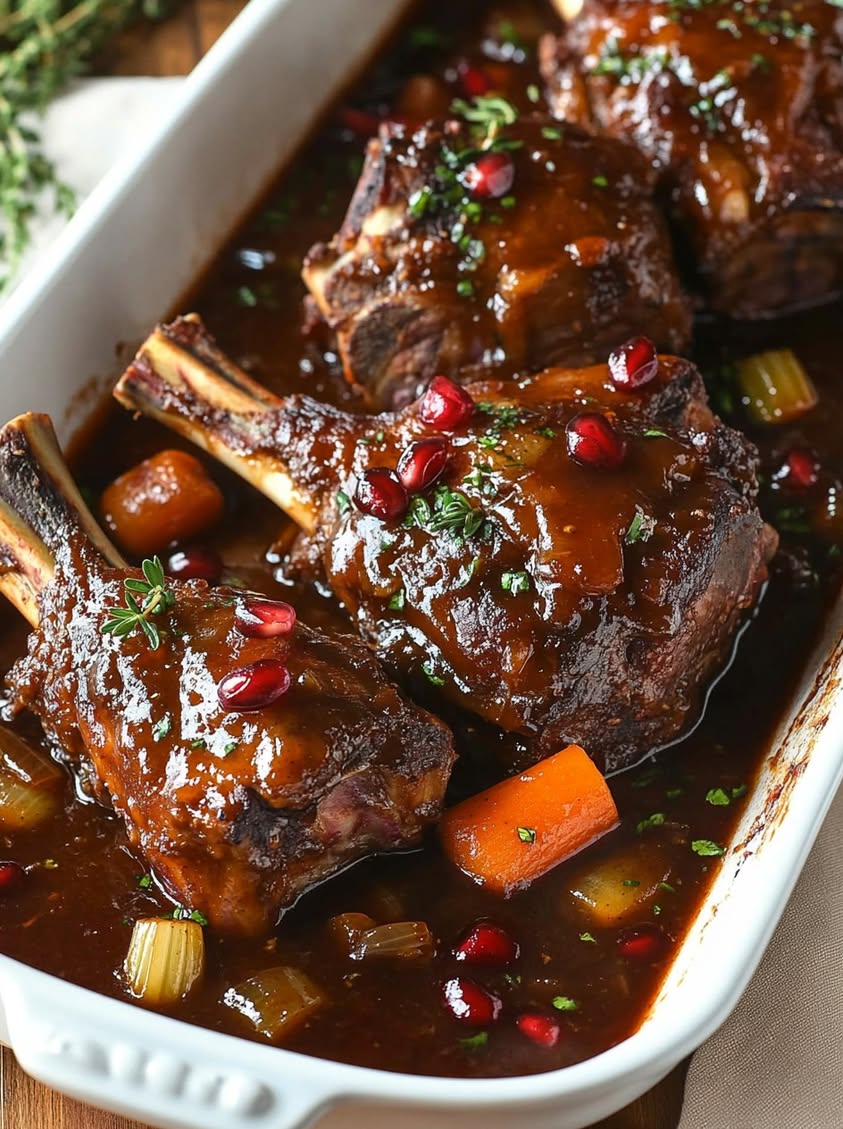
Fall-Apart Mediterranean Lamb Shanks Braised in Red Wine and Pomegranate Molasses: A Celebration of Deep, Complex Flavors
Imagine a dish that fills your home with the most incredible, mouthwatering aroma, a promise of a meal that is both rustic and deeply sophisticated. These Fall-Apart Mediterranean Lamb Shanks Braised in Red Wine and Pomegranate Molasses deliver exactly that experience. This recipe transforms a humble, tough cut of meat into the most tender, flavorful, and impressive centerpiece you can serve. The long, slow braise in a rich, tangy-sweet sauce creates a symphony of flavors that will have everyone at the table asking for seconds.
Furthermore, this dish is a true celebration of Mediterranean cooking principles. It uses simple, high-quality ingredients to build layers of flavor that are complex yet perfectly balanced. The rich, gamey flavor of the lamb shanks is beautifully complemented by the fruity acidity of the red wine and the sweet-tart punch of the pomegranate molasses. Ultimately, this recipe is about patience and reward. While it requires a few hours of mostly hands-off cooking, the result is a restaurant-quality meal that feels like a warm, comforting hug.
Quick Recipe Highlights
- Flavor Profile: This dish offers a masterful balance of deep, savory umami from the braised lamb, bright acidity from the red wine and tomatoes, and a unique sweet-tart finish from the pomegranate molasses. Herbs like rosemary and oregano provide a classic Mediterranean aromatic backbone.
- Texture: After hours of slow cooking, the lamb shanks achieve a legendary fall-off-the-bone tenderness. The connective tissue and collagen melt into the sauce, making it luxuriously thick and velvety, perfect for soaking up with crusty bread or creamy polenta.
- Aroma: As it cooks, your kitchen will be filled with the hearty scent of seared meat, the earthy fragrance of rosemary and garlic, and the sweet, tangy notes of reducing wine and pomegranate. It’s an aroma that builds incredible anticipation.
- Visual Appeal: The finished dish is a feast for the eyes. The lamb shanks are presented whole, glistening with a deep, glossy, mahogany-colored sauce. A final sprinkle of fresh pomegranate arils and herbs adds a vibrant pop of color and freshness.
- Skill Level Needed: This is an intermediate-friendly recipe. The techniques—searing, sautéing, and braising—are fundamental. Success relies more on patience and timing than on advanced chef skills, making it perfect for a confident home cook.
- Special Equipment: A large, heavy-bottomed Dutch oven or oven-safe pot with a tight-fitting lid is essential for even heat distribution and perfect braising. You will also need basic kitchen tools like tongs, a wooden spoon, and a fine-mesh strainer for the final sauce.
Recipe Overview
- Difficulty Level: We rate this recipe as medium. While the steps are straightforward, achieving the perfect sear on the lamb and properly building the braising liquid’s flavor requires some attention. Additionally, the long cook time demands planning, but the active hands-on work is minimal and manageable for most cooks.
- Category: This dish is the ultimate comfort food main course. It’s a hearty, protein-centric meal perfect for a special weekend dinner, a holiday gathering, or any occasion where you want to serve something truly memorable and satisfying.
- Cuisine: The recipe draws direct inspiration from the Eastern Mediterranean and Middle Eastern culinary traditions. Ingredients like pomegranate molasses, oregano, and the use of slow-braised lamb are hallmarks of the region’s cuisine, celebrated for its bold flavors and communal dining style.
- Cost: Lamb shanks are a moderately priced cut, especially when compared to premium chops or racks. The other ingredients—red wine, canned tomatoes, vegetables, and pantry staples—are affordable. This makes the dish an excellent way to create a luxurious-feeling meal without a luxury price tag.
- Season: This is an ideal cooler-weather dish. Its rich, warming qualities make it perfect for autumn and winter. However, it can be enjoyed year-round, especially for a festive indoor meal. The bright pomegranate notes also offer a lovely bridge into spring.
- Occasion: These braised lamb shanks are perfect for a relaxed yet impressive dinner party. They can be prepared almost entirely ahead of time, allowing you to enjoy your guests. They are also a fantastic choice for holiday meals like Easter, Christmas, or a cozy New Year’s Eve dinner.
Why You’ll Love This Recipe
First and foremost, the taste and texture are simply unforgettable. The lamb becomes so tender that it literally falls apart with the gentle nudge of a fork, offering a melt-in-your-mouth experience. Meanwhile, the sauce reduces into a complex, glossy glaze that clings to every morsel. Each bite delivers a journey from savory and rich to bright and tangy, creating a deeply satisfying flavor profile that is hard to replicate with quicker cooking methods.
Convenience is another major benefit, surprisingly. Once you complete the initial searing and sautéing steps, the oven does all the hard work. This hands-off time allows you to prepare side dishes, set the table, or simply relax. Moreover, the dish actually improves when made a day ahead, giving the flavors more time to meld. This make-ahead quality makes it a stress-free superstar for entertaining.
Nutritionally, this braised lamb dish offers several advantages. Lamb is an excellent source of high-quality protein, iron, zinc, and B vitamins. The slow cooking process also helps break down tough fibers, making the nutrients more bioavailable. Additionally, the sauce is packed with vegetables like onions, carrots, and garlic, which contribute vitamins and antioxidants. Using a whole, unprocessed cut of meat allows you to control exactly what goes into your meal.
For social gatherings, this recipe is a true crowd-pleaser. It presents dramatically, creating a “wow” moment when you bring the pot to the table. The act of sharing a large, communal dish like braised lamb shanks fosters a sense of warmth and connection. It encourages conversation and a leisurely dining pace, turning a simple meal into a memorable event that your friends and family will talk about for weeks.
Finally, it is remarkably cost-effective and accessible. Lamb shanks are an underutilized cut that offers incredible value. The braising method transforms this affordable meat into something extraordinarily special. Most ingredients are pantry staples or easy to find at any well-stocked grocery store. Even pomegranate molasses is now commonly available in the international aisle. Consequently, you can create a globally-inspired gourmet experience without needing a specialty shopping trip.
Historical Background and Cultural Significance
The tradition of braising tough cuts of meat like lamb shanks is ancient and spans countless cultures. In the Mediterranean and Middle East, where sheep herding has been central to life for millennia, every part of the animal was used. Slow-cooking methods in communal ovens or over low fires were developed to tenderize these tougher, working-muscle cuts, turning necessity into a celebrated culinary art form. This practice of “low and slow” cooking is a cornerstone of peasant cuisine worldwide, showcasing resourcefulness and deep flavor development.
Culturally, dishes centered around braised lamb hold significant importance. They are often featured at festive occasions, religious holidays, and family gatherings. In Greek culture, lamb is synonymous with Easter celebrations. Similarly, across the Levant, slow-cooked lamb dishes signify hospitality and abundance. Serving a whole shank to a guest is a gesture of generosity and respect. The communal nature of sharing a large pot of food is deeply embedded in the social fabric of these regions.
The recipe has evolved beautifully over time. Originally, it might have been cooked in a clay pot over embers with just water, onions, and local herbs. The introduction of ingredients like tomatoes and wine from the New World and other trade routes enriched the flavor profile. Pomegranate molasses, a reduction of pomegranate juice, is a classic Persian and Levantine ingredient that adds a signature sweet-sour note, representing a beautiful fusion of regional tastes within the broader Mediterranean sphere.
Regional variations are fascinating. In Italy, you might find lamb shanks braised with white wine, tomatoes, and olives (Osso Buco-style). In France, a *navarin d’agneau* features spring lamb with young vegetables. A Moroccan tagine might include dried fruits, almonds, and warm spices like cinnamon and cumin. The Greek version often highlights lemon and oregano. Our recipe with red wine and pomegranate molasses leans into the Eastern Mediterranean tradition, offering a perfect example of how local ingredients define a dish’s character while honoring the universal technique of braising.
Ingredient Deep Dive
Lamb Shanks are the star. This cut comes from the lower leg of the animal, a muscle that works hard, making it rich in connective tissue and collagen. During the long, moist braise, this collagen breaks down into gelatin, which is what creates the incredible, fall-apart tenderness and luxuriously thick sauce. Nutritionally, lamb is a powerhouse of heme iron (highly absorbable), zinc for immune function, and vitamin B12. Look for shanks that are well-trimmed of excess fat but still have a good layer around the meat. For the best flavor, choose grass-fed lamb if available.
Pomegranate Molasses is the secret weapon. This isn’t the sweet molasses you bake with; it’s a thick, syrupy reduction of pomegranate juice. It brings a compelling sweet-tart, almost fruity-sour flavor that cuts through the richness of the lamb. Historically, pomegranates are symbols of fertility and abundance in many Middle Eastern cultures. The molasses is rich in antioxidants from the pomegranate. If you can’t find it, a substitute can be made by reducing pure pomegranate juice with a little sugar and lemon juice, though the flavor won’t be as concentrated.
Dry Red Wine forms the acidic backbone of the braising liquid. It deglazes the pot, capturing all the flavorful browned bits (fond) from searing the lamb. As it cooks, the alcohol evaporates, leaving behind a deep, rounded fruitiness and complexity. Choose a wine you would enjoy drinking, like a Cabernet Sauvignon, Syrah, or Merlot. The wine’s tannins help tenderize the meat slightly and add structure to the sauce. For a non-alcoholic version, you can use a mix of rich beef broth and a tablespoon of red wine vinegar or extra pomegranate juice.
Aromatics like onion, carrot, garlic, rosemary, and oregano build the foundational flavor. The onion and carrot sweeten as they cook, balancing the acidity. Garlic provides its unmistakable pungent warmth. Rosemary and oregano are classic Mediterranean herbs that pair perfectly with lamb, offering piney, earthy notes. Using fresh herbs is ideal for garnish, but dried herbs work perfectly in the braise as their flavors withstand and infuse the long cooking process. Always sauté these until softened to unlock their full aromatic potential.
Common Mistakes to Avoid
- Skipping the Sear: Do not rush or skip browning the lamb shanks. This Maillard reaction creates hundreds of new flavor compounds and a beautiful brown crust that adds immense depth to the final dish. Pat the shanks very dry before searing to ensure a good crust, not a steam.
- Crowding the Pot: Searing the shanks in a single layer is crucial. If you crowd them, they will steam and release liquid, preventing proper browning. Cook them in batches if your pot isn’t large enough. This patience pays off in flavor.
- Using Boiling Liquid: When you add the wine and broth to the pot, ensure they are at least at room temperature, not cold straight from the fridge. Adding very cold liquid to a hot pot can shock the ingredients and slow the cooking process unnecessarily.
- Underseasoning: Season the lamb shanks generously with salt and pepper before searing. Season again as you build the sauce. Remember, you are seasoning a large volume of meat and liquid. Taste the sauce before serving and adjust seasoning if needed.
- Insufficient Braising Time: Do not try to shortcut the braising time. The lamb needs those full 2.5 to 3 hours at a low temperature for the connective tissues to fully break down. The meat should offer no resistance when pierced with a fork.
- Neglecting the Sauce Finish: After removing the lamb, always strain the braising liquid and skim the fat. Then, reduce it on the stovetop. This step concentrates the flavors and creates a luxurious, glossy sauce instead of a thin, watery broth.
- Overlooking Resting Time: Let the lamb shanks rest tented with foil for 10-15 minutes after braising and before serving. This allows the juices, which have been driven to the surface by heat, to redistribute throughout the meat, ensuring every bite is moist.
- Wrong Side Dishes: Serving this rich dish with a delicate side like a light salad can create imbalance. Choose starchy sides that can soak up the incredible sauce, such as creamy polenta, mashed potatoes, couscous, or crusty bread.
Essential Techniques
Browning/Searing: This is the non-negotiable first step for building flavor. Use high heat and a little oil in your heavy pot. Pat the lamb shanks completely dry with paper towels—this is the secret to a good sear, not a steam. Place them in the pot without crowding and let them develop a deep brown crust on all sides before turning. This process, called the Maillard reaction, creates complex, savory flavors that will infuse the entire braise.
Deglazing: After removing the seared meat, you’ll see browned bits stuck to the bottom of the pot. This “fond” is pure flavor gold. Pour in your red wine (or other liquid) and use a wooden spoon to scrape all those bits loose as the liquid simmers. This incorporates the caramelized flavors into your sauce base, ensuring no deliciousness is left behind.
Braising: This moist-heat cooking method is what transforms tough meat into tenderness. After searing and building your liquid, the covered pot goes into a low oven (around 325°F). The gentle, consistent heat slowly breaks down collagen into gelatin over several hours. The key is maintaining a bare simmer; you should see small bubbles occasionally break the surface. A violent boil will make the meat tough and dry.
Reducing/Sauce Finishing: Once the meat is tender, the braising liquid is often too thin. Straining it removes the spent vegetables and herbs, giving you a smooth base. Skimming the fat from the surface is important for a refined sauce. Then, simmering it uncovered on the stovetop allows water to evaporate, concentrating the flavors and thickening the liquid into a rich, coating sauce.
Pro Tips for Perfect Fall-Apart Mediterranean Lamb Shanks
For the deepest flavor, season your lamb shanks with salt and pepper up to 24 hours in advance and leave them uncovered on a rack in the fridge. This dry-brine helps season the meat throughout and dries the surface for an even better sear.
Use kitchen twine to tie the rosemary and thyme sprigs together with a bay leaf. This creates a classic “bouquet garni” that is easy to remove from the pot before serving, leaving no stray herb stems behind.
After straining the braising liquid, let it sit for a minute so the fat rises to the top. Then, use a ladle or a fat separator to skim off the excess fat. This results in a cleaner, more refined sauce that isn’t greasy.
If your sauce isn’t thickening to a glaze-like consistency after reducing, make a simple slurry by mixing a teaspoon of cornstarch with a tablespoon of cold water. Whisk this into the simmering sauce until it thickens.
For a stunning presentation, serve each lamb shank atop a bed of creamy polenta or mashed potatoes. Spoon the glossy sauce over the top and garnish generously with fresh pomegranate arils and chopped mint or parsley for a burst of color and freshness.
Always taste your sauce for balance before serving. If it tastes too sharp or acidic, a tiny pinch of sugar can round it out. If it’s too sweet, a splash of red wine vinegar can bring back brightness.
Leftover braised lamb meat, pulled from the bone, is incredible. Use it to fill savory hand pies, top a gourmet pizza, or mix into a pasta sauce for a luxurious next-day meal.
Variations and Adaptations
For regional twists, try a Greek version by omitting the pomegranate molasses and adding the zest and juice of a lemon in the last 30 minutes of cooking. A Moroccan-inspired tagine variation would include adding a cinnamon stick, a pinch of saffron, and some dried apricots or dates to the braise, serving it over couscous with toasted almonds.
Seasonal adaptations are easy. In spring, add fresh artichoke hearts and peas during the last 30 minutes of braising. For a heartier winter meal, add chunks of parsnip or turnip along with the carrots. You can also use a full-bodied winter ale instead of red wine for a different depth of flavor.
Dietary modifications are straightforward. For a gluten-free meal, ensure your broth is certified GF and serve with polenta or rice. To make it dairy-free, simply avoid using butter (use all oil) and serve with dairy-free sides. The recipe is naturally dairy-free as written.
Flavor variations can personalize the dish. Add a tablespoon of tomato paste when sautéing the vegetables for a richer tomato base. For a spicy kick, include a teaspoon of smoked paprika or a pinch of red pepper flakes. A tablespoon of Dijon mustard whisked into the finishing sauce adds a lovely sharp complexity.
For texture, you can leave the vegetables in the sauce instead of straining them for a more rustic, chunky texture. Alternatively, after straining, you can blend the cooked vegetables with a bit of the braising liquid to create a thick vegetable puree to mix back into the sauce.
Presentation alternatives include pulling all the meat from the bones after cooking and shredding it. Mix the meat with the reduced sauce and serve it in a bowl as a luxurious ragu over pasta or creamy grits for a deconstructed, elegant take.
Serving and Presentation Guide
Plating is key for visual impact. Place a generous mound of your chosen starch—creamy polenta, mashed potatoes, or couscous—in the center of a wide, shallow bowl. Carefully place one lamb shank upright, leaning against the starch, so its impressive shape is visible. This creates height and drama on the plate.
Garnishing adds the final touch of freshness and color. A generous sprinkle of vibrant red pomegranate arils is non-negotiable for color and a burst of juicy crunch. Follow this with a scattering of finely chopped fresh herbs like mint, parsley, or cilantro. A final drizzle of extra pomegranate molasses around the plate adds a professional chef’s touch.
Traditional accompaniments are simple and starch-focused to soak up the sauce. Creamy polenta, buttery mashed potatoes, or fluffy couscous are classic. A side of warm, crusty bread is also essential for mopping up every last drop. A simple, crisp salad with a lemony vinaigrette helps cut the richness of the main dish.
For a modern family-style presentation, bring the entire Dutch oven to the table. Place it on a trivet and let guests serve themselves. This creates a warm, communal atmosphere. Provide a small bowl of the fresh garnishes (pomegranate arils, herbs) on the side for everyone to add as they like.
Temperature is critical. Serve the lamb shanks and sauce piping hot. Warm your serving plates or bowls beforehand to keep the food hot longer at the table. The starch should also be hot when you plate it to ensure the perfect eating temperature from the first bite to the last.
Portion control is simple: one lamb shank per person is a standard and satisfying serving. They are substantial. If your shanks are particularly large, one can sometimes serve two people, especially if you are offering multiple hearty side dishes. Simply pull the meat from the bone and divide it.
Wine and Beverage Pairing
Wine pairing for these rich lamb shanks is a delight. You want a wine with enough structure and body to stand up to the bold flavors. A classic Syrah/Shiraz, with its peppery, dark fruit notes, is a perfect match. A Cabernet Sauvignon offers structured tannins that complement the meat’s richness. Alternatively, a Grenache-based blend from the Southern Rhône or Spain provides ripe fruit that harmonizes with the pomegranate sweetness.
For non-alcoholic alternatives, consider a tart pomegranate juice spritzer mixed with sparkling water and a squeeze of lime. A rich, savory tomato-based beverage or a lightly sweetened mint iced tea also pairs beautifully. The goal is to have a drink that can cleanse the palate between bites of the rich, flavorful lamb.
While not traditional, a strong, black coffee after the meal can be a wonderful pairing, especially if the dinner extends late into the evening. The bitterness of the coffee contrasts with the residual sweetness of the sauce. A pot of mint tea, served hot, is a very authentic Mediterranean way to finish the meal and aid digestion.
Serve red wine at a cool room temperature, around 60-65°F. This allows the wine’s aromas and flavors to express themselves fully without being muted by warmth. If you’ve stored your wine in a warm place, chill it in the fridge for about 20 minutes before serving.
When serving, pour wine into large-bowled glasses. This gives the wine space to breathe, releasing its complex aromas which will then mingle with the fragrant aromas of the dish itself, enhancing the overall dining experience.
Storage and Shelf Life
For storage, let the lamb and sauce cool completely to room temperature before transferring to airtight containers. You can store the meat and sauce together or separately. Properly stored, they will last in the refrigerator for 3 to 4 days. The flavors often improve on the second day as they continue to meld.
Freezing is an excellent option for longer storage. Place cooled portions in freezer-safe containers or heavy-duty zip-top bags, removing as much air as possible. The braised lamb and sauce can be frozen for up to 3 months. Thaw overnight in the refrigerator before reheating.
Signs of spoilage include an off or sour smell, a significant change in the color of the meat or sauce, or the presence of mold. If the sauce develops a frothy or bubbly texture, it is a sign of fermentation and should be discarded. Always reheat leftovers to a minimum internal temperature of 165°F.
Reheating instructions are simple for best results. Gently reheat the lamb and sauce together in a covered saucepan over low heat on the stovetop, stirring occasionally. You can add a small splash of water or broth if the sauce seems too thick. Alternatively, reheat in a covered dish in a 300°F oven until warmed through. Avoid the microwave, as it can make the meat rubbery.
Make Ahead Strategies
This dish is a make-ahead dream. You can complete the entire recipe—searing, braising, and saucing—up to two days in advance. In fact, many chefs argue it tastes better the next day. After cooking, let it cool, then store the lamb shanks submerged in their sauce in the refrigerator. The fat will solidify on top, making it easy to remove before reheating, resulting in a cleaner sauce.
For a prep timeline, you can chop all your vegetables and measure your herbs and spices the day before. Store them separately in containers in the fridge. You can also season the lamb shanks a day ahead for dry-brining benefits. This makes the actual day-of cooking much faster and more relaxed.
When making ahead, store the cooked lamb shanks fully submerged in their sauce in an airtight container. This prevents the meat from drying out. If you plan to freeze, do so at this stage. The quality impact of making ahead is positive, as flavors have more time to develop and marry together.
For reheating, take the container out of the fridge at least 30 minutes before to take the chill off. Reheat gently in a covered Dutch oven in a 300°F oven for 45-60 minutes, or until heated through. You can also reheat on the stovetop over low heat. The goal is to warm it gently without further cooking the meat.
Always add fresh elements after reheating. Garnish with the pomegranate arils and fresh herbs just before serving. This ensures they retain their vibrant color, crisp texture, and fresh flavor, providing the perfect contrast to the deep, slow-cooked braise.
Scaling Instructions
Halving the recipe is straightforward for a smaller meal. Use two lamb shanks and halve all other ingredients precisely. Use a medium-sized Dutch oven. The cooking time may be slightly reduced by 15-30 minutes, so start checking for tenderness around the 2-hour mark. The sauce reduction time will also be shorter.
Doubling or tripling for a crowd is very feasible. You will need a very large Dutch oven or a heavy roasting pan that can be covered tightly with foil. Brown the shanks in batches to avoid crowding. You may need to increase the initial braising time by 30-45 minutes to ensure all shanks become perfectly tender. The sauce reduction step will take longer due to the larger volume of liquid.
Equipment adjustments are necessary when scaling. For a double batch, ensure your pot is large enough to hold all shanks in a single layer if possible. If using a roasting pan, ensure it is oven-safe and that you have heavy-duty foil to create a tight seal, mimicking a lid. A wider pan may lead to more evaporation, so you might need slightly more braising liquid.
Timing modifications are minimal when scaling up. The active prep time will increase due to batching the searing of the meat. However, the oven braising time will remain roughly the same (2.5-3 hours) as long as the shanks are in a single layer. If stacked, you must add time and rotate them halfway through cooking.
Storage considerations for larger batches are important. You will have more leftovers. Divide them into meal-sized portions before refrigerating or freezing for easier use later. Label containers with the date to keep track of freshness.
Nutritional Deep Dive
This dish provides a robust macro breakdown. A serving is high in quality protein from the lamb, essential for muscle repair and satiety. The sauce and vegetables contribute complex carbohydrates and a small amount of natural sugar from the pomegranate molasses and carrots. The fat content comes primarily from the lamb, which includes both saturated and monounsaturated fats. Much of the visible fat can be skimmed off the sauce after cooking, allowing you to control the final fat content.
The micronutrient profile is impressive. Lamb is an exceptional source of heme iron, which is highly absorbable and crucial for preventing anemia. It’s also rich in zinc, which supports immune function, and vitamin B12, vital for nerve health and energy production. The vegetables and pomegranate contribute antioxidants like vitamin C and various polyphenols, which combat oxidative stress in the body.
Health benefits extend beyond basic nutrition. The slow-cooking process makes the protein and nutrients in the lamb more digestible. The collagen and gelatin released into the sauce are beneficial for joint and gut health. The herbs and garlic have anti-inflammatory properties. This is a nutrient-dense meal that provides sustained energy.
For dietary considerations, the recipe is naturally gluten-free and dairy-free as written. It is not suitable for vegetarians or vegans. For those on low-carb or keto diets, this can be a good fit if served with a non-starchy vegetable like cauliflower mash instead of polenta or potatoes, and by being mindful of the small amount of sugar in the pomegranate molasses.
Portion analysis shows one lamb shank is a substantial serving of protein. Pairing it with a moderate portion of a whole-grain or vegetable-based starch and a large side salad creates a balanced plate. The sauce, while flavorful, should be used as an accent rather than a soup to manage sodium and calorie intake.
For weight management, focus on the high protein and fiber (from vegetables) content, which promotes fullness. Control portion sizes of added starches. Skim all visible fat from the sauce before serving to reduce calorie density without sacrificing flavor. This allows you to enjoy a rich, satisfying meal that aligns with health goals.
Dietary Adaptations
Gluten-Free: This recipe is naturally gluten-free. Simply ensure that the beef or chicken broth you use is certified gluten-free, as some brands may contain gluten-based additives or be processed in facilities with wheat.
Dairy-Free: The recipe contains no dairy as written. Use olive oil for searing instead of butter to keep it fully dairy-free. Serve with dairy-free sides like polenta made with water or olive oil, or mashed potatoes made with olive oil and broth.
Vegan/Vegetarian: A direct substitute is challenging due to the central role of lamb. However, you can apply the braising technique and flavor profile to hearty vegetables. Try braising whole portobello mushroom caps or large chunks of seared cauliflower “steaks” in the same red wine and pomegranate molasses sauce with vegetable broth.
Low-Carb/Keto: This works well. Serve the lamb shank with its sauce over a bed of cauliflower mash or roasted low-carb vegetables like zucchini and bell peppers. Be mindful of the pomegranate molasses, as it contains sugar. You can use a smaller amount or seek a sugar-free pomegranate syrup substitute.
Paleo: The recipe is Paleo-friendly if you use a sugar-free pomegranate molasses (check labels) or make your own by reducing pure pomegranate juice without added sugar. Ensure your broth is compliant (no soy or legumes). Serve with mashed cauliflower or roasted root vegetables like sweet potatoes.
Low-FODMAP: Onions and garlic are high in FODMAPs. Substitute the onion with the green tops of spring onions (scallions). Use garlic-infused olive oil for flavor instead of whole garlic cloves (the fructans are not oil-soluble). Ensure the pomegranate molasses does not contain high-fructose corn syrup.
Troubleshooting Guide
If the meat is tough, it hasn’t braised long enough. Return it to the oven and continue cooking, checking every 20-30 minutes. Toughness means the collagen hasn’t fully converted to gelatin. Ensure your oven temperature is correct and that the liquid is at a very gentle simmer, not a boil.
If the sauce is too thin, you haven’t reduced it enough. After removing the meat, strain the liquid into a saucepan and simmer it vigorously, uncovered, until it reduces by about one-third or coats the back of a spoon. For a quick fix, a cornstarch slurry (1 tsp cornstarch + 1 tbsp cold water) whisked in will thicken it.
If the sauce is too salty, dilution is the first step. Add a bit of water or unsalted broth. If it’s still too salty, adding a peeled, raw potato to the simmering sauce for 15-20 minutes can help absorb some salt. Remove the potato before serving. A small squeeze of lemon juice can also help balance the flavor.
If the sauce lacks depth, you may have rushed the initial browning or skipped deglazing. While you can’t go back, you can boost flavor by stirring in a teaspoon of tomato paste or a splash of Worcestershire sauce during the reduction phase. A pinch of sugar can also help balance and round out flat flavors.
If you don’t have pomegranate molasses, make a quick substitute by combining 1/4 cup pomegranate juice, 1 tablespoon lemon juice, and 1 teaspoon sugar or honey in a small saucepan. Simmer until reduced by half and syrupy. This won’t be identical but will provide the necessary sweet-tart note.
If the meat is dry, it was likely overcooked or cooked at too high a temperature. While braising is forgiving, extremely prolonged cooking can eventually dry out meat. Unfortunately, this is hard to fix. Serving it with plenty of the rich sauce can help mask dryness. Next time, check for tenderness earlier.
Recipe Success Stories
Community feedback on this recipe has been overwhelmingly positive. Many home cooks report that it has become their “special occasion go-to” dish, impressing in-laws and holiday guests alike. A common theme is the surprise at how achievable such a restaurant-quality meal is at home. Several readers have mentioned that the aroma alone is worth the effort, creating an unforgettable atmosphere in their kitchens.
Variation successes are fun to hear about. One cook added dried figs and a cinnamon stick for a Persian twist and raved about the results. Another used a dark beer instead of red wine for a deeper, maltier flavor profile that was perfect for a fall gathering. A family with young children tried pulling the meat from the bone and serving it over pasta, which was a huge hit with the kids.
Adaptation stories for dietary needs are inspiring. A reader following a gluten-free diet was thrilled to find such a flavorful centerpiece that required no modification. Another, cooking for a dairy-free guest, appreciated that the recipe was naturally safe and still felt indulgent. These stories highlight the recipe’s versatility and inclusivity.
Reader suggestions have been incorporated into our tips. One savvy cook suggested searing the shanks the night before to save time on the day of a party. Another recommended using a fat separator for the sauce for a truly professional, grease-free finish. The recommendation to serve with cauliflower mash for a low-carb option came directly from our community.
Photography tips from{“success”:true,”message”:”Recipe created successfully”,”post_id”:8291,”tasty_recipe_id”:8291,”shortcode”:” Print
Fall-Apart Mediterranean Lamb Shanks Braised in Red Wine and Pomegranate Molasses
Description
Tender lamb shanks slow-braised in a rich Mediterranean-inspired sauce of red wine, pomegranate molasses, and aromatic herbs until they fall off the bone.
Ingredients
For the Crust:
- 4 lamb shanks (about 1 lb each)
- 2 tbsp olive oil
- 1 large onion, chopped
- 4 cloves garlic, minced
- 1 cup dry red wine
- 1/2 cup pomegranate molasses
- 2 cups beef or lamb broth
- 1 can (14 oz) crushed tomatoes
- 2 sprigs fresh rosemary
- 3 sprigs fresh thyme
- 1 tsp ground cumin
- Salt and black pepper to taste
- Fresh parsley, chopped (for garnish)
Instructions
1. Prepare the Crust:
- Preheat oven to 325°F (165°C). Season lamb shanks generously with salt and pepper.
- Heat olive oil in a large Dutch oven over medium-high heat. Sear lamb shanks on all sides until browned, about 3-4 minutes per side. Remove and set aside.
- In the same pot, add onion and garlic. Sauté until softened, about 5 minutes. Pour in red wine to deglaze, scraping up browned bits.
- Stir in pomegranate molasses, broth, crushed tomatoes, rosemary, thyme, and cumin. Bring to a simmer.
- Return lamb shanks to the pot, submerging them in the liquid. Cover and transfer to the preheated oven. Braise for 2.5 to 3 hours, until meat is tender and falling off the bone.
- Remove from oven. Skim off excess fat if desired. Garnish with fresh parsley before serving.
Notes
You can customize the seasonings to taste.

I’m Billy, a classically trained culinary school graduate from The Culinary Institute of America with over 12 years in the restaurant industry and over 19 years of cooking experience.