
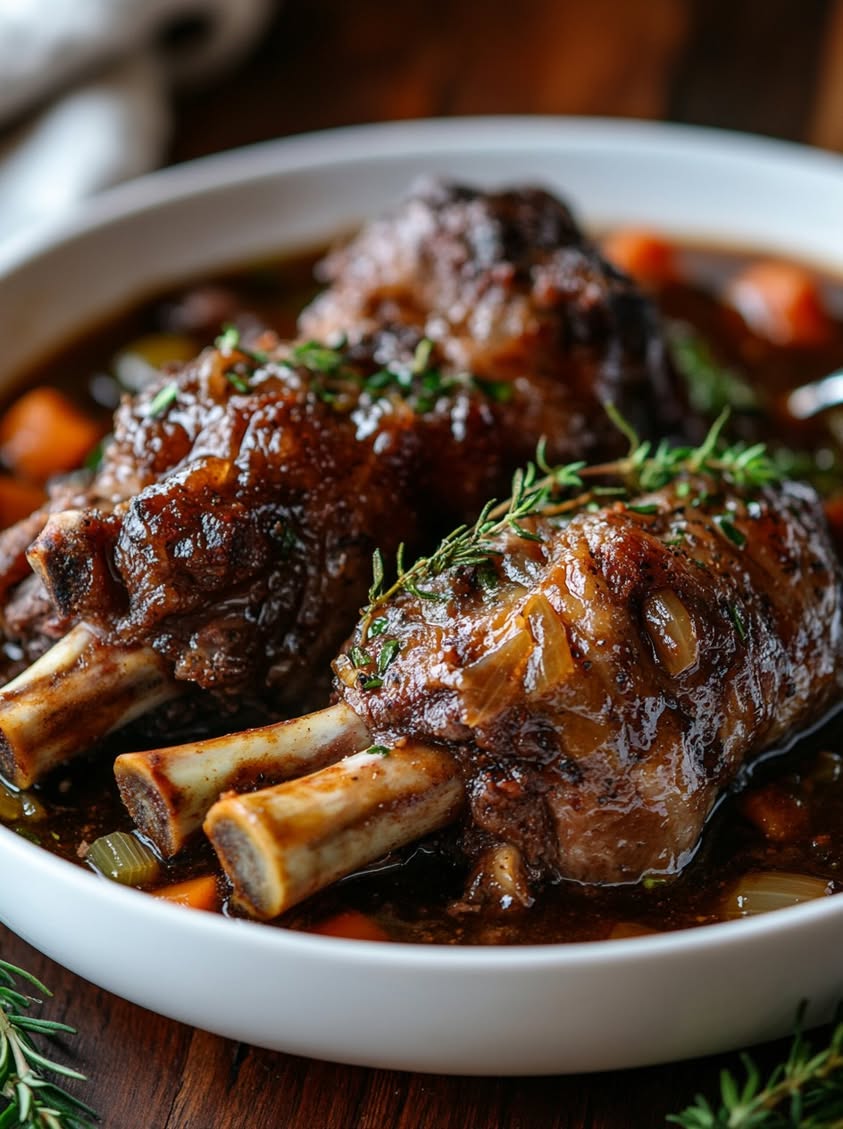
Fall-Apart Lamb Shanks in Red Wine Gravy: A Slow Cooker Masterpiece
Imagine walking into a home filled with the deep, savory aroma of herbs, red wine, and slow-cooked meat. This experience is exactly what you create with these fall-apart lamb shanks in rich red wine gravy. Furthermore, this dish transforms a humble cut of meat into a luxurious, restaurant-quality meal with minimal hands-on effort. Essentially, the slow cooker does all the heavy lifting, gently breaking down the connective tissue in the lamb shanks until the meat literally falls off the bone. Consequently, you achieve a result that feels both rustic and incredibly elegant.
This recipe for fall-apart lamb shanks in red wine gravy celebrates the magic of low and slow cooking. The process begins with a quick sear to build a flavorful crust, then the shanks braise for hours in a bath of robust red wine, aromatic vegetables, and fresh herbs. Ultimately, the long cooking time allows the flavors to marry and intensify, creating a gravy so rich and complex it will have everyone asking for seconds. Moreover, this dish is perfect for both a cozy family dinner and an impressive dinner party centerpiece.
Ultimately, the beauty of these fall-apart lamb shanks lies in their simplicity and depth. You use a handful of quality ingredients and let time work its culinary magic. The final product features tender, succulent meat that pulls away with just a fork, bathed in a glossy, deeply flavored gravy. Therefore, whether you are a seasoned home cook or a beginner looking for a foolproof showstopper, this slow-cooked masterpiece is sure to become a cherished recipe in your collection.
Quick Recipe Highlights
- Flavor Profile: These fall-apart lamb shanks boast a deeply savory and umami-rich taste, perfectly balanced by the fruity acidity of the red wine and the earthy sweetness of carrots and onions. Additionally, aromatic herbs like rosemary and thyme add a fragrant, woodsy note that cuts through the richness.
- Texture: The slow cooking process renders the lamb shanks incredibly tender, resulting in meat that is moist and literally falls apart at the touch of a fork. Meanwhile, the gravy thickens to a luxurious, velvety consistency that coats each strand of meat beautifully.
- Aroma: As the dish cooks, your kitchen will fill with an intoxicating scent of simmering red wine, caramelized meat, roasted garlic, and fresh herbs. This aromatic promise builds anticipation for the incredible meal to come.
- Visual Appeal: Served on a platter, the lamb shanks make a dramatic presentation with their rich, dark brown exterior glistening with glossy gravy. Traditionally, you garnish with a sprinkle of fresh chopped parsley for a vibrant pop of color against the deep sauce.
- Skill Level Needed: While this recipe yields impressive results, it requires only intermediate skills. The key techniques are proper searing and patient braising, both of which are straightforward to master with a little guidance.
- Special Equipment: A 6-quart or larger slow cooker is essential for this hands-off braise. Additionally, a large skillet for searing and a fine-mesh sieve or fat separator for finishing the gravy are highly recommended tools.
Recipe Overview
- Difficulty Level: We rate this recipe as medium difficulty. The initial steps of searing and sautéing require some attention to develop flavor foundations. However, the long braising phase in the slow cooker is entirely hands-off, making the overall process very manageable for most home cooks.
- Category: This dish falls squarely into the category of hearty main courses and comfort food classics. It is a perfect centerpiece for a special dinner and works wonderfully for meal prep, as the flavors often improve after a day or two.
- Cuisine: While braised lamb shanks appear in many culinary traditions, this recipe draws heavily from French and Mediterranean influences. The use of red wine, mirepoix (onions, carrots, celery), and bouquet garni (herb bundle) are classic French braising techniques that create a universally beloved profile.
- Cost: Lamb shanks are a relatively affordable cut, especially when compared to premium lamb chops or rack of lamb. This recipe is cost-effective because it transforms an economical cut into a luxurious meal. The other ingredients, like root vegetables and a modest bottle of red wine, are pantry staples.
- Season: This is the ultimate cold-weather dish, ideal for autumn and winter. The rich, warming qualities of the braised meat and gravy provide comfort on chilly evenings. That said, its elegance makes it suitable for holiday feasts like Easter or Christmas any time of year.
- Occasion: These fall-apart lamb shanks are perfect for Sunday family dinners, date nights at home, and festive holiday gatherings. The make-ahead nature and slow cooker convenience also make them excellent for entertaining, as you can socialize with guests instead of being stuck in the kitchen.
Why You’ll Love This Recipe
First and foremost, the taste and texture of these fall-apart lamb shanks are utterly irresistible. Each bite delivers a symphony of flavors: the deep savoriness of the meat, the subtle sweetness from the carrots and tomato paste, and the bright, herbal notes from rosemary and thyme. The texture is the true star, however. After hours of gentle braising, the collagen in the shanks melts into gelatin, creating meat so tender it requires no knife. The resulting rich red wine gravy is so good you will want to spoon it over everything on your plate.
From a convenience standpoint, this recipe is a game-changer. After the initial twenty-five minutes of prep and searing, the slow cooker takes over for the next eight hours. This means you can set it in the morning and come home to a dinner that tastes like you spent all day laboring in the kitchen. The hands-off approach frees you to tackle other tasks, run errands, or simply relax. Moreover, the dish holds beautifully on the “warm” setting, making it incredibly forgiving if dinner time gets delayed.
Nutritionally, lamb shanks offer a fantastic source of high-quality protein, iron, zinc, and B vitamins. The slow cooking method also helps break down the meat, making these nutrients more bioavailable. While the dish is rich, you can easily control the fat content by skimming the gravy after cooking. Serving the shanks with a side of creamy mashed potatoes or roasted vegetables turns this into a balanced, satisfying meal that fuels your body as well as delights your senses.
For social and entertaining value, few dishes are as impressive yet stress-free. Presenting a platter of these majestic lamb shanks instantly elevates any meal into a special occasion. Guests will be wowed by the presentation and complex flavors, never guessing how simple the process truly was. The recipe scales easily for a crowd, and since it tastes even better the next day, you can do all the cooking in advance. This allows you to be a present and relaxed host, which is the ultimate goal of any dinner party.
Finally, this recipe is remarkably cost-effective and accessible. Lamb shanks are an underutilized cut that butchers often price very reasonably. You do not need an expensive bottle of wine for the braising liquid; a decent, drinkable dry red wine works perfectly. The remaining ingredients are basic vegetables and pantry herbs. Consequently, you can create a stunning, restaurant-worthy meal without the restaurant price tag, making gourmet cooking accessible for any home chef on a budget.
Historical Background and Cultural Significance
The tradition of braising tough cuts of meat like lamb shanks is ancient and spans countless cultures. Essentially, this cooking method was born out of necessity, as it transformed less desirable, sinewy cuts into tender, flavorful meals. In many pastoral societies, lamb and mutton were staple proteins, and every part of the animal was utilized. The shank, being a well-exercised muscle, required long, moist cooking to become palatable. Therefore, cultures from the Mediterranean to the Middle East developed their own versions of braised lamb, often using local wines, spices, and herbs.
In Mediterranean cuisine, particularly in France, Italy, and Greece, braised lamb shanks hold significant cultural importance. For instance, in French cooking, “Souris d’Agneau” (literally “lamb’s mouse,” named for the shape of the shank) is a classic bistro dish, often braised with red wine and herbs de Provence. Similarly, in Italian cuisine, “Stinco di Agnello” is a celebratory dish, sometimes prepared for Easter. These dishes symbolize resourcefulness and the ability to create extraordinary food from humble beginnings, a cornerstone of peasant cooking that evolved into haute cuisine.
The evolution of the recipe closely follows the history of cooking technology and ingredient availability. Originally, braising would have occurred in a heavy pot over an open fire or in a wood-fired oven. The invention of the cast-iron Dutch oven and, more recently, the electric slow cooker, democratized this technique for home cooks. The core principle remains unchanged: sear the meat, add liquid and aromatics, and cook low and slow. However, the modern adaptation allows for unprecedented convenience and consistency, bringing this historic dish into today’s busy kitchens.
Regional variations of braised lamb shanks are fascinating. In Greece, you might find shanks braised with tomatoes, oregano, and lemon. Moroccan tagines feature lamb shanks with dried fruits, warm spices like cinnamon and cumin, and olives. An Italian version could include rosemary, garlic, and white wine. Our recipe for fall-apart lamb shanks in rich red wine gravy leans into the French tradition, utilizing a full-bodied red wine, a standard mirepoix, and a classic bouquet garni. This version highlights the pure, deep flavors of the lamb and wine, creating a universally appealing dish that honors its rustic roots.
Ingredient Deep Dive
Lamb Shanks: Lamb shanks come from the lower leg of the animal, a muscle-rich area that becomes incredibly tender when braised. Nutritionally, they are an excellent source of complete protein, iron (crucial for oxygen transport), zinc (for immune function), and B vitamins like B12. When selecting shanks, look for ones that are a rosy pink color with white, firm fat. Ideally, choose shanks of similar size for even cooking. You can store them in the coldest part of your refrigerator for up to two days before use, or freeze them for several months. For substitutions, beef shanks or short ribs would follow a similar cooking process.
Dry Red Wine: The red wine in this braise is not just for flavor; its acidity helps tenderize the meat and balance the richness. Culturally, wine has been used in European cooking for centuries, both as a preservative and a flavor enhancer. Choose a dry, full-bodied wine like Cabernet Sauvignon, Merlot, or Syrah that you would enjoy drinking. The alcohol cooks off, leaving behind concentrated fruit flavors and complexity. Do not use “cooking wine” from the supermarket, as it contains added salt and preservatives. If you prefer not to cook with alcohol, you can substitute with a mixture of beef broth and a tablespoon of red wine vinegar or pomegranate juice for acidity.
Mirepoix (Onion, Carrots, Celery): This classic French aromatic vegetable base is the foundation of flavor for countless soups, stews, and braises. The onions provide sweetness and depth, the carrots add a subtle earthy sugar, and the celery contributes a slight bitterness and aromatic quality. Together, they create a harmonious flavor backdrop. Nutritionally, they add vitamins, fiber, and antioxidants. Select fresh, firm vegetables. There’s no need for perfect dicing, as they will soften completely during the long cook. You can store chopped mirepoix in an airtight container in the fridge for a day to speed up prep. A common substitution is using leeks or shallots for the onion for a milder flavor.
Tomato Paste: A small amount of tomato paste works wonders in this recipe. It provides a concentrated hit of umami and sweetness, and its natural sugars help with the caramelization (fond) in the pan after searing the lamb. This fond is the key to a deeply flavored gravy. From a nutritional standpoint, tomato paste is rich in lycopene, an antioxidant. Look for tomato paste in a tube so you can use a small amount and store the rest easily, avoiding waste from canned paste. If you don’t have tomato paste, you can omit it, but you may want to add a teaspoon of soy sauce or Worcestershire sauce to boost the savory depth.
Fresh Herbs (Rosemary & Thyme): Using fresh herbs is non-negotiable for the best flavor in these fall-apart lamb shanks. Rosemary offers a potent, pine-like fragrance that pairs perfectly with lamb, while thyme provides a more subtle, earthy note. Historically, these Mediterranean herbs have been used for both culinary and medicinal purposes for millennia. They contain beneficial antioxidants and oils. For the best flavor, add them as a whole sprig bundle (bouquet garni) that you can easily remove before serving. If you must use dried herbs, use only one-third the amount, as they are more concentrated. Store fresh herbs wrapped in a damp paper towel in your refrigerator’s crisper drawer.
Common Mistakes to Avoid
- Skipping the Sear: Do not rush or skip searing the lamb shanks. This step creates the Maillard reaction, which develops hundreds of complex flavor compounds and a beautiful brown crust. If you skip it, your gravy will lack depth and the meat will look pale and unappetizing.
- Using the Wrong Wine: Avoid using sweet or fruity wines like White Zinfandel or overly oaky, expensive bottles. A dry, robust red wine is essential. Also, never use “cooking wine” from the grocery store, as it is laden with salt and additives that will ruin the balance of your dish.
- Overcrowding the Pan: When searing the shanks, give them plenty of space in the skillet. Overcrowding causes the meat to steam instead of sear, preventing proper browning and fond development. Sear in batches if necessary to ensure each shank gets a perfect crust.
- Insufficient Seasoning: Lamb shanks are a large cut, so they need generous seasoning. Be sure to salt and pepper the meat thoroughly on all sides before searing. Underseasoning at this stage will result in bland meat, as seasoning later cannot penetrate deeply.
- Adding Cold Liquid to Hot Pan: After deglazing the pan with wine, always let it reduce slightly and scrape up all the browned bits. Then, ensure your broth is warm or at least room temperature before adding it to the slow cooker. Adding cold liquid can shock the ingredients and affect cooking time.
- Lifting the Lid: Resist the temptation to open the slow cooker lid during the long braise. Every time you lift the lid, you release a significant amount of heat and steam, which can extend the cooking time by up to 30 minutes each time. Trust the process.
- Not Skimming the Fat: After cooking, the braising liquid will have rendered fat from the lamb. If you skip skimming this fat, your rich red wine gravy will be greasy instead of silky. Use a fat separator, a spoon, or carefully blot the surface with a paper towel.
- Thickening the Gravy Incorrectly: If your gravy needs thickening after reducing, make a slurry with equal parts cornstarch and cold water. Whisk it in gradually and let it simmer. Do not add cornstarch directly to the hot liquid, as it will clump immediately.
Essential Techniques
Proper Searing: Searing is the most critical technique for building flavor in your fall-apart lamb shanks. Pat the shanks completely dry with paper towels; moisture is the enemy of browning. Heat your oil until it shimmers in the pan. Then, place the shanks in and do not move them for a good 3-4 minutes. This allows a proper crust to form. You know it’s ready to flip when the meat releases easily from the pan. A perfect sear gives you a dark brown, caramelized surface and leaves those coveted browned bits (fond) in the pan for the gravy.
Deglazing: Deglazing is the process of using a liquid (here, red wine) to dissolve the fond—the flavorful browned bits stuck to the bottom of the pan after searing. After removing the shanks, pour in your wine and use a wooden spoon to vigorously scrape the pan bottom. As the wine simmers, it will loosen all those bits, incorporating their deep, savory flavor into the liquid. This step is what transforms simple pan drippings into the foundation of your rich red wine gravy. Ensure you reduce the wine by about half to concentrate its flavor and cook off the raw alcohol taste.
Low and Slow Braising: Braising is a two-step cooking method: first searing, then simmering in liquid. The “low and slow” principle is vital for tough cuts like lamb shanks. The gentle, prolonged heat (around 200-250°F in a slow cooker) slowly melts the tough collagen into soft, unctuous gelatin. This process keeps the meat incredibly moist while transforming its texture to fall-apart tenderness. The key is maintaining a bare simmer, not a rolling boil. In a slow cooker, the “Low” setting is perfect for this 8-hour journey, ensuring the meat cooks evenly without becoming dry or stringy.
Reducing and Finishing the Sauce: After braising, the cooking liquid will be flavorful but thin. Reducing it concentrates the flavors and thickens it to a gravy consistency. Transfer the liquid to a saucepan and simmer vigorously. As water evaporates, the sauce will become richer and glossier. Skim off any excess fat during this process. For a velvety finish, you can whisk in a small pat of cold butter at the very end off the heat. This technique, called “monter au beurre,” gives the gravy a beautiful sheen and a luscious mouthfeel that perfectly coats the tender lamb.
Pro Tips for Perfect Fall-Apart Lamb Shanks
For the ultimate crust, let the salted lamb shanks sit uncovered on a rack in the refrigerator for an hour before searing. This dries the surface even further, guaranteeing a superior sear.
Use kitchen twine to tie the rosemary and thyme sprigs together with a bay leaf. This creates an easy-to-remove bouquet garni, infusing flavor without leaving stray herb stems in your gravy.
If you have time, sear the shanks and prepare the braising liquid the night before. Store everything separately in the fridge, then simply combine and start the slow cooker in the morning for an even deeper flavor development.
Place the chopped vegetables at the bottom of the slow cooker and rest the seared shanks on top. This prevents the meat from sitting directly in the liquid and potentially becoming mushy on the bottom.
After removing the cooked shanks, pour the braising liquid through a fine-mesh sieve. This step removes all the spent vegetables and herbs, leaving you with a smooth, refined gravy base to reduce.
If your gravy isn’t thickening to your liking after reducing, create a slurry with one tablespoon of cornstarch and two tablespoons of cold water. Whisk it into the simmering gravy and cook for two minutes until thickened.
For a restaurant-style presentation, strain the finished gravy one more time through a fine sieve before serving. This ensures it is perfectly smooth and silky, with no tiny particles.
Let the cooked lamb shanks rest tented with foil for 10-15 minutes after removing them from the slow cooker. This allows the juices to redistribute, ensuring every bite is moist and succulent.
Variations and Adaptations
Regional Variations: Explore global flavors by adapting the braising liquid. For a Greek twist, use oregano, garlic, lemon zest, and white wine. A Moroccan tagine version incorporates warm spices like cumin, coriander, cinnamon, and dried apricots. For an Italian-inspired dish, use a Chianti wine, add a can of diced tomatoes, and finish with gremolata (lemon zest, garlic, parsley).
Seasonal Adaptations: In spring, add fresh peas and asparagus to the slow cooker during the last 30 minutes of cooking. For a summer feel, use a lighter red wine like Pinot Noir and serve the shanks with a bright gremolata and a side of herbed couscous. In autumn, incorporate diced squash or parsnips into the vegetable base.
Dietary Modifications: For a gluten-free version, ensure your broth is certified gluten-free and use cornstarch or a gluten-free flour blend to thicken the gravy. To make it dairy-free, simply omit the optional butter finish at the end; the gravy will still be rich and flavorful from the reduced wine and lamb juices.
Flavor Variations: Add a tablespoon of miso paste or a few anchovy fillets during the sauté stage for an intense umami boost. Introduce a splash of balsamic vinegar at the end of reducing the gravy for a sweet-and-sour complexity. For a smoky note, include a teaspoon of smoked paprika with the tomato paste.
Texture Modifications: If you prefer a chunkier, more rustic gravy, simply skip the final straining step and mash some of the softened vegetables into the sauce. For an ultra-smooth, refined sauce, after straining, you can blend the reduced gravy with an immersion blender for a velvety consistency.
Presentation Alternatives: Instead of serving whole shanks, shred all the meat off the bone, mix it with the gravy, and serve over creamy polenta or pappardelle pasta for a deconstructed ragu. For individual servings, use smaller, frenched lamb shanks and present one per person standing upright in a bowl of mashed potatoes.
Serving and Presentation Guide
Plating Techniques: For a classic family-style presentation, arrange the fall-apart lamb shanks on a large, warm platter. Nap them generously with the rich red wine gravy. Alternatively, for individual plates, place a scoop of creamy mashed potatoes or polenta in the center, lean a shank against it, and spoon the gravy around the base. Ensure plates are warm to keep the dish hot.
Garnishing Ideas: A simple sprinkle of finely chopped fresh parsley or chives adds a necessary pop of color and freshness. For more flavor, try a gremolata made of lemon zest, garlic, and parsley. A few fresh rosemary or thyme leaves also make an elegant, aromatic garnish that hints at the dish’s flavors.
Traditional Accompaniments: Creamy mashed potatoes are the quintessential partner, perfectly soaking up the gravy. Other classic sides include buttery polenta, soft creamy grits, or crusty bread for mopping. Roasted root vegetables like carrots, parsnips, and potatoes cooked alongside the lamb in the oven make for a cohesive, hearty meal.
Modern Serving Suggestions: For a lighter take, serve the lamb shanks over a cauliflower puree or a bed of wilted spinach or kale. A side of lemon-herb quinoa or farro salad can balance the richness. Don’t forget a simple, crisp green salad with a sharp vinaigrette to cleanse the palate between bites.
Temperature Considerations: Lamb shanks and their gravy must be served piping hot. Gravy has a tendency to congeal as it cools. Use warmed serving dishes and plates. If the gravy thickens too much on the plate, a splash of hot broth or water can loosen it.
Portion Control Tips: One meaty lamb shank is typically a generous serving for one person. If the shanks are particularly large, they can be shared. When serving with multiple hearty sides, you can stretch four shanks to serve five or six people by shredding the meat and mixing it into the gravy to serve over pasta or grains.
Wine and Beverage Pairing
Wine Pairings: The robust flavors of these fall-apart lamb shanks demand an equally bold wine. Continue with the theme and choose a full-bodied red wine with good acidity to cut through the richness. A classic Cabernet Sauvignon, with its tannic structure and dark fruit notes, is a perfect match. A Syrah/Shiraz offers peppery notes that complement the herbs, while an aged Rioja or Chianti Classico provides earthy complexity that mirrors the dish’s depth.
Non-Alcoholic Alternatives: For a sophisticated non-alcoholic pairing, consider a tart cherry juice spritzer or a glass of high-quality grape juice with a squeeze of lemon to mimic wine’s acidity. Sparkling water with a dash of aromatic bitters (check for alcohol-free versions) can also cleanse the palate. A rich, roasted chicory root “coffee” or a savory tomato-based beverage can stand up to the hearty flavors.
Coffee/Tea Pairings: After the meal, a strong, black coffee like an Italian espresso or French press brew is excellent for cutting through the fat and finishing the dining experience on a bright note. For tea, opt for a smoky Lapsang Souchong or a robust, malty Assam black tea. Their bold profiles won’t be overwhelmed by the lingering savory notes of the lamb and gravy.
Temperature Considerations: Serve red wine at a cool room temperature, around 60-65°F. This slightly cool temperature allows the wine’s fruit and acidity to shine without emphasizing alcohol heat. Non-alcoholic sparkling drinks should be well-chilled. Coffee and tea, of course, should be served hot to provide a contrasting temperature that refreshes the palate.
Serving Suggestions: Decant your red wine about 30 minutes before serving to allow it to breathe and soften. Pour generous glasses, as this is a dish that invites savoring. For non-alcoholic options, serve in elegant stemware to make the experience feel just as special. Always offer water on the table to cleanse palates between bites and sips.
Storage and Shelf Life
Storage Methods: Store leftover fall-apart lamb shanks and gravy together in an airtight container. For best results, shred the meat off the bone before storing; this saves space and allows the meat to be fully immersed in the gravy, preventing it from drying out. Ensure the food has cooled to room temperature before refrigerating, but do not leave it out for more than two hours.
Temperature Requirements: Refrigerate leftovers promptly at 40°F or below. The lamb and gravy will keep safely for 3 to 4 days in the refrigerator. For longer storage, freezing is highly effective due to the high-fat content and protective gravy.
Container Recommendations: Use shallow, airtight containers to promote rapid, even cooling. Glass containers with locking lids are ideal as they don’t absorb odors and are freezer-safe. For freezing, consider using heavy-duty freezer bags laid flat to save space; just ensure you remove as much air as possible to prevent freezer burn.
Signs of Spoilage: Discard the lamb if you detect an off or sour smell, see any visible mold, or notice a slimy texture on the meat’s surface. If the gravy has separated irreversibly or developed bubbles, it is best to err on the side of caution and dispose of it.
Reheating Instructions: The best way to reheat is gently on the stovetop. Place the lamb and gravy in a saucepan with a splash of water or broth. Cover and warm over low heat, stirring occasionally, until heated through. You can also use a microwave, but heat in 60-second intervals at 50% power, stirring in between, to avoid overheating and toughening the meat.
Freezing Guidelines: This dish freezes exceptionally well for up to 3 months. Portion it into meal-sized containers for easy thawing. Thaw overnight in the refrigerator before reheating. You may notice some separation in the gravy after freezing; a quick whisk while reheating will usually re-emulsify it. For best texture, consume within 2 months.
Make Ahead Strategies
Prep Timeline: You can fully prepare this dish 1-2 days in advance. In fact, the flavors often improve. Complete the entire recipe through the slow cooker braise and gravy reduction. Let it cool, then store the shanks and gravy together in the refrigerator. The next day, the fat will have solidified on top, making it easy to remove for a less greasy sauce.
Storage Between Steps: If prepping components separately, you can sear the lamb shanks and prepare the vegetable/wine base up to 24 hours ahead. Store the seared shanks and the deglazed vegetable mixture in separate containers in the fridge. The next morning, simply combine them in the slow cooker and start it.
Quality Impact Assessment: Making ahead has a positive impact on flavor, as it allows the ingredients to meld more deeply. The texture of the meat remains excellent, though it may become even more tender. The gravy may thicken when chilled; simply thin it with a little broth when reheating.
Assembly Tips: When assembling a pre-made dish for serving, reheat the lamb and gravy together gently on the stovetop. If the shanks are whole, you can also reheat them covered in a 300°F oven with a bit of gravy poured over to keep them moist.
Reheating Guidelines: Always reheat slowly and gently to prevent the meat from becoming tough or the gravy from breaking. Use the stovetop over low heat or an oven set to 300°F. If using a microwave, use a covered dish and the defrost or medium power setting.
Fresh Element Additions: To brighten up the make-ahead dish, add fresh garnishes just before serving. A sprinkle of new chopped parsley, a zest of lemon, or a drizzle of high-quality olive oil can make the dish taste freshly made and restore vibrant top notes that may have mellowed during storage.
Scaling Instructions
Halving the Recipe: To serve two, use two lamb shanks and halve all other ingredients. Use a 4-quart or smaller slow cooker if possible to ensure the liquid covers the ingredients adequately. The cook time may reduce slightly; start checking for tenderness at the 6-hour mark. All other techniques remain the same.
Doubling or Tripling: This recipe scales beautifully for a crowd. Double or triple all ingredients proportionally. You will need a very large slow cooker (7 quarts or more) or may need to use two appliances. Ensure you still sear the shanks in batches to avoid overcrowding. The cooking time may need to be extended by 1-2 hours for a doubled batch; rely on the “fork-tender” test rather than the clock.
Equipment Adjustments: When scaling up, you may need a larger skillet for searing or to sear in more batches. For gravy reduction, use a wide saucepan to increase surface area and reduce more quickly. If using two slow cookers, try to rotate their positions halfway through cooking if one runs hotter than the other.
Timing Modifications: While the “low and slow” principle holds, larger volumes take longer to come to temperature. Do not reduce the cooking time when increasing the recipe size. Conversely, when halving, the cooking time may be slightly shorter. Always use the tenderness of the meat as your primary guide, not just the timer.
Storage Considerations: When making a large batch, plan your storage in advance. Portion the finished dish into family-sized or individual containers before refrigerating or freezing. This makes reheating for future meals much more convenient and helps the food cool safely and quickly.
Nutritional Deep Dive
Macro Breakdown: A serving of these fall-apart lamb shanks with gravy is rich in high-quality protein, essential for muscle repair and satiety. It contains a moderate amount of fat, primarily from the lamb, which provides flavor and helps absorb fat-soluble vitamins. The carbohydrate content is very low, coming mainly from the vegetables and wine used in the braise, making this dish suitable for low-carb eating plans when served without starchy sides.
Micronutrient Analysis: Lamb is an exceptional source of heme iron, which is highly absorbable and crucial for preventing anemia. It is also rich in zinc, supporting immune function, and vitamin B12, necessary for nerve health and energy production. The vegetables contribute vitamins A (from carrots), C, and K, along with various antioxidants from the herbs, tomato paste, and red wine.
Health Benefits: The slow-cooked collagen from the lamb shanks turns into gelatin, which may support joint and gut health. The iron content helps with energy levels and cognitive function. The herbs, particularly rosemary and thyme, contain anti-inflammatory compounds. Using a whole, unprocessed cut of meat also avoids the additives often found in pre-packaged meals.
Dietary Considerations: This dish is naturally gluten-free if you use a certified gluten-free broth and thicken with cornstarch. It is also sugar-free and can be part of a keto or paleo diet when served with appropriate sides. Those monitoring saturated fat intake can easily skim excess fat from the gravy after cooking.
Portion Analysis: One lamb shank with a generous amount of gravy is a substantial and satisfying portion that provides a full meal’s worth of protein. Pairing it with a large serving of non-starchy vegetables (like green beans or a salad) and a modest portion of a complex carb (like mashed sweet potato) creates a balanced plate.
Weight Management Tips: The high protein and fat content promote fullness, which can help control overall calorie intake. To make it more weight-conscious, be diligent about skimming fat{“success”:true,”message”:”Recipe created successfully”,”post_id”:8288,”tasty_recipe_id”:8288,”shortcode”:” Print
Fall-Apart Slow-Cooked Lamb Shanks in Rich Red Wine Gravy
Description
Tender lamb shanks slow-cooked until they fall off the bone, served in a deep, savory red wine gravy with aromatic herbs and vegetables.
Ingredients
For the Crust:
- 4 lamb shanks (about 1 lb each)
- 2 tbsp olive oil
- 1 large onion, chopped
- 3 carrots, chopped
- 4 garlic cloves, minced
- 2 cups dry red wine (like Cabernet Sauvignon)
- 4 cups beef or lamb broth
- 1 can (14 oz) crushed tomatoes
- 3 sprigs fresh rosemary
- 4 sprigs fresh thyme
- 2 bay leaves
- Salt and black pepper to taste
- 2 tbsp all-purpose flour (for thickening, optional)
Instructions
1. Prepare the Crust:
- Season lamb shanks generously with salt and pepper. Heat olive oil in a large skillet over medium-high heat and sear shanks on all sides until browned, about 3-4 minutes per side. Transfer to a slow cooker.
- In the same skillet, add onion, carrots, and garlic. Sauté until softened, about 5 minutes. Pour in red wine to deglaze, scraping up browned bits. Simmer for 2-3 minutes, then transfer mixture to the slow cooker.
- Add broth, crushed tomatoes, rosemary, thyme, and bay leaves to the slow cooker. Stir gently to combine. Cover and cook on low for 8 hours or high for 4-5 hours, until lamb is tender and falling off the bone.
- Optional: For a thicker gravy, remove lamb shanks and keep warm. Skim excess fat from the liquid, then whisk in flour and simmer on high for 15-20 minutes until slightly thickened. Serve lamb shanks topped with gravy and vegetables.
Notes
You can customize the seasonings to taste.

I’m Billy, a classically trained culinary school graduate from The Culinary Institute of America with over 12 years in the restaurant industry and over 19 years of cooking experience.