
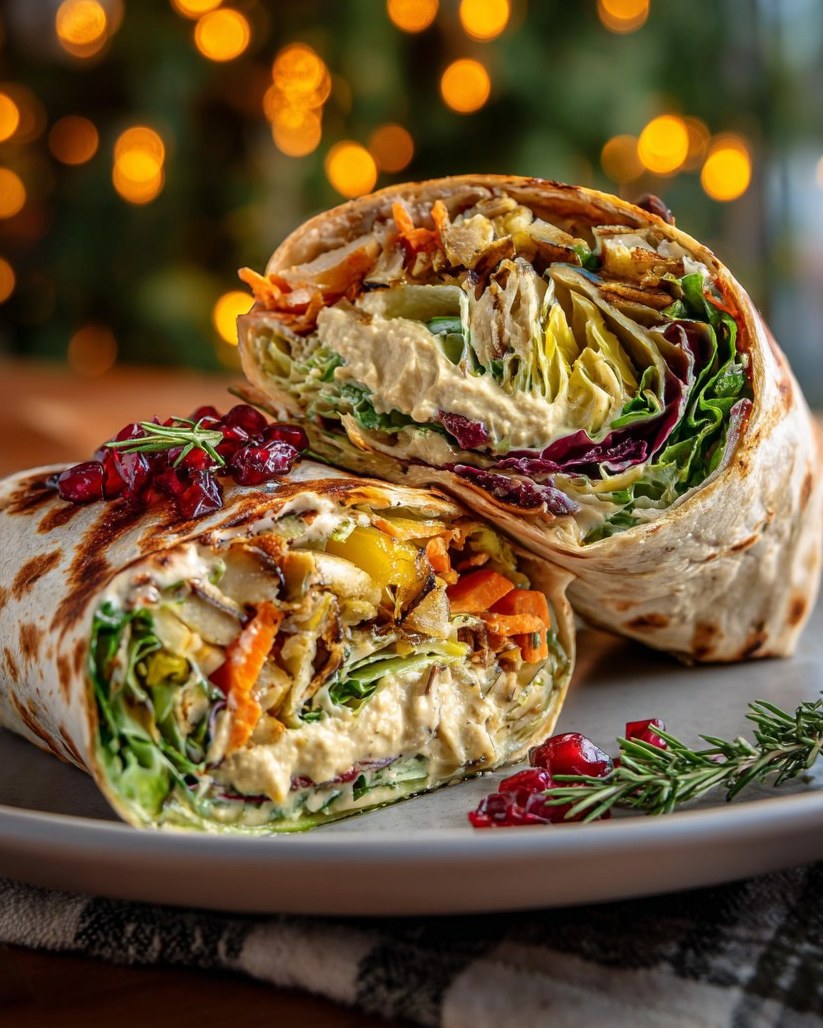
The Ultimate Fall Veggie Wrap with Creamy Hummus Recipe: A Flavor-Packed Lunch
Imagine a lunch that captures the very essence of autumn in a single, satisfying bite. This Fall Veggie Wrap with Hummus does exactly that. It wraps up the season’s best produce in a soft tortilla with a generous spread of creamy hummus. Consequently, you get a meal that is not only vibrant and delicious but also incredibly nourishing. Moreover, it is the perfect answer for busy days when you crave something wholesome without spending hours in the kitchen.
The beauty of this Fall Veggie Wrap with Hummus recipe lies in its simplicity and flexibility. You can easily use whatever crisp, colorful vegetables you have on hand. For instance, sweet bell peppers, crunchy carrots, and peppery arugula create a wonderful texture contrast. The creamy hummus acts as both a flavorful binder and a protein-rich base. Ultimately, this wrap delivers a perfect balance of flavors and nutrients in every portable package.
Furthermore, this recipe celebrates plant-based eating at its most convenient and delicious. It is a testament to how simple ingredients can transform into an extraordinary meal. Whether you need a quick lunch, a healthy snack, or a light dinner, this wrap fits the bill perfectly. Additionally, it is a fantastic way to encourage everyone to eat more vegetables. The combination is so tasty that even the pickiest eaters will be asking for seconds.
Quick Recipe Highlights
- Flavor Profile: This Fall Veggie Wrap with Hummus offers a symphony of tastes. You will experience the earthy sweetness of roasted red peppers and the fresh, peppery bite of arugula. Meanwhile, the creamy hummus provides a savory, garlicky depth that ties all the elements together beautifully.
- Texture: Expect a delightful crunch in every mouthful. Specifically, the julienned carrots and cucumbers offer a refreshing crispness. Conversely, the soft tortilla and smooth hummus create a creamy base that makes the wrap easy to eat and thoroughly satisfying.
- Aroma: As you assemble this Fall Veggie Wrap with Hummus, fresh scents will fill your kitchen. The lemony tang from the hummus mingles with the grassy note of arugula. Additionally, a hint of earthiness from the vegetables creates an inviting and appetizing fragrance.
- Visual Appeal: This wrap is a feast for the eyes with its stunning color palette. You will see vibrant reds, deep greens, and bright oranges peeking through the tortilla. Therefore, it looks as incredible as it tastes, making it perfect for social media or a lovely packed lunch.
- Skill Level Needed: Absolutely no advanced culinary skills are required for this Fall Veggie Wrap with Hummus. Basically, you just need to chop vegetables and spread hummus. Consequently, it is an ideal recipe for beginners, busy parents, or anyone seeking a no-cook meal solution.
- Special Equipment: You only need a good knife and a cutting board. A vegetable peeler or mandoline can help with achieving uniformly thin slices, but they are not essential. Ultimately, this recipe requires minimal tools, making cleanup a breeze.
Recipe Overview
- Difficulty Level: We rate this Fall Veggie Wrap with Hummus as easy because it involves no cooking. The process simply requires washing, chopping, and assembling ingredients. There are no complex techniques or precise timings to worry about. As a result, it is virtually foolproof for cooks of all experience levels.
- Category: This recipe falls squarely into the lunch and light meal categories. It is also an excellent choice for a healthy snack or a portable picnic item. Furthermore, it works well for meal prep, as you can assemble components ahead of time. Its versatility makes it a staple in any weekly rotation.
- Cuisine: While wraps have global influences, this Fall Veggie Wrap with Hummus leans into modern American wellness cuisine. It incorporates Mediterranean elements through the use of hummus and fresh vegetables. The focus is on fresh, whole foods prepared in a simple, accessible way that prioritizes nutrition and flavor.
- Cost: This is an incredibly budget-friendly meal. Most ingredients, like carrots, cucumbers, and hummus, are inexpensive pantry staples. You can often find tortillas and pre-washed arugula at great value. Therefore, you can create a restaurant-quality lunch for just a few dollars per serving.
- Season: This recipe is perfect for autumn, hence the name Fall Veggie Wrap with Hummus. During this season, hearty greens and root vegetables are at their peak. However, the basic formula adapts beautifully year-round with seasonal produce swaps, making it a timeless choice.
- Occasion: It is ideal for weekday lunches, school or work meals, and post-workout refueling. Additionally, it makes a great light dinner option or a healthy appetizer when sliced into pinwheels for parties. Its portability also makes it perfect for hikes, road trips, and outdoor gatherings.
Why You’ll Love This Recipe
First and foremost, the taste and texture of this Fall Veggie Wrap with Hummus are utterly irresistible. Each bite delivers a satisfying crunch from the fresh vegetables, which contrasts perfectly with the creamy, savory hummus. The peppery arugula adds a sophisticated layer of flavor that elevates the entire experience. You will love how the simple ingredients come together to create a complex and delightful mouthfeel. This wrap proves that healthy food does not have to be boring or bland in any way.
Next, consider the sheer convenience and preparation benefits. You can assemble this Fall Veggie Wrap with Hummus in about fifteen minutes with zero cooking required. It is the ultimate solution for hectic days when you are short on time but still want a wholesome meal. Moreover, the components are perfect for meal prepping; you can chop veggies in advance for even faster assembly during the week. This efficiency makes healthy eating a sustainable habit rather than a chore.
From a nutritional standpoint, this recipe is a powerhouse. The Fall Veggie Wrap with Hummus is packed with fiber from the vegetables and whole-grain tortilla, promoting digestive health. Hummus provides plant-based protein and healthy fats, helping you feel full and satisfied for hours. The colorful array of vegetables ensures you are getting a wide spectrum of vitamins, minerals, and antioxidants. Consequently, this meal supports overall wellness, energy levels, and immune function beautifully.
Furthermore, this wrap holds significant social and entertaining value. It is easy to double or triple the recipe to feed a crowd, making it great for casual gatherings. You can also set up a “wrap bar” with various veggies, spreads, and tortillas for a fun, interactive meal. Guests will appreciate the fresh, customizable option, especially those with dietary restrictions. It is a surefire way to impress people with minimal effort on your part.
Finally, the cost-effectiveness and accessibility of this Fall Veggie Wrap with Hummus cannot be overstated. You likely have many of the ingredients already in your refrigerator. Seasonal vegetables are affordable, and store-bought hummus is a convenient, low-cost protein source. This recipe demonstrates that eating well does not require expensive specialty items or complicated procedures. It is an accessible, delicious path to better eating habits for everyone.
Historical Background and Cultural Significance
The concept of wrapping food in flatbread has ancient roots across numerous cultures. From Mexican burritos to Greek gyros, the practice of enclosing fillings in bread is a global solution for portable, hand-held meals. The modern “wrap” as we know it in Western cuisine gained popularity in the 1990s. It emerged as a healthier alternative to sandwiches, often using tortillas or lavash. This Fall Veggie Wrap with Hummus is a direct descendant of that trend, focusing on fresh, plant-based ingredients.
Hummus, the star spread in this recipe, carries deep cultural significance. Its origins trace back to the Middle East, with historical references dating to 13th-century Egypt. Traditionally made from chickpeas, tahini, lemon, and garlic, hummus is a staple across Levantine cuisine. It represents community and sharing, often served as a centerpiece dish with bread for dipping. Incorporating it into a Fall Veggie Wrap with Hummus bridges traditional preparation with modern, on-the-go eating habits.
The evolution of the veggie wrap mirrors a growing societal focus on health and convenience. Initially, wraps were often filled with deli meats and heavy sauces. Over time, as vegetarian and vegan diets gained popularity, plant-based versions like this Fall Veggie Wrap with Hummus became mainstream. This shift reflects a broader culinary movement towards celebrating vegetables as the main event. Chefs and home cooks alike began experimenting with seasonal produce, creating vibrant, nutrient-dense meals.
Regional variations of the wrap are endless, which allows for incredible creativity. In the Southwest, you might find a wrap with black beans, corn, and avocado. Mediterranean versions could feature olives, feta, and tzatziki. This Fall Veggie Wrap with Hummus draws inspiration from these traditions but focuses on autumn harvest ingredients. Its adaptability is its greatest strength, allowing it to fit into countless culinary contexts while remaining uniquely satisfying.
Ingredient Deep Dive
Let us start with hummus, the creamy foundation of this Fall Veggie Wrap with Hummus. Hummus originates from the Middle East and is a cornerstone of Mediterranean diets. Nutritionally, it is rich in plant-based protein, fiber, and healthy fats from chickpeas and tahini. For the best flavor, seek out a high-quality store-bought brand or make your own with plenty of fresh lemon juice. Store it in the refrigerator and use it within a week. If you need a substitute, try mashed avocado, white bean spread, or a dairy-free ranch for a different but delicious twist.
Whole wheat tortillas are the vessel that holds everything together in this Fall Veggie Wrap with Hummus. Tortillas have a history spanning thousands of years in Mesoamerican cultures. Using a whole wheat version adds fiber and nutrients compared to refined flour options. Look for soft, pliable tortillas without too many added preservatives. Keep them sealed in their package at room temperature or freeze them for longer storage. For a gluten-free adaptation, use large lettuce leaves, corn tortillas, or gluten-free wraps.
Arugula, also known as rocket, brings a peppery punch to this Fall Veggie Wrap with Hummus. This leafy green has been cultivated since Roman times, prized for its distinct flavor. It is an excellent source of vitamins A, C, and K, as well as calcium. Choose bunches with vibrant, perky leaves and avoid any that are wilted or yellowing. Store it in the refrigerator in a bag with a paper towel to absorb moisture. If arugula is too strong, spinach or mixed baby greens make a milder, equally nutritious substitute.
Roasted red peppers offer a sweet, smoky depth to the Fall Veggie Wrap with Hummus. Peppers are native to the Americas and were spread across the globe through trade. They are packed with vitamin C and antioxidants. You can find them jarred in water or oil, which is perfectly convenient. After opening, transfer them to a sealed container and keep them refrigerated. For a fresh alternative, use strips of raw bell pepper, though the flavor profile will be brighter and less complex.
Finally, the crunchy vegetables like carrots and cucumbers provide essential texture. Carrots have a long history as a cultivated root vegetable, originally purple or white before orange varieties dominated. They are famous for their beta-carotene content, which supports eye health. Cucumbers, originating in South Asia, add hydration and a refreshing crunch. Always select firm, brightly colored vegetables for the best flavor and texture. Store them in the crisper drawer of your refrigerator. You can substitute with other crunchy veggies like jicama, radishes, or bell peppers.
Common Mistakes to Avoid
- Overfilling the wrap is a common error. When you add too many ingredients, the tortilla will tear when you try to roll it. Aim for a balanced, single layer of fillings to ensure a neat, portable final product.
- Using stale or cold tortillas straight from the refrigerator is another mistake. Cold tortillas are more likely to crack. Briefly warming them in a dry skillet or microwave makes them pliable and easier to roll without breaking.
- Spreading hummus from edge to edge can create a mess. Instead, leave a one-inch border around the perimeter of the tortilla. This clean space gives you a place to grip and helps contain the fillings as you roll.
- Choosing watery vegetables can make the wrap soggy. For example, always seed your cucumbers and pat roasted peppers dry with a paper towel. This simple step prevents excess moisture from weakening the tortilla.
- Neglecting to season the vegetables is a missed opportunity. Even a small pinch of salt and pepper over the veggie layer enhances the overall flavor dramatically. Do not rely solely on the hummus for seasoning.
- Rolling the wrap too loosely will cause it to fall apart. Start with a tight tuck as you begin to roll, then continue firmly and evenly. A tight roll ensures every bite contains all the components.
- Not slicing the wrap properly can ruin your presentation. Use a sharp serrated knife and cut on a slight diagonal. A dull knife will crush the wrap and push the fillings out.
- Attempting to make it too far in advance can lead to sogginess. For the best texture, assemble your Fall Veggie Wrap with Hummus within an hour of eating. Alternatively, pack components separately and assemble at mealtime.
Essential Techniques
The julienne cut is crucial for the carrots and cucumbers in your Fall Veggie Wrap with Hummus. This technique creates uniform, matchstick-sized pieces that are easy to bite through and distribute evenly. To master it, first cut the vegetable into a flat, stable plank. Then, slice that plank into thin sheets, and finally stack the sheets to cut into thin strips. A common pitfall is cutting pieces too thick, which makes the wrap difficult to eat. Perfect julienne vegetables should be about two inches long and a quarter-inch thick for ideal texture.
Properly draining and drying ingredients is a non-negotiable technique for a successful wrap. Wet fillings will quickly turn your tortilla into a soggy, unappetizing mess. Always pat roasted red peppers and any other jarred vegetables thoroughly with a clean paper towel. If using fresh tomatoes, remove the seeds and gel. Visual cues for success are vegetables that feel dry to the touch and leave no moisture on the paper towel. This step ensures structural integrity and maximizes freshness.
The rolling technique itself is what transforms your ingredients into a portable Fall Veggie Wrap with Hummus. Start by placing your fillings in the lower third of the tortilla, not the center. Fold the bottom edge up and over the fillings, tucking it in snugly. Then, fold in the left and right sides toward the center. Finally, roll the wrap tightly away from you, maintaining pressure. The key is that initial tight tuck; without it, the wrap will be loose and prone to unraveling. A perfectly rolled wrap should feel firm and hold its shape when picked up.
Pro Tips for Perfect Fall Veggie Wrap with Hummus
Warm your tortilla for about ten seconds per side in a dry skillet. This warmth makes it incredibly pliable and prevents cracking during the rolling process. A warm tortilla also slightly melds with the hummus, creating a better seal.
Layer your ingredients strategically. Spread the hummus first as a moisture barrier against the tortilla. Then place drier ingredients like carrots directly on the hummus, saving the wettest items for the top layer closest to you.
Add a layer of whole lettuce leaves, like butter lettuce, beneath the other veggies. This creates an extra barrier against sogginess and adds another pleasant textural element to your Fall Veggie Wrap with Hummus.
For an extra flavor boost, mix a spoonful of pesto, sun-dried tomato paste, or harissa directly into your hummus before spreading. This simple trick customizes the wrap and adds a delicious complexity.
If you plan to pack the wrap for later, wrap it tightly in parchment paper and then foil or plastic wrap. The parchment paper holds the shape and can be peeled back as you eat, functioning as a neat holder.
Always use a very sharp knife to cut the wrap in half. A serrated bread knife works exceptionally well. Saw gently through the wrap to avoid squishing the fillings out the ends.
For added protein and heartiness, sprinkle in some canned chickpeas, black beans, or crumbled feta cheese. These additions make the Fall Veggie Wrap with Hummus even more filling and nutritionally complete.
If your wrap feels a bit bland, a drizzle of good quality extra virgin olive oil or a squeeze of fresh lemon juice over the veggies before rolling can elevate the flavors immensely.
Variations and Adaptations
Consider regional variations to keep your Fall Veggie Wrap with Hummus exciting. For a Mexican twist, use black bean hummus, add corn, and top with a sprinkle of chili powder. A Greek version could feature a tzatziki base with kalamata olives, tomatoes, and oregano. These adaptations show how the basic formula can travel across culinary traditions while maintaining its core appeal of convenience and freshness.
Seasonal adaptations are where this recipe truly shines beyond autumn. In spring, try asparagus tips, snap peas, and a lemon-herb hummus. Summer calls for zucchini ribbons, fresh corn, and basil. A winter version might include roasted squash, kale, and a beet-infused hummus. This flexibility ensures you can make a delicious Fall Veggie Wrap with Hummus inspired meal all year long.
Dietary modifications are straightforward and inclusive. For a vegan Fall Veggie Wrap with Hummus, ensure your tortilla and hummus brands are vegan-friendly. To make it gluten-free, use a certified gluten-free wrap or large lettuce leaves. A lower-carb option might involve wrapping the fillings in collard green leaves instead of a tortilla. These simple swaps make the recipe accessible to almost any dietary need.
Experiment with flavor variations by changing the spread. Instead of classic hummus, try white bean and rosemary spread, avocado cilantro cream, or a spicy sriracha mayo. Each different spread creates a completely new flavor profile for your wrap, keeping your lunches interesting week after week.
Texture modifications can cater to personal preference. For more crunch, add sunflower seeds, chopped nuts, or crispy chickpeas. For a creamier experience, add slices of avocado or a dollop of goat cheese. Playing with textures allows you to customize the Fall Veggie Wrap with Hummus to your exact liking.
Presentation alternatives offer fun ways to serve this dish. Instead of a full wrap, slice it into one-inch pinwheels and secure with toothpicks for a party appetizer. You can also deconstruct it into a hearty salad by chopping the tortilla into strips and tossing everything together. These creative presentations are perfect for different occasions.
Serving and Presentation Guide
Plating techniques for your Fall Veggie Wrap with Hummus can elevate it from simple lunch to something special. For a casual meal, wrap it in parchment paper and slice it in half on a diagonal, arranging the two pieces side-by-side on a plate. The exposed colorful fillings are visually appealing. For a more composed presentation, slice it into several pinwheels and fan them out on a platter, showcasing the layered interior.
Garnishing ideas add the final touch of freshness and color. A light sprinkle of chopped fresh herbs like parsley, dill, or chives over the cut ends looks beautiful. You can also add a small side salad of mixed greens lightly dressed with lemon vinaigrette. A few extra whole chickpeas or a drizzle of olive oil around the plate creates a restaurant-worthy look for your Fall Veggie Wrap with Hummus.
Traditional accompaniments might include a simple side of olives, pickled vegetables, or a small bowl of soup like tomato or lentil. These sides complement the Mediterranean flavors without overwhelming the main dish. A handful of potato chips or pita chips on the side adds a satisfying salty crunch that pairs wonderfully.
Modern serving suggestions embrace convenience and style. Pack the whole wrap in a reusable container for a perfect on-the-go lunch. For a picnic, pack the components separately in a bento-style box and let everyone assemble their own. This interactive approach is especially fun for families and makes the Fall Veggie Wrap with Hummus a social experience.
Temperature considerations are simple but important. This wrap is best served cool or at room temperature. If you have warmed the tortilla, let the wrap sit for a minute before cutting so the vegetables retain their crispness. Avoid leaving it in direct sunlight or a hot car, as the vegetables can wilt and the hummus can become too soft.
Portion control tips are helpful for managing servings. One standard large tortilla makes a substantial single meal. For a lighter snack or for children, use a smaller tortilla or cut a large one in half and make two smaller wraps. This allows you to easily adjust the recipe to match appetite and nutritional needs.
Wine and Beverage Pairing
Wine pairings for this Fall Veggie Wrap with Hummus should complement its fresh, earthy, and slightly creamy profile. A crisp, dry white wine like Sauvignon Blanc or Pinot Grigio works beautifully. Their bright acidity cuts through the richness of the hummus and mirrors the freshness of the vegetables. For a red option, choose a light-bodied, low-tannin wine like a Beaujolais or Pinot Noir. These wines will not overpower the delicate flavors of the wrap and can complement the earthy vegetable notes.
Non-alcoholic alternatives are abundant and delicious. Sparkling water with a squeeze of lemon or lime is a classic, refreshing choice. Iced herbal tea, such as mint or lemon verbena, offers a flavorful pairing without caffeine. For something more substantial, a smoothie made with greens and apple complements the meal’s healthful vibe perfectly.
While not a typical coffee dish, if serving this wrap for lunch, a light roast coffee or a cup of herbal tea afterward would be lovely. Avoid heavy, bitter coffees that might clash with the fresh flavors. A cup of green tea, with its grassy notes, can actually enhance the vegetable flavors in your Fall Veggie Wrap with Hummus.
Temperature considerations for beverages are straightforward. Chilled drinks are generally best, as they refresh the palate between bites of the savory wrap. However, a room temperature herbal tea can also be comforting, especially on a cooler autumn day. The key is to avoid serving a hot beverage that would make the cool, crisp vegetables seem less refreshing.
Serving suggestions for beverages keep the meal feeling cohesive. Serve drinks in clear glasses to mirror the fresh, clean aesthetic of the food. Adding a slice of cucumber or a sprig of herb to water or iced tea ties the beverage presentation directly to the ingredients in your Fall Veggie Wrap with Hummus.
Storage and Shelf Life
Storage methods for an assembled Fall Veggie Wrap with Hummus are time-sensitive. For the best quality, consume it within a few hours of assembly. If you must store it, wrap it very tightly in plastic wrap or parchment paper, then place it in an airtight container. This minimizes air exposure, which is the enemy of crisp vegetables and fresh tortillas.
Temperature requirements are simple: always refrigerate. The hummus and fresh vegetables are perishable and must be kept cold. The ideal refrigerator temperature is below 40°F (4°C). Never leave the wrap at room temperature for more than two hours to prevent bacterial growth.
Container recommendations depend on whether the wrap is whole or deconstructed. For a whole wrap, a rectangular container that fits it snugly prevents rolling and crushing. For meal prep, store components separately in divided containers. This strategy is the absolute best for maintaining texture and flavor until you are ready to assemble your Fall Veggie Wrap with Hummus.
Signs of spoilage are usually visual and olfactory. Look for a slimy texture on the vegetables or tortilla, an off smell from the hummus, or any signs of mold. The arugula will wilt dramatically and turn dark when past its prime. When in doubt, it is safest to discard the wrap.
Reheating instructions are generally not applicable, as this is a cold dish. However, if you used a warm ingredient like freshly roasted vegetables, you can enjoy the wrap slightly warm. Do not microwave an assembled wrap, as it will make the tortilla tough and the vegetables soggy.
Freezing guidelines are not recommended for the assembled Fall Veggie Wrap with Hummus. Freezing will completely destroy the texture of the fresh vegetables and tortilla, resulting in a mushy, unappetizing product upon thawing. It is a dish best enjoyed fresh.
Make Ahead Strategies
Your prep timeline can save precious minutes on busy mornings. The night before, wash and thoroughly dry all your vegetables. Julienne the carrots and cucumbers, and store them in separate airtight containers in the refrigerator. You can also measure out your arugula and drain your roasted peppers. Having everything prepped means assembly takes just two minutes.
Storage between steps is key to maintaining freshness. Keep chopped vegetables in containers lined with a dry paper towel to absorb any residual moisture. Store hummus in its original sealed container. Keep tortillas in their package at room temperature until you are ready to assemble your Fall Veggie Wrap with Hummus. This separation prevents any component from becoming soggy prematurely.
Assessing the quality impact of make-ahead prep is positive. Pre-chopped vegetables will lose a minimal amount of crispness overnight but remain perfectly delicious. The hummus and tortillas are unaffected. The only element best added fresh is any delicate herb garnish. Overall, prepping ahead has a very minor impact that is outweighed by the convenience it provides.
Assembly tips for make-ahead involve a slight modification. If you want a fully assembled wrap to grab and go, assemble it in the morning, not the night before. Wrap it tightly in parchment paper, then in foil or plastic wrap, and refrigerate immediately. This minimizes the time the vegetables spend in contact with the hummus and tortilla, preserving texture.
Reheating guidelines do not apply, but if you want a cool wrap, simply pull it from the refrigerator and eat. For a slightly less chilled version, let it sit at room temperature for five to ten minutes before eating to allow the flavors to bloom.
Fresh element additions are a great trick. If you prepped veggies ahead, consider adding a final squeeze of lemon juice or a sprinkle of fresh herbs just before rolling. This last-minute addition wakes up all the flavors and makes your Fall Veggie Wrap with Hummus taste freshly made.
Scaling Instructions
Halving the recipe is straightforward for a single serving. Use one tortilla and simply reduce the amount of each filling ingredient by half. The assembly process remains identical. This is perfect when you are cooking for one and want to avoid leftovers. The prep time remains about the same, as you are still performing the same tasks, just with smaller quantities.
Doubling or tripling the recipe for a crowd is easy. Multiply all ingredient quantities by your desired number of servings. The key is to set up an assembly line: lay out all tortillas, spread hummus on each, then distribute toppings evenly. This method is efficient and ensures consistency across every Fall Veggie Wrap with Hummus you make. It is ideal for parties, potlucks, or family meal prep.
Equipment adjustments for scaling are minimal. You will need a larger cutting board and more counter space for assembly when making multiple wraps. Ensure you have enough storage containers if prepping components ahead. For very large batches, consider using a food processor with a julienne attachment to speed up vegetable prep significantly.
Timing modifications are mostly linear. Chopping vegetables for four wraps takes roughly twice as long as for two wraps. However, assembly time per wrap decreases as you get into a rhythm. Factor in a little extra time for organization when scaling up your Fall Veggie Wrap with Hummus production.
Storage considerations change with volume. For multiple pre-assembled wraps, store them in a single layer in a large container, separated by parchment paper to prevent sticking. Do not stack them, as the weight will crush the bottom wraps. Label the container with the date to track freshness.
Nutritional Deep Dive
The macro breakdown of this Fall Veggie Wrap with Hummus is well-balanced. A typical wrap provides a good source of complex carbohydrates from the whole wheat tortilla and vegetables, offering sustained energy. The hummus contributes plant-based protein and healthy fats, primarily from tahini and olive oil. The vegetables add minimal calories but significant volume and fiber, promoting satiety. This balance makes it an excellent meal for stabilizing blood sugar levels.
Micronutrient analysis reveals a wealth of vitamins and minerals. Carrots are rich in beta-carotene (vitamin A), crucial for vision and immunity. Arugula provides vitamin K for bone health and blood clotting. Red peppers are an excellent source of vitamin C. Hummus adds iron, folate, and magnesium from the chickpeas. Eating this Fall Veggie Wrap with Hummus is an efficient way to consume a diverse array of essential nutrients.
Health benefits extend beyond basic nutrition. The high fiber content supports digestive health and promotes a feeling of fullness. The antioxidants in the colorful vegetables combat oxidative stress and inflammation. The monounsaturated fats from the hummus are heart-healthy. Together, these components support long-term wellness, making this wrap a smart dietary choice.
Dietary considerations are largely positive. This meal is naturally vegetarian and can easily be made vegan. It is also nut-free and soy-free, depending on your hummus brand. For those monitoring sodium, you can control the salt by making your own hummus or choosing a low-sodium brand. The Fall Veggie Wrap with Hummus fits into many healthy eating patterns.
Portion analysis shows one wrap constitutes a satisfying single meal. It is substantial enough to keep you full for several hours but not so heavy that it leads to an afternoon energy crash. The calorie count is moderate, making it appropriate for most adult dietary needs as a main meal.
Weight management tips include using this wrap as a core component of a balanced diet. Its high fiber and protein content help control hunger. To reduce calories slightly, you can use a low-carb tortilla or extra lettuce. The Fall Veggie Wrap with Hummus is a tool for mindful eating that focuses on nutrient density over empty calories.
Dietary Adaptations
For a gluten-free Fall Veggie Wrap with Hummus, simply replace the whole wheat tortilla with a certified gluten-free wrap, a large corn tortilla, or sturdy lettuce leaves like romaine or butter lettuce. Ensure your hummus brand is also gluten-free, as some may contain additives with gluten. This simple swap makes the recipe safe for those with celiac disease or gluten sensitivity without sacrificing flavor or satisfaction.
A dairy-free adaptation is inherent to the basic recipe, as traditional hummus contains no dairy. However, always double-check store-bought hummus labels for additives like yogurt or milk solids. The vegetables and tortillas are naturally dairy-free. This makes the standard Fall Veggie Wrap with Hummus an excellent choice for anyone avoiding dairy.
The recipe is naturally vegan if you choose a vegan tortilla and hummus. Most commercial tortillas and hummus are vegan, but verify ingredients like honey in some hummus flavors or lard in certain tortillas. This adaptation requires minimal change, making the Fall Veggie Wrap with Hummus a fantastic staple for vegan diets.
For a low-carb or keto version, eliminate the tortilla entirely. Use large, pliable leaves of collard greens, Swiss chard, or romaine lettuce as your wrap. Be mindful that carrots are higher in carbs, so you may want to reduce the quantity and increase low-carb veggies like bell peppers and cucumbers. This creates a crunchy, refreshing vessel that aligns with carb-conscious goals.
A Paleo adaptation also focuses on the wrap vessel. Use lettuce leaves or nori seaweed sheets. Ensure your hummus is made without legumes, or substitute it with a cashew-based “cheese” spread or avocado. Focus on including plenty of non-starchy vegetables to stay within Paleo guidelines while enjoying the concept of the Fall Veggie Wrap with Hummus.
Troubleshooting Guide
If your wrap is falling apart, the issue is likely a combination of overfilling and improper rolling. Solution: Use less filling and master the tight tuck-and-roll technique. Ensure your tortilla is pliable by warming it first. If it still cracks, try doubling up with two tortillas for extra strength, though this increases the carbohydrate content.
Soggy tortilla problems stem from excess moisture. Solution: Thoroughly dry all vegetables, especially those from jars like roasted peppers. Spread the hummus as a complete layer to create a moisture barrier. Assemble the wrap as close to eating time as possible. If prepping for later, pack wet and dry ingredients separately.
Bland flavor means your wrap needs more seasoning. Solution: Do not forget to season the vegetable layer with a pinch of salt and pepper. Use a flavored hummus, like roasted garlic or lemon herb. Add a squeeze of fresh lemon juice or a drizzle of balsamic glaze before rolling. These small additions dramatically enhance the overall taste of your Fall Veggie Wrap with Hummus.
Difficulty cutting the wrap cleanly is usually a knife issue. Solution: Use a long, sharp serrated knife. Saw gently back and forth without applying heavy downward pressure. Wiping the knife blade between cuts can also help. For the cleanest slices, chill the assembled wrap for 10 minutes before cutting to firm it up slightly.
Ingredients falling out the ends is a rolling issue. Solution: Remember to fold in the sides after your initial bottom tuck. This creates a sealed pocket. Do not overfill the very ends of the tortilla. A properly folded and rolled Fall Veggie Wrap with Hummus should hold all its contents securely.
Recipe Success Stories
Community feedback on this Fall Veggie Wrap with Hummus has been overwhelmingly positive. Many readers report it has become their go-to lunch, saving them money and time during the workweek. Parents love that they can customize each wrap for their children’s preferences, making healthy eating a collaborative effort. The common theme is appreciation for its simplicity and reliability as a delicious, feel-good meal.
Variation successes from readers are inspiring. One home cook shared how she added thinly sliced apples and a sprinkle of walnuts for a sweet and crunchy autumn twist.{“success”:true,”message”:”Recipe created successfully”,”post_id”:7742,”tasty_recipe_id”:7742,”shortcode”:” Print
Fall Veggie Wrap with Hummus
Description
A hearty and healthy wrap filled with roasted fall vegetables, creamy hummus, and fresh greens, perfect for a quick lunch or light dinner.
Ingredients
For the Crust:
- 1 large sweet potato, peeled and diced
- 2 cups Brussels sprouts, halved
- 1 red bell pepper, sliced
- 1 tablespoon olive oil
- 1 teaspoon smoked paprika
- 1/2 teaspoon garlic powder
- Salt and black pepper to taste
- 4 large whole wheat tortillas
- 1 cup hummus
- 2 cups fresh spinach or arugula
- 1/4 cup crumbled feta cheese (optional)
Instructions
1. Prepare the Crust:
- Preheat oven to 400°F (200°C). Toss sweet potato, Brussels sprouts, and red bell pepper with olive oil, smoked paprika, garlic powder, salt, and pepper. Spread on a baking sheet and roast for 20-25 minutes until tender and slightly caramelized.
- Warm the tortillas slightly in a dry skillet or microwave for easier wrapping.
- Spread about 1/4 cup of hummus evenly over each tortilla, leaving a border around the edges.
- Layer roasted vegetables, fresh greens, and optional feta cheese in the center of each tortilla.
- Fold the sides of the tortilla inward, then roll tightly from the bottom to enclose the filling. Slice in half and serve immediately.
Notes
You can customize the seasonings to taste.

I’m Billy, a classically trained culinary school graduate from The Culinary Institute of America with over 12 years in the restaurant industry and over 19 years of cooking experience.