
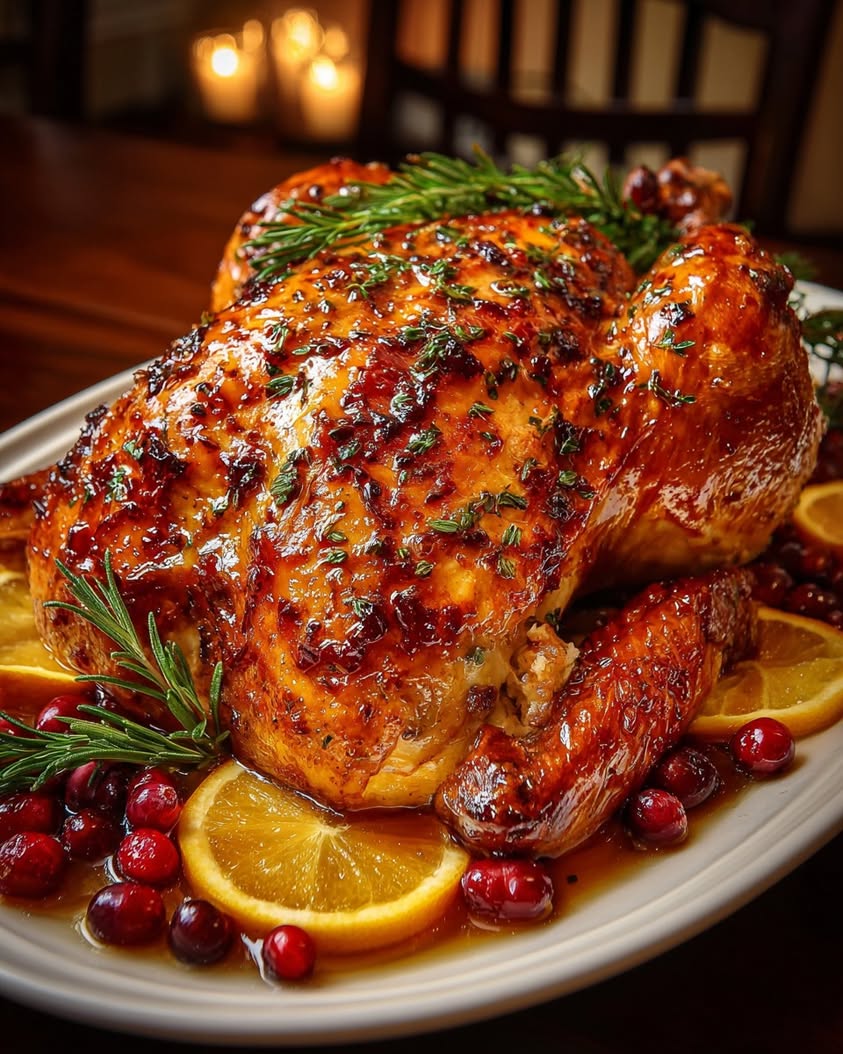
Festive Citrus-Cranberry Turkey: A Holiday Showstopper Recipe
The centerpiece of your holiday table deserves to be magnificent, juicy, and bursting with seasonal flavor. Consequently, this Festive Citrus-Cranberry Turkey recipe is designed to deliver exactly that. Imagine a golden-brown bird with impossibly crisp skin, its aroma filling your kitchen with notes of sweet orange, tart cranberry, and fragrant herbs. Moreover, this recipe guides you through a simple yet transformative brine and glaze process, ensuring every bite from the white meat to the dark meat is succulent and deeply seasoned. Ultimately, this method takes the intimidation out of roasting a perfect turkey, turning it into a joyful and rewarding culinary project.
This Festive Citrus-Cranberry Turkey is more than just a meal; it’s a sensory experience that defines the holiday. The bright, tangy cranberry glaze caramelizes beautifully in the oven, creating a stunning presentation that will have your guests reaching for their phones before their forks. Meanwhile, the citrus brine works its magic overnight, tenderizing the meat and infusing it with a subtle, refreshing brightness that cuts through the richness. Furthermore, this recipe is incredibly versatile, pairing wonderfully with all your classic holiday sides from creamy mashed potatoes to savory stuffing. In essence, if you want a turkey that is as memorable as the occasion itself, this Festive Citrus-Cranberry Holiday Turkey is your guaranteed path to success.
Quick Recipe Highlights
- Flavor Profile: This turkey boasts a brilliant balance of sweet, tart, and savory. The orange and lemon provide a sunny, bright foundation, while the cranberry adds a festive, tangy punch. Additionally, herbs like rosemary and thyme lend an earthy, aromatic depth that ties all the flavors together perfectly.
- Texture: Expect the holy grail of turkey textures: skin that shatters with a delightful crackle, giving way to exceptionally juicy and tender meat. The brine is the key here, as it helps the turkey retain moisture throughout the long roasting process, preventing any dreaded dryness.
- Aroma: As this Festive Citrus-Cranberry Turkey roasts, it will perfume your entire home with the quintessential scents of the season. You’ll smell the warming sweetness of citrus, the sharp, festive note of cranberry, and the comforting, woody fragrance of roasting herbs and turkey.
- Visual Appeal: The finished bird is a masterpiece of holiday colors. The cranberry glaze bakes into a deep, ruby-red sheen against the golden-brown skin, often garnished with fresh cranberries and citrus slices for a stunning, magazine-worthy presentation on your platter.
- Skill Level Needed: This recipe is approachable for confident home cooks. While it involves multiple steps like brining and glazing, the instructions are clear and sequential. Importantly, no advanced techniques are required, just patience and attention to timing.
- Special Equipment: You will need a large container or brining bag for the turkey, a roasting pan with a rack, and a reliable meat thermometer. A brush for applying the glaze is also helpful, though a spoon works in a pinch.
Recipe Overview
- Difficulty Level: We rate this Festive Citrus-Cranberry Turkey as intermediate. The process itself is straightforward, but it requires planning ahead for the brine and careful monitoring of internal temperature during roasting. However, with our detailed guide, even a first-time turkey roaster can achieve spectacular results.
- Category: This dish is the definitive main course for a holiday feast or a special Sunday dinner. It’s a celebratory protein that anchors the entire meal, around which all other sides are thoughtfully arranged.
- Cuisine: This recipe falls firmly within the tradition of American holiday cuisine, particularly Thanksgiving and Christmas. It takes a classic preparation and elevates it with modern, bright flavors from citrus and cranberry, reflecting a contemporary approach to traditional holiday cooking.
- Cost: Turkey is typically a very cost-effective protein, especially when feeding a crowd. The brine and glaze ingredients are pantry staples or seasonal items readily available at reasonable prices. Overall, this Festive Citrus-Cranberry Holiday Turkey offers incredible value for a show-stopping centerpiece.
- Season: This recipe is perfect for the late fall and winter holidays. Cranberries and citrus like oranges are at their peak, making the flavors feel fresh and seasonal. The warm, comforting nature of the dish is ideal for colder weather gatherings.
- Occasion: It is tailor-made for Thanksgiving, Christmas, and any festive gathering where you want to impress. It also works beautifully for a smaller, elegant dinner party when using a turkey breast instead of a whole bird.
Why You’ll Love This Recipe
First and foremost, the taste and texture are simply unbeatable. The brine guarantees juicy meat, while the cranberry-orange glaze creates a flavor explosion that is both familiar and exciting. Each slice offers a perfect harmony of savory turkey, sweet-tart fruit, and aromatic herbs. Furthermore, the contrast between the crispy skin and tender interior provides a satisfying mouthfeel that makes every bite a celebration. This Festive Citrus-Cranberry Turkey will redefine your expectations for holiday poultry, leaving your guests raving and asking for the recipe.
From a convenience standpoint, this recipe is brilliantly structured. The brine does most of the heavy lifting for flavor and tenderness overnight, meaning your active prep time on the day of is manageable. The glaze comes together in minutes on the stovetop. Additionally, using a meat thermometer takes all the guesswork out of doneness, ensuring food safety and perfect results every single time. This methodical approach reduces stress and lets you enjoy the cooking process and your company.
Nutritionally, this Festive Citrus-Cranberry Holiday Turkey is a fantastic lean protein source. Turkey is rich in nutrients like selenium, B vitamins, and tryptophan. By making your own glaze, you control the sugar content, avoiding the excessive additives found in many store-bought versions. The citrus in the brine also adds a dose of vitamin C. Serving this as the center of a plate filled with vegetables and whole grains makes for a balanced and satisfying holiday meal.
The social and entertaining value of this dish is immense. A beautifully roasted turkey is a gesture of care and celebration. Presenting this glistening, aromatic Festive Citrus-Cranberry Turkey at the head of the table creates a moment of shared awe and anticipation. It fosters conversation, becomes the focal point of the meal, and creates lasting memories. It’s a dish that says “welcome” and “celebrate” in the most delicious way possible.
Finally, this recipe is remarkably cost-effective and accessible. A whole turkey is one of the most economical ways to feed a large group. The brine and glaze ingredients are inexpensive, especially when cranberries are in season. You don’t need any fancy or specialized equipment beyond a large pot and a roasting pan. This accessibility means anyone can create a spectacular holiday centerpiece without breaking the bank, making the joy of a beautiful meal available to all.
Historical Background and Cultural Significance
The turkey’s place as the centerpiece of the American Thanksgiving table has roots in 19th-century domestic mythology and publishing. While wild fowl was indeed part of early colonial harvest meals, it was not exclusively turkey. However, influential writers and editors like Sarah Josepha Hale, who campaigned for a national Thanksgiving holiday, consistently portrayed the roast turkey as the essential feast dish. Her descriptions in magazines and novels cemented the turkey’s iconic status, linking it indelibly with family, bounty, and national identity.
Culturally, the turkey transcends being mere food; it is a powerful symbol of abundance, gratitude, and family gathering. The act of preparing and sharing it is a ritual that reinforces bonds. Over time, the basic roasted bird has evolved to reflect regional tastes and family traditions, with stuffings, brines, and glazes acting as edible family histories. The Festive Citrus-Cranberry Turkey is a modern iteration of this tradition, incorporating popular winter fruits to create a new classic.
The recipe has evolved significantly from simple roasting. Early methods often resulted in dry meat, leading cooks to adopt techniques like barding with fat or larding with strips of pork. The introduction of brining, borrowed from other culinary traditions, was a game-changer for home cooks seeking juicier results. Glazes, like the cranberry-orange one in this recipe, represent a more recent trend toward adding bold, sweet-and-sour flavor profiles to the turkey’s skin, enhancing both taste and visual drama.
Regional variations on the holiday turkey are fascinating. In the Southern United States, you might find a turkey smoked or fried. Some families swear by a heritage breed bird, while others use a flavorful compound butter under the skin. The cranberry glaze has cousins in maple-glazed or honey-glazed turkeys. The beauty of the Festive Citrus-Cranberry Holiday Turkey recipe is that it provides a fantastic, reliable base from which you can start your own family tradition, perhaps adding a splash of bourbon to the glaze or using a different herb blend in the brine.
Ingredient Deep Dive
Whole Turkey: Selecting a good quality turkey is the first step to success. Look for a fresh or thoroughly thawed bird. If possible, choose a turkey that hasn’t been pre-basted or injected with saline solution, as this can affect your brine’s effectiveness and make the meat too salty. Heritage breed turkeys often have more flavor but can be leaner and require careful cooking. Allow approximately 1 to 1.5 pounds of turkey per person to ensure plenty for the meal and coveted leftovers.
Fresh Cranberries: These vibrant red berries are native to North America and have been used by Indigenous peoples for centuries, both as food and medicine. They are packed with vitamin C, fiber, and unique phytonutrients like proanthocyanidins, which are known for supporting urinary tract health. When selecting cranberries for your glaze, choose firm, plump berries with a deep red color. They freeze beautifully, so you can buy extra bags in season and use them year-round for this Festive Citrus-Cranberry Turkey.
Oranges & Lemons (Citrus): Citrus fruits bring essential brightness and acidity that cut through the richness of the turkey. The zest contains potent aromatic oils, while the juice provides tangy liquid. Citrus is an excellent source of vitamin C and adds a wonderful fragrance. For the best flavor, use organic citrus if you’re using the zest, and always roll the fruit on the counter before juicing to maximize yield. The citrus in the brine not only flavors the meat but also, due to its acidity, helps tenderize it slightly.
Fresh Herbs (Rosemary & Thyme): These woody herbs are the backbone of savory flavor in both the brine and the cavity of the bird. Rosemary, with its pine-like aroma, and thyme, with its subtle earthiness, are classic partners for poultry. They don’t just add flavor; they contribute to the incredible aroma that fills your home. If you don’t have fresh, you can use dried, but reduce the quantity by about two-thirds, as dried herbs are more concentrated. Their robust nature stands up well to long cooking times.
Common Mistakes to Avoid
- Not Thawing the Turkey Completely: A partially frozen turkey will not brine or cook evenly. Always thaw your turkey safely in the refrigerator, allowing about 24 hours for every 4-5 pounds. This is a critical step for food safety and even cooking.
- Skipping the Brining Step: Brining is the single best insurance policy against dry turkey. The saltwater solution helps the meat retain moisture during the long roast. If you’re short on time, even a 6-8 hour brine is vastly better than none at all for your Festive Citrus-Cranberry Holiday Turkey.
- Not Using a Meat Thermometer: Relying on pop-up timers or guessing based on time alone is a recipe for overcooked meat. Invest in a good digital probe thermometer. Insert it into the thickest part of the thigh without touching bone; it should read 165°F.
- Putting a Cold Turkey in a Hot Oven: After brining, let the turkey sit at room temperature for about 60-90 minutes before roasting. This helps it cook more evenly, preventing the outside from being done while the inside is still cold.
- Basting Too Often: While basting with pan juices can promote browning, opening the oven door frequently causes major temperature fluctuations and can actually extend cooking time. Baste once or twice, but don’t obsess over it.
- Carving Immediately After Roasting: Let the turkey rest for at least 30-45 minutes after it comes out of the oven. This allows the juices, which have been driven to the center by the heat, to redistribute throughout the meat. Carving too soon will cause all those precious juices to run out onto the cutting board.
- Overcooking the Glaze: When making the cranberry glaze, cook it just until the berries pop and the sauce thickens slightly. If you reduce it too much, it can become sticky and difficult to brush onto the turkey, and it may burn in the oven’s high heat.
- Forgetting to Season Under the Skin: Before applying the glaze, gently loosen the skin over the breast and thighs and season the meat directly with salt and pepper. This simple step adds a crucial layer of flavor to the meat itself.
Essential Techniques
Brining: Brining is the process of soaking meat in a saltwater solution, often with sugar and aromatics. The salt alters the protein structure in the muscle fibers, allowing them to hold onto more moisture during cooking. This is why a brined turkey stays so remarkably juicy. To master it, ensure your brine is completely cool before adding the turkey, and keep the bird refrigerated during the entire brining process. A common pitfall is using a brine that’s too warm, which can lead to bacterial growth.
Trussing: Trussing means tying the turkey’s legs and wings close to its body with kitchen twine. This technique promotes even cooking by creating a more uniform shape. Without trussing, the thinner wing and leg tips can burn before the thicker breast is done. It also makes for a neater presentation. The key is to tie it snugly but not too tightly. If you don’t have twine, you can simply tuck the wing tips under the shoulders and leave the legs untied—the skin will often hold them in place.
Glazing: Applying a glaze adds flavor, color, and a beautiful sheen. For the best results on your Festive Citrus-Cranberry Turkey, apply the glaze during the last 30-45 minutes of cooking. Applying it too early can cause the sugars in the cranberries and orange juice to burn. Brush it on in a few thin, even layers, allowing each layer to set slightly before adding the next. This builds up a gorgeous, lacquered finish without making the skin soggy.
Resting: Resting is non-negotiable for perfect turkey. When meat is hot, the juices are concentrated in the center. Resting allows the fibers to relax and reabsorb those juices throughout the entire roast. If you carve immediately, the juices will spill out, leaving the meat dry. Tent the turkey loosely with foil to keep it warm, but don’t wrap it tightly, or the crisp skin will steam and soften. A good 30-minute rest makes a world of difference.
Pro Tips for Perfect Festive Citrus-Cranberry Turkey
Dry the Skin Thoroughly: After removing the turkey from the brine and patting it dry, let it air-dry uncovered in the refrigerator for a few hours or overnight. This step is crucial for achieving the crispiest possible skin, as moisture is the enemy of crispness.
Use a V-Rack: Place your turkey breast-side up on a V-rack in your roasting pan. This elevates the bird and allows hot air to circulate underneath, promoting even browning on all sides and preventing the bottom from steaming in the pan juices.
Start High, Finish Low: Consider starting the turkey in a very hot oven (425°F-450°F) for the first 30 minutes to jump-start browning and crisping. Then, reduce the heat to 325°F for the remainder of the cooking time. This method yields beautiful color without overcooking.
Flavor the Pan Drippings: Add roughly chopped onions, carrots, and celery to the bottom of the roasting pan. As the turkey cooks, the drippings will mingle with these vegetables, creating an incredibly flavorful base for your gravy.
Check Multiple Spots: When checking for doneness, take the temperature in both the thickest part of the breast and the innermost part of the thigh. The breast should be 165°F, and the thigh should be 165°F-175°F. If the breast is done first, you can tent it with foil while the dark meat finishes.
Garnish with Fresh Elements: Just before serving, garnish your platter with fresh rosemary sprigs, additional cranberries, and thin slices of orange and lemon. This adds a final touch of freshness and color that makes the presentation pop.
Variations and Adaptations
Regional Variations: Across different areas, the flavor profile shifts. In the South, you might add a cup of strong brewed sweet tea to the brine. For a Northeastern twist, use pure maple syrup instead of brown sugar in the glaze. A southwestern adaptation could include adding orange zest, cumin, and a pinch of chili powder to the brine for a warm, spiced note.
Seasonal Adaptations: While perfect for fall and winter, you can adapt this Festive Citrus-Cranberry Holiday Turkey for other times. In spring, use a lemon-herb brine with fresh tarragon and a glaze made with apricot preserves. For a summer twist, a brine with lime and cilantro and a peach-mango glaze can be delightful on a smoked turkey.
Dietary Modifications: For a gluten-free version, ensure any stock or broth used is certified gluten-free. To make it dairy-free, simply omit any butter called for in the glaze; the fruit juices and reduction will still create a lovely glaze. For a lower-sugar option, reduce the brown sugar in the glaze by half and consider adding a touch of balsamic vinegar for complexity.
Flavor Variations: The basic citrus-cranberry profile is wonderfully adaptable. Add a half-cup of bourbon or apple cider to the brine for deeper flavor. Incorporate warm spices like star anise, cinnamon stick, or whole cloves into the brine bag. For the glaze, try using pomegranate juice instead of some of the orange juice for a deeper, richer tartness.
Texture Modifications: If you prefer ultra-crispy skin, rub the dried skin with a small amount of baking powder (about 1 teaspoon) before letting it air-dry. The alkaline powder helps break down proteins, promoting exceptional browning and crispness. For extra juicy meat, consider spatchcocking the turkey (removing the backbone and flattening it) before brining; it will cook much faster and more evenly.
Presentation Alternatives: Instead of a whole bird, use this brine and glaze on a bone-in turkey breast for a smaller gathering. You can also roast the turkey parts separately—legs and thighs in one pan, breasts in another—to perfect the doneness of each type of meat. For a stunning buffet presentation, carve the turkey in the kitchen and arrange the slices on a platter, drizzled with a little extra warm glaze.
Serving and Presentation Guide
Plating Techniques: For a traditional family-style presentation, place the whole, rested turkey on a large, sturdy platter. Carve at the table for drama. For a more streamlined buffet, carve in the kitchen and fan the slices neatly on a platter, spooning some of the glaze over the top. Ensure your platter is large enough to hold the turkey without overcrowding, leaving space for garnishes.
Garnishing Ideas: Fresh garnishes add life and color. Scatter whole fresh cranberries and roasted chestnuts around the base. Tuck fresh rosemary and thyme sprigs around the bird. Arrange thin slices of orange and lemon, either fresh or lightly caramelized in a pan, over and around the turkey. A light dusting of flaky sea salt over the carved meat just before serving enhances flavor and looks professional.
Traditional Accompaniments: This Festive Citrus-Cranberry Turkey pairs classically with rich, savory sides that complement its bright flavors. Think creamy mashed potatoes or potato gratin, savory herb stuffing, green bean casserole, roasted Brussels sprouts with bacon, and sweet potato casserole. The tangy cranberry glaze also loves the sweetness of candied yams or glazed carrots.
Modern Serving Suggestions: For a contemporary twist, serve the turkey with farro or wild rice pilaf studded with dried cranberries and pecans. Roasted rainbow carrots or a shaved Brussels sprout salad with a citrus vinaigrette echo the turkey’s flavors beautifully. Offer a variety of condiments beyond gravy, such as a whole grain mustard sauce or a spicy pepper jelly.
Temperature Considerations: Serve the turkey warm, not piping hot. After its rest, the internal temperature will be perfect for eating. Keep the platter warm by placing it on a heating pad or by briefly warming the platter before adding the carved meat. Cover loosely with foil if needed, but avoid sealing it tightly to preserve the skin’s crispness.
Portion Control Tips: A general rule is 1 to 1.5 pounds of whole turkey per person. This accounts for bone weight and ensures generous servings with plenty for seconds and leftovers. When carving, slice the breast meat against the grain for maximum tenderness. Separate the thighs and drumsticks at the joint for easier serving.
Wine and Beverage Pairing
Wine Pairings: The sweet-tart cranberry and citrus flavors in this turkey call for wines with good acidity and some fruitiness. A Pinot Noir is a classic choice, with its bright red fruit and earthy notes that won’t overpower the meat. A dry Riesling or a Viognier complements the citrus beautifully. For a richer option, a lightly oaked Chardonnay can stand up to the meal’s richness. If you prefer a rosé, choose a dry, fuller-bodied style from Provence or Tavel.
Non-Alcoholic Alternatives: Sparkling apple cider is a festive and perfect match. For a more tailored pairing, make a cranberry-orange spritzer with muddled cranberries, orange slices, and sparkling water. A warm mulled cranberry punch with cinnamon and cloves also echoes the holiday spices and warms you from the inside out.
Coffee/Tea Pairings: After the meal, a medium-roast coffee with low acidity pairs well, as it won’t clash with the fruit flavors. A spiced chai tea latte complements the warm spices you may have used. For an herbal option, a citrus or berry-infused herbal tea can be a lovely, light finish.
Temperature Considerations: Serve white wines and sparkling beverages well-chilled, around 45-50°F. Red wines like Pinot Noir are best served slightly cooler than room temperature, around 55-60°F, to keep their fruit vibrant. Non-alcoholic punches and spritzers should be served cold to refresh the palate.
Serving Suggestions: Offer a variety of beverages to cater to all guests. Set up a small drink station with the wine options, a pitcher of a signature non-alcoholic punch, and still and sparkling water. This allows guests to help themselves and mix and match throughout the meal.
Storage and Shelf Life
Storage Methods: After your feast, let the turkey cool to room temperature within two hours of serving. Remove all meat from the carcass. Store the sliced or pulled meat in shallow, airtight containers. This promotes rapid, even cooling. You can store the carcass separately to make stock later. Never leave cooked turkey at room temperature for more than two hours, as this enters the “danger zone” for bacterial growth.
Temperature Requirements: Refrigerate cooked turkey promptly. It will keep safely in the refrigerator for 3-4 days. The temperature of your fridge should be at or below 40°F. Use a refrigerator thermometer to be sure. For longer storage, freezing is your best option.
Container Recommendations: Use glass or BPA-free plastic containers with tight-fitting lids. Alternatively, heavy-duty freezer bags are excellent for freezing, as you can squeeze out excess air to prevent freezer burn. Label all containers with the contents and date.
Signs of Spoilage: Discard turkey that has an off or sour smell, a slimy texture, or an unusual color. When in doubt, throw it out. Food safety is paramount, especially with poultry.
Reheating Instructions: Reheat turkey gently to prevent it from drying out. The best methods are in a covered dish in the oven at 325°F with a splash of broth or gravy, or in short bursts in the microwave with a damp paper towel over it. Ensure reheated turkey reaches an internal temperature of 165°F.
Freezing Guidelines: For best quality, freeze turkey within 3-4 days of cooking. Pack it in meal-sized portions. Remove as much air as possible from freezer bags. Properly stored, cooked turkey will maintain best quality for about 3-4 months in the freezer, though it will remain safe longer.
Make Ahead Strategies
Prep Timeline: You can break this Festive Citrus-Cranberry Holiday Turkey recipe into stages. Two days ahead, make your brine and brine the turkey. The day before, remove the turkey from the brine, pat it dry, and let it air-dry in the fridge uncovered. You can also make the cranberry glaze and refrigerate it. On the day of, all you need to do is bring the turkey to room temperature, truss it, and roast.
Storage Between Steps: Keep the brining turkey in its bag or container in the coldest part of your refrigerator. After air-drying, you can leave the turkey on a rack on a baking sheet, uncovered, in the fridge. Store the prepared glaze in a sealed jar in the refrigerator; gently reheat it before using to make it brushable.
Quality Impact Assessment: Making components ahead greatly improves the final product. The brine has more time to work, and air-drying the skin is much easier when done overnight. The glaze flavors also meld and deepen when made a day ahead. None of these steps diminish quality; in fact, they enhance it.
Assembly Tips: On roasting day, take the turkey out of the fridge 60-90 minutes before it goes in the oven. Reheat the glaze until just warm and fluid. Season the turkey under the skin, truss it, and you’re ready to go. Having everything prepped means you can relax and enjoy the process.
Reheating Guidelines: This make-ahead strategy is for pre-cooking prep. If you need to cook the turkey entirely ahead, follow the storage guidelines above. Reheat whole carved portions in a 325°F oven with gravy or broth to keep moist.
Fresh Element Additions: Even with make-ahead prep, add fresh garnishes just before serving. The bright pop of fresh herbs, citrus slices, and whole cranberries makes the presentation look immediate and vibrant, not pre-prepared.
Scaling Instructions
Halving the Recipe: This recipe scales beautifully for a smaller gathering. Simply use a turkey breast or a small whole turkey (10-12 lbs). Halve all the brine and glaze ingredients proportionally. The cooking time will be significantly less, so rely on your meat thermometer. A bone-in breast may take only 1.5 to 2 hours.
Doubling or Tripling: For a very large crowd, you can roast two smaller turkeys rather than one massive one, as they will cook more evenly. Double or triple the brine and glaze recipes in separate containers. Use two ovens if available, or roast sequentially, keeping the first turkey warm in a low oven (tented loosely) while the second cooks.
Equipment Adjustments: Scaling up requires planning. Ensure you have a container large enough for brining multiple birds (clean coolers work well). You’ll need multiple roasting pans and racks, and multiple reliable thermometers. Make sure your oven racks are positioned to allow for proper air circulation if cooking two at once.
Timing Modifications: Cooking time is not linear with weight. A 12-pound turkey does not take twice as long as a 6-pound turkey. Use the standard guideline of about 13 minutes per pound at 325°F for an unstuffed bird, but always, always use a thermometer to determine actual doneness.
Storage Considerations: Cooking multiple turkeys will yield a lot of leftovers. Plan your storage containers and freezer space in advance. Consider dividing the meat into meal-sized portions before storing to make future meals easier.
Nutritional Deep Dive
Macro Breakdown: Turkey is an excellent source of lean protein, crucial for muscle repair and satiety. A 3-ounce serving of skinless white meat provides about 25 grams of protein with only 1-2 grams of fat. The skin and dark meat contain more fat. The cranberry glaze adds carbohydrates primarily from natural fruit sugars and any added sweetener. Overall, this Festive Citrus-Cranberry Turkey is a high-protein, moderate-carbohydrate centerpiece.
Micronutrient Analysis: Turkey is rich in B vitamins, particularly B3 (niacin) and B6, which are vital for energy metabolism and nervous system health. It’s also one of the best dietary sources of selenium, a powerful antioxidant. Cranberries contribute vitamin C, vitamin K, and manganese. The citrus adds a significant boost of vitamin C as well.
Health Benefits: The lean protein helps maintain muscle mass and promotes fullness. Selenium supports thyroid function and immune response. The antioxidants in cranberries (proanthocyanidins) are noted for urinary tract health. The meal, when balanced with vegetables, provides a wide spectrum of nutrients that support overall health.
Dietary Considerations: This dish is naturally gluten-free if you verify your broth/stock. It’s also dairy-free unless butter is added to the glaze. It fits into many healthy eating patterns, including Mediterranean and DASH diets, due to its lean protein and fruit components.
Portion Analysis: A healthy portion is about 3-4 ounces of cooked, skinless meat (about the size of a deck of cards). Enjoying the crispy skin is part of the holiday experience, but be mindful that it concentrates the fat and calories. Filling half your plate with vegetable sides creates a balanced meal.
Weight Management Tips: To enjoy this Festive Citrus-Cranberry Holiday Turkey as part of a weight-conscious plan, focus on the skinless white meat, control your portion of glaze, and load up on non-starchy vegetable sides. The high protein content will help you feel satisfied, reducing the likelihood of overeating on other, richer dishes.
Dietary Adaptations
Gluten-Free: This recipe is naturally gluten-free. The only potential source of gluten would be in any broth or stock used in the brine or gravy. Always use a broth that is certified gluten-free. All other ingredients—fresh herbs, citrus, cranberries, sugar—are inherently gluten-free.
Dairy-Free: The standard recipe is dairy-free. Some glaze variations may include butter for richness, but it is not necessary. You can achieve a beautiful glaze using just the fruit juices, cranberries, and sugar. For a richer dairy-free option, use a tablespoon of olive oil or dairy-free butter alternative.
Vegan Adaptation: For a plant-based centerpiece, use this incredible cranberry-orange glaze on a whole roasted cauliflower or a stuffed squash. The brine concept doesn’t apply, but you can marinate the cauliflower in the citrus juice and herb mixture before roasting. The flavors are equally festive and satisfying.
Low-Carb/Keto: Replace the brown sugar in the glaze with a keto-friendly sweetener like erythritol or allulose that measures like sugar. Be aware that cranberries do contain natural sugars, so use them sparingly or consider a glaze based primarily on citrus zest, herbs, and butter. Focus on eating the skin and dark meat for higher fat content.
Paleo: Use coconut sugar or pure maple syrup (in moderation) instead of brown sugar. Ensure any broth used is compliant (no additives). The recipe is otherwise paleo-friendly, focusing on whole foods like fresh turkey, berries, and citrus.
Low-FODMAP: The main FODMAP concerns here are the onions and garlic if used in the brine or stuffing. For a low-FODMAP version, omit onion and garlic entirely. Use the green tops of scallions (green part only) and garlic-infused oil for flavor instead. Cranberries and citrus are low-FODMAP in typical serving sizes.
Troubleshooting Guide
Texture Issues (Dry Meat): If your turkey turns out dry, it was likely overcooked. Next time, brine without fail and use a thermometer to pull the bird at exactly 165°F in the breast. For the current dry turkey, salvage it by slicing it and serving it smothered in plenty of gravy or a flavorful sauce. Use the leftovers in soups, pot pies, or salads with moist dressings.
Flavor Balance (Bland Turkey): I’m Billy, a classically trained culinary school graduate from The Culinary Institute of America with over 12 years in the restaurant industry and over 19 years of cooking experience.