
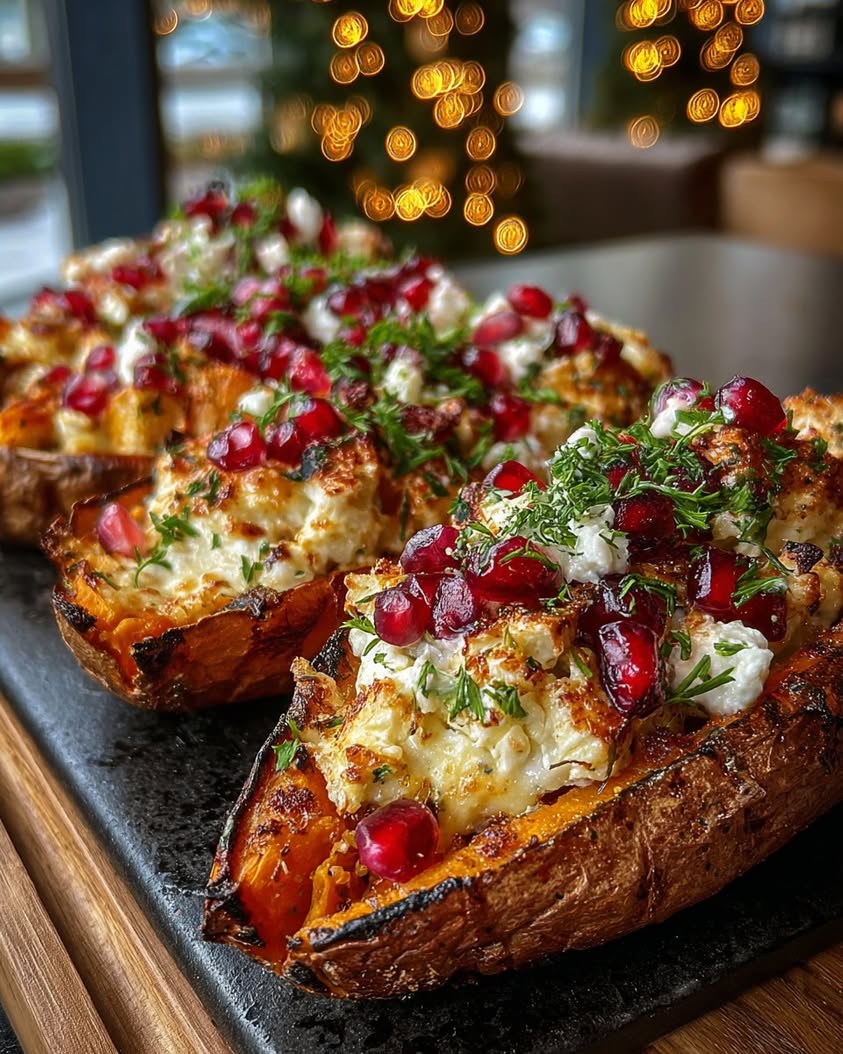
Festive Sweet Potato Boats with Creamy Brie & Pomegranate Seeds: A Holiday Showstopper
Imagine a dish that captures the very essence of the holiday season on a single plate. Consequently, these Festive Sweet Potato Boats with Creamy Brie & Pomegranate Seeds do exactly that. They combine the earthy sweetness of roasted sweet potato with the luxurious melt of brie cheese, all topped with the bright, tart pop of pomegranate seeds. Ultimately, this recipe transforms simple ingredients into a stunning centerpiece that is as beautiful as it is delicious.
Moreover, this dish is a celebration of texture and flavor harmony. The soft, caramelized flesh of the sweet potato provides a perfect base. Meanwhile, the warm, runny brie adds a rich and creamy contrast. Finally, the crunchy pomegranate arils and fresh herbs offer a refreshing finish. This combination creates a memorable eating experience that feels both indulgent and wholesome. It is perfect for holiday gatherings, special dinners, or even a cozy night in.
Furthermore, the visual appeal of these sweet potato boats is undeniable. The vibrant orange of the potato, the golden-white melt of the cheese, and the jewel-like red seeds create a festive color palette. As a result, this dish looks spectacular on a holiday table. It is a guaranteed conversation starter that proves impressive food does not need to be complicated. These Festive Sweet Potato Boats with Brie and Pomegranate Seeds are your new secret weapon for holiday entertaining.
Quick Recipe Highlights
- Flavor Profile: This dish masterfully balances sweet, savory, and tangy notes. The natural sweetness of the roasted potato pairs with the rich, buttery flavor of brie. Simultaneously, the pomegranate seeds introduce a necessary burst of tartness and freshness.
- Texture: You will experience a wonderful contrast in every bite. The soft, almost fluffy interior of the sweet potato meets the gooey, melted cheese. Subsequently, the juicy crunch of the pomegranate seeds and the delicate green herbs provide the perfect finishing texture.
- Aroma: While roasting, the sweet potatoes release a warm, caramelized scent. As the brie melts, it adds a nutty, earthy aroma to the kitchen. Finally, the fresh thyme or rosemary contributes a subtle, pine-like fragrance that signals holiday cooking.
- Visual Appeal: The presentation is truly stunning. The bright orange boats act as a vibrant canvas. Then, the melted brie creates pools of creamy white, beautifully dotted with ruby-red pomegranate seeds and green herbs for a festive look.
- Skill Level Needed: This is an accessible recipe for cooks of all levels. Basic roasting and assembly skills are all that is required. Therefore, even a beginner can achieve a beautiful and delicious result with minimal effort.
- Special Equipment: You only need a baking sheet and a sharp knife. Parchment paper is helpful for easy cleanup. A spoon is useful for scooping the potato flesh, but otherwise, no special tools are necessary.
Recipe Overview
- Difficulty Level: We rate this recipe as easy because it involves straightforward techniques. Roasting sweet potatoes is a simple, hands-off process. Additionally, the assembly requires no cooking, just a bit of artistic arranging. Consequently, the risk of error is very low, making it perfect for stress-free entertaining.
- Category: This versatile dish fits multiple categories beautifully. It works as an impressive vegetarian main course. Alternatively, it can serve as a substantial side dish alongside a holiday roast. It also makes a fantastic appetizer or part of a festive buffet spread.
- Cuisine: While not tied to one specific tradition, it draws inspiration from modern American and fusion cuisines. It uses the global popularity of sweet potatoes and brie. Furthermore, it incorporates pomegranate, a fruit with deep historical roots across the Middle East and Mediterranean, creating a contemporary, globally-inspired dish.
- Cost: This recipe is surprisingly budget-friendly for its impressive output. Sweet potatoes and fresh herbs are inexpensive staples. While brie can be a splurge, a small amount goes a long way. Pomegranates are seasonal but often affordable during the holidays, or you can buy just the seeds.
- Season: This recipe shines brightest in the fall and winter months. Sweet potatoes are at their peak, and pomegranates are in season. Moreover, the warm, comforting nature of the dish is ideal for colder weather and aligns perfectly with holiday celebrations from Thanksgiving through New Year’s.
- Occasion: It is tailor-made for holiday dinners, festive potlucks, and special gatherings. It also makes an elegant date-night meal or a luxurious Meatless Monday option. Essentially, any time you want to elevate a meal with minimal fuss, these sweet potato boats are the perfect choice.
Why You’ll Love This Recipe
First and foremost, the taste and texture are utterly captivating. Each component brings something unique to the table, creating a symphony in your mouth. The sweet potato offers a deep, caramelized base note. Then, the brie introduces a luxurious, creamy fat that coats the palate. Finally, the pomegranate seeds cut through with a bright, acidic pop that cleanses the taste buds. This balance ensures every bite is interesting and satisfying, preventing flavor fatigue. You will love how these simple ingredients create a complex and restaurant-worthy eating experience right at home.
From a convenience standpoint, this recipe is a dream for busy hosts. The active prep time is remarkably short, involving mostly washing, cutting, and seeding. Meanwhile, the sweet potatoes roast unattended in the oven, freeing you up for other tasks. The assembly is quick and intuitive, requiring no precise measurements or techniques. Consequently, you can prepare a stunning dish without being chained to the kitchen. This makes holiday entertaining less stressful and more enjoyable, allowing you to spend time with your guests.
Nutritionally, these Festive Sweet Potato Boats with Brie and Pomegranate Seeds offer a great profile. Sweet potatoes are packed with beta-carotene, fiber, and vitamins. Pomegranate seeds are loaded with antioxidants and vitamin C. While brie adds richness, it also provides protein and calcium. Together, they create a dish that feels indulgent but is built on wholesome foundations. You can enjoy this as a satisfying main or side, knowing you are feeding your body well. It is a perfect example of how celebratory food can also be nourishing.
The social and entertaining value of this dish cannot be overstated. Visually, it is an absolute showstopper that will draw compliments the moment it hits the table. It caters beautifully to vegetarian guests, offering them a centerpiece-worthy option. Furthermore, the individual servings make plating and serving effortless. This dish encourages sharing and conversation, becoming a focal point of your meal. It demonstrates thoughtfulness and care in your menu planning, elevating the entire dining experience for everyone involved.
Finally, this recipe is wonderfully cost-effective and accessible. The ingredients are easy to find at any standard grocery store, especially during the holiday season. You do not need expensive equipment or rare spices. Importantly, the recipe is forgiving; if your sweet potatoes are slightly different sizes or your brie melts more than expected, the result is still fantastic. This accessibility ensures that anyone can recreate this beautiful dish, regardless of their cooking budget or expertise. It proves that impressive holiday cooking is within everyone’s reach.
Historical Background and Cultural Significance
The story of this dish is a modern tale of ingredient fusion. Sweet potatoes have a long history in the Americas, cultivated for thousands of years. They became a staple in Southern U.S. cooking and are now synonymous with autumn and Thanksgiving feasts. Brie cheese, conversely, hails from France, with a history dating back to the 8th century. It is known as the “Queen of Cheeses” and is often associated with celebration and luxury. This recipe brings these two distinct culinary worlds together on one plate, representing the global nature of contemporary home cooking.
Culturally, each ingredient carries its own significance. The sweet potato is a symbol of abundance and nourishment in many cultures. Pomegranates are rich in symbolism across history, representing fertility, prosperity, and eternity in Greek, Persian, and Jewish traditions. Using them during the winter holidays taps into this ancient symbolism of life and bounty during the darkest time of the year. Brie adds an element of European festivity and indulgence. Combining them creates a dish that feels both timeless and modern, connecting our holiday tables to deeper historical threads.
The evolution of this recipe follows the trend towards vegetable-centric, visually-driven meals. Roasted vegetable “boats” or “bowls” have become popular as healthy, gluten-free, and customizable meal vessels. The addition of a melting cheese like brie elevates the humble vegetable into something decadent. Meanwhile, the use of pomegranate seeds as a garnish has exploded in popularity due to their health halo and stunning color. This specific combination likely emerged from food blogs and social media, where visually striking, flavorful, and relatively easy recipes are shared and adapted by home cooks worldwide.
Regional variations of this concept are endless, which speaks to its versatility. In the American South, you might find a version with pecans and maple syrup. A Mediterranean twist could include crumbled feta, olives, and oregano instead of brie and thyme. In Mexico, one might top the sweet potato with cotija cheese, chili powder, and lime. The basic template—a roasted starchy vegetable topped with cheese and a fresh, acidic element—is universally adaptable. This particular version with brie and pomegranate has become a holiday favorite for its perfect balance of festive flavors and colors.
Ingredient Deep Dive
Let us start with the star: the sweet potato. This vibrant tuber is native to the tropical Americas and was domesticated over 5,000 years ago. It traveled to Europe with Columbus and later to Asia and Africa, becoming a global staple. Nutritionally, it is a powerhouse, especially the orange-fleshed varieties rich in beta-carotene, which the body converts to vitamin A. They are also an excellent source of vitamin C, potassium, and fiber. When selecting, look for firm potatoes with smooth, unblemished skin. Avoid any with soft spots or signs of sprouting. Store them in a cool, dark, well-ventilated place—not the refrigerator, as cold temperatures can alter their texture and flavor.
Next, we have creamy brie cheese. Brie originated in the Île-de-France region and is one of the world’s most famous soft-ripened cheeses. Its edible white rind is a mold called Penicillium camemberti, which contributes to its distinctive earthy flavor. As it warms, brie transforms into a luxurious, spoonable cream. It provides protein, calcium, and fat, which helps balance the carbohydrates in the sweet potato. When buying brie, choose a wheel that feels springy to the touch, not hard or slimy. The rind should be intact and white, perhaps with faint reddish streaks. Let it come to room temperature before serving for the best texture and flavor. If you cannot have brie, Camembert or a creamy goat cheese are excellent substitutes.
The final flourish is the pomegranate seed. Pomegranates are ancient fruits, cultivated since antiquity throughout the Mediterranean, Middle East, and South Asia. They are deeply embedded in mythology and religion, often symbolizing life and rebirth. The juicy arils (the seed and the juice sac around it) are packed with vitamin C, vitamin K, folate, and potent antioxidants like punicalagins. To select a good pomegranate, look for one that feels heavy for its size with firm, unbroken skin. The crown should be intact and dry. The easiest way to seed it is to score the skin, submerge it in a bowl of water, and break it apart; the seeds will sink, and the pith will float. Store seeds in an airtight container in the fridge for up to five days, or freeze them for months.
Common Mistakes to Avoid
- Underseasoning the Sweet Potato: Sweet potatoes need salt just like any other vegetable. Failing to season them before roasting results in a bland base that the other ingredients cannot fully compensate for. Always rub the flesh with oil and a generous pinch of salt and pepper before they go in the oven.
- Overcrowding the Baking Sheet: Placing the potato halves too close together steams them instead of roasting them. You need space for hot air to circulate to achieve proper caramelization. Use a large enough baking sheet and do not let the potatoes touch for the best results.
- Using Cold Brie Straight from the Fridge: Adding cold, hard brie to the hot potato means it will not melt properly into the flesh. Let the brie sit at room temperature for 20-30 minutes before assembling. Alternatively, you can add it in the last minute of baking to help it melt.
- Cutting the Sweet Potatoes Incorrectly: Slicing them lengthwise creates the perfect “boat” shape to hold toppings. Cutting them into rounds makes a messier presentation and is harder to eat. Use a sharp knife and cut from stem to root for the best structural integrity.
- Skipping the Oil on the Baking Sheet: Even with parchment paper, a light brush of oil on the cut side of the potato promotes better browning and prevents sticking. This step ensures you get those desirable caramelized edges and a easy release from the pan.
- Adding Pomegranate Seeds Too Early: If you add the seeds before baking or while the dish is piping hot, they can wilt, lose their juicy pop, and turn brown. Always add fresh garnishes like pomegranate seeds and herbs just before serving to preserve their texture and color.
- Choosing the Wrong Sweet Potato Variety: There are firm, white-fleshed sweet potatoes and softer, orange-fleshed ones (often called yams in the U.S.). For this recipe, the orange-fleshed varieties are superior because they become creamier and sweeter when roasted, creating a better contrast with the brie.
- Not Testing for Doneness with a Fork: Sweet potato sizes vary, so cook times are a guide. The only way to know they are done is to pierce the thickest part with a fork. It should slide in with absolutely no resistance. Undercooked potatoes will be hard and unpleasantly starchy.
Essential Techniques
Roasting for Caramelization: Roasting is the most important technique here. It concentrates the sweet potato’s natural sugars, creating deep, complex flavors and a tender, fluffy texture. The key is high, dry heat. Do not cover the potatoes, as trapping steam will make them soggy. Instead, roast them cut-side down initially on an oiled surface to maximize contact with the hot pan. This direct heat jumpstarts the Maillard reaction, creating those delicious browned bits. A perfectly roasted sweet potato should be easily pierced and have golden-brown edges.
Preparing Pomegranate Seeds: Seeding a pomegranate can be intimidating but is simple with the right method. The water bowl technique is foolproof. First, score the fruit around its equator and gently pry it apart into two halves. Then, hold each half over a bowl of water, seed-side down, and use your fingers to push the seeds out. The seeds (arils) will sink to the bottom, while the bitter white pith will float. Finally, skim off the pith and strain the seeds. This method prevents juice splatter and makes separating the seeds from the pith effortless.
Working with Soft Cheese: Handling brie requires a gentle touch. Use a sharp knife to slice it, wiping the blade clean between cuts if it gets too sticky. For this recipe, you can slice it into thin pieces or simply tear it into chunks. To maximize its creamy texture, let it warm up before using it. If you add it to the hot potato boats after baking, the residual heat will melt it perfectly. Understanding that brie’s flavor and texture are best at room temperature is the secret to enjoying it fully.
Pro Tips for Perfect Festive Sweet Potato Boats
Choose sweet potatoes that are similar in size and shape. This ensures they cook at the same rate, so all your boats are ready simultaneously. Look for medium, plump potatoes without any major curves or bends for the most even roasting.
Score the flesh of the sweet potato in a crosshatch pattern before roasting. Do not cut all the way through to the skin. This simple step increases the surface area for browning and helps the melted brie seep into the nooks and crannies.
For an extra flavor dimension, drizzle the cut sides of the potatoes with a tiny bit of maple syrup or honey before roasting. This enhances their natural sweetness and promotes even more caramelization. Just a teaspoon per half is plenty.
If your brie is very ripe and runny, you can freeze it for 15-20 minutes before slicing. This firms it up just enough to get clean cuts without making a sticky mess of your knife and hands.
Add a textural contrast with a sprinkle of toasted nuts. Chopped pecans, walnuts, or pistachios scattered over the top add a wonderful crunch that complements the creamy cheese and soft potato beautifully.
For a fresh, herbal note, mix your pomegranate seeds with a small amount of finely chopped mint or parsley before scattering them over the dish. This distributes the herb flavor more evenly and adds another layer of freshness.
If serving as a main course, consider adding a protein. A handful of warmed, shredded rotisserie chicken or crispy chickpeas placed under the brie turns this into a more substantial and balanced meal.
Always let the roasted potatoes cool for 5 minutes before adding the brie. If the potato is scalding hot, the cheese will melt too quickly and become oily. A brief rest allows for the perfect gooey melt.
Variations and Adaptations
For regional variations, consider a Greek-inspired version. Swap the brie for crumbled feta cheese. Then, top with chopped Kalamata olives, fresh oregano, and a drizzle of olive oil. Alternatively, a Southwestern twist could use black beans, corn, Monterey Jack cheese, avocado, and a squeeze of lime juice. The basic boat concept is endlessly adaptable to your favorite flavor profiles.
Seasonal adaptations are easy. In spring, use asparagus tips and fresh goat cheese. For summer, try topping with corn salsa, cotija cheese, and cilantro. The fall and winter version with brie and pomegranate is classic, but you could also use roasted apples, walnuts, and blue cheese for a different autumnal feel.
Dietary modifications are straightforward. For a vegan version, use a high-quality vegan cream cheese or a melty vegan mozzarella instead of brie. Ensure the maple syrup (if using) is vegan. For a dairy-free option, a rich tahini drizzle or avocado slices can provide the creamy element. The dish is naturally gluten-free, making it safe for those with celiac disease or gluten sensitivity.
Flavor variations can take this dish in many directions. Add a savory element with crispy fried sage or rosemary. Introduce spice with a sprinkle of chili flakes or a dash of smoked paprika on the potatoes before roasting. For a sweeter profile, a drizzle of balsamic glaze after assembly adds a lovely tangy sweetness that pairs well with all the components.
Texture modifications can cater to different preferences. For more crunch, add toasted breadcrumbs or pumpkin seeds on top. For ultimate creaminess, mix a spoonful of mascarpone or ricotta into the sweet potato flesh before adding the brie. You can also blend the scooped-out flesh with the cheese and herbs, then return it to the skin for a smoother, more uniform texture.
Presentation alternatives include turning this into a dip or spread. Simply scoop the roasted sweet potato flesh into a bowl, mix with softened brie and herbs, then top with pomegranate seeds. Serve with crackers or crostini. For individual appetizers, use small sweet potatoes or even baby bell peppers as the vessel for a bite-sized holiday treat.
Serving and Presentation Guide
Plating is key for visual impact. Serve each sweet potato boat on its own individual plate or arrange them on a large, rustic wooden board or elegant platter. Place a small bunch of fresh thyme or rosemary sprigs in the center of the board for decoration. The contrast between the vibrant food and a neutral plate makes the colors pop even more.
Garnishing should be the final step. After placing the brie on the warm potato, immediately scatter a generous handful of pomegranate seeds over the top. Then, add the fresh herbs. For a professional touch, you can drizzle a very fine thread of high-quality extra virgin olive oil or reduced balsamic vinegar around the plate just before serving.
Traditional accompaniments for a holiday meal might include a simple green salad with a citrus vinaigrette to cut through the richness. If serving as a side, it pairs wonderfully with roast turkey, ham, or beef tenderloin. For a vegetarian feast, complement it with roasted Brussels sprouts, wild rice pilaf, and cranberry sauce.
Modern serving suggestions include slicing the boats into smaller segments for a passed appetizer at a cocktail party. You can also set up a “sweet potato boat bar” where guests can choose their own toppings from bowls of brie, seeds, nuts, herbs, and sauces. This interactive approach is fun for casual gatherings.
Temperature considerations are crucial. The dish is best served warm, when the brie is soft and inviting. However, it is also tasty at room temperature, making it suitable for buffets. Avoid letting it sit under a heat lamp, as this will cause the pomegranate seeds to shrivel and the herbs to wilt. Assemble just before serving for the best texture.
Portion control is simple, as each half potato is a natural serving. For a light lunch or appetizer, one half per person is sufficient. As a main course, plan for two halves per person, especially if you are not serving other substantial sides. For a potluck, you can estimate that one large sweet potato, yielding two boats, will serve 2-4 people as part of a larger spread.
Wine and Beverage Pairing
Wine pairings should complement the sweet, creamy, and tart elements. A sparkling wine like Champagne or Prosecco is fantastic; the bubbles cut through the richness of the brie beautifully. A medium-bodied white wine with good acidity, such as a Chardonnay (unoaked or lightly oaked) or a Viognier, also works well. For red wine lovers, opt for a fruit-forward, low-tannin red like a Pinot Noir or Beaujolais. The key is to avoid wines that are too heavy or tannic, as they can clash with the sweetness of the potato.
Non-alcoholic alternatives can be just as sophisticated. A sparkling apple cider or ginger beer provides a similar effervescent contrast. For a still option, a tart pomegranate juice spritzer (mixed with club soda and a squeeze of lime) echoes the flavors on the plate. Iced herbal tea, like rosemary or mint, offers a refreshing and aromatic complement without any sweetness overload.
Coffee and tea pairings are excellent if serving this for a brunch or lunch. A medium-roast coffee with low acidity will not compete with the dish’s flavors. For tea, consider a creamy Earl Grey or a spiced chai latte. The bergamot in Earl Grey or the warm spices in chai can harmonize with the sweet and savory notes in a delightful way.
Temperature considerations for beverages are standard. Serve white and sparkling wines well chilled. Red wines should be slightly cooler than room temperature. Non-alcoholic sparklers should be ice-cold. Coffee and tea, of course, should be served hot. Having a variety of temperatures available can enhance the overall dining experience, offering a refreshing sip between rich bites.
Serving suggestions include offering a choice. Set out bottles of both a sparkling wine and a still white, or a carafe of spritzer and a pitcher of iced tea. Labeling them with simple tags adds a thoughtful touch. Always ensure plenty of water is on the table as well, as this helps cleanse the palate and keeps guests hydrated.
Storage and Shelf Life
Storage methods depend on whether the dish is assembled. Unassembled components keep best. Store roasted, cooled sweet potato halves in an airtight container in the refrigerator for up to 4 days. Keep brie in its original wrapping in the cheese drawer. Pomegranate seeds should be stored in a sealed container in the fridge. Once assembled, the dish is best eaten immediately, but leftovers can be refrigerated for 1-2 days.
Temperature requirements are straightforward. All components must be refrigerated if not consumed within 2 hours of preparation. Do not leave assembled boats at room temperature for extended periods due to the dairy content. When reheating, ensure the internal temperature reaches at least 165°F (74°C) for food safety, especially when using cheese.
Container recommendations include glass or BPA-free plastic with tight-fitting lids. For the sweet potatoes, you can lay them in a single layer if possible. For seeds, a small jar or bowl covered with plastic wrap is fine. Avoid storing the roasted potatoes in a bag where they might get soggy from condensation.
Signs of spoilage include an off or sour smell from the cheese or potatoes, visible mold (other than brie’s natural rind), and a slimy texture on the potato skin or flesh. Pomegranate seeds will become mushy and brown when they are past their prime. If in doubt, it is safest to discard the item.
Reheating instructions are simple but important. Reheat sweet potato halves in a 350°F (175°C) oven until warmed through, about 10-15 minutes. The microwave can make them rubbery. Add the brie after reheating so it can melt from the residual heat. Add fresh pomegranate seeds and herbs just before serving the reheated portion.
Freezing guidelines are not recommended for the assembled dish. The texture of the sweet potato and the brie will suffer significantly upon thawing. You can freeze roasted sweet potato flesh (scooped out) for up to 3 months for use in soups or mashes, but for this recipe, it is best made fresh or stored refrigerated for a short time.
Make Ahead Strategies
A prep timeline can save you stress on the day of your event. Up to two days ahead, seed your pomegranates and store the seeds in the fridge. The day before, wash and scrub your sweet potatoes. You can even roast them the day before; let them cool completely, then store them covered in the fridge. On the day of, simply reheat the potatoes in the oven before assembling.
Storage between steps is simple with proper planning. Keep all prepped components in separate, labeled containers. This prevents cross-contamination of flavors and makes assembly a breeze. Having everything measured and ready turns the final plating into a quick, restaurant-style activity rather than a last-minute scramble.
Quality impact assessment is crucial. Roasting the potatoes a day in advance may slightly reduce the crispness of the edges, but the flavor will still be excellent. Pomegranate seeds are fine for 2-3 days. Brie is best sliced the day of to prevent excessive drying. Herbs should be washed and chopped no more than a few hours ahead to prevent wilting.
Assembly tips for make-ahead: Do not assemble the complete boats until just before serving. Instead, set up an assembly station with warm potatoes, sliced brie, seeds, and herbs. This allows you to put together a fresh, beautiful platter in minutes when your guests arrive, ensuring the perfect texture and temperature.
Reheating guidelines for pre-roasted potatoes: Place the cold potato halves on a baking sheet, cut-side up. Cover loosely with foil and warm in a 375°F (190°C) oven for 10-15 minutes. Remove the foil for the last 5 minutes if you want to re-crisp the edges. They should be hot all the way through before adding the cheese.
Fresh element additions are non-negotiable. No matter how much you prep ahead, the pomegranate seeds and fresh herbs must be added at the very last moment. This preserves their vibrant color, juicy texture, and aromatic qualities, which are essential to the dish’s final character and appeal.
Scaling Instructions
Halving the recipe is simple for smaller gatherings. Use one large sweet potato, cut in half. Reduce all other toppings proportionally. The cooking time may be slightly less, so start checking for doneness around the 35-minute mark. Use a smaller baking sheet to ensure the oven space is efficiently filled, as an empty oven can affect heat circulation.
Doubling or tripling the recipe for a crowd is easy, but requires planning. You will need multiple baking sheets. Rotate the sheets from top to bottom and front to back halfway through roasting to ensure even cooking. You may need to roast in batches unless you have a convection oven. In a standard oven, avoid overcrowding by using two racks and staggering the pans so they are not directly above each other.
Equipment adjustments are necessary when scaling up. Ensure you have enough platters or boards for presentation. For very large batches, consider keeping the assembled boats warm on a warming tray set to a low temperature, but add the pomegranate seeds just before moving them to the serving table to keep them fresh.
Timing modifications are minimal when scaling. The roast time for the potatoes themselves does not change dramatically with more on a pan, as long as they are not touching. However, your oven may take longer to come back to temperature if you are doing multiple batches. Factor in an extra 10-15 minutes of total oven time per additional batch.
Storage considerations for large batches are the same. Do not assemble all boats at once if they will sit out for a long time. Instead, assemble in waves, bringing out a fresh platter as needed. Keep extra toppings in bowls nearby for guests to add more as they like, which also keeps the presentation looking fresh throughout the event.
Nutritional Deep Dive
The macro breakdown of one sweet potato boat is well-balanced. A medium sweet potato provides complex carbohydrates for sustained energy, along with a good amount of fiber. The brie contributes protein and healthy fats, which help slow the absorption of sugars and increase satiety. The pomegranate seeds add a small amount of natural sugar and fiber. This combination makes the dish more metabolically balanced than a carbohydrate-only side dish, helping to prevent a blood sugar spike.
Micronutrient analysis reveals a wealth of vitamins and minerals. Sweet potatoes are exceptionally high in Vitamin A (as beta-carotene), vital for vision and immune function. They also provide Vitamin C, potassium, and manganese. Pomegranate seeds are a great source of Vitamin C, Vitamin K, and folate. Brie contributes calcium for bone health and B vitamins. Together, they offer a broad spectrum of nutrients in one delicious package.
Health benefits are significant. The antioxidants in both sweet potatoes (beta-carotene) and pomegranates (punicalagins) combat oxidative stress and inflammation in the body. The fiber supports digestive health and promotes a healthy gut microbiome. The healthy fats from the cheese aid in the absorption of the fat-soluble vitamins (like Vitamin A) present in the sweet potato, making this a synergistic combination from a nutritional standpoint.
Dietary considerations are mostly positive. The dish is naturally gluten-free and grain-free. It is vegetarian and can be adapted to be vegan. For those on a low-carb or keto diet, this is not suitable due to the high carbohydrate content of the sweet potato. For people managing diabetes, the fiber and fat content help moderate the glycemic response, but portion control is still advised.
Portion analysis shows that one boat is a satisfying serving. As a side, it provides a substantial vegetable portion. As a main, two boats create a filling meal. The calorie content is moderate, coming primarily from the nutrient-dense sweet potato and the cheese. It is a whole-food-based dish with minimal processed ingredients, which is always a healthier choice.
Weight management tips include being mindful of the amount of brie used. While delicious, cheese is calorie-dense. You can use a slightly thinner layer of brie without sacrificing flavor. Also, loading up on the pomegranate seeds and herbs adds volume and flavor for very few extra calories. Pairing this with a large green salad can help fill you up with low-calorie foods, making the entire meal more satisfying and balanced.
Dietary Adaptations
For a gluten-free adaptation, this recipe is naturally perfect. Sweet potatoes, brie, pomegranate, and herbs are all inherently gluten-free. Simply ensure that any pre-packaged ingredients, like a flavored spice blend you might add, are certified gluten-free. There is no need for any substitution, making this a safe and celebratory option for those with celiac disease or gluten intolerance.
A dairy-free version requires replacing the brie. Excellent options include a dollop of thick, unsweetened coconut yogurt or a drizzle of creamy tahini sauce. For a “cheesy” flavor, sprinkle with nutritional yeast. Another great option is to use slices of ripe avocado for creaminess. The result will be different but equally delicious, focusing on the sweet potato and pomegranate as the stars.
Creating a vegan Festive Sweet Potato Boat is straightforward. Use a dairy-free creamy element as mentioned above. Instead of honey for roasting (if used), opt for maple syrup or agave nectar. Ensure all other ingredients are plant-based. A great combination is a cashew cream mixed with lemon juice and nutritional yeast, topped with the pomegranate seeds and fresh herbs for a completely plant-based holiday dish.
Low-carb and keto adaptations are challenging due to the sweet potato’s starch content. A possible{“success”:true,”message”:”Recipe created successfully”,”post_id”:7854,”tasty_recipe_id”:7854,”shortcode”:” Print
Festive Sweet Potato Boats with Creamy Brie & Pomegranate Seeds
Description
A vibrant, festive dish featuring roasted sweet potato halves topped with melted brie, fresh pomegranate seeds, and a drizzle of honey for a sweet-savory holiday treat.
Ingredients
For the Crust:
- 2 large sweet potatoes, halved lengthwise
- 4 oz brie cheese, sliced
- 1/2 cup pomegranate seeds
- 2 tbsp olive oil
- 1 tbsp honey
- 1 tsp fresh thyme leaves
- Salt and black pepper to taste
- Chopped pecans for garnish (optional)
Instructions
1. Prepare the Crust:
- Preheat oven to 400°F (200°C). Place sweet potato halves on a baking sheet, drizzle with olive oil, and season with salt and pepper.
- Roast for 25-30 minutes until tender. Remove from oven and top each half with brie slices.
- Return to oven for 3-5 minutes until brie is melted. Drizzle with honey and sprinkle with pomegranate seeds, thyme, and pecans (if using). Serve warm.
Notes
You can customize the seasonings to taste.

I’m Billy, a classically trained culinary school graduate from The Culinary Institute of America with over 12 years in the restaurant industry and over 19 years of cooking experience.