
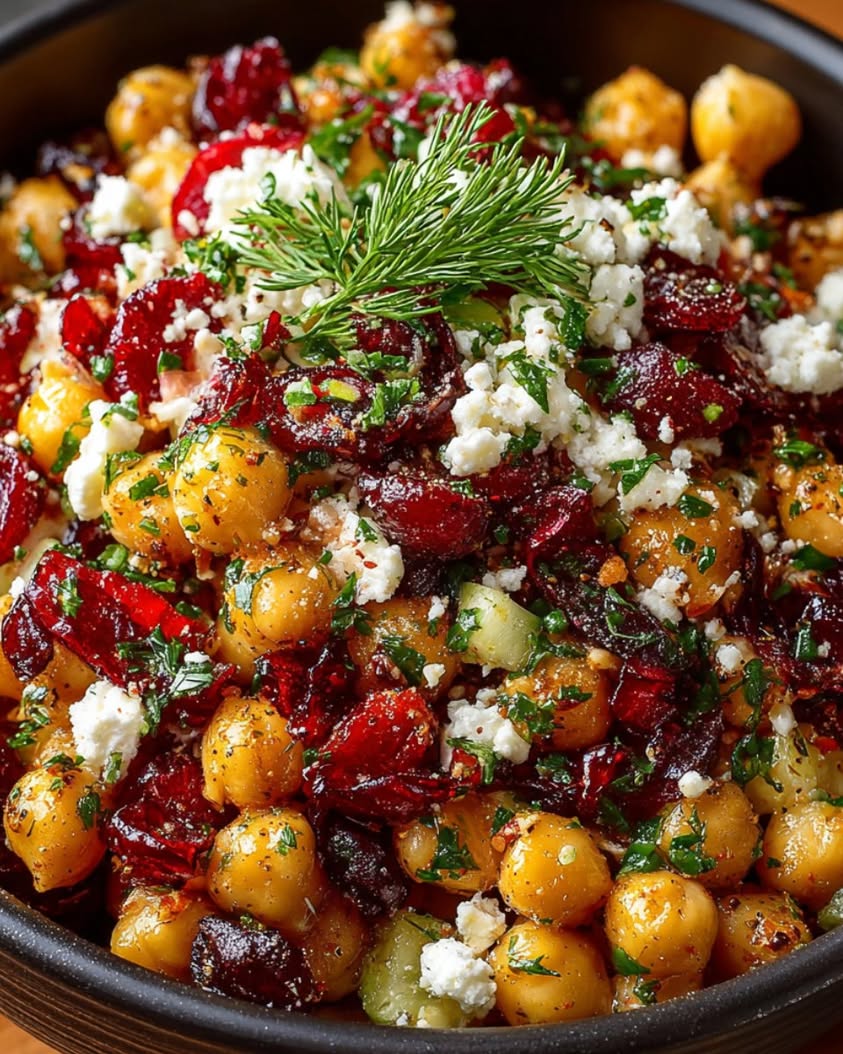
Feta and Cranberry Chickpeas with Lemon Vinaigrette: A Tangy, Textured Power Salad
This vibrant Feta and Cranberry Chickpeas with Lemon Vinaigrette recipe is a true celebration of flavor and texture. Moreover, it delivers a perfect balance of creamy, tangy, sweet, and savory notes in every single bite. The dish centers around protein-packed chickpeas, which provide a wonderfully hearty and satisfying base. Consequently, you get a meal that is both nourishing and incredibly delicious without any heavy cooking required.
Imagine the bright, zesty punch of fresh lemon juice mingling with rich olive oil and fragrant herbs. Then, picture that dressing coating plump chickpeas, briny crumbled feta cheese, and sweet-tart dried cranberries. Ultimately, this combination creates a salad that is far greater than the sum of its simple parts. It is a versatile dish that works beautifully as a light lunch, a substantial side, or a make-ahead potluck star.
The beauty of this Feta and Cranberry Chickpeas with Lemon Vinaigrette salad lies in its effortless assembly. Furthermore, it requires absolutely zero cooking, making it a perfect solution for busy weeknights or warm weather dining. You simply whisk, toss, and serve. In short, this recipe proves that incredible, healthy food does not need to be complicated or time-consuming to prepare.
Quick Recipe Highlights
- Flavor Profile: This salad masterfully balances tangy, salty, sweet, and savory elements. The sharp lemon vinaigrette cuts through the richness of the feta, while the cranberries add a necessary pop of fruity sweetness. Additionally, fresh herbs like parsley or dill introduce a final layer of aromatic freshness that ties everything together beautifully.
- Texture: You will enjoy a delightful contrast of creamy, chewy, and soft components. The chickpeas offer a pleasantly firm and creamy bite, the feta is crumbly and rich, and the cranberries provide a satisfyingly chewy texture. This interplay makes each forkful interesting and deeply satisfying from a sensory perspective.
- Aroma: The immediate scent is bright and citrusy from the fresh lemon zest and juice. Upon closer inspection, you will detect the earthy aroma of the chickpeas and the sharp, salty tang of the feta cheese. Finally, the fresh herbs release their green, fragrant notes, completing the aromatic profile.
- Visual Appeal: This dish is a feast for the eyes with its stunning color palette. You see creamy white feta, vibrant red cranberries, and the deep green of fresh herbs all set against the neutral backdrop of the chickpeas. Consequently, it looks as incredible on a buffet table as it does on a simple dinner plate.
- Skill Level Needed: This is a beginner-friendly recipe requiring no specialized culinary skills. Essentially, you need the ability to whisk a dressing, open a can, and toss ingredients in a bowl. Therefore, it is absolutely perfect for novice cooks or anyone seeking a no-fuss, impressive dish.
- Special Equipment: You only require basic kitchen tools. A mixing bowl, a whisk or fork for the vinaigrette, and a can opener are the only essentials. A microplane or zester for the lemon is helpful but not strictly mandatory, as you can simply use the juice.
Recipe Overview
- Difficulty Level: We classify this Feta and Cranberry Chickpeas with Lemon Vinaigrette recipe as “Easy” for several clear reasons. First, it involves no heat application, eliminating risks of burning or overcooking. Second, the technique is purely assembly-based, with no knife skills beyond possibly chopping herbs. Finally, the ingredient list is forgiving, allowing for easy substitutions without compromising the final dish’s integrity.
- Category: This versatile dish fits multiple meal categories seamlessly. It functions perfectly as a hearty and protein-rich main course salad for a light lunch. Alternatively, it serves as a standout side dish for grilled meats or fish. You can even present it as a flavorful dip with pita chips or a filling for wraps and pitas.
- Cuisine: While not tied to one specific tradition, this recipe draws inspiration from Mediterranean and Middle Eastern culinary principles. The use of chickpeas, lemon, olive oil, and fresh herbs is quintessentially Mediterranean. Meanwhile, the combination of sweet dried fruit with salty cheese echoes flavors found across Levantine cuisine, resulting in a delicious fusion.
- Cost: This is an exceptionally budget-friendly recipe. Canned chickpeas, dried cranberries, and block feta are all inexpensive pantry staples. The fresh herbs and lemon are low-cost produce items. Overall, you can create four generous servings for a fraction of the cost of a store-bought salad, making it brilliant for meal prep.
- Season: This Feta and Cranberry Chickpeas with Lemon Vinaigrette salad is truly a year-round champion. Its bright flavors are particularly refreshing during spring and summer months. Conversely, the hearty chickpeas and rich cheese make it satisfying enough for fall and winter. Importantly, it relies on pantry and fridge staples, so seasonal availability is never an issue.
- Occasion: This dish is suitable for countless occasions. It is ideal for quick weekday lunches, elegant weekend brunches, and festive holiday potlucks. Furthermore, it travels well for picnics and is a safe bet for gatherings with diverse dietary preferences, as it is naturally vegetarian and easily adaptable.
Why You’ll Love This Recipe
You will adore the taste and texture appeal of this Feta and Cranberry Chickpeas with Lemon Vinaigrette. Every mouthful delivers a symphony of contrasting sensations. The creamy, earthy chickpeas pair wonderfully with the salty, crumbly feta. Simultaneously, the sweet-tart cranberries burst with flavor, and the lemon vinaigrette adds a necessary zing that lifts all the components. This combination is not just tasty; it is genuinely addictive and keeps you coming back for another forkful.
The convenience and preparation benefits are truly unmatched. Since there is zero cooking involved, you can have a gourmet-tasting salad ready in about fifteen minutes. This makes it a lifesaver on busy evenings or when you need a last-minute dish to bring to a party. Moreover, the cleanup is minimal, often involving just one mixing bowl and a whisk. Essentially, you get maximum flavor payoff for minimal effort and kitchen time.
Nutritional advantages are a significant highlight of this chickpea salad recipe. Chickpeas are a fantastic source of plant-based protein and fiber, promoting satiety and digestive health. Feta cheese provides calcium and protein, while the olive oil in the vinaigrette offers heart-healthy monounsaturated fats. Consequently, this dish is not just delicious; it is a genuinely nourishing choice that fuels your body with quality ingredients.
The social and entertaining value of this dish is immense. It is a crowd-pleaser that appeals to a wide range of palates. You can easily double or triple the recipe to feed a large group without any extra stress. Additionally, its vibrant colors and fresh flavors make it look and taste like you spent far more time than you actually did. It is a recipe that reliably earns compliments and recipe requests.
Finally, the cost-effectiveness and accessibility are major wins. You can create a large, restaurant-quality salad for just a few dollars. Most ingredients are pantry staples or easy to find at any standard grocery store. This accessibility means you can whip it up anytime a craving strikes, without a special shopping trip. It is a delicious proof that eating well does not have to be expensive or complicated.
Historical Background and Cultural Significance
The origin story of this specific recipe is modern, but its roots are deeply ancient. Chickpeas, one of the world’s oldest cultivated legumes, have been a dietary staple in the Middle East and Mediterranean for over 7,000 years. Combining legumes with acid (lemon) and fat (olive oil) is a timeless culinary practice in these regions. The addition of cheese and fruit, however, represents a contemporary fusion, blending traditional ingredients in a new, salad-focused format that prioritizes convenience and bold flavor contrasts.
Cultural importance stems from the individual ingredients. In Greek cuisine, feta is a protected designation of origin product, integral to the country’s culinary identity. Similarly, the use of lemon and olive oil forms the holy trinity of flavor in much of Mediterranean cooking. Dried fruits like cranberries, while not native to the region, echo the use of raisins, apricots, and dates in North African and Levantine tagines and salads. Therefore, this dish respectfully borrows and combines elements from rich food traditions.
The evolution of the recipe follows broader food trends. The rise of health-conscious eating and plant-based protein sources brought chickpeas to the forefront of modern cuisine. The demand for quick, no-cook meals made “bowl” salads immensely popular. This Feta and Cranberry Chickpeas with Lemon Vinaigrette recipe is a direct product of these trends. It takes the humble chickpea from a simple hummus or stew ingredient and elevates it into a star of a fresh, assembly-only dish that fits contemporary lifestyles perfectly.
Regional variations are endless and encourage personalization. In the Eastern Mediterranean, one might use tangy halloumi instead of feta and pomegranate seeds instead of cranberries. A North African twist could include preserved lemon and olives. In a more American style, adding chopped apples and walnuts creates a fall-inspired version. This adaptability is a testament to the recipe’s solid foundation. It provides a perfect template that home cooks can confidently tweak based on local ingredients and personal taste preferences.
Ingredient Deep Dive
Chickpeas (Garbanzo Beans): Cultivated since ancient times in the Middle East, chickpeas are a global culinary cornerstone. Nutritionally, they are powerhouses, packed with plant-based protein, fiber, iron, and folate. For the best texture in your Feta and Cranberry Chickpeas with Lemon Vinaigrette, rinse canned chickpeas thoroughly to remove the starchy liquid. If you have time, gently pat them dry with a towel to help the dressing cling better. For a substitution, try white beans like cannellini or great northern beans for a similar creamy texture.
Feta Cheese: Traditionally made from sheep’s or goat’s milk in Greece, feta has a sharp, salty tang and crumbly texture. It adds a creamy richness and umami depth that is crucial to the salad’s balance. Look for feta stored in brine for the best flavor and texture. For a dairy-free version, a firm, salty tofu crumble or a vegan feta alternative can work. Remember that the saltiness of feta varies by brand, so always taste your dressing before adding extra salt.
Dried Cranberries: These are a modern, American twist on traditional dried fruits like raisins or currants. They provide essential sweetness and a chewy texture that contrasts the salty feta and creamy chickpeas. For a less sweet or more natural option, seek out unsweetened or fruit-juice-sweetened cranberries. Other excellent substitutes include chopped dried apricots, cherries, or golden raisins. Soaking them in warm water for 5 minutes can plump them up if they seem too dry.
Fresh Lemon (Juice and Zest): The lemon is non-negotiable for the vibrant vinaigrette. Freshly squeezed juice is far superior to bottled, offering a brighter, cleaner acidity without any metallic aftertaste. The zest contains potent aromatic oils that intensify the lemon flavor without additional sourness. Always zest your lemon before juicing it; it is much easier. For a different citrus profile, you could use a combination of lemon and orange, or substitute with white wine vinegar in a pinch, though you will lose the fresh citrus aroma.
Extra Virgin Olive Oil: This is the backbone of your dressing, providing richness and carrying the flavors. A good, fruity extra virgin olive oil will elevate the entire dish. Since it is a raw application, the oil’s quality is paramount. Avoid using refined or “light” olive oils, as they lack flavor. For storage, keep your olive oil in a cool, dark place to prevent it from becoming rancid. If you need a substitute, a neutral oil like avocado oil works, but you will sacrifice some of the Mediterranean character.
Common Mistakes to Avoid
- Using Bottled Lemon Juice: This is the most common pitfall. Bottled juice lacks the bright, fresh flavor of real lemon and often contains preservatives that impart a bitter, chemical taste. Always use a fresh lemon for both its juice and zest to achieve the vibrant flavor profile this Feta and Cranberry Chickpeas with Lemon Vinaigrette recipe promises.
- Not Rinsing the Canned Chickpeas: Skipping the rinse leaves a starchy, sometimes metallic-tasting liquid on the beans. This liquid can make your salad dressing gloppy and dilute its flavors. Always drain your chickpeas in a colander and rinse them under cold water for a full minute to ensure they are clean and ready to absorb the dressing.
- Overlooking the Lemon Zest: Many people juice the lemon and discard the peel. The zest is where the powerful, aromatic citrus oils live. Incorporating it into the vinaigrette adds a profound layer of flavor that juice alone cannot provide. It is a simple step that makes a dramatic difference in the final taste.
- Using Pre-Crumbled Feta: While convenient, pre-crumbled feta is often drier, chalkier, and coated with anti-caking agents. A block of feta stored in brine is far superior in texture and flavor. Crumble it yourself just before adding it to the salad to maintain its creamy, moist quality.
- Dressing the Salad Too Early: If you plan to store the salad for more than an hour before serving, hold off on adding the dressing. The acid in the lemon will start to “cook” and soften the chickpeas, and the herbs will wilt. For best results, dress the salad no more than 30 minutes before you plan to eat it.
- Skimping on Fresh Herbs: Dried parsley or dill cannot replicate the bright, green freshness that this salad needs. Fresh herbs are a key flavor component, not just a garnish. If you cannot find one herb, try the other, or use a combination of fresh mint and chives for a different but equally delicious profile.
- Not Tasting for Seasoning: Feta cheese is very salty, and the dressing may not need additional salt. Always taste your dressed salad before adding any extra salt or pepper. You might only need a crack of black pepper to finish it perfectly.
- Using a Blunt or Old Olive Oil: Olive oil can go rancid over time, developing an unpleasant smell and taste. If your oil smells waxy or like crayons, it is past its prime. Since the dressing is uncooked, the flavor of the oil shines through, so using a fresh, high-quality bottle is essential.
Essential Techniques
Emulsifying the Vinaigrette: This technique is crucial for a cohesive dressing that clings to the salad ingredients. Start by whisking the lemon juice, zest, mustard, and seasonings together in a bowl. Then, add the olive oil in a very slow, steady stream while whisking constantly. This gradual incorporation allows the oil to break into tiny droplets suspended in the acid, creating a temporary emulsion. A proper emulsion gives the vinaigrette a slightly thickened, glossy appearance and prevents it from separating immediately. The common pitfall is adding the oil too quickly, which causes it to pool and not integrate.
Properly Draining and Drying Chickpeas: This step ensures your salad is not watery and that the dressing adheres properly. After draining the chickpeas in a colander, rinse them under cold running water while gently agitating them with your hand. This washes away the starchy canning liquid. For an even better result, spread the rinsed chickpeas on a clean kitchen towel or several layers of paper towels and pat them gently until dry. Removing this surface moisture is the secret to a salad that is flavorful, not diluted.
Creamy Feta Crumbling: The goal is to create irregular, bite-sized crumbles that retain their moist, creamy interior. Use your fingers to break the block of feta apart rather than cutting it with a knife. Fingers allow you to feel and follow the natural lines in the cheese, resulting in perfect texture. Avoid crumbling it too far in advance, as it can dry out. Adding the feta at the end of the tossing process helps prevent it from breaking down into a paste.
Pro Tips for Perfect Feta and Cranberry Chickpeas with Lemon Vinaigrette
Toast Your Chickpeas: For an incredible depth of flavor and extra crunch, spread your rinsed and dried chickpeas on a baking sheet. Toss them with a teaspoon of olive oil and a pinch of salt, then roast at 400°F for 15-20 minutes until golden and crisp. Let them cool completely before adding to the salad.
Infuse Your Oil: Gently warm your olive oil with a clove of smashed garlic and a sprig of rosemary or thyme over low heat for 5 minutes. Let it cool completely, then strain it. Using this infused oil in your vinaigrette adds a subtle, sophisticated layer of flavor.
Plump Your Cranberries: If your dried cranberries are particularly hard, soak them in warm water, orange juice, or even a tablespoon of the lemon juice for 5-10 minutes before adding them to the salad. This rehydrates them slightly, making them juicier and preventing them from absorbing moisture from the other ingredients.
Add a Pinch of Sugar: If your lemon is very sharp, a tiny pinch of sugar or honey in the vinaigrette can help balance the acidity without making it taste sweet. This is a classic chef’s trick to round out flavors and create a more harmonious dressing.
Massage Your Kale Base: If using kale as a green base, chop it finely, drizzle it with a teaspoon of the dressing and a pinch of salt, then massage it with your hands for 1-2 minutes. This breaks down the tough fibers, making it tender and more receptive to flavors.
Garnish with Texture: Right before serving, add a final garnish of texture. Toasted pine nuts, slivered almonds, or sunflower seeds provide a wonderful crunch that contrasts the creamy and chewy elements beautifully.
Variations and Adaptations
Regional Variations: Travel your taste buds by swapping ingredients. For a Greek island feel, use kalamata olives and fresh oregano instead of cranberries and dill. A Moroccan-inspired version could include preserved lemon, chopped dates, and a dash of cumin in the dressing. For an Italian twist, substitute the feta with fresh mozzarella pearls (bocconcini) and add sun-dried tomatoes and basil.
Seasonal Adaptations: Make the most of fresh produce. In summer, add diced cucumber, cherry tomatoes, and fresh sweet corn. During fall, incorporate roasted cubed butternut squash and toasted pecans. For winter, mix in roasted Brussels sprout halves and pomegranate arils. Spring welcomes additions like fresh peas, asparagus tips, and radishes.
Dietary Modifications: This recipe is wonderfully adaptable. For a vegan Feta and Cranberry Chickpeas with Lemon Vinaigrette, use a plant-based feta alternative or seasoned tofu crumbles. To make it gluten-free, simply ensure all packaged ingredients like dried cranberries are certified GF—it is naturally gluten-free otherwise. For a lower-fat version, reduce the olive oil slightly and use a reduced-fat feta, though full-fat versions provide the best flavor and texture.
Flavor Variations: Change the profile of your dressing easily. Add a teaspoon of Dijon mustard for tangy depth, a minced garlic clove for punch, or a tablespoon of maple syrup for a sweet-and-sour balance. Fresh herbs are also interchangeable; try tarragon, mint, chives, or basil in place of or in addition to parsley and dill.
Texture Modifications: Play with the mouthfeel. Add crisp elements like diced celery, apple, or jicama. For extra creaminess, mix in diced avocado just before serving. Toasted quinoa or farro can be stirred in to make it even heartier and add a nutty, chewy texture.
Presentation Alternatives: Serve it differently. Pack it into a hollowed-out tomato or bell pepper for a stunning individual presentation. Layer it in a mason jar with greens at the bottom for a perfect portable lunch. Alternatively, serve it on a large platter over a bed of mixed greens, arranged artfully with the ingredients grouped separately for a deconstructed, elegant look.
Serving and Presentation Guide
Plating Techniques: For individual servings, use a ring mold or a small bowl to create a neat, towering mound of the salad in the center of the plate. Gently lift the mold away for a professional look. For family-style, present the Feta and Cranberry Chickpeas with Lemon Vinaigrette in a wide, shallow bowl or on a large platter. Use a spoon to create gentle waves and peaks in the salad, allowing the different colors to show through naturally.
Garnishing Ideas: A final garnish adds visual pop and flavor. A drizzle of high-quality olive oil, a sprinkle of flaky sea salt, and a grind of black pepper are classic. Fresh herb sprigs, edible flowers, or a few extra whole cranberries look beautiful. For a finishing touch, add a light dusting of sumac or smoked paprika around the rim of the plate for color and a hint of extra flavor.
Traditional Accompaniments: In a Mediterranean context, this salad pairs naturally with warm, grilled pita bread or lavash for scooping. It is also a classic side for grilled lamb chops, chicken souvlaki, or whole roasted fish. A simple plate of olives, marinated artichokes, and cured meats would complement it perfectly on a mezze table.
Modern Serving Suggestions: For a contemporary lunch, serve it over a bed of massaged kale, arugula, or spinach. Use it as a hearty filling for whole-wheat wraps or pita pockets, adding a layer of hummus for extra creaminess. It also makes an excellent topping for grain bowls alongside quinoa or brown rice, roasted vegetables, and a dollop of tzatziki.
Temperature Considerations: This salad is best served at cool room temperature. If made ahead and refrigerated, let it sit out for 15-20 minutes before serving to take the chill off. The flavors are much more pronounced when not ice-cold. However, do not let it sit in a warm environment for more than two hours for food safety reasons.
Portion Control Tips: As a main course, plan for about 1.5 to 2 cups per person. As a side dish, ¾ to 1 cup is sufficient. To manage portions for a crowd, serve it with a large spoon and provide smaller plates to encourage appropriate serving sizes, ensuring there is enough for everyone.
Wine and Beverage Pairing
Wine Pairings: The bright acidity and salty-sweet profile of this salad call for wines with good acidity and minimal oak. A crisp, dry Greek Assyrtiko or a New Zealand Sauvignon Blanc mirrors the lemon’s zestiness beautifully. A dry Rosé from Provence, with its red fruit notes, complements the cranberries and balances the saltiness of the feta. For a red option, choose a light, chilled Beaujolais or Pinot Noir with low tannins to avoid clashing with the acidity.
Non-Alcoholic Alternatives: Sparkling water with a twist of lemon or lime is a refreshing, palate-cleansing choice. For more flavor, try a homemade herbal iced tea with mint and lemon verbena. A tart cherry or pomegranate juice spritzer (mixed with sparkling water) echoes the fruit notes in the salad. Kombucha, particularly a ginger or lemon flavor, can also pair well with its tangy effervescence.
Coffee/Tea Pairings: While not a typical pairing for salad, if serving this for a brunch or lunch, consider beverage options. A light, citrusy herbal tea like lemon ginger or chamomile would be soothing. A medium-roast coffee served iced with a slice of lemon zest on the side can surprisingly highlight the salad’s bright notes without overwhelming it.
Temperature Considerations: Always serve white and rosé wines well-chilled, between 45-55°F. Non-alcoholic spritzers and iced teas should be very cold. The contrast between the cool beverage and the cool room-temperature salad is pleasant and refreshing, especially on a warm day.
Serving Suggestions: Present beverages in clear glassware to showcase their color alongside the vibrant salad. Offer a carafe of water with lemon and cucumber slices on the table to ensure guests stay hydrated, as the salty feta can be thirst-inducing. If hosting, having one white wine and one non-alcoholic option available covers all preferences elegantly.
Storage and Shelf Life
Storage Methods: Store leftover Feta and Cranberry Chickpeas with Lemon Vinaigrette in a single layer, if possible, in a shallow, airtight container. This prevents the bottom layer from becoming crushed and soggy. Press a piece of plastic wrap directly onto the surface of the salad before sealing the lid to minimize air exposure, which can oxidize the herbs and cause the feta to dry out.
Temperature Requirements: This salad must always be refrigerated. Do not leave it at room temperature for more than two hours total (including prep and serving time). The ideal refrigerator temperature is 40°F or below. Store it on a middle shelf, not in the door, where temperatures fluctuate more.
Container Recommendations: Glass containers with locking lids are ideal as they are non-porous and do not absorb odors or stains. If using plastic, ensure it is BPA-free and designed for food storage. Wide, shallow containers are better than deep, narrow ones, as they allow for more even cooling and easier serving of leftovers.
Signs of Spoilage: Discard the salad if you notice an off or sour smell beyond the tangy lemon. Visible mold, especially on the cheese or herbs, is an absolute sign it has spoiled. If the texture becomes unpleasantly mushy or slimy, or if the herbs have turned completely brown and wilted, it is time to throw it out.
Reheating Instructions: This salad is not meant to be reheated. It is designed to be served cold or at room temperature. If you have added warm ingredients like roasted chickpeas or vegetables, simply let the stored salad come to room temperature for 20 minutes before serving again. Do not microwave it.
Freezing Guidelines: Freezing is not recommended for this recipe. The texture of the chickpeas will become mealy and grainy upon thawing. The dairy in the feta will separate and become crumbly and watery, and the fresh herbs will turn to black mush. The salad will lose all its appealing texture and fresh flavor.
Make Ahead Strategies
Prep Timeline: You can efficiently prep this salad up to 24 hours in advance. The best approach is to prepare all components separately. Make the lemon vinaigrette and store it in a jar in the fridge. Rinse, dry, and store the chickpeas in one container. Crumble the feta and store it in a separate, small airtight container. Keep the cranberries and chopped herbs in another container. This compartmentalized prep preserves the texture and freshness of each element perfectly.
Storage Between Steps: The vinaigrette can be made up to 3 days ahead; the oil may solidify in the fridge, so let it come to room temperature and shake vigorously before using. Pre-rinsed chickpeas will keep for 2 days in the fridge before they start to dry out. Pre-crumbled feta is best used within 24 hours to prevent excessive drying. Keep all components refrigerated until you are ready to assemble.
Quality Impact Assessment: Assembling the salad more than 30-60 minutes before serving will cause a gradual decline in texture. The chickpeas will soften slightly from the acid, the herbs will wilt, and the feta may bleed its color. For the absolute best quality, follow the separate component storage method and combine everything just before serving or within the hour you plan to eat.
Assembly Tips: When ready to serve, add the chickpeas and cranberries to your serving bowl. Shake or whisk the dressing vigorously again, then pour about three-quarters of it over the base ingredients and toss. Add the feta and herbs, then toss gently once more. Taste and add more dressing only if needed. This method ensures everything is coated but not drowned, and the delicate feta and herbs stay intact.
Fresh Element Additions: If you have pre-assembled the entire salad, you can revive it before serving. Add a fresh squeeze of lemon juice and a new drizzle of olive oil to brighten the flavors. Stir in a handful of freshly chopped herbs to restore the green, aromatic lift. A final seasoning of salt and pepper can also wake up the flavors that may have muted overnight.
Scaling Instructions
Halving the Recipe: Halving this Feta and Cranberry Chickpeas with Lemon Vinaigrette recipe is straightforward for a smaller yield. Use one 15-ounce can of chickpeas, halve all other ingredient measurements precisely, and prepare the dressing in a small jar for easy shaking. The prep time remains the same, but you will use fewer bowls. Be especially careful when halving the salt in the dressing, as the feta’s saltiness remains a constant factor to balance.
Doubling or Tripling: For a crowd, doubling or tripling works perfectly. Use a very large mixing bowl or divide the mixing between two bowls to ensure even coating. When making a large batch of vinaigrette, consider using a blender or food processor for easy emulsification. Taste the dressed salad carefully before adding extra salt, as the cumulative salt from a large amount of feta can be significant.
Equipment Adjustments: Scaling up requires larger equipment. Use a stockpot or an extra-large salad bowl for mixing. Have multiple measuring cups and spoons ready to streamline the process. If toasting chickpeas for a large batch, use two baking sheets and rotate them in the oven halfway through for even roasting.
Timing Modifications: The active prep time increases slightly when scaling up, mainly due to more chopping and measuring. However, the process remains efficient. For a tripled recipe, add an extra 5-10 minutes to your prep time. The “cook time” of zero minutes remains unchanged regardless of scale.
Storage Considerations: A large batch should be stored in multiple shallow containers rather than one enormous, deep container. This promotes faster, more even cooling in the refrigerator, which is critical for food safety. Label containers with the date if you are preparing for an event several days away.
Nutritional Deep Dive
Macro Breakdown: A serving of this Feta and Cranberry Chickpeas with Lemon Vinaigrette provides a balanced macronutrient profile. The chickpeas are an excellent source of complex carbohydrates and plant-based protein, offering sustained energy. The olive oil and feta contribute healthy fats, which aid in the absorption of fat-soluble vitamins and promote satiety. The dried cranberries add a small amount of simple carbohydrates for quick energy. This combination helps stabilize blood sugar levels and keeps you full for hours.
Micronutrient Analysis: This salad is rich in essential vitamins and minerals. Chickpeas provide significant iron, folate, and magnesium. Feta cheese is a great source of calcium, phosphorus, and vitamin B12. The lemon juice offers vitamin C, which can enhance iron absorption from the chickpeas. Fresh herbs like parsley are surprisingly high in vitamins A, C, and K. Together, these ingredients create a micronutrient-dense meal.
Health Benefits: Regular consumption of meals like this supports overall health. The fiber from chickpeas promotes digestive health and feeds beneficial gut bacteria. The monounsaturated fats from olive oil support heart health. The protein supports muscle maintenance and repair. The antioxidants from the lemon, herbs, and cranberries help combat oxidative stress in the body. It is a meal that truly nourishes from the inside out.
Dietary Considerations: This recipe is naturally vegetarian and can be easily adapted to be gluten-free and vegan. For those monitoring sodium, be mindful of the feta cheese, as it is the primary source of salt. You can reduce the sodium by using a lower-sodium feta or reducing the amount used. The salad is also relatively low in saturated fat, especially if you control the amount of feta and olive oil.
Portion Analysis: As a main dish, a 2-cup serving is satisfying and nutritionally complete. As a side, a 1-cup portion is appropriate. The calorie density is moderate, coming primarily from the healthy fats and complex carbs. It is a volume-friendly food, meaning you can eat a generous, visually satisfying portion for a reasonable number of calories, which is helpful for weight management.
Weight Management Tips: This salad is an excellent tool for weight management due to its high fiber and protein content, which increase feelings of fullness. To make it even lighter, you can slightly reduce the olive oil in the dressing and increase the lemon juice. Loading the salad onto a large bed of leafy greens adds volume{“success”:true,”message”:”Recipe created successfully”,”post_id”:7676,”tasty_recipe_id”:7676,”shortcode”:” Print
Feta and Cranberry Chickpeas with Lemon Vinaigrette
Description
A vibrant and zesty salad featuring chickpeas, tangy feta, sweet cranberries, and a bright lemon vinaigrette. Perfect as a light lunch or side dish.
Ingredients
For the Crust:
- 2 cans (15 oz each) chickpeas, drained and rinsed
- 1 cup crumbled feta cheese
- 1/2 cup dried cranberries
- 1/4 cup chopped fresh parsley
- 1/4 cup extra-virgin olive oil
- 3 tablespoons fresh lemon juice
- 1 teaspoon honey
- 1 clove garlic, minced
- Salt and black pepper to taste
Instructions
1. Prepare the Crust:
- In a large bowl, combine chickpeas, feta cheese, cranberries, and parsley.
- In a small bowl, whisk together olive oil, lemon juice, honey, garlic, salt, and pepper until emulsified.
- Pour the vinaigrette over the chickpea mixture and toss gently to coat evenly.
- Let the salad sit for 10 minutes before serving to allow flavors to meld.
Notes
You can customize the seasonings to taste.

I’m Billy, a classically trained culinary school graduate from The Culinary Institute of America with over 12 years in the restaurant industry and over 19 years of cooking experience.