
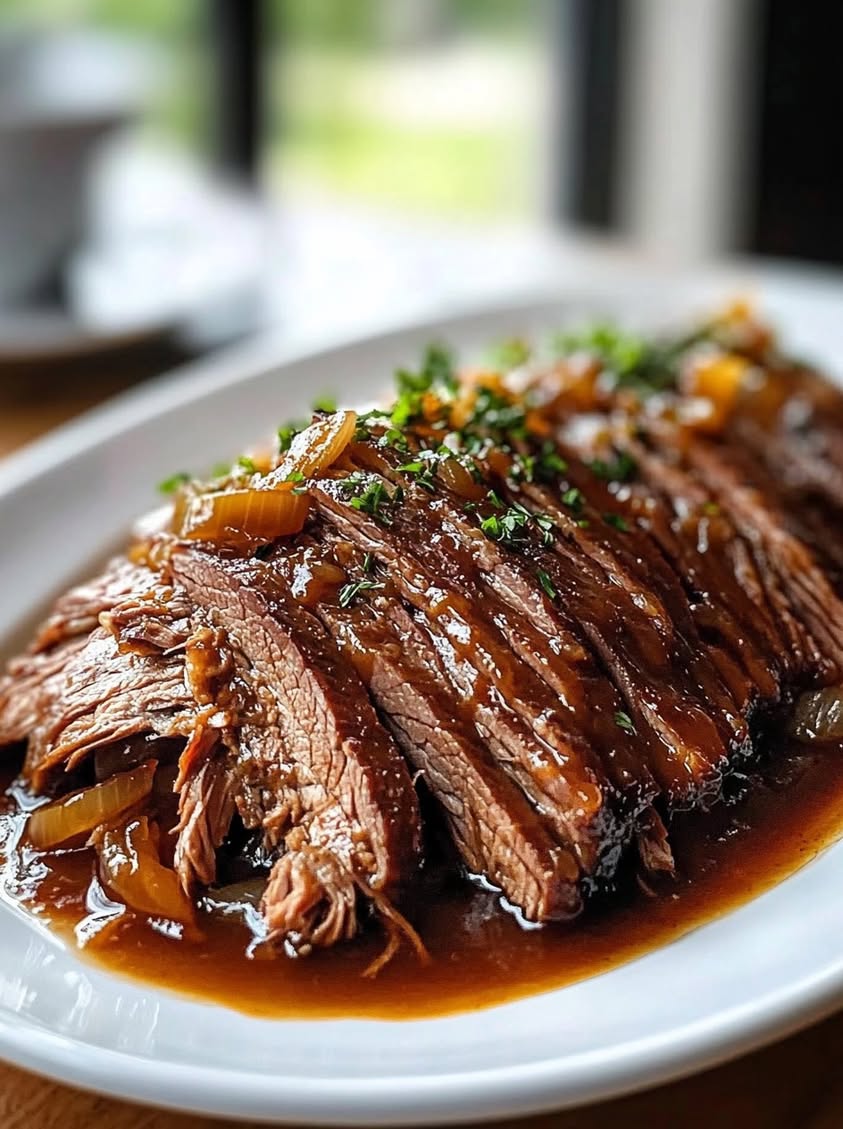
Fork-Tender Slow-Cooked Beef Brisket with Savory Pan Juices: The Ultimate Comfort Food
Imagine a dish where the meat practically melts at the touch of your fork, releasing a cascade of deep, savory flavor. This Ultimate Slow-Cooked Beef Brisket Recipe with Savory Pan Juices delivers exactly that experience. Moreover, it transforms a humble, tough cut of beef into a centerpiece of pure tenderness. The magic happens in your oven, where low and slow heat patiently breaks down connective tissue. Consequently, you get succulent slices bathed in a rich, glossy sauce that is pure liquid gold.
This recipe is a celebration of patience and simple ingredients. It requires minimal hands-on work, making it perfect for a weekend project or a stress-free dinner party. The aromatic blend of onions, garlic, and herbs fills your home with an irresistible scent for hours. Ultimately, this slow-cooked beef brisket is more than a meal; it is a comforting tradition. It promises to gather people around the table and create lasting memories with every delicious bite.
Quick Recipe Highlights
- Flavor Profile: This brisket boasts a deeply savory, umami-rich taste with subtle sweetness from caramelized onions and a hint of aromatic herbs. The savory pan juices concentrate all these flavors into a luxurious, spoonable sauce.
- Texture: The long, slow cook renders the brisket incredibly tender and moist, allowing it to be pulled apart with gentle pressure. The exterior develops a beautiful bark, while the interior remains juicy and succulent.
- Aroma: As it cooks, your kitchen will fill with the warm, comforting scents of roasting beef, sweet onions, pungent garlic, and earthy thyme. This aromatic promise is a key part of the experience.
- Visual Appeal: Sliced against the grain, the brisket reveals beautiful pinkish-gray meat with a dark, flavorful crust. Served draped in the glossy, dark brown savory pan juices, it is a rustic and inviting sight.
- Skill Level Needed: This is a beginner-friendly recipe. While it takes time, the process is straightforward and forgiving. The most important skills are patience and trusting the low-temperature oven to do its work.
- Special Equipment: You only need a large, heavy-bottomed Dutch oven or roasting pan with a tight-fitting lid. This vessel is essential for creating the moist environment needed for braising and collecting those precious juices.
Recipe Overview
- Difficulty Level: We rate this recipe as “Easy” because the technique is simple and the oven does most of the work. There is no complicated searing or precise temperature monitoring. You simply season, surround with aromatics, and let time transform the meat. The forgiving nature of braising means minor variations won’t ruin the dish.
- Category: This dish falls squarely into the category of hearty main courses and comfort food classics. It is ideal for family dinners, holiday feasts, and special occasions where a show-stopping centerpiece is desired.
- Cuisine: While brisket is celebrated in many cultures, this recipe leans into American comfort food traditions with its straightforward herb profile and braising method. It draws inspiration from classic Jewish-style brisket and Texas barbecue, but simplified for the home oven.
- Cost: Brisket is a cost-effective cut, offering a large amount of meat for a reasonable price. The other ingredients are pantry staples like onions, garlic, and broth. Overall, this recipe provides an impressive, restaurant-quality meal at a fraction of the cost.
- Season: This is the ultimate cold-weather dish, perfect for fall and winter. However, its crowd-pleasing nature makes it suitable for any gathering year-round. The comforting warmth is always welcome.
- Occasion: It is perfect for Sunday supper, Passover, Christmas, Easter, or any potluck. Its make-ahead nature and ability to feed a crowd make it a stress-free choice for entertaining.
Why You’ll Love This Recipe
First and foremost, the taste and texture are utterly transformative. This Ultimate Slow-Cooked Beef Brisket Recipe turns a notoriously tough cut into something luxuriously tender. Each bite delivers a complex symphony of savory beef flavor, enhanced by sweet onions and aromatic herbs. The savory pan juices, reduced to a glossy perfection, are so flavorful you will want to pour them over everything on your plate. Furthermore, the contrast between the slightly chewy bark and the melt-in-your-mouth interior creates a satisfying eating experience that is deeply comforting.
Convenience is another major benefit. After the initial twenty minutes of prep, the oven takes over. This hands-off cooking method frees you up to prepare sides, clean the house, or simply relax. Additionally, the recipe is incredibly forgiving. Unlike a steak that requires perfect timing, brisket benefits from extended, gentle cooking. An extra thirty minutes in the oven will only make it more tender. This flexibility removes the stress often associated with cooking a large piece of meat for guests.
Nutritionally, brisket offers a good source of high-quality protein and essential nutrients like iron, zinc, and B vitamins. While it contains fat, the long cooking process allows much of it to render out into the juices. You can easily skim this fat off the top of the savory pan juices before serving for a leaner sauce. Served with a heap of roasted vegetables or a fresh salad, this meal can be part of a balanced diet.
The social and entertaining value of this dish is immense. A whole brisket presented at the table creates a sense of occasion and abundance. It encourages sharing and conversation. Because it can be made a day or two in advance, you can be a present host rather than a frantic cook. Reheating it gently only improves the flavors, making party planning seamless and enjoyable.
Finally, this recipe is remarkably cost-effective and accessible. Brisket is one of the more affordable beef cuts, especially when considering the yield. The ingredients are simple and easy to find at any grocery store. You do not need expensive equipment or rare spices. This accessibility means anyone can create a spectacular, memorable meal without breaking the bank. It is the definition of humble ingredients elevated through technique.
Historical Background and Cultural Significance
The story of brisket is a global tale of resourcefulness. This cut comes from the breast or lower chest of the cow, a muscle that works hard. Consequently, it is dense with connective tissue, making it tough if cooked quickly. Cultures worldwide discovered that slow, moist cooking methods like braising or smoking could transform this inexpensive cut into a delicacy. From Irish corned beef to Korean *jangjorim*, the principle is the same: time and low heat are the keys to tenderness.
In American culinary tradition, brisket holds a place of honor in two distinct cultures. In Jewish cuisine, braised brisket is a centerpiece of holiday meals, especially Passover. Cooked with onions, garlic, and sometimes tomatoes or dried fruit, it symbolizes tradition and family. Meanwhile, in Texas and the American South, brisket is the king of barbecue. Pitmasters smoke it for over half a day over indirect heat, creating a smoky bark and tender interior. Both methods, though different, share the core goal of breaking down collagen into gelatin.
The evolution of the home oven recipe is a practical adaptation. Not everyone has a smoker or wants to tend a fire for 12 hours. The oven-braised method captures the spirit of these traditions by using a tightly covered Dutch oven to create a humid environment. The beef essentially steams in its own juices and those of the aromatics. This technique democratizes the fork-tender brisket, making it achievable for any home cook on any day of the week.
Regional variations are fascinating. A Texas-style oven recipe might include a coffee or chili powder rub. A Kansas City influence could bring a sweet, tomato-based sauce into the braising liquid. An Eastern European version might incorporate beer and prunes. The beauty of this Ultimate Slow-Cooked Beef Brisket Recipe with Savory Pan Juices is its simplicity; it serves as a perfect, neutral canvas. From this base, you can add your own cultural or personal twists, creating a family heirloom recipe of your own.
Ingredient Deep Dive
Beef Brisket: This is the star. A whole packer brisket has two parts: the flat (leaner) and the point (fattier). For this recipe, a “flat cut” or first cut is ideal as it is more uniform and easier to slice. Look for a piece with good marbling (thin white streaks of fat within the meat), as this fat will render and self-baste the brisket, ensuring it stays juicy. If possible, choose a brisket that is not overly trimmed; a thin fat cap on top is desirable for flavor. Store it in the coldest part of your refrigerator for up to two days before cooking, or freeze for longer storage.
Yellow Onions and Garlic: These are the aromatic foundation. Onions sweeten dramatically as they cook for hours, providing a crucial flavor base that balances the beef’s savoriness. Garlic adds its pungent, earthy notes. Do not skimp! They will practically dissolve into the savory pan juices, thickening and flavoring them naturally. Choose firm, heavy onions with dry, papery skins. Store onions and garlic in a cool, dark, dry place—not in the refrigerator, where moisture can cause them to spoil faster.
Beef Broth: This liquid is the braising medium that keeps the environment humid and contributes deep flavor. Use a good-quality, low-sodium broth so you can control the salt level of the final dish. Alternatively, you can use water, but broth adds a richer dimension. For a more intense flavor, consider using a concentrated beef stock or demi-glace. Store unopened boxes or cans in your pantry. Once opened, refrigerate and use within a few days.
Tomato Paste: This ingredient is a flavor powerhouse. A small amount adds umami, a touch of acidity, and helps color the pan juices a beautiful deep brown. It also contributes to the sauce’s body. Look for tomato paste in a tube so you can use a small amount and save the rest without waste. Double-concentrated paste offers even more flavor. Store an opened tube in the refrigerator for several weeks.
Fresh Thyme and Bay Leaves: These herbs provide the classic aromatic backdrop. Thyme’s slightly minty, lemony flavor pairs perfectly with beef. Bay leaves add a subtle, almost floral complexity. Always use fresh thyme for the brightest flavor; dried thyme can be substituted but use half the amount. Bay leaves should be whole and removed before serving. Store fresh thyme wrapped in a damp paper towel in the refrigerator. Store dried bay leaves in your spice cabinet.
Common Mistakes to Avoid
- Not Trimming Excess Fat: While some fat is good, a very thick fat cap (over 1/4 inch) will not fully render and can make the dish greasy. Conversely, trimming all the fat off will leave the meat dry. Aim for a thin, even layer.
- Skipping the Seasoning Step: Generously seasoning the brisket on all sides with salt and pepper is non-negotiable. This seasoning penetrates the meat during the long cook and forms the foundation of the crust and the flavorful juices.
- Using a Pot That’s Too Small: The brisket needs to sit snugly, but not crammed, in the pot with the onions around it. If the pot is too small, the meat will steam instead of braise properly, and the onions may burn.
- Peeking During Cooking: Every time you open the oven to check, you release a significant amount of heat and steam. This can lower the oven temperature and extend the cooking time unnecessarily. Trust the process and wait until the minimum time is up.
- Not Cooking It Long Enough: Brisket is done when it is tender, not when it reaches a specific internal temperature. If a fork doesn’t slide in and out with minimal resistance, it needs more time. Undercooked brisket will be chewy and tough.
- Slicing With the Grain: This is the most common serving mistake. Always identify the direction of the muscle fibers (the grain) and slice perpendicularly (against the grain). This cuts the long fibers into short pieces, making the meat dramatically more tender to eat.
- Discarding the Pan Juices: Those savory pan juices are liquid gold, packed with concentrated flavor. Never throw them out. Always strain them, skim the fat, and reduce them slightly on the stovetop to create your sauce.
- Using High Heat to Reheat: Reheating brisket quickly in a microwave or a hot oven will dry it out. Always reheat it gently, covered, in a low oven (300°F) with some of the juices to keep it moist.
Essential Techniques
Braising: This is the core technique. Braising involves first surrounding the meat with aromatics and then cooking it in a covered pot with a small amount of liquid. The covered environment creates moist heat that gently breaks down tough collagen into soft gelatin. The key is a tight-fitting lid to trap steam. Without this, the liquid can evaporate too quickly, leading to dry meat and potentially burned ingredients.
Reducing the Pan Juices: After cooking, the liquid in the pot is flavorful but often thin. Pouring it into a saucepan and simmering it uncovered allows water to evaporate. This concentrates the flavors and thickens the sauce slightly. A good reduction should coat the back of a spoon. Skimming the fat from the surface before reducing gives you a cleaner, glossier sauce.
Slicing Against the Grain: Identifying the grain is crucial. Look for the long, parallel lines of muscle fiber running along the brisket. Place your knife perpendicular to those lines and slice. This action cuts the fibers into short segments, which your teeth can easily break apart. Slicing with the grain leaves long, stringy fibers that are difficult to chew, undermining all your slow-cooking work.
Resting the Meat: After removing the brisket from the oven, let it rest in the pot, covered, for at least 20-30 minutes. This allows the juices, which have been driven to the center by the heat, to redistribute throughout the meat. Slicing immediately will cause all those precious juices to run out onto the cutting board, leaving the brisket drier. Resting ensures every slice is juicy.
Pro Tips for Perfect Fork-Tender Slow-Cooked Beef Brisket
For the best bark, pat the brisket completely dry with paper towels before seasoning. Moisture on the surface will steam the meat instead of allowing a nice crust to form.
Season the brisket liberally the night before and leave it uncovered on a rack in the fridge. This dry-brine helps season the meat deeply and dries the surface further for better browning.
If your brisket seems to be cooking too quickly on the bottom, create a “rack” with a layer of thick onion slices. This elevates the meat slightly and prevents direct contact with the hot pot.
To test for doneness, use a fork or a thin, sharp skewer. It should insert into the thickest part with almost no resistance, like pushing into room-temperature butter.
If the pan juices are too fatty after skimming, a teaspoon of cornstarch slurry (mixed with cold water) can be whisked in during the reduction for a thicker, gravy-like consistency.
For deeper flavor, add a splash of red wine or a tablespoon of Worcestershire sauce to the broth before pouring it into the pot.
Leftover brisket makes incredible sandwiches. Pile thin slices on a good roll, top with pickles and onions, and drizzle with warmed pan juices.
Always use a sharp carving knife for slicing. A dull knife will tear the meat and ruin your beautiful, clean slices against the grain.
Variations and Adaptations
For a Texas-inspired twist, rub the brisket with a blend of coarse salt, black pepper, smoked paprika, and a touch of chili powder before cooking. Add a cup of strong black coffee to the braising liquid for a deep, bitter note that complements the beef.
In the fall, add chunks of carrots, parsnips, and celery to the pot during the last 90 minutes of cooking. This creates a complete one-pot meal with vegetables that soak up the incredible savory pan juices.
For a gluten-free version, ensure your beef broth is certified gluten-free. The recipe is naturally gluten-free as written, but always check labels on broths and tomato paste for hidden additives.
To add a sweet and tangy element, stir a quarter cup of apple cider vinegar and two tablespoons of brown sugar into the broth. This creates a flavor profile reminiscent of Carolina barbecue, balanced by the richness of the beef.
For a smoother sauce, after reducing the pan juices, use an immersion blender to puree the softened onions and garlic directly into the liquid. This creates a naturally thick, velvety sauce without any need for flour or cornstarch.
For individual servings, after the brisket is cooked and sliced, portion it into oven-safe dishes, cover with juices and onions, and reheat to serve. This is elegant for dinner parties.
Serving and Presentation Guide
Plating is key for visual appeal. Slice the entire brisket against the grain and arrange the slices slightly overlapping on a large, warm platter. Spoon a generous amount of the hot, reduced savory pan juices over the top, allowing some to pool around the meat. Scatter the soft, caramelized onions from the pot over and around the slices for texture and color.
Garnishing adds freshness. A sprinkle of finely chopped fresh parsley or chives provides a vibrant green contrast to the deep brown meat and sauce. For a bit of brightness, a few microgreens or a very light zest of lemon over the top can elevate the dish without overpowering it.
Traditional accompaniments include creamy mashed potatoes, buttery egg noodles, or soft polenta—all perfect for soaking up the juices. For vegetable sides, roasted carrots, braised greens like kale or collards, or a simple steamed green bean salad provide balance.
Modern serving suggestions include using the brisket as a topping for loaded baked potatoes or as a filling for tacos with pickled red onions and cotija cheese. Shredded leftovers are fantastic on pizza or in a breakfast hash with potatoes and eggs.
Serve the brisket very warm, but not piping hot. Allowing it to sit for 5-10 minutes after saucing lets the flavors settle. Keep the extra pan juices warm in a gravy boat on the table so guests can add more as desired.
For portion control, a good rule of thumb is about 1/2 pound of raw brisket per person, which yields roughly a 6-ounce cooked portion. Since brisket is rich, people often eat less than they think, making it great for leftovers.
Wine and Beverage Pairing
Wine pairings should complement the rich, savory flavors. A full-bodied red wine with good acidity is ideal. California Zinfandel, with its jammy fruit and spice notes, stands up beautifully. Alternatively, a Syrah/Shiraz offers peppery tones that match the black pepper seasoning. For a smoother option, choose an aged Cabernet Sauvignon; its tannins are softened and pair wonderfully with the fat in the beef.
Non-alcoholic alternatives can be just as thoughtful. A tart cherry juice or pomegranate juice spritzer mimics the acidity and fruitiness of red wine. For a richer option, a smoked black tea or a chicory-based coffee drink can echo the deep, roasted notes of the brisket and its savory pan juices.
While not traditional, a strong, malty beer is an excellent pairing. A brown ale, porter, or even a stout can complement the caramelized notes and rich meat. The carbonation also helps cut through the richness, cleansing the palate between bites.
Serve red wines at a cool room temperature, around 60-65°F. Chilling them slightly below typical room temperature can make them more refreshing. Non-alcoholic beverages should be served well-chilled. Always have plenty of cool water on the table to cleanse palates and hydrate guests.
For a crowd, consider offering both a red wine and a robust beer option. Place bottles on the table so guests can help themselves. For a non-alcoholic anchor, a large pitcher of sparkling water with citrus slices is always a welcome and refreshing choice.
Storage and Shelf Life
Proper storage is essential for food safety and quality. Let the brisket and juices cool to room temperature within two hours of cooking. Do not leave them out on the counter for longer. Store the sliced or unsliced brisket in an airtight container, completely submerged in or topped with the strained pan juices. This prevents the meat from drying out in the refrigerator.
Refrigerate the brisket for up to 4 days. The flavor often improves after a day or two as the spices and juices further penetrate the meat. Always use clean utensils to remove portions from the storage container to prevent bacterial contamination.
For freezing, portion the brisket and juices into freezer-safe bags or containers. Squeeze out excess air to prevent freezer burn. Properly stored, it will maintain best quality for 2-3 months, though it remains safe to eat longer. Thaw overnight in the refrigerator.
Signs of spoilage include a sour or off odor, a slimy texture on the surface of the meat, or mold growth. If you see any of these signs, discard the brisket immediately. Do not taste it.
Reheating must be done gently. Place the brisket and juices in a covered oven-safe dish. Add a splash of water or broth if the juices have thickened. Heat in a 300°F oven until warmed through, about 20-30 minutes for slices. You can also reheat slices gently in a covered skillet with a bit of the juices over low heat.
Make Ahead Strategies
This Ultimate Slow-Cooked Beef Brisket Recipe is a make-ahead dream. In fact, many cooks believe it tastes better the next day. You can cook the brisket completely up to three days before serving. After cooking, let it cool in its juices, then store the whole pot (if it fits) or transfer everything to a storage container in the refrigerator.
The storage step between cooking and serving actually improves the dish. The flavors have more time to meld and intensify. The fat in the juices will solidify on top, making it incredibly easy to remove for a leaner sauce. This is a significant advantage over serving it immediately.
Assembling for service is simple. Remove the cold brisket from the solidified fat and juices. Slice it cold against the grain—it is much easier to get clean slices when the meat is firm. Arrange the slices in your serving dish. Scrape the fat off the jellied juices, then warm the juices in a saucepan to liquefy them. Pour the warm juices over the cold sliced meat.
Reheating guidelines are crucial for quality. Cover the sauced brisket dish tightly with foil. Reheat in a 325°F oven until the meat is hot all the way through, about 30-45 minutes depending on the amount. This gentle reheating prevents the meat from drying out or becoming tough.
Add fresh elements just before serving. After reheating, garnish with your fresh herbs. If you’ve skimmed all the fat from the sauce, a small drizzle of good olive oil over the top before garnishing can add back a pleasant richness and shine.
Scaling Instructions
Halving the recipe is straightforward for smaller households. Use a 3-4 pound brisket flat. Halve all other ingredients proportionally. Use a medium Dutch oven. The cooking time may be slightly less, so start checking for fork-tender doneness at the 3-hour mark. The savory pan juices will be less voluminous but just as flavorful.
Doubling or tripling for a crowd requires planning. You will need a very large roasting pan with a tight-fitting lid or heavy-duty foil. Ensure the briskets are in a single layer and not stacked. You may need to increase the initial oven time by 30-60 minutes. Stir the onions and rotate the pans (if using multiple) halfway through cooking for even heating.
Equipment adjustments are necessary when scaling up. A standard home oven can typically handle one large roasting pan. For a truly large batch, consider borrowing a commercial-sized electric roaster oven, which is designed for this purpose and frees up your kitchen oven for sides.
Timing modifications are minimal due to the forgiving braise. However, a significantly larger mass of meat and liquid will take longer to come up to temperature. Always use the fork-tenderness test as your true guide, not the clock. Plan for extra time just in case.
Storage considerations for large batches are important. Portion the cooked brisket and juices into several smaller containers for faster cooling in the refrigerator. This is safer than trying to cool a giant pot, which can stay in the “danger zone” for too long.
Nutritional Deep Dive
A 4-ounce serving of cooked lean brisket provides approximately 30 grams of high-quality protein, essential for muscle repair and satiety. It is also a significant source of heme iron, which is more easily absorbed by the body than plant-based iron, and zinc, which supports immune function. The long cooking process renders out much of the saturated fat, especially if you skim the solidified fat from the chilled savory pan juices before reheating.
The micronutrient profile is impressive. Brisket is rich in B vitamins, particularly B12, which is crucial for nerve function and energy metabolism, and B6, which helps the body make serotonin. It also contains selenium, a powerful antioxidant. The onions and garlic contribute vitamin C, quercetin, and allicin, compounds with anti-inflammatory and cardiovascular benefits.
For weight management, focus on portion control. A 4-6 ounce serving of brisket with a large portion of non-starchy vegetables and a modest amount of a complex carb like sweet potato can be part of a balanced meal. The high protein content promotes feelings of fullness, which can help prevent overeating. Avoid drowning your plate in the pan juices; a few tablespoons for flavor are sufficient.
Dietary considerations include the high sodium content if you use a regular broth and season heavily. Opt for low-sodium broth and be mindful of added salt. The dish is naturally gluten-free and dairy-free as written. For those on a low-carb or keto diet, this brisket is an excellent choice, especially when served with cauliflower mash instead of potatoes.
Dietary Adaptations
Gluten-Free: This recipe is inherently gluten-free. The only potential source is the beef broth, as some brands use wheat-based additives. Always choose a broth labeled “certified gluten-free” to be safe. All other ingredients—beef, vegetables, herbs—are naturally free of gluten.
Dairy-Free: The standard recipe contains no dairy. It is safe for those avoiding milk, cheese, or butter. The richness comes entirely from the beef and its rendered fats, not from any dairy products.
Low-Carb/Keto: This is a fantastic keto-friendly main dish. A serving has virtually no carbs. Serve it with keto-approved sides like mashed cauliflower, roasted radishes, or a large green salad with a high-fat dressing. Ensure any commercial broth used has no added sugar.
Paleo: To make this Paleo-compliant, ensure your beef is grass-fed if possible. Use a broth that is free of additives, sugar, and soy. The tomato paste is generally accepted in moderation on a Paleo diet. Serve with root vegetables like carrots or parsnips.
Low-FODMAP: Onions and garlic are high in FODMAPs. Substitute the onions with the green tops of scallions (green parts only). Infuse the broth with garlic-infused oil (with the solids strained out) instead of whole garlic cloves. These swaps will provide similar flavor without the problematic carbohydrates.
Whole30: This recipe can be Whole30-compliant with careful ingredient selection. Use a broth with no sugar, soy, or MSG. Check that your tomato paste has no added sugar or sulfites. It is a perfect protein for the program when paired with compliant vegetables.
Troubleshooting Guide
Brisket is Tough and Chewy: This means it is undercooked. The collagen hasn’t fully converted to gelatin. The solution is simple: put it back in the oven. Add a bit more broth if the juices are low, cover tightly, and continue cooking. Check for tenderness every 30-45 minutes until the fork slides in easily.
Brisket is Dry: Dryness usually results from overcooking without enough moisture or using an overly lean cut. Unfortunately, you can’t add moisture back into the meat fibers. For future cooks, ensure there is always at least an inch of liquid in the pot, and choose a brisket with some marbling. For now, serve the dry brisket with extra generous amounts of the reduced savory pan juices to compensate.
Pan Juices are Too Thin/Watery: This is common. Pour all the juices into a saucepan and simmer vigorously over medium-high heat. As water evaporates, the flavors will concentrate and the sauce will thicken slightly. You can also create a slurry with a teaspoon of arrowroot or cornstarch and a tablespoon of cold water, then whisk it into the simmering juices until thickened.
Pan Juices are Too Salty: Dilution is the answer. Add a cup of low-sodium broth or water to the juices and bring to a simmer. You can also stir in a peeled, raw potato chunk and simmer for 15-20 minutes; the potato will absorb some salt. Remove the potato before serving. For future reference, use low-sodium broth and season carefully.
Onions Burned on Bottom: If the heat was too high or the liquid evaporated, the onions can scorch. If the burnt taste has permeated the juices, it’s difficult to fix. Next time, ensure there is sufficient liquid and use a diffuser under your pot if you have an electric stove with intense heat spots. For a minor burn, carefully pour off the unburnt juices, leaving the charred bits behind.
Not Enough Pan Juices: If your pot wasn’t sealed tightly, too much liquid may have evaporated. When you uncover the brisket, add enough hot broth or water to come about halfway up the side of the meat. Continue cooking covered for another 30 minutes to allow the new liquid to become infused with flavor.
Recipe Success Stories
Community feedback on this Ultimate Slow-Cooked Beef Brisket Recipe has been overwhelmingly positive. Many home cooks report it was their first time attempting brisket and they were thrilled with the “restaurant-quality” results. A common theme is the surprise at how simple the process truly is. One reader mentioned serving it for a holiday dinner to rave reviews, with guests insisting on taking leftovers home.
Variation successes are fun to hear. One family added a bottle of stout beer to the braising liquid for a St. Patrick’s Day feast. Another reader, living in a small apartment without a Dutch oven, successfully adapted it using a slow cooker on the low setting for 10 hours, with excellent results. The versatility of the method is a key part of its appeal.
Adaptation stories for dietary needs are inspiring. A reader following a low-FODMAP diet used the scallion green and garlic oil substitution and reported it was the first time in years they could enjoy a brisket without digestive issues. Their gratitude for providing clear adaptation notes was a wonderful reminder of why inclusive recipes matter.
Reader suggestions have improved the recipe over time. The pro tip about dry-brining the night before came from a commenter. Another suggested lining the pot with parchment paper under the onion “rack” for even easier cleanup. The community of home cooks constantly refines and shares knowledge, making the recipe better for everyone.
Photography tips from readers are invaluable. The best advice is to shoot in natural light, with the brisket sliced and glistening with sauce. A dark, textured background makes the meat’s colors pop. A fork pulling apart an incredibly tender piece is a classic shot that perfectly conveys the recipe’s promise.
Frequently Asked Questions
Q: Can I make this in a slow cooker?
A: Absolutely. Follow all prep steps (seasoning, layering onions). Place everything in your slow cooker. Cook on LOW for 8-10 hours. The results will be very similar, though you may not get as much surface bark. Transfer the juices to a saucepan to reduce and thicken after cooking.
Q: What’s the difference between a “flat cut” and a “point cut” brisket?
A: The flat cut is leaner, more uniform, and easier to slice neatly. The point cut has more internal fat (marbling) and connective tissue, making it incredibly flavorful but harder to slice evenly. For this braised recipe, the flat cut is recommended for its consistency.
Q: My brisket has a layer of hard fat. Should I remove it?
A: Yes, trim any very hard, thick white fat down to about a 1/4-inch layer. Soft, flexible fat and internal marbling should be left alone, as they will render and baste the meat.

I’m Billy, a classically trained culinary school graduate from The Culinary Institute of America with over 12 years in the restaurant industry and over 19 years of cooking experience.