
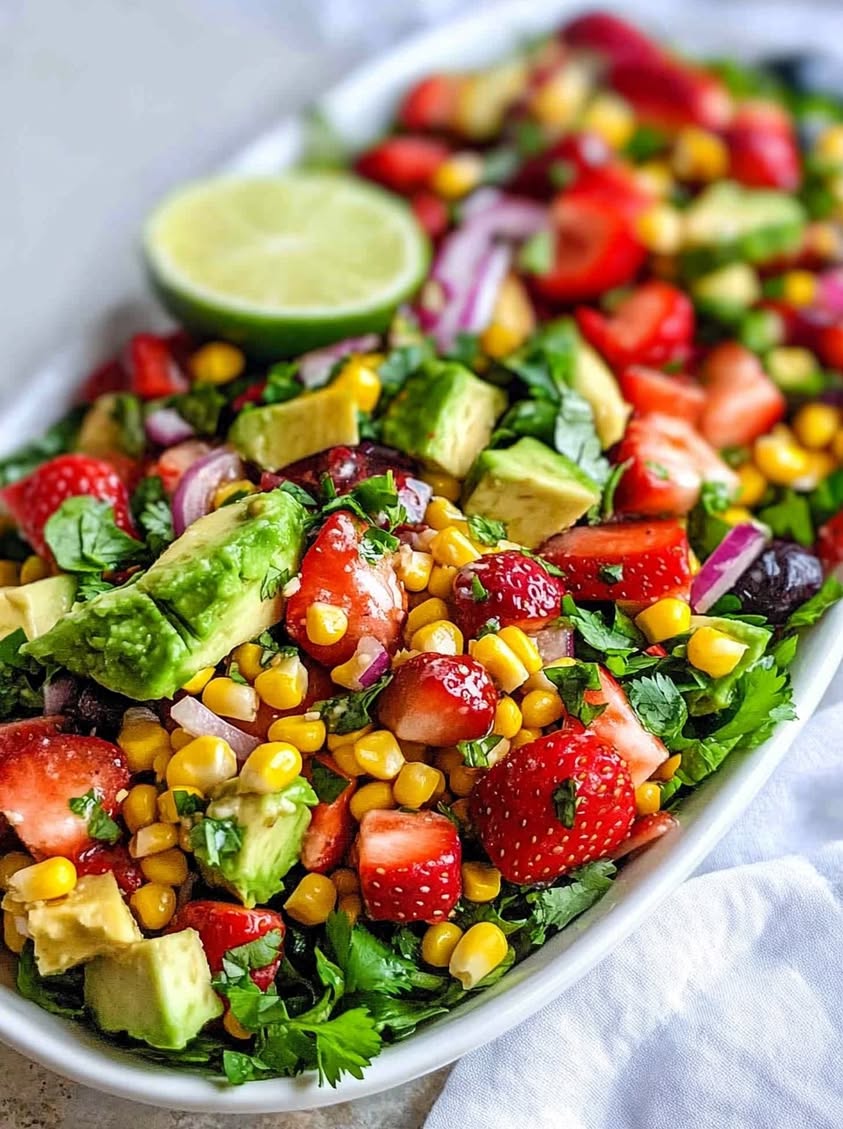
Fresh Strawberry Avocado Corn Salad with Zesty Lime Dressing Recipe: A Summer Sensation
Welcome to the ultimate guide for creating a stunning Fresh Strawberry Avocado Corn Salad with Zesty Lime Dressing Recipe. This vibrant dish captures the very essence of summer on a plate. Moreover, it combines sweet, savory, and tangy flavors in a way that is both unexpected and utterly delightful. Imagine biting into juicy strawberries, creamy avocado, and crisp sweet corn, all coated in a bright, herbaceous lime dressing. Consequently, this salad is not just a side dish; it’s a conversation starter and a guaranteed crowd-pleaser for any warm-weather gathering.
This Fresh Strawberry Avocado Corn Salad with Zesty Lime Dressing Recipe is a celebration of peak-season produce. Each ingredient shines individually, yet together they create a harmonious and complex flavor profile. The recipe is incredibly versatile, serving perfectly as a light lunch, a dazzling side at a barbecue, or even a festive potluck contribution. Furthermore, it requires minimal cooking and comes together in under 30 minutes, making it the ideal solution for busy weeknights or last-minute entertaining. Ultimately, it’s a healthy, beautiful, and delicious way to enjoy the best fruits and vegetables of the season.
Quick Recipe Highlights
- Flavor Profile: This salad masterfully balances sweet strawberries and corn with rich, buttery avocado. The zesty lime dressing, brightened with cilantro and a hint of honey, ties everything together with a perfect sweet-tangy punch.
- Texture: You get a wonderful contrast of textures in every bite. Creamy avocado melts against the juicy burst of strawberry, while the crisp corn and crunchy red onion provide a satisfying freshness. The overall mouthfeel is light yet substantial.
- Aroma: The moment you toss the salad, fresh aromas fill the air. Zesty lime and fragrant cilantro are most prominent, followed by the sweet scent of ripe strawberries and the earthy note of fresh corn.
- Visual Appeal: This is a truly photogenic dish. The vibrant red strawberries, green avocado and cilantro, yellow corn, and purple-red onion create a stunning confetti of colors that looks as good as it tastes.
- Skill Level Needed: Absolutely beginner-friendly. The only “cooking” involved is quickly charring the corn. The rest is simple chopping and whisking, making it accessible for cooks of all levels.
- Special Equipment: No special tools are required. A good chef’s knife, a cutting board, a mixing bowl, and a small whisk for the dressing are all you need. A grill pan or skillet is helpful for the corn.
Recipe Overview
- Difficulty Level: This recipe is rated “Easy” because it involves fundamental kitchen skills like chopping, whisking, and simple sautéing. There are no advanced techniques or precise baking times to worry about. The instructions are straightforward, and the assembly is forgiving, allowing for personal touches and ingredient adjustments without risk of failure.
- Category: This dish fits beautifully into multiple categories. It is primarily a salad, but its heartiness allows it to stand as a light vegetarian main course. It also excels as a vibrant side dish for grilled proteins like chicken, fish, or shrimp, making it incredibly versatile for meal planning.
- Cuisine: While not tied to one specific tradition, this salad draws inspiration from modern Californian and Southwest cuisines, which celebrate fresh, local produce and bold, contrasting flavors. The use of lime, cilantro, and avocado nods to Latin American influences, creating a fresh fusion feel.
- Cost: This is a moderately priced recipe, with cost largely dependent on seasonality. Strawberries and corn are very affordable in summer. Avocado and red onion are typically budget-friendly year-round. Overall, it provides a high-end restaurant feel for a fraction of the cost, making it a fantastic value.
- Season: This Fresh Strawberry Avocado Corn Salad with Zesty Lime Dressing Recipe is unquestionably a summer superstar. It is best made when strawberries and sweet corn are at their peak ripeness and flavor, typically from late spring through early fall. Using in-season produce guarantees the sweetest, most flavorful results.
- Occasion: Perfect for casual weeknight dinners, weekend barbecues, potlucks, picnics, and bridal or baby showers. Its bright colors and fresh flavors make it especially suitable for outdoor dining and warm-weather celebrations like Memorial Day or the Fourth of July.
Why You’ll Love This Recipe
First and foremost, the taste and texture combination is irresistibly addictive. The natural sweetness of strawberries and corn plays perfectly against the rich, creamy avocado. Then, the zesty lime dressing cuts through the richness with its herbal, tangy flavor. Every forkful delivers a party of contrasting sensations that are both refreshing and satisfying. Consequently, this salad never feels boring or one-note; it is a complex eating experience that will have you and your guests coming back for more.
From a convenience standpoint, this recipe is a true winner. It requires minimal active cooking time and uses simple techniques. You can easily prepare the dressing and chop the vegetables ahead of time for quick assembly later. Furthermore, it’s a one-bowl wonder for serving, meaning fewer dishes to wash. This makes it an ideal choice for busy days when you want a healthy, homemade meal without spending hours in the kitchen. Ultimately, it proves that impressive food doesn’t have to be complicated.
Nutritionally, this Fresh Strawberry Avocado Corn Salad with Zesty Lime Dressing Recipe is a powerhouse. Strawberries are packed with vitamin C and antioxidants. Avocado provides heart-healthy monounsaturated fats and fiber. Sweet corn offers energy-sustaining complex carbohydrates and beneficial plant compounds. The olive oil in the dressing is another source of good fats. Together, they create a meal that supports overall health, promotes glowing skin, and provides lasting energy without the crash associated with heavy, processed foods.
For social gatherings, this salad is a guaranteed star. Its stunning visual appeal immediately draws people in and signals that care was put into the meal. It caters to various dietary preferences, being naturally vegetarian, gluten-free, and easily adaptable for vegans. Moreover, it pairs seamlessly with almost any main dish, from grilled steak to veggie burgers. Serving this salad shows thoughtfulness and a flair for seasonal cooking, making you the host everyone admires.
Finally, this recipe is remarkably cost-effective and accessible. The ingredients are common and can be found at any standard grocery store. When made in season, it is incredibly affordable for the gourmet result it delivers. You don’t need expensive equipment or rare ingredients. This accessibility ensures that anyone can recreate this restaurant-quality dish at home, making healthy, beautiful eating an everyday possibility rather than a special occasion treat.
Historical Background and Cultural Significance
The origin of combining fruits like strawberries with savory ingredients in salads is a practice with deep roots in various culinary traditions, though this specific combination is a modern innovation. Californian cuisine, which emerged in the 1970s, heavily emphasized “fusion” cooking and using the freshest local, seasonal produce. Chefs like Alice Waters championed this philosophy, encouraging the mixing of sweet and savory elements from the bounty of the state’s farms. This Fresh Strawberry Avocado Corn Salad with Zesty Lime Dressing Recipe is a direct descendant of that culinary movement, celebrating the simultaneous harvest of strawberries and corn in the region.
Culturally, the salad represents a shift towards lighter, vegetable-forward eating that prioritizes flavor and health. It embodies a contemporary American approach to food that is global yet local. The inclusion of avocado, once exotic but now a staple, and cilantro, an herb prevalent in Mexican cooking, shows how immigrant foodways have been seamlessly woven into the mainstream culinary fabric. This dish is less about a single tradition and more about a modern, inclusive food culture that freely borrows and combines the best flavors from around the world.
The evolution of this recipe follows the trend of “main course salads” that gained popularity in the late 20th and early 21st centuries. As home cooks sought meals that were both nutritious and quick, salads transformed from simple side dishes of lettuce and tomato into hearty, component-rich meals. The addition of substantial ingredients like avocado and corn turns this from a garnish into a satisfying focal point. The zesty lime dressing reflects a growing preference for vibrant, acidic vinaigrettes over heavier cream-based dressings.
Regional variations of this concept abound, demonstrating its adaptability. In the Southern United States, a similar salad might include peaches or black-eyed peas. In coastal areas, grilled shrimp or crab might be added. A Mediterranean version could swap strawberries for cherries and cilantro for mint, using a lemon-olive oil dressing. This flexibility is key to the recipe’s enduring appeal; it provides a perfect template that can be tweaked based on what is freshest and most inspiring at your local market, making it a timeless seasonal classic.
Ingredient Deep Dive
Fresh Strawberries: Historically, wild strawberries have been enjoyed for millennia, but the modern garden strawberry we know is a hybrid developed in 18th-century France. Nutritionally, they are a vitamin C powerhouse, containing more per serving than oranges, and are rich in antioxidants like anthocyanins, which give them their red color. For the best salad, select berries that are uniformly red, fragrant, and firm with bright green caps. Avoid any with white shoulders or bruising. Store them unwashed in a single layer in the refrigerator and wash just before using. If strawberries aren’t in season, you can substitute with ripe mango, peaches, or even pomegranate arils for a different sweet-tart pop.
Avocado: Originating in south-central Mexico, avocados have been cultivated for over 5,000 years and were prized by ancient Mesoamerican cultures. They are uniquely rich in monounsaturated fats, which support heart health, and are an excellent source of fiber, potassium, and vitamins C, E, and K. Choose an avocado that yields slightly to gentle pressure near the stem. To speed ripening, place it in a paper bag with a banana. Store ripe avocados in the refrigerator to pause ripening. For a substitute in a pinch, try creamy goat cheese or even blanched, chopped asparagus for a different texture, though the rich flavor will differ.
Sweet Corn: A staple originating in Mesoamerica, corn was domesticated from a wild grass and is deeply woven into the history of the Americas. Fresh sweet corn provides fiber, B vitamins, and antioxidants like lutein. For the ultimate flavor, seek out locally grown corn with bright green, snug husks and moist, golden silk. The kernels should be plump and release a milky liquid when punctured. To store, keep ears in their husks in the refrigerator and use within a few days. While fresh-off-the-cob is ideal, high-quality frozen or canned corn (well-drained) can work as a time-saving substitute.
Cilantro & Lime (The Dressing Base): This duo is foundational in Latin American, Asian, and Middle Eastern cuisines. Cilantro, also called coriander leaf, has a bright, citrusy flavor that people either love or find soapy due to a genetic trait. It contains antioxidants and may aid in detoxification. Lime juice is rich in vitamin C and aids in iron absorption from the greens. For the best dressing, use freshly squeezed lime juice and finely chop the cilantro stems for extra flavor. If cilantro is a problem, flat-leaf parsley or fresh basil make excellent, though distinct, substitutes. Bottled lime juice lacks the fresh, bright punch and is not recommended.
Common Mistakes to Avoid
- Using Overripe or Underripe Avocado: An underripe avocado will be hard and tasteless, while an overripe one turns mushy and brown. Aim for that perfect slight give. To salvage a cut underripe avocado, drizzle it with lime juice and let it sit; the acid can help soften it slightly.
- Not Drying the Strawberries: After washing strawberries, failing to pat them thoroughly dry will introduce extra water into the salad. This extra moisture will dilute the flavorful dressing and make the salad soggy very quickly, compromising the texture.
- Overcooking or Undercooking the Corn: Boiling corn too long leaches its sweetness into the water. Conversely, not cooking it enough leaves it starchy. The goal for this salad is a quick char or blanch to enhance sweetness while maintaining a crisp-tender bite.
- Chopping Ingredients Inconsistently: Huge chunks of avocado and tiny pieces of strawberry create an unbalanced eating experience. Strive for a relatively uniform, bite-sized dice so that each forkful contains a bit of every ingredient.
- Adding Dressing Too Early: Tossing the salad with the dressing more than 10-15 minutes before serving is a critical error. The acid in the lime will start to “cook” the avocado and strawberries, causing them to break down and become mushy.
- Skimping on Salt: Salt is not just for savoriness; it is a flavor enhancer that makes the sweetness of the strawberries and corn pop. Always season the dressing adequately and taste it before adding it to the salad. An underseasoned salad will taste flat.
- Using Stale Spices or Old Oil: If your black pepper is dusty or your olive oil has been in a warm cupboard for a year, it will negatively impact the dressing’s flavor. Use freshly cracked black pepper and fresh, good-quality extra virgin olive oil for the best taste.
- Ignoring the Onion’s Bitterness: Slicing red onion and adding it raw can sometimes impart a harsh, overpowering bite. Soaking the slices in cold water for 5-10 minutes tames this sharpness while keeping their delightful crunch and color.
Essential Techniques
Charring Corn for Depth: Charring corn on a grill pan or skillet is crucial because it caramelizes the natural sugars, adding a smoky, complex flavor that elevates the entire salad. To master it, shuck the corn and brush lightly with oil. Place it on a hot, dry grill pan, turning occasionally until kernels have dark brown spots. A common pitfall is moving the corn too often; let it sit to develop a good sear. Visual cues for success are evenly distributed, deep golden-brown marks on the kernels without burning the cob itself.
Emulsifying the Dressing: Properly emulsifying the dressing ensures a cohesive, glossy coating that clings to the ingredients instead of pooling at the bottom of the bowl. The technique involves slowly whisking the oil into the acid and other ingredients to create a temporary suspension. To master it, combine all non-oil ingredients first, then whisk vigorously while streaming in the oil in a thin, steady stream. The pitfall is adding the oil too quickly, which causes separation. Success is visible when the dressing thickens slightly and looks uniform, not oily or broken.
Dicing Avocado Cleanly: Cutting avocado neatly preserves its shape and presentation. The importance lies in preventing mushiness. To master it, slice the avocado in half around the pit, twist to separate, and carefully tap a knife into the pit to remove it. Make lengthwise and crosswise cuts in the flesh while still in the skin, then scoop out the perfect dice with a spoon. The common pitfall is hacking at the avocado with a knife, which smashes it. Success yields clean, cube-like pieces that hold their shape when tossed gently.
Pro Tips for Perfect Fresh Strawberry Avocado Corn Salad
For maximum flavor, use the corn immediately after charring it while it’s still warm. The residual heat will slightly wilt the spinach or greens if using, creating a wonderful wilted salad base that soaks up the dressing beautifully.
Toast any optional nuts or seeds like pepitas or slivered almonds in a dry pan until fragrant. This simple step adds a crucial layer of nutty flavor and extra crunch that complements the creamy and juicy components perfectly.
When making the dressing, use a microplane to zest the lime directly into the bowl before juicing it. The zest contains potent aromatic oils that will infuse the dressing with an intense, perfumed lime flavor you can’t get from juice alone.
If preparing components ahead, store the chopped strawberries, diced avocado (tossed with a squeeze of lime), and dressing separately in airtight containers in the fridge. Combine everything just before serving to maintain ideal texture and freshness.
For a more substantial meal, add a protein directly on top. Grilled shrimp, shredded rotisserie chicken, black beans, or crumbled queso fresco or feta cheese turn this vibrant side into a complete and satisfying main course effortlessly.
Always taste your dressing on a leaf of spinach or a piece of corn before committing it to the whole salad. Adjust the balance of sweet (honey), acid (lime), and salt until it makes your taste buds sing.
Use a sharp serrated knife to hull and chop the strawberries. A serrated blade glides through the berry’s skin without crushing the delicate flesh, resulting in cleaner cuts and less juice lost on the cutting board.
Variations and Adaptations
Regional Variations: Give the salad a Southern twist by using fresh peaches instead of strawberries and adding crumbled bacon. For a coastal version, fold in lump crab meat or small cooked shrimp. A Mediterranean adaptation could feature cherries, chopped mint, and crumbled feta cheese with a lemon-oregano vinaigrette, showcasing how the template adapts to local flavors.
Seasonal Adaptations: This recipe is a blueprint for year-round enjoyment. In fall, use roasted cubed sweet potato and apples with a maple-Dijon dressing. For winter, try segments of citrus like blood oranges and grapefruit with pomegranate arils. In spring, asparagus tips and sugar snap peas make excellent fresh additions, ensuring you can enjoy a vibrant salad every month.
Dietary Modifications: For a vegan version, ensure the honey in the dressing is swapped for agave nectar or maple syrup. To make it nut-free, omit any nut garnishes and use sunflower seeds instead. For a lower-carb option, reduce the amount of corn and increase the volume of non-starchy vegetables like diced cucumber or bell peppers.
Flavor Variations: Experiment with different herbs; basil or mint can replace cilantro for a different aromatic profile. Add a pinch of smoked paprika or chipotle powder to the dressing for a smoky kick. A tablespoon of finely minced shallot can add a more subtle onion flavor than red onion.
Texture Modifications: For extra crunch, add toasted pepitas, sunflower seeds, or tortilla strip croutons. For added creaminess, include small balls of fresh mozzarella (bocconcini) or creamy goat cheese crumbles. To make it more salad-like, serve it on a bed of baby spinach, arugula, or mixed greens.
Presentation Alternatives: Serve the salad in individual avocado halves or endive leaves for elegant appetizers. Layer it in a clear glass trifle dish to show off the beautiful colors. For a deconstructed version, arrange each ingredient in separate sections on a large platter and let guests build their own bites.
Serving and Presentation Guide
Plating Techniques: For a family-style presentation, use a wide, shallow bowl or a large platter to prevent piling and crushing the ingredients. Gently mound the salad, allowing the colors to show. For individual servings, a ring mold can create a beautiful, restaurant-style tower in the center of the plate. Always drizzle a little extra dressing around the edges for a professional finish.
Garnishing Ideas: A final flourish makes the dish pop. Sprinkle with extra chopped cilantro or microgreens. Add a few whole strawberry slices or avocado fans on top. A light dusting of flaky sea salt like Maldon just before serving enhances flavors and adds visual texture. Edible flowers are a stunning garnish for special occasions.
Traditional Accompaniments: This salad pairs classically with grilled mains. Think simply seasoned grilled chicken breasts, cedar-plank salmon, garlic-lime shrimp skewers, or classic hamburgers and hot dogs. The freshness of the salad cuts through the richness of grilled meats perfectly, creating a balanced plate.
Modern Serving Suggestions: For a modern lunch, pack it in a mason jar with the dressing at the bottom and greens on top, then shake to mix. Serve it alongside grain bowls or as a topping for fish tacos instead of a slaw. It also makes a fantastic filling for a wrap with some grilled chicken.
Temperature Considerations: This salad is best served cool or at room temperature. Chilling all ingredients beforehand is fine, but avoid serving it ice-cold straight from the fridge, as this mutes the flavors. Let it sit out for about 10 minutes before serving to allow the natural tastes to shine.
Portion Control Tips: As a side dish, plan for about 1 to 1.5 cups per person. As a main course, aim for 2 to 3 cups per serving, potentially with added protein. Using a large serving spoon helps control portions and ensures each serving gets a bit of every ingredient.
Wine and Beverage Pairing
Wine Pairings: The sweet, acidic, and herbal notes in this salad call for wines with good acidity and fruitiness. A dry Rosé from Provence is a perfect match, as its strawberry notes and crisp finish complement the dish. A Sauvignon Blanc, especially from New Zealand, with its grassy and citrusy profile, mirrors the lime and cilantro beautifully. For a red option, a light, chilled Pinot Noir with low tannins won’t overpower the salad’s delicate flavors.
Non-Alcoholic Alternatives: Sparkling water with muddled strawberries and a lime wedge is a refreshing and thematic choice. Iced hibiscus tea (agua de jamaica) offers a tart, cranberry-like flavor that pairs wonderfully. A virgin mojito, with its mint, lime, and soda, echoes the salad’s fresh and zesty character without alcohol.
Coffee/Tea Pairings: While not a typical pairing for salad, if serving at a brunch, a light roast coffee with bright citrus notes can work. For tea, consider a chilled green tea or a citrus herbal tea like lemon verbena, served over ice. These provide a clean, palate-cleansing effect after the rich avocado.
Temperature Considerations: All beverages should be served well-chilled. White wine, Rosé, and non-alcoholic sparklers should be ice cold. Iced tea and coffee should be freshly brewed and cooled to avoid dilution from too much melting ice, which can weaken the flavor.
Serving Suggestions: Present wines in appropriate stemware to enhance aroma. For non-alcoholic options, use tall glasses with plenty of ice and attractive garnishes like a lime wheel or a sprig of mint. Offering a selection of two beverages caters to different guest preferences elegantly.
Storage and Shelf Life
Storage Methods: Due to the avocado and fresh fruit, this salad is best enjoyed immediately. However, you can store leftovers in an airtight container in the refrigerator. Place a piece of plastic wrap directly on the surface of the salad to limit air exposure, which accelerates browning, before sealing the container lid.
Temperature Requirements: Always store the salad in the coldest part of your refrigerator, ideally at or below 40°F (4°C). Do not leave it at room temperature for more than two hours, as the combination of dairy (if using cheese) and fresh produce can promote bacterial growth.
Container Recommendations: A glass container with a tight-sealing lid is ideal. Glass is non-porous and doesn’t retain odors, and you can see the contents easily. If using a larger bowl, the direct-plastic-wrap method is crucial before covering with foil or a lid.
Signs of Spoilage: Discard the salad if the avocado has turned extensively brown and mushy, the strawberries have become slimy or moldy, or the dressing smells sour or off. Any significant change in texture or aroma is a clear indicator it is no longer good to eat.
Reheating Instructions: This salad is not meant to be reheated. Serving it cold or cool is part of its appeal. If you’ve added a warm protein like grilled chicken, store it separately and reheat that component alone before adding it back to the cold salad.
Freezing Guidelines: Freezing is not recommended. The high water content in the strawberries, cucumber, and avocado will cause them to become mushy and watery upon thawing, completely destroying the salad’s desirable texture. The dressing may also separate.
Make Ahead Strategies
Prep Timeline: You can prep nearly all components 1 day in advance. The day before, shuck and char the corn, let it cool, and cut the kernels off the cob. Store in a container. Hull and chop the strawberries; store in a separate container with a paper towel to absorb moisture. Make the dressing and store it in a jar in the fridge. Chop the red onion and store it in water in the fridge. Wait to dice the avocado until just before assembly.
Storage Between Steps: Keep all prepped ingredients in separate, airtight containers. This prevents cross-contamination of flavors and moisture. The corn and strawberries can be stored in the fridge. The dressing can be kept at room temperature if used within a few hours, otherwise refrigerate.
Quality Impact Assessment: Prepping ahead has minimal negative impact if done correctly. The corn may lose a slight bit of its charred crispness but retains flavor. Strawberries may soften slightly but hold up well. The dressing’s flavors often meld and improve overnight. The key is protecting the avocado from air until the last moment.
Assembly Tips: On the day of serving, dice the avocado and toss it with a teaspoon of the prepared dressing to coat and prevent browning. In your large serving bowl, combine the corn, strawberries (pat dry if needed), and drained red onion. Add the avocado, then pour the remaining dressing over everything. Toss gently but thoroughly just before serving.
Reheating Guidelines: No reheating is needed. If the prepped corn or other ingredients are very cold, you may want to let them sit out for 15-20 minutes to take the chill off, as the salad tastes best at a cool room temperature rather than ice-cold.
Fresh Element Additions: Always add delicate herbs like cilantro and any last-minute garnishes (toasted nuts, cheese) after the final toss. This keeps them vibrant and prevents them from wilting or getting soggy if added during the make-ahead stage.
Scaling Instructions
Halving the Recipe: Halving is straightforward for a smaller meal. Simply divide all ingredient quantities by two. Use a smaller skillet for the corn. The dressing may be trickier to emulsify in very small quantities, so consider making the full dressing recipe and using half, storing the rest for another salad later in the week. The prep time remains similar, though you may finish a bit faster.
Doubling or Tripling: For a crowd, doubling or tripling works perfectly. Multiply all ingredients accordingly. Cook the corn in batches to avoid steaming it; you want a good char on each ear. Use a very large bowl for mixing, or mix in a clean, food-safe bin for a big batch. Whisk the dressing in a large measuring cup or jar to ensure even distribution.
Equipment Adjustments: When scaling up, your standard skillet won’t hold multiple ears of corn. Use a large grill pan, an outdoor grill, or roast the corn in a 400°F oven instead. You’ll need a much larger serving vessel. For dressing, a blender or immersion blender can help quickly emulsify a large volume.
Timing Modifications: Prepping a double batch won’t double your active time, as many tasks are done in parallel. However, charring corn in batches will add time. Start with the corn, then while it cools, prep the strawberries and other ingredients. The assembly time for a large batch is only marginally longer.
Storage Considerations: A large batch of salad is still best served fresh. If you must store leftovers, divide them into smaller containers rather than leaving a huge amount in one bowl. This limits air exposure for the portion not being eaten, keeping it fresher for a potential next-day lunch.
Nutritional Deep Dive
Macro Breakdown: This salad provides a balanced mix of macronutrients. The healthy fats come primarily from the avocado and olive oil, supporting satiety and nutrient absorption. Complex carbohydrates from the corn offer sustained energy. The strawberries contribute a small amount of natural sugars and fiber. Overall, it’s a meal with a favorable balance that avoids blood sugar spikes, especially when paired with a protein source.
Micronutrient Analysis: It is exceptionally rich in vitamins C and K, folate, and potassium. Strawberries are the vitamin C stars. Avocado is a top source of vitamin K and potassium, even more than bananas. Corn provides B vitamins like thiamine and folate. The cilantro and lime add smaller amounts of various antioxidants and phytonutrients that support overall cellular health.
Health Benefits: Regular consumption of the ingredients in this salad supports heart health through healthy fats and potassium. The antioxidants combat oxidative stress and inflammation. The fiber promotes digestive health and helps maintain healthy cholesterol levels. The hydration from the fresh produce supports skin health and overall bodily functions.
Dietary Considerations: The recipe is naturally gluten-free and vegetarian. It can be made vegan with a simple sweetener swap. It is not inherently low-carb due to the corn, but it is low in sodium if you control the salt addition. It’s also dairy-free by default, making it suitable for many common dietary restrictions.
Portion Analysis: A standard serving as a side (about 1.5 cups) is a nutrient-dense addition to any meal without being overly caloric. As a main (2-3 cups with protein), it constitutes a complete, satisfying meal that is volumous—meaning you eat a large portion for a moderate calorie count, which is excellent for weight management.
Weight Management Tips: This salad is a weight-loss-friendly food due to its high fiber and water content, which promote fullness. To keep it optimal, be mindful of dressing portions; the oil is healthy but calorie-dense. Using a light hand or serving it on the side for dipping can help control intake without sacrificing flavor.
Dietary Adaptations
Gluten-free: This recipe is naturally gluten-free as written. Simply ensure that any added garnishes or accompaniments, like croutons or pre-shredded cheese, are certified gluten-free. Cross-contamination is rarely an issue with fresh produce, making it a very safe choice for those with celiac disease or gluten sensitivity.
Dairy-free: The base recipe contains no dairy. If you wish to add a creamy element, opt for dairy-free alternatives like vegan feta or a sprinkle of nutritional yeast instead of Parmesan cheese. Always check labels on pre-made dressings or additions to confirm they are dairy-free.
Vegan: To make this salad vegan, substitute the honey in the dressing with an equal amount of agave nectar, maple syrup, or even a pinch of sugar dissolved in the lime juice. Confirm that any added protein or cheese is plant-based. This simple swap makes the entire dish compliant with a vegan diet.
Low-carb/Keto: For a keto or very low-carb version, omit the sweet corn and reduce the amount of strawberries. Increase the volume with low-carb vegetables like diced bell peppers, zucchini, or cucumber. You can also add more avocado. Ensure the dressing uses a keto-friendly sweetener like monk fruit or stevia instead of honey.
Paleo: To align with Paleo guidelines, omit the corn and black beans (if added). Use raw honey in the dressing, which is generally Paleo-accepted. Focus on the strawberries, avocado, and other non-starchy vegetables. Add compliant protein like grilled chicken or shrimp to make it a complete Paleo meal.
Low-FODMAP: For a Low-FODMAP adaptation, limit strawberries to a ½ cup serving per person, as they contain polyols. Use only the green tops of scallions instead of red onion. Omit the honey and use maple syrup in moderation. Ensure the avocado portion is no more than 1/8 of a whole per serving.
Troubleshooting Guide
Texture Issues (Soggy Salad): If your salad becomes soggy, it’s likely due to excess moisture or dressing too early. Solution: Ensure all washed ingredients are thoroughly dried. Always dress the salad at the last minute. If prepping ahead, store components separately. If it’s already soggy, you can drain it in a colander for a minute and add a handful of fresh greens or nuts to absorb some moisture.
Flavor Balance (Dressing Too Tart or Too Sweet): An imbalanced dressing can ruin the salad. If it’s too tart, whisk in more honey or olive oil, one teaspoon at a time, until mellowed. If it’s too sweet or flat, add more fresh lime juice and a pinch of salt. Always taste and adjust before tossing. Remember, the sweetness of the fruit will also balance the dressing once combined.
Temperature Problems (Ingredients Too Cold): Serving the salad ice-cold straight from the fridge mutes all the flavors. Solution: After assembling, let it sit at room temperature for 10-15 minutes before serving. This allows the natural flavors and aromas to wake up and become more pronounced, significantly improving the eating experience.
Equipment Challenges (No Grill Pan): I’m Billy, a classically trained culinary school graduate from The Culinary Institute of America with over 12 years in the restaurant industry and over 19 years of cooking experience.