
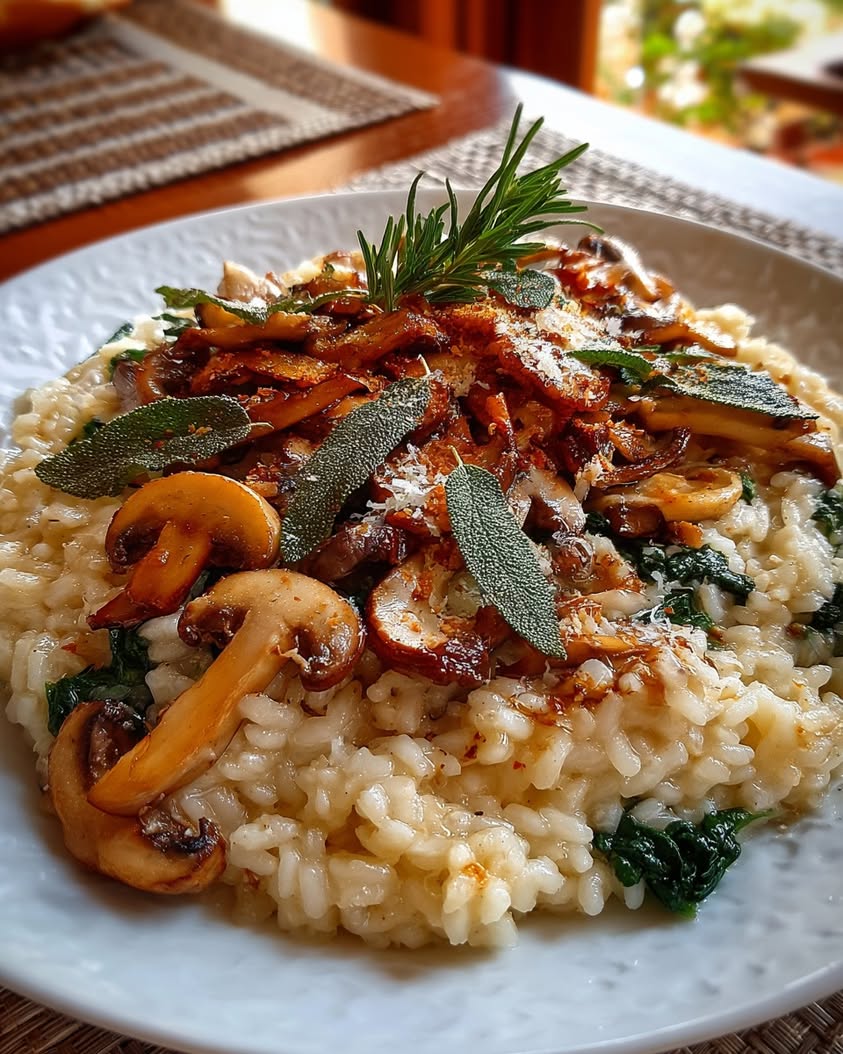
Garlic Butter Mushroom Risotto Recipe: A Creamy, Comforting Masterpiece
Imagine a dish that wraps you in a warm, savory embrace. This Garlic Butter Mushroom Risotto Recipe does exactly that. It transforms simple ingredients into a luxurious meal. The process itself is almost meditative. You stir warm broth into plump arborio rice. Meanwhile, the aroma of garlic and earthy mushrooms fills your kitchen. Ultimately, you create a creamy risotto without heavy cream. The secret lies in the starch released from the rice. Consequently, you achieve a velvety, comforting texture that is pure magic.
This particular recipe elevates the classic with gourmet touches. For instance, we finish it with crispy fried sage and a drizzle of truffle oil. These elements add incredible depth. The sage provides a fragrant, crispy contrast. Simultaneously, the truffle oil introduces a luxurious, earthy aroma. This Garlic Butter Mushroom Risotto Recipe is perfect for a special dinner. Alternatively, it makes a fantastic comforting weekend meal. It feels restaurant-quality but is completely achievable in your own home. Let’s explore how to master this delicious dish.
Quick Recipe Highlights
- Flavor Profile: This dish delivers a powerful umami punch from the mushrooms, balanced by sweet, nutty garlic butter and the sophisticated, earthy finish of truffle oil. The crispy sage adds an herby, slightly peppery note that cuts through the richness perfectly.
- Texture: The risotto itself is the star, with a luxuriously creamy and loose consistency that coats each grain of rice. The sautéed mushrooms remain tender yet meaty, while the fried sage leaves provide a delightful, shatter-crisp garnish that contrasts beautifully with the soft base.
- Aroma: As it cooks, your kitchen will fill with the irresistible scent of garlic and butter toasting, followed by the deep, earthy fragrance of mushrooms releasing their juices. The final drizzle of truffle oil and the crispy sage adds a final layer of complex, aromatic heaven.
- Visual Appeal: The risotto presents a beautiful canvas of creamy ivory rice studded with golden-brown mushrooms. The vibrant green of the crispy sage leaves and the glossy sheen from the truffle oil make for an elegant, restaurant-worthy plate that is incredibly photogenic.
- Skill Level Needed: This recipe requires a moderate level of attention and technique, primarily the patience to stir and add broth gradually. It’s an excellent recipe for confident beginners looking to level up their skills or for intermediate home cooks to perfect their risotto method.
- Special Equipment: You need a heavy-bottomed pot or Dutch oven to ensure even heat distribution and prevent scorching. A ladle for adding broth and a wooden spoon for gentle stirring are also key. No other specialized equipment is necessary.
Recipe Overview
- Difficulty Level: We rate this Garlic Butter Mushroom Risotto Recipe as medium difficulty. The techniques are straightforward, but success hinges on attentive cooking. You must manage the broth addition and constant stirring to activate the rice’s starch. However, with clear instructions, any dedicated cook can achieve fantastic results.
- Category: This dish is a quintessential main course, hearty enough to stand alone. It also functions beautifully as a luxurious side dish for roasted meats like chicken or beef. Furthermore, it fits into the comfort food and gourmet home-cooking categories with ease.
- Cuisine: The foundation is firmly rooted in Northern Italian cuisine, where risotto is a celebrated staple. The use of mushrooms and sage reflects this tradition. The truffle oil garnish adds a modern, luxurious twist that is inspired by contemporary fine dining interpretations of classic Italian food.
- Cost: This is a moderately priced recipe. Arborio rice, mushrooms, and fresh herbs are affordable. The truffle oil is the splurge ingredient, but a small bottle lasts for many dishes. Overall, you create a meal that tastes far more expensive than its actual cost, making it great for entertaining.
- Season: This Garlic Butter Mushroom Risotto Recipe shines in the fall and winter. Earthy mushrooms and hearty sage are at their peak. The warm, creamy nature of the dish is ideal for cooler weather. That said, with seasonal mushroom varieties, you can enjoy it year-round.
- Occasion: It’s perfect for a romantic date night at home, a small dinner party where you want to impress, or a comforting Sunday family supper. It feels special without being overly complicated, making it versatile for both casual and celebratory meals.
Why You’ll Love This Recipe
First and foremost, the taste and texture are utterly divine. Each spoonful of this Garlic Butter Mushroom Risotto Recipe offers a symphony of comfort. The creamy rice, savory mushrooms, and aromatic garlic butter create a deeply satisfying base. Then, the crispy sage adds a surprising crunch and herby flavor. Finally, the truffle oil ties everything together with its unmistakable, luxurious aroma. It’s a dish that feels indulgent and sophisticated, yet the flavors are familiar and comforting. You will find yourself going back for just one more bite every time.
Furthermore, the preparation offers a rewarding cooking experience. Unlike many complex dishes, this risotto recipe uses a single pot for most of the work. The process of slowly adding broth and stirring is almost therapeutic. It allows you to connect with the food as it transforms. You witness the rice plump up and release its starch, creating the signature creaminess. Consequently, you gain a real sense of accomplishment when you serve the perfect, velvety risotto. It’s a fantastic way to build confidence in the kitchen.
From a nutritional standpoint, this dish has several advantages. Mushrooms are a great source of B vitamins, selenium, and antioxidants. They also provide a meaty texture and umami flavor without the need for heavy meats. Arborio rice offers carbohydrates for energy. Using a homemade or quality broth adds depth of flavor and nutrients. While it is a rich dish, you control the amount of butter and oil. Therefore, you can adjust it to your dietary preferences while still enjoying incredible flavor.
This Garlic Butter Mushroom Risotto Recipe also holds tremendous social and entertaining value. It is an impressive dish to serve to guests. The presentation with the crispy sage and truffle oil drizzle looks professional. Moreover, the act of stirring risotto can be part of the evening’s entertainment. You can chat with guests in the kitchen as you cook. It creates a warm, interactive dining experience that is far more memorable than ordering takeout.
Finally, it is cost-effective and accessible. The core ingredients are pantry and grocery store staples. You don’t need expensive equipment or hard-to-find items. A small investment in a bottle of truffle oil elevates the entire meal, but it is optional. Essentially, you can create a restaurant-quality gourmet meal for a fraction of the price. This makes the Garlic Butter Mushroom Risotto Recipe a valuable addition to your cooking repertoire for both everyday and special occasions.
Historical Background and Cultural Significance
Risotto’s origin story begins in Northern Italy, specifically in the regions of Lombardy and Piedmont. The history is intertwined with the introduction of rice to Italy via Arab traders in the Middle Ages. The swampy plains of the Po River Valley proved ideal for growing short-grain rice varieties. Initially, rice was used in soups and sweet puddings. However, by the 19th century, the technique of toasting rice and slowly adding broth evolved into what we now recognize as risotto. This method maximized the starch content of local grains like Arborio, Carnaroli, and Vialone Nano, creating a uniquely creamy dish.
The cultural importance of risotto in Italy cannot be overstated. It is a cornerstone of *cucina italiana*, representing regional pride and culinary ingenuity. Each area has its signature version, often named after its city of origin, like Risotto alla Milanese with saffron. Risotto is more than just food; it is a symbol of patience, care, and family. Traditionally, it is served as a *primo* (first course), setting the stage for the meal. Mastering risotto is a rite of passage for many Italian home cooks, a skill passed down through generations.
The evolution of the Garlic Butter Mushroom Risotto Recipe is a tale of adaptation. Classic *risotto ai funghi* uses dried porcini mushrooms rehydrated in the broth. The modern version often incorporates fresh cremini or shiitake mushrooms for a more accessible and meaty texture. The addition of garlic butter is a contemporary twist that amplifies the savory notes. The use of truffle oil is a 20th-century innovation, bringing the coveted flavor of truffles to home kitchens at a lower cost. This recipe beautifully bridges tradition and modern taste preferences.
Regional variations of mushroom risotto are fascinating. In Piedmont, they might use prized white Alba truffles shaved on top. In Tuscany, wild mushrooms foraged from the woods are key. Outside of Italy, chefs and home cooks have created countless adaptations. Some add Parmesan cheese for extra savoriness, while others use white wine for acidity. The crispy sage garnish in this recipe adds a fragrant, textural element often found in dishes from the northern alpine regions. This global journey shows how a classic technique can inspire endless delicious interpretations.
Ingredient Deep Dive
Arborio Rice: This short-grain rice is the non-negotiable star of any authentic risotto. Cultivated primarily in the Po Valley, its high starch content and firm core are what create the classic creamy-yet-al-dente texture. When you toast it in fat and slowly add liquid, the outer layer releases amylopectin starch, thickening the cooking liquid into a velvety sauce while the center remains slightly firm. Do not rinse Arborio rice, as you need that surface starch. Store it in a cool, dry pantry. For substitutions, Carnaroli (the “king of risotto rice”) or Vialone Nano are excellent choices, but long-grain rice will not work.
Mushrooms (Cremini/Button): Cremini mushrooms are simply mature white button mushrooms, offering a deeper color and slightly more robust flavor. They are cultivated worldwide and are an excellent, affordable source of umami. Nutritionally, they provide B vitamins, potassium, and antioxidants like selenium. When selecting, choose firm, dry caps with closed gills. Avoid slimy or wrinkled mushrooms. Store them in a paper bag in the refrigerator. For a more intense flavor, you can substitute with shiitake, oyster, or a blend of wild mushrooms. Dried porcini mushrooms, rehydrated, will add an incredible depth of flavor.
Garlic Butter: This compound butter is a flavor powerhouse. The history of combining garlic and butter spans cultures, but it is a foundational element in many French and Italian dishes. The fat in butter carries the flavor compounds of garlic, mellowing its sharpness and distributing it evenly throughout the risotto. For best results, use unsalted butter to control seasoning and fresh garlic, minced or thinly sliced. You can make your own garlic butter in advance by blending softened butter with minced garlic and herbs. Clarified butter (ghee) can be used for a higher smoke point and rich, nutty flavor.
Fresh Sage: Sage has a long history in Mediterranean cooking and medicine, revered for its earthy, slightly peppery flavor. In this recipe, frying the sage leaves transforms them. The heat removes bitterness, crisps the texture, and concentrates their aromatic oils, creating a fragrant garnish. Fresh sage is essential for frying; dried sage will burn. Look for vibrant, fuzzy leaves without dark spots. Store wrapped in a damp paper towel in the fridge. If you cannot find sage, fresh thyme sprigs fried until crisp make a lovely, lemony alternative.
Truffle Oil: Truffle oil is a modern culinary invention, typically made by infusing olive or neutral oil with synthetic truffle aroma (truffle essence) or, in higher-quality versions, with real truffle pieces. It provides the distinctive, pungent, and earthy aroma of truffles at a fraction of the cost of fresh truffles. Use it sparingly as a finishing drizzle; heat destroys its delicate flavor. Store it in a cool, dark place. For a more authentic but costly option, shave fresh black or white truffle on top just before serving. A high-quality extra virgin olive oil can be used if truffle oil is unavailable.
Common Mistakes to Avoid
- Using the Wrong Rice: Long-grain rice like jasmine or basmati will not release enough starch and will result in a separated, pilaf-like dish, not a creamy risotto. Always use a short-grain Italian rice like Arborio, Carnaroli, or Vialone Nano specifically designed for this technique.
- Rinsing the Rice: Washing Arborio rice before cooking removes the precious surface starch that is crucial for creating the creamy sauce. You must add the rice to the pot dry and straight from the package to ensure success.
- Adding All the Broth at Once: Dumping all the liquid in at the start is the surest way to ruin your risotto. The gradual addition is what allows the rice to release its starch slowly and absorb flavor, creating the perfect creamy consistency.
- Using Cold Broth: Adding cold or room-temperature broth to the pot shocks the rice and stops the cooking process unevenly. You must keep the broth at a gentle simmer in a separate pot so it integrates seamlessly and maintains a constant cook temperature.
- Over-stirring or Under-stirring: Constant, aggressive stirring can break the rice grains and make the risotto gluey. Conversely, not stirring enough can cause the rice to stick and cook unevenly. Aim for frequent, gentle folds to move the rice around the pan.
- Cooking at Too High a Heat: A raging boil will evaporate the broth too quickly and cook the outside of the rice grains before the inside is done, leading to a chalky center. Maintain a steady, active simmer throughout the cooking process.
- Overcooking the Rice: Risotto rice should be *al dente* – tender with a slight bite at the center. Mushy, overcooked rice results from adding too much broth or cooking for too long. Start tasting a few minutes before the suggested time is up.
- Adding Cheese Too Early: If you choose to add Parmesan cheese, stir it in at the very end, off the heat. Adding it while the risotto is still actively cooking can cause the cheese to seize up and become stringy or greasy.
- Skipping the Toast Step: Sautéing the rice in fat until it becomes translucent around the edges and makes a clicking sound is called *tostatura*. This step seals the grain and helps it absorb liquid evenly later on, contributing to the final texture.
- Not Letting it Rest: Serving risotto immediately after the last broth addition is a common error. Letting it sit off the heat, covered, for 2-3 minutes allows the last bit of liquid to fully absorb and the flavors to marry perfectly.
Essential Techniques
Toasting the Rice (Tostatura): This first step is critical for texture. After sautéing your aromatics, you add the dry Arborio rice to the hot fat. You then stir it for 1-2 minutes until the grains become slightly translucent at the edges and make a faint clicking sound. This process seals the outer layer of the rice, which helps it absorb the broth gradually and evenly without becoming mushy. A common pitfall is skipping this step or toasting for too long, which can give the rice a nutty flavor but may hinder absorption. The visual cue is a pearly, glossy look to the grains.
The Gradual Broth Addition (Mantecatura): This is the heart of the risotto method. After toasting, you add warm broth one ladleful at a time, waiting until each addition is almost fully absorbed before adding the next. This slow process coaxes the starch out of the rice, creating a naturally creamy emulsion. The importance lies in controlling the cooking environment, allowing the rice to swell uniformly. The master tip is to keep the broth at a steady simmer in a separate pot. A common mistake is adding too much broth at once, which boils the rice instead of simmering it. The success cue is a thick, creamy liquid that ribbons off your spoon.
Sautéing Mushrooms for Maximum Flavor: To achieve deep, savory mushroom flavor, avoid crowding the pan. Cook them in batches if necessary over medium-high heat. Crowding creates steam, which boils the mushrooms and makes them rubbery and watery. Instead, you want them to sear and caramelize, which concentrates their flavor and creates fond (browned bits) on the pan. Season them only after they have browned, as salt draws out moisture early. This technique ensures your mushrooms are meaty and flavorful, not soggy, adding significant texture and taste to your final Garlic Butter Mushroom Risotto Recipe.
Frying Sage Leaves to Crispness: Frying fresh herbs is a simple way to add texture and concentrated flavor. Heat a small amount of oil or butter over medium heat. Add the dry sage leaves (pat them dry if washed) and fry for just 10-20 seconds per side until they darken slightly and become crisp. They will continue to crisp as they drain on paper towels. The key is to use medium heat; too hot, and they burn instantly; too low, and they become soggy and oily. Perfectly fried sage should be fragrant, deeply green, and shatter when touched.
Pro Tips for Perfect Garlic Butter Mushroom Risotto
First, always warm your broth in a separate saucepan before starting. This prevents temperature shocks that disrupt the rice’s cooking process and ensures a steady, even simmer from the first ladle to the last.
Use a wide, heavy-bottomed pot or Dutch oven. The wide surface allows for even liquid evaporation and better control, while the heavy base distributes heat consistently to prevent hot spots that can scorch the rice.
Toast the rice until you hear a faint “clicking” sound and the edges look translucent. This crucial step, called *tostatura*, seals the grain and is the foundation for the perfect creamy-yet-separate texture.
Resist the urge to constantly stir aggressively. Instead, use a wooden spoon to gently fold the rice from the bottom of the pot over itself every 30-60 seconds. This protects the grains from breaking while still encouraging starch release.
Cook your mushrooms in batches if your pan is small. Overcrowding steams them, making them soggy. You want a good sear to develop caramelization and deep, concentrated umami flavor for your risotto.
Finish the risotto with the truffle oil off the heat. The delicate aroma of truffle oil dissipates with high heat, so drizzle it over individual servings just before eating to preserve its luxurious fragrance and flavor.
Let the finished risotto rest, covered, for 2-3 minutes before serving. This allows the last bit of liquid to fully integrate and the consistency to settle into the ideal creamy, flowing texture.
Season in layers. Add a pinch of salt when sautéing onions, another when cooking mushrooms, and then do your final seasoning at the end. This builds a more complex and balanced flavor profile throughout the dish.
Variations and Adaptations
Regional Variations: To explore authentic Italian regional twists, try a *Risotto ai Funghi Porcini* using dried porcini mushrooms rehydrated in your broth. For a Venetian touch, finish with a swirl of mascarpone cheese instead of butter. A Lombardy-inspired version might include a pinch of saffron threads added with the first ladle of broth, marrying the worlds of Risotto alla Milanese and mushroom risotto.
Seasonal Adaptations: In spring, use morel mushrooms and fresh peas, finishing with lemon zest. Summer calls for a lighter version with chanterelles and sweet corn, topped with fresh chives. In fall, embrace a mix of wild mushrooms like hen-of-the-woods and shiitake. For a winter holiday version, add diced roasted butternut squash and a sprinkle of toasted pecans.
Dietary Modifications: For a vegan Garlic Butter Mushroom Risotto, use olive oil and vegan butter, and choose a rich vegetable broth. Skip the cheese or use a nutritional yeast or vegan Parmesan alternative. For a gluten-free version, the recipe is naturally compliant—just ensure your broth is certified gluten-free. To reduce fat, use less butter and finish with a touch of high-quality olive oil instead of truffle oil.
Flavor Variations: Add a splash of dry white wine or sherry after toasting the rice for a bright, acidic note. Incorporate a teaspoon of fresh thyme or rosemary with the mushrooms for a different herbal profile. For a richer, deeper flavor, use a combination of chicken and mushroom broth. A tablespoon of white miso paste stirred in at the end can amplify the umami flavor spectacularly.
Texture Modifications: For an extra-creamy texture, stir in a tablespoon of cream cheese or crème fraîche at the end. For more defined, separate grains, use Carnaroli rice, which holds its shape slightly better than Arborio. To add more textural contrast, reserve some sautéed mushrooms for a garnish on top instead of stirring them all in.
Presentation Alternatives: Serve the risotto in a hollowed-out roasted acorn squash for a stunning fall presentation. Plate it in a shallow bowl with a well in the center, placing the crispy sage and extra mushrooms in the middle. For individual servings, use small mason jars or ramekins, packing the risotto in and unmolding it onto the plate for a neat, restaurant-style tower.
Serving and Presentation Guide
Plating Techniques: For the most appealing presentation, serve your Garlic Butter Mushroom Risotto in wide, shallow bowls. This allows the risotto to spread out slightly, showcasing its creamy texture. Use a spoon to create a slight swirl or well in the center. This central depression is the perfect place to add your garnishes, creating visual focus and making each bite a combination of elements.
Garnishing Ideas: The classic garnish for this recipe is the crispy sage leaves and a drizzle of truffle oil. Elevate it further with a few shavings of Parmesan or Pecorino Romano cheese. A sprinkle of freshly cracked black pepper adds visual contrast. For a pop of color and freshness, add a few microgreens or finely chopped flat-leaf parsley. If you have them, a few thin slices of raw mushroom on top look beautiful.
Traditional Accompaniments: In Italy, risotto is typically served as a *primo* (first course) followed by a lighter *secondo* (main protein). A simple green salad with a lemony vinaigrette is the perfect follow-up to cut the richness. For a more substantial meal, serve it alongside a simply grilled chicken breast, seared scallops, or a piece of roasted white fish.
Modern Serving Suggestions: For a contemporary family-style meal, place the pot of risotto directly on the table with the garnishes in small bowls, allowing everyone to serve themselves. Consider it as a luxurious side dish to a standing rib roast or herb-crusted pork tenderloin for a holiday feast. It also makes an elegant vegetarian main course when paired with the salad.
Temperature Considerations: Risotto waits for no one. Serve it immediately after its brief rest. The ideal serving temperature is hot, where it is still creamy and flowing but not scalding. Warm your serving bowls by rinsing them with hot water and drying them just before plating. This ensures the risotto stays at the perfect temperature from kitchen to table.
Portion Control Tips: This recipe yields about four generous main-course portions or six smaller first-course portions. A good rule of thumb is about ¾ cup of dry rice per person for a main. Remember, risotto is rich and filling. It’s better to serve a slightly smaller portion that leaves guests satisfied rather than overly full, especially if other courses are to follow.
Wine and Beverage Pairing
Wine Pairings: The earthy mushrooms and rich garlic butter in this risotto call for wines with good acidity and earthy notes themselves. A classic Italian white like a Pinot Grigio from Alto Adige or a Verdicchio offers crispness that cuts through the richness. For red wine lovers, a light-bodied, earthy red like a Pinot Noir or a Barbera works beautifully without overpowering the dish. The key is to avoid heavily oaked wines, which can clash with the delicate truffle and mushroom flavors.
Non-Alcoholic Alternatives: A sparkling water with a twist of lemon or lime cleanses the palate between bites beautifully. For a more crafted option, try a chilled, non-alcoholic ginger beer; its spice and effervescence contrast the creaminess nicely. An earthy, non-alcoholic aperitif like a Seedlip Garden 108, which has herbal and pea notes, can mirror the dish’s savory profile in a sophisticated way.
Coffee/Tea Pairings: After the meal, a cup of coffee or tea can be a lovely finish. A medium-roast coffee with nutty or chocolatey notes complements the earthy flavors. For tea, consider an oolong tea, which often has mineral and woody notes that echo the mushrooms. A simple cup of peppermint tea can also be a refreshing, palate-cleansing end to the rich meal.
Temperature Considerations: White wines should be served well-chilled, around 45-50°F. Light reds like Pinot Noir are best served slightly cooler than room temperature, around 55°F. Non-alcoholic sparkling beverages should be served very cold. This contrast between the cool drink and the warm, creamy risotto enhances the dining experience.
Serving Suggestions: Always offer water alongside any other beverage. When serving wine, pour a small taste first to allow guests to experience the pairing. For a dinner party, you might choose one white and one red option to cater to different preferences. Remember, the best pairing is one that you and your guests enjoy, so don’t be afraid to experiment with your favorite drinks.
Storage and Shelf Life
Storage Methods: Store leftover Garlic Butter Mushroom Risotto in an airtight container. Press a piece of plastic wrap directly onto the surface of the risotto before sealing the lid. This minimizes air exposure and prevents a dry, rubbery skin from forming on top. Proper storage is key to maintaining the best possible texture for leftovers.
Temperature Requirements: Cool the risotto to room temperature within two hours of cooking, then transfer it to the refrigerator immediately. Do not leave it out on the counter for extended periods. Risotto contains cooked rice, which can harbor bacteria if not cooled and stored promptly. It will keep safely in the refrigerator for 3-4 days.
Container Recommendations: Use shallow containers rather than deep ones. This allows the risotto to cool more quickly and evenly, which is critical for food safety. Glass containers with tight-fitting lids are ideal as they don’t absorb odors and allow you to see the contents.
Signs of Spoilage: Discard the risotto if you notice an off or sour smell, significant discoloration (like gray or pink hues), or visible mold. If the texture becomes unpleasantly slimy or excessively dry and hard, it is past its prime. When in doubt, follow the golden rule: when in doubt, throw it out.
Reheating Instructions: The best way to reheat risotto is on the stovetop. Place it in a saucepan with a small splash of broth, water, or milk. Heat over low to medium heat, stirring frequently, until warmed through. The added liquid helps reconstitute the creamy texture. You can also reheat it in the microwave in 30-second intervals, stirring between each and adding a teaspoon of liquid.
Freezing Guidelines: You can freeze risotto, but be aware the texture of the rice will become softer upon thawing. Portion it into freezer-safe bags or containers, removing as much air as possible. Thaw overnight in the refrigerator before reheating using the stovetop method with extra liquid. Use within 2-3 months for best quality.
Make Ahead Strategies
Prep Timeline: You can do significant prep 1-2 hours before cooking. Clean and slice the mushrooms, mince the garlic, and measure out your rice and broth. You can even fry the sage leaves in advance and let them cool on a paper towel. Having everything *mise en place* (in its place) makes the actual cooking process smooth and stress-free.
Storage Between Steps: Keep prepped ingredients in separate bowls in the refrigerator until you’re ready to start cooking. Store sliced mushrooms in a bowl covered with a damp paper towel. Keep minced garlic in a small ramekin. This organization prevents cross-contamination and keeps ingredients fresh.
Quality Impact Assessment: Prepping ingredients ahead has no negative impact on flavor. In fact, it often improves the experience by reducing last-minute chaos. However, do not partially cook the risotto and then finish it later. The texture will be irreparably compromised. The toast-and-simmer process should be one continuous, attentive session.
Assembly Tips: When ready to cook, simply take your prepped ingredients from the fridge. Warm your broth in a saucepan. Then, follow the recipe steps sequentially. Having everything measured and ready allows you to focus entirely on the technique of toasting the rice and adding the broth, which is where the magic happens.
Reheating Guidelines: If you must make the entire risotto ahead (for a party, for instance), cook it to just *al dente*, about 1-2 minutes less than the recipe states. Spread it on a baking sheet to cool quickly, then refrigerate. To serve, reheat portions in a pan with extra broth, finishing the last minute of cooking to restore the creamy texture.
Fresh Element Additions: Any make-ahead plan should always reserve the final garnishes for the last moment. Keep your crispy sage leaves in a single layer in a dry container. Have your truffle oil ready by the stove. Add these elements only after the risotto is plated and ready to serve to preserve their texture and aroma.
Scaling Instructions
Halving the Recipe: To serve two, simply divide all ingredient quantities by two. Use a medium saucepan instead of a large Dutch oven. The cook time may be slightly shorter, so start checking for doneness around the 18-minute mark. Keep the broth simmering in a smaller pot. All techniques remain the same; just be vigilant as smaller quantities can cook and evaporate more quickly.
Doubling or Tripling: For a crowd, you can double or triple the recipe. Use a very large, wide pot or consider cooking in two separate pots to maintain control over the process. You will need a correspondingly larger amount of simmering broth. The cooking time will increase slightly, but the more significant change is the physical effort of stirring a larger volume. Enlist a helper to take turns stirring.
Equipment Adjustments: When scaling up, your pot must be large enough to allow the rice to spread in a relatively thin layer. If the pot is too small and deep, the rice will steam rather than simmer properly. If scaling down, a pot that’s too large can cause the liquid to evaporate too fast. Match your pot size to the volume of ingredients.
Timing Modifications: While the fundamental time per ladle of broth doesn’t change dramatically, the total time for a doubled recipe might be 5-10 minutes longer. The key is to rely on visual and textural cues—creamy consistency, *al dente* rice—rather than a strict timer. Taste frequently as you near the end of the estimated cook time.
Storage Considerations: Remember that a larger batch means more leftovers. Have appropriate storage containers ready. It’s often better to slightly undercook a large batch if you know you’ll be reheating portions later, as reheating will continue the cooking process. Cool large batches by spreading them on a baking sheet before transferring to containers for the fridge.
Nutritional Deep Dive
Macro Breakdown: A serving of this Garlic Butter Mushroom Risotto is a balanced source of macronutrients. The Arborio rice provides complex carbohydrates for sustained energy. Mushrooms contribute a small amount of plant-based protein. The butter and oil add healthy fats, which are essential for absorbing fat-soluble vitamins and for satiety. The dish is moderately caloric, with the majority of calories coming from the rice and fats, making it a satisfying and energy-dense meal.
Micronutrient Analysis: This dish is a good source of several key micronutrients. Mushrooms provide B vitamins like riboflavin and niacin, which support energy metabolism, as well as selenium, a powerful antioxidant. Garlic offers allicin, a compound with noted health benefits. If using vegetable broth, you also gain minerals from the vegetables used to make it. Using a quality salt ensures proper electrolyte balance.
Health Benefits: The combination of ingredients offers several health perks. The fiber from the mushrooms and rice supports digestive health. The antioxidants in mushrooms and garlic contribute to reducing oxidative stress in the body. The comforting, satisfying nature of the meal can also support mental well-being. It’s a hearty dish that can be part of a balanced diet.
Dietary Considerations: As written, this recipe contains dairy (butter) and gluten (if not using certified GF broth). It is vegetarian. For those monitoring sodium, you can control the salt level by using low-sodium broth and salting to taste at the end. The dish is not inherently low-carb or keto due to the rice, but adaptations are possible.
Portion Analysis: A standard serving ({“success”:true,”message”:”Recipe created successfully”,”post_id”:9033,”tasty_recipe_id”:9033,”shortcode”:” Print
Garlic Butter Mushroom Risotto with Crispy Sage & Truffle Oil
Description
A creamy, savory risotto featuring sautéed mushrooms, garlic butter, crispy sage leaves, and a drizzle of truffle oil for an elegant finish.
Ingredients
For the Crust:
- 1 cup Arborio rice
- 4 cups vegetable broth, kept warm
- 1 lb mixed mushrooms (cremini, shiitake, oyster), sliced
- 4 tbsp unsalted butter
- 3 cloves garlic, minced
- 1 small onion, finely chopped
- 1/2 cup dry white wine
- 1/2 cup grated Parmesan cheese
- 1/4 cup fresh sage leaves
- 2 tbsp olive oil
- 1 tbsp truffle oil
- Salt and black pepper to taste
Instructions
1. Prepare the Crust:
- Heat 2 tbsp butter and 1 tbsp olive oil in a large pan over medium heat. Add mushrooms and cook until browned and tender, about 8 minutes. Season with salt and pepper, then set aside.
- In the same pan, melt remaining 2 tbsp butter. Add onion and garlic, sauté until soft, about 5 minutes. Stir in Arborio rice and toast for 2 minutes until lightly golden.
- Pour in white wine and cook until absorbed. Add warm broth one ladle at a time, stirring frequently until each is absorbed before adding the next, about 20-25 minutes until rice is creamy and al dente.
- Fold in cooked mushrooms, Parmesan cheese, and season with salt and pepper. Remove from heat and cover to keep warm.
- In a small skillet, heat 1 tbsp olive oil over medium-high. Fry sage leaves until crispy, about 30 seconds per side. Drain on paper towels.
- Serve risotto topped with crispy sage leaves and a drizzle of truffle oil.
Notes
You can customize the seasonings to taste.

I’m Billy, a classically trained culinary school graduate from The Culinary Institute of America with over 12 years in the restaurant industry and over 19 years of cooking experience.