
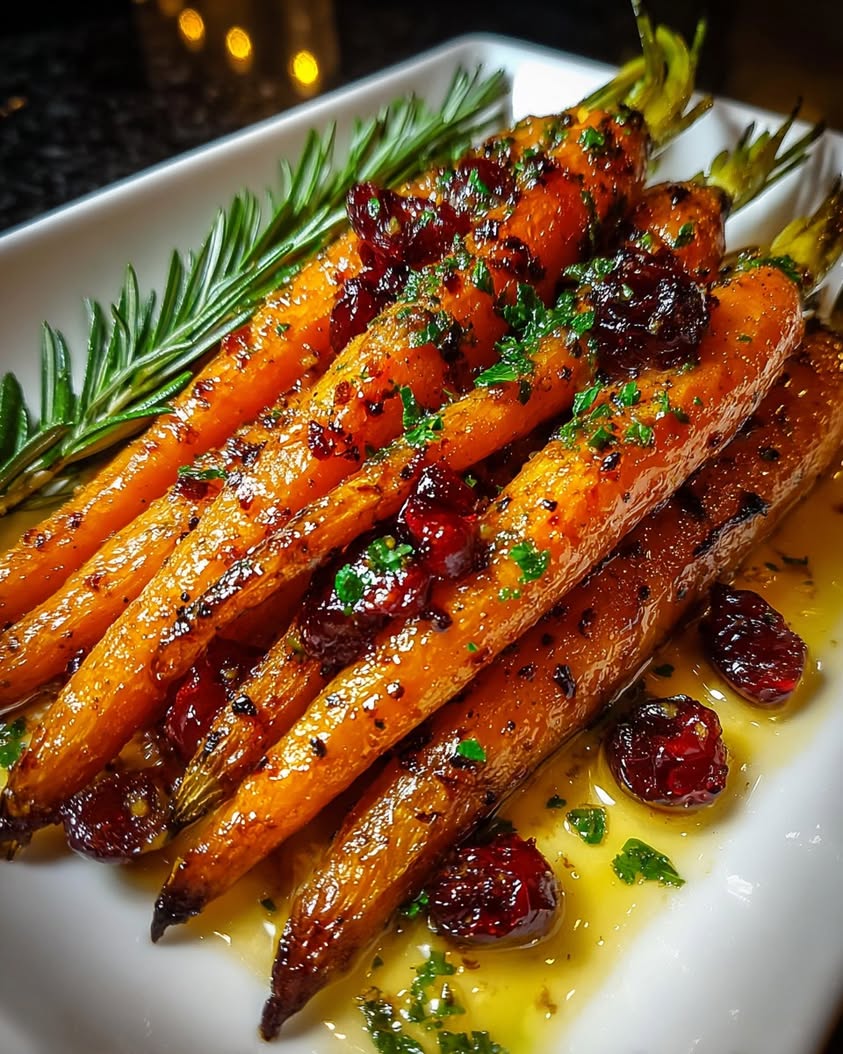
Ginger-Maple Roasted Carrots with Cranberry Butter: A Festive Side Dish That Steals the Show
Imagine a side dish so vibrant and flavorful that it becomes the star of your holiday table. This Ginger-Maple Roasted Carrots with Cranberry Butter recipe is exactly that. It transforms humble carrots into a spectacular culinary experience. The natural sweetness of the carrots deepens and caramelizes in the oven. Meanwhile, a glossy, spiced maple glaze coats each piece. Finally, a dollop of tangy, vibrant cranberry butter melts over the top. Consequently, every bite delivers a perfect harmony of sweet, savory, and tart notes.
This dish is more than just a recipe; it is a celebration of seasonal produce. It bridges the gap between a simple weeknight vegetable and an elegant holiday centerpiece. The process is remarkably straightforward, requiring minimal hands-on effort. Essentially, you let the oven do most of the work. The result, however, is nothing short of impressive. The carrots emerge tender yet firm, with beautifully caramelized edges. Their flavor is profoundly enhanced by the ginger and maple. Ultimately, the cranberry butter adds a festive, colorful finish that makes the entire plate pop.
Perfect for Thanksgiving, Christmas, or any special dinner, this recipe is a guaranteed crowd-pleaser. It pairs beautifully with roasted turkey, glazed ham, or a hearty vegetarian main. Moreover, it brings a welcome splash of color to the winter table. The deep orange of the carrots contrasts stunningly with the ruby-red butter. This Ginger-Maple Roasted Carrots with Cranberry Butter recipe is your new secret weapon for memorable meals. It proves that side dishes can be the most exciting part of the feast.
Quick Recipe Highlights
- Flavor Profile: This dish masterfully balances sweet, spicy, and tart. The maple syrup and roasted carrots provide a deep, caramelized sweetness. Fresh ginger adds a warm, peppery kick. Meanwhile, the cranberry butter introduces a bright, tangy counterpoint that cuts through the richness.
- Texture: You get a wonderful contrast in every mouthful. The carrots roast to a perfect tender-crisp bite with slightly sticky, caramelized exteriors. The cranberry butter is luxuriously smooth and creamy. It melts into the warm carrots, creating a luscious sauce.
- Aroma: As the carrots roast, your kitchen fills with an irresistible fragrance. Warm notes of ginger and cinnamon mingle with the sweet scent of maple. The cranberry butter adds a final, festive aroma of citrus and berries when dolloped on top.
- Visual Appeal: This dish is a feast for the eyes. The glossy, amber-glazed carrots shine on the platter. The vibrant red cranberry butter provides a stunning color contrast. A sprinkle of fresh herbs adds the perfect green accent for a restaurant-worthy presentation.
- Skill Level Needed: This is an accessible recipe for cooks of all levels. The techniques are simple: peeling, chopping, whisking, and roasting. There is no fancy knife work or complex procedures. Therefore, even a beginner can achieve spectacular results with confidence.
- Special Equipment: You only need basic kitchen tools. A sturdy baking sheet, a mixing bowl, and a small saucepan are essential. Parchment paper is highly recommended for easy cleanup. A microplane or fine grater is useful for the ginger, but a knife works too.
Recipe Overview
- Difficulty Level: We classify this Ginger-Maple Roasted Carrots with Cranberry Butter recipe as easy. The steps are sequential and simple, involving basic prep and oven roasting. There is no technical skill required beyond careful timing. The recipe is forgiving, allowing for slight variations in carrot size or oven temperature without failure.
- Category: This dish fits perfectly into several meal categories. Primarily, it is a standout vegetable side dish for holiday feasts and Sunday dinners. Additionally, it can serve as a component on a vibrant vegetarian or vegan plate. It also works wonderfully as part of a colorful meal prep lunch.
- Cuisine: The recipe draws inspiration from modern American holiday cooking. It utilizes classic North American ingredients like maple syrup and cranberries. The technique of roasting vegetables with a sweet glaze has roots in various global cuisines. Ultimately, it creates a contemporary, fusion-style dish perfect for today’s tables.
- Cost: This is a very cost-effective recipe, especially when carrots are in season. Carrots, ginger, and basic pantry spices are inexpensive. Maple syrup and fresh cranberries are the premium ingredients, but a little goes a long way. Overall, you can feed a crowd for a fraction of the cost of other holiday sides.
- Season: This recipe is ideal for the fall and winter months. Carrots are at their sweetest after a frost, and cranberries are freshly harvested. The warm spices of ginger and cinnamon complement cooler weather perfectly. It brings warmth and color to the table during the holiday season from October through December.
- Occasion: It is the ultimate holiday side dish for Thanksgiving, Christmas, and Easter dinners. Furthermore, it elevates any special weekend family meal or dinner party. The recipe scales easily, making it suitable for intimate gatherings or large potlucks. It is a guaranteed conversation starter at any festive table.
Why You’ll Love This Recipe
First and foremost, the taste and texture of this dish are extraordinary. The Ginger-Maple Roasted Carrots with Cranberry Butter recipe delivers a complex flavor profile that delights the palate. Each component plays a crucial role. Sweet roasted carrots meet a spicy ginger-maple glaze. Then, a tart and creamy cranberry butter finishes the experience. The contrast between the tender vegetable and the melting butter is simply divine. You will find yourself savoring each bite, appreciating the layers of flavor that unfold.
From a convenience standpoint, this recipe is a dream for busy hosts. The prep work is minimal and can often be done ahead of time. You can peel and cut the carrots hours before roasting. Similarly, the cranberry butter can be prepared days in advance. When it is time to cook, you simply toss and roast. The oven does the heavy lifting, freeing you to focus on other dishes. This streamlined process reduces stress and makes holiday cooking enjoyable.
Nutritionally, this side dish is a powerhouse. Carrots are famously rich in beta-carotene, which supports eye health and immunity. Ginger offers anti-inflammatory properties and aids digestion. Maple syrup provides minerals like manganese and zinc. Cranberries are packed with antioxidants and vitamin C. By choosing this recipe, you are serving a side that is as wholesome as it is delicious. It is a fantastic way to add vibrant, nutrient-dense food to your holiday spread.
For entertaining, this Ginger-Maple Roasted Carrots with Cranberry Butter recipe offers immense social value. Its stunning visual appeal immediately impresses guests. The unique combination of flavors sparks conversation and curiosity. It pairs seamlessly with a wide variety of main courses, from traditional turkey to modern plant-based roasts. Serving a show-stopping side dish like this demonstrates care and creativity. It makes your guests feel special and well-catered to.
Finally, this recipe is remarkably cost-effective and accessible. The ingredients are easy to find at any grocery store, especially in season. You likely have many of the pantry staples already. It transforms affordable carrots into a luxurious-tasting dish. This allows you to create a memorable meal without stretching your budget. The recipe is also highly adaptable for different dietary needs, which we will explore later.
Historical Background and Cultural Significance
The story of roasted carrots is ancient, but this particular recipe is a modern celebration. Carrots have been cultivated for thousands of years, originally prized for their aromatic seeds and leaves. The orange carrot we know today was developed in the Netherlands in the 17th century. Roasting vegetables over fire is one of humanity’s oldest cooking methods. It concentrates flavors and creates appealing textures. This Ginger-Maple Roasted Carrots recipe is a contemporary twist on that timeless technique.
Culturally, both maple syrup and cranberries hold significant places in North American history. Indigenous peoples of the Northeast were the first to harvest maple sap and boil it into syrup. They also used cranberries for food, dye, and medicine. European settlers adopted these ingredients, incorporating them into their own culinary traditions. Today, maple syrup and cranberries are iconic symbols of fall in the United States and Canada. They evoke feelings of harvest, gratitude, and celebration.
The evolution of this specific recipe reflects broader food trends. Modern cooking emphasizes elevating simple, whole ingredients. The move towards vegetable-centric meals has inspired chefs and home cooks alike. Combining sweet and savory elements on one plate is a hallmark of contemporary cuisine. This Ginger-Maple Roasted Carrots with Cranberry Butter recipe is a product of these trends. It takes a classic pairing—sweet potatoes with marshmallows, for instance—and updates it with more sophisticated, balanced flavors.
Regional variations of glazed roasted vegetables exist worldwide. In the American South, you might find carrots glazed with bourbon and brown sugar. Mediterranean versions could use honey, olive oil, and rosemary. Asian-inspired recipes often feature soy sauce, sesame, and rice vinegar. This recipe’s use of ginger and maple gives it a distinctly North American character. However, its core principle of enhancing a vegetable’s natural sweetness through roasting and glazing is universal. It is a delicious testament to culinary innovation.
Ingredient Deep Dive
Carrots: Carrots are the humble star of this dish. Originally purple or white, the orange carrot was cultivated in honor of the Dutch Royal Family. They are incredibly rich in beta-carotene, which the body converts to vitamin A, crucial for vision and immune function. When selecting carrots, look for firm, smooth roots with vibrant color and fresh, green tops if attached. Avoid any that are limp, cracked, or rubbery. Store them unwashed in a plastic bag in the refrigerator’s crisper drawer. For a variation, try using rainbow carrots for a stunning visual effect, though roasting times may vary slightly.
Maple Syrup: Pure maple syrup is the liquid gold of the forest. It takes approximately 40 gallons of sap to produce one gallon of syrup. Beyond sweetness, it contributes complex notes of caramel, vanilla, and wood. Nutritionally, it contains antioxidants and minerals like manganese and zinc. Always choose “Grade A” syrup for its clean flavor; darker syrups have a stronger taste. Store it in the refrigerator after opening to prevent mold. For a substitution in a pinch, you could use honey or agave nectar, but the distinct maple flavor will be lost.
Fresh Ginger: Ginger has been used for millennia in both culinary and medicinal applications. It adds a warm, peppery, and slightly sweet zest that is irreplaceable. Gingerol, its main bioactive compound, has powerful anti-inflammatory and antioxidant effects. Select ginger roots that are firm, smooth, and heavy for their size with taut skin. Avoid any that are wrinkled or soft. Store unpeeled ginger in a resealable bag in the refrigerator. For the freshest flavor, grate it yourself just before using. Ground ginger can be substituted in the glaze, but use only one-third the amount as the flavor is more concentrated.
Fresh Cranberries: These tart, ruby-red berries are one of only three fruits native to North America. They are packed with vitamin C, fiber, and unique antioxidants called proanthocyanidins. Choose cranberries that are firm, shiny, and bright to deep red. They should bounce when dropped—a sign of freshness. Discard any that are soft, shriveled, or discolored. Store them in their original bag in the refrigerator for up to a month, or freeze them for longer storage. Frozen cranberries can be used directly in the butter without thawing.
Unsalted Butter: Butter provides the rich, creamy base for the cranberry compound butter. Using unsalted butter allows you to control the final seasoning of the dish perfectly. Butter contains vitamins A, E, and K2. For the best flavor, use a high-quality butter. The butter should be softened to room temperature so it whips easily with the cranberry mixture. Store compound butter tightly wrapped in the refrigerator for up to two weeks or in the freezer for months. For a dairy-free version, a high-quality vegan butter substitute works very well.
Common Mistakes to Avoid
- Overcrowding the Pan: Placing carrots too close together on the baking sheet is a common error. They will steam instead of roast, resulting in soggy, pale carrots. For proper caramelization, ensure each piece has space. Use two pans if necessary to avoid this pitfall.
- Using Pre-Cut “Baby” Carrots: Those bagged, uniform “baby” carrots are often whittled-down mature carrots. They lack the sweet, concentrated flavor of whole carrots and can dry out. Always choose whole, fresh carrots and cut them yourself for the best texture and taste.
- Neglecting to Dry the Carrots: After washing, carrots must be patted completely dry. Any excess water will create steam in the oven. This steam prevents the beautiful browning and caramelization that defines a perfectly roasted vegetable.
- Adding the Glaze Too Early: If you toss the carrots in the maple-ginger glaze before roasting, the sugars can burn in the hot oven. Instead, roast the carrots first until nearly tender. Then, add the glaze for the final 10-15 minutes to allow it to caramelize without burning.
- Overcooking the Cranberry Butter: When making the cranberry butter, cook the cranberries just until they pop and soften. Boiling them for too long can make the butter mixture bitter and cause it to separate. A gentle simmer is all that is needed.
- Not Tasting for Balance: Both the glaze and the cranberry butter need a balance of sweet, tart, and salty. Always taste your cranberry butter before chilling. You may need an extra pinch of salt or a squeeze of lemon juice to make the flavors sing.
- Slicing Carrots Inconsistently: Cutting carrots into uneven pieces leads to uneven cooking. Some pieces will be mushy while others are still hard. Take the time to cut them into uniform coins or batons for consistent, perfect roasting.
- Skipping the Parchment Paper: The maple syrup in the glaze will create a sticky, hard-to-clean mess on your baking sheet. Lining the pan with parchment paper is non-negotiable. It guarantees easy cleanup and prevents the carrots from sticking and tearing.
Essential Techniques
Uniform Cutting: Achieving evenly sized carrot pieces is the first critical technique. Consistent size ensures that every piece roasts at the same rate. Use a sharp chef’s knife and aim for coins about 1/2-inch thick or batons of similar thickness. This attention to detail prevents a mix of undercooked and overcooked carrots in the same batch. The visual cue for success is a baking sheet filled with pieces that look like twins.
High-Heat Roasting: Roasting at a high temperature, around 400°F to 425°F, is essential. This high heat quickly caramelizes the natural sugars in the carrots. It creates a flavorful browned exterior while keeping the interior tender. A common pitfall is roasting at too low a temperature, which steams the vegetables. The success cue is hearing a gentle sizzle from the oven and seeing golden-brown, slightly shrunken edges on the carrots.
Creating a Compound Butter: A compound butter is simply butter mixed with other flavorings. The technique here involves gently cooking cranberries with orange and spices, then blending them into softened butter. The key is to allow the cooked cranberry mixture to cool completely before incorporating it into the butter. If it is too warm, it will melt the butter and create a greasy, separated mess. Success is a beautifully marbled, spreadable butter that holds its shape when chilled.
Glazing for Shine: Applying the glaze at the right moment is a finishing technique. Adding the ginger-maple mixture during the last part of roasting allows it to thicken and cling to the carrots. Toss the carrots vigorously in the glaze so each piece gets an even, glossy coat. The glaze should bubble and reduce slightly in the oven’s heat. The visual cue is a shiny, sticky coating that glistens on the carrots without pooling on the pan.
Pro Tips for Perfect Ginger-Maple Roasted Carrots with Cranberry Butter
First, for maximum flavor, let the peeled and cut carrots sit for 5-10 minutes before tossing with oil. This brief rest allows the natural sugars to come to the surface, promoting better caramelization in the oven.
Second, add a teaspoon of cornstarch to your ginger-maple glaze mixture. This small addition helps the glaze thicken beautifully in the oven, creating a professional-looking sticky coating that clings perfectly to each carrot.
Third, when making the cranberry butter, reserve a few whole cranberries before cooking. Finely chop these raw berries and fold them in at the end for a delightful burst of fresh tartness and interesting texture in the finished butter.
Fourth, consider roasting your carrots on a preheated baking sheet. Placing the carrots on a hot pan gives them an immediate sear, jumpstarting the caramelization process and preventing them from sticking.
Fifth, if your carrots are done roasting but your glaze isn’t sticky enough, simply turn on the broiler for the final 1-2 minutes. Watch them closely, as the sugars can burn quickly under the intense direct heat.
Sixth, for an elegant presentation, use a piping bag fitted with a star tip to pipe rosettes of the chilled cranberry butter onto the warm carrots just before serving. This creates a stunning visual effect with minimal effort.
Seventh, garnish with more than just parsley. Try toasted pecans or walnuts for crunch, pomegranate arils for extra color and pop, or a light sprinkle of flaky sea salt to enhance all the flavors.
Eighth, make a double batch of the cranberry butter. It freezes excellently and can be used on dinner rolls, melted over pork chops or chicken, or stirred into oatmeal for a festive breakfast.
Variations and Adaptations
Regional Variations: You can easily adapt this recipe to reflect different regional flavors. For a Southern twist, add a splash of bourbon to the maple glaze and use pecans as a garnish. A Mediterranean version might use honey instead of maple, with fresh rosemary and a sprinkle of feta cheese. An Asian-inspired take could incorporate a tablespoon of soy sauce and a teaspoon of sesame oil into the glaze, finishing with toasted sesame seeds.
Seasonal Adaptations: While perfect for fall and winter, this dish can shine year-round. In spring, use young, slender carrots with their tops on and substitute the cranberry butter for a lemon-herb butter with chives and thyme. For summer, try a version with a balsamic-maple glaze and a strawberry-basil butter for a lighter, brighter profile that pairs with grilled meats.
Dietary Modifications: This recipe is naturally vegetarian and can be adapted for many diets. For a vegan Ginger-Maple Roasted Carrots recipe, use a plant-based butter substitute and ensure your maple syrup is vegan-certified. A gluten-free version requires no changes, as all ingredients are inherently gluten-free. For a lower-sugar option, reduce the maple syrup by half and add a pinch of smoked paprika for depth.
Flavor Variations: Do not be afraid to play with the spice profile. Add a pinch of cayenne pepper to the glaze for a sweet heat. Incorporate ground cardamom or allspice for a more complex warmth. For the butter, try simmering the cranberries with a sprig of fresh thyme or a strip of orange zest for an herbal or citrusy note.
Texture Modifications: If you prefer different textures, adjust the cut of your carrots. Leave smaller carrots whole for a rustic, dramatic presentation. Cut them into long, thin julienne strips for a quicker roast and more surface area for glaze. For a heartier side, roast the carrots with chunks of parsnip or sweet potato, adjusting the time as needed for the denser vegetables.
Presentation Alternatives: Move beyond the platter for creative serving. Serve individual portions in small, shallow bowls with a quenelle of cranberry butter melting on top. Alternatively, arrange the glazed carrots on a bed of creamy polenta or whipped potatoes, letting the cranberry butter sauce drizzle down. For a cocktail party, serve smaller carrot sticks as a finger food with the cranberry butter as a dip.
Serving and Presentation Guide
Plating Techniques: Presentation elevates this dish from simple to spectacular. Arrange the glazed carrots in a cascading row down the center of a long, rectangular platter. Alternatively, create a circular sunburst pattern on a round plate. For family-style serving, simply mound them in a warm, shallow bowl. The goal is to create height and dimension, not just a flat layer.
Garnishing Ideas: The right garnish adds the final touch of color and flavor. Fresh, finely chopped parsley or cilantro provides a green contrast. For texture and richness, sprinkle with toasted chopped pecans, walnuts, or pumpkin seeds. A handful of bright pomegranate arils adds a juicy pop and reinforces the berry theme. A final flourish of flaky sea salt, such as Maldon, enhances all the flavors.
Traditional Accompaniments: This side dish is a classic partner for holiday roasts. It pairs beautifully with herb-roasted turkey, honey-glazed ham, or prime rib. For a vegetarian feast, serve it alongside a savory mushroom Wellington or a hearty lentil loaf. It also complements other traditional sides like creamy mashed potatoes, green bean casserole, and savory stuffing.
Modern Serving Suggestions: Think beyond the holiday table. Serve these carrots atop a bowl of farro or quinoa for a satisfying grain bowl lunch. Chop them and add to a winter salad with bitter greens, goat cheese, and a citrus vinaigrette. They also make a fantastic topping for a gourmet veggie burger or a unique pizza ingredient.
Temperature Considerations: Serve the carrots hot from the oven. The residual heat is crucial for melting the cranberry butter into a luscious sauce. Have your compound butter chilled and ready, but add it just before serving so it begins to soften and meld with the carrots. Warm your serving platter briefly to keep the dish hot at the table.
Portion Control Tips: This recipe yields about six servings as a side dish. Plan for roughly 3-4 medium carrot pieces per person. If serving as part of a large buffet with many other sides, you can stretch it to eight servings. For a main component of a vegetarian meal, consider the recipe serving four people.
Wine and Beverage Pairing
Wine Pairings: The sweet, spicy, and tart notes in this dish call for versatile wines. An off-dry Riesling or Gewürztraminer is a brilliant match; their slight sweetness and floral notes complement the ginger and maple without clashing. For red wine lovers, a light-bodied, low-tannin Pinot Noir works well, as its red fruit flavors echo the cranberry. A dry rosé with good acidity can also bridge the gap between the sweet carrots and tart butter beautifully.
Non-Alcoholic Alternatives: Sparkling apple cider is a festive and perfect pairing, offering autumnal sweetness and bubbles to cleanse the palate. For a more sophisticated option, try a ginger-infused sparkling water with a twist of orange. A warm mug of spiced apple tea or a cranberry-hibiscus iced tea also harmonizes wonderfully with the dish’s flavor profile.
Coffee and Tea Pairings: After a meal featuring this dish, a cup of coffee or tea can be delightful. A medium-roast coffee with notes of caramel or nut will echo the roasted, sweet elements. For tea, choose a spiced chai to complement the ginger, or a delicate orange pekoe tea that won’t overpower the carrots’ subtlety.
Temperature Considerations: Serve white wines and sparkling ciders well-chilled, around 45-50°F. Red wines like Pinot Noir should be served slightly cooler than room temperature, around 55°F. Non-alcoholic sparklers should be ice-cold. This ensures the beverages refresh the palate between bites of the rich, flavorful carrots.
Serving Suggestions: Always offer water alongside any paired beverage. The high mineral content of still or sparkling water helps reset the taste buds. When serving wine, pour modestly to allow guests to enjoy the pairing without overwhelming the food. For a crowd, a signature mocktail or cocktail that incorporates cranberry and ginger can be a fun and thematic addition.
Storage and Shelf Life
Storage Methods: Store leftover glazed carrots and cranberry butter separately for best results. Place the cooled carrots in an airtight container in the refrigerator. The cranberry butter should be kept wrapped in parchment or plastic wrap, or in a sealed container, in the fridge.
Temperature Requirements: Both components must be refrigerated at or below 40°F. The compound butter is dairy-based and can spoil if left out. The glazed carrots, due to their sugar content, are also prone to fermentation if kept at room temperature for too long.
Container Recommendations: Use glass or BPA-free plastic containers with tight-fitting lids for the carrots. For the butter, you can keep it rolled into a log in parchment paper inside a zip-top bag, or simply press it into a small ramekin and cover the surface directly with plastic wrap to prevent oxidation.
Signs of Spoilage: Discard the carrots if they develop an off smell, become slimy, or show visible mold. The cranberry butter should be discarded if it develops an unpleasant sour odor, changes color significantly, or shows any signs of mold growth on the surface.
Reheating Instructions: Reheat carrots in a 350°F oven for 10-15 minutes until warmed through, or in a skillet over medium heat. Avoid the microwave if possible, as it can make them soggy. The cranberry butter should be served cold or slightly softened, not reheated.
Freezing Guidelines: The cranberry butter freezes exceptionally well for up to 3 months. Wrap it tightly in plastic wrap and then foil before freezing. The roasted carrots can be frozen, but their texture will become softer upon thawing. Freeze them on a parchment-lined sheet, then transfer to a freezer bag. Thaw in the refrigerator before reheating.
Make Ahead Strategies
Prep Timeline: You can prepare nearly every component of this Ginger-Maple Roasted Carrots recipe ahead of time. Up to 3 days in advance, make the cranberry butter and store it wrapped in the fridge. The day before, wash, peel, and cut the carrots. Store them submerged in cold water in the refrigerator to keep them crisp.
Storage Between Steps: Keep the pre-cut carrots in a container of water, changing the water daily. The cranberry butter log can be stored in the fridge for up to two weeks or frozen. The glaze ingredients can be measured and mixed, but keep them separate from the carrots until roasting time.
Quality Impact Assessment: Prepping ahead has minimal negative impact on this dish. The cranberry butter’s flavors actually improve with a day or two to meld. The carrots stay perfectly fresh in water. The only task best done day-of is the actual roasting and glazing to ensure the perfect hot, caramelized texture.
Assembly Tips: On the day of serving, drain and thoroughly dry the pre-cut carrots. Toss with oil, salt, and pepper, then roast. Warm the pre-made glaze slightly so it’s easy to toss with the carrots. Slice discs from the chilled cranberry butter log just before serving.
Reheating Guidelines: If you must roast the carrots fully ahead, reheat them in a single layer on a baking sheet in a 400°F oven for 5-8 minutes to re-crisp the edges before adding the glaze for a final few minutes. Do not reheat the carrots with the butter already on them.
Fresh Element Additions: Even with make-ahead prep, always add fresh garnishes at the last minute. Sprinkle on fresh herbs, nuts, or pomegranate seeds just before carrying the platter to the table. This ensures maximum visual appeal and textural contrast.
Scaling Instructions
Halving the Recipe: To serve 2-3 people, simply divide all ingredient quantities by two. Use a standard quarter-sheet pan or a smaller baking dish for roasting. The cook time may decrease by 5-7 minutes since there will be less moisture in the oven, so check for doneness early. The cranberry butter can still be made as a full batch and frozen for future use.
Doubling or Tripling: For a large crowd, multiply the ingredients accordingly. The key is to use multiple baking sheets and roast in batches, or on separate oven racks, rotating the pans halfway through. Do not pile the carrots higher on a single pan; they must be in a single layer. You may need to increase the total roasting time by 5-10 minutes per batch due to a fuller oven.
Equipment Adjustments: Scaling up requires planning. Ensure you have enough baking sheets and oven space. You may need to mix the carrots and oil in a very large bowl or even a clean sink basin. For the cranberry butter, use a larger saucepan and consider using a hand mixer or stand mixer to incorporate the butter smoothly into the larger quantity of cranberry mixture.
Timing Modifications: When cooking multiple batches, the first batch can be kept warm, tented with foil, in a 200°F oven while subsequent batches cook. Add the glaze to each batch during its final roasting stage. The cranberry butter can be made in one large batch ahead of time.
Storage Considerations: Leftovers will be more plentiful when scaling up. Plan for adequate refrigerator space for storing the cooked carrots in shallow containers. Consider if your guests might want to take some home, and have small containers ready for gifting leftovers.
Nutritional Deep Dive
Macro Breakdown: A serving of this Ginger-Maple Roasted Carrots with Cranberry Butter is a balanced side. It provides complex carbohydrates from the carrots and maple syrup for sustained energy. The butter and olive oil contribute healthy fats, which aid in the absorption of the fat-soluble vitamins in the carrots. The dish is low in protein, so it is best paired with a protein-rich main course.
Micronutrient Analysis: This dish is a micronutrient powerhouse. Carrots deliver a massive dose of vitamin A (as beta-carotene), essential for vision and immune health. They also provide vitamin K1, potassium, and antioxidants. Ginger contributes gingerol, a compound with potent anti-inflammatory properties. Cranberries are famous for their vitamin C and unique proanthocyanidins, which support urinary tract health.
Health Benefits: Consuming this recipe supports overall wellness. The antioxidants combat oxidative stress and inflammation. The fiber from the carrots and cranberries promotes digestive health and satiety. The healthy fats ensure you absorb all the available nutrients. The ginger can help soothe nausea and aid digestion, making this a beneficial dish after a large meal.
Dietary Considerations: This recipe is naturally gluten-free and vegetarian. It can be made vegan with a simple butter swap. It is not suitable for a strict low-carb or keto diet due to the natural sugars in carrots and maple syrup. For those watching sodium, you can reduce or omit the added salt without compromising the core flavors significantly.
Portion Analysis: One serving is approximately 3-4 medium carrot pieces with a tablespoon of cranberry butter. This portion provides a satisfying amount of vegetables and flavor without being overly heavy. It is a calorie-conscious choice compared to many other holiday sides laden with cream, cheese, or breading.
Weight Management Tips: To make this dish even lighter, you can reduce the amount of olive oil used to toss the carrots by half—they will still roast nicely. You can also reduce the maple syrup in the glaze by one-third and use a light butter alternative in the cranberry butter. The core flavors will remain vibrant.
Dietary Adaptations
Gluten-Free: This Ginger-Maple Roasted Carrots recipe is naturally and inherently gluten-free. All ingredients—carrots, maple syrup, ginger, cranberries, butter, and spices—contain no gluten. Always double-check labels on pre-packaged spices to ensure no cross-contamination if you have celiac disease or a severe sensitivity.
Dairy-Free/Vegan: For a vegan version, substitute the unsalted butter with a high-quality, firm vegan butter stick (not the spreadable tub kind). Brands like Miyoko’s or Earth Balance work well. Ensure your maple syrup is vegan-certified. The roasting process remains identical. The result is a plant-based side dish that is just as rich and flavorful.
Low-Carb/Keto: This recipe is not suitable for a standard keto diet due to the carb count in carrots and maple syrup. For a keto adaptation, use lower-carb root vegetables like radishes or turnips. Replace the maple syrup with a sugar-free maple-flavored syrup and a small amount of powdered erythritol to mimic the sweetness and glaze consistency.
Paleo: To make this recipe Paleo-compliant, ensure you use pure maple syrup (which is Paleo-approved in moderation) and ghee instead of regular butter. Ghee is clarified butter with the milk solids removed, making it suitable for most Paleo diets. All other ingredients are already Paleo-friendly.

I’m Billy, a classically trained culinary school graduate from The Culinary Institute of America with over 12 years in the restaurant industry and over 19 years of cooking experience.