
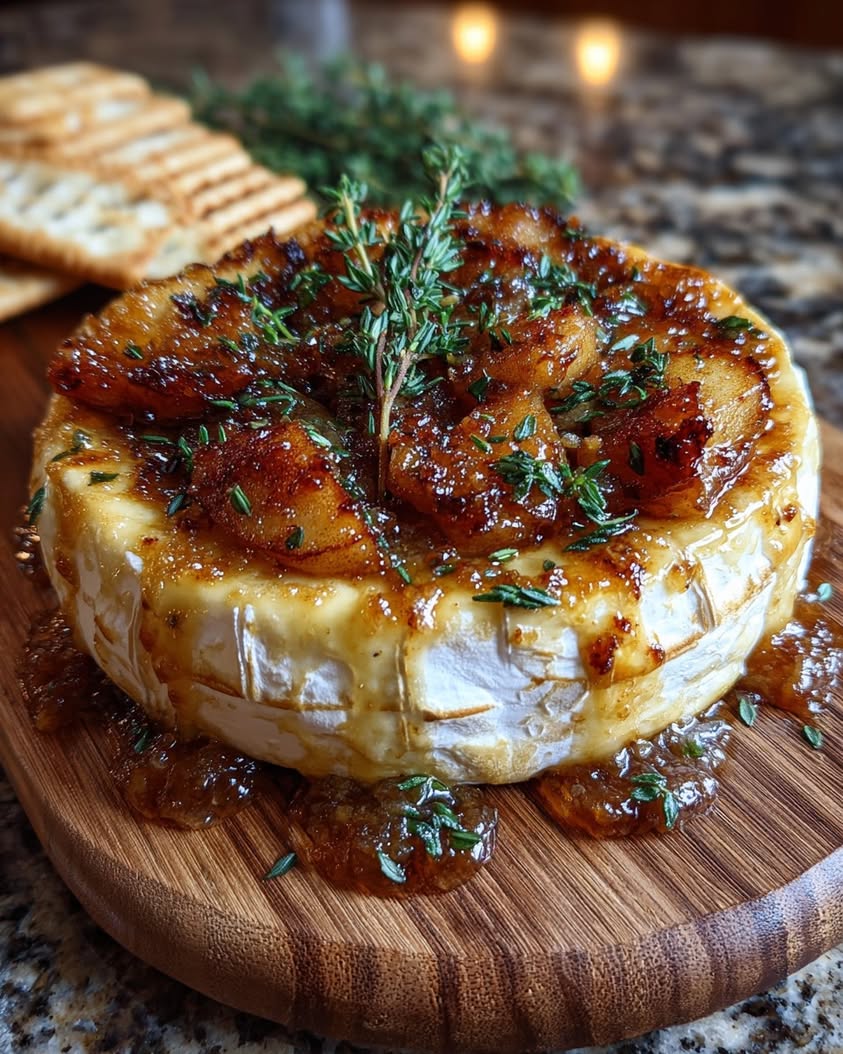
Golden Baked Brie with Caramelized Apples and Thyme Recipe: An Elegant Appetizer
Imagine pulling a warm, golden wheel of baked brie from your oven. The cheese is perfectly molten inside, and it’s crowned with a glossy topping of sweet caramelized apples and fragrant thyme. This Golden Baked Brie with Caramelized Apples and Thyme recipe transforms a few simple ingredients into a show-stopping centerpiece for any gathering. Moreover, the combination of rich, creamy cheese and spiced fruit creates a symphony of flavors that feels both rustic and incredibly elegant.
This dish is the ultimate crowd-pleaser, perfect for holiday parties, cozy nights in, or impromptu entertaining. The process is surprisingly straightforward, yet the result looks and tastes like it came from a professional kitchen. Essentially, you are creating a warm cheese dip and a fruit compote in one beautiful package. The aroma alone, as the brie bakes and the apples caramelize with brown sugar and butter, will have everyone gathering in the kitchen with anticipation.
Ultimately, this Golden Baked Brie with Caramelized Apples and Thyme recipe masterfully balances sweet and savory notes. Each scoop delivers the luxurious, gooey texture of melted brie, perfectly complemented by the tender, spiced apples. It’s a tactile and delicious experience, best enjoyed with slices of crusty baguette or crisp apple slices. This recipe proves that the most memorable dishes are often the simplest ones, executed with care and good ingredients.
Quick Recipe Highlights
- Flavor Profile: This Golden Baked Brie with Caramelized Apples and Thyme recipe delivers a perfect harmony. You get the rich, tangy creaminess of the baked cheese beautifully contrasted by the sweet, buttery apples. The fresh thyme and a hint of cinnamon add earthy, warm notes that tie everything together wonderfully.
- Texture: The experience is all about luxurious contrast. The baked brie wheel becomes wonderfully oozy and soft beneath its rind. Meanwhile, the caramelized apples offer a tender yet slightly firm bite. Finally, serving it with a crunchy baguette or a crisp cracker completes the perfect textural symphony.
- Aroma: As this dish bakes, it fills your kitchen with an irresistible fragrance. First, you’ll smell the sweet, buttery scent of apples caramelizing with brown sugar. Then, the herbal note of fresh thyme and the warm spice of cinnamon mingle with the rich, nutty aroma of the melting cheese.
- Visual Appeal: This dish is a feast for the eyes before you even take a bite. The golden-brown pastry or rind of the brie cradles the luscious, melted interior. The glossy, amber-hued apples piled on top are studded with green thyme leaves, creating a beautiful and appetizing presentation on any table.
- Skill Level Needed: This is an accessible recipe for cooks of all levels. The techniques involved—slicing apples, making a simple stovetop compote, and baking cheese—are fundamental. Therefore, even a beginner can achieve impressive results with minimal fuss and basic kitchen tools.
- Special Equipment: You need only standard kitchen equipment. A good oven-safe skillet or a small baking dish is essential. Additionally, a sharp knife for prepping apples and a wooden spoon for stirring the caramelizing apples are the only other tools required.
Recipe Overview
- Difficulty Level: We rate this Golden Baked Brie with Caramelized Apples and Thyme recipe as “Easy” for good reason. The steps are sequential and simple: prepare the apple topping, place it on the cheese, and bake. There’s no intricate pastry work or advanced techniques. Consequently, it’s a low-stress recipe that guarantees a high-reward result.
- Category: This dish fits beautifully into several categories. Primarily, it’s a fantastic warm appetizer or starter for a dinner party. Alternatively, it can serve as a luxurious cheese course. Furthermore, it makes for an indulgent snack or the centerpiece of a sophisticated cocktail party spread.
- Cuisine: While brie cheese originates from France, this preparation is a modern, fusion-style appetizer popular in American entertaining. It takes the French tradition of baked cheese and incorporates a very American-friendly fruit topping. The result is a globally-inspired dish that feels right at home on any contemporary table.
- Cost: This is a moderately priced appetizer that delivers maximum impact. A wheel of good-quality brie is the main investment. Apples, butter, sugar, and thyme are inexpensive pantry staples. Overall, you can create this stunning dish for a fraction of the cost of a store-bought, pre-made version.
- Season: This recipe shines brightest in the fall and winter months. That’s when apples are at their peak flavor and hearty, warm appetizers are most desired. However, it’s truly a versatile dish you can enjoy year-round, especially for holiday gatherings from Thanksgiving through New Year’s.
- Occasion: It’s perfect for almost any gathering. Think holiday parties, Friendsgiving, book club meetings, or romantic date nights at home. It’s also an excellent choice for potlucks because it travels well and can be served straight from the baking dish.
Why You’ll Love This Recipe
You will adore the taste and texture of this Golden Baked Brie with Caramelized Apples and Thyme. The first bite is a revelation: the warm, velvety cheese floods your palate, followed immediately by the sweet, spiced apples. The thyme adds a subtle, savory backbone that prevents the dish from being overly sweet. Every element complements the others, creating a complex flavor profile that is both comforting and sophisticated. The contrast between the creamy cheese and the tender fruit is utterly addictive, ensuring your guests will keep coming back for just one more scoop.
Convenience is another major benefit of this baked brie recipe. From start to finish, it takes about 40 minutes, with most of that time being hands-off baking. You can prepare the apple topping while the oven preheats, making the workflow incredibly efficient. Furthermore, the ingredients are easy to find at any standard grocery store. You don’t need any special skills or equipment, which makes it a reliable go-to recipe when you need something impressive without hours of labor. It’s the definition of simple elegance.
This dish also offers some nutritional advantages when enjoyed in moderation. Apples provide dietary fiber and vitamin C, while the cheese offers a good source of calcium and protein. Using fresh ingredients allows you to control the amount of sugar. Choosing a whole-grain baguette or serving with apple slices instead of crackers can add more fiber and nutrients to your snack. Ultimately, it’s a more wholesome option than many processed appetizers, balancing indulgence with real food ingredients.
The social and entertaining value of this Golden Baked Brie with Caramelized Apples and Thyme is immense. It’s a communal dish that encourages sharing and conversation. Placing it in the center of the table creates an instant focal point. Its warm, inviting aroma acts as a social lubricant, drawing people together. It looks far more elaborate than it is, making you look like a hosting pro. Whether for a casual game night or a formal holiday dinner, it sets a tone of generous, welcoming hospitality.
Finally, this recipe is wonderfully cost-effective and accessible. A single wheel of brie can serve six to eight people as an appetizer, making it a budget-friendly choice for feeding a crowd. The apple topping uses inexpensive, shelf-stable ingredients. You likely already have butter, brown sugar, and cinnamon in your pantry. This accessibility means you can whip up this gourmet-tasting dish without a special trip to the store or breaking the bank. It democratizes fancy appetizers, bringing them within easy reach for any home cook.
Historical Background and Cultural Significance
The story of baked brie begins, of course, in the Brie region of France. For centuries, this iconic soft-ripened cheese has been celebrated for its creamy texture and edible rind. Historically, cheese was often warmed near hearths to soften it, a practice that naturally evolved into the deliberate baking of whole wheels. The concept of adding sweet or savory toppings is a more modern, largely American innovation that gained massive popularity in the late 20th century. This adaptation transformed a traditional French cheese course into a shareable, dip-style appetizer perfect for casual entertaining.
Culturally, baked brie became a symbol of 1980s and 1990s entertaining in the United States. It represented a desire for approachable yet sophisticated party food. The act of baking the whole wheel and serving it communally tapped into a trend towards interactive, rustic-chic dining. Adding fruit preserves or nuts on top made the flavor more appealing to the American palate, which often enjoys a sweet-and-savory combination. Consequently, baked brie secured its place as a staple on holiday party menus and in culinary magazines, bridging the gap between everyday cooking and special occasion fare.
The recipe has evolved significantly from its simple origins. Early versions often involved wrapping the brie in puff pastry, creating the famous “brie en croute.” The current trend leans towards simpler preparations that highlight the quality of the cheese itself, like this Golden Baked Brie with Caramelized Apples and Thyme. Toppings have also become more complex, moving beyond jarred jam to fresh, homemade compotes featuring seasonal fruits, herbs, and spices. This evolution reflects a broader culinary movement towards fresh, from-scratch ingredients and bolder, more balanced flavor combinations.
Regional variations of this concept are endless. In the American South, you might find baked brie topped with pecans and bourbon-spiked peaches. Pacific Northwest versions could feature local blackberries and hazelnuts. Some European interpretations stick closer to tradition, perhaps adding a drizzle of honey and a sprinkle of fresh rosemary. The version with caramelized apples and thyme has a particularly autumnal, rustic feel that resonates with North American fall traditions. This adaptability is key to the dish’s enduring popularity, allowing it to be reinvented for local tastes and ingredients.
Ingredient Deep Dive
Let’s start with the star: Brie Cheese. Originating from the Île-de-France region, brie is one of the world’s most famous cheeses, often called the “Queen of Cheeses.” Its edible, bloomy rind is formed by Penicillium candidum mold, which helps the interior ripen to a soft, creamy consistency. Nutritionally, it provides a good source of protein, calcium, and phosphorus. When selecting brie for baking, choose a wheel that is ripe but not overripe; it should feel slightly soft when gently pressed. Store it in the refrigerator’s cheese drawer and bring it to room temperature for about 30 minutes before baking for even melting. If needed, Camembert makes an excellent substitute.
Apples are the perfect partner. For this Golden Baked Brie with Caramelized Apples and Thyme recipe, choose firm, tart varieties that hold their shape when cooked. Granny Smith apples are the classic choice due to their bright acidity and structure. Apples are rich in dietary fiber, particularly pectin, and vitamin C. When caramelizing, their natural sugars break down and combine with the butter and brown sugar to create a deep, complex sweetness. Select apples that are firm and free of bruises. Store them in the refrigerator to maintain crispness. For a different flavor profile, you could substitute with ripe pears or even figs.
Fresh Thyme is the herbal hero. This woody, aromatic herb has been used since ancient times for both culinary and medicinal purposes. Its tiny leaves pack a potent, earthy, and slightly floral flavor that cuts through the richness of the cheese and the sweetness of the apples. Thyme contains antioxidants and has traditional uses supporting respiratory health. Always choose fresh thyme over dried for this recipe; the delicate flavor of fresh is far superior. Look for vibrant green sprigs without black spots. Store it in the refrigerator wrapped in a damp paper towel. If you must substitute, fresh rosemary (used sparingly) can work, but it will impart a stronger, pine-like flavor.
Brown Sugar and Butter form the foundation of the caramelization process. Brown sugar, with its molasses content, adds a deeper, more caramel-like flavor than white sugar and promotes beautiful browning. Butter not only prevents sticking but also contributes rich, nutty notes through the Maillard reaction. Together, they create the luxurious sauce that coats the apples. For a deeper flavor, consider using dark brown sugar. Unsalted butter is preferred so you can control the salt level in the dish. For a dairy-free version, a high-quality plant-based butter can work well. The key is to cook the mixture over medium heat to allow the sugars to melt and caramelize without burning.
Common Mistakes to Avoid
- Choosing an Overripe Brie: A brie wheel that is too ripe will become completely liquid and may leak out excessively when baked. It can also have an overly strong ammonia scent. Instead, select a wheel that is just ripe—yielding gently to pressure but still holding its shape.
- Not Bringing Brie to Room Temperature: Placing a cold brie wheel straight from the fridge into the oven results in uneven heating. The outside may overheat before the center properly melts. Always let the cheese sit on the counter for 20-30 minutes before baking for a perfectly gooey center.
- Overcooking the Apples: Cooking the apples for too long or over too high a heat turns them into mushy applesauce. You want them tender but still with a slight bite. Cook them just until they are softened and coated in a syrupy caramel, usually 8-10 minutes.
- Using Dried Thyme Instead of Fresh: Dried thyme has a much more concentrated, dusty flavor that can overpower the delicate balance of the dish. Fresh thyme provides a bright, aromatic quality that is essential. If you must use dried, use only one-third the amount.
- Skipping the Scoring Step: Forgetting to lightly score the top rind of the brie can prevent the apple topping from mingling with the molten cheese underneath. A few shallow cuts help the flavors integrate and make scooping easier.
- Baking on the Wrong Surface: Placing the brie wheel directly on a baking sheet can lead to a mess if it oozes. Always use a parchment-lined baking dish or a dedicated oven-safe skillet or ceramic dish to contain any potential runoff.
- Not Letting it Rest After Baking: Cutting into the brie immediately after pulling it from the oven causes the liquid cheese to gush out uncontrollably. Let it rest for 5-7 minutes. This allows the cheese to set slightly, making for cleaner, more manageable serving.
- Using the Wrong Apple Variety: Soft, sweet apples like Red Delicious will turn to complete mush. Always opt for firm, tart apples such as Granny Smith, Honeycrisp, or Braeburn that can withstand the heat and retain texture.
Essential Techniques
Caramelizing Apples is the first crucial technique. This process transforms raw, crisp apple slices into tender, sweet, and complexly flavored toppings. The key is to cook them over medium heat in butter and sugar, allowing the natural fruit sugars and the added brown sugar to melt and brown slowly. Constant stirring is not necessary; let the apples sit for a minute to develop a bit of color before stirring. The visual cue for success is a glossy, amber-colored syrup coating the apples, and the apples themselves should be tender but not falling apart. The pitfall is rushing this step with high heat, which burns the sugar before the apples soften.
Properly Baking the Brie is the second essential technique. The goal is to warm the cheese all the way through so the interior becomes luxuriously molten while the rind stays intact. Placement in the oven is important; the middle rack ensures even heat circulation. The visual cue is a wheel that has puffed up slightly and the rind may show small bubbles. You should see the cheese visibly softening when you gently nudge the dish. The common mistake is over-baking, which can cause the cheese to separate and become greasy. Perfectly baked brie will be uniformly soft when pressed with a spoon.
Scoring the Brie Rind is a simple but impactful technique. Using a sharp paring knife, make a few shallow cuts in a crosshatch or star pattern on the top of the wheel, just through the rind. This does two things: it allows the heat to penetrate more evenly into the center of the cheese, and it creates pockets for the apple topping to settle into, ensuring every bite includes both elements. The key is to cut only through the white rind, not deep into the cheese paste. This prevents excessive leaking while still promoting flavor integration.
Pro Tips for Perfect Golden Baked Brie with Caramelized Apples and Thyme
First, always use an oven-safe dish that is just slightly larger than your brie wheel. This contains any melting cheese and creates a beautiful presentation for serving directly from the dish. A small cast-iron skillet or a ceramic quiche dish works perfectly.
Second, add a splash of apple cider or calvados to the apples as they caramelize. This deglazes the pan, lifts any flavorful browned bits, and adds an extra layer of autumnal apple flavor that complements the cheese beautifully.
Third, incorporate a small pinch of flaky sea salt into the apple topping just before placing it on the brie. The salt crystals will amplify the sweetness of the apples and the richness of the cheese, creating a more balanced and sophisticated flavor profile.
Fourth, if your brie comes in a wooden box, you can actually bake it in the box for a rustic presentation. Just be sure to remove any plastic or paper labels first. The wood protects the cheese from direct heat and can be placed directly on a baking sheet.
Fifth, for extra texture and nutty flavor, toast a handful of chopped walnuts or pecans and sprinkle them over the baked brie along with the apples. The crunch provides a wonderful contrast to the creamy cheese and soft fruit.
Sixth, let your baked brie rest for a full 5-7 minutes after removing it from the oven. This resting period allows the internal cheese to set slightly, preventing a volcanic flow when you make the first cut and making it easier to scoop neatly.
Seventh, prepare your serving accompaniments in advance. Slice the baguette, arrange crackers, and slice extra apples so everything is ready the moment your golden baked brie comes out of the oven. This ensures you serve it at its peak warmth and texture.
Eighth, for a beautiful glossy finish, brush the top of the brie wheel very lightly with honey or maple syrup before adding the apple topping. This encourages a gorgeous golden-brown color on the rind as it bakes.
Variations and Adaptations
Consider regional variations to tailor this dish. A Southern-inspired version might include pecans and a bourbon-spiked peach compote. A Pacific Northwest adaptation could use fresh blackberries and a sprinkle of toasted hazelnuts. For a holiday twist, incorporate dried cranberries and orange zest into the apple mixture. These regional touches make the recipe feel personal and connected to local ingredients and traditions.
Seasonal adaptations are easy and rewarding. In spring, try a topping of roasted strawberries and rhubarb with fresh basil. Summer invites a combination of fresh figs, honey, and lavender. The classic apple and thyme version is perfect for fall. For a winter holiday, use spiced pears, dried cherries, and a hint of cardamom. Using what’s in season ensures the best flavor and supports local agriculture.
Dietary modifications can accommodate almost everyone. For a gluten-free option, serve with gluten-free crackers or vegetable crudités. To make it dairy-free, seek out a high-quality vegan brie alternative made from cashews or almonds; the caramelized apple topping is already plant-based. For a nut-free version, simply omit any nut garnishes and ensure all other ingredients are from safe facilities.
Experiment with flavor variations by changing the herbs and spices. Swap thyme for fresh rosemary or sage. Add a pinch of nutmeg or allspice to the apples along with the cinnamon. For a savory twist, top the brie with sautéed mushrooms, caramelized onions, and a sprinkle of fresh thyme. A drizzle of hot honey after baking adds sweet heat. The basic method is a canvas for your creativity.
Texture modifications can add new dimensions. Add a crunchy element by sprinkling toasted breadcrumbs or crushed pretzels over the top before baking. For a smoother topping, you can puree half of the caramelized apples into a sauce. Wrapping the brie in a single layer of phyllo dough before adding the topping creates an extra-crispy, shatterable exterior that is delightful.
Presentation alternatives can elevate the dish. Instead of piling all the apples on top, serve the baked brie plain with the caramelized apples in a separate bowl on the side for dipping. You can also bake individual mini brie wheels in ramekins for personalized portions. For a stunning centerpiece, arrange the baked brie on a board surrounded by all the dippers, creating an interactive grazing experience.
Serving and Presentation Guide
Plating techniques start with choosing the right vessel. Bake and serve the Golden Baked Brie with Caramelized Apples and Thyme in a beautiful oven-to-table dish, like a small cast-iron skillet, a ceramic baker, or a slate board. This eliminates the need for transferring and keeps the cheese warm. Place the dish on a larger board or platter to create a defined serving area and to catch any drips. This also provides space to artfully arrange your chosen dippers around the central cheese wheel.
Garnishing ideas add the final touch of freshness and color. Before serving, sprinkle a few extra fresh thyme leaves over the warm apples. A final drizzle of high-quality honey or a balsamic glaze adds shine and a flavor boost. For a festive look, add a few edible flowers or a crown of fresh rosemary sprigs around the base of the dish. A light dusting of flaky sea salt or cracked black pepper can also enhance the visual appeal and taste.
Traditional accompaniments focus on texture contrast. A freshly baked, thinly sliced baguette is the classic choice. Also offer an array of crackers: water crackers, seeded crisps, and nut-based crackers provide different flavors and sturdiness. For a fresher option, include slices of crisp apple (like Granny Smith) and pear. These fruit slices complement the topping and add a refreshing, clean element to balance the richness.
Modern serving suggestions expand the possibilities. Include crunchy vegetable sticks like endive spears, celery, or fennel for a low-carb option. Pretzel crisps or breadsticks offer a fun, different shape for dipping. For a sweet-and-salty combo, add a small bowl of salty Marcona almonds or candied pecans to the side. Encourage guests to create their own perfect bite by mixing and matching the dippers.
Temperature considerations are critical for the best experience. Serve the brie immediately after its brief rest, while the cheese is at its peak ooze. Warm your serving platter or board slightly to help maintain the cheese’s temperature. Have your dippers at room temperature so they don’t cool the cheese down too quickly upon contact. If the cheese begins to firm up, you can briefly place the whole dish back in a warm oven for a minute or two.
Portion control tips help manage serving. Provide a small cheese knife or spreader for guests to use. One wheel typically serves 6-8 as part of a larger appetizer spread. If it’s the main appetizer, plan for it to serve 4-6. You can pre-scoop a few portions onto the edge of the platter to show guests how it’s done and to get the party started. Remind everyone that the rind is edible and delicious!
Wine and Beverage Pairing
Wine pairings for this rich, sweet-and-savory dish should balance its creaminess and fruitiness. A lightly chilled Beaujolais or Pinot Noir works wonderfully; their bright red fruit flavors and low tannins won’t clash with the cheese. A dry Riesling or Chenin Blanc offers a fantastic white wine option, with enough acidity to cut through the fat and complementary apple notes. For a sparkling choice, a dry Brut Champagne or Cava provides celebratory bubbles and cleansing acidity that resets the palate between each indulgent bite.
Non-alcoholic alternatives can be just as sophisticated. Sparkling apple cider is a natural pairing, echoing the apple topping. A tart cranberry spritzer made with club soda and a splash of unsweetened cranberry juice balances the richness. For a warmer option, a mulled cider with cinnamon and orange complements the autumnal spices in the dish. Iced herbal tea, like a peach or ginger blend, also offers a refreshing counterpoint.
Coffee and tea pairings are excellent for a cozy gathering. Serve a medium-roast coffee with notes of caramel or nut; its bitterness contrasts the sweet apples. A black tea like Earl Grey, with its bergamot citrus notes, cuts through the cheese’s creaminess beautifully. For an after-dinner serving, a decaf espresso or a chai tea latte would make a delightful companion, extending the warm, spiced experience.
Temperature considerations for beverages are important. White wines, sparkling wines, and non-alcoholic spritzers should be served well-chilled. Red wines are best at a cool room temperature, slightly below 65°F. Warm beverages like cider or tea should be served piping hot. Offering a mix of temperatures allows guests to choose what suits them and can help balance the warm, rich cheese.
Serving suggestions for your beverage pairing enhance the experience. Set up a small drink station near the appetizer table with the chosen wine and glasses, or a carafe of non-alcoholic cider. Provide clear glassware for sparkling drinks to show off the bubbles. For hot drinks, use insulated mugs to keep them warm throughout the social event. Labeling the beverages with small tags can be a helpful and elegant touch for your guests.
Storage and Shelf Life
Storage methods for leftovers are straightforward but time-sensitive. First, allow any leftover baked brie to cool completely to room temperature. Then, carefully transfer it to an airtight container. It’s best to store the cheese and apple topping together to maintain the flavor combination. Do not leave baked brie at room temperature for more than two hours, as dairy products can spoil quickly. Always refrigerate leftovers promptly to ensure food safety.
Temperature requirements are strict for food safety. Store the airtight container in the coldest part of your refrigerator, typically the back of the middle shelf. The ideal refrigerator temperature is at or below 40°F. Never attempt to store baked brie at room temperature overnight. If you need to transport leftovers, use a cooler bag with ice packs to keep the temperature safely low until you can refrigerate it.
Container recommendations focus on preventing odor transfer and drying out. A glass container with a tight-fitting lid is ideal because it won’t absorb smells and allows you to see the contents. If using plastic, ensure it is food-grade and BPA-free. You can also wrap the cooled brie tightly in plastic wrap and then place it in a zip-top bag, pressing out all the air before sealing.
Signs of spoilage are important to recognize. Discard the baked brie if you notice an off, sour, or strong ammonia smell. Visible mold growth (beyond the original edible rind) is a definite sign it has gone bad. If the texture becomes excessively grainy or separated, or if the apples develop an off smell or slimy texture, it’s time to throw it away. When in doubt, follow the golden rule: when in doubt, throw it out.
Reheating instructions require care to restore texture. Reheat leftovers gently to avoid overcooking the cheese. The best method is to place a portion in an oven-safe dish and warm it in a 300°F oven for 8-12 minutes, just until heated through. You can also use the microwave in short 15-second bursts on medium power, but this may cause the cheese to become overly liquid and separate. Stir gently if using the microwave.
Freezing guidelines are not generally recommended for this dish. Freezing and thawing will drastically alter the texture of both the brie and the apples. The cheese can become grainy and separate, and the apples will turn mushy. This Golden Baked Brie with Caramelized Apples and Thyme is best enjoyed fresh. For make-ahead convenience, you can prepare the apple topping and store it separately in the fridge for up to 2 days, then assemble and bake when ready to serve.
Make Ahead Strategies
Your prep timeline can be spread over two days for stress-free entertaining. The day before your event, prepare the caramelized apple topping. Let it cool completely, then store it in an airtight container in the refrigerator. You can also pre-slice your baguette and store it in a paper bag at room temperature. On the day of serving, simply take the brie out of the fridge 30 minutes before baking, top it with the cold apple mixture, and bake as directed. This splits the work effectively.
Storage between steps is simple with proper planning. The cooled apple topping will keep well in the fridge for 2-3 days. The brie cheese itself should remain in its original packaging in the fridge until you’re ready to use it. Keep your prepared dippers—like sliced baguette or apple slices—in separate containers. For the apples, a squeeze of lemon juice can prevent browning. Store everything separately until assembly to maintain the best textures.
Assessing quality impact is key. Making the apple topping ahead actually improves the dish, as the flavors have time to meld and deepen. The brie itself should always be baked fresh. Pre-sliced bread may stale slightly, so consider storing it in a paper bag (not plastic) to retain some crispness, or simply slice it fresh an hour before serving. The overall impact of make-ahead steps is positive, saving you valuable time during the final countdown.
Assembly tips for the day-of are minimal. Bring the refrigerated apple topping to room temperature for about 15 minutes before using; this prevents it from cooling the cheese too much and lengthening baking time. Score the room-temperature brie, spoon on the topping, and bake. There’s no need to adjust baking time if the topping is at room temp. If it’s cold from the fridge, you may need to add 2-3 extra minutes to the baking time.
Reheating guidelines only apply if you’ve baked the entire dish ahead, which we don’t recommend. However, if you have leftover baked brie, reheat it gently as described in the storage section. For the best experience, it’s always superior to bake fresh and serve immediately. The texture of freshly baked, molten brie is the star of the show and is difficult to replicate with reheating.
Fresh element additions can revitalize a make-ahead dish. Even if you prepared the apple topping yesterday, add a sprinkle of freshly chopped thyme just before serving for a burst of aroma and color. You can also garnish with a final drizzle of honey or a few toasted nuts after baking to add freshness and texture that wasn’t lost during refrigeration.
Scaling Instructions
Halving the recipe is perfect for a small, intimate gathering. Use a 4-ounce mini brie wheel instead of a full wheel. Halve all the topping ingredients: one small apple, one tablespoon each of butter and brown sugar, and a few sprigs of thyme. Use a small ramekin or oven-safe dish for baking. The cook time may be slightly reduced by 3-5 minutes, so watch for the cheese to puff and soften. This scaled-down version is ideal for a romantic date night or a treat for two.
Doubling or tripling the recipe is great for a large party. Simply multiply all ingredients accordingly. Instead of baking one giant wheel (which may not cook evenly), bake multiple standard-sized wheels in separate dishes. You can stagger their baking times so you always have a fresh, warm one coming out of the oven. Arrange them on a large serving board for an impressive display. Ensure you have enough oven space and baking dishes to accommodate the quantity.
Equipment adjustments are necessary when scaling. For a double batch, you’ll need two oven-safe skillets or baking dishes. Make sure your oven racks are positioned to allow for proper air circulation around each dish; you may need to bake in batches. For a halved recipe, a small cast-iron skillet or even a large ramekin works perfectly. Always use a dish that fits the cheese snugly with just a little room for the topping.
Timing modifications are minimal but important. A single wheel bakes in about 15-20 minutes. When baking multiple wheels at once, they may take a few minutes longer due to the oven’s heat being distributed across more dishes. Rotate the dishes halfway through baking for even cooking. For a halved recipe using a mini brie, start checking at 12 minutes. The visual cue—a puffed, soft wheel—remains the same regardless of size.
Storage considerations change with scale. Leftovers from a doubled batch will be more abundant, so ensure you have enough airtight containers for proper refrigeration. Conversely, a halved recipe likely won’t yield leftovers. When planning for a large event, remember that you can prepare a large quantity of apple topping in advance and store it, but bake the cheese wheels fresh to serve in succession for the best quality.
Nutritional Deep Dive
A macro breakdown of this dish reflects its indulgent nature. The primary components are fats from the brie cheese and butter, and carbohydrates from the apples, brown sugar, and bread dippers. A typical serving (1/6 of the recipe with one slice of baguette) may contain approximately 250-300 calories, with about 18-20 grams of fat, 15-20 grams of carbohydrates, and 10-12 grams of protein. The exact numbers depend on the specific brands of cheese and bread used and the size of your serving.
The micronutrient analysis reveals some benefits alongside the indulgence. Brie cheese provides a significant amount of calcium, essential for bone health, and vitamin B12. Apples contribute vitamin C and dietary fiber, particularly if you leave the skin on. Thyme contains small amounts of vitamin C, vitamin A, and iron. Using whole-grain bread for dipping adds more fiber and B vitamins. While not a health food, the dish does offer more nutritional value than many other creamy appetizers.
Health benefits come from the individual quality ingredients. The calcium in{“success”:true,”message”:”Recipe created successfully”,”post_id”:8134,”tasty_recipe_id”:8134,”shortcode”:” Print
Golden Baked Brie with Caramelized Apples and Thyme
Description
A warm, gooey baked brie topped with sweet caramelized apples and fragrant thyme, perfect for sharing as an elegant appetizer.
Ingredients
For the Crust:
- 1 (8-ounce) wheel of brie cheese
- 2 medium apples (such as Honeycrisp or Granny Smith), peeled and thinly sliced
- 2 tablespoons unsalted butter
- 2 tablespoons brown sugar
- 1 tablespoon fresh thyme leaves, plus extra for garnish
- 1/4 teaspoon ground cinnamon
- Pinch of salt
- Crackers or sliced baguette for serving
Instructions
1. Prepare the Crust:
- Preheat oven to 350°F (175°C). Place the brie wheel on a parchment-lined baking sheet or in a small oven-safe dish.
- In a skillet over medium heat, melt the butter. Add the sliced apples, brown sugar, thyme, cinnamon, and salt. Cook, stirring occasionally, until apples are tender and caramelized, about 8-10 minutes.
- Spoon the caramelized apple mixture over the top of the brie wheel, spreading it evenly.
- Bake for 15-20 minutes, or until the brie is soft and gooey in the center.
- Carefully transfer the baked brie to a serving plate. Garnish with extra thyme leaves and serve immediately with crackers or baguette slices.
Notes
You can customize the seasonings to taste.

I’m Billy, a classically trained culinary school graduate from The Culinary Institute of America with over 12 years in the restaurant industry and over 19 years of cooking experience.