
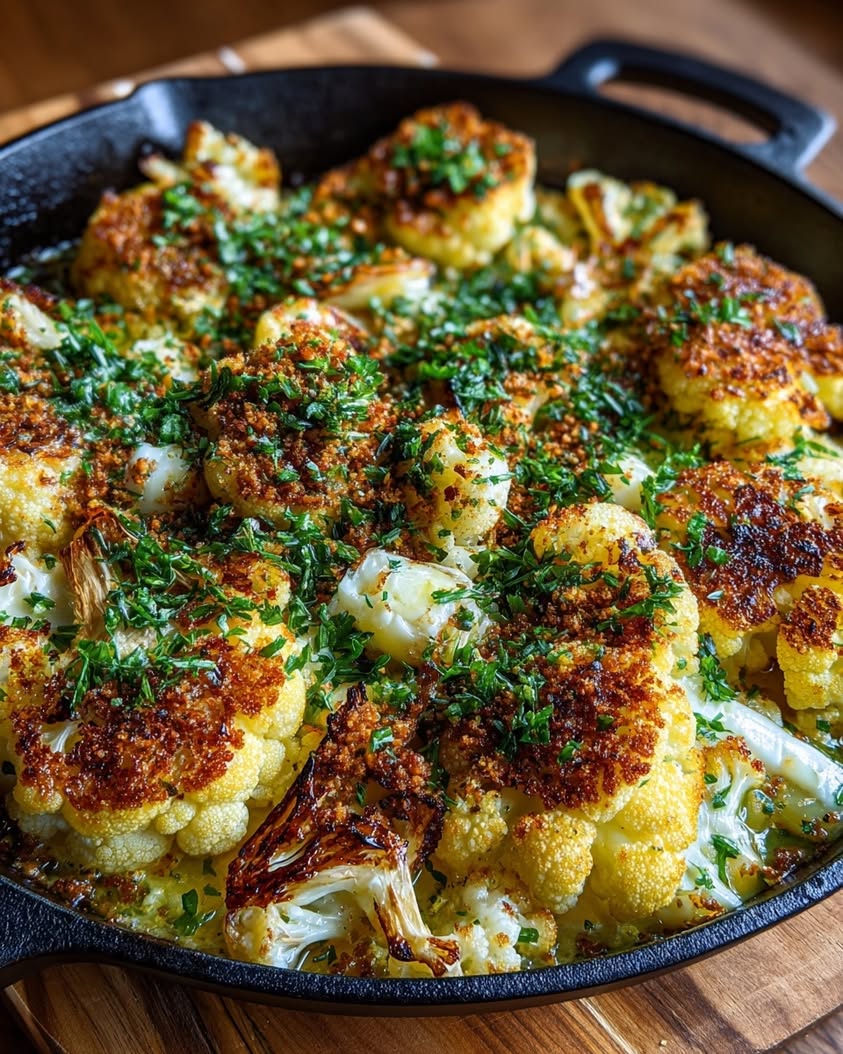
Golden Cauliflower Skillet with Melted Brie, Garlic Butter Drizzle & Herb Crunch: Your New Favorite Comfort Food
Picture this: a sizzling cast iron skillet arrives at your table, filled with golden-roasted cauliflower florets, draped in a blanket of oozing, decadent brie cheese. Next, imagine a fragrant garlic butter drizzle sizzling as it hits the hot surface, and finally, a shower of crisp, herby breadcrumbs for the perfect crunch. This Golden Cauliflower Skillet with Melted Brie, Garlic Butter Drizzle & Herb Crunch is not just a side dish; it is a show-stopping centerpiece that redefines vegetable-centric cooking. Moreover, it transforms humble cauliflower into a luxurious, shareable experience that will have everyone reaching for seconds.
Consequently, this recipe masterfully balances deep, savory flavors with contrasting textures. The caramelized edges of the roasted cauliflower provide a sweet, nutty base, while the melted brie adds a creamy, tangy richness that is utterly irresistible. Meanwhile, the garlic butter infuses every bite with aromatic warmth, and the herb crunch delivers a satisfying final note. Ultimately, this dish proves that eating your vegetables can be the most exciting part of the meal, offering a sophisticated yet approachable option for any night of the week.
Quick Recipe Highlights
- Flavor Profile: This dish delivers a complex symphony of tastes. Specifically, you get the sweet, caramelized notes from perfectly roasted cauliflower, the rich, tangy creaminess from melted brie, and the pungent, aromatic punch from fresh garlic butter. Finally, fresh herbs and lemon zest brighten everything up.
- Texture: The texture journey is a key part of the experience. You experience tender, almost meaty cauliflower florets contrasted against the gooey, stretchy melted cheese. Subsequently, the crispy, buttery breadcrumb topping provides a delightful crunch that completes every single bite.
- Aroma: As this Golden Cauliflower Skillet bakes, your kitchen will fill with an incredible fragrance. Initially, you will smell the earthy, nutty scent of roasting cauliflower. Then, the pungent, savory aroma of garlic butter will take over, followed by the mild, fungal scent of melting brie and the fresh, green notes of parsley and thyme.
- Visual Appeal: This dish is a feast for the eyes with its stunning color palette. You see deep golden-brown cauliflower florets peeking through a creamy white layer of melted brie. Meanwhile, the vibrant green herbs and golden breadcrumb topping create beautiful visual contrast, making it perfect for photos and impressing guests.
- Skill Level Needed: This is a fantastically accessible recipe for cooks of all levels. Basically, it requires simple techniques like chopping, roasting, and making a quick compound butter. Therefore, even a beginner can achieve restaurant-quality results with minimal fuss and straightforward steps.
- Special Equipment: You only need a few key tools. Primarily, a reliable oven-safe skillet, like cast iron or stainless steel, is essential for both stovetop and oven cooking. Additionally, a small saucepan for the garlic butter and a mixing bowl for the breadcrumb topping will have you fully equipped.
Recipe Overview
- Difficulty Level: We classify this Golden Cauliflower Skillet as an easy recipe. The steps are sequential and simple: prepare the cauliflower, roast it, add cheese, and finish with toppings. While there is some multi-tasking, each task is manageable, and the visual cues are clear, guiding you to success without advanced skills.
- Category: This versatile dish fits multiple meal categories beautifully. It shines as a spectacular vegetarian main course, a hearty side dish for roasted meats, or an impressive appetizer for sharing. Furthermore, its rich flavor profile allows it to anchor a meal or complement other components with ease.
- Cuisine: This recipe draws inspiration from modern American bistro cooking and French culinary techniques. The use of brie and compound butter is classically French, while the one-pan, rustic presentation and focus on a vegetable centerpiece reflect contemporary, vegetable-forward American dining trends.
- Cost: This is a cost-effective way to create a luxurious-tasting dish. A head of cauliflower and a wedge of brie are relatively inexpensive, especially compared to meat-centric mains. The remaining ingredients—garlic, butter, breadcrumbs, herbs—are pantry staples, making this an affordable gourmet experience.
- Season: This Golden Cauliflower Skillet is truly a year-round champion. It is perfect for cozy fall and winter dinners, providing warmth and richness. Conversely, it also works in spring and summer when served with lighter accompaniments, as cauliflower is consistently available and affordable.
- Occasion: This dish is suited for a wide range of occasions. It is simple enough for a casual family weeknight dinner yet elegant enough for a dinner party centerpiece. Additionally, it makes a fantastic holiday side dish, offering a decadent vegetarian option that everyone can enjoy.
Why You’ll Love This Recipe
First and foremost, the taste and texture combination is absolutely magical. The roasted cauliflower develops a deep, almost sweet flavor that pairs perfectly with the funky, creamy brie. Then, the garlic butter seeps into every nook, and the herby crunch on top ensures no bite is boring. This dish satisfies cravings for something rich, savory, and comforting while still feeling somewhat virtuous because it is vegetable-based. Every element complements the others, creating a harmonious and deeply satisfying eating experience that feels special.
From a convenience standpoint, this recipe is a winner. It primarily uses one skillet, meaning fewer dishes to wash. The prep is straightforward—mainly chopping cauliflower and mincing garlic—and the oven does most of the work. You can easily prepare the garlic butter and breadcrumb topping while the cauliflower roasts, making efficient use of your time. Ultimately, you get a stunning, restaurant-worthy dish with minimal active cooking time and a simple cleanup process, which is a huge win for any home cook.
Nutritionally, this Golden Cauliflower Skillet offers several advantages. Cauliflower is a nutritional powerhouse, packed with vitamins C and K, fiber, and antioxidants. While brie and butter add richness, they do so in moderation, as a little goes a long way in terms of flavor. You can control the amount of cheese and adjust the butter to your preference. This dish encourages eating more vegetables in a delicious way, making it easier to incorporate healthy choices into your diet without feeling deprived.
For social and entertaining value, this dish is a superstar. It is visually dramatic when brought to the table in the skillet, encouraging sharing and conversation. It caters well to vegetarians and can be easily adapted for other dietary needs, which takes the stress out of menu planning. Guests are always impressed by the melty cheese pull and the aromatic garlic butter drizzle, making it a guaranteed conversation starter and a memorable part of any meal.
Finally, this recipe is cost-effective and accessible. Cauliflower and brie are widely available at most grocery stores year-round. You do not need any rare or expensive specialty ingredients. The recipe is also forgiving; if you cannot find fresh thyme, use dried. If you prefer a different nutty cheese, you can substitute. This flexibility and reliance on common ingredients mean you can create this luxurious-tasting dish without breaking the bank or making a special shopping trip.
Historical Background and Cultural Significance
The story of this dish is a modern tale of culinary evolution. Cauliflower, for centuries, was often boiled or steamed into submission, losing its texture and flavor. However, the roasted cauliflower trend of the last 15-20 years revolutionized its place in cooking. By applying high-heat roasting, chefs and home cooks unlocked a sweet, nutty, caramelized potential that made cauliflower a star ingredient, worthy of center stage rather than just a bland side.
Culturally, the use of brie and garlic butter connects this recipe to French culinary traditions. Brie, named after the French region, is one of the world’s most famous and beloved cheeses, symbolizing indulgence and rustic charm. Garlic butter, or beurre à l’ail, is a foundational compound butter in French cuisine, used to finish steaks, escargot, and bread. Combining these elements with a vegetable reflects a contemporary “bistro” style—taking classic, high-quality French components and applying them in a simpler, more accessible way.
The evolution of this specific recipe mirrors broader food trends: vegetable-forward dining, one-pan meals, and the desire for “shareable” comfort food. It represents a departure from meat-centric mains, showcasing how vegetables can be treated with the same respect and technique as premium proteins. The “skillet-to-table” presentation also taps into a desire for rustic, communal dining experiences, where food is served family-style in the vessel it was cooked in, fostering connection.
Regional variations of this concept are endless. In the Mediterranean, you might find roasted cauliflower with feta, olives, and lemon. In South Asia, it could be spiced with turmeric, cumin, and cilantro. This particular Golden Cauliflower Skillet with Brie sits comfortably in a Euro-American fusion space, taking the French cheese and butter technique and applying it to a vegetable that has been enthusiastically adopted into modern Western cooking. It is a delicious example of how global ingredients and techniques can merge to create something new and exciting.
Ingredient Deep Dive
Cauliflower: This versatile brassica has a history dating back to Asia Minor and the Mediterranean. It was cultivated in the Middle East for centuries before spreading to Europe. Nutritionally, it is incredibly rich in vitamin C, vitamin K, and folate, and is a great source of fiber and antioxidants like sulforaphane. When selecting a head, look for tight, compact florets that are creamy white with bright green, perky leaves. Avoid any with brown spots or a loose, spreading appearance. Store it unwashed in a perforated plastic bag in the refrigerator’s crisper drawer for up to a week. For substitutions, broccoli or romanesco cauliflower can be used, though cooking times may vary slightly.
Brie Cheese: Hailing from the Île-de-France region, Brie is known as the “Queen of Cheeses.” Its history is intertwined with French royalty and aristocracy. It is a soft-ripened cheese made from cow’s milk, with a bloomy, edible rind and a creamy interior. It provides protein, calcium, and vitamin B12, though it is also high in saturated fat, so moderation is key. Choose a wedge that feels slightly soft to the touch and has a pleasant, mushroomy aroma. Avoid any with an ammonia smell. Store brie in its original wrapper or wax paper in the coldest part of your fridge. For a similar melty texture, you could substitute Camembert, Taleggio, or a creamy goat cheese log.
Garlic: Garlic has been used for both culinary and medicinal purposes for over 5,000 years, originating in Central Asia. It is famed for its allicin compound, which has antioxidant and anti-inflammatory properties. Fresh garlic provides a pungent, aromatic base that mellows and sweetens when cooked in butter. Select firm, plump heads with tight, unbroken papery skin. Avoid heads that are sprouting or feel light and shriveled. Store in a cool, dark, dry place with good air circulation—not in the refrigerator. For a milder flavor, you can use roasted garlic paste. In a pinch, 1/8 teaspoon of garlic powder can substitute for one fresh clove, but the flavor will be less complex.
Panko Breadcrumbs: Panko are Japanese-style breadcrumbs made from crustless white bread, resulting in a lighter, flakier, and crispier texture than traditional breadcrumbs. They became popular in Western cooking in the late 20th century for their superior crunch. They primarily provide carbohydrates and texture, with little fat unless toasted in butter. Look for unseasoned panko to control the flavor of your dish. Store them in a sealed container in a cool, dry pantry. For a gluten-free version, use gluten-free panko or crushed gluten-free crackers. For a keto option, use crushed pork rinds or grated Parmesan cheese crisped in the oven.
Common Mistakes to Avoid
- Overcrowding the Skillet: Do not pile the cauliflower in too tightly. If the florets are touching, they will steam instead of roast. Consequently, you will miss out on the crucial caramelized, golden-brown edges that provide so much flavor. Always ensure there is a little space between pieces.
- Using Cold Brie Straight from the Fridge: Adding a cold, hard wedge of brie to the hot skillet will not allow it to melt properly and could cool the dish down. Instead, let the brie sit at room temperature for 20-30 minutes before slicing. This way, it will melt evenly and beautifully over the hot cauliflower.
- Burning the Garlic Butter: Garlic burns very quickly and turns bitter. When making the drizzle, cook the minced garlic over low to medium-low heat just until fragrant, about 30-60 seconds. Do not let it brown. Immediately remove it from the heat and stir in the fresh herbs to stop the cooking process.
- Skipping the Breadcrumb Toasting Step: Simply sprinkling plain, dry panko on top will result in a bland, soft topping. You must toast the panko in butter first. This step cooks the breadcrumbs, infuses them with buttery flavor, and ensures they stay supremely crunchy even after being added to the dish.
- Underseasoning the Cauliflower: Cauliflower is like a blank canvas and needs ample seasoning. Do not be shy with salt and pepper before roasting. Season it generously, as some seasoning will be lost during the cooking process. Properly seasoned cauliflower is the foundation of the entire dish’s flavor.
- Not Preheating the Skillet (if starting on stovetop): If your recipe starts by searing cauliflower on the stovetop, a cold skillet will not create a good sear. Always preheat your skillet over medium-high heat before adding oil and cauliflower. A hot skillet ensures immediate sizzle and better browning.
- Using Pre-Shredded or Pre-Crumbled Cheese: These products often contain anti-caking agents like cellulose, which prevent them from melting smoothly. For the creamiest, most luxurious melt, always start with a wedge of brie and slice or tear it yourself just before adding it to the dish.
- Neglecting to Let it Rest: Pulling the skillet from the oven and serving immediately can be messy and too hot. Let the Golden Cauliflower Skillet rest for 5 minutes after adding the final toppings. This allows the cheese to set slightly and the flavors to meld, making it easier to serve.
Essential Techniques
Dry Roasting for Caramelization: This is the most critical technique for flavor development. The goal is to evaporate surface moisture from the cauliflower quickly, allowing the natural sugars to caramelize and create a deep, nutty, golden-brown exterior. To master it, ensure your cauliflower florets are completely dry after washing, toss them thoroughly with oil to coat every surface, and do not overcrowd the pan. A common pitfall is adding wet cauliflower to the pan, which leads to steaming. Visual cues for success are evenly browned edges and a tender-but-not-mushy interior when pierced with a fork.
Making a Compound Butter (Garlic Butter Drizzle): A compound butter is simply butter softened and blended with other flavorings. Its importance here is to create a flavorful, aromatic liquid that can be drizzled and will solidify slightly on contact with the hot food, clinging to every bite. To master it, use room-temperature butter for easy mixing, cook the garlic gently to avoid bitterness, and stir in fresh herbs off the heat to preserve their brightness. A common pitfall is using cold butter, which will not blend smoothly with the garlic. The visual cue for the garlic is that it should sizzle gently and become fragrant but not change to more than a very pale golden color.
Toasting Breadcrumbs for Maximum Crunch: Toasting breadcrumbs in fat is essential for developing flavor, color, and an enduring crunchy texture that won’t get soggy quickly. The fat (usually butter) coats each crumb, toasts it evenly, and acts as a barrier against moisture. To master it, use a pan over medium heat, stir constantly for even browning, and remove them from the pan the moment they reach a perfect golden color, as they will continue to cook from residual heat. The most common pitfall is walking away, which leads to burning in seconds. Perfectly toasted panko should be a uniform light golden brown and smell wonderfully nutty.
Pro Tips for Perfect Golden Cauliflower Skillet
First, cut your cauliflower florets into uniform sizes. This ensures they all cook at the same rate, so you don’t end up with some pieces burnt and others undercooked. Aim for bite-sized pieces, about 1.5 to 2 inches across.
For an extra flavor boost, toss the cauliflower with a teaspoon of nutritional yeast or a sprinkle of smoked paprika before roasting. These ingredients add a deep, savory, umami quality that complements the brie beautifully.
Use the flat side of your knife to crush the garlic cloves before mincing. This breaks down the cell walls and makes the garlic easier to mince finely, and also helps release more of its flavorful oils into the butter.
If your brie has a very thick, chalky rind, you can trim it off slightly. While the rind is edible, some find it too strong. Trimming a millimeter off allows for even creamier melting while still utilizing most of the cheese.
Add a teaspoon of fresh lemon juice or white wine to your garlic butter just after taking it off the heat. The acidity will cut through the richness of the cheese and butter, brightening the entire dish.
For a more substantial meal, add a can of drained, rinsed chickpeas to the skillet with the cauliflower before roasting. They will get crispy and add plant-based protein, turning the side dish into a full vegetarian main.
Let the skillet sit for a full 5 minutes after the final bake. This rest period allows the molten cheese to set just enough for cleaner serving, and lets the intense heat subside so the flavors can shine.
Garnish with something fresh and colorful right before serving. Chopped chives, extra parsley, microgreens, or even a few pomegranate arils add a final pop of color, freshness, and texture that elevates the presentation.
Variations and Adaptations
Regional Variations: Travel the world from your skillet. For a Greek twist, swap brie for crumbled feta and add Kalamata olives and oregano. For an Italian version, use torn fresh mozzarella or burrata, and top with a drizzle of basil pesto instead of garlic butter. For a hint of Morocco, spice the cauliflower with ras el hanout and top with toasted almonds and cilantro.
Seasonal Adaptations: Embrace what is fresh. In spring, add tender asparagus tips or fresh peas in the last 5 minutes of roasting. For summer, incorporate cherry tomatoes that will burst and add juiciness. In fall, mix in cubed sweet potato or Brussels sprout halves for a heartier dish. Winter calls for adding robust kale or shreds of Brussels sprouts.
Dietary Modifications: This recipe is wonderfully adaptable. For a gluten-free version, use certified gluten-free panko breadcrumbs. To make it vegan, replace the brie with a melty vegan cheese block and use plant-based butter. For a dairy-free option, use olive oil and nutritional yeast in the breadcrumbs, and skip the cheese or use a vegan alternative.
Flavor Variations: Change the profile with simple swaps. Use truffle oil or a dab of truffle butter in the drizzle for luxury. Add heat with red pepper flakes to the garlic butter or a dash of hot sauce. For an herby focus, mix chopped rosemary, sage, and thyme into the breadcrumbs for a Provençal feel.
Texture Modifications: Play with the crunch. Instead of panko, use crushed walnuts, pecans, or pine nuts for a richer, nuttier crunch. For extra crispiness, add a tablespoon of grated Parmesan to the panko while toasting it in butter. For a softer top, skip the breadcrumbs and use a mix of grated Gruyère and Parmesan that will form a delicious crust.
Presentation Alternatives: Serve it differently. Instead of one large skillet, divide the roasted cauliflower among individual small cast-iron pans or ramekins before adding the cheese for personal servings. Alternatively, deconstruct it: serve the roasted cauliflower on a platter with a bowl of warm garlic butter for dipping and a board of sliced brie on the side.
Serving and Presentation Guide
Plating Techniques: For the most dramatic effect, serve the Golden Cauliflower Skillet directly in the oven-safe pan you cooked it in. Place the hot skillet on a trivet or heat-resistant pad in the center of the table. Provide a large serving spoon so guests can help themselves family-style. This rustic presentation highlights the beautiful layers and encourages sharing.
Garnishing Ideas: Final garnishes add freshness and color. A generous sprinkle of finely chopped fresh parsley, chives, or dill is classic. For brightness, add a few twists of freshly cracked black pepper and a light grating of lemon zest. A tiny drizzle of high-quality olive oil or a balsamic glaze just before serving adds shine and a touch of acidity.
Traditional Accompaniments: As a hearty side, this skillet pairs wonderfully with simply prepared proteins. Serve it alongside a roasted whole chicken, pan-seared pork chops, or grilled steak. The rich cauliflower and brie complement the savory meat without competing, creating a balanced plate.
Modern Serving Suggestions: As a vegetarian main, build a meal around it. Start with a light, acidic salad like arugula with lemon vinaigrette to balance the richness. Offer a basket of crusty artisan bread or baguette slices for guests to scoop up every last bit of melted cheese and garlic butter from the skillet.
Temperature Considerations: This dish is best served piping hot, straight from the oven after its brief rest. The cheese should be molten and stretchy, and the garlic butter should be warm enough to be fluid. If it sits too long, the cheese will solidify and the dish will lose its luxurious, gooey appeal. Plan your timing so other meal components are ready when the skillet comes out.
Portion Control Tips: This recipe generously serves four as a main or six as a side. When serving as a main, consider adding a protein-rich element like the chickpeas mentioned earlier or a side of lentils. As a side, a small scoop alongside your protein is perfect. Remember, it is rich, so a little goes a long way in terms of satisfaction.
Wine and Beverage Pairing
Wine Pairings: The rich, creamy brie and earthy cauliflower call for wines with good acidity to cut through the fat. A crisp, unoaked Chardonnay is a classic pairing—its apple and citrus notes contrast the richness. Alternatively, a dry Riesling or a Sauvignon Blanc with herbal notes complements the garlic and herbs beautifully. For red wine lovers, a light-bodied, low-tannin Pinot Noir with red fruit flavors won’t overpower the dish.
Non-Alcoholic Alternatives: Sparkling water with a squeeze of lemon or lime is always a refreshing palate cleanser. For something more special, try a tart cherry or pomegranate spritzer. A chilled, non-alcoholic ginger beer also works wonderfully, as the spicy ginger cuts through the cheese’s creaminess and complements the garlic.
Coffee/Tea Pairings: While not a typical pairing for the meal, a post-dinner beverage can be selected to complement the experience. A medium-roast coffee with nutty or chocolatey notes can mirror the roasted flavors of the cauliflower. For tea, a smoky Lapsang Souchong or a gentle, floral white tea would provide a nice contrast without overwhelming the lingering savory notes.
Temperature Considerations: White and sparkling wines should be served well-chilled, between 45-50°F. Light reds like Pinot Noir should be slightly cool, around 55°F. Non-alcoholic sparkling drinks are best served very cold. The contrast between the cool beverage and the warm, rich food is a key part of the pairing’s success.
Serving Suggestions: Always offer water on the table alongside your chosen beverage. The saltiness and richness of the dish will make guests thirsty. Use clear glasses for white wines and sparkling waters to showcase their color, and have a coaster ready for the hot skillet to protect your table.
Storage and Shelf Life
Storage Methods: Store any leftovers in an airtight container in the refrigerator. For best results, transfer the cooled cauliflower and cheese mixture, but store the breadcrumb topping separately in a small bag at room temperature to preserve its crunch. The garlic butter will solidify; you can scrape it into a container and store it in the fridge as well.
Temperature Requirements: The main dish must be refrigerated at 40°F or below within two hours of cooking. Do not leave the cheesy skillet at room temperature for an extended period, as dairy products can spoil quickly. The breadcrumb topping can be kept in a cool, dry pantry.
Container Recommendations: Use a shallow, wide container rather than a deep one. This allows the cheesy cauliflower to cool more quickly and evenly, and prevents condensation from making the bottom layer soggy. Glass containers are ideal as they do not absorb odors.
Signs of Spoilage: Discard the leftovers if you notice an off, sour, or ammonia-like smell, especially from the cheese. Visible mold growth is an obvious sign. If the texture becomes excessively slimy or the color changes dramatically, it is time to throw it out. Typically, it will last 3-4 days when stored properly.
Reheating Instructions: Reheat gently to avoid overcooking the cauliflower and breaking the cheese sauce. The best method is in a preheated 350°F oven. Spread the leftovers in an oven-safe dish, cover with foil, and heat for 10-15 minutes until warmed through. You can also use a microwave on medium power in 30-second intervals, stirring between, but the texture will be softer.
Freezing Guidelines: Freezing is not highly recommended for this dish, as the cauliflower can become watery and the dairy can separate upon thawing, resulting in a grainy texture. If you must freeze it, expect a significant loss in quality. Thaw overnight in the refrigerator and reheat gently in the oven, stirring halfway through.
Make Ahead Strategies
Prep Timeline: You can break this recipe into stages. Up to 24 hours ahead, cut the cauliflower into florets and store them in a sealed container or bag in the fridge. Make the garlic butter compound butter, roll it into a log in parchment paper, and refrigerate. Toast the breadcrumb-herb mixture and store at room temperature in an airtight container.
Storage Between Steps: Keep pre-cut cauliflower dry in the fridge. The compound butter log will keep for up to 5 days in the fridge or a month in the freezer—simply slice off a disc and melt it when needed. The toasted breadcrumbs will stay crisp for 2-3 days in a sealed container.
Quality Impact Assessment: Pre-cutting the cauliflower has minimal impact. Making the garlic butter ahead actually improves the flavor, as the garlic infuses the butter more deeply. Toasting breadcrumbs ahead preserves their crunch, as long as they are stored properly. The only step best done just before serving is adding the cheese and final baking for optimal melt and texture.
Assembly Tips: When ready to cook, take the pre-cut cauliflower from the fridge, toss with oil and seasoning, and roast. While it roasts, slice your room-temperature brie. Once the cauliflower is golden, top with brie and bake until melted. Gently re-melt your pre-made garlic butter in a small pan, and sprinkle the pre-toasted breadcrumbs over the finished dish.
Reheating Guidelines: If you fully assemble and bake the dish ahead of time, reheat it covered in a 325°F oven until the cheese is melty again, about 15-20 minutes. You may need to add a fresh sprinkle of herbs or breadcrumbs after reheating to revive the texture and appearance.
Fresh Element Additions: Always add a final garnish of something fresh after reheating or just before serving a make-ahead dish. A sprinkle of new chopped parsley, a few extra breadcrumbs for crunch, or a fresh drizzle of olive oil will make the dish taste and look freshly made.
Scaling Instructions
Halving the Recipe: To serve two, simply divide all ingredient quantities by two. Use a smaller oven-safe skillet, about 8 inches in diameter. The roasting time may be slightly less—start checking for doneness around the 20-minute mark. All other techniques and steps remain identical. This is perfect for a cozy dinner for two.
Doubling or Tripling: For a crowd, double or triple the ingredients. The key here is to use multiple skillets or a very large sheet pan. Do not pile the cauliflower deeper in one pan; it must have space to roast. If using sheet pans, roast the cauliflower in a single layer, then transfer to a large serving dish, top with brie, and broil to melt. You may need to make the garlic butter and breadcrumbs in separate batches to avoid overcrowding the pans.
Equipment Adjustments: Scaling up requires planning. Ensure you have enough oven space and racks to accommodate multiple pans. Rotate pans halfway through roasting for even cooking. If using one huge dish, like a half-sheet pan, your cooking time may increase slightly due to the larger volume of cold ingredients hitting the hot oven.
Timing Modifications: When doubling, the prep time will increase linearly (chopping more cauliflower). The oven time may increase by 5-10 minutes if the pans are very full. Always rely on visual cues—golden-brown cauliflower and melted cheese—rather than strictly following the original timer.
Storage Considerations: Leftovers from a scaled-up batch will be more abundant. Have plenty of shallow storage containers ready. Consider if your guests might want to take some home, and have disposable containers available. Remember, the dish is best fresh, so try to scale according to your expected number of guests.
Nutritional Deep Dive
Macro Breakdown: A serving of this Golden Cauliflower Skillet provides a balance of macronutrients. The cauliflower and breadcrumbs contribute complex carbohydrates and fiber. The brie and butter are sources of fat, primarily saturated, and provide a modest amount of protein. This makes the dish energy-dense and satisfying, though the fat content means it should be enjoyed as part of a balanced meal, perhaps paired with a lean protein source if serving as a side.
Micronutrient Analysis: This dish is a notable source of several vitamins and minerals. Cauliflower is rich in Vitamin C, Vitamin K, and folate. Brie provides calcium, phosphorus, and Vitamin B12. Garlic contributes manganese and Vitamin B6. The fresh herbs, while used in small amounts, add traces of Vitamin A, Vitamin K, and antioxidants. It is a nutrient-dense way to enjoy comforting flavors.
Health Benefits: The combination offers several benefits. The fiber from cauliflower promotes digestive health and satiety. The calcium from cheese supports bone health. The compounds in garlic, like allicin, have been studied for their potential cardiovascular and immune-supporting properties. The dish is also naturally gluten-free (with certified GF breadcrumbs) and can be part of a low-carb diet in moderation, as cauliflower is low in net carbs.
Dietary Considerations: For those monitoring sodium, be mindful of the salt added during roasting and the natural sodium in cheese. For heart health, the saturated fat from butter and brie suggests enjoying this as an occasional treat rather than a daily staple. The dish is vegetarian and can be adapted to other diets as outlined in the adaptations section.
Portion Analysis: One serving as a main (¼ of the recipe) is quite substantial and filling due to the fiber and fat content. As a side (⅙ of the recipe), it provides a luxurious complement without overwhelming the plate. Listening to your hunger cues is key; the richness often means you may be satisfied with a slightly smaller portion than you initially serve yourself.
Weight Management Tips: To enjoy this dish as part of a weight-conscious plan, focus on portion control. Serve it as a side rather than a main. Increase the ratio of cauliflower to cheese in your portion. Use a light hand with the garlic butter drizzle, or make it with a butter-olive oil blend. These small adjustments allow you to savor the flavor while managing calorie intake.
Dietary Adaptations
Gluten-free: This adaptation is incredibly simple. Ensure you use certified gluten-free panko breadcrumbs, which are widely available. Double-check that any pre-made seasonings or broth you might use are also gluten-free. All other core ingredients—cauliflower, brie, butter, garlic, herbs—are naturally gluten-free, making this a safe and delicious option for those with celiac disease or gluten sensitivity.
Dairy-free: Create a rich, creamy experience without dairy. Replace the butter with a high-quality plant-based butter or olive oil. For the cheese, use a melty, block-style vegan cheese; brands that melt well are key. Alternatively, skip the cheese and create a creamy sauce with blended cashews{“success”:true,”message”:”Recipe created successfully”,”post_id”:8925,”tasty_recipe_id”:8925,”shortcode”:” Print
Golden Cauliflower Skillet with Melted Brie, Garlic Butter Drizzle & Herb Crunch
Description
A decadent, savory skillet dish featuring roasted cauliflower florets, creamy melted brie cheese, a rich garlic butter drizzle, and a crispy herb topping for the perfect crunch.
Ingredients
For the Crust:
- 1 large head cauliflower, cut into florets
- 2 tablespoons olive oil
- 1 teaspoon smoked paprika
- Salt and black pepper to taste
- 8 ounces brie cheese, rind removed and cubed
- 4 tablespoons unsalted butter
- 4 cloves garlic, minced
- 1/4 cup fresh parsley, finely chopped
- 1/4 cup panko breadcrumbs
- 1 tablespoon fresh thyme leaves
Instructions
1. Prepare the Crust:
- Preheat oven to 400°F (200°C). Toss cauliflower florets with olive oil, smoked paprika, salt, and pepper on a baking sheet. Roast for 20-25 minutes until golden and tender.
- Transfer roasted cauliflower to an oven-safe skillet. Scatter cubed brie cheese evenly over the top. Broil on high for 3-5 minutes until brie is melted and bubbly.
- In a small saucepan, melt butter over medium heat. Add minced garlic and cook for 1-2 minutes until fragrant. Drizzle garlic butter over the skillet.
- In a bowl, mix parsley, panko breadcrumbs, and thyme. Sprinkle the herb crunch mixture over the melted brie. Serve immediately while hot.
Notes
You can customize the seasonings to taste.

I’m Billy, a classically trained culinary school graduate from The Culinary Institute of America with over 12 years in the restaurant industry and over 19 years of cooking experience.