
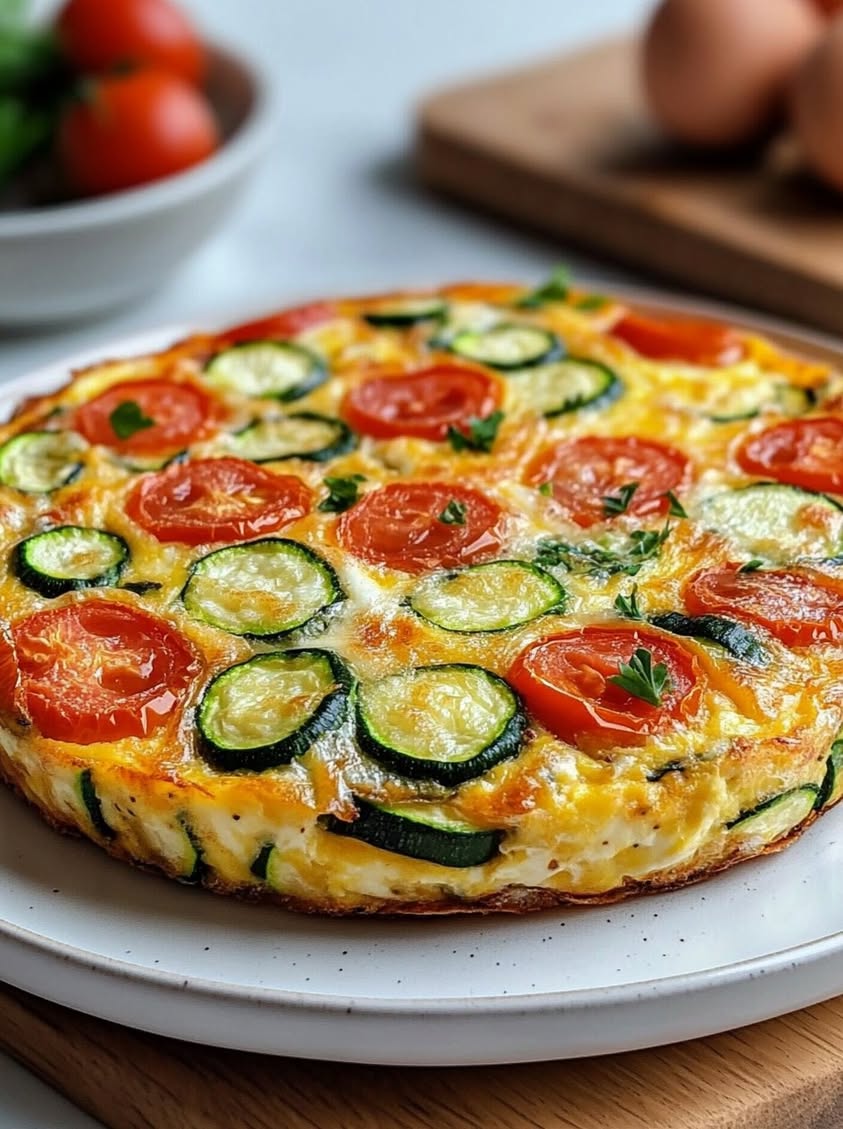
Golden Garden Zucchini and Tomato Frittata with Melted Mozzarella: A Vibrant, Protein-Packed Meal
Imagine a dish that captures the very essence of a summer garden on your plate. This Golden Garden Zucchini and Tomato Frittata with Melted Mozzarella does exactly that. It transforms simple, fresh ingredients into a stunning, satisfying meal that works for breakfast, brunch, lunch, or a light dinner. The beauty of this recipe lies in its simplicity and versatility. You get a golden, fluffy egg base packed with tender zucchini, juicy tomatoes, and gooey melted cheese in every single bite.
Furthermore, this frittata is a true celebration of seasonal produce. When zucchini and tomatoes are at their peak, this recipe lets their natural sweetness and flavor shine. The eggs act as a creamy, rich canvas, while the mozzarella adds a delightful stretchy texture that makes each forkful irresistible. Ultimately, this dish is a testament to how a few quality ingredients can create something truly special and delicious without requiring hours in the kitchen.
Moreover, this Golden Garden Zucchini and Tomato Frittata is incredibly forgiving and adaptable. Whether you are cooking for a crowd or meal-prepping for the week, it delivers consistent, fantastic results. The process is straightforward, and the final product is as beautiful as it is tasty. It is a reliable recipe that will quickly become a staple in your home cooking repertoire, especially when you want something nutritious, colorful, and utterly comforting.
Quick Recipe Highlights
- Flavor Profile: This frittata offers a beautifully balanced taste. You get the savory richness of eggs and cheese perfectly complemented by the mild, slightly sweet zucchini and the bright, acidic pop of fresh tomatoes. A hint of garlic and herbs ties everything together for a deeply satisfying flavor experience.
- Texture: The texture is a delightful contrast. Expect a light and fluffy egg custard surrounding tender-crisp zucchini pieces. Meanwhile, the tomatoes soften and release their juices, and the mozzarella cheese melts into irresistible, stretchy pockets throughout the entire dish.
- Aroma: As it cooks, your kitchen will fill with an inviting, savory fragrance. The scent of sautéing garlic and onions mingles with the earthy aroma of zucchini and the comforting smell of baking eggs and melting cheese. It is a smell that promises a delicious meal is moments away.
- Visual Appeal: This frittata is a feast for the eyes. The golden-brown top gives way to a vibrant interior of green zucchini and red tomato pieces, all held together by the yellow egg. The melted mozzarella creates beautiful cheesy swirls, making it look as impressive as it tastes.
- Skill Level Needed: This is a beginner-friendly recipe. The techniques involved—sautéing vegetables and baking eggs—are fundamental. No fancy flipping or advanced skills are required, making it an excellent choice for novice cooks and a quick, satisfying project for experienced ones.
- Special Equipment: You only need a reliable oven-safe skillet. A 10-inch cast iron or non-stick skillet works perfectly. Other than that, basic kitchen tools like a whisk, a knife, and a cutting board are all you need to create this wonderful dish.
Recipe Overview
- Difficulty Level: We rate this Golden Garden Zucchini and Tomato Frittata as “Easy” for good reason. The steps are sequential and simple: chop, sauté, mix, and bake. There is no complicated timing or precision required. Consequently, even if you have never made a frittata before, you can achieve excellent results on your first try.
- Category: This dish is the ultimate all-day meal. It fits perfectly into breakfast and brunch menus, served with toast or fruit. Additionally, it makes a fantastic light lunch or dinner alongside a simple green salad. It truly blurs the lines between meal categories with its versatility.
- Cuisine: While frittatas have strong roots in Italian cuisine, this version is a modern, garden-inspired take. It uses classic Italian ingredients like zucchini, tomato, and mozzarella but in a very accessible, weeknight-friendly format. The result is a dish that feels both rustic and refined.
- Cost: This is an incredibly budget-friendly meal. Eggs are an affordable protein source, and zucchini and tomatoes are often inexpensive, especially in season. With just a few other pantry staples, you can create a restaurant-quality dish that feeds four people for a fraction of the cost of eating out.
- Season: This recipe sings in the late summer and early fall when zucchini and tomatoes are abundant and bursting with flavor. However, it is a wonderful way to bring a taste of sunshine to your table year-round, as these vegetables are typically available in grocery stores every season.
- Occasion: This frittata is perfect for casual weekend brunches with family, elegant ladies’ luncheons, or a simple “breakfast for dinner” night. It is impressive enough for guests yet easy enough for a quiet Tuesday evening. Basically, it suits any occasion that calls for delicious, wholesome food.
Why You’ll Love This Recipe
First and foremost, the taste and texture of this Golden Garden Zucchini and Tomato Frittata are utterly irresistible. The combination is a masterclass in simplicity. Fluffy eggs envelop sweet zucchini and tangy tomatoes, while the melted mozzarella adds a creamy, stringy richness that is deeply comforting. Every bite delivers a harmonious blend of savory, fresh, and cheesy notes that will have everyone asking for seconds. It is a flavor profile that feels both familiar and special at the same time.
Next, consider the sheer convenience this recipe offers. From start to finish, you can have a hot, nutritious meal on the table in about thirty-five minutes. The prep is minimal—mostly just chopping a few vegetables. After a quick sauté, the oven does the majority of the work. This makes it an ideal solution for busy mornings, rushed weeknights, or lazy weekends when you want something delicious without a lot of effort. It is a one-pan wonder that minimizes cleanup, too.
From a nutritional standpoint, this frittata is a powerhouse. Eggs provide high-quality protein and essential nutrients like choline. Zucchini adds fiber, vitamins C and B6, and potassium. Tomatoes contribute lycopene, a powerful antioxidant. Together, they create a balanced meal that will keep you full and energized. It is a fantastic way to incorporate more vegetables into your diet in a format that feels indulgent rather than obligatory.
Furthermore, this dish has incredible social and entertaining value. It presents beautifully straight from the skillet, making for a dramatic tableside presentation. You can easily double the recipe in a larger pan to feed a crowd. It is also excellent at room temperature, which makes it perfect for brunch buffets or picnic baskets. Serving this Golden Garden Zucchini and Tomato Frittata shows your guests you care, without you being stuck in the kitchen all day.
Finally, the cost-effectiveness and accessibility are unbeatable. The ingredients are humble, affordable, and easy to find. You likely have most of them in your kitchen already. This recipe demonstrates that eating well does not require expensive or exotic components. Instead, it celebrates how to elevate everyday ingredients into something extraordinary. It is a sustainable, wallet-friendly approach to cooking that delivers maximum flavor and satisfaction.
Historical Background and Cultural Significance
The frittata has deep roots in Italian culinary tradition, often considered the versatile cousin of the French omelet and the Spanish tortilla. Historically, it was a practical dish for farmers and home cooks. It provided a delicious way to use up leftover vegetables, cheeses, and meats before they spoiled. The concept is ancient, with simple egg dishes appearing in Roman cookbooks. However, the frittata as we know it today, cooked slowly and finished in the oven or under a broiler, solidified its place in Italian home cooking over centuries.
Culturally, the frittata holds significant importance as a symbol of resourcefulness and “cucina povera” or “poor kitchen.” This style of cooking emphasizes making the most of what you have. A frittata transforms scraps into a cohesive, nourishing meal for the family. It is rarely served as a first course in Italy but instead appears as a light lunch, a picnic item, or a quick dinner. It represents comfort, simplicity, and the ingenuity of home cooking passed down through generations.
The evolution of the recipe is a story of adaptation. While traditional Italian frittatas often feature ingredients like artichokes, potatoes, or onions, the version with zucchini and tomato reflects both Mediterranean flavors and modern garden-to-table trends. The addition of mozzarella, a cheese beloved worldwide, adds a contemporary touch of creamy indulgence. This Golden Garden Zucchini and Tomato Frittata is a beautiful example of how classic techniques adapt to highlight seasonal, local produce, no matter where you are in the world.
Regional variations of the frittata abound throughout Italy. In the south, you might find frittata enriched with ricotta or pecorino cheese. Coastal regions add seafood like anchovies or shrimp. The version presented here, with summer squash and tomatoes, feels particularly connected to the gardens of central Italy. Ultimately, the frittata’s global popularity proves its universal appeal. It is a blank canvas that welcomes interpretation, making it a beloved dish in households far beyond its Italian origins.
Ingredient Deep Dive
Eggs: Eggs are the essential foundation of any frittata, providing structure, protein, and richness. Culturally, they are a symbol of rebirth and nourishment across countless civilizations. Nutritionally, they are a complete protein, containing all nine essential amino acids, and are rich in vitamins B12, D, and choline, which is crucial for brain health. For the best results in your Golden Garden Zucchini and Tomato Frittata, use the freshest eggs you can find. They will have firmer whites and richer yolks, leading to a fluffier texture. Store them in their carton on a shelf in the refrigerator, not in the door, to maintain a consistent temperature. If needed, you can substitute with a commercial egg replacer for a vegan version, though the texture will differ.
Zucchini: Also known as courgette, zucchini is a summer squash that originated in the Americas but was cultivated into its modern form in Italy. It is a staple of Mediterranean cooking. This vegetable is low in calories but high in valuable nutrients like vitamin C, vitamin B6, manganese, and dietary fiber. When selecting zucchini for your frittata, look for small to medium-sized ones that feel firm and heavy for their size with glossy, unblemished skin. Avoid large zucchini, as they tend to be seedy and watery. Store them unwashed in a perforated plastic bag in the refrigerator’s crisper drawer for up to a week. Yellow summer squash makes an excellent, colorful substitution.
Tomatoes: Tomatoes bring a vital burst of acidity and umami to balance the richness of the eggs and cheese. Historically, they were once feared in Europe but are now central to countless global cuisines. They are an excellent source of vitamin C, potassium, and the antioxidant lycopene, which is linked to reduced risk of certain diseases. For this recipe, ripe but firm Roma or plum tomatoes are ideal as they have fewer seeds and less excess water. Alternatively, use any ripe, in-season tomato. Store ripe tomatoes at room temperature away from direct sunlight to preserve their flavor and texture. For a sweeter, concentrated flavor, you can substitute with sun-dried tomatoes (oil-packed and chopped).
Mozzarella Cheese: Mozzarella, with its legendary meltability, adds creamy pockets and stretchy texture to the frittata. Traditionally made from buffalo or cow’s milk in southern Italy, it is now produced worldwide. It provides a good amount of protein and calcium. For the best melting quality and flavor, use fresh mozzarella (packed in water) and tear it into pieces, or use a low-moisture, pre-shredded block. Avoid pre-shredded cheese coated in anti-caking agents, as it can melt less smoothly. Store mozzarella in its original packaging in the refrigerator. For a dairy-free version, a plant-based mozzarella-style shred that melts well can be used, or nutritional yeast can be sprinkled in for a cheesy flavor without the stretch.
Aromatics (Onion & Garlic): Onion and garlic form the flavor base, or “soffritto,” that gives the frittata depth and savoriness. These aromatics have been used medicinally and culinarily for thousands of years. They contain compounds with potential anti-inflammatory and immune-boosting properties. Use a yellow or white onion for a balanced sweetness. Fresh garlic is always preferable to powdered. Store onions and garlic in a cool, dark, dry place with good air circulation. If you are out of fresh onion, a tablespoon of onion powder can work in a pinch. Similarly, a quarter teaspoon of garlic powder can substitute for one fresh clove, though the fresh flavor is superior.
Common Mistakes to Avoid
- Using a Wet Skillet: Always ensure your skillet is hot and dry before adding the oil to sauté the vegetables. Adding oil to a cold or wet pan can cause the food to steam instead of sauté, resulting in soggy, less flavorful zucchini and onions.
- Overcrowding the Pan: When sautéing the zucchini and onion, give them enough space in the pan. Overcrowding creates steam, which prevents proper browning and caramelization. Cook in batches if your skillet is small to achieve that perfect tender-crisp texture.
- Not Whisking Eggs Thoroughly: Take a moment to whisk the eggs vigorously with the milk, salt, and pepper. Inadequate whisking leads to a dense, uneven frittata. You want to incorporate air to help create a light, fluffy final product.
- Pouring Eggs Over Scorching Hot Vegetables: After sautéing, let the vegetable mixture cool in the pan for just a minute before adding the eggs. Pouring eggs onto piping-hot vegetables can cause them to scramble immediately on contact, ruining the custardy texture.
- Overbaking the Frittata: The key to a perfect frittata is cooking it just until the center is set but still slightly jiggly. Overbaking leads to a dry, rubbery texture. Remember, residual heat will continue to cook the frittata slightly after you remove it from the oven.
- Using Pre-Shredded Cheese with Additives: Pre-shredded cheeses are often coated with potato starch or cellulose to prevent clumping. These additives can inhibit smooth melting. For the creamiest, most integrated cheese in your Golden Garden Zucchini and Tomato Frittata, shred it yourself from a block.
- Skipping the Broiler Step: If your frittata is set but the top hasn’t achieved a beautiful golden-brown color, do not hesitate to use the broiler for the final minute or two. This step adds crucial visual appeal and flavor through light caramelization.
- Cutting Immediately After Baking: Allow the frittata to rest in the pan for at least 5 minutes after baking. This lets the structure firm up, making it much easier to slice cleanly without falling apart. Patience here ensures perfect wedges.
- Neglecting to Season in Layers: Season your vegetables while they sauté, and season your egg mixture. This layered seasoning ensures every component of the frittata is properly flavored, not just the surface.
- Using Vegetables with High Water Content Without Precooking: Never add raw, high-moisture vegetables like zucchini directly to the egg mixture. Sautéing them first drives off excess water, concentrating their flavor and preventing a watery, soggy frittata.
Essential Techniques
Sautéing Vegetables: Sautéing is the crucial first step for building flavor and controlling moisture. The goal is to cook the zucchini and onions until they are just tender and lightly golden, not mushy. This process caramelizes their natural sugars, adding depth, and evaporates excess water that would otherwise steam inside the frittata. Use medium-high heat and do not stir constantly; let the vegetables sit for a minute to develop color. The visual cue for success is translucent onions and zucchini that have lost their raw, opaque whiteness and have a few golden spots.
Whisking the Egg Base: Thorough whisking is non-negotiable for a light texture. You are not just combining ingredients; you are incorporating air into the eggs. This creates tiny bubbles that expand in the oven’s heat, giving the frittata its characteristic lift and fluffiness. Whisk vigorously for a full 30-60 seconds until the mixture is uniform in color and slightly frothy on top. The common pitfall is under-whisking, which results in a dense, flat egg cake. Success looks like a smooth, homogenous, pale yellow liquid.
The Oven Finish: Baking is the gentlest, most even way to cook a frittata through without burning the bottom. After starting on the stovetop to set the edges, transferring the skillet to a preheated oven allows hot, ambient air to cook the top and center uniformly. The key is to bake just until the center is set. To test, gently jiggle the skillet; the center should have a slight jiggle, like set gelatin, not a liquid wave. Overbaking is the primary enemy, leading to dryness. The perfect frittata will be puffed, golden, and firm to a light touch.
Pro Tips for Perfect Golden Garden Zucchini and Tomato Frittata
First, for maximum flavor, let your whisked egg mixture rest for 5-10 minutes before pouring it into the skillet. This allows the proteins to relax, which can contribute to a more tender final texture.
Second, use an oven thermometer to ensure your oven is accurately preheated to 375°F. An oven that runs too hot or too cold will throw off the cooking time and texture of your frittata.
Third, if you are using fresh mozzarella (the kind packed in water), be sure to pat it very dry with paper towels before tearing and adding it. The extra moisture can make the frittata soggy.
Fourth, add fresh herbs like basil or chives after the frittata comes out of the oven. The residual heat will wilt them perfectly, preserving their bright color and fresh flavor better than baking them inside.
Fifth, run a silicone spatula or a thin knife around the edge of the frittata right after it comes out of the oven. This loosens it from the pan and makes it much easier to slide out onto a cutting board later.
Sixth, for a deeper, more savory flavor, consider adding a teaspoon of white miso paste or a tablespoon of grated Parmesan cheese to your egg mixture before whisking.
Seventh, if you do not have an oven-safe skillet, you can sauté the vegetables in a regular pan and then transfer them to a well-greased pie dish or cake pan before adding the eggs and baking.
Eighth, let the frittata cool for a full 10 minutes before slicing. This resting period allows the proteins to fully set, guaranteeing clean, beautiful wedges that hold their shape on the plate.
Variations and Adaptations
Regional Variations: To travel with your taste buds, try a Greek-inspired version by adding spinach, kalamata olives, and crumbled feta cheese. For a French twist, use Herbes de Provence and Gruyère cheese. A Spanish “tortilla” style would mean focusing on thinly sliced potatoes and onions slow-cooked in olive oil as the base, omitting the zucchini and tomato.
Seasonal Adaptations: In spring, use asparagus tips and fresh peas. For autumn, swap the zucchini for sautéed mushrooms and butternut squash cubes. In winter, use roasted red peppers from a jar and thawed frozen spinach (squeezed very dry) for a burst of color and nutrition.
Dietary Modifications: For a keto or low-carb version, simply ensure you are using full-fat dairy and enjoy as-is—it is naturally low in carbs. To make it gluten-free, confirm all your ingredients (like spices) are certified gluten-free, though the base recipe inherently contains no gluten.
Flavor Variations: Boost umami by adding a handful of sautéed chopped mushrooms or a few strips of crumbled cooked bacon. For a spicy kick, add a pinch of red pepper flakes to the sautéing vegetables or a dash of hot sauce to the egg mixture. Fresh dill or tarragon can offer a completely different herbal profile than basil or oregano.
Texture Modifications: For a richer, almost quiche-like texture, stir 1/4 cup of ricotta or cottage cheese into the egg mixture. For a firmer, denser slice, use fewer eggs (8 instead of 10) and less milk. To add crunch, sprinkle the top with panko breadcrumbs mixed with a little olive oil before the final few minutes of baking.
Presentation Alternatives: Instead of baking in one large skillet, divide the mixture among greased muffin tins to make individual “frittata cups” perfect for on-the-go meals. For a more elegant presentation, bake in a rectangular baking dish, let it cool completely, then cut into small squares to serve as an appetizer or part of a brunch spread.
Serving and Presentation Guide
Plating Techniques: For a rustic, family-style presentation, bring the whole skillet directly to the table. Alternatively, slide the entire frittata onto a large, clean cutting board or a simple white platter to let its colors shine. Use a sharp chef’s knife or a pizza cutter to slice it into clean wedges directly on the serving surface.
Garnishing Ideas: A final flourish makes the dish pop. Scatter fresh, whole small basil leaves or chopped chives over the top. A light drizzle of high-quality extra virgin olive oil or a balsamic glaze adds sheen and flavor. A sprinkle of flaky sea salt or freshly cracked black pepper just before serving enhances every bite.
Traditional Accompaniments: In Italy, a frittata is often served at room temperature with a simple side of bitter greens, like arugula, dressed with lemon and oil. A crusty loaf of bread or toasted baguette slices are essential for soaking up any delicious remnants. For a heartier meal, add a side of roasted potatoes or a bean salad.
Modern Serving Suggestions: For a trendy brunch, serve a wedge on a plate alongside a small, dressed microgreen salad and avocado slices. Cut leftover frittata into strips and add them to a grain bowl with quinoa, chickpeas, and tahini dressing. You can even place a slice between two pieces of buttered toast for an incredible breakfast sandwich.
Temperature Considerations: This Golden Garden Zucchini and Tomato Frittata is wonderfully versatile. It is delicious served hot from the oven, warm, or at room temperature. This makes it ideal for buffets or packed lunches. If reheating, do so gently in a low oven or toaster oven to avoid overcooking and drying it out.
Portion Control Tips: A standard 10-inch frittata typically yields 4 generous wedges or 6 smaller, appetizer-sized portions. To stretch it further for a larger group, supplement with abundant side dishes like a fruit salad, roasted vegetables, or a selection of cheeses and charcuterie.
Wine and Beverage Pairing
Wine Pairings: The bright acidity of the tomatoes and the richness of the eggs and cheese call for a wine with good acidity and freshness. A crisp, dry Italian white like Pinot Grigio or Vermentino is a classic match. Alternatively, a light-bodied, low-tannin red like a Beaujolais or a chilled Frappato can work beautifully if you prefer red wine. For a brunch setting, a dry sparkling wine like Prosecco or Cava adds a celebratory touch that cuts through the dish’s richness.
Non-Alcoholic Alternatives: A sparkling water with a squeeze of lemon or lime provides a clean, palate-cleansing effervescence. For something more complex, try a tart cherry juice spritzer or a homemade iced tea infused with herbs like basil or mint, which echo the flavors in the frittata. A virgin Bloody Mary also makes a fantastic, savory companion.
Coffee/Tea Pairings: For a morning or brunch frittata, a medium-roast coffee with low acidity complements the savory notes without overpowering them. A robust black tea like English Breakfast or an Earl Grey holds up well. An herbal tea, such as lemon verbena or peppermint, can be a refreshing, digestif-style finish to the meal.
Temperature Considerations: White and sparkling wines should be served well-chilled, between 45-50°F. Light reds can be served slightly chilled, around 55°F, which softens them and makes them more refreshing. Non-alcoholic spritzers and iced teas are best served cold, while coffee and hot tea should, of course, be served piping hot.
Serving Suggestions: Always offer water alongside any beverage pairing to cleanse the palate. When serving wine, use appropriate glassware—a standard white wine glass for whites and a smaller bowl glass for light reds. For a casual gathering, presenting beverages in large, attractive pitchers allows guests to help themselves easily.
Storage and Shelf Life
Storage Methods: Once completely cooled to room temperature, transfer leftover frittata to an airtight container. You can store it in one large piece or pre-sliced into portions. Alternatively, wrap it tightly in plastic wrap or aluminum foil. Proper containment is key to preventing it from drying out or absorbing other odors from the refrigerator.
Temperature Requirements: Refrigeration is mandatory. The frittata must be stored at or below 40°F (4°C). Do not leave it at room temperature for more than two hours, as eggs and dairy are perishable and can harbor bacterial growth if left in the “danger zone” (40°F – 140°F) for too long.
Container Recommendations: A glass or BPA-free plastic container with a tight-sealing lid is ideal. If storing slices, separate them with parchment paper to prevent sticking. For the best quality, place a paper towel in the container underneath the frittata to absorb any minimal condensation that may form.
Signs of Spoilage: Discard the frittata if you notice an off or sour smell, significant discoloration (like gray or green patches), or visible mold growth. A slimy texture on the surface is also a clear indicator that it has spoiled and should not be consumed.
Reheating Instructions: To preserve texture, avoid reheating in the microwave, which can make it rubbery. Instead, warm slices in a preheated 300°F oven for 10-15 minutes, or until heated through. You can also reheat gently in a skillet over low heat with a lid, which can help revive a slightly crisp bottom.
Freezing Guidelines: This frittata freezes reasonably well. Cool completely, wrap individual slices tightly in plastic wrap, and then place them in a freezer-safe bag or container. Label with the date. Freeze for up to 2 months. Thaw overnight in the refrigerator before reheating using the oven method described above.
Make Ahead Strategies
Prep Timeline: You can fully prepare this frittata 1-2 days in advance. Simply bake it as directed, let it cool completely, then cover and refrigerate. This makes it a superstar for holiday brunches or easy weekday lunches. The flavor often improves after a day, as the ingredients meld together.
Storage Between Steps: For partial prep, you can chop the zucchini, onion, and tomatoes the night before. Store them separately in airtight containers in the refrigerator. Whisk the eggs and milk together and keep them in a sealed pitcher or jar in the fridge. This cuts your active prep time to just minutes when you are ready to cook.
Quality Impact Assessment: Making the frittata a day ahead may cause it to lose a bit of its initial fluffiness, but the flavor will be excellent. The texture becomes more firm and set, which can actually make it easier to slice neatly for serving. It will not be “soggy” if properly stored.
Assembly Tips: If assembling cold ingredients from the fridge, note that it may add a few minutes to the baking time. Ensure your sautéed vegetables are cooled before mixing with the eggs if you are doing a complete make-ahead mix. Pour the combined mixture into a greased dish, cover, and refrigerate until ready to bake.
Reheating Guidelines: Reheat a whole, refrigerated frittata, covered with foil, in a 325°F oven for 15-20 minutes, or until warmed through. For a crisper top, remove the foil for the last 5 minutes. Reheating slices in a toaster oven is very effective for restoring a pleasant texture.
Fresh Element Additions: To brighten up a make-ahead frittata, add fresh garnishes after reheating. A sprinkle of freshly chopped herbs, a drizzle of good olive oil, or a side of quick-pickled onions or a fresh tomato salsa can add a vibrant, just-made feel to the dish.
Scaling Instructions
Halving the Recipe: To serve two, simply divide all ingredient quantities by two. Use an 8-inch oven-safe skillet. The sauté and bake times will be slightly shorter—start checking for doneness around the 12-minute mark for baking. This is a perfect option for a cozy breakfast for two.
Doubling or Tripling: For a crowd, double or triple the ingredients. You will need a much larger baking vessel, like a 9×13-inch baking dish or a large, deep skillet. The vegetable sauté may need to be done in batches. The baking time will increase significantly; a doubled recipe in a 9×13 dish may take 30-40 minutes. Check for doneness by inserting a knife in the center—it should come out clean.
Equipment Adjustments: Scaling up requires matching the pan size to the volume. A too-small pan will overflow; a too-large pan will result in a very thin frittata. As a rule, the egg mixture should fill your chosen pan about 3/4 of the way full before baking. For a triple batch, consider using two separate skillets or baking dishes.
Timing Modifications: While prep time scales linearly, cooking time does not. Sautéing vegetables will take longer if done in a single, crowded batch (not recommended). Baking time increases but not exactly double or triple. Rely on visual and tactile doneness cues (set center, golden top) rather than a strict timer when scaling.
Storage Considerations: A larger frittata will take longer to cool in the center. Ensure it is fully cooled to room temperature before covering and refrigerating to prevent condensation, which can make the top soggy. Leftovers from a large batch are excellent for meal prep throughout the week.
Nutritional Deep Dive
Macro Breakdown: A serving of this Golden Garden Zucchini and Tomato Frittata provides an excellent balance of macronutrients. It is a high-protein meal, primarily from the eggs and cheese, which supports muscle repair and satiety. The fat content, coming from the eggs, oil, and cheese, provides sustained energy and helps absorb fat-soluble vitamins from the vegetables. The carbohydrates are low and primarily come from the fibrous zucchini and tomatoes, making it a balanced choice for various dietary approaches.
Micronutrient Analysis: This dish is a micronutrient powerhouse. Eggs contribute choline for brain health, vitamin D for bone health, and B vitamins for energy metabolism. Zucchini provides vitamin C for immunity and manganese for bone development. Tomatoes are famous for lycopene, an antioxidant linked to heart health. Onions and garlic contain beneficial sulfur compounds. Together, they create a meal dense with vitamins, minerals, and protective phytochemicals.
Health Benefits: Consuming this frittata supports overall wellness in several ways. The high protein and fiber promote fullness, aiding in weight management. The combination of nutrients supports cardiovascular health, healthy inflammation responses, and stable blood sugar levels. The antioxidants from the colorful vegetables help combat oxidative stress. It is a nutrient-dense meal that fuels your body with quality ingredients.
Dietary Considerations: This recipe is naturally gluten-free and grain-free. It can be adapted to be vegetarian, keto, and low-carb friendly. For those monitoring sodium, you can control the amount of added salt. Individuals with dairy allergies would need to substitute the cheese. It is a versatile template that can fit into many healthy eating patterns.
Portion Analysis: One quarter of this frittata is a substantial, satisfying portion for a main meal. For a lighter option, such as part of a larger brunch spread, it can be sliced into sixths. The portion size is easily adjustable based on your hunger levels and what else you are serving alongside it.
Weight Management Tips: This frittata is an excellent ally for weight management due to its high protein and fiber content, which keep you full for hours. To reduce calories slightly, you can use a lower-fat milk, reduce the amount of cheese by a quarter, or use a cooking oil spray instead of a tablespoon of oil. The bulk from the vegetables adds volume without many calories.
Dietary Adaptations
Gluten-free: This recipe is naturally gluten-free as it contains no flour, bread, or gluten-containing grains{“success”:true,”message”:”Recipe created successfully”,”post_id”:8569,”tasty_recipe_id”:8569,”shortcode”:” Print
Golden Garden Zucchini and Tomato Frittata with Melted Mozzarella
Description
A vibrant, protein-packed frittata loaded with fresh zucchini, juicy tomatoes, and gooey melted mozzarella, perfect for a hearty breakfast or light dinner.
Ingredients
For the Crust:
- 6 large eggs
- 1 medium zucchini, thinly sliced
- 1 cup cherry tomatoes, halved
- 1 cup shredded mozzarella cheese
- 1/4 cup grated Parmesan cheese
- 2 tablespoons olive oil
- 1 small onion, diced
- 2 cloves garlic, minced
- 1 teaspoon dried oregano
- Salt and black pepper to taste
- Fresh basil for garnish
Instructions
1. Prepare the Crust:
- Preheat the oven to 375°F (190°C).
- In a large bowl, whisk together the eggs, Parmesan cheese, oregano, salt, and pepper until well combined.
- Heat olive oil in a 10-inch oven-safe skillet over medium heat. Add the onion and cook until softened, about 3-4 minutes.
- Add the zucchini and garlic to the skillet, cooking until zucchini is tender, about 5-6 minutes. Stir in the cherry tomatoes and cook for another 2 minutes.
- Pour the egg mixture evenly over the vegetables in the skillet. Sprinkle the shredded mozzarella on top.
- Transfer the skillet to the preheated oven and bake for 15-18 minutes, or until the frittata is set and the cheese is golden and bubbly.
- Let cool for 5 minutes, then garnish with fresh basil before slicing and serving.
Notes
You can customize the seasonings to taste.

I’m Billy, a classically trained culinary school graduate from The Culinary Institute of America with over 12 years in the restaurant industry and over 19 years of cooking experience.