
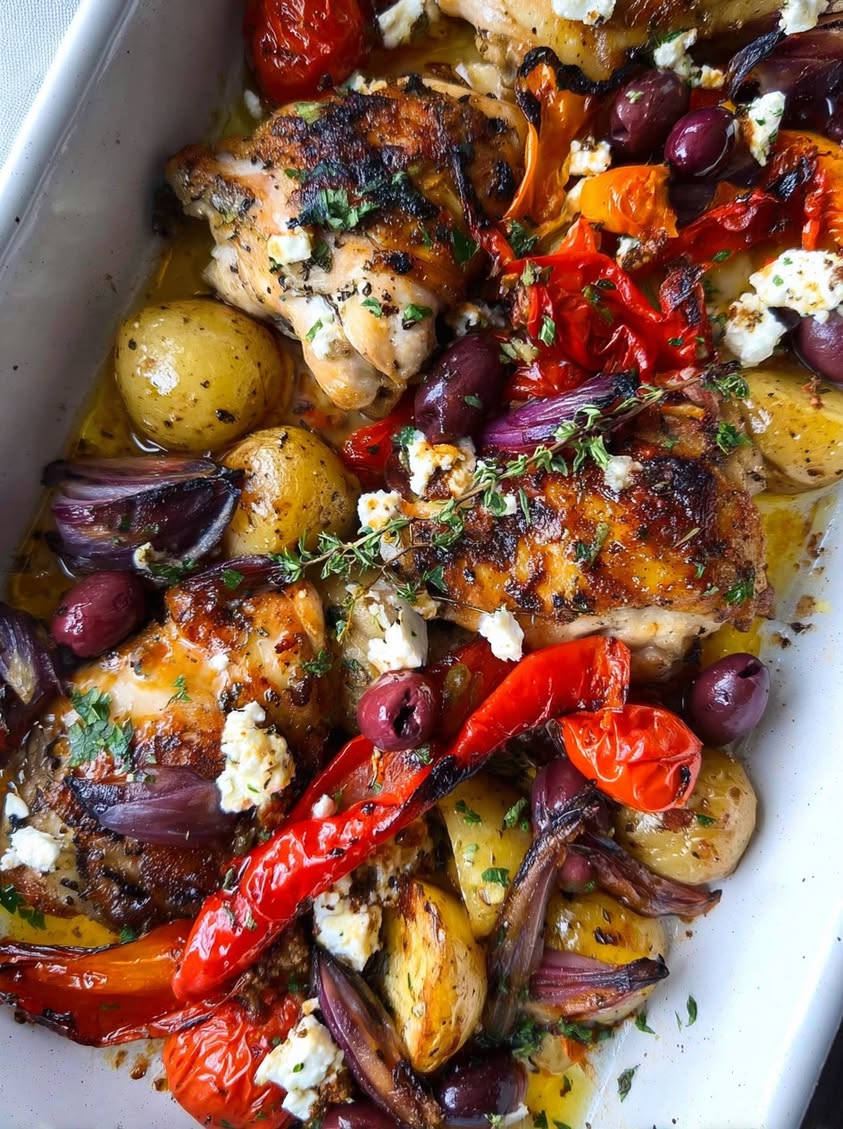
Golden Greek Lemon Chicken with Roasted Vegetables, Kalamata Olives & Feta: A Vibrant Mediterranean Feast
Imagine the sun-drenched hills of the Mediterranean brought directly to your dinner table. This Golden Greek Lemon Chicken with Roasted Vegetables, Kalamata Olives & Feta is more than just a meal; it’s a vibrant celebration of flavor and color. Moreover, it captures the essence of Greek home cooking with its bright, zesty notes and hearty, satisfying components. The aroma alone, with its blend of oregano, lemon, and roasting vegetables, will transport your senses. Ultimately, this one-pan wonder delivers a complete, nutritious dinner that feels both rustic and elegant, perfect for a busy weeknight or a leisurely weekend gathering.
The magic of this dish lies in its beautiful simplicity and the way the ingredients harmonize in the oven. Juicy chicken thighs become golden and crisp, while potatoes, bell peppers, and red onion caramelize into sweet, tender perfection. Meanwhile, the briny punch of Kalamata olives and the creamy tang of feta cheese add the final, authentic Greek touches. Consequently, every forkful is a balanced mix of savory, tangy, and herbal flavors. This recipe for Golden Greek Lemon Chicken with Roasted Vegetables and Feta is incredibly forgiving and adaptable, making it a reliable staple you’ll return to again and again.
Quick Recipe Highlights
- Flavor Profile: This dish is a masterclass in balanced Mediterranean flavors. First, you get the bright, sunny acidity from fresh lemon and white wine. Next, earthy oregano and briny olives provide depth. Finally, the creamy, salty feta cheese brings everything together into a cohesive and unforgettable taste experience.
- Texture: The texture contrast is absolutely delightful. You have crispy, golden-brown chicken skin giving way to tender, juicy meat. Simultaneously, the roasted vegetables offer a soft interior with slightly caramelized edges. The feta adds a soft, crumbly element, and the olives provide a pleasant, meaty bite.
- Aroma: As it roasts, the kitchen fills with an irresistible fragrance. The primary notes are of roasting garlic and onions, mingled with the herbal scent of dried oregano. Furthermore, the bright, citrusy aroma of lemon cuts through the richness, creating an inviting and complex scent profile that promises a delicious meal.
- Visual Appeal: This dish is a feast for the eyes with its stunning color palette. Golden-brown chicken rests atop a bed of vibrant red bell peppers, deep purple onions, and creamy yellow potatoes. The green olives and white feta crumbles provide beautiful pops of contrast, making it incredibly photogenic and appetizing.
- Skill Level Needed: This is a fantastic recipe for cooks of all levels. Primarily, it requires basic knife skills for chopping vegetables and the ability to season meat. The oven does most of the work, so patience and timing are more important than advanced culinary techniques. It’s an ideal recipe to build confidence in the kitchen.
- Special Equipment: You need only a few standard kitchen tools. A large, sturdy roasting pan or rimmed baking sheet is essential to hold everything in a single layer. Additionally, a reliable chef’s knife, a cutting board, and a small bowl for mixing the simple marinade are all you need to get started.
Recipe Overview
- Difficulty Level: We rate this recipe as “Easy” for several compelling reasons. First, the preparation involves straightforward chopping and simple mixing—no complex techniques are required. Second, it’s a one-pan meal, meaning minimal cleanup. Finally, the oven roasting is very forgiving; slight variations in timing won’t ruin the dish, making it perfect for beginners and seasoned cooks alike.
- Category: This dish comfortably fits into multiple meal categories. It is a complete main course protein, a hearty dinner centerpiece, and a fantastic meal prep option. Furthermore, it can be considered a healthy Mediterranean diet recipe and a fantastic family-friendly weeknight dinner that pleases both adults and children.
- Cuisine: This recipe is firmly rooted in the culinary traditions of Greece and the wider Mediterranean basin. It showcases hallmarks of the region’s cooking: abundant use of olive oil, lemon, oregano, olives, and feta. The philosophy of simple, fresh ingredients cooked to highlight their natural flavors is the very heart of this cuisine.
- Cost: This is a very cost-effective meal to prepare. Chicken thighs are an affordable cut of protein, and potatoes, onions, and bell peppers are inexpensive, especially in season. While Kalamata olives and feta cheese are pricier per ounce, you use small amounts that pack a huge flavor punch, making them a worthwhile investment for the authentic taste.
- Season: This dish is truly versatile across seasons. It feels particularly comforting in the cooler fall and winter months with its warm, roasted components. Conversely, the bright lemon and fresh herbs also make it light and suitable for spring and summer, especially when served with a crisp salad on the side.
- Occasion: Its flexibility makes it perfect for many occasions. It’s simple enough for a casual Tuesday family dinner yet impressive enough for hosting friends on a Saturday night. Additionally, it travels well for potlucks and can be easily scaled up for larger gatherings, making it a truly adaptable crowd-pleaser.
Why You’ll Love This Recipe
You will adore the taste and texture appeal of this Golden Greek Lemon Chicken with Roasted Vegetables and Feta. Every bite delivers a symphony of sensations. The chicken is incredibly juicy and infused with lemon and herbs, while the vegetables become sweet and tender from roasting. The salty olives and creamy feta provide the perfect counterpoints, ensuring no single flavor overpowers the others. Ultimately, it’s a satisfying meal that feels both wholesome and indulgent, hitting all the right notes for a memorable dinner.
The convenience and preparation benefits are a major win for any home cook. This is a glorious one-pan meal, meaning you mix, roast, and serve from a single dish. Consequently, cleanup is an absolute breeze. The active prep time is short—just about 20 minutes of chopping and mixing. After that, the oven takes over, freeing you up to set the table, make a side salad, or simply relax. This efficient process makes weeknight dinners stress-free and enjoyable.
From a nutritional standpoint, this dish is packed with advantages. Chicken thighs provide high-quality protein and essential B vitamins. The colorful array of vegetables offers a wide spectrum of vitamins, minerals, and antioxidants. Olive oil, a cornerstone of the Mediterranean diet, contributes heart-healthy monounsaturated fats. Furthermore, the cooking method of roasting requires minimal added fat, allowing the natural flavors and nutrients of the ingredients to shine. It’s a balanced meal that supports a healthy lifestyle without sacrificing flavor.
The social and entertaining value of this recipe is incredibly high. It presents beautifully straight from the pan, offering a rustic, family-style serving option that encourages sharing and conversation. The familiar yet elevated flavors are universally appealing, making it a safe bet for guests with varied tastes. Moreover, because it’s mostly hands-off once it’s in the oven, you can spend more time with your company and less time fussing in the kitchen, which is the true secret to successful hosting.
Finally, this recipe is remarkably cost-effective and accessible. It utilizes affordable, pantry-staple ingredients and stretches them into a spectacular meal. Chicken thighs are a budget-friendly protein choice that stays moist during roasting. Potatoes and onions are inexpensive year-round vegetables that form a hearty base. Even the “specialty” ingredients like olives and feta are used sparingly but effectively, maximizing their impact on flavor without breaking the bank. This accessibility makes it a recipe you can enjoy regularly.
Historical Background and Cultural Significance
The origin story of dishes like this Golden Greek Lemon Chicken is deeply woven into the fabric of rural Greek life and the concept of “magirefta,” or home-cooked food. Traditionally, Greek cooking is not about elaborate sauces or complex techniques, but about celebrating high-quality, seasonal ingredients. Families would use what was available from their gardens—herbs, lemons, olives—and combine them with a protein, often chicken or lamb, for a Sunday family meal. Roasting everything together in a single pan was a practical solution, conserving both fuel and effort while allowing flavors to meld beautifully.
The cultural importance of such a meal extends beyond nutrition. In Greece, food is synonymous with hospitality, family, and community. A shared meal like this, often centered around a communal dish, fosters connection and conversation. The ingredients themselves are iconic: olive oil is considered “liquid gold,” oregano grows wild on the hillsides, and feta cheese is a protected designation of origin (PDO) product, integral to Greek identity. Therefore, cooking this dish is a small way to participate in a rich and enduring culinary tradition that values simplicity, freshness, and togetherness.
The evolution of the recipe reflects both tradition and modern adaptation. The classic core of lemon, oregano, and olive oil is timeless. However, the specific combination with bell peppers and red onion shows a slight modernization, incorporating New World vegetables that have become staples. The use of a precise oven temperature and timing is also a contemporary touch, offering reliability for home cooks. Despite these tweaks, the soul of the dish remains unchanged: it is a hearty, flavorful, and communal way of eating that translates perfectly to today’s kitchens.
Regional variations of this concept exist all around the Mediterranean. In Crete, they might add a handful of wild greens or use different mountain herbs. In the islands, capers might join the olives. Some versions use chicken breasts, though thighs are more traditional for their fat content and flavor. The vegetables can change with the season—artichokes in spring, zucchini in summer. This flexibility is key to the recipe’s longevity. Our version with Kalamata olives and feta is a celebration of the Peloponnese region, known for its superb olives and iconic cheese.
Ingredient Deep Dive
Chicken Thighs (bone-in, skin-on): This cut is the hero for a reason. Culturally, it’s a frugal and flavorful choice common in home cooking worldwide. Nutritionally, thighs contain more iron and zinc than breasts and remain incredibly juicy during roasting. For selection, look for plump thighs with pink flesh and creamy white skin. Store them in the coldest part of your fridge and use within 1-2 days. If you must substitute, bone-in chicken breasts will work, but reduce cooking time to avoid dryness.
Lemons: In Mediterranean cultures, lemons symbolize cleanliness and are used abundantly for their bright, purifying flavor. They are packed with vitamin C and antioxidants. Always choose lemons that are heavy for their size with smooth, vibrant yellow skin, indicating juiciness. Store at room temperature for a week or in the fridge for longer. In a pinch, bottled lemon juice can be used, but fresh is vastly superior for both flavor and aroma in this Golden Greek Lemon Chicken with Roasted Vegetables and Feta.
Extra Virgin Olive Oil: This is the foundational fat of the Mediterranean diet, revered for its health benefits and flavor. It contains heart-healthy monounsaturated fats and antioxidants. Select a bottle labeled “extra virgin” for roasting; its robust flavor stands up to heat. Store in a cool, dark place to prevent rancidity. While other oils can be used, they won’t provide the authentic fruity, peppery notes that are essential to the dish’s character.
Dried Oregano: This humble herb is synonymous with Greek cuisine. Its earthy, slightly bitter flavor is a cornerstone of the flavor profile. Dried oregano is actually preferred over fresh here, as its flavor concentrates and withstands long cooking better. Look for Greek oregano if available, as it has a more potent flavor. Store it in a sealed container away from light and heat. Do not substitute with Italian seasoning blend, as it contains other herbs that will alter the authentic taste.
Kalamata Olives: These specific olives, named after the city of Kalamata, are a PDO product of Greece. They are rich, fruity, and have a distinct almond shape. Nutritionally, they provide healthy fats and antioxidants. Always buy them with pits for better flavor and texture; pitting them is simple. Store leftover olives in their brine in the fridge. Other black olives can be used, but they lack the deep, winey flavor of true Kalamatas.
Feta Cheese: Authentic Greek feta is made from at least 70% sheep’s milk, giving it a tangy, salty, and crumbly character. It’s a good source of calcium and protein. For the best results, buy a block of feta packed in brine, not pre-crumbled dry cheese. Store it submerged in its brine in the refrigerator. Crumbling it yourself just before serving ensures maximum creaminess and prevents it from drying out and disappearing into the dish.
Common Mistakes to Avoid
- Crowding the Pan: This is the most common error. If you pack the chicken and vegetables too tightly, they will steam instead of roast. Consequently, you won’t get that essential caramelization and crispy skin. Always use a large enough pan to arrange everything in a single, uncrowded layer.
- Using Boneless, Skinless Chicken Thighs: While convenient, this swap often leads to dry, chewy chicken. The bone helps conduct heat evenly, and the skin protects the meat and becomes deliciously crispy. Stick with bone-in, skin-on thighs for the authentic texture and flavor of this Greek lemon chicken.
- Not Patting the Chicken Dry: Skipping this step means moisture on the skin will prevent proper browning. Always pat the chicken thighs thoroughly dry with paper towels before seasoning. This simple act is the secret to achieving that perfect, golden, crispy exterior.
- Underseasoning: Roasting mutes flavors, so you must be generous with seasoning. Don’t be shy with the salt, pepper, and oregano. Season the chicken directly and also toss the vegetables well with the oil and herbs. Proper seasoning at the beginning builds layers of flavor.
- Adding the Feta and Olives Too Early: If you add these ingredients at the start, the feta will melt into nothing and the olives will become tough and overly salty. Always add them in the last 10-15 minutes of cooking. This preserves their texture and distinctive flavors.
- Neglecting to Toss the Vegetables: Halfway through roasting, take a moment to toss or stir the vegetables. This ensures they cook evenly and caramelize on all sides. Otherwise, the pieces on the bottom may burn while those on top remain undercooked.
- Using a Weak Baking Sheet: A flimsy, thin pan can warp in the high heat and lead to uneven cooking. It can also cause burning on the bottom. Invest in a heavy, rimmed baking sheet or a sturdy roasting pan for the best and most consistent results.
- Not Letting the Chicken Rest: Cutting into the chicken immediately after pulling it from the oven will cause all the precious juices to run out onto the pan. Let it rest for 5-10 minutes tented with foil. This allows the juices to redistribute, guaranteeing moist, tender meat.
Essential Techniques
Patting Chicken Dry: This is a non-negotiable first step for perfect skin. Moisture is the enemy of browning. By using paper towels to thoroughly dry the surface of the chicken thighs, you remove the barrier that would otherwise cause steaming. The result is skin that crisps up beautifully and evenly in the oven’s dry heat. The visual cue for success is hearing a faint sizzle when the oiled chicken hits the hot pan and seeing immediate browning, not pale, soggy skin.
Creating a Flavorful Marinade/Paste: The simple mixture of olive oil, lemon juice, garlic, and oregano is more than a marinade; it’s a flavor paste. The technique involves whisking or muddling these ingredients to emulsify them slightly, helping the oil carry the lemon and garlic flavors. Rubbing this mixture under the chicken skin is a pro move—it seasons the meat directly. The key is to be generous and ensure every piece is coated. This foundational step builds deep, aromatic flavor throughout the entire dish.
High-Heat Roasting: Starting the dish in a very hot oven (400°F/200°C) is crucial. This initial blast of heat sears the chicken skin and starts the caramelization process on the vegetables, locking in juices and creating fond (those tasty browned bits) in the pan. After the first 20-25 minutes, you can often reduce the heat slightly to finish cooking through without burning. The technique ensures a textural contrast between the crispy exterior and tender interior, which is the hallmark of great roasted chicken.
Resting the Meat: This is the final, patient technique that makes all the difference. When meat cooks, its juices are driven toward the center. Cutting it immediately releases those juices. Resting for 5-10 minutes allows the muscle fibers to relax and reabsorb the moisture. For this Greek lemon chicken, simply tent the pan loosely with foil. The chicken will stay warm, and when you slice into it, you’ll be rewarded with succulent, juicy meat instead of a dry disappointment.
Pro Tips for Perfect Golden Greek Lemon Chicken
For maximum flavor, gently loosen the skin on the chicken thighs and rub some of the lemon-herb mixture directly onto the meat. This seasons it from the inside out.
Cut your vegetables into uniform sizes. This ensures they all cook at the same rate, so you don’t end up with some pieces mushy and others undercooked.
Preheat your baking sheet in the oven for 5 minutes before adding the chicken. This gives the skin a head start on crisping and prevents sticking.
Use the juices left in the pan after cooking. They are packed with flavor from the chicken, lemon, and vegetables. Drizzle them over the plated dish for an extra boost of sauce.
If your vegetables are browning too quickly, you can add a splash of chicken broth or white wine to the pan to create steam and slow the browning while adding moisture.
For an extra burst of freshness, garnish the finished dish with a handful of chopped fresh parsley or dill just before serving. The green color and herbal note brighten the entire plate.
Let the feta cheese come to room temperature for about 15 minutes before crumbling it over the hot dish. Cold feta won’t soften as nicely from the residual heat.
If you have time, marinate the chicken in the lemon-herb mixture for 30 minutes to an hour in the refrigerator before roasting. This deeper infusion of flavor is a game-changer.
Variations and Adaptations
For regional variations, explore different Greek influences. A Cypriot version might add a teaspoon of ground cumin or coriander to the rub. An island-style adaptation could include a handful of capers along with the olives. For a more rustic Peloponnesian touch, substitute sweet potatoes for half of the Yukon golds. Each region of Greece has its own herb profile, so experimenting with a pinch of dried mint or thyme can create a delightful twist on the classic oregano base.
Seasonal adaptations make this recipe a year-round favorite. In spring, add artichoke hearts and asparagus tips during the last 10 minutes of roasting. Summer calls for zucchini, eggplant, and cherry tomatoes. In autumn, swap in cubed butternut squash and Brussels sprouts. Winter is perfect for root vegetables like parsnips and carrots. The core method remains the same; you simply rotate the vegetable medley to match what’s fresh and abundant at your local market.
Dietary modifications are straightforward. For a gluten-free meal, this recipe is naturally perfect—just ensure any pre-made broth or seasoning blends are certified GF. To make it dairy-free, simply omit the feta cheese; the dish will still be incredibly flavorful. For a lower-carb or keto version, increase the chicken portion and replace the potatoes with more low-starch vegetables like cauliflower florets, broccoli, or extra bell peppers. The high-fat content from the olive oil and chicken skin aligns well with keto principles.
Serving and Presentation Guide
Plating techniques can elevate this homey dish. For family style, present everything directly in the roasting pan or transfer it to a large, rustic platter. Arrange the chicken pieces on top of the vegetable bed for height. For individual plates, use a wide, shallow bowl. Place a scoop of vegetables in the center, top with a piece of chicken, and spoon some of the pan juices over everything. Finally, garnish strategically with the feta and olives so each plate gets a share of these flavorful accents.
Garnishing adds the final touch of freshness and color. Beyond the feta and olives, a generous sprinkle of chopped fresh parsley, dill, or mint adds a vibrant green element and a bright herbal note. A few very thin slices of lemon, either fresh or quickly charred under the broiler, make a beautiful and edible garnish. A final drizzle of high-quality extra virgin olive oil just before serving enhances richness and sheen.
Traditional accompaniments keep the meal authentically Greek. A simple Horiatiki (Greek village salad) with tomatoes, cucumber, red onion, and more feta is a perfect fresh counterpoint. Warm, fluffy pita bread is essential for soaking up the delicious pan juices. For a more substantial meal, serve with a side of lemon-herb rice or orzo pasta cooked in chicken broth. A dollop of tzatziki sauce on the side offers a cool, creamy contrast to the warm, roasted flavors.
Wine and Beverage Pairing
Wine pairings for this dish should complement its bright acidity and herbal notes. A classic Greek Assyrtiko from Santorini is an impeccable choice; its crisp minerality and citrus flavors mirror the lemon in the chicken. Alternatively, a Sauvignon Blanc from New Zealand or a Vermentino from Italy will also work beautifully with their zesty profiles. If you prefer red wine, opt for a light-bodied, low-tannin option like a Greek Xinomavro or a French Beaujolais, which won’t overpower the dish.
For non-alcoholic alternatives, consider beverages that can stand up to the robust flavors. A sparkling lemonade or limeade provides refreshing acidity. Iced herbal teas, such as mint or lemon verbena, are excellent palate cleansers. For a more unique pairing, try a glass of chilled grape must (savatiano) or a non-alcoholic ginger beer, which offers a spicy kick that contrasts nicely with the salty feta and olives.
Storage and Shelf Life
Proper storage is key to enjoying leftovers. Allow the dish to cool completely before storing. Place the chicken and vegetables in separate airtight containers to prevent the vegetables from becoming soggy. They will keep in the refrigerator for 3-4 days. The feta is best stored separately in its brine. Signs of spoilage include an off smell, a slimy texture on the chicken or vegetables, or any visible mold. When in doubt, it’s safest to discard the food.
Reheating instructions are simple but important. To maintain the best texture, reheat the chicken and vegetables separately. For the chicken, use an oven or toaster oven preheated to 350°F (175°C) until warmed through, about 10-15 minutes. This helps keep the skin from getting rubbery. The vegetables can be reheated in a skillet over medium heat with a tiny splash of water or broth to re-steam them. Avoid using the microwave for the chicken, as it will make the skin limp.
Make Ahead Strategies
You can efficiently break down the prep to save time on a busy night. The day before, chop all the vegetables (potatoes, peppers, onion) and store them submerged in water in the fridge to prevent browning. You can also make the lemon-herb marinade and coat the chicken thighs, then store them in a sealed bag or container in the refrigerator. This not only saves time but also allows the chicken to marinate longer, deepening the flavor. When ready to cook, simply pat the chicken dry again, drain the vegetables, toss them with oil, and assemble the pan.
For storage between steps, keep components separate until just before roasting. Marinated chicken can sit in the fridge for up to 24 hours. Cut vegetables stored in water will stay crisp for a day. The quality impact is positive for the chicken (more flavor) and neutral for the vegetables if dried well before roasting. When assembling, add any fresh elements like whole garlic cloves. Follow the standard roasting instructions, knowing your active prep time is now just minutes.
Scaling Instructions
Halving the recipe is simple for smaller households. Use a standard quarter sheet pan instead of a half sheet. All ingredient quantities are easily divided by two. The cooking time may reduce slightly, so start checking for doneness around the 35-minute mark. The key is to maintain the single-layer rule; even with fewer ingredients, they should not be crowded. The rest of the technique remains identical, ensuring you still get perfectly crispy chicken and roasted vegetables.
Doubling or tripling the recipe for a crowd requires some adjustments. You will likely need to use two or three large baking sheets and rotate them in the oven halfway through cooking to ensure even heat distribution. Consider staggering the start time if oven space is limited. Equipment like a larger roasting pan may be necessary. The total cooking time may increase by 5-10 minutes due to the larger volume of food. Always use a meat thermometer to check the chicken for doneness (165°F / 74°C) when scaling up.
Nutritional Deep Dive
A serving of this Golden Greek Lemon Chicken with Roasted Vegetables and Feta provides a well-rounded macro profile. It is an excellent source of high-quality protein from the chicken, essential for muscle repair and satiety. The healthy fats come primarily from the olive oil and the chicken skin, offering sustained energy. The carbohydrates are complex and fiber-rich, originating from the potatoes and vegetables, which provide steady fuel without a blood sugar spike. This balance makes it a satisfying meal that keeps you full for hours.
The micronutrient analysis is impressive due to the colorful vegetable variety. Red bell peppers are loaded with vitamins A and C. Potatoes provide potassium and vitamin B6. Onions offer quercetin, an antioxidant. The lemon juice contributes additional vitamin C. Olive oil is rich in vitamin E and polyphenols. Together, these components support immune function, heart health, and reduce inflammation. This dish is a tangible example of how delicious food can also be powerfully nutritious.
Dietary Adaptations
For a gluten-free version, this recipe is naturally compliant. Simply double-check that any store-bought chicken broth or seasoning mixes you might consider adding are certified gluten-free. The core ingredients—chicken, vegetables, olives, feta, olive oil, lemon, and herbs—are all inherently gluten-free, making this a safe and flavorful choice for those with celiac disease or gluten sensitivity.
To create a dairy-free adaptation, omit the feta cheese. The dish will still be bursting with flavor from the lemon, olives, and herbs. For a creamy element, you could serve it with a dollop of dairy-free tzatziki made with coconut or almond milk yogurt. Alternatively, a sprinkle of nutritional yeast at the end can add a slightly cheesy, umami note without any dairy products.
For a lower-carb or keto adaptation, replace the starchy potatoes with low-carb vegetables. Excellent choices include cauliflower florets, broccoli, halved Brussels sprouts, or zucchini. Increase the amount of chicken or add extra olives and a higher-fat cheese to maintain satiety. The high fat content from the olive oil and chicken skin, combined with moderate protein and low net carbs, makes this adaptation perfectly suited for a ketogenic lifestyle.
Troubleshooting Guide
If your chicken skin isn’t crispy, the likely culprits are excess moisture or overcrowding. Next time, be meticulous about patting the chicken dry and ensure the pieces are not touching in the pan. Also, verify your oven temperature with an independent thermometer; an oven that runs cool won’t generate enough heat for proper browning. For a quick fix, you can broil the chicken for the last 2-3 minutes of cooking, watching closely to prevent burning.
If the vegetables are undercooked while the chicken is done, the pieces may be too large or the oven temperature too high, causing the chicken to cook faster. The solution is to cut vegetables into smaller, uniform sizes (about 1-inch pieces). You can also start the vegetables roasting alone for 15 minutes before adding the chicken to the pan, giving them a head start. Alternatively, remove the cooked chicken to rest, and continue roasting the vegetables until tender.
Frequently Asked Questions
Can I use chicken breasts instead of thighs? Yes, but be cautious. Bone-in, skin-on breasts can work; reduce the cooking time by about 10-15 minutes and use a meat thermometer to ensure they reach 165°F without drying out. Boneless, skinless breasts are not recommended as they will likely become dry and lack the flavorful crispy element.
What can I substitute for Kalamata olives? Other black olives like Niçoise or Gaeta can be used, though the flavor will be slightly different. Green Castelvetrano olives offer a buttery, mild alternative. In a pinch, a tablespoon of capers can provide a similar briny punch, though the texture will differ.
Can I make this recipe ahead of time? Absolutely. You can chop vegetables and marinate the chicken up to 24 hours in advance. For best results, roast just before serving. Leftovers reheat well, but the crispy skin is best enjoyed fresh.
Do I have to use dried oregano? Dried oregano is traditional and holds up better to roasting. If you only have fresh, use triple the amount (1 tbsp fresh for every 1 tsp dried) and add it in the last 10 minutes of cooking to prevent it from burning.
My potatoes are taking forever to cook. Why? Potatoes should be cut into 1-inch chunks, no larger. Also, ensure they are in direct contact with the hot pan and coated in oil. If they are buried under other vegetables or chicken, they will steam instead of roast.
Is this recipe freezer-friendly? The cooked chicken freezes reasonably well for up to 2 months, though the skin will lose its crispness. The roasted vegetables do not freeze well, becoming mushy upon thawing. It’s best enjoyed fresh or refrigerated for short-term leftovers.
Can I add other vegetables? Definitely. This recipe is very adaptable. Good additions include carrots, parsnips, zucchini, eggplant, or cherry tomatoes. Add quicker-cooking veggies like zucchini in the last 15-20 minutes to prevent them from turning to mush.
What should I do with the pan juices? Do not discard them! They are liquid gold. After resting the chicken, drizzle the flavorful juices from the pan over the plated dish. They add incredible moisture and flavor to both the chicken and the vegetables.
Additional Resources
If you loved this Golden Greek Lemon Chicken with Roasted Vegetables and Feta, explore other Mediterranean-inspired recipes on our site. A classic Greek Lemon Potatoes recipe uses similar flavors for a perfect side dish. Our guide to Building a Mezze Platter can help you turn this meal into a larger feast for entertaining. For a deeper dive into technique, check out our article on How to Spatchcock a Chicken for even faster, more even roasting. We also have a comprehensive guide to Choosing and Using Olive Oil to help you select the best bottle for cooking and finishing your dishes.
{“success”:true,”message”:”Recipe created successfully”,”post_id”:8234,”tasty_recipe_id”:8234,”shortcode”:” Print
Golden Greek Lemon Chicken with Roasted Vegetables, Kalamata Olives & Feta
Description
A vibrant, one-pan Mediterranean dish featuring tender lemon-herb chicken thighs roasted alongside colorful vegetables, briny olives, and creamy feta cheese.
Ingredients
For the Crust:
- 4 bone-in, skin-on chicken thighs
- 1 lemon, juiced and zested
- 3 cloves garlic, minced
- 2 tablespoons olive oil
- 1 teaspoon dried oregano
- 1/2 teaspoon dried thyme
- Salt and black pepper to taste
- 1 red onion, cut into wedges
- 1 bell pepper (any color), sliced
- 1 zucchini, sliced into half-moons
- 1 cup cherry tomatoes
- 1/2 cup Kalamata olives, pitted
- 4 ounces feta cheese, crumbled
- Fresh parsley, chopped for garnish
Instructions
1. Prepare the Crust:
- Preheat oven to 400°F (200°C). In a bowl, whisk together lemon juice, lemon zest, minced garlic, olive oil, oregano, thyme, salt, and pepper.
- Place chicken thighs in a large baking dish. Pour half of the lemon-herb marinade over the chicken, rubbing it under the skin and all over. Let sit for 10 minutes.
- Arrange red onion, bell pepper, zucchini, and cherry tomatoes around the chicken in the baking dish. Drizzle the remaining marinade over the vegetables and toss lightly.
- Roast in the preheated oven for 25-30 minutes, or until chicken is golden brown and cooked through (internal temperature of 165°F).
- Remove from oven and scatter Kalamata olives and crumbled feta cheese over the dish. Return to oven for 5 minutes to warm the olives and slightly soften the feta.
- Garnish with fresh parsley before serving. Serve hot directly from the baking dish.
Notes
You can customize the seasonings to taste.

I’m Billy, a classically trained culinary school graduate from The Culinary Institute of America with over 12 years in the restaurant industry and over 19 years of cooking experience.