
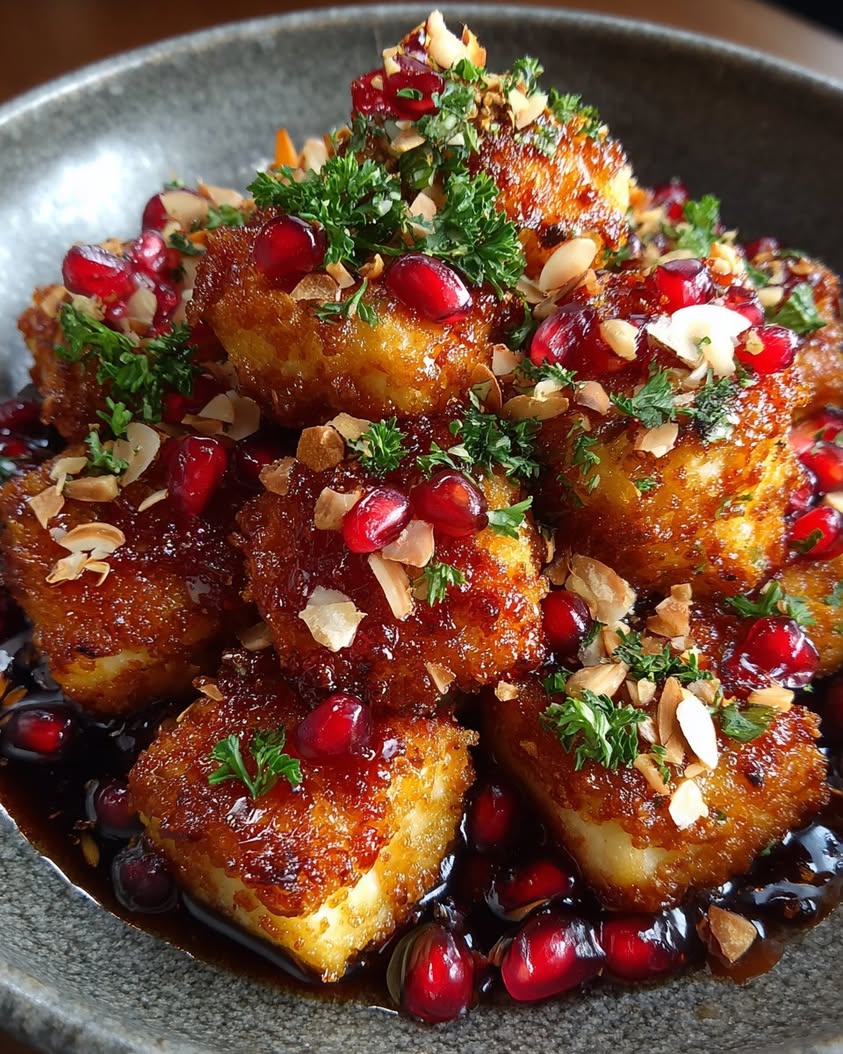
Golden Halloumi Bites with Pomegranate Glaze and Almond Crunch: The Ultimate Sweet-Salty Appetizer
Imagine a dish that delivers a perfect symphony of textures and flavors in every single bite. That is exactly what you get with these Golden Halloumi Bites with Pomegranate Glaze and Almond Crunch. This recipe transforms simple halloumi cheese into a stunning appetizer that is both impressive and incredibly easy to make. The combination of salty, squeaky cheese, a tart-sweet pomegranate reduction, and a nutty, crunchy almond topping creates an unforgettable experience. Consequently, it is a guaranteed crowd-pleaser that will have your guests asking for the recipe.
These Golden Halloumi Bites are not just delicious; they are also a visual masterpiece. The golden-brown sear on the cheese, the deep ruby red glaze, and the sprinkle of toasted almonds create a plate that looks as good as it tastes. Moreover, this dish comes together in under thirty minutes, making it the ultimate last-minute hero for any gathering. Whether you are hosting a holiday party, a casual get-together, or simply treating yourself, this recipe delivers restaurant-quality results with minimal effort. Ultimately, it is a celebration of contrasting flavors that work in perfect harmony.
Quick Recipe Highlights
- Flavor Profile: These bites masterfully balance salty halloumi with a tangy, sweet pomegranate glaze. The toasted almonds add a rich, nutty depth that ties everything together beautifully.
- Texture: Experience the iconic squeak of perfectly pan-fried halloumi, contrasted with a sticky glaze and the satisfying crunch of almonds. It is a delightful play of creamy, chewy, and crisp elements.
- Aroma: As the halloumi fries, it releases a savory, milky fragrance. Meanwhile, the pomegranate molasses reduces into a syrup with a deep, fruity, and almost wine-like aroma that is utterly intoxicating.
- Visual Appeal: The dish boasts a stunning color palette: golden-brown cheese, glossy crimson glaze, and flecks of golden-brown almond. It is an elegant and festive presentation on any table.
- Skill Level Needed: This is a beginner-friendly recipe. The key techniques are simple pan-frying and reducing a sauce, requiring no special culinary skills for fantastic results.
- Special Equipment: You only need a good non-stick or cast-iron skillet and a small saucepan. No fancy gadgets are required, making this recipe accessible to every home cook.
Recipe Overview
- Difficulty Level: This recipe is rated easy because it involves straightforward techniques like cubing cheese, pan-frying, and simmering a glaze. There is no complex timing or advanced skills required. The steps are simple and sequential, making it hard to mess up. Even a novice cook can achieve impressive, delicious results on the first try.
- Category: This dish fits perfectly into the appetizer or starter category. It can also serve as a fantastic vegetarian main when paired with a hearty salad or grain bowl. Additionally, it works wonderfully as a shared plate or tapas-style offering for parties and gatherings.
- Cuisine: While halloumi is famously Cypriot, this recipe takes inspiration from broader Mediterranean and Middle Eastern flavors. The use of pomegranate molasses and almonds nods to Levantine cuisine, creating a beautiful fusion dish that celebrates ingredients from across the region.
- Cost: The cost is moderate, primarily driven by the halloumi cheese and pomegranate molasses. However, both ingredients are now widely available. A block of halloumi and a bottle of molasses will make multiple batches, making subsequent preparations very economical.
- Season: This recipe shines in the fall and winter, especially during the holiday season when pomegranates are in peak season. The warm, rich flavors are perfect for cooler weather. Conversely, it is also a fantastic summer appetizer for barbecues and outdoor dining.
- Occasion: These bites are incredibly versatile for any occasion. They are elegant enough for Thanksgiving or Christmas parties, simple enough for a weeknight treat, and impressive enough for date night at home. They are the perfect finger food for any event.
Why You’ll Love This Recipe
First and foremost, the taste and texture appeal is off the charts. The salty, savory punch of the fried halloumi is brilliantly cut by the sweet-tart pomegranate glaze. Then, the toasted almond crunch adds a final layer of complexity that makes each bite exciting. This combination of salty, sweet, tangy, and crunchy is universally loved. Furthermore, the unique “squeaky” texture of halloumi is a fun and delightful experience that always sparks conversation.
Next, consider the sheer convenience and preparation benefits. This entire dish comes together in about twenty-five minutes with minimal prep work. You can cube the cheese and make the glaze while the pan heats up. There is no marinating, no resting time, and very little cleanup. For busy hosts, this is a dream recipe that delivers maximum impact with minimal time investment. Consequently, it relieves stress and lets you enjoy your own party.
Additionally, there are notable nutritional advantages. Halloumi is a good source of protein and calcium. Pomegranate molasses contains antioxidants from the concentrated pomegranate juice. Almonds provide healthy fats, fiber, and vitamin E. While this is an indulgent appetizer, it is made with whole, recognizable ingredients. Therefore, you can feel good about serving it, knowing it is a step above processed snacks.
Moreover, the social and entertaining value is immense. These Golden Halloumi Bites are designed for sharing and are guaranteed to be the talk of any gathering. They are easy to eat as finger food, making them perfect for cocktail parties or standing events. The stunning presentation immediately elevates the feel of your spread. Ultimately, they show care and effort, making your guests feel specially treated.
Finally, the cost-effectiveness and accessibility are major wins. While halloumi can be a premium ingredient, this recipe stretches one block to serve four people as an appetizer. The pomegranate molasses and almonds are pantry staples that last for ages. You do not need any rare or expensive tools. This makes the Golden Halloumi Bites with Pomegranate Glaze and Almond Crunch an accessible luxury for any home cook.
Historical Background and Cultural Significance
The story begins with halloumi, a cheese with a history dating back to the Byzantine era in Cyprus. Traditionally made from a mixture of sheep’s and goat’s milk, its high melting point was a practical solution for preserving milk in a warm climate. This unique property, which allows it to be fried or grilled without melting, is what makes our Golden Halloumi Bites possible. Historically, it was prepared by village communities and stored in its brine, a testament to its role as a staple food.
Culturally, halloumi is deeply woven into Cypriot identity and is now a protected designation of origin (PDO) product. It is a symbol of national pride and culinary heritage. Meanwhile, pomegranates hold significant symbolic meaning across the Middle East and Mediterranean, representing abundance, fertility, and prosperity. Using pomegranate molasses, a reduction of the fruit’s juice, connects this recipe to ancient preservation techniques and a deep history of sweet-and-sour flavor profiles in the region.
The evolution of this specific recipe is a modern tale of fusion cuisine. While halloumi is often served simply with lemon or watermelon, contemporary chefs began experimenting with sweet and sticky glazes. The pomegranate glaze is a natural pairing, as its acidity balances the cheese’s saltiness. The addition of toasted almonds for crunch is a global touch, adding texture and nuttiness appreciated in many culinary traditions. This evolution shows how traditional ingredients can be reimagined for modern palates.
Regional variations of this concept abound. In Greece, one might find fried saganaki cheese with a honey glaze. In Lebanon, a similar effect could be achieved with akkawi cheese and a date syrup. Our version specifically uses halloumi for its unbeatable frying texture and pomegranate for its vibrant color and complex flavor. This recipe sits at a delicious crossroads, honoring its origins while creating something new and exciting for today’s global kitchen.
Ingredient Deep Dive
Let us start with halloumi, the star of the show. This semi-hard, brined cheese from Cyprus is traditionally made from sheep’s and goat’s milk, though cow’s milk versions exist. Its high melting point comes from the way the curds are heated during production. Nutritionally, it is high in protein and calcium but also in sodium due to the brine. When selecting halloumi, look for a firm, white block without discoloration. Store it in its brine in the refrigerator. If you cannot find halloumi, queso panela or breaded fried mozzarella are possible substitutes, though the texture will differ.
Next, pomegranate molasses is the key to the glaze. It is not true molasses but a reduction of pomegranate juice, lemon juice, and sometimes sugar into a thick, tangy syrup. It is a staple in Middle Eastern pantries, used in dishes like muhammara and fesenjan. It is rich in antioxidants from the concentrated pomegranate. When buying it, check the label for 100% pomegranate juice with no added corn syrup or artificial flavors. It stores at room temperature for months after opening. For a substitute, mix reduced balsamic vinegar with a little honey, though the flavor profile will shift.
Finally, the toasted almond crunch. Almonds have been cultivated in the Mediterranean and Middle East for thousands of years. They provide healthy monounsaturated fats, vitamin E, and magnesium. Toasting them is crucial as it deepens their flavor and enhances crunch. For the best result, buy whole raw almonds and toast them yourself in a dry pan until fragrant and lightly golden. You can store toasted almonds in an airtight container for a week. For a variation, try toasted pine nuts, pistachios, or walnuts, each bringing a unique flavor and texture to your Golden Halloumi Bites.
Common Mistakes to Avoid
- Using a Cold Pan: Adding halloumi to a cold skillet will cause it to stew in its own moisture instead of searing. Always ensure your pan is properly heated over medium-high heat before adding the cheese cubes. This guarantees that golden-brown crust.
- Overcrowding the Pan: Crowding the cubes steams them instead of frying them. Cook in batches if necessary to give each piece space. This ensures even browning and that perfect squeaky texture.
- Moving the Cheese Too Soon: Resist the urge to constantly stir or flip the halloumi. Let it sit undisturbed for a minute or two to develop a proper sear. Then, it will release easily from the pan.
- Overcooking the Glaze: Pomegranate molasses can burn quickly because of its sugar content. When reducing it, keep the heat low and watch it carefully. It should thicken to a syrup that coats the back of a spoon, not turn into hard candy.
- Using Stale or Untoasted Almonds: Raw almonds lack the deep flavor and crunch needed. Always toast your almonds just before using them. Stale, pre-toasted almonds can taste bland and chewy.
- Skipping the Resting Step: Letting the halloumi bites rest for a minute after frying allows them to firm up slightly. This prevents them from seeming too soft or oily when you bite into them.
- Adding Salt: Halloumi is already very salty from its brine. Salting it during cooking is a common mistake that will make the dish inedible. Taste one piece before considering any additional seasoning.
- Serving Immediately from a Hot Pan: The glaze will be extremely hot. Allowing the bites to cool for just a minute or two on the serving plate makes them the perfect temperature for eating and lets the glaze set slightly.
Essential Techniques
Pan-frying halloumi is the core technique. The goal is a golden-brown crust with a soft, slightly melted interior. The high heat is essential to quickly sear the outside before the inside overcooks. Use a neutral oil with a high smoke point, like avocado or grapeseed oil. Do not move the cubes until they easily release from the pan. The visual cue for success is a uniform, appetizing golden color on at least two sides. Mastering this simple fry is the key to perfect texture.
Reducing the pomegranate glaze requires patience. Combining pomegranate molasses with water and simmering allows it to thicken into a coating consistency. The technique is gentle simmering, not rapid boiling. Stir occasionally to prevent scorching. The importance lies in achieving a syrup that will cling to the cheese without being runny or rock-hard. The visual cue is when the syrup coats the back of a spoon and leaves a clear trail when you run your finger through it. This creates the perfect sticky-sweet layer.
Toasting almonds maximizes their flavor. The technique is dry-toasting in a pan over medium heat, shaking frequently. This evenly toasts the nuts without burning them. The importance is transforming their raw, mild flavor into a deep, nutty richness that complements the other ingredients. The visual cues are a light golden-brown color and a fragrant, toasted aroma. Listen for a faint crackling sound. Properly toasted almonds add the essential crunch that defines the final element of the dish.
Pro Tips for Perfect Golden Halloumi Bites
Pat the halloumi cubes completely dry with a paper towel before frying. Any surface moisture will cause splattering and prevent proper browning. This simple step ensures a crispier exterior.
Use a combination of oil and a tiny bit of butter for frying if you like. The butter adds a rich, nutty flavor to the sear, but be careful as it can burn. Add it in the last 30 seconds of frying for flavor.
Make the pomegranate glaze first and set it aside. This allows it to cool and thicken slightly, making it easier to drizzle and stick to the warm halloumi bites when you are ready to assemble.
Toast a few extra almonds. You can use them as a garnish on the finished plate or save them for salads later in the week. They are a versatile kitchen staple.
If serving at a party, keep the components separate until just before serving. Place the fried halloumi on a platter, with the glaze in a small pitcher and almonds in a bowl. Let guests assemble their own bite to maintain maximum crunch.
For a flavor boost, add a tiny pinch of cinnamon or a drop of orange blossom water to the pomegranate glaze as it simmers. This adds an aromatic layer that is subtle but sophisticated.
Use two forks or tongs to gently toss the fried halloumi in the glaze. This is gentler than a spoon and helps coat all sides evenly without breaking the delicate cubes.
If your glaze becomes too thick after cooling, gently reheat it with a teaspoon of warm water to loosen it back to a drizzling consistency.
Variations and Adaptations
For regional variations, explore different glazes. A Greek-inspired version could use a honey and lemon glaze with a sprinkle of dried oregano. A Persian twist might involve a glaze sweetened with date syrup and garnished with crushed pistachios and dried rose petals. Each variation respects the core concept while drawing from different regional pantries.
Seasonal adaptations are easy. In summer, serve the bites atop a watermelon slice or with a fresh mint salad. In fall, incorporate a sprinkle of pumpkin seeds into the almond crunch. For winter holidays, garnish with fresh pomegranate arils and rosemary sprigs for a festive touch. The base recipe is a fantastic canvas for seasonal produce.
Dietary modifications are straightforward. For a gluten-free version, ensure your pomegranate molasses has no additives containing gluten. The recipe is naturally vegetarian. For a vegan adaptation, seek out a brand of vegan halloumi-style cheese, though frying results may vary. To reduce sugar, use a sugar-free pomegranate molasses or dilute it more with lemon juice.
Flavor variations can personalize the dish. Add a pinch of chili flakes or a dash of hot sauce to the glaze for a spicy kick. Infuse the frying oil with a sprig of thyme or a smashed garlic clove for an herbal note. A sprinkle of za’atar over the finished bites adds an earthy, Middle Eastern flavor that complements the other ingredients beautifully.
Serving and Presentation Guide
Plating techniques matter for visual impact. Arrange the Golden Halloumi Bites on a dark-colored plate or slate board to make the golden cheese and red glaze pop. Space them out slightly so they do not touch, preventing them from sticking together. You can also skewer each cube with a decorative toothpick for easy, elegant serving. This turns them into perfect passed appetizers.
Garnishing adds the final touch. Beyond the toasted almond crunch, consider fresh garnishes like microgreens, finely chopped flat-leaf parsley, or mint. A few whole pomegranate arils scattered around the plate add bursts of color and fresh juice. A light drizzle of extra pomegranate molasses in a zigzag pattern across the plate looks professional and enticing.
For traditional accompaniments, serve with warm pita bread or flatbreads for scooping up any extra glaze. A simple side of olives, marinated artichokes, or a tangy cucumber-yogurt dip (tzatziki) complements the rich flavors. In a mezze spread, these bites pair wonderfully with hummus, baba ganoush, and stuffed grape leaves.
Modern serving suggestions include placing them atop a salad of arugula, lemon vinaigrette, and shaved fennel for a light lunch. Alternatively, serve them in small, individual spoons or on mini tasting plates as part of a gourmet appetizer course. For a brunch twist, pair them with poached eggs and avocado toast.
Wine and Beverage Pairing
Wine pairings should balance the salt and sweetness. A crisp, high-acid white wine like a New Zealand Sauvignon Blanc or a Greek Assyrtiko cuts through the richness of the fried cheese. Alternatively, a light-bodied, fruity red with low tannins, such as a Beaujolais or a Pinot Noir, complements the pomegranate glaze beautifully. Sparkling wines like Prosecco or Cava are always a celebratory and palate-cleansing choice.
For non-alcoholic alternatives, consider sparkling pomegranate juice or a pomegranate spritzer. Iced mint tea or lemonade provides a refreshing contrast. A ginger beer or a non-alcoholic craft beer with citrus notes can also stand up to the bold flavors of the dish.
While not a classic coffee dish, these bites could pair with a post-dinner espresso or a cup of mint tea. The bitterness of coffee contrasts the sweet glaze, and the herbal notes of mint tea refresh the palate. Serve coffee strong and black or tea unsweetened to avoid competing with the dish’s sweetness.
Storage and Shelf Life
Storage methods are important for leftovers, though these are best fresh. If you must store them, place cooled halloumi bites in a single layer in an airtight container in the refrigerator for up to one day. Do not store them with the glaze already on, as it will make the cheese soggy. Store the glaze and almonds separately.
Reheating instructions are specific. To recrisp the halloumi, reheat it in a dry non-stick skillet over medium heat for a minute or two per side. Do not microwave, as it will become rubbery. Gently rewarm the glaze in a saucepan with a splash of water. Assemble with fresh almonds after reheating.
Freezing is not recommended for the assembled dish. The texture of the fried halloumi becomes very poor upon thawing and reheating. You can freeze the block of halloumi cheese itself in its original packaging, and the pomegranate molasses and almonds have long shelf lives at room temperature.
Make Ahead Strategies
You can prep components ahead of time to streamline party cooking. Cube the halloumi and store it in an airtight container in the fridge for up to a day. Make the pomegranate glaze and store it at room temperature. Toast the almonds and keep them in a sealed container. This prep timeline means you only have to fry the cheese and assemble the dish when guests arrive.
Storage between steps is simple. Keep the cubed cheese chilled until ready to fry. The glaze can sit out for several hours. The toasted almonds are best used the same day but will keep for a week in the pantry.
For assembly, fry the halloumi just before serving. While it rests for a minute, gently rewarm the glaze if it has thickened too much. Toss the warm cheese in the glaze, transfer to a platter, and immediately sprinkle with the toasted almonds. This ensures every element is at its peak texture and temperature.
Scaling Instructions
Halving the recipe is straightforward for a smaller snack. Use half a block of halloumi, and halve the glaze ingredients. You can still use the same pan for frying. The cooking time will be slightly shorter due to the smaller batch. This is perfect for a romantic appetizer for two.
Doubling or tripling for a crowd requires planning. Use multiple skillets or cook in more batches to avoid overcrowding. Multiply the glaze ingredients in a larger saucepan. Toast the almonds in a larger batch in the oven on a sheet tray for even results. Consider setting up an assembly line for frying and glazing to keep the process efficient.
Nutritional Deep Dive
A serving of Golden Halloumi Bites provides a balance of macronutrients. The halloumi offers a significant amount of protein and fat, contributing to satiety. The pomegranate glaze adds carbohydrates primarily in the form of natural sugars. The almonds contribute healthy fats, a small amount of protein, and fiber. This combination provides sustained energy.
Micronutrient analysis reveals benefits. Halloumi is rich in calcium and phosphorus for bone health. Pomegranate molasses contains vitamin C and potassium. Almonds are an excellent source of vitamin E, an antioxidant. Together, they offer a range of vitamins and minerals, though the dish should be enjoyed in moderation as part of a balanced diet due to its sodium and fat content.
Dietary Adaptations
For a gluten-free version, this recipe is naturally gluten-free. Always double-check the label on your pomegranate molasses to ensure no gluten-containing additives were used during production.
Creating a dairy-free or vegan version requires a substitute for halloumi. Look for a firm, vegan cheese alternative designed for frying or grilling. Brands offering “grillable” vegan cheese blocks are your best bet. The texture will differ but can still be delicious. Ensure your pomegranate molasses is vegan.
For a lower-carb or keto adaptation, be mindful of the pomegranate molasses, which contains sugar. Use it very sparingly or seek a sugar-free pomegranate syrup. The halloumi and almonds are keto-friendly in moderation. Calculate the net carbs based on the specific brands you use.
Troubleshooting Guide
If your halloumi is not browning, your pan is not hot enough. Remove the cheese, increase the heat, and try again with a new batch. Ensure the cubes are patted completely dry. Do not overcrowd the pan, as this lowers the temperature and creates steam.
If the glaze is too thin, continue simmering it over low heat until it reduces further. If it is too thick and sticky, whisk in warm water, one teaspoon at a time, until it reaches a drizzling consistency. Remember, it will thicken slightly as it cools.
If the almonds burn while toasting, you must start over. Burnt nuts taste bitter. Toast over medium heat, shaking the pan constantly, and remove them the moment they become fragrant and lightly colored. They continue to cook slightly from residual heat after being removed from the pan.
Frequently Asked Questions
Can I bake the halloumi instead of frying it? Yes, you can. Arrange the cubes on a parchment-lined baking sheet and bake at 400°F (200°C) for 10-15 minutes, flipping halfway, until golden. However, pan-frying gives a superior, crispier crust.
Where can I find pomegranate molasses? Look in the international aisle of most major supermarkets, near Middle Eastern or Mediterranean products. It is also readily available online from retailers like Amazon.
My halloumi is leaking a lot of oil in the pan. What did I do wrong? This usually means the heat is too low. The cheese is stewing and releasing its fat instead of searing. Increase the heat for a quicker, cleaner sear.
Can I use fresh pomegranate juice for the glaze? You can, but you will need to reduce about 2 cups of juice down to a few tablespoons, which takes time and can be messy. Pomegranate molasses is a convenient and consistent product.
What can I use instead of almonds? Toasted pine nuts, pistachios, walnuts, or even sesame seeds make excellent crunchy toppings. Choose based on your flavor preference.
Is halloumi healthy? Halloumi is high in protein and calcium but also high in saturated fat and sodium. It is a delicious food to enjoy in moderation as part of a balanced diet.
Can I make these ahead for a party? You can prep the components ahead, but assemble them just before serving to maintain the ideal texture of the crispy cheese and crunchy almonds.
Why is my halloumi rubbery? Overcooking can make halloumi tough and rubbery. Fry just until golden on the outside; the inside should still be soft. It continues to firm up slightly after being removed from the heat.
Can I use pre-sliced halloumi? Yes, but pre-sliced halloumi is often thinner. Adjust cooking time downward to avoid overcooking. Cubes from a block provide the best texture contrast.
What do I serve with these as a main course? Serve them over a large salad, with a side of couscous or quinoa, and some roasted vegetables for a satisfying vegetarian meal.
Additional Resources
If you loved the flavors here, explore other recipes using pomegranate molasses. Try it in a marinade for chicken or lamb, swirled into yogurt for a dip, or drizzled over roasted vegetables. It is a versatile ingredient that adds a unique sweet-and-sour note to both savory and sweet dishes.
For more halloumi inspiration, consider recipes like halloumi fries with a lemon-herb mayo, halloumi and vegetable skewers for the grill, or a halloumi breakfast hash. This cheese’s versatility makes it a fantastic ingredient to keep on hand for quick, impressive meals.
To master the technique of pan-frying, practice with other proteins like tofu, fish, or chicken. The principle of a hot pan, dry surface, and not overcrowding applies universally. Building this fundamental skill will improve countless recipes in your repertoire.
{“success”:true,”message”:”Recipe created successfully”,”post_id”:8025,”tasty_recipe_id”:8025,”shortcode”:” Print
Golden Halloumi Bites with Pomegranate Glaze & Toasted Almond Crunch
Description
Crispy pan-fried halloumi cheese bites drizzled with a tangy-sweet pomegranate glaze and topped with toasted almonds for a delightful crunch.
Ingredients
For the Crust:
- 1 block halloumi cheese (about 8 oz), cut into 1-inch cubes
- 2 tablespoons olive oil
- 1/2 cup pomegranate juice
- 2 tablespoons honey
- 1 tablespoon balsamic vinegar
- 1/4 cup sliced almonds, toasted
- 1 tablespoon fresh mint, chopped
- Salt and black pepper to taste
Instructions
1. Prepare the Crust:
- Pat the halloumi cubes dry with a paper towel and season lightly with black pepper.
- Heat olive oil in a non-stick skillet over medium-high heat. Add halloumi cubes and cook for 2-3 minutes per side until golden brown. Remove and set aside.
- In a small saucepan, combine pomegranate juice, honey, and balsamic vinegar. Bring to a simmer over medium heat, then reduce heat to low and cook for 8-10 minutes until thickened into a glaze.
- Arrange the halloumi bites on a serving plate. Drizzle with the pomegranate glaze, sprinkle with toasted almonds and fresh mint. Serve immediately.
Notes
You can customize the seasonings to taste.

I’m Billy, a classically trained culinary school graduate from The Culinary Institute of America with over 12 years in the restaurant industry and over 19 years of cooking experience.