
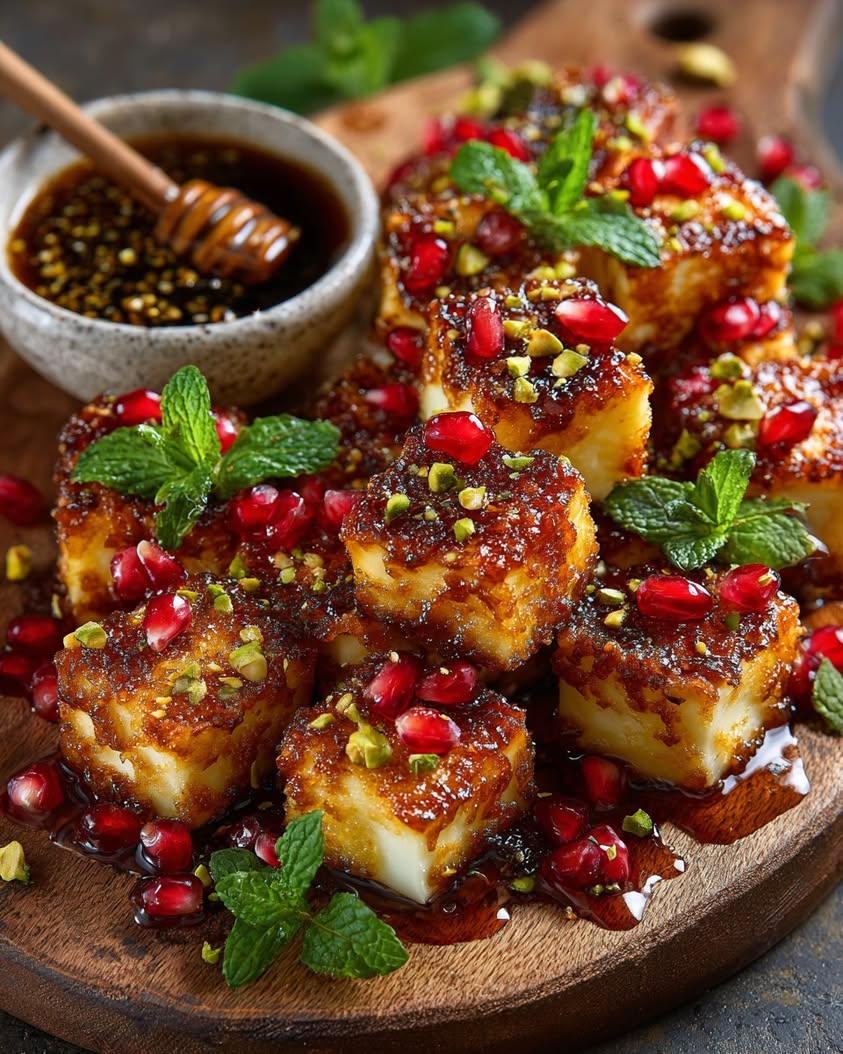
Golden Halloumi Bites with Pomegranate Glaze & Candied Pistachios: A Sweet and Salty Appetizer
Imagine a perfect bite that crackles with a golden crust, then yields to a soft, salty interior, all while being drizzled with a sweet-tart glaze and finished with a nutty crunch. This Golden Halloumi Bites recipe delivers exactly that experience. Consequently, it transforms simple halloumi cheese into a show-stopping appetizer. Ultimately, it combines contrasting textures and flavors for a memorable dish.
These bites are incredibly versatile. For instance, they work beautifully as a quick weeknight treat or as an elegant starter for a dinner party. Moreover, the combination of salty fried cheese, vibrant pomegranate glaze, and sugary pistachios creates a complex flavor profile. Therefore, it feels both familiar and excitingly new. This recipe proves that impressive food does not require hours of labor.
The magic lies in the balance. Salty halloumi meets the fruity acidity of pomegranate molasses. Simultaneously, the candied nuts add a caramelized sweetness and textural contrast. As a result, every component plays a crucial role. This Golden Halloumi Bites recipe is a guaranteed crowd-pleaser that will have everyone asking for the secret.
Quick Recipe Highlights
- Flavor Profile: This dish masterfully balances salty, sweet, and tangy notes. The inherent saltiness of the halloumi cheese is beautifully cut by the tart-sweet pomegranate glaze. Furthermore, the candied pistachios introduce a rich, buttery caramel flavor that ties everything together.
- Texture: You get a fantastic textural journey. First, there’s the satisfyingly crisp, golden-brown exterior of the fried halloumi. Next, it gives way to a soft, slightly squeaky interior. Finally, the sticky glaze and crunchy, sugary nut topping complete the experience with delightful contrast.
- Aroma: Cooking halloumi releases a wonderfully savory, milky aroma. As the glaze reduces, it fills the kitchen with the deep, fruity scent of pomegranate. Additionally, toasting the pistachios with sugar creates a warm, nutty, and caramel-like fragrance that is utterly irresistible.
- Visual Appeal: The presentation is stunning. Golden-brown cheese cubes glisten with a dark, glossy pomegranate glaze. Meanwhile, the bright green and beige candied pistachios sprinkled on top add color and texture. Consequently, the dish looks as impressive as it tastes, perfect for social media or a festive table.
- Skill Level Needed: This is a beginner-friendly recipe. Essentially, it involves simple pan-frying and a quick glaze reduction. Therefore, even novice cooks can achieve fantastic results. The key techniques are easy to master with minimal practice.
- Special Equipment: You only need basic kitchen tools. A good non-stick skillet is essential for frying the halloumi without sticking. Otherwise, you just need a small saucepan for the glaze, a cutting board, and a sharp knife. No fancy gadgets are required.
Recipe Overview
- Difficulty Level: We rate this Golden Halloumi Bites recipe as easy. The steps are straightforward and sequential. Primarily, you fry cheese, reduce a glaze, and candy some nuts. There are no complex techniques like tempering or baking. Consequently, it’s nearly foolproof for cooks of any level.
- Category: This dish fits multiple categories beautifully. It’s primarily a fantastic appetizer or starter. Alternatively, it can serve as a unique side dish or a component of a mezze platter. For a lighter meal, you can even add it to a salad. Therefore, its versatility is a major strength.
- Cuisine: The recipe draws inspiration from Eastern Mediterranean and Middle Eastern cuisines. Halloumi originates from Cyprus, and pomegranate molasses is a staple in Levantine cooking. The use of pistachios is common across the region. As a result, the flavors are authentic yet approachable for a global palate.
- Cost: This is a moderately priced appetizer. Halloumi cheese is the main expense, but a little goes a long way. Pomegranate molasses and pistachios are pantry items you can use in many other dishes. Overall, you can create an impressive restaurant-quality bite for a fraction of the cost.
- Season: This Golden Halloumi Bites recipe shines in the fall and winter. Pomegranates are in season, making the glaze feel particularly fresh. Moreover, the warm, rich flavors are comforting during cooler months. However, its bright elements also make it suitable for spring and summer gatherings.
- Occasion: It’s perfect for any gathering. Serve it as a festive holiday appetizer, a game-day snack, or a pre-dinner bite at a cocktail party. Because it comes together so quickly, it’s also ideal for last-minute guests. Ultimately, it elevates any occasion with minimal effort.
Why You’ll Love This Recipe
First and foremost, the taste and texture are utterly addictive. The initial salty punch of the warm halloumi is immediately complemented by the sweet and tangy pomegranate glaze. Then, the candied pistachio provides a final note of buttery crunch. This combination creates a harmonious flavor symphony in your mouth. Every bite offers a satisfying contrast that keeps you coming back for more. The squeaky texture of the cheese against the sticky glaze is a particular delight.
Next, consider the sheer convenience. This entire Golden Halloumi Bites recipe takes only about 25 minutes from start to finish. You can prepare the glaze and candied nuts while the halloumi fries. Consequently, you have a gourmet-level appetizer ready in the time it takes to watch a sitcom. The ingredient list is also short and focused. You likely have olive oil, honey, and sugar already. Therefore, you only need to pick up a few specialty items.
Furthermore, there are some nutritional advantages. Halloumi is a good source of protein and calcium. Pomegranate molasses contains antioxidants from the fruit. Pistachios offer healthy fats, fiber, and protein. While this is a treat, it’s made with whole, recognizable ingredients. Compared to processed appetizers, it’s a better choice. You control the amount of sugar and oil used.
From a social perspective, this dish has immense entertaining value. It looks incredibly impressive on a platter. The glossy glaze and colorful toppings suggest you spent far more time than you actually did. Guests are always intrigued by the unique combination. It sparks conversation and is a guaranteed hit. Because it’s finger food, it’s perfect for parties where people are mingling.
Finally, it’s cost-effective and accessible. Making these bites at home is significantly cheaper than ordering a similar appetizer at a restaurant. The ingredients, while special, are becoming widely available in most grocery stores. You can easily double or triple the recipe for a crowd without breaking the bank. This Golden Halloumi Bites recipe delivers maximum flavor and wow factor for a reasonable investment.
Historical Background and Cultural Significance
The story of this dish begins with its core ingredient: halloumi. This semi-hard, brined cheese has been made in Cyprus for centuries. Traditionally, it was prepared by shepherds from a mixture of goat’s and sheep’s milk. Its high melting point made it ideal for grilling or frying over open fires. This unique property is what allows our Golden Halloumi Bites to develop a crisp crust while staying intact. The cheese’s preservation in brine also meant it could be stored and eaten throughout long seasons.
Pomegranate molasses, another key component, has deep roots in the culinary traditions of the Middle East and Persia. For generations, cooks would slowly reduce pomegranate juice into a thick, tangy syrup. This process was a practical way to preserve the fruit’s harvest. The molasses became a vital souring agent and flavor enhancer in countless dishes, from stews to salads. Its introduction to halloumi is a more modern fusion, showcasing how traditional ingredients find new life in contemporary recipes.
The evolution of this specific recipe reflects global food trends. As Mediterranean and Middle Eastern cuisines gained worldwide popularity, chefs and home cooks began experimenting with classic pairings. The salty-sweet combination is a timeless favorite across many cultures. Someone, perhaps in a home kitchen or a trendy restaurant, likely thought to drizzle the tart pomegranate molasses over fried halloumi. The addition of candied nuts for crunch was a natural progression, adding texture and another layer of sweetness.
Regional variations of this concept abound. In Greece, you might find fried cheese like saganaki served with a squeeze of lemon. In Turkey, a similar cheese might be paired with a grape molasses. Some modern interpretations use a balsamic reduction or a honey drizzle. The use of pistachios is common, but walnuts or almonds could be used depending on the region. This Golden Halloumi Bites recipe is a delicious example of how culinary borders are fluid, creating new classics from ancient ingredients.
Ingredient Deep Dive
Let’s start with halloumi cheese. Originating from Cyprus, this brined cheese is famous for its high melting point, which allows it to be fried or grilled without losing its shape. It’s typically made from a blend of goat’s and sheep’s milk, though cow’s milk versions are also common. Nutritionally, it provides a good amount of protein and calcium. When selecting halloumi, look for a firm block stored in brine. For the best texture in this Golden Halloumi Bites recipe, pat it very dry before cooking to ensure a proper sear. Store unused halloumi in its brine in the refrigerator.
Pomegranate molasses is the star of the glaze. It’s not a sweet molasses like the blackstrap variety; instead, it’s a reduction of pomegranate juice, resulting in a thick, tangy, and slightly sweet syrup. It’s rich in antioxidants from the pomegranates. Look for a brand with no added sugars or colors for the purest flavor. If you can’t find it, you can make a substitute by reducing pure pomegranate juice with a little lemon juice and sugar. Store it in a cool pantry after opening.
Candied pistachios provide the essential crunch. Pistachios themselves are native to the Middle East and Central Asia and are packed with healthy fats, protein, and fiber. The candying process in this recipe is simple: toasting them briefly with sugar creates a delicate, sweet shell. For selection, use raw, shelled pistachios. You can substitute with other nuts like walnuts or almonds. Store any leftover candied nuts in an airtight container to maintain their crispness.
The supporting cast is simple but important. A mild honey balances the tartness of the pomegranate molasses in the glaze. Use a light, floral honey so its flavor doesn’t overpower. A good quality extra virgin olive oil is best for frying the halloumi, as it can handle moderate heat and adds a fruity note. Finally, fresh pomegranate arils and mint leaves are optional but recommended garnishes that add a burst of freshness, color, and a final layer of texture to the finished Golden Halloumi Bites.
Common Mistakes to Avoid
- Not Drying the Halloumi: This is the most critical error. Halloumi stored in brine is wet. If you don’t pat it thoroughly dry with paper towels, it will steam instead of sear. Consequently, you’ll miss out on the essential golden, crispy crust that defines this recipe.
- Overcrowding the Pan: When frying the halloumi cubes, give them space. Crowding the pan drops the oil temperature dramatically. Therefore, the cheese will release moisture and boil in its own liquid, resulting in soggy, pale bites instead of beautifully browned ones.
- Moving the Cheese Too Soon: After placing halloumi in the hot pan, resist the urge to move it immediately. Let it cook undisturbed for a minute or two. This allows a proper crust to form. If you move it too early, it will stick and tear.
- Overcooking the Glaze: The pomegranate glaze reduction happens quickly. Watch it carefully once it starts simmering. Over-reducing will make it too thick and sticky, almost like candy. You want a syrup that easily drips off a spoon, not one that hardens on contact.
- Burning the Candied Pistachios: The sugar and nuts can burn in seconds. Use medium-low heat and stir constantly. The moment the sugar melts and coats the nuts, immediately transfer them to a plate to stop the cooking. Otherwise, they will taste bitter.
- Serving Cold: Halloumi is best served immediately after cooking. Its texture changes as it cools, becoming firmer and less appealing. Always plan to make this Golden Halloumi Bites recipe as the last item before serving to enjoy it at its peak.
- Using a Bland Oil: While you don’t need to deep fry, using a good quality olive oil or a neutral oil with a high smoke point is important. A flavorless or low-quality oil can impart an off-taste to the delicate cheese.
- Skipping the Rest: After frying, let the halloumi bites rest on a paper towel for just a moment. This absorbs excess surface oil, ensuring the glaze adheres properly and the final dish isn’t greasy.
Essential Techniques
Perfect Pan-Frying is the cornerstone of this recipe. It’s important because it creates the signature golden crust and warm, soft interior. To master it, ensure your pan and oil are properly heated before adding the cheese. A good test is when the oil shimmers. Cook the halloumi in a single layer without moving it until you see a browned edge. The common pitfall is flipping too early. The visual cue for success is a deep golden-brown color on the bottom before you turn each cube.
Reducing a Glaze is a simple but vital technique. It concentrates the flavors of the pomegranate molasses and honey into a thick, glossy sauce. To do it correctly, bring the mixture to a simmer over medium heat, then immediately reduce to low. Stir occasionally as it thickens. The main pitfall is walking away and letting it over-reduce into a hard, sticky mass. Watch for the syrup to coat the back of a spoon. It should drip slowly, not run off like water.
Candying Nuts in a pan is a quick way to add sweet crunch. The importance lies in toasting the nuts and melting the sugar simultaneously for even coating. Master it by using constant, gentle heat and stirring non-stop. A common mistake is using high heat, which burns the sugar before the nuts toast. The visual cue is the sugar turning from granular to liquid and clear, then coating each nut. Immediately remove them from the heat to prevent burning.
Pro Tips for Perfect Golden Halloumi Bites
Cut your halloumi into uniform cubes. Consistent size ensures every piece cooks at the same rate, so you don’t end up with some overcooked and some undercooked. Aim for one-inch cubes for the ideal bite-sized portion.
Use a non-stick skillet for foolproof frying. This minimizes the chance of the cheese sticking and tearing when you flip it. A well-seasoned cast iron pan also works beautifully if that’s what you have.
Get your pan properly hot before adding the oil, then let the oil heat up before adding the cheese. This two-step heating process creates an instant sear, locking in the texture and preventing sticking.
Make the glaze and candied pistachios while the halloumi fries. This efficient multitasking means all components are ready and warm at the same time, which is crucial for the best flavor and presentation.
Garnish generously right before serving. Sprinkle the warm bites with the candied pistachios, fresh pomegranate arils, and mint. The fresh elements add color, a pop of juice, and herbal notes that elevate the whole dish.
If you need to keep bites warm for a few minutes, place them on a wire rack set over a baking sheet in a low oven. This prevents the bottom from getting soggy from trapped steam.
For an extra flavor dimension, add a tiny pinch of chili flakes or a crack of black pepper to the glaze as it reduces. This introduces a subtle warmth that complements the sweet and salty profile.
Serve with toothpicks or small forks. This makes them easy for guests to eat and helps keep fingers clean from the deliciously sticky glaze.
Variations and Adaptations
For regional variations, explore different glazes. A Turkish-inspired version might use a grape molasses (pekmez). A Greek twist could involve a simple oregano-infused honey. In the Caucasus, a walnut sauce might accompany the cheese. These adaptations connect the Golden Halloumi Bites recipe to different culinary traditions while keeping the core concept intact.
Seasonal adaptations are easy. In summer, top with fresh peaches or nectarines instead of pomegranate arils. In spring, a drizzle of mint oil or a sprinkle of edible flowers works beautifully. For winter, incorporate warm spices like cinnamon or a pinch of cloves into the glaze. This keeps the dish feeling fresh and appropriate all year round.
Dietary modifications are straightforward. For a vegan version, seek out a plant-based halloumi alternative, which are increasingly available. Use maple syrup or agave instead of honey in the glaze. The recipe is naturally gluten-free, but always check your halloumi label to ensure no wheat-based additives were used.
Flavor variations can personalize the dish. Add a teaspoon of rose water or orange blossom water to the glaze for a floral note. Incorporate za’atar or sumac into the candied pistachios for an herby or tangy twist. A splash of lemon juice in the glaze can brighten it further. Experiment with different nuts like almonds or hazelnuts.
Texture modifications can cater to preference. For extra crunch, roll the fried halloumi in the crushed candied pistachios instead of just sprinkling them on top. For a smoother experience, blend the glaze until completely uniform before drizzling. You can also serve the glaze on the side as a dip for interactive eating.
Presentation alternatives offer creative freedom. Skewer the fried halloumi cubes on small sticks with a grape or an olive between them before drizzling. Alternatively, serve the components deconstructed on a board: a pile of halloumi bites, a bowl of glaze, and a bowl of candied nuts for guests to assemble themselves.
Serving and Presentation Guide
Plating techniques matter for visual impact. Arrange the warm Golden Halloumi Bites on a shallow platter or a sleek slate board. Drizzle the pomegranate glaze in a zigzag pattern over the top, not just in a pool at the bottom. This ensures each bite gets some glaze. Leave a little space between the cubes so the garnishes don’t clump in one area.
Garnishing is the final touch. Generously sprinkle the candied pistachios over the glazed bites. Then, scatter fresh pomegranate arils and small mint leaves across the platter. The red arils and green mint provide vibrant color contrast against the golden cheese and dark glaze, making the dish photograph beautifully and look professionally assembled.
For traditional accompaniments, think of a mezze spread. Serve these bites alongside other small dishes like hummus, baba ganoush, stuffed grape leaves, and warm pita bread. They also pair wonderfully with a simple salad of cucumber, tomato, and red onion with a lemon-olive oil dressing to cut through the richness.
Modern serving suggestions include placing a single perfect bite on a small spoon as a passed amuse-bouche. Alternatively, serve them in individual mini cast iron skillets or on small plates for a seated appetizer course. You can also add them to a grain bowl with quinoa, roasted vegetables, and a lemony yogurt sauce for a complete meal.
Temperature considerations are non-negotiable. Halloumi must be served hot or very warm. The glaze should be warm so it’s fluid. The candied nuts and fresh garnishes are at room temperature. This contrast in temperatures adds to the sensory experience. Never serve cold halloumi, as its texture becomes unpleasantly rubbery.
Portion control is easy. This recipe yields about four servings as an appetizer, which typically means 4-5 pieces per person. If serving as part of a larger spread with many other items, you can stretch it to 6 servings. For a main component, consider doubling the recipe to ensure everyone gets enough.
Wine and Beverage Pairing
Wine pairings should complement the salty, sweet, and tangy profile. A crisp, dry white wine like a Sauvignon Blanc or a Greek Assyrtiko works wonderfully. Their high acidity cuts through the richness of the fried cheese. Alternatively, a light-bodied, fruity red with low tannins, such as a Beaujolais or a Pinot Noir, can handle the sweetness of the glaze without clashing. A dry rosé is another excellent choice, offering the best of both worlds.
For non-alcoholic alternatives, consider drinks with balancing acidity or herbal notes. A sparkling pomegranate juice or a pomegranate spritzer mirrors the glaze’s flavor. Iced mint tea complements the fresh garnish and cleanses the palate. A lemonade, perhaps with a hint of rosemary, provides a refreshing counterpoint to the salty cheese. These options ensure everyone can enjoy a thoughtful pairing.
While not a classic coffee or tea dish, certain pairings could work if serving these bites at a brunch or afternoon gathering. A medium-roast coffee with low acidity won’t overpower the flavors. A cup of mint tea or a citrus-forward herbal tea like lemon verbena would harmonize with the fresh and tangy elements of the Golden Halloumi Bites recipe nicely.
Temperature is key for beverages. Serve white wines, rosés, and non-alcoholic spritzers well-chilled. Red wines should be slightly cooler than room temperature. Iced teas and lemonades must be cold. The contrast between a cool, refreshing drink and the warm, savory-sweet appetizer is a large part of the pairing’s success.
Final serving suggestions include offering a variety. Set out a bottle of white and a bottle of rosé, or a carafe of two different non-alcoholic options. This allows guests to choose what they prefer. Always provide plenty of water as well to cleanse the palate between these flavorful bites.
Storage and Shelf Life
Storage methods for leftovers are limited but possible. Store any uneaten halloumi bites, glaze, and candied nuts separately in airtight containers in the refrigerator. The fried halloumi will lose its crisp texture and become quite firm. The glaze will thicken significantly when cold. The candied nuts may soften if not kept completely sealed.
Temperature requirements are standard refrigeration at or below 40°F (4°C). Do not leave the assembled dish at room temperature for more than two hours due to the dairy content. For short-term holding before serving, you can keep the components warm separately for up to 30 minutes.
Container recommendations are simple. Use shallow containers for the halloumi to prevent steaming and further sogginess. A glass jar is perfect for the leftover glaze. The candied nuts do best in a completely airtight container or jar to maintain their crunch. Label containers with the date for reference.
Signs of spoilage include an off or sour smell from the cheese, mold growth (unlikely but possible), or a significant change in the glaze’s texture or color. If the halloumi develops a slimy surface, discard it immediately. When in doubt, it’s best to err on the side of caution and not consume old leftovers.
Reheating instructions are specific. To reheat halloumi, place it on a baking sheet in a single layer and warm it in a 350°F (175°C) oven for 5-7 minutes, or until heated through. This will help re-crisp it slightly. You can also quickly re-fry it in a pan. Gently warm the glaze in a saucepan with a teaspoon of water to loosen it. Note that reheated halloumi will never be as perfect as fresh.
Freezing is not recommended for this Golden Halloumi Bites recipe. The texture of the halloumi becomes very watery and grainy upon thawing due to its high moisture and brine content. The glaze can be frozen, but it may separate when thawed. The candied nuts will lose their crispness. This dish is truly best enjoyed fresh.
Make Ahead Strategies
An efficient prep timeline can save you stress. You can candy the pistachios up to 3 days in advance; just store them airtight at room temperature. The pomegranate glaze can be made 2 days ahead and gently reheated with a splash of water to thin it. The halloumi itself should be cut and patted dry up to a few hours before cooking, then covered and refrigerated. This leaves only the frying and assembly for right before serving.
Storage between steps is simple. Keep the pre-cut, dried halloumi in a container in the fridge. Store the cooled glaze in a jar in the fridge. Keep the candied nuts in an airtight container in a cool, dry place (not the fridge, as humidity can soften them). Have your garnishes (pomegranate arils, mint) prepped and ready in separate small bowls.
Assessing quality impact is important. The nuts and glaze hold up perfectly when made ahead. The halloumi only suffers if you fry it in advance; it will become tough and lose its appealing texture. Therefore, the key to success with this Golden Halloumi Bites recipe is doing all the prep work ahead but executing the final cook at the last minute.
Assembly tips for a party are straightforward. Have your serving platter ready. Fry the halloumi in batches if needed. As each batch is done, place it on the platter and drizzle immediately with the warm glaze so it soaks in slightly. Wait to add the candied nuts and fresh garnishes until all the halloumi is fried and on the platter to keep them crisp and vibrant.
Reheating guidelines for components are specific. If the glaze has thickened too much in the fridge, warm it in a small saucepan over low heat, adding a teaspoon of water at a time until it returns to a drizzling consistency. Do not microwave the halloumi, as it will become rubbery. If you must reheat pre-fried halloumi, use the oven method mentioned earlier.
Adding fresh elements is the final step. Always add the candied pistachios, fresh pomegranate arils, and mint leaves at the very last second before serving. This preserves their texture, color, and fresh flavor, which are essential contrasts to the warm, cooked components of the dish.
Scaling Instructions
Halving the recipe is simple for a smaller snack. Use half a block of halloumi (about 7 oz), and halve all other ingredients precisely. Use a smaller skillet to maintain the proper oil depth for frying. The cooking time will be slightly shorter since you’re working with a single, uncrowded batch. This is a great way to test the Golden Halloumi Bites recipe for two people.
Doubling or tripling for a crowd requires planning. Double or triple all ingredients linearly. Do not try to fry all the halloumi at once; cook in multiple batches to avoid overcrowding and steaming. You may need to make the glaze in a larger saucepan. Keep the cooked batches warm on a wire rack in a low oven (200°F / 95°C) while you finish the rest.
Equipment adjustments are necessary when scaling up. For a double batch, you might be fine with your standard skillet if you do two batches. For tripling or more, consider using two skillets simultaneously to speed up the process. Ensure you have a large enough platter for presentation. A gravy boat or small pitcher is helpful for drizzling a large amount of glaze neatly.
Timing modifications are minimal. The glaze and candied nuts will take marginally longer to make in larger quantities. The frying time per batch remains the same, but the total active time increases with each batch. Factor this in so you’re not stuck in the kitchen while guests arrive. Prep everything else ahead of time.
Storage considerations for large batches are similar. You still cannot successfully make the fried halloumi far in advance. However, you can have multiple batches of glaze and candied nuts ready. For a very large party, consider setting up a small station to fry halloumi fresh throughout the event, serving it in smaller, replenished quantities to ensure perfect texture every time.
Nutritional Deep Dive
A macro breakdown for one serving (approximately ¼ of the recipe) provides insight. You’ll get a good amount of protein from the halloumi and pistachios, along with a moderate amount of fat, primarily from the cheese, oil, and nuts. The carbohydrates come mainly from the honey and sugar in the glaze and candied nuts. This balance makes it a satisfying appetizer that provides energy and satiety.
The micronutrient analysis is favorable. Halloumi contributes calcium and phosphorus for bone health. Pomegranate molasses offers antioxidants like punicalagins. Pistachios provide B vitamins, potassium, and magnesium. The fresh pomegranate arils add vitamin C and vitamin K. While it’s a treat, this Golden Halloumi Bites recipe includes ingredients with genuine nutritional value.
Health benefits are tied to its whole-food ingredients. The protein and fat help regulate blood sugar by slowing the absorption of the sugars from the glaze. The antioxidants combat oxidative stress. The dish contains no refined grains or processed additives. Enjoyed in moderation as part of a varied diet, it can fit into a healthy lifestyle.
Dietary considerations are important to note. The recipe is naturally gluten-free. It is vegetarian but not vegan due to the cheese and honey. It is high in sodium due to the brined halloumi, so those on sodium-restricted diets should consume a smaller portion. The sugar content is moderate and comes from natural sources like honey and fruit molasses.
Portion analysis shows that a little goes a long way. Four to five bites constitute a satisfying appetizer portion that won’t ruin your appetite for the main course. The rich flavors and textures are so pronounced that you’re satisfied with a smaller quantity compared to blander, starchier appetizers. This helps with natural portion control.
Weight management tips include being mindful of the oil used for frying. You can reduce the oil slightly and ensure the pan is properly hot to minimize absorption. Blotting the fried cheese thoroughly on paper towels removes excess surface fat. Remember, this is an appetizer meant to be shared, not a main course, so enjoy it as a flavorful start to a meal.
Dietary Adaptations
For a gluten-free version, you’re in luck. This Golden Halloumi Bites recipe is naturally gluten-free as written. However, always double-check the label on your halloumi cheese, as very rare brands might use a wheat-based additive. Ensure your pomegranate molasses has no added thickeners containing gluten. All other ingredients are inherently safe.
A dairy-free adaptation requires a cheese substitute. Seek out a high-quality vegan “halloumi” style cheese, often made from coconut oil and modified starch. These products are designed to fry and hold their shape. The flavor will be different but can still be delicious. Use agave syrup instead of honey to keep the recipe fully plant-based.
Creating a vegan version combines the changes above. Use vegan halloumi and agave or maple syrup. The candied pistachios are already vegan if you use a vegan sugar. The pomegranate molasses is typically vegan. Garnish with pomegranate arils and mint. This allows everyone to enjoy the same beautiful presentation and combination of textures.
For a low-carb or keto adaptation, significant changes are needed. The main issue is the sugar in the glaze and candied nuts. Replace the honey in the glaze with a keto-friendly sweetener like allulose or monk fruit that behaves like sugar in sauces. For the nuts, toast them in butter or oil with a keto sweetener instead of sugar. The halloumi itself is low in carbs.
A Paleo adaptation focuses on removing dairy and refined sugars. Omit the halloumi entirely and use large, thick slices of pan-fried jicama or even seared halloumi-style tofu if soy is allowed. Use only honey or maple syrup in the glaze (no refined sugar). Ensure the pistachios are simply toasted, not candied with sugar. This creates a different but inspired dish.
For a Low-FODMAP version, the primary concern is the honey and potentially the pistachios in large amounts. Replace the honey with maple syrup, which is low-FODMAP in moderate servings. Limit the pistachio topping to a small sprinkle per serving (about 10 nuts). Halloumi cheese is generally considered low-FODMAP in servings of about 40g, so stick to a moderate portion size.
Troubleshooting Guide
If your halloumi is soggy and not browning, the issue is likely moisture or pan temperature. First, ensure you patted the cheese bone-dry. Second, make sure your pan and oil are properly hot before adding the cheese. A drop of water should sizzle violently. Don’t overcrowd the pan, as this drops the temperature. Cook in batches if necessary to get that perfect golden crust.
If the glaze is too thick or hardens, you’ve over-reduced it. To fix it, return the glaze to the saucepan with a tablespoon of warm water and whisk over low heat until it loosens to a drizzling consistency. If it’s too thin and runny, simply simmer it for another minute or two until it coats the back of a spoon. Remember, it will thicken slightly as it cools on the hot cheese.
If the candied pistachios are sticky or clumped, the sugar may have crystallized or not melted evenly. To prevent this, use low heat and stir constantly. If they’ve already clumped, you can break them apart with your fingers or give them a quick pulse in a food processor. For a future batch, ensure the nuts are completely dry before adding{“success”:true,”message”:”Recipe created successfully”,”post_id”:8949,”tasty_recipe_id”:8949,”shortcode”:” Print
Golden Halloumi Bites with Pomegranate Glaze & Candied Pistachios
Description
Crispy, pan-fried halloumi cheese bites drizzled with a sweet-tart pomegranate glaze and topped with crunchy candied pistachios for a delightful appetizer or snack.
Ingredients
For the Crust:
- 8 oz halloumi cheese, cut into 1-inch cubes
- 2 tbsp olive oil
- 1/2 cup pomegranate juice
- 2 tbsp honey
- 1 tsp lemon juice
- 1/4 cup shelled pistachios
- 1 tbsp granulated sugar
- 1 tbsp water
- Fresh mint leaves for garnish
- Salt and black pepper to taste
Instructions
1. Prepare the Crust:
- In a small saucepan, combine pomegranate juice, honey, and lemon juice. Simmer over medium heat for 10-12 minutes until reduced to a syrupy glaze. Set aside.
- In another small pan, combine pistachios, sugar, and water. Cook over medium heat, stirring constantly, until sugar crystallizes and coats the pistachios (about 3-4 minutes). Transfer to a plate to cool, then roughly chop.
- Heat olive oil in a non-stick skillet over medium-high heat. Pat halloumi cubes dry, then fry for 2-3 minutes per side until golden brown. Drain on paper towels.
- Arrange halloumi bites on a serving plate. Drizzle with pomegranate glaze, sprinkle with candied pistachios, and garnish with mint leaves. Season lightly with salt and pepper if desired.
- Serve immediately while warm.
Notes
You can customize the seasonings to taste.

I’m Billy, a classically trained culinary school graduate from The Culinary Institute of America with over 12 years in the restaurant industry and over 19 years of cooking experience.