
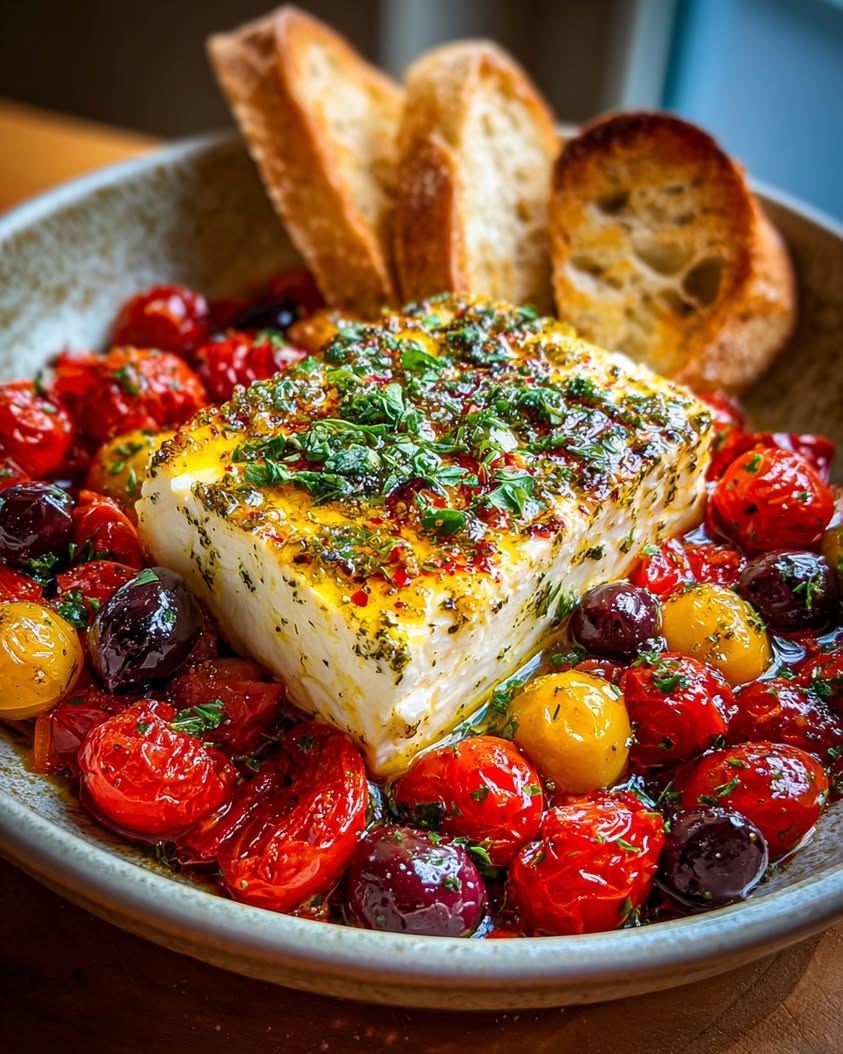
Golden Herb-Baked Feta with Olives and Tomatoes: An Easy Appetizer
Imagine pulling a sizzling, fragrant dish from your oven with minimal effort. This golden herb-baked feta with olives and tomatoes delivers exactly that experience. It transforms simple, humble ingredients into a show-stopping centerpiece for your table. The block of feta cheese emerges beautifully golden and slightly caramelized at the edges. Meanwhile, the cherry tomatoes burst, creating a vibrant, juicy sauce that mingles with the briny olives and fragrant herbs.
This recipe for golden herb-baked feta with olives and tomatoes is a true testament to the magic of Mediterranean cooking. It relies on quality ingredients and the transformative power of heat rather than complex techniques. Consequently, you get a dish that feels both rustic and elegant. The aroma of garlic, oregano, and thyme filling your kitchen is an irresistible preview of the deliciousness to come. Ultimately, it is the perfect appetizer for any gathering or a fantastic light meal.
Furthermore, this golden herb-baked feta with olives and tomatoes is incredibly versatile. You can serve it straight from the baking dish for a casual, family-style presentation. Alternatively, you can plate it beautifully for a more formal occasion. The warm, creamy feta pairs perfectly with crusty bread for dipping and scooping. Every bite offers a harmonious blend of salty, tangy, and herbal notes that will have everyone reaching for more.
Quick Recipe Highlights
- Flavor Profile: This dish features a bold, savory combination. The salty, tangy feta cheese mellows and becomes creamy when baked. Simultaneously, sweet roasted tomatoes and briny Kalamata olives create a perfect balance. Finally, fresh herbs and a hint of garlic add aromatic depth to every bite.
- Texture: You will experience a wonderful contrast of textures. The baked feta becomes soft and spreadable, almost dip-like. Juicy burst tomatoes provide a saucy element, while the olives offer a pleasant, meaty chew. Crusty bread is essential for scooping and adds a satisfying crunch.
- Aroma: The scent while baking is absolutely intoxicating. Fragrant oregano and thyme release their essential oils. Garlic becomes sweet and mellow in the oven’s heat. Together, these aromas create an inviting, herbaceous fragrance that promises a delicious meal.
- Visual Appeal: This dish is a feast for the eyes with its vibrant colors. The golden-brown crust on the white feta is visually striking. Bright red tomatoes and deep purple olives create a beautiful mosaic. A final garnish of fresh green herbs adds the perfect finishing touch.
- Skill Level Needed: This is a beginner-friendly recipe requiring very basic skills. You only need to chop a few ingredients and combine them in a dish. There is no precise measuring or tricky techniques involved. Essentially, if you can use an oven, you can master this dish.
- Special Equipment: You need only a standard oven and a baking dish. A small ceramic or glass baking dish works perfectly. No special tools are required. A good knife for chopping herbs and garlic is helpful, but not strictly necessary.
Recipe Overview
- Difficulty Level: We rate this recipe as easy for several important reasons. First, the preparation involves simple chopping and assembling, not complex knife work. Second, the cooking process is entirely hands-off once the dish goes into the oven. Third, there is no risk of overcooking in a traditional sense. Finally, the ingredient list is short and forgiving, allowing for easy substitutions.
- Category: This golden herb-baked feta fits beautifully into multiple meal categories. Primarily, it serves as an outstanding appetizer or meze. Additionally, it can be the centerpiece of a light lunch or vegetarian dinner. It also works wonderfully as part of a larger spread or buffet. Ultimately, its versatility is one of its greatest strengths.
- Cuisine: This dish draws direct inspiration from Greek and broader Mediterranean culinary traditions. Baked feta, or “Feta Psiti,” is a classic preparation in Greece. The combination with olives, tomatoes, and oregano is quintessentially Mediterranean. However, this recipe adopts a modern, accessible approach for home cooks everywhere. It celebrates the region’s focus on fresh, flavorful, and simple ingredients.
- Cost: This is a very cost-effective dish to prepare, especially for entertaining. A block of feta cheese is typically inexpensive. Cherry tomatoes and Kalamata olives are pantry staples with a long shelf life. Fresh herbs can be grown at home or purchased in small quantities. Overall, you can create an impressive appetizer for four people for a very reasonable price.
- Season: This recipe shines brightest in the summer and early fall. That is when tomatoes are at their peak sweetness and flavor. However, it is truly a year-round dish because cherry tomatoes are reliably good. During colder months, it brings a welcome taste of sunshine to the table. Therefore, you can enjoy it anytime you crave Mediterranean flavors.
- Occasion: It is perfect for almost any gathering, from casual to formal. Serve it at a last-minute get-together with friends. It is also ideal for holiday parties, book clubs, or game day. Furthermore, it makes a romantic and easy date night meal. Its crowd-pleasing nature and simple preparation make it a go-to recipe.
Why You’ll Love This Recipe
You will adore the incredible taste and texture of this golden herb-baked feta. The transformation of simple feta cheese in the oven is nothing short of magical. It becomes warm, soft, and luxuriously creamy, losing some of its sharp bite. The tomatoes roast and burst, creating a sweet, jammy sauce that mingles with the olive oil and herbs. Each component complements the others, creating a harmonious and deeply satisfying flavor profile that is both rustic and refined.
The convenience and preparation benefits are a major reason to love this dish. You can assemble the entire recipe in about ten minutes with minimal cleanup. There is no need for pre-cooking or complicated steps. Simply combine everything in a single dish and let the oven do the work. This makes it perfect for busy weeknights or when you have unexpected guests. You can focus on your company instead of being stuck in the kitchen.
This golden herb-baked feta with olives and tomatoes offers several nutritional advantages. Feta cheese is a good source of calcium and protein. Tomatoes provide vitamin C, potassium, and the antioxidant lycopene. Olive oil is rich in heart-healthy monounsaturated fats. Using fresh herbs adds flavor without extra sodium. When served with whole-grain bread and a side salad, it becomes a balanced and nourishing meal.
The social and entertaining value of this dish is exceptionally high. It is inherently a sharing dish, designed to be placed in the center of the table. It encourages conversation and interaction as people dip and scoop together. The dramatic, bubbly presentation always impresses guests. It feels special and indulgent, yet it requires so little effort from the host. This combination makes it a perennial favorite for any kind of gathering.
Finally, the cost-effectiveness and accessibility of the ingredients make this a staple recipe. You can find every component at any standard grocery store. There is no need for expensive or exotic items. The recipe is also highly adaptable based on what you have on hand. You can create a restaurant-quality appetizer for a fraction of the price. This golden herb-baked feta proves that impressive food does not require a big budget.
Historical Background and Cultural Significance
The story of baked feta is deeply rooted in the pastoral traditions of Greece. Shepherds, needing simple, transportable, and non-perishable food, often carried blocks of feta cheese. They would sometimes warm the cheese over a fire to soften it, creating an early version of the dish. This practical origin evolved into a beloved preparation known as “Feta Psiti.” Traditionally, it might be wrapped in parchment or fig leaves with a drizzle of oil before being baked in embers. This humble beginning highlights the resourcefulness of Mediterranean cuisine.
Feta cheese itself holds immense cultural importance in Greece, protected by a PDO (Protected Designation of Origin). This means true feta can only come from specific regions of Greece and must be made from at least 70% sheep’s milk. The cheese is a staple in the Greek diet, appearing in salads, pastries, and countless cooked dishes. Baking feta elevates this everyday ingredient, often for festive occasions or as a meze, which is a small dish meant for sharing and socializing. The act of sharing food from a common plate is central to Greek hospitality, or “philoxenia.”
The evolution of the recipe for golden herb-baked feta with olives and tomatoes reflects modern global tastes. While the core concept of baked feta is ancient, the addition of cherry tomatoes and specific herbs is a more contemporary twist. The internet and food media have popularized these vibrant, photogenic versions worldwide. This global appreciation has led to countless variations, from adding chili flakes for heat to incorporating different types of olives or peppers. The recipe’s adaptability is key to its enduring and growing popularity.
Regional variations of baked feta exist throughout the Eastern Mediterranean. In Turkey, a similar dish might feature the cheese “beyaz peynir” baked with peppers and spices. Across the Balkans, baked white cheeses are common, often served with flatbread. The Greek island of Sifnos is famous for its “Feta me Meli,” where feta is baked with honey and sesame seeds. This sweet and savory combination showcases another delicious direction. Our version with olives and tomatoes leans into the classic Greek flavor profile that is universally appealing.
Ingredient Deep Dive
Feta Cheese is the star of this dish. This brined curd cheese has a history dating back thousands of years in Greece. It is rich in calcium, phosphorus, and protein, and it contains beneficial bacteria due to its fermentation. For the best results in your golden herb-baked feta, seek out a block of feta packed in brine, not pre-crumbled. The brine keeps it moist and flavorful. Store an unopened package in the brine in the refrigerator. If you need a substitute, a firm goat cheese or halloumi can work, though the texture and saltiness will differ.
Cherry Tomatoes provide sweetness and a saucy element. Tomatoes originated in South America but became central to Mediterranean cuisine after their introduction to Europe. They are an excellent source of vitamins C and K, potassium, and the antioxidant lycopene. Choose cherry or grape tomatoes that are firm and brightly colored for the best flavor in your baked feta dish. Avoid refrigerating tomatoes, as cold temperatures degrade their texture and flavor. For a substitution, you can use sun-dried tomatoes (oil-packed) or diced Roma tomatoes, though the cooking time may vary slightly.
Kalamata Olives add a essential briny, meaty depth. These dark purple olives hail specifically from the Kalamata region of Greece and are protected by a PDO. They are rich in monounsaturated fats and vitamin E. Select olives sold in brine or vinegar at the deli counter for superior flavor and texture compared to canned varieties. Store leftover olives in their liquid in the refrigerator. If you cannot find Kalamatas, other brine-cured olives like Gaeta or Niçoise will work well in this golden herb-baked feta recipe.
Extra Virgin Olive Oil is the cooking medium and a key flavor component. Olive oil cultivation is ancient, with evidence dating back to 6000 BC in the Mediterranean region. It is a cornerstone of the heart-healthy Mediterranean diet, full of antioxidants and anti-inflammatory compounds. Use a good-quality extra virgin olive oil you enjoy tasting, as its flavor will shine through. Store it in a cool, dark place to prevent rancidity. While you can use regular olive oil, extra virgin adds a fruitier, more complex note to the finished dish.
Fresh Herbs like oregano and thyme provide the aromatic signature. These herbs have been used for millennia in Mediterranean cooking and medicine for their flavors and preservative qualities. They contain various antioxidants and essential oils. For the brightest flavor in your golden herb-baked feta, always choose fresh herbs over dried if possible. Store them like a bouquet of flowers, stems in water, in the refrigerator. If you must substitute dried herbs, use about one-third the amount, as their flavor is more concentrated.
Common Mistakes to Avoid
- Using Pre-Crumbled Feta: Pre-crumbled feta contains anti-caking agents and is often drier. Consequently, it will not melt and become creamy in the same way. Always buy a solid block of feta stored in brine for the best texture and flavor in your baked feta dish.
- Overcrowding the Baking Dish: You need a dish where the ingredients fit snugly but in a single layer. If the dish is too large, the olive oil will spread out and burn. Conversely, if it is too small, the tomatoes will steam instead of roast. Choose an appropriately sized dish for even cooking.
- Skipping the Quality Olive Oil: This recipe has few ingredients, so each one matters significantly. A bland or low-quality olive oil will result in a bland dish. Invest in a good extra virgin olive oil that you like the taste of on its own. The oil’s flavor infuses the entire recipe.
- Not Using Enough Fresh Herbs: Herbs are a primary flavor driver here. A sparse sprinkle will get lost. Be generous with your fresh oregano and thyme. You can also add rosemary or marjoram for variation. The herbs should coat the feta and tomatoes visibly before baking.
- Forgetting to Serve with Bread: The warm, creamy feta and juicy tomatoes beg to be scooped up. Without crusty bread, you miss a key textural element and a way to enjoy all the delicious sauce. Always have warm, rustic bread or toasted pita on the side for serving.
- Baking at the Wrong Temperature: A very high temperature might burn the herbs before the feta softens. A temperature that is too low will not achieve the golden color or burst the tomatoes properly. Stick to the recommended 400°F (200°C) for perfect results every time.
- Using Cold Feta Straight from the Fridge: Taking the feta out of the brine and baking it immediately can lead to uneven heating. Let the feta block sit at room temperature for 15-20 minutes before assembling the dish. This helps it warm through evenly and become perfectly creamy.
- Stirring the Dish During Baking: Resist the urge to shake or stir the pan. Let the heat work its magic undisturbed. The feta will soften, the tomatoes will blister and burst, and the oil will become infused with flavor. Stirring can break the feta apart too early.
Essential Techniques
Selecting and Preparing the Feta Block is the first crucial technique. You must choose a block of feta in brine, not a crumbled product. Remove it from the brine and pat it dry gently with a paper towel. Do not rinse it, as you want to retain some of that salty brine flavor. Placing it in the center of your baking dish allows the heat to circulate evenly around it. This ensures the cheese softens and turns golden without drying out at the edges.
Creating the Herb and Oil Mixture is where you build the foundational flavor. Finely chop your fresh herbs to release their aromatic oils. Combine them with minced garlic and a generous amount of extra virgin olive oil in a small bowl. Stir this mixture well to create a flavorful paste. Drizzling and spooning this over the feta and tomatoes ensures every bite is infused with flavor. This step is simple but vital for a deeply aromatic finished dish.
Roasting to Achieve the Perfect Texture requires understanding visual cues. Place the assembled dish in a preheated oven. You will know it is done when the feta is soft to the touch and has golden-brown spots on top. The tomatoes should be wrinkled, blistered, and some will have burst open. The olive oil will be bubbling around the edges. This process usually takes 15-20 minutes. Avoid over-baking, as the feta can start to separate and become greasy.
Pro Tips for Perfect Golden Herb-Baked Feta
Bring your feta to room temperature for about 15 minutes before baking. This simple step ensures the center warms through perfectly and becomes creamy at the same rate as the exterior. Cold feta straight from the fridge can remain firm in the middle while the edges overheat.
Use a ceramic or stoneware baking dish if you have one. These materials retain and distribute heat evenly, promoting perfect roasting for the tomatoes and gentle warming for the feta. A metal pan can sometimes cause the bottom to cook too aggressively.
Do not discard the flavorful oil left in the baking dish after serving. This oil is infused with the essence of garlic, herbs, tomatoes, and feta. Drizzle it over the served dish or use it to dress a simple side salad. It is liquid gold.
Add a pinch of chili flakes or a drizzle of honey just before serving for a flavor twist. Chili flakes introduce a subtle heat that cuts through the richness. Honey provides a sweet contrast that complements the salty feta beautifully, echoing the Greek “Feta me Meli.”
If your fresh herbs are looking wilted, revive them in a bowl of ice water for 10 minutes before chopping. This rehydrates the leaves and makes them perk up, ensuring they look vibrant and taste fresh in your final presentation.
For an even more dramatic presentation, add the whole sprigs of herbs to the dish before baking. Then, garnish with additional freshly chopped herbs after baking. This provides layers of herbal flavor and a beautiful, professional look.
Variations and Adaptations
Explore regional variations by incorporating ingredients from other Mediterranean cuisines. For an Italian twist, use fresh basil and mozzarella (bocconcini) alongside the feta. A French Provençal version could include herbes de Provence and Niçoise olives. For a Middle Eastern flair, add a sprinkle of za’atar seasoning and some preserved lemon. A Turkish adaptation might include slices of spicy pepper and a garnish of fresh mint. These changes keep the core technique while taking your taste buds on a tour.
Make seasonal adaptations based on the freshest produce available. In summer, use heirloom cherry tomatoes in different colors. During fall, add roasted cubes of butternut squash or pumpkin. For a winter version, incorporate roasted garlic cloves and rosemary. In spring, fresh peas and asparagus tips can be lovely additions. The golden herb-baked feta method is a fantastic canvas for seasonal vegetables.
Consider dietary modifications to suit different needs. For a vegan version, use a firm, brine-able vegan cheese alternative or a block of extra-firm tofu pressed and marinated. To make it gluten-free, simply serve with gluten-free bread or crackers. For a lower-carb or keto option, serve the baked feta with sliced cucumbers, bell peppers, or celery sticks for dipping instead of bread.
Experiment with flavor variations by changing the aromatics and add-ins. Add capers or anchovy fillets for a more pungent, savory note. Include sliced red onion or shallots for sweetness. A splash of white wine or lemon juice added before baking adds acidity. For a smoky element, use smoked paprika or a few drops of smoked olive oil. The basic recipe is wonderfully adaptable.
Serving and Presentation Guide
Master plating techniques to make your dish visually stunning. Serve it directly in the beautiful baking dish you cooked it in for a rustic, family-style appeal. Alternatively, carefully transfer the warm feta and tomatoes to a shallow serving platter, drizzling all the infused oil over the top. Place the dish on a wooden board or a colorful napkin to anchor it on the table. Always have a serving spoon or small knife for spreading the feta.
Garnishing ideas can elevate the presentation from simple to spectacular. A final drizzle of high-quality olive oil adds shine. A sprinkle of flaky sea salt, like Maldon, enhances texture and flavor. Freshly cracked black pepper is a must. A handful of additional fresh herb leaves (oregano, thyme, or parsley) adds a pop of green. For color, add a few extra whole olives or a pinch of red pepper flakes.
Traditional accompaniments focus on bread for scooping. Warm, crusty baguette slices are the classic choice. Toasted pita bread or pita chips offer a different texture. Rustic sourdough or focaccia also work beautifully. Beyond bread, consider serving with grilled vegetables like zucchini or eggplant slices. A simple green salad on the side balances the richness perfectly.
Wine and Beverage Pairing
Choose wine pairings that complement the salty, tangy, and herbal notes of the dish. A crisp, acidic white wine like Assyrtiko from Greece or a Sauvignon Blanc cuts through the richness of the feta beautifully. A light-bodied, fruity red wine, such as a Beaujolais or a Greek Xinomavro, can also pair well if served slightly chilled. Rosé is another fantastic option, especially a dry Provençal style, as it bridges the gap between red and white. Ultimately, the best pairing is a wine you enjoy that refreshes your palate between bites.
Non-alcoholic alternatives can be just as sophisticated. Sparkling water with a squeeze of lemon or lime is always refreshing. A homemade herbal iced tea, using mint or lemon verbena, complements the herbal notes in the dish. For a more complex option, try a tart cherry or pomegranate spritzer. The key is to have a beverage with some acidity or effervescence to cleanse the palate from the creamy, salty cheese.
Storage and Shelf Life
Store any leftovers properly to enjoy them safely. First, let the baked feta cool completely to room temperature. Then, transfer it to an airtight container, making sure to include all the flavorful oil and juices. You can store it in the refrigerator for up to 3 days. The feta will firm up again when chilled. The tomatoes will soften further in the oil.
Reheating instructions are important for restoring the creamy texture. The best method is to reheat it gently in an oven or toaster oven at 325°F (160°C) until just warmed through. You can also reheat it in a microwave in short bursts, but this may cause the feta to become a bit rubbery. Stir it gently after reheating to recombine the oils and juices. Do not reheat it more than once for food safety and quality.
Freezing is not recommended for this golden herb-baked feta. Dairy-based dishes like this one do not freeze well. The freezing process will cause the feta to separate and become grainy and crumbly upon thawing. The tomatoes will turn mushy and waterlogged. It is best enjoyed fresh or stored in the refrigerator for a few days. Plan to make only what you will consume within a short timeframe.
Make Ahead Strategies
You can implement a prep timeline to streamline your cooking. Up to a day in advance, you can wash and dry the cherry tomatoes. You can also chop the herbs and mince the garlic, storing them separately in the refrigerator. You can even combine the oil, herbs, and garlic in a jar and let it marinate. However, do not assemble the dish itself until just before baking. This prevents the tomatoes from releasing too much water and the feta from starting to dissolve in the acid.
Understand the quality impact of prepping components ahead. Pre-chopped herbs may lose some vibrancy but will still be flavorful. The garlic-infused oil will actually improve in flavor as it sits. The feta should remain whole and in its brine until assembly. By doing these small tasks ahead, you reduce your active prep time to just a few minutes. This makes the recipe even more convenient for entertaining.
Follow smart assembly tips when you are ready to bake. Take your pre-prepped components from the fridge about 30 minutes before assembling. This allows everything to come closer to room temperature. Assemble the dish in your baking dish, then let it sit on the counter while your oven preheats. This final rest ensures more even cooking from the moment it hits the oven heat.
Scaling Instructions
Halving the recipe is simple for a smaller serving. Use a 4-ounce block of feta and reduce the other ingredients proportionally. A small gratin dish or even a large ramekin works perfectly. The cooking time may be slightly less, so start checking at the 12-minute mark. This is ideal for a romantic dinner for two or a solo treat with leftovers for lunch.
Doubling or tripling the recipe for a crowd requires minor adjustments. Use a larger baking dish or multiple smaller dishes to ensure everything is in a single layer, not piled up. You may need to increase the baking time by 5-10 minutes if the dish is very full. Rotate the dish(es) in the oven halfway through for even browning. Scaling up works beautifully because the recipe is so straightforward.
Nutritional Deep Dive
The macro breakdown of this dish offers a balanced profile. Feta cheese provides a good amount of protein and fat, specifically saturated fat. The olive oil contributes healthy monounsaturated fats. The tomatoes add carbohydrates in the form of natural sugars and fiber. When served with whole-grain bread, you get complex carbohydrates. This combination can be part of a balanced diet when enjoyed in moderation.
Micronutrient analysis reveals several beneficial vitamins and minerals. Feta is an excellent source of calcium and phosphorus for bone health. Tomatoes provide vitamin C, potassium, and the antioxidant lycopene. Olive oil contains vitamin E and various polyphenols. Fresh herbs, while used in smaller quantities, add trace amounts of vitamins A, C, and K. Together, they create a nutrient-dense appetizer or light meal.
Dietary Adaptations
Create a vegan version by substituting the feta cheese. Use a block of extra-firm tofu that has been pressed, cubed, and marinated in a mixture of lemon juice, nutritional yeast, and salt. Alternatively, several brands now make convincing vegan feta-style cheeses from almonds or tofu. Follow the same baking method. The result will be different but still delicious, with the same flavorful tomatoes and herbs.
For a gluten-free adaptation, the recipe itself is naturally gluten-free. The only consideration is the serving accompaniment. Simply serve your golden herb-baked feta with gluten-free bread, crackers, or sliced raw vegetables. Ensure all other ingredients, like pre-mixed spices, are certified gluten-free. This makes it an easy and safe option for those with celiac disease or gluten sensitivity.
Troubleshooting Guide
Solve texture issues if your feta turns out too dry or crumbly. This usually happens from over-baking or using a low-quality, dry feta. Next time, ensure your feta is a block in brine and check it earlier. If it is dry after baking, drizzle it with a little extra olive oil or a spoonful of water or white wine and return it to the oven for just a minute. The added moisture can help revive it slightly.
Address flavor balance if the dish tastes bland. The most common culprit is underseasoning or weak ingredients. Remember, feta is salty, but the tomatoes and oil need help. Before baking, season the tomatoes lightly with salt and pepper. Use generous, fresh herbs and quality olive oil. After baking, taste the oil and add a pinch of flaky salt or a squeeze of lemon juice to brighten everything up.
Frequently Asked Questions
Can I use dried herbs instead of fresh? Yes, you can substitute dried herbs. However, use only one-third the amount called for fresh, as dried herbs are more concentrated. Add them directly to the olive oil mixture. The flavor will be slightly different but still good. For the best golden herb-baked feta, fresh is always superior.
What kind of baking dish is best? A ceramic or glass baking dish is ideal. These materials distribute heat gently and evenly, preventing the bottom from burning. A small cast iron skillet also works well and can go from oven to table. Avoid using a very large, shallow pan, as the oil may burn.
Can I add other vegetables? Absolutely. Sliced bell peppers, red onion, zucchini, or artichoke hearts are great additions. Just ensure they are cut to a size that will cook in the same time frame. Denser vegetables may need a quick sauté before adding to the dish.
Is this served hot or warm? It is best served warm, straight from the oven. The feta is wonderfully soft and spreadable at this temperature. It will start to firm up as it cools. If it does cool, you can gently reheat it before serving.
Can I make this ahead of time? You can prep all the components ahead, but assemble and bake just before serving. If you bake it ahead and reheat, the texture of the feta will suffer and it may become oily. For the best results, bake it fresh.
What can I serve with this besides bread? Try serving it with crackers, crostini, or sliced baguette. For a low-carb option, use endive leaves, cucumber slices, or bell pepper strips for scooping. It also makes a great topping for a grain bowl or salad.
My feta didn’t get golden, just soft. Why? Your oven rack may be too low, or your oven temperature might be inaccurate. For better browning, place the dish in the upper third of the oven. You can also broil it for the last 1-2 minutes, watching carefully to prevent burning.
How do I know when it’s done baking? The feta should be soft to the touch and may have light golden spots. The tomatoes will be wrinkled and some will have burst. The olive oil around the edges will be bubbling gently. This typically takes 15-20 minutes at 400°F (200°C).
Can I use a different type of cheese? Halloumi or a firm goat cheese log can work, but the result will be different. Halloumi holds its shape more and gets squeaky. Goat cheese will become very soft and may melt more. The classic flavor comes from authentic feta.
Is this recipe gluten-free? The recipe itself contains no gluten. The only potential source is the bread you serve it with. To keep the meal gluten-free, simply choose gluten-free bread or crackers for dipping.
Additional Resources
Explore related recipes that follow a similar simple, flavorful philosophy. A Greek salad with the same ingredients served fresh is a natural companion. Spanakopita (spinach pie) or Tiropita (cheese pie) offer more traditional Greek baked dishes. For another easy baked appetizer, try baked brie with jam or honey. These recipes all share the Mediterranean spirit of celebrating a few good ingredients.
Master technique guides that will elevate your overall cooking. Learning how to properly roast vegetables will help you adapt this recipe seasonally. Understanding how to select and store fresh herbs maximizes their flavor and lifespan. A guide to different olive oils helps you choose the best one for dressing versus cooking. These skills transfer to countless other dishes in your repertoire.
{“success”:true,”message”:”Recipe created successfully”,”post_id”:7863,”tasty_recipe_id”:7863,”shortcode”:” Print
Golden Herb-Baked Feta with Olives, Tomatoes & Rustic Bread
Description
A warm, savory Mediterranean appetizer featuring creamy feta cheese baked with herbs, juicy tomatoes, and briny olives, served with toasted rustic bread for dipping.
Ingredients
For the Crust:
- 1 block (8 oz) feta cheese
- 1 cup cherry tomatoes, halved
- 1/2 cup Kalamata olives, pitted
- 3 cloves garlic, minced
- 2 tbsp extra virgin olive oil
- 1 tsp dried oregano
- 1/2 tsp red pepper flakes
- Fresh basil leaves for garnish
- 1 loaf rustic bread, sliced and toasted
Instructions
1. Prepare the Crust:
- Preheat oven to 400°F (200°C). Place the feta block in the center of a small baking dish.
- Arrange the cherry tomatoes and olives around the feta. Sprinkle minced garlic, oregano, and red pepper flakes over everything.
- Drizzle olive oil evenly over the feta, tomatoes, and olives.
- Bake for 20-25 minutes until the feta is soft and golden on top.
- Garnish with fresh basil and serve immediately with toasted rustic bread slices.
Notes
You can customize the seasonings to taste.

I’m Billy, a classically trained culinary school graduate from The Culinary Institute of America with over 12 years in the restaurant industry and over 19 years of cooking experience.