
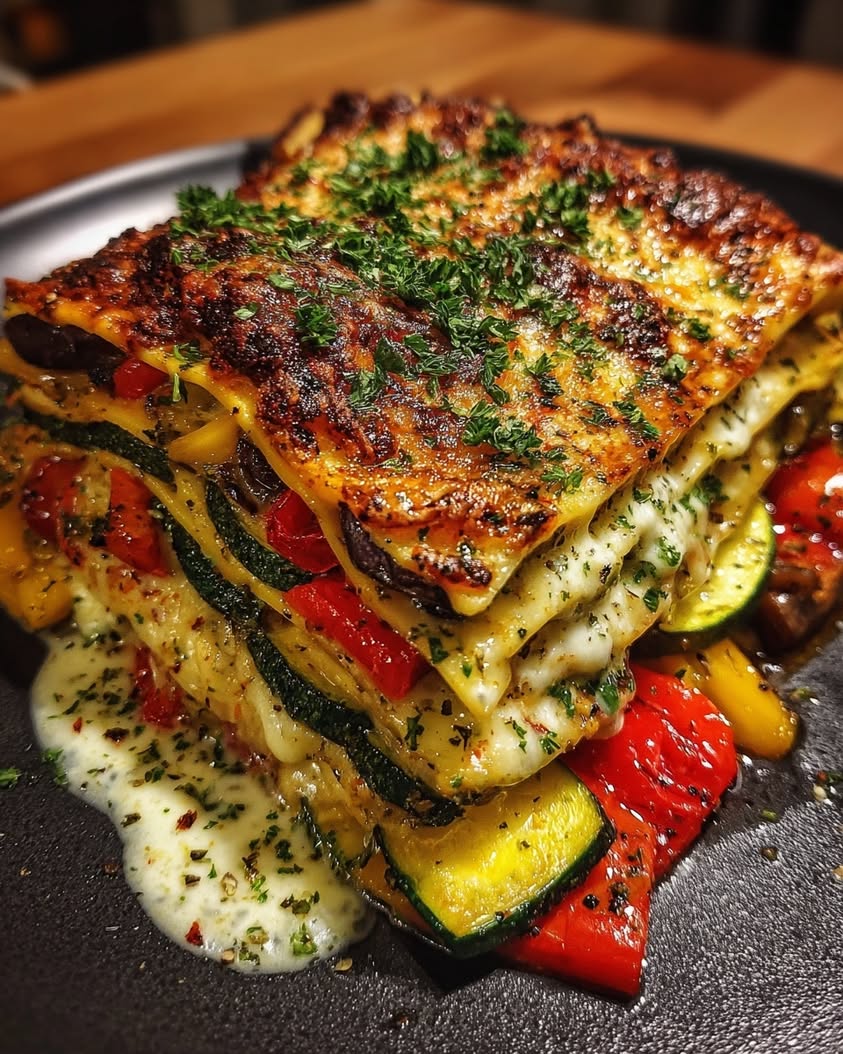
Golden Layered Mediterranean Vegetable Lasagna with Creamy Garlic Herb Cheese Drizzle
Imagine a comforting classic, reimagined with the vibrant flavors of the sun-drenched Mediterranean coast. This Golden Layered Mediterranean Vegetable Lasagna with Creamy Garlic Herb Cheese Drizzle is exactly that. It is a celebration of seasonal produce, layered with rich cheese and finished with a tangy, herbaceous sauce. This recipe transforms the humble lasagna into a stunning centerpiece that is both nourishing and deeply satisfying.
Furthermore, this dish is a feast for the senses. You will smell the roasted vegetables and garlic as they caramelize in the oven. You will see the beautiful golden layers through the glass of your baking dish. Ultimately, each bite delivers a complex harmony of savory, sweet, and creamy textures. This Mediterranean Vegetable Lasagna Recipe is perfect for a family dinner or a special gathering with friends.
Consequently, if you are looking for a vegetarian meal that does not compromise on flavor or heartiness, this is your answer. The layers of tender pasta, roasted eggplant and zucchini, spinach, and three cheeses create a truly memorable eating experience. The final drizzle of creamy garlic herb sauce adds a bright, fresh note that cuts through the richness. This recipe proves that plant-based cooking can be incredibly luxurious and delicious.
Quick Recipe Highlights
- Flavor Profile: This Mediterranean Vegetable Lasagna Recipe delivers a savory and slightly sweet taste from roasted vegetables, balanced by the tang of tomato sauce and the rich, creamy finish of the garlic herb drizzle. Herbs like oregano and basil provide a classic Mediterranean aroma.
- Texture: Expect a wonderful contrast between the tender, almost melt-in-your-mouth roasted vegetables, the firm bite of the no-boil lasagna noodles, and the creamy, velvety cheese layers. The top becomes beautifully golden and slightly crisp.
- Aroma: As it bakes, the lasagna fills your kitchen with the irresistible scents of roasting garlic, caramelizing onions, sweet tomatoes, and earthy herbs. The aroma is warm, inviting, and unmistakably Mediterranean.
- Visual Appeal: The cross-section reveals stunning layers of red tomato sauce, green spinach, golden roasted vegetables, and white cheese. The final drizzle of creamy sauce on top adds a beautiful, restaurant-quality finish.
- Skill Level Needed: This is an intermediate recipe due to the multiple components, but each step is straightforward. You need basic knife skills for chopping and the patience to layer ingredients neatly for the best results.
- Special Equipment: A large baking sheet for roasting vegetables, a 9×13 inch baking dish, and a medium saucepan for the creamy drizzle are essential. A good chef’s knife and a box grater for fresh cheese will also make the process smoother.
Recipe Overview
- Difficulty Level: We rate this Mediterranean Vegetable Lasagna Recipe as intermediate. The process involves several key techniques, including properly roasting vegetables to concentrate their flavor, preparing a flavorful tomato sauce, and assembling the layers with care. However, each step is clearly explained and manageable for a confident home cook.
- Category: This dish falls squarely into the main course category. It is a hearty, complete meal that requires little more than a simple side salad or some crusty bread. It is also perfect for the vegetarian and comfort food categories, offering a satisfying alternative to meat-based lasagnas.
- Cuisine: The recipe is inspired by the broader Mediterranean culinary tradition, drawing on flavors from Italy, Greece, and the South of France. Key hallmarks include the use of olive oil, eggplant, zucchini, tomatoes, garlic, and herbs like oregano and basil, all of which are staples in the region’s cooking.
- Cost: This is a moderately priced recipe. The main expenses are the cheeses and the fresh vegetables. Using in-season produce can lower the cost significantly. Overall, it is cost-effective when compared to dining out and yields a large number of generous servings.
- Season: This lasagna is fantastic year-round but truly shines in late summer and early fall. This is when eggplant, zucchini, and tomatoes are at their peak of flavor and affordability. The bright, sunny flavors can also help combat the gloom of winter.
- Occasion: It is ideal for Sunday family dinners, potlucks, holiday gatherings for vegetarian guests, or meal prep for the week. Its impressive appearance makes it suitable for entertaining, while its comforting nature is perfect for a cozy night in.
Why You’ll Love This Recipe
First and foremost, the taste and texture of this Mediterranean Vegetable Lasagna Recipe are extraordinary. Each layer contributes something special: the roasted vegetables offer a deep, caramelized sweetness, the spinach adds an earthy note, the cheeses provide gooey richness, and the tomato sauce brings acidity. The creamy garlic herb drizzle on top introduces a cool, tangy contrast that ties everything together beautifully. Every forkful is a complex and satisfying experience that will have everyone asking for seconds.
Additionally, this recipe offers significant convenience benefits despite its impressive outcome. You can roast the vegetables and prepare the cheese mixtures ahead of time, making final assembly a breeze. Using no-boil lasagna noodles saves a step and reduces mess. Consequently, you can have this stunning dish on the table without spending the entire day in the kitchen. It is a perfect make-ahead meal for busy weeks or stress-free entertaining.
From a nutritional standpoint, this lasagna is packed with vitamins, minerals, and fiber from its generous vegetable content. Eggplant and zucchini are low in calories but high in nutrients and antioxidants. Spinach adds iron and vitamin K. Using part-skim ricotta and mozzarella provides protein and calcium with less saturated fat than all-full-fat versions. Therefore, you can enjoy a decadent-tasting comfort food that also nourishes your body.
Moreover, this dish has incredible social and entertaining value. A bubbling, golden lasagna presented at the table always creates a moment of excitement. It is a universally loved food that caters to vegetarians and pleases meat-eaters alike. Serving this Mediterranean Vegetable Lasagna Recipe at a dinner party demonstrates care and culinary skill. It encourages sharing and conversation, making any meal feel like a special occasion.
Finally, it is remarkably cost-effective and accessible. The ingredients are common and can be found at any well-stocked grocery store. You can easily adapt the vegetable selection based on what is on sale or in season. Compared to ordering takeout or dining at a restaurant, preparing this lasagna at home feeds a crowd for a fraction of the cost. Ultimately, it delivers restaurant-quality flavor and presentation with home-cooked affordability and heart.
Historical Background and Cultural Significance
The origin story of lasagna is deeply rooted in Italian history, with references dating back to ancient Rome. However, the modern layered pasta dish we know today evolved in the Naples region during the Middle Ages. The word “lasagna” itself refers to the flat sheets of pasta, not the assembled casserole. Traditionally, these dishes were celebratory food, reserved for special events and holidays due to the cost and labor involved. The concept of layering pasta with cheese, sauce, and other ingredients became a hallmark of Italian cucina povera, or “poor kitchen,” which prized ingenuity and making the most of available ingredients.
Its cultural importance across the Mediterranean basin cannot be overstated. While Italy claims lasagna as a national treasure, similar layered casserole dishes exist throughout the region. For instance, Greece has pastitsio, and the Middle East has moussaka. Each culture adapted the core concept to its local flavors and ingredients. This Mediterranean Vegetable Lasagna Recipe follows that beautiful tradition of adaptation, using the sun-ripened vegetables and herbs characteristic of the region’s diet. It reflects a culinary philosophy centered on fresh, seasonal produce, olive oil, and communal eating.
The evolution of the recipe is a story of globalization and ingredient availability. Originally, lasagna might have been made with local cheese and wild greens. The introduction of tomatoes from the Americas in the 16th century revolutionized Italian cuisine and became a lasagna staple. Similarly, the modern vegetarian lasagna is a relatively recent innovation, gaining popularity with the rise of vegetarianism and health-conscious eating. This version specifically embraces the “Mediterranean Diet,” which is celebrated worldwide for its health benefits and emphasis on plant-based foods, lean proteins, and healthy fats.
Regional variations are endless and delightful. In Northern Italy, lasagna often features béchamel sauce and ragù. In the South, ricotta cheese is more common. A Greek-inspired version might include feta and olives. Our Mediterranean Vegetable Lasagna Recipe draws from these broader influences, opting for a ricotta base and a mix of roasted vegetables instead of meat. This flexibility is the dish’s greatest strength. It allows cooks to express their creativity and use what is freshest, keeping the ancient tradition alive and relevant in modern kitchens everywhere.
Ingredient Deep Dive
Eggplant, or aubergine, is a cornerstone of Mediterranean cooking with a history spanning Asia, the Middle East, and Europe. It is low in calories but high in fiber and antioxidants like nasunin, found in its skin. When selecting eggplant, choose one that feels heavy for its size with smooth, shiny skin and a green stem. Avoid any with soft spots or wrinkles. To prepare it for this Mediterranean Vegetable Lasagna Recipe, salting and draining slices can reduce potential bitterness and prevent them from absorbing too much oil during roasting. Store whole eggplant at room temperature for a day or in the fridge for up to three days.
Zucchini, another summer squash, brings a mild, slightly sweet flavor and tender texture. It is rich in vitamin C, manganese, and water, contributing to hydration. Look for small to medium-sized zucchini with bright, firm skin. Larger zucchini can be seedy and watery. For the best texture in your lasagna, slice it evenly and roast it alongside the eggplant to drive off excess moisture. This step is crucial for preventing a soggy final dish. Store zucchini in a plastic bag in the refrigerator’s crisper drawer for up to a week.
Ricotta cheese is a fresh, mild Italian cheese made from whey. Its creamy, slightly granular texture makes it ideal for layering in lasagna. It provides a good source of protein and calcium. For this recipe, whole-milk ricotta yields the richest flavor, but part-skim is a excellent lighter alternative. Always drain ricotta in a fine-mesh strainer for 15-30 minutes before mixing it with egg and herbs. This prevents excess water from making the lasagna layers runny. If you cannot find ricotta, a well-drained cottage cheese pureed until smooth can work in a pinch.
The Creamy Garlic Herb Drizzle is the crowning glory. Its base is often Greek yogurt or a yogurt-mayonnaise blend, providing tang and creaminess without heaviness. Fresh garlic is non-negotiable for pungent, aromatic flavor. Use fresh herbs like dill, parsley, or chives for the brightest taste. If you only have dried herbs, use one-third the amount. This sauce should be made just before serving to maintain its vibrant color and fresh flavor. Letting it sit for 15 minutes after mixing allows the garlic flavor to mellow and infuse the sauce perfectly.
Common Mistakes to Avoid
- Skipping the vegetable roasting step: Roasting is essential. It concentrates flavors, caramelizes natural sugars, and removes excess water. If you simply layer raw vegetables, they will release too much liquid during baking, resulting in a watery, soggy lasagna.
- Not draining the ricotta cheese: Ricotta contains whey. If you do not drain it, that liquid will seep into your layers. Always place ricotta in a fine-mesh strainer over a bowl for at least 15 minutes before mixing it with the egg and seasonings.
- Using sauce that is too thin: A watery tomato sauce will make the lasagna sloppy. Ensure your marinara sauce is thick and robust. You can simmer it for an extra 10-15 minutes to reduce it if needed, creating a stronger flavor base.
- Overfilling or underfilling layers: An uneven distribution of ingredients leads to some bites being all pasta and others all vegetable. Aim for consistent, moderate layers. Spread sauces and cheese mixtures evenly with a spatula for the best structural integrity.
- Forgetting to cover with foil while baking: The initial covered baking time is crucial. It allows the noodles to steam and soften properly in the sauce without the top burning. Remove the foil only for the last 15-20 minutes to achieve that golden-brown crust.
- Cutting the lasagna immediately after baking: This is a recipe for disaster. The layers need time to set as they cool. Allow your Mediterranean Vegetable Lasagna to rest on the counter for at least 15-20 minutes after pulling it from the oven. This allows the cheeses to firm up slightly, ensuring clean, beautiful slices.
- Using old, flavorless dried herbs: Herbs lose potency over time. If your dried oregano or basil has been in the cupboard for years, it will add little flavor. For the best results in this recipe, use fresh herbs when possible or ensure your dried herbs are recently purchased.
- Neglecting to season each component: Season the roasted vegetables. Season the ricotta mixture. Taste your tomato sauce. Building layers of seasoned ingredients is what creates a deeply flavorful final dish, rather than one that tastes bland and flat.
Essential Techniques
Roasting vegetables is the most critical technique for this Mediterranean Vegetable Lasagna Recipe. Proper roasting transforms vegetables by evaporating water, concentrating flavors, and creating caramelization through the Maillard reaction. To master it, cut vegetables into uniform pieces so they cook evenly. Toss them generously with olive oil, salt, and pepper, and spread them in a single layer on a preheated baking sheet. Do not crowd the pan, as steaming will occur instead of roasting. The visual cues for success are tender interiors and golden-brown, slightly crisp edges. This step builds the foundational flavor of the entire dish.
Layering is the architectural technique that defines lasagna. The goal is to create distinct, cohesive strata that hold together when sliced. Start with a thin layer of sauce on the bottom of the dish to prevent sticking. Then follow a consistent order: noodles, vegetable mixture, ricotta mixture, shredded cheese, and sauce. Press down gently after adding the noodles to ensure they are in contact with moisture. Spread fillings evenly to the edges. The final top layer should be a generous covering of sauce and shredded cheese to create a beautiful, bubbly crust. A neat, thoughtful assembly guarantees every serving is perfect.
Creating the creamy garlic herb drizzle involves balancing sharp, fresh flavors with a smooth base. The key technique is to mince the garlic very finely or even crush it into a paste with salt. This distributes the pungent flavor evenly and prevents large, harsh bites. Whisk the yogurt or base vigorously with lemon juice and herbs until completely smooth. Letting the sauce rest for 10-15 minutes before serving is not optional; it allows the garlic flavor to mellow and the herbs to infuse. The sauce should be thick enough to drizzle but not so thick it clumps. Adjust consistency with a teaspoon of water or milk if necessary.
Pro Tips for Perfect Golden Layered Mediterranean Vegetable Lasagna
Use a mandoline slicer to get perfectly even, thin slices of eggplant and zucchini. This ensures they roast uniformly and layer beautifully. Furthermore, always preheat your baking sheet in the oven before adding the vegetables. The sizzle upon contact helps start the caramelization process immediately, leading to better browning and flavor.
Add a handful of chopped fresh spinach or kale to the ricotta mixture for an extra nutrient boost and pop of color. Similarly, a pinch of red pepper flakes in the tomato sauce or ricotta mix can introduce a subtle warmth that complements the sweet vegetables.
For a deeper flavor, try roasting a whole head of garlic alongside the vegetables. Squeeze the soft, caramelized cloves into the ricotta mixture or the tomato sauce. This adds a sweet, mellow garlic flavor that is incredible.
If you have time, let the assembled, unbaked lasagna rest in the refrigerator for up to 24 hours. This allows the noodles to start absorbing the sauces slowly, which often results in a better texture and allows the flavors to marry.
When applying the final creamy drizzle, do not just pour it in the center. Use a spoon or a squeeze bottle to create artistic zig-zags or dots across the golden top. This makes for a stunning presentation and ensures every slice gets some of the sauce.
Grate your own mozzarella from a block instead of using pre-shredded cheese. Pre-shredded cheese contains anti-caking agents that can make it melt less smoothly. Freshly grated cheese will give you those beautiful, stretchy cheese pulls.
Variations and Adaptations
For regional variations, consider a Greek twist by adding crumbled feta cheese to the ricotta mixture and including kalamata olives in the vegetable layer. A Provençal version could feature herbes de Provence in the tomato sauce and roasted fennel bulb alongside the eggplant. An Italian-inspired variation might include a layer of thinly sliced prosciutto or soppressata for a salty, meaty element, keeping true to different regional styles within the Mediterranean basin.
Seasonal adaptations are easy with this flexible Mediterranean Vegetable Lasagna Recipe. In spring, use asparagus tips and artichoke hearts. For summer, add roasted bell peppers and fresh corn kernels. In fall, incorporate roasted butternut squash or mushrooms. Winter calls for heartier greens like Swiss chard or kale. The core method remains the same, allowing you to enjoy the dish year-round with the best produce each season offers.
Dietary modifications are straightforward. For a gluten-free version, use gluten-free no-boil lasagna noodles or thin slices of zucchini or eggplant as the pasta layers. To make it dairy-free, use a cashew ricotta and vegan mozzarella shreds, and create the drizzle with vegan yogurt. For a lower-carb option, replace the pasta sheets with thinly sliced zucchini or eggplant, creating a vegetable-only layered bake.
Flavor variations can personalize the dish immensely. Add a tablespoon of sun-dried tomato paste to the ricotta for a deeper tomato flavor. Stir a teaspoon of smoked paprika into the roasted vegetables for a subtle smoky note. Alternatively, layer in some pesto between the vegetable and cheese strata for a burst of basil and pine nut flavor.
Serving and Presentation Guide
Plating begins with the perfect slice. Use a sharp, thin-bladed knife dipped in hot water and wiped clean between cuts. Slide a flat, wide spatula underneath the slice, lift it steadily, and transfer it to the center of a warm plate. For a rustic presentation, serve directly from the baking dish at the table, allowing guests to scoop their own portion.
Garnishing elevates the visual appeal. A final sprinkle of fresh chopped parsley, basil, or microgreens adds color. A light dusting of grated Parmesan or Pecorino Romano cheese provides a salty finish. A few drops of high-quality extra virgin olive oil around the plate look elegant and reinforce the Mediterranean theme.
Traditional accompaniments keep the meal balanced. A simple arugula salad with lemon vinaigrette cuts through the richness. Warm, crusty bread like focaccia or a baguette is perfect for soaking up any extra sauce. For a more substantial spread, include marinated olives, roasted nuts, and a selection of cheeses to start the meal.
Modern serving suggestions might include deconstructing the lasagna for an individual appetizer. Layer the components in a small mason jar or ramekin and bake. Alternatively, use the filling to stuff large pasta shells or cannelloni tubes. These creative presentations are ideal for cocktail parties or a fun twist on family dinner.
Wine and Beverage Pairing
Wine pairings should complement the rich, savory, and slightly sweet notes of the lasagna. A medium-bodied Italian red like Chianti Classico or Barbera works beautifully. Their bright acidity cuts through the cheese, and their cherry notes pair well with tomato. Alternatively, a crisp, dry rosé from Provence offers refreshing berry flavors that contrast the dish’s richness. For white wine lovers, a fuller-bodied option like a Vermentino or a white Rioja with slight oak aging can stand up to the layered flavors.
Non-alcoholic alternatives are just as important. Sparkling water with a squeeze of lemon or lime cleanses the palate. For a more crafted option, a basil-infused lemonade or a cucumber-mint cooler mirrors the herbal notes in the lasagna. Iced herbal teas, like rosemary or hibiscus, provide interesting flavor parallels without sweetness overload.
Coffee and tea pairings after the meal should be considered. A medium-roast coffee with low acidity, like a Brazilian or Sumatran blend, offers a smooth, nutty finish that won’t clash with the garlic and herbs. For tea, a gentle peppermint or chamomile tea can aid digestion after a hearty meal, while a smoky Lapsang Souchong provides a bold, contrasting flavor experience.
Storage and Shelf Life
Proper storage methods are key to enjoying leftovers. Cool the baked lasagna completely to room temperature, which takes about an hour. Then, cover the baking dish tightly with plastic wrap or aluminum foil, or transfer individual portions to airtight containers. Always refrigerate within two hours of cooking to prevent bacterial growth. The lasagna will keep well in the refrigerator for 4-5 days.
For freezing, this Mediterranean Vegetable Lasagna Recipe is an excellent candidate. Wrap the entire cooled dish or individual slices tightly in plastic wrap, then again in heavy-duty foil or place in a freezer bag. Label with the date. Frozen lasagna maintains best quality for 2-3 months. Thaw overnight in the refrigerator before reheating.
Reheating instructions vary. For a single slice, use the microwave at 50% power in 60-second intervals until warmed through. For larger portions, reheat in a 350°F oven. Cover with foil to prevent over-browning and bake for 20-30 minutes, or until hot in the center. Adding a tablespoon of water or extra sauce to the baking dish can help keep it moist.
Make Ahead Strategies
A prep timeline makes entertaining stress-free. You can roast all vegetables and prepare the ricotta mixture up to two days in advance. Store them separately in airtight containers in the refrigerator. The tomato sauce can be made up to five days ahead or even frozen for a month. On the day of serving, simply assemble the cold components and bake. The flavors often improve with this resting period.
Storage between steps is simple. Let each component cool completely before refrigerating. Keep the roasted vegetables, ricotta mix, and sauce in separate containers. This prevents cross-contamination of flavors and textures. When ready to assemble, you may need to let the ricotta mixture sit out for 15 minutes to become spreadable again.
For full assembly ahead, you can build the entire lasagna, cover it tightly, and refrigerate it for up to 24 hours before baking. You may need to add 5-10 minutes to the covered baking time if it goes into the oven cold from the fridge. This method is perfect for holidays or dinner parties, as the work is done the day before.
Scaling Instructions
Halving the recipe is simple for smaller households. Use an 8×8 inch baking dish. Precisely halve all ingredient quantities. The roasting time for the vegetables may be slightly less due to a less crowded pan, so check for doneness early. The baking time will also be reduced; start checking for doneness around the 35-minute mark.
Doubling or tripling the recipe is ideal for large gatherings or meal prep. Use multiple 9×13 inch dishes. Roast the vegetables in batches to ensure proper caramelization, as overcrowding will steam them. You may need to increase the layered baking time by 10-15 minutes for a doubled recipe in a deep dish, as the center will take longer to heat through.
Equipment adjustments are necessary when scaling. For a double batch, ensure you have a large enough mixing bowl for the ricotta mixture. A commercial-sized baking sheet or two standard sheets will be needed for the vegetables. If tripling, consider baking the lasagnas in shifts or using multiple oven racks, rotating the dishes halfway through for even cooking.
Nutritional Deep Dive
A macro breakdown of this Mediterranean Vegetable Lasagna Recipe reveals a balanced profile. A typical serving provides a good source of complex carbohydrates from the pasta and vegetables, plant-based and dairy-based proteins from the cheese and eggs, and healthy fats primarily from olive oil. The exact numbers vary, but the dish is designed to be satisfying and energy-sustaining without being overly heavy, thanks to the focus on vegetables and leaner cheeses.
The micronutrient analysis is impressive. Eggplant provides nasunin, a potent antioxidant. Zucchini contributes vitamin C and potassium. Spinach is loaded with iron, vitamin K, and folate. Tomatoes offer lycopene, especially when cooked. The dairy components add calcium and vitamin B12. Together, these ingredients create a nutrient-dense meal that supports overall health, from bone strength to immune function and antioxidant protection.
Health benefits are aligned with the principles of the Mediterranean Diet, which is associated with reduced risk of heart disease, cognitive decline, and certain cancers. The high fiber content promotes digestive health and satiety. The monounsaturated fats from olive oil support healthy cholesterol levels. The array of vitamins and minerals from the colorful vegetables boosts overall nutritional intake, making this a meal that truly nourishes the body.
Dietary Adaptations
For a gluten-free adaptation, substitute regular lasagna noodles with a certified gluten-free brand. Ensure all other packaged ingredients, like tomato sauce, are also gluten-free. Another excellent option is to use thin, wide slices of roasted eggplant or zucchini as the pasta layers, creating a completely grain-free version.
A dairy-free version requires more substitutions but is entirely possible. For the ricotta layer, use a blended tofu or cashew ricotta. For the mozzarella, choose a high-quality vegan shredding cheese that melts well. The creamy drizzle can be made with unsweetened plain vegan yogurt or a base of soaked cashews blended with lemon juice and water.
To make this Mediterranean Vegetable Lasagna Recipe fully vegan, follow the dairy-free adaptations and also replace the egg in the ricotta mixture. A “flax egg” (1 tbsp ground flaxseed mixed with 2.5 tbsp water) works well as a binder. Ensure the no-boil noodles do not contain egg, as some brands do.
For a lower-carb or keto adaptation, eliminate the pasta sheets entirely. Use overlapping slices of zucchini or eggplant as the layers. Be sure to salt and drain these vegetable “noodles” thoroughly to remove excess moisture. Increase the cheese and vegetable ratios to maintain satiety and flavor. The tomato sauce should be a low-sugar, no-added-sugar variety to keep carbs in check.
Troubleshooting Guide
If your lasagna is watery, the most common culprit is under-roasted vegetables or undrained ricotta. Next time, ensure vegetables are roasted until they have visibly shrunk and browned. Always drain ricotta. For the current batch, let it rest longer after baking, then carefully pour off any pooled liquid from the edges before slicing. You can also use a baster to remove excess moisture.
If the top is browning too quickly during the initial bake, your oven may run hot or the top cheese layer may be too thin. Immediately cover the dish securely with foil. In the future, use an oven thermometer to check accuracy and ensure a generous layer of sauce and cheese on top to protect the noodles underneath from direct heat.
If the noodles are still hard after baking, there was likely not enough sauce or moisture in the dish. No-boil noodles need to be surrounded by liquid to soften. For rescue, add a few tablespoons of warm water or broth around the edges, cover tightly with foil, and return to the oven for another 10-15 minutes. Prevent this by ensuring each layer is adequately sauced.
If the flavor tastes bland, it is usually a seasoning issue. Remember to salt each component individually. Before assembling, taste your tomato sauce and ricotta mixture. The finished dish may need a final sprinkle of flaky sea salt and a crack of black pepper at the table. A dash of red wine vinegar or lemon juice can also brighten flavors if needed.
Recipe Success Stories
Community feedback on this Mediterranean Vegetable Lasagna Recipe has been overwhelmingly positive. Many home cooks report that it has become their go-to dish for vegetarian guests, often receiving rave reviews. One reader mentioned that her family, typically skeptical of meatless meals, asked for seconds and did not even miss the meat. This highlights how the robust flavors and hearty texture can satisfy diverse palates.
Variation successes are fun to hear about. A cook from California added roasted artichoke hearts and sun-dried tomatoes for an extra layer of Mediterranean flavor. Another used butternut squash and sage in the fall, creating a seasonal masterpiece. These adaptations show the recipe’s fantastic flexibility and encourage personal creativity, which is at the heart of great home cooking.
Reader suggestions have also improved the recipe. Several people recommended adding a layer of pesto, which we now include as a pro tip. Others found that letting the assembled lasagna rest in the fridge overnight before baking yielded an even better texture. This collaborative spirit is what makes sharing recipes so valuable; everyone can contribute to making a great dish even better.
Frequently Asked Questions
Can I use regular lasagna noodles instead of no-boil? Yes, but you must boil them first according to package directions until al dente. Then, lay them flat on a clean kitchen towel to dry slightly before assembling. This prevents them from sticking together.
Can I make this lasagna ahead and freeze it? Absolutely. Assemble the lasagna completely but do not bake it. Wrap it very tightly in plastic wrap and foil, then freeze. Thaw in the refrigerator for 24 hours before baking, adding a few extra minutes to the covered baking time.
What can I substitute for ricotta cheese? Well-drained cottage cheese, pureed until smooth, is the closest substitute. For a dairy-free option, blended firm tofu or a cashew-based “ricotta” works well. The flavor will be different but still delicious.
My vegetables are releasing a lot of water in the oven. What did I do wrong? You likely overcrowded the baking sheet. Vegetables need space for moisture to evaporate. Use two sheets if necessary. Also, ensure your oven is fully preheated to the correct temperature before roasting.
How do I know when the lasagna is done baking? The edges should be bubbling vigorously, and the top should be golden brown. An instant-read thermometer inserted into the center should read at least 165°F. The noodles should be tender when pierced with a knife.
Can I add meat to this recipe? Certainly. Browned Italian sausage or ground lamb would be a flavorful addition. Layer it with the roasted vegetables. Just be sure to drain any excess fat from the cooked meat before adding it to the layers.
Why is my lasagna so soupy when I cut into it? This is usually due to cutting it too soon. Let it rest for a full 20 minutes after baking. This allows the starches to set and the liquids to be reabsorbed, giving you clean slices.
Can I use frozen spinach instead of fresh? Yes. Thaw a 10-ounce package of frozen chopped spinach and squeeze it in a clean towel until very, very dry. Then, mix it into the ricotta cheese mixture or layer it directly with the other vegetables.
What’s the best way to reheat leftovers? For best texture, reheat in the oven at 350°F, covered with foil, until warmed through. The microwave is faster but can make the edges rubbery. Reheat at 50% power for more even results.
Is this recipe suitable for kids? Most children enjoy the familiar flavors of pasta and cheese. You can chop the roasted vegetables more finely if they are wary of textures. The creamy drizzle is also usually a kid-friendly topping.
Additional Resources
For related recipes, explore other Mediterranean-inspired casseroles like a Greek Spanakopita or a Ratatouille Tart. If you love the creamy garlic herb sauce, try it as a dip for grilled vegetables or a spread for sandwiches. Mastering a classic homemade marinara sauce will also elevate this and countless other pasta dishes, giving you full control over flavor and seasoning.
Technique guides are invaluable for improving your skills. Look for detailed tutorials on knife skills for efficient vegetable chopping, the science of roasting for perfect caramelization, and the art of sauce-making. Understanding these fundamentals will make you a more confident and capable cook, allowing you to execute this Mediterranean Vegetable Lasagna Recipe and many others with ease.
For ingredient information, consider researching the seasonal growing cycles of eggplant, zucchini, and tomatoes in your area. Visiting a local farmer’s market can provide inspiration and the freshest possible produce. Learning to identify high-quality olive oil and cheeses will also significantly impact the final flavor of your dishes, turning good meals into extraordinary ones.
{“success”:true,”message”:”Recipe created successfully”,”post_id”:8714,”tasty_recipe_id”:8714,”shortcode”:” Print
Golden Layered Mediterranean Vegetable Lasagna with Creamy Garlic Herb Cheese Drizzle
Description
A vibrant, vegetarian lasagna featuring layers of roasted Mediterranean vegetables, rich tomato sauce, and lasagna noodles, topped with a creamy garlic herb cheese drizzle for a golden, flavorful finish.
Ingredients
For the Crust:
- 9 lasagna noodles, cooked al dente
- 2 medium zucchinis, sliced
- 1 large eggplant, cubed
- 1 red bell pepper, sliced
- 1 yellow bell pepper, sliced
- 1 onion, chopped
- 3 cloves garlic, minced
- 2 cups marinara sauce
- 1 cup ricotta cheese
- 1 cup shredded mozzarella cheese
- 1/2 cup grated Parmesan cheese
- 1/2 cup heavy cream
- 2 tablespoons olive oil
- 1 teaspoon dried oregano
- 1 teaspoon dried basil
- Salt and black pepper to taste
- Fresh basil for garnish
Instructions
1. Prepare the Crust:
- Preheat oven to 400°F (200°C). Toss zucchini, eggplant, bell peppers, and onion with olive oil, salt, pepper, oregano, and basil. Roast on a baking sheet for 20-25 minutes until golden and tender.
- In a bowl, mix ricotta cheese with half of the minced garlic. Set aside.
- In a saucepan, heat marinara sauce over medium heat. Stir in the remaining minced garlic and simmer for 5 minutes.
- Reduce oven to 375°F (190°C). In a 9×13 inch baking dish, spread a thin layer of marinara sauce. Layer 3 lasagna noodles, half of the roasted vegetables, half of the ricotta mixture, and a third of the mozzarella cheese. Repeat layers, ending with noodles on top.
- Cover with remaining marinara sauce and sprinkle with remaining mozzarella and Parmesan cheeses. Bake uncovered for 25-30 minutes until bubbly and golden.
- While baking, whisk heavy cream with a pinch of salt, pepper, and any leftover herbs in a small saucepan over low heat until warm. Drizzle over the lasagna before serving. Garnish with fresh basil.
Notes
You can customize the seasonings to taste.

I’m Billy, a classically trained culinary school graduate from The Culinary Institute of America with over 12 years in the restaurant industry and over 19 years of cooking experience.