
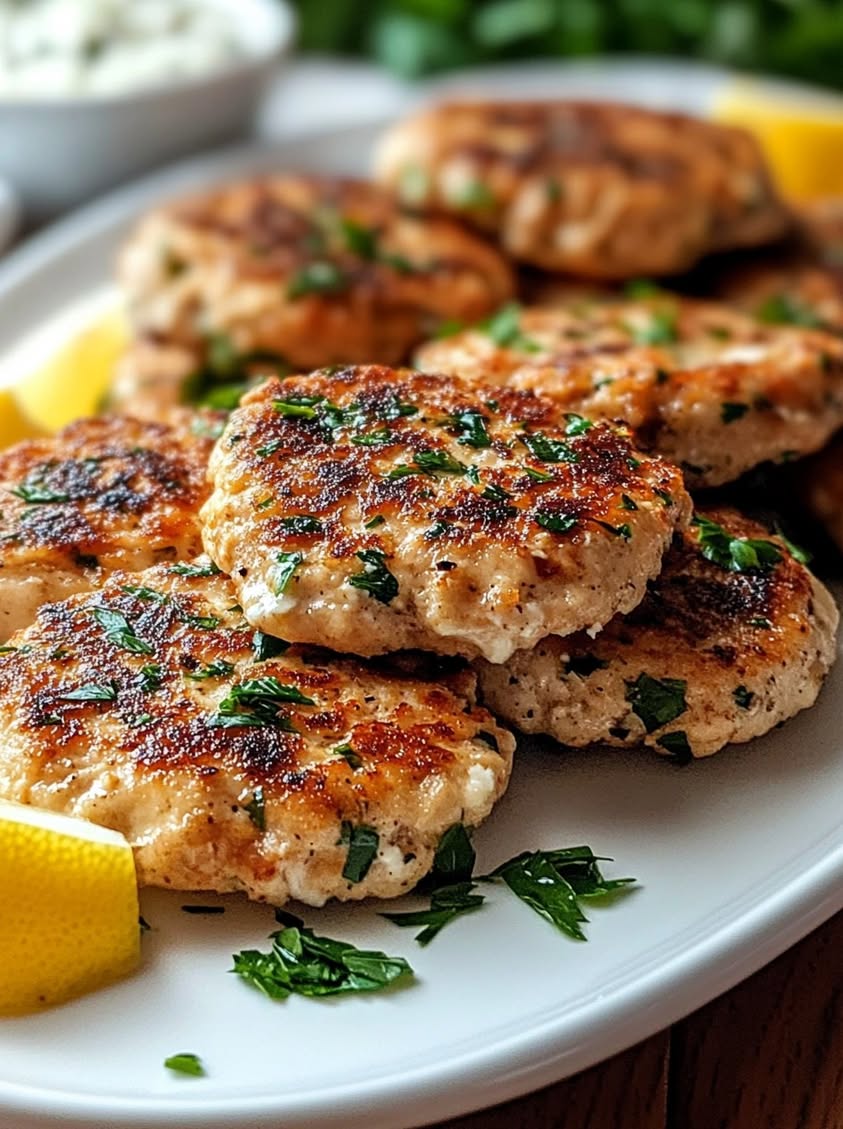
Golden Mediterranean Chicken Patties with Feta and Lemon Recipe: A Taste of the Sun-Drenched Coast
Imagine capturing the vibrant essence of a Mediterranean summer in a single, juicy bite. That is precisely the experience offered by this Golden Mediterranean Chicken Patties with Feta and Lemon Recipe. These patties are not your average chicken burger; instead, they are a flavorful celebration of fresh herbs, tangy cheese, and bright citrus. Furthermore, they cook quickly on the stovetop, delivering a golden-brown crust that gives way to a moist, incredibly flavorful interior. Consequently, this recipe transforms simple ground chicken into a gourmet weeknight meal that feels both special and effortlessly healthy.
The magic of this Golden Mediterranean Chicken Patties with Feta and Lemon Recipe lies in its harmonious blend of ingredients. Fresh dill and parsley infuse the meat with a garden-fresh aroma, while crumbled feta cheese provides creamy pockets of salty tang. Meanwhile, a generous amount of lemon zest and juice cuts through the richness, adding a necessary brightness that defines Mediterranean cuisine. Ultimately, these patties are incredibly versatile; you can serve them in a pita with tzatziki, atop a crisp salad, or simply with a side of roasted vegetables. This dish promises to transport your taste buds with minimal effort and maximum flavor.
Quick Recipe Highlights
- Flavor Profile: These patties deliver a complex yet balanced taste. You get the savory, herbal notes from fresh dill and parsley, a creamy saltiness from the feta, and a vibrant, sunny acidity from fresh lemon. The combination is simultaneously rich and refreshing.
- Texture: Expect a delightful contrast between the golden, slightly crisp exterior achieved through pan-searing and the tender, juicy interior. The crumbled feta offers soft, melty pockets that create little bursts of creamy texture throughout each bite.
- Aroma: As the patties cook, your kitchen will fill with the irresistible scent of sautéed garlic and onions mingling with the fresh, grassy notes of dill and parsley. The lemon zest adds a final top note of bright citrus that makes the entire dish smell incredibly fresh.
- Visual Appeal: These patties boast a beautiful golden-brown crust speckled with visible green herbs and white feta crumbles. Served with a wedge of lemon and perhaps a sprinkle of extra herbs, they present a colorful and appetizing plate that looks as good as it tastes.
- Skill Level Needed: This is a beginner-friendly recipe. The process involves simple mixing, shaping, and pan-frying. No advanced techniques are required, making it perfect for novice cooks or anyone seeking a quick, impressive meal.
- Special Equipment: You need only basic kitchen tools: a mixing bowl, a skillet (preferably non-stick or well-seasoned cast iron), and a spatula. A box grater or microplane for the onion and lemon zest is helpful but not strictly mandatory.
Recipe Overview
- Difficulty Level: We rate this recipe as “Easy.” The steps are straightforward: combine ingredients, form patties, and cook. There is no intricate knife work, complex sauces, or precise baking times. However, attention to mixing gently and not overcooking is key to perfect texture. Anyone comfortable with basic stovetop cooking can achieve excellent results.
- Category: This dish fits multiple meal categories beautifully. It works as a main protein for dinner, a fantastic filling for lunch wraps or pitas, or even as a protein-packed appetizer when made into smaller slider-sized patties. Its flexibility is one of its greatest strengths.
- Cuisine: The recipe draws direct inspiration from the sun-drenched coasts of Greece and the wider Eastern Mediterranean. The hallmark flavors—feta, lemon, oregano, dill, and olive oil—are classic to the region. It is a modern, home-cook friendly interpretation of traditional flavor combinations found in Greek tavernas.
- Cost: This is a very cost-effective meal. Ground chicken is typically affordable, and the fresh herbs, lemon, and aromatics are inexpensive. Feta cheese is the standout ingredient but a small block goes a long way. Overall, you can create a restaurant-quality meal for a fraction of the price.
- Season: While delicious year-round, these patties truly shine in the spring and summer. This is when fresh herbs are at their peak, and the bright, light flavors complement warmer weather perfectly. They are an ideal alternative to heavier beef burgers at a summer barbecue.
- Occasion: Perfect for busy weeknights, casual weekend lunches, or even easy entertaining. You can prepare the mixture ahead of time, then cook patties just before guests arrive. They feel special enough for company but simple enough for a regular Tuesday dinner.
Why You’ll Love This Recipe
First and foremost, the taste and texture are utterly irresistible. Each bite of these Golden Mediterranean Chicken Patties with Feta and Lemon Recipe delivers a symphony of flavors. The savory chicken acts as a perfect canvas for the salty feta and the aromatic fresh herbs. Meanwhile, the lemon zest and juice provide a crucial burst of acidity that lifts all the other ingredients, preventing the patty from feeling heavy. The contrast between the seared crust and the tender, moist interior creates a satisfying mouthfeel that keeps you coming back for more. Ultimately, this dish proves that healthy food does not have to be bland or boring.
Next, consider the sheer convenience and preparation benefits. From start to finish, you can have this meal on the table in under 30 minutes. The ingredient list is simple, with no hard-to-find items. Moreover, the process is almost foolproof: mix, shape, and cook. You can easily double the batch for meal prep, as the cooked patties reheat beautifully. This recipe is a lifesaver on those evenings when you want something delicious and wholesome but lack the time or energy for a complicated culinary project. It turns pantry staples into a gourmet experience with minimal fuss.
Furthermore, the nutritional advantages are significant. Ground chicken, especially lean ground chicken or chicken breast, is an excellent source of high-quality protein. The fresh herbs like parsley and dill are packed with antioxidants and vitamins. Using olive oil for cooking adds heart-healthy monounsaturated fats. Compared to a traditional beef burger, this option is often lower in saturated fat while being just as satisfying. You are nourishing your body with real, whole-food ingredients without any compromise on flavor, making it a win for both your palate and your well-being.
Additionally, the social and entertaining value of this dish is high. These patties are incredibly versatile for serving. You can set up a “make-your-own” pita station with tzatziki, sliced tomatoes, onions, and lettuce for a fun, interactive meal with friends or family. They are also elegant enough to serve as a main course for a dinner party, paired with a sophisticated side like lemon-herb orzo or a quinoa salad. The bright, familiar Mediterranean flavors are universally appealing, ensuring that you please a wide range of guests, from picky eaters to food enthusiasts.
Finally, the cost-effectiveness and accessibility seal the deal. You do not need expensive or exotic ingredients to create something extraordinary. Ground chicken, a lemon, an onion, some basic herbs, and a block of feta are all budget-friendly items available at any standard grocery store. This recipe demonstrates how to elevate economical ingredients through smart flavor combinations and simple technique. It is an accessible gateway to exploring Mediterranean cooking at home, proving that you do not need a passport or a fancy restaurant reservation to enjoy a taste of the Aegean coast.
Historical Background and Cultural Significance
The culinary traditions of the Mediterranean basin, particularly in Greece and Turkey, have long celebrated the combination of meat with herbs, cheese, and citrus. While the specific concept of a “chicken patty” is a modern convenience, the flavor profile is deeply rooted in history. For centuries, Mediterranean cooks have utilized what the land and sea provide: aromatic wild herbs like oregano and dill, fresh cheeses like feta and halloumi, and abundant citrus fruits. Dishes like keftedes (Greek meatballs) and various grilled meat skewers share the same foundational philosophy of enhancing simple protein with vibrant, fresh accompaniments. This recipe is a contemporary, streamlined descendant of those ancient practices.
Culturally, meals in the Mediterranean region are about more than sustenance; they are central to social life, family, and celebration. The emphasis is on fresh, seasonal ingredients shared communally. The bright, bold flavors in these chicken patties—the lemon, the herbs, the olive oil—epitomize the Mediterranean dietary pattern, which is renowned for its health benefits and delicious simplicity. This style of cooking prioritizes flavor through quality ingredients rather than heavy sauces or complicated techniques. Consequently, this dish carries with it the spirit of the Mediterranean table: wholesome, joyful, and meant to be shared.
The evolution of this specific recipe is a story of global fusion and home cooking innovation. As ground meat became more commercially available and home cooks sought quicker weeknight solutions, traditional meatball recipes naturally adapted. The idea of forming a mixture into a patty for faster, more even cooking is a logical modern twist. The inclusion of feta cheese directly in the mixture is a brilliant innovation that adds moisture and flavor from the inside out, a technique that may have roots in stuffed meat dishes but is perfectly suited for a quick-cooking patty. It represents how classic flavors evolve to fit contemporary lifestyles.
Regional variations of this concept abound, highlighting the diversity within Mediterranean cuisine. In Greece, you might find similar flavors in souvlaki or sheftalia. In Turkey, the herbs might shift to include more mint, and the patty could be served with a yogurt-based sauce. Lebanese cuisine might incorporate sumac or allspice for a different aromatic profile. Our Golden Mediterranean Chicken Patties with Feta and Lemon Recipe sits comfortably within this family, offering a accessible version that honors the core principles while being perfectly designed for the modern home kitchen. It is a delicious testament to the timeless and adaptable nature of Mediterranean cooking.
Ingredient Deep Dive
Ground Chicken: Choosing the right ground chicken is crucial for the perfect texture. A mix of dark and white meat (often labeled simply “ground chicken”) will yield the juiciest, most flavorful patties, as the dark meat contains more fat. If you prefer leaner patties, opt for ground chicken breast, but be extra careful not to overcook them. From a cultural standpoint, chicken is a versatile protein used across the Mediterranean, often marinated with herbs and citrus before grilling. Nutritionally, it’s an excellent source of lean protein, B vitamins, and selenium. For storage, use it within 1-2 days of purchase or freeze it immediately.
Feta Cheese: Authentic Greek feta is made from at least 70% sheep’s milk, often blended with goat’s milk, and stored in brine. This cheese has a Protected Designation of Origin (PDO) status in the EU, meaning true “feta” comes from specific regions in Greece. Its tangy, salty flavor and crumbly texture are irreplaceable in this recipe. Feta is a good source of calcium and protein. When selecting feta, look for blocks stored in brine for the best flavor and texture. Pre-crumbled feta often contains anti-caking agents and can be drier. For a dairy-free version, a firm, salty tofu or a vegan feta alternative can work, though the flavor profile will change.
Fresh Dill & Parsley: These herbs are the soul of the dish. Dill, with its feathery fronds and slightly anise-like flavor, is quintessential in Greek and Eastern European cooking. Parsley (preferably flat-leaf/Italian parsley for its more robust flavor) adds a fresh, clean, slightly peppery note. Together, they provide a garden-fresh aroma and taste that dried herbs cannot replicate. They are rich in vitamins A, C, and K, and antioxidants. Always choose bright green, perky bunches without wilting or yellowing. To store, wrap stems in a damp paper towel and place in a plastic bag in the refrigerator. For a twist, you could incorporate fresh mint or oregano.
Lemon (Zest & Juice): The lemon performs double duty, providing both aromatic oils from the zest and sharp acidity from the juice. This brightening effect is a hallmark of Mediterranean cuisine, cutting through the richness of the meat and cheese. Historically, lemons have been cultivated in the Mediterranean for over a thousand years. They are an excellent source of vitamin C. Always zest your lemon before juicing it, and use organic if possible since you’re consuming the outer peel. The zest contains essential oils that carry the true lemon flavor without the sourness. For storage, whole lemons last weeks in the fridge.
Yellow Onion & Garlic: These aromatics form the savory flavor base. Grating the onion (rather than dicing) integrates its flavor and moisture seamlessly into the patty mixture without creating chunks that might burn. Garlic, a staple in virtually all Mediterranean cooking, adds its pungent, earthy sweetness. Both onions and garlic contain prebiotic fibers and compounds like allicin, which have noted health benefits. Choose firm onions with dry, papery skins and firm garlic heads without sprouts. For a low-FODMAP adaptation, use only the green tops of scallions (chives) and garlic-infused oil instead of fresh garlic.
Common Mistakes to Avoid
- Overmixing the Meat: When you combine the ingredients, mix just until everything is incorporated. Overworking the ground chicken activates proteins that can make the patties tough, dense, and rubbery. Use a gentle hand or even a fork to fold the mixture together.
- Using Only Lean Chicken Breast: While you can use all breast meat, it is very lean and prone to drying out. For guaranteed juicy patties, use a ground chicken mix that includes some dark meat. The extra fat content makes a significant difference in both flavor and texture.
- Skipping the Lemon Zest: The juice is important, but the zest is where the powerful lemon aroma lives. The essential oils in the zest provide a fragrance and flavor depth that the juice alone cannot achieve. Always zest your lemon directly into the mixing bowl.
- Forming Patties That Are Too Thick: If your patties are too thick, the outside may burn before the inside is fully cooked. Aim for patties that are about 3/4-inch thick. This ensures even cooking and a nice sear without risking a raw center.
- Not Creating a Dimple: A common trick for burgers and patties is to make a slight indentation (a “dimple”) in the center of each patty with your thumb. As the meat cooks, it contracts and plumps up. The dimple prevents the patty from puffing into a ball, resulting in an even thickness.
- Crowding the Pan: Give each patty plenty of space in the skillet. If you crowd them, they will steam instead of sear, and you will not achieve that desirable golden-brown crust. Cook in batches if your pan is not large enough to accommodate all patties without touching.
- Flipping Too Often: Let the patties cook undisturbed for the first 4-5 minutes. This allows a proper crust to form. If you move them or peek too soon, they are likely to stick and tear. Patience is key for a perfect release and color.
- Overcooking: Chicken patties cook quickly. Overcooking is the fastest route to dry, chalky results. Use a meat thermometer for precision; the internal temperature should reach 165°F (74°C). Remember, they will continue to cook slightly from residual heat after being removed from the pan.
- Adding Salt to the Mixture Too Early: While you need salt, adding it directly to the ground meat and then letting the mixture sit can draw out moisture and make the patties wet. It is best to mix in the salt just before shaping and cooking, or ensure you cook the patties immediately after mixing.
- Using Cold Feta Straight from the Fridge: Very cold feta is harder to crumble evenly. Let it sit at room temperature for 10-15 minutes before adding it to the mixture. This allows for better distribution of creamy pockets throughout the patty.
Essential Techniques
Grating the Onion: Grating the onion on the large holes of a box grater is a game-changer for meatball and patty mixtures. This technique releases the onion’s juices and creates a fine pulp that integrates completely, distributing flavor evenly without leaving crunchy bits. The moisture also helps keep the patties tender. The key is to grate carefully to avoid grating your knuckles. If you find the onion too pungent, you can rinse the grated pulp in a fine-mesh strainer and squeeze out excess liquid, though this will reduce some flavor.
Proper Patty Shaping: The goal is a uniform patty that cooks evenly. Divide the mixture into equal portions (using a kitchen scale is most accurate). Gently form each portion into a ball, then flatten it into a disk about 3/4-inch thick. Use your thumb to make a shallow indentation in the center. Handle the meat as little as possible to maintain a light texture. If the mixture is too sticky, lightly dampen your hands with water or oil. This prevents the meat from sticking to your palms.
Achieving the Perfect Sear: A proper sear creates flavor through the Maillard reaction—a chemical process that browns the meat and develops complex tastes. Ensure your skillet is preheated over medium heat before adding the oil. The oil should shimmer but not smoke. Place the patties in the pan and do not move them. You should hear a steady sizzle. A good sear will naturally release the patty from the pan when it’s ready to flip. If it sticks, it needs more time to form its crust.
Knowing When They’re Done: Visual cues are helpful: the patties should be deeply golden brown on both sides, and the juices running out should be clear, not pink. However, the most reliable method is using an instant-read meat thermometer. Insert it into the side of a patty, aiming for the center. The safe internal temperature for poultry is 165°F (74°C). Remove the patties from the pan at about 160°F, as carryover cooking will raise the temperature the final few degrees while they rest.
Pro Tips for Perfect Golden Mediterranean Chicken Patties
For the ultimate flavor, let the mixed patty mixture rest in the refrigerator for 15-30 minutes before shaping. This allows the flavors to meld and the mixture to firm up, making it easier to handle and shape into neat patties.
Use a combination of olive oil and a neutral oil with a higher smoke point, like avocado oil, for pan-frying. The olive oil adds flavor, while the other oil prevents burning at medium-high heat, ensuring a perfect golden crust.
If you are making these for a crowd, keep the first batch warm by placing the cooked patties on a wire rack set over a baking sheet in a 200°F oven. This prevents the bottom from getting soggy while you finish cooking the rest.
Do not press down on the patties with your spatula while they cook. This squeezes out the precious juices and fat, leading to a drier final product. Let them cook undisturbed to retain all their moisture.
For an extra flavor boost, toast the panko breadcrumbs in a dry skillet with a pinch of dried oregano before adding them to the mixture. This deepens their nutty flavor and adds another layer of Mediterranean aroma.
If you are grilling these patties, chill the shaped patties for at least 30 minutes first. This helps them hold their shape better on the grill grates. Also, ensure the grill is clean and well-oiled to prevent sticking.
For a gluten-free version, substitute the panko breadcrumbs with an equal amount of gluten-free breadcrumbs or almond flour. The almond flour will add a subtle nuttiness that complements the other flavors beautifully.
Always let the patties rest for 3-5 minutes after cooking before serving. This allows the juices, which have been driven to the center by the heat, to redistribute throughout the patty, ensuring every bite is moist.
Variations and Adaptations
Regional Variations: To take a Turkish turn, add a teaspoon of ground cumin and a pinch of Aleppo pepper or red pepper flakes to the mixture. Serve with a garlic-yogurt sauce and sumac-dusted onions. For a more Italian-Mediterranean flair, swap the dill for fresh basil, use Pecorino Romano instead of feta, and add a pinch of red chili flakes.
Seasonal Adaptations: In the summer, incorporate finely chopped sun-dried tomatoes or roasted red peppers into the mixture for a sweet, concentrated flavor. In the fall, add a tablespoon of finely chopped rosemary and serve the patties with a side of roasted root vegetables and a pomegranate glaze.
Dietary Modifications: For a keto or low-carb version, omit the breadcrumbs entirely. The egg and the grated onion provide enough binding. You can also use crushed pork rinds or a tablespoon of coconut flour as a substitute binder. The patties will be slightly more delicate but just as tasty.
Flavor Variations: Experiment with different cheeses. Crumbled goat cheese (chèvre) offers a tangy creaminess, while halloumi, grated, will give a salty, squeaky texture that holds its shape well when cooked. For a smokier note, add a teaspoon of smoked paprika to the herb mix.
Texture Modifications: For a finer, more uniform texture, pulse the mixture a few times in a food processor after combining. For a chunkier, more rustic texture, use hand-torn bread pieces instead of panko and fold in the feta in larger crumbles. You can also add a handful of finely chopped toasted pine nuts for crunch.
Presentation Alternatives: Instead of traditional patties, form the mixture into smaller, bite-sized meatballs. Serve them as an appetizer on toothpicks with a lemon-herb dipping sauce. Alternatively, shape the mixture into oblong kofta-style logs and cook them on a grill pan for a different visual appeal.
Serving and Presentation Guide
Plating Techniques: For a restaurant-style presentation, use a swipe of tzatziki or lemon aioli across the plate as a base. Place the patty slightly off-center. Build height by leaning a warm pita wedge against it or creating a small mound of a colorful side salad, like a tomato-cucumber salad or a simple arugula mix.
Garnishing Ideas: A final flourish makes the dish pop. Always include a fresh lemon wedge for an extra squeeze. Scatter additional chopped fresh dill or parsley over the top. A light drizzle of high-quality extra virgin olive oil just before serving adds shine and richness. A few Kalamata olives or a sprinkle of crumbled feta on the plate adds color and reinforces the theme.
Traditional Accompaniments: In true Greek style, serve these patties tucked into warm, soft pita bread with sliced red onion, tomato, and a generous dollop of tzatziki sauce. A side of crispy Greek lemon potatoes or a hearty Greek salad (horiatiki) completes the meal perfectly.
Modern Serving Suggestions: For a low-carb or grain-free option, serve the patty atop a large, crisp lettuce leaf (like romaine or butter lettuce) as a “protein-style” wrap. Alternatively, slice the patty and arrange it over a nourish bowl with quinoa, roasted vegetables, hummus, and a tahini-lemon dressing.
Temperature Considerations: These patties are best served warm, straight from the pan after their brief rest. However, they are also delicious at room temperature, making them excellent for picnics or packed lunches. If serving as part of a buffet, keep them on a warming tray or covered loosely with foil to retain heat without making the crust soggy.
Portion Control Tips: One patty per person is a standard serving as a main course when paired with substantial sides. For appetizers or sliders, form the mixture into 8 smaller patties. If you are watching portions, these patties are protein-dense and satisfying; half a patty paired with a large salad can make a very filling and balanced meal.
Wine and Beverage Pairing
Wine Pairings: The bright acidity and herbal notes in these patties call for wines with similar characteristics. A crisp, dry Greek Assyrtiko is a perfect regional match, with its citrus and mineral notes cutting through the richness of the feta. A New Zealand Sauvignon Blanc, with its pronounced grapefruit and herbaceous flavors, is another fantastic choice. For red wine lovers, a light-bodied, low-tannin red like a Greek Xinomavro or a Beaujolais Villages works well served slightly chilled.
Non-Alcoholic Alternatives: Sparkling water with a squeeze of lemon or lime and a sprig of fresh mint is a refreshing and simple pairing. For something more complex, try a chilled herbal iced tea, such as mint or lemon verbena. A homemade lemonade, perhaps infused with a few basil leaves, mirrors the citrus in the dish and provides a sweet-tart balance.
Coffee/Tea Pairings: While not a typical dinner pairing, if serving these for a brunch or lunch, a medium-roast coffee with bright acidity would complement the lemon notes. A cup of mint tea after the meal is a traditional and digestive-friendly choice in many Mediterranean cultures, cleansing the palate beautifully.
Temperature Considerations: White and rosé wines should be served well-chilled, between 45-50°F. Light reds meant to be served cool should be around 55°F. Non-alcoholic sparkling drinks are best over ice. The contrast between a cool, crisp beverage and the warm, savory patty is part of the sensory pleasure.
Serving Suggestions: Always offer water alongside any other beverage. For a dinner party, consider setting out a carafe of infused water with cucumber and lemon slices. When pairing, the goal is to choose a drink that refreshes the palate between bites, not one that overpowers the delicate herbal and citrus flavors of the patty itself.
Storage and Shelf Life
Storage Methods: Allow cooked patties to cool completely to room temperature before storing. Place them in a single layer in an airtight container, separated by parchment paper if stacking is necessary. You can also store them in a zip-top bag, pressing out as much air as possible. The uncooked mixture can be stored in the refrigerator for up to 24 hours before shaping and cooking.
Temperature Requirements: Both cooked patties and uncooked mixture must be stored in the refrigerator at 40°F or below. Do not leave cooked patties at room temperature for more than 2 hours. For longer storage, freezing is the best option.
Container Recommendations: Use shallow, airtight glass or BPA-free plastic containers for refrigeration. For freezing, wrap each patty individually in plastic wrap and then place them in a heavy-duty freezer bag or a vacuum-sealed bag to prevent freezer burn.
Signs of Spoilage: Discard patties if they develop an off or sour smell, a slimy texture on the surface, or any visible mold. If the patties have been stored for longer than the recommended time, it is safer to err on the side of caution and dispose of them.
Reheating Instructions: To retain moisture, reheat patties gently. The best methods are in a 300°F oven for 10-15 minutes until warmed through, or in a covered skillet over low heat with a splash of water or broth to create steam. Avoid microwaving, as it can make the texture rubbery and dry.
Freezing Guidelines: Both uncooked and cooked patties freeze well. For uncooked, shape the patties, place them on a parchment-lined baking sheet, and flash-freeze for 1 hour. Then transfer to a freezer bag. They can be cooked from frozen; just add 2-3 minutes to the cooking time. Cooked patties can be frozen for up to 3 months. Thaw overnight in the refrigerator before reheating.
Make Ahead Strategies
Prep Timeline: You can prepare the entire mixture up to 24 hours in advance. Store it covered tightly in the refrigerator. The flavors will actually improve as they meld. Shape the patties just before you plan to cook them for the best texture. You can also shape the patties ahead and refrigerate them on a tray covered with plastic wrap for a few hours before cooking.
Storage Between Steps: If preparing the mixture ahead, keep it in a single mass in a bowl, pressed down and covered with plastic wrap directly on the surface to prevent oxidation and drying out. Do not add salt until you are ready to shape and cook, as it can draw out moisture over time.
Quality Impact Assessment: Make-ahead prep has a positive impact on flavor, as it allows the herbs and aromatics to permeate the meat. The texture may become slightly more cohesive, which can actually help the patties hold together better. There is no significant downside if stored properly for a day.
Assembly Tips: When ready to cook, take the chilled mixture from the fridge, add the salt, give it one gentle mix to incorporate, then proceed with shaping. If the mixture is very cold, let it sit at room temperature for 10 minutes to make shaping easier without over-handling.
Reheating Guidelines: For make-ahead cooked patties, follow the gentle reheating instructions above. To refresh the crust, you can give them a quick sear in a hot pan for 30 seconds per side after warming them through in the oven.
Fresh Element Additions: If you make the mixture ahead, consider adding an extra sprinkle of fresh chopped herbs to the shaped patties just before cooking. This boosts the vibrant, fresh aroma that can diminish slightly after overnight refrigeration. A final squeeze of fresh lemon juice after reheating is also essential.
Scaling Instructions
Halving the Recipe: Halving is straightforward for smaller households. Use half of every ingredient. The single egg can be tricky; beat one egg in a small bowl and use approximately half (about 2 tablespoons). The cooking time will remain roughly the same, as the patty size doesn’t change. You will simply have fewer patties to cook.
Doubling or Tripling: For a crowd, doubling or tripling works perfectly. Use a very large mixing bowl to ensure even mixing. It is best to mix in batches if tripling to avoid overworking the meat. Cook in batches to avoid overcrowding the pan, and keep cooked batches warm in a low oven as described in the pro tips.
Equipment Adjustments: When scaling up, you may need multiple large skillets or plan for more cooking batches. A large electric griddle can be a lifesaver, allowing you to cook many patties at once. Ensure you have a large enough mixing bowl and a sturdy spoon or spatula for mixing the larger quantity of ingredients.
Timing Modifications: The prep time will increase linearly as you scale up. However, the actual cook time per patty remains constant. The main time increase comes from cooking in multiple batches. Factor this in when planning a meal for guests.
Storage Considerations: If you make a large batch with the intent to freeze, use the flash-freezing method on a baking sheet before bagging. This prevents the patties from freezing together in a solid block, allowing you to pull out exactly the number you need later on.
Nutritional Deep Dive
Macro Breakdown: A typical patty from this recipe is an excellent source of high-quality protein, essential for muscle repair and satiety. The fat content comes primarily from the olive oil, the chicken (especially if using a mix with dark meat), and the feta cheese, providing a blend of monounsaturated and saturated fats. The carbohydrates are minimal, coming mainly from the small amount of breadcrumbs, onion, and herbs. This macro profile supports stable energy levels.
Micronutrient Analysis: This dish delivers a range of vitamins and minerals. The chicken provides B vitamins, particularly B6 and niacin, which support metabolism. Feta cheese is rich in calcium and phosphorus for bone health. The fresh herbs, especially parsley, are powerhouses of Vitamin K, Vitamin C, and Vitamin A. Lemon juice adds a boost of Vitamin C, while garlic and onions contain beneficial sulfur compounds.
Health Benefits: The ingredient synergy promotes several health benefits. The lean protein and healthy fats promote fullness, aiding in weight management. The antioxidants from herbs, lemon, and garlic support the immune system and reduce inflammation. The Mediterranean diet pattern, which this recipe exemplifies, is consistently linked to improved heart health, better brain function, and longevity.
Dietary Considerations: This recipe is naturally low in sugar and carbohydrates. It can be adapted to be gluten-free (with GF breadcrumbs) and is suitable for those following a Mediterranean, low-carb, or high-protein dietary approach. The sodium content is moderate, primarily from the feta; you can control this by using a lower-sodium feta or reducing the added salt.
Portion Analysis: One patty is a satisfying single serving of protein. When paired with a large salad or non-starchy vegetables, it creates a balanced, nutrient-dense meal. For those with higher caloric needs, serving two patties or adding a complex carbohydrate like a whole-grain pita or quinoa is an easy adjustment.
Weight Management Tips: These patties are a weight{“success”:true,”message”:”Recipe created successfully”,”post_id”:8246,”tasty_recipe_id”:8246,”shortcode”:” Print
Golden Mediterranean Chicken Patties with Fresh Herbs, Creamy Feta, and Bright Lemon
Description
Juicy chicken patties infused with Mediterranean flavors, packed with fresh herbs, tangy feta cheese, and zesty lemon, pan-fried to golden perfection.
Ingredients
For the Crust:
- 1 lb ground chicken
- 1/2 cup crumbled feta cheese
- 1/4 cup finely chopped fresh parsley
- 2 tbsp finely chopped fresh dill
- 1 lemon (zest and juice)
- 1/4 cup finely chopped red onion
- 2 cloves garlic, minced
- 1 large egg
- 1/4 cup breadcrumbs
- 1 tsp dried oregano
- 1/2 tsp salt
- 1/4 tsp black pepper
- 2 tbsp olive oil (for frying)
Instructions
1. Prepare the Crust:
- In a large bowl, combine ground chicken, feta, parsley, dill, lemon zest, red onion, garlic, egg, breadcrumbs, oregano, salt, and pepper. Mix gently until just combined.
- Form the mixture into 8 equal-sized patties, about 1/2-inch thick.
- Heat olive oil in a large skillet over medium heat. Add patties and cook for 5-6 minutes per side, until golden brown and cooked through (internal temperature 165°F).
- Serve patties drizzled with fresh lemon juice and optional extra herbs or a side of tzatziki.
Notes
You can customize the seasonings to taste.

I’m Billy, a classically trained culinary school graduate from The Culinary Institute of America with over 12 years in the restaurant industry and over 19 years of cooking experience.