
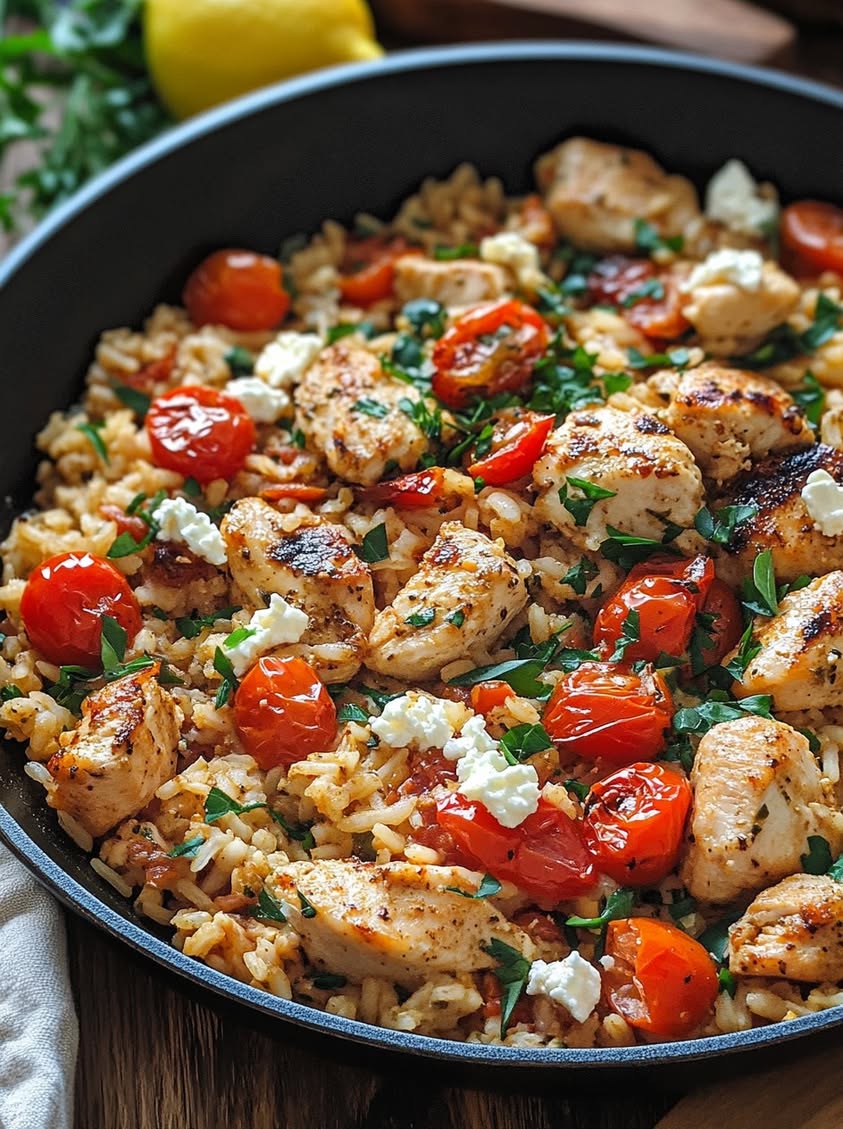
Golden Mediterranean Chicken Skillet with Fluffy Rice, Blistered Tomatoes, and Melting Feta: A One-Pan Wonder
Imagine a meal that delivers the vibrant, sun-drenched flavors of the Mediterranean coast directly to your dinner table, all from a single pan. This Golden Mediterranean Chicken Skillet with Fluffy Rice, Blistered Tomatoes, and Melting Feta is exactly that kind of culinary magic. Furthermore, it transforms simple, wholesome ingredients into a stunningly beautiful and deeply satisfying dish. The aroma alone, with its notes of garlic, oregano, and sweet tomatoes, will have your family gathering in the kitchen long before the timer dings.
This recipe is a celebration of texture and taste. You get perfectly seared, golden chicken thighs nestled into a bed of aromatic, fluffy rice. Meanwhile, cherry tomatoes blister and burst, releasing their sweet juices into the pan. Finally, a generous block of feta cheese slowly melts over the top, creating creamy, tangy pockets that tie the entire dish together. Consequently, every forkful is a harmonious blend of savory, sweet, and tangy notes, making it a guaranteed crowd-pleaser for any night of the week.
Quick Recipe Highlights
- Flavor Profile: This dish masterfully balances savory, herbal, and tangy notes. The chicken is seasoned with classic Mediterranean herbs like oregano and thyme, while the blistered tomatoes add a burst of sweetness. Ultimately, the melting feta cheese introduces a creamy, salty tang that perfectly complements the other elements.
- Texture: You will experience a wonderful contrast in every bite. The chicken skin becomes beautifully crisp, while the meat underneath stays incredibly juicy. Simultaneously, the rice cooks up light and fluffy, absorbing all the delicious pan juices. The tomatoes offer a soft, almost jammy texture, and the feta provides delightful creamy pockets.
- Aroma: As the dish cooks, your kitchen will fill with an irresistible fragrance. Key aromatic notes include the earthy scent of toasting oregano and thyme, the sweet pungency of sautéing garlic and onion, and the bright, summery smell of bursting tomatoes. It is a truly inviting sensory experience.
- Visual Appeal: This skillet meal is a feast for the eyes with its stunning color palette. You see golden-brown chicken, vibrant red and blistered tomatoes, bright green herbs, and white, creamy feta cheese all nestled together. It looks restaurant-worthy but is deceptively simple to prepare at home.
- Skill Level Needed: This is a fantastic recipe for cooks of all levels. It requires basic techniques like searing meat and sautéing aromatics. Moreover, the one-pan method simplifies the process significantly, making it an excellent choice for a busy weeknight or a relaxed weekend meal.
- Special Equipment: The only special tool you absolutely need is a large, oven-safe skillet, preferably cast iron or stainless steel. This single pan is used for searing, sautéing, and finishing the dish, which means minimal cleanup. A lid for the skillet is also helpful for steaming the rice to perfection.
Recipe Overview
- Difficulty Level: We rate this Golden Mediterranean Chicken Skillet as an easy recipe. The steps are straightforward and logical, flowing from searing the chicken to building the rice base. While it uses foundational cooking techniques, it does not require advanced skills or tricky timing. Therefore, it is very approachable for beginner and intermediate home cooks alike.
- Category: This dish is the ultimate all-in-one meal. It perfectly fits into categories like weeknight dinners, family meals, meal prep, and entertaining. It provides a complete, balanced plate with protein, carbohydrates, and vegetables, eliminating the need for multiple side dishes. Consequently, it saves both time and effort.
- Cuisine: The recipe draws clear inspiration from the sunny, health-focused culinary traditions of the Mediterranean region. It features hallmark ingredients like olive oil, garlic, oregano, tomatoes, and feta cheese. These elements are staples in Greek, Southern Italian, and other coastal cuisines, celebrated for their fresh, vibrant flavors.
- Cost: This is a very cost-effective meal to prepare. Chicken thighs are an affordable and flavorful protein choice. Similarly, pantry staples like rice, onions, and garlic are inexpensive. The splurge items, like fresh cherry tomatoes and a good block of feta, still keep the total cost per serving quite reasonable, especially compared to dining out.
- Season: This recipe shines brightest in the late summer and early fall when cherry tomatoes are at their peak sweetness and abundance. However, it is truly a versatile dish you can enjoy year-round. During colder months, it brings a much-needed taste of sunshine and warmth to the dinner table.
- Occasion: It is incredibly versatile for different occasions. It is simple enough for a casual Tuesday night dinner with the family yet impressive enough to serve to guests. You can easily double the recipe for a larger gathering. The beautiful presentation always makes it feel like a special occasion.
Why You’ll Love This Recipe
First and foremost, the taste and texture appeal of this Golden Mediterranean Chicken Skillet is undeniable. Each component is cooked to perfection, creating a symphony of flavors in your mouth. You get the savory, herby crust on the chicken, the sweet pop of tomato, the fluffy, savory rice, and the rich, tangy melt of feta. Every single bite offers a new combination, keeping your palate engaged and satisfied from start to finish. It is a dish that feels both comforting and exciting at the same time.
Next, consider the sheer convenience and preparation benefits. This is a celebrated one-pan wonder, meaning you sear, sauté, and simmer everything in a single skillet. As a result, you drastically cut down on active cooking time and, more importantly, on post-dinner cleanup. The process is streamlined and efficient. You simply build layers of flavor in the pan, let it simmer, and finish it in the oven. Therefore, you spend less time juggling pots and more time enjoying your meal or your company.
Furthermore, this dish offers notable nutritional advantages. It is built on a foundation of wholesome, real foods. Chicken thighs provide high-quality protein and essential nutrients. Likewise, the tomatoes are rich in vitamins and antioxidants. Using olive oil, a cornerstone of the Mediterranean diet, adds heart-healthy fats. The rice offers energizing carbohydrates. Altogether, it is a balanced meal that fuels your body deliciously without relying on processed ingredients.
Additionally, the social and entertaining value of this skillet meal is high. Food presented in a skillet has a rustic, communal charm that invites people to gather around. It is a visually impressive dish that tells a story of care and flavor. Serving it straight from the pan at the table creates an interactive, shareable dining experience. Guests will be delighted by the beautiful presentation and complex flavors, making you look like a culinary star with minimal stress.
Finally, the cost-effectiveness and accessibility of the ingredients make this a practical staple. You do not need rare or expensive items to create this restaurant-quality meal. Most components are pantry staples or easy to find at any grocery store. Chicken thighs are a budget-friendly cut that stays moist during cooking. Consequently, you can prepare a stunning, satisfying dinner for a family of four without straining your food budget, proving that eating well does not have to be expensive.
Historical Background and Cultural Significance
The origin story of dishes like this one is woven into the fabric of Mediterranean home cooking. While not a single, historic recipe, it embodies the principles of “cucina povera” or the cuisine of the poor, prevalent in regions like Greece and Southern Italy. This culinary philosophy is based on creating maximum flavor from simple, local, and inexpensive ingredients. Cooks would use one pot to prepare a complete meal, combining a protein with grains and seasonal vegetables. Our Golden Mediterranean Chicken Skillet is a direct descendant of this practical and delicious tradition.
The cultural importance of these one-pot meals cannot be overstated. They represent resourcefulness, family, and sharing. In many Mediterranean cultures, the midday or evening meal is a central family event. A single, substantial dish cooked in a large pot or pan is practical for feeding a family and encourages communal eating. The specific combination of chicken, tomatoes, and cheese speaks to the agricultural bounty of the region, where these ingredients have been staples for centuries, celebrated for their flavor and nutritional value.
The evolution of this recipe in modern kitchens is fascinating. Traditionally, such a dish might have been cooked slowly over a hearth or in a heavy clay pot. The modern adaptation uses a reliable oven-safe skillet on a standard stovetop and oven, making the technique accessible to everyone. The inclusion of specific ingredients like cherry tomatoes and block feta reflects contemporary availability and preferences. However, the soul of the recipe—the layering of flavors and the one-pan method—remains faithfully connected to its rustic roots.
Regional variations of this concept are abundant across the Mediterranean. In Spain, you might find a similar dish using chorizo and paprika. In Italy, it could feature cannellini beans and rosemary. A Greek version might include Kalamata olives and fresh dill. Our specific recipe with oregano, thyme, and feta leans into Greek flavor profiles. This adaptability is key to the recipe’s enduring popularity. Cooks can easily swap herbs, use different vegetables, or choose another cheese based on what is fresh and available, making it a truly versatile template for a healthy, flavorful meal.
Ingredient Deep Dive
Let us start with bone-in, skin-on chicken thighs. This cut is a hero of flavor and texture. Culturally, dark meat chicken is prized in Mediterranean cooking for its richness and ability to stay succulent during longer cooking times. Nutritionally, it provides high-quality protein, iron, and zinc. For selection, look for thighs with pink, firm flesh and skin that is not overly torn. You can store them in the coldest part of your fridge for 1-2 days before use. If you need a substitution, bone-in chicken breasts or drumsticks will work, but adjust cooking times as white meat cooks faster.
Next, consider the long-grain white rice. Rice has been a staple grain around the world for millennia. In Mediterranean regions like Greece and Turkey, rice pilafs are common. It serves as a perfect base to soak up all the delicious juices in the skillet. Nutritionally, it is a great source of energy-providing carbohydrates. When selecting rice, a standard long-grain variety like Jasmine or Basmati works perfectly for fluffy results. Store uncooked rice in a cool, dry pantry. There is no need to rinse it for this recipe, as the starch helps thicken the cooking liquid. For a whole-grain alternative, you could use brown rice, but you will need to increase the liquid and cooking time significantly.
Now, examine the cherry tomatoes. Tomatoes are a New World food that became central to Mediterranean cuisine after their introduction. Their bright acidity and sweetness are essential to the region’s flavor profile. They are packed with vitamins C and K, potassium, and the antioxidant lycopene. For the best results in this Golden Mediterranean Chicken Skillet, choose the sweetest, ripest cherry tomatoes you can find. They should be firm but give slightly to pressure. Store them at room temperature until they are perfectly ripe, then refrigerate if needed. Grape tomatoes are an excellent substitute, as they also blister beautifully and hold their shape.
Finally, the block of feta cheese is crucial. Authentic Greek feta is a PDO (Protected Designation of Origin) product made from sheep’s milk or a sheep/goat blend. It has a tangy, salty, and crumbly character. When baked, it softens beautifully without completely losing its shape. Nutritionally, feta is a good source of calcium and protein. Always choose a block of feta stored in brine for the best flavor and texture; pre-crumbled feta contains anti-caking agents and will not melt properly. If you need a dairy-free option, a firm, brined vegan cheese alternative can work, though the flavor profile will change.
Common Mistakes to Avoid
- Not patting the chicken dry. If you skip drying the chicken thighs thoroughly with paper towels, the skin will steam instead of sear. Consequently, you will miss out on that essential golden, crispy texture that adds so much flavor to the dish and the pan drippings.
- Crowding the skillet when searing. You must give the chicken pieces plenty of space in the pan. If you overcrowd them, they will release too much moisture and boil in their own juices. This prevents proper browning and results in pale, less flavorful chicken.
- Using instant or minute rice. These varieties are pre-cooked and will turn to mush with the extended simmering time required in this recipe. Always use standard long-grain white rice that requires cooking to achieve the perfect fluffy texture.
- Stirring the rice after adding the liquid. Once you add the broth and rice to the skillet and bring it to a simmer, resist the urge to stir. Stirring releases starch from the rice, making the final dish gummy and sticky instead of light and separate.
- Substituting pre-crumbled feta. Pre-crumbled feta is coated in powders to prevent clumping. These additives prevent it from melting properly into the creamy pockets you desire. For the best results, you must buy a solid block of feta and crumble it yourself or place the whole block on top.
- Overcooking the chicken. While chicken thighs are forgiving, they can still dry out if cooked for too long. Use a meat thermometer to ensure they reach a safe internal temperature of 165°F, then remove the skillet from the oven promptly to avoid overcooking.
- Using cold broth. Adding cold chicken broth to the hot skillet will drastically lower the temperature. This can interrupt the cooking process and lead to unevenly cooked rice. Always warm your broth slightly before adding it to the pan for more consistent results.
- Forgetting to season in layers. Seasoning is not a one-time event. You should season the chicken before searing, then taste and adjust the seasoning of the cooking liquid before adding the rice. This builds a foundation of flavor in every component of the dish.
Essential Techniques
Mastering the sear on the chicken is your first essential technique. A proper sear creates the Maillard reaction, which is a complex chemical process that develops hundreds of new flavor compounds. This gives the chicken its deep, savory, golden-brown crust. To achieve it, ensure your pan is hot before adding the oil, then add the dried chicken skin-side down. Do not move it for several minutes until it releases easily from the pan. The common pitfall is impatience; moving the chicken too soon will tear the skin. A visual cue for success is a crisp, uniformly brown skin that does not stick to the pan.
Next, you need to understand the pilaf method for cooking the rice. This technique involves sautéing the rice briefly in the flavorful fat and aromatics before adding liquid. Toasting the rice grains in this way coats them in fat, which helps them cook up separate and fluffy rather than clumpy. It also allows the rice to absorb the foundational flavors of garlic, onion, and herbs from the very beginning. The key is to stir the rice for just 1-2 minutes until it becomes slightly translucent at the edges. Do not let it brown. Then, add your warm broth, bring it to a simmer, cover, and let the steam do the work without peeking or stirring.
Finally, achieving perfectly blistered tomatoes is a simple but important technique. Blistering concentrates the tomatoes’ natural sugars and intensifies their flavor. The high, dry heat of the oven causes the tomato skins to burst and wrinkle while the interior softens. For success, ensure your oven is fully preheated and that the tomatoes are in a single layer on top of the rice, not buried. They need direct exposure to the oven’s heat. Do not stir them in. The visual cue is seeing the skins split and perhaps even char slightly in spots, while the tomatoes themselves collapse into a juicy, sweet state.
Pro Tips for Perfect Golden Mediterranean Chicken Skillet
Bring your chicken thighs to room temperature for about 15 minutes before cooking. This simple step helps them cook more evenly, preventing the outside from overcooking before the inside is done.
Use a mix of fresh and dried herbs. While dried oregano and thyme are perfect for seasoning the chicken and building the base, finish the dish with a handful of freshly chopped parsley or dill. The fresh herbs add a bright, vibrant note that elevates the final presentation and flavor.
Do not skip deglazing the pan. After removing the seared chicken, if there are any particularly dark bits stuck to the pan, add a splash of white wine or extra broth and scrape them up. These “fond” bits are packed with flavor and will enrich your entire dish.
Let the skillet rest for 5-10 minutes after removing it from the oven. This allows the rice to finish steaming gently and the juices in the chicken to redistribute. As a result, the rice will be fluffier and the chicken juicier when you serve it.
For extra flavor, add a strip of lemon zest to the broth as it simmers with the rice. The citrus oil will infuse the dish with a subtle, bright fragrance that complements the other Mediterranean flavors beautifully.
If your skillet is not oven-safe, you can transfer everything after the simmering step to a greased baking dish. Then, top with the tomatoes and feta and bake as directed. The results will be just as delicious.
For a richer sauce, use a combination of chicken broth and a splash of heavy cream or full-fat coconut milk when you add the liquid. This creates a more luxurious, creamy base for the rice.
Always taste your dish before serving and adjust the final seasoning. You may need an extra pinch of salt, a crack of black pepper, or a squeeze of fresh lemon juice to make all the flavors pop perfectly.
Variations and Adaptations
For regional variations, you can easily take this skillet in different culinary directions. A Spanish-inspired version might include smoked paprika, saffron threads, and chorizo slices cooked with the onions. Alternatively, an Italian twist could feature cannellini beans, rosemary, and a sprinkle of Parmesan cheese instead of feta. For a Greek island feel, add a handful of pitted Kalamata olives and some fresh dill with the parsley. These simple swaps let you travel with your taste buds using the same reliable cooking method.
Seasonal adaptations make this a year-round favorite. In spring, use tender asparagus spears cut into pieces in place of or alongside the tomatoes. During summer, capitalize on zucchini and eggplant by dicing and sautéing them with the onions. For a cozy fall version, add cubed butternut squash and swap the oregano for sage. In winter, use sun-dried tomatoes and artichoke hearts for their intense, preserved flavors that bring sunshine to darker days.
Dietary modifications are straightforward. For a gluten-free meal, ensure your chicken broth is certified gluten-free; all other main ingredients are naturally gluten-free. To make it dairy-free, omit the feta or use a high-quality vegan feta alternative. For a lower-carb or keto adaptation, replace the rice with cauliflower rice. Add the riced cauliflower in the last 5-10 minutes of cooking so it heats through but does not become mushy.
Consider flavor variations by playing with the aromatics and spices. Add a teaspoon of ground cumin and coriander for a North African flair. Include a tablespoon of harissa paste for a spicy kick. Swap the thyme for herbes de Provence for a French countryside vibe. A spoonful of tomato paste added with the garlic will deepen the tomato flavor and enrich the sauce’s color.
Texture modifications can cater to different preferences. If you love creamy rice, stir in an extra 1/4 cup of broth or cream at the end and let it sit covered for a few minutes. For more vegetable crunch, add a diced bell pepper to the onion sauté. If you prefer a thicker, stew-like consistency, dust the chicken lightly with flour before searing; the flour will help thicken the cooking liquid as it simmers.
Presentation alternatives can make the same dish feel new. Instead of one large block, crumble the feta over the top before baking for more even distribution. Serve the finished skillet with lemon wedges and a drizzle of high-quality extra virgin olive oil. For individual portions, you can divide the mixture into smaller, oven-safe dishes or cast iron pans before the baking step for a personalized touch.
Serving and Presentation Guide
Plating this dish is part of its charm. For the most dramatic effect, bring the entire skillet directly to the table. Place it on a trivet or heat-safe pad. The rustic presentation in the cooking vessel is inviting and signals a hearty, shareable meal. Provide a large serving spoon and fork so guests can help themselves. The visual of the golden chicken, blistered tomatoes, and melting feta is a centerpiece in itself.
Garnishing ideas are simple but effective. A generous scattering of freshly chopped flat-leaf parsley or dill adds a necessary pop of green color and fresh flavor. Additionally, a light drizzle of your best extra virgin olive oil just before serving enhances richness and sheen. For a bit of brightness and acidity, offer lemon wedges on the side. A final crack of black pepper over the top adds visual texture and a flavor punch.
Traditional accompaniments for a Mediterranean meal like this are light and fresh. A simple green salad with a lemony vinaigrette is perfect to balance the richness of the skillet. Alternatively, warmed pita bread or crusty baguette is ideal for scooping up every last bit of the flavorful rice and sauce. For a more substantial spread, include a bowl of tzatziki or hummus as a starter.
Modern serving suggestions might include turning leftovers into a new meal. Flake any remaining chicken and mix it with the rice and tomatoes for a fantastic lunch bowl the next day, perhaps over a bed of greens. You could also stuff the mixture into pita pockets with a dollop of yogurt sauce for a delicious handheld lunch option.
Temperature considerations are key. This dish is best served hot, straight from the oven after its brief rest. The feta should be soft and warm, and the rice should be steaming. If you need to hold it for a short time before serving, keep it covered in a warm oven. However, avoid holding it for too long, as the rice can continue to absorb moisture and become overly soft.
Portion control is easy with a one-pan meal. Typically, one chicken thigh per person is a good serving, along with a generous scoop of the rice and tomato mixture. If you are serving heartier appetites or have fewer sides, you can plan for one and a half thighs per person. The recipe scales up easily if you are feeding a larger group.
Wine and Beverage Pairing
Choosing the right wine can elevate your Golden Mediterranean Chicken Skillet experience. A crisp, acidic white wine is a classic pairing. For example, a Greek Assyrtiko or a Sauvignon Blanc cuts through the richness of the feta and complements the herbal notes. Alternatively, a light-bodied red wine like a Pinot Noir or a Greek Xinomavro works beautifully. These reds have enough acidity to balance the tomatoes but are not too tannic to overpower the chicken and creamy cheese.
For non-alcoholic alternatives, consider beverages that offer refreshment and contrast. Sparkling water with a squeeze of lemon or lime is always a winner. A homemade lemonade, perhaps infused with herbs like mint or basil, mirrors the dish’s bright flavors. Iced herbal teas, such as mint or chamomile, are also delightful and soothing companions to the meal.
While not traditional pairings for this specific dish, coffee or tea after the meal follows the Mediterranean custom of lingering at the table. A strong Greek coffee or a pot of herbal mint tea would be authentic choices to serve as a digestif after enjoying this hearty skillet. They provide a warm, comforting finish to the dining experience.
Temperature considerations for your beverages are straightforward. White wines and non-alcoholic sparklers should be served well-chilled. Light red wines are best served slightly cooler than room temperature, around 55-60°F. Iced drinks should be cold but not watered down; use large ice cubes or frozen fruit to keep them cool without excessive dilution.
Serving suggestions for your beverage pairing are simple. Pour wines into appropriate glassware to appreciate their aroma. Present non-alcoholic options in attractive pitchers or bottles with glasses. Ultimately, the goal is to choose a drink that cleanses the palate between bites and enhances the overall enjoyment of this flavorful, communal meal.
Storage and Shelf Life
Proper storage methods are essential for maintaining quality. First, allow any leftovers to cool to room temperature, but do not leave them out for more than two hours. Then, transfer the contents to an airtight container. You can store the chicken, rice, and tomatoes together. For best results, place the container in the refrigerator promptly. Properly stored, this Golden Mediterranean Chicken Skillet will keep for 3 to 4 days.
Temperature requirements are non-negotiable for safety. The danger zone for bacterial growth is between 40°F and 140°F. Therefore, you must get the leftovers into the refrigerator quickly. Do not store the entire hot skillet in the fridge, as it will raise the internal temperature of your refrigerator. Instead, portion the food into shallow containers which will cool down much faster and more evenly.
Container recommendations focus on airtight materials. Glass containers with locking lids are excellent because they do not absorb odors and are easy to clean. Alternatively, BPA-free plastic containers designed for food storage work well. If you need to separate components, you can store the chicken separately from the rice mixture, but this is not necessary. The key is a tight seal to prevent the rice from drying out and to keep other fridge odors from permeating your food.
Recognizing signs of spoilage is crucial. Before reheating, always inspect and smell your leftovers. Discard the food if you notice any off or sour odors, significant discoloration, or visible mold. If the rice has developed an unusually dry, hard, or slimy texture, it is best to err on the side of caution and throw it away. When in doubt, remember the old adage: when in doubt, throw it out.
Reheating instructions aim to restore moisture and texture. The best method is to reheat leftovers in a skillet on the stovetop over medium-low heat. Add a small splash of water or broth to the pan to create steam and prevent the rice from drying out. Cover the skillet to allow everything to heat through gently. You can also use the microwave. Place the food in a microwave-safe dish, sprinkle with a tablespoon of water, cover loosely, and heat in 60-second intervals, stirring in between, until hot throughout.
Freezing guidelines are possible but with caveats. You can freeze this dish for up to 2 months. However, be aware that the texture of the rice and tomatoes may become softer upon thawing. To freeze, portion the completely cooled mixture into freezer-safe bags or containers, removing as much air as possible. Thaw overnight in the refrigerator before reheating using the stovetop method described above, adding a bit more liquid as needed.
Make Ahead Strategies
Creating a prep timeline can turn this into a speedy weeknight meal. The day before, you can complete several steps. Chop your onion and mince your garlic, storing them together in an airtight container in the fridge. Measure out your dried herbs, rice, and broth. You can even season the chicken thighs and store them on a plate, covered, in the refrigerator. This advance work reduces your active prep time to just searing and assembling on the day of cooking.
Storage between steps is simple with proper planning. If you pre-chop vegetables, keep them chilled. Pre-measured dry ingredients can sit on the counter. For the pre-seasoned chicken, ensure it is on the bottom shelf of your fridge to prevent cross-contamination. Let the chicken sit at room temperature for about 15 minutes before you plan to cook it to take the chill off, which promotes even searing.
Assessing the quality impact of make-ahead steps is important. Pre-chopping onions and garlic has virtually no negative impact on flavor. Pre-measuring herbs and spices is also fine. Seasoning the chicken ahead of time actually allows the salt to penetrate the meat, resulting in more flavorful and juicy chicken. The only component you should not prepare ahead is the rice, as it needs to be toasted and simmered fresh for the best texture.
Assembly tips for a make-ahead approach streamline the process. When you are ready to cook, simply pull your prepped ingredients from the fridge. Heat your skillet, add oil, and sear the chicken. Then, use your pre-chopped aromatics and pre-measured herbs and rice to build the base quickly. Finally, pour in your broth and proceed with the recipe as written. The cooking process becomes a smooth, efficient assembly line.
Reheating guidelines for a fully made-ahead dish are similar to reheating leftovers. If you cook the entire skillet a day in advance, let it cool completely and store it covered in the fridge. To reheat, place the skillet (if oven-safe) in a preheated 350°F oven, covered, for 20-25 minutes, or until heated through. You may need to add a small amount of broth to the bottom to prevent drying out.
Adding fresh elements after make-ahead prep or reheating is a pro move. If you have prepped everything ahead and cooked it fresh, garnish with your fresh herbs just before serving. If you are reheating a fully cooked dish, add a new sprinkle of fresh herbs after reheating to revive the bright flavors. A fresh drizzle of olive oil and a squeeze of lemon juice just before serving can also refresh the dish perfectly.
Scaling Instructions
Halving the recipe is straightforward for smaller households. Use two chicken thighs, half of all the other ingredients, and a medium-sized skillet. The cooking times will remain largely the same, though the rice may cook a minute or two faster due to the smaller volume. Keep a close eye on the liquid absorption during the simmering stage. The result will be a perfectly portioned meal for two with perhaps a small leftover portion for lunch.
Doubling or tripling the recipe for a crowd requires some adjustments. You will need a very large, deep skillet or a wide Dutch oven to accommodate everything. Brown the chicken in batches to avoid overcrowding; do not try to sear all the chicken at once. You may need to increase the initial sauté time for the onions and garlic slightly due to the larger volume. The simmering and baking times may increase by 5-10 minutes. Check for doneness by ensuring the rice is tender and the chicken reaches 165°F internally.
Equipment adjustments are critical when scaling. For a double batch, a 12-inch skillet is the minimum size; a 14-inch is better. For a triple batch, you will likely need to use a large Dutch oven or divide the mixture between two standard skillets. If using two skillets, you may need to rotate them in the oven for even cooking. Ensure any cookware you use is oven-safe to the required temperature.
Timing modifications are minimal but important. While active prep time increases when batching chicken, the passive cooking times (simmering, baking) remain similar. The key difference is that a larger volume of food will take longer to come to a simmer on the stovetop and may need a few extra minutes in the oven to cook through. Always use a meat thermometer to check the chicken and taste a grain of rice to ensure it is fully cooked.
Storage considerations for scaled-up recipes are practical. If you are cooking for a future event, the dish stores and reheats well. For a large gathering, you can prepare it a few hours ahead and keep it warm in a low oven, covered, until serving time. For leftovers from a doubled batch, portion them into meal-sized containers for easy lunches or dinners throughout the week, following the standard refrigeration guidelines.
Nutritional Deep Dive
A macro breakdown of this Golden Mediterranean Chicken Skillet reveals a balanced meal. One serving provides a substantial amount of high-quality protein from the chicken thighs, essential for muscle repair and satiety. The rice contributes complex carbohydrates, offering sustained energy. The olive oil and the natural fats in the chicken skin and feta provide healthy fats, which are crucial for nutrient absorption and hormone health. This balance helps keep you full and satisfied for hours after eating.
The micronutrient analysis is impressive. Cherry tomatoes are rich in vitamin C, potassium, and the antioxidant lycopene, which is linked to heart health. Garlic and onions contain beneficial compounds like allicin. Oregano and thyme are packed with antioxidants. Feta cheese offers a good dose of calcium and phosphorus for bone health. The chicken provides B vitamins, particularly niacin and B6, which support metabolism and energy production.
Overall health benefits align with the principles of the Mediterranean diet, which is consistently ranked among the healthiest eating patterns in the world. This diet is associated with reduced risks of heart disease, cognitive decline, and certain cancers. This dish incorporates its key tenets: lean protein, healthy fats from olive oil, plenty of herbs, and vegetables. It is a whole-foods-based meal with minimal processing.
Dietary considerations are generally positive. The dish is naturally gluten-free if you use a certified gluten-free broth. It is high in protein and can fit into many balanced eating plans. For those monitoring sodium, you can control the salt level by using low-sodium broth and being mindful of how much you add during seasoning, as feta is inherently salty.
Portion analysis shows that one serving, with one chicken thigh and a scoop of the rice mixture, is a satisfying and appropriate meal-sized portion. It is hearty without being overly heavy. The combination of protein, fiber from the tomatoes and onions, and complex carbs provides a steady release of energy, preventing the blood sugar spikes associated with more refined meals.
Weight management tips related to this dish focus on its satiating properties. The high protein and good fat content promote feelings of fullness. To make it even lighter, you can remove the chicken skin after searing (though you will lose some flavor) or use a leaner cut like chicken breast. You can also slightly reduce the amount of rice and increase the volume of non-starchy vegetables, like adding spinach at the end.
Dietary Adaptations
For a gluten-free version, this recipe is already nearly compliant. The only ingredient to double-check is the chicken broth. Many{“success”:true,”message”:”Recipe created successfully”,”post_id”:8237,”tasty_recipe_id”:8237,”shortcode”:” Print
Golden Mediterranean Chicken Skillet with Fluffy Rice, Blistered Tomatoes, and Melting Feta
Description
A vibrant one-pan meal featuring tender chicken thighs cooked with aromatic herbs, fluffy rice, sweet blistered cherry tomatoes, and creamy feta cheese, all infused with Mediterranean flavors.
Ingredients
For the Crust:
- 4 boneless, skinless chicken thighs
- 1 cup long-grain white rice
- 2 cups chicken broth
- 1 pint cherry tomatoes
- 4 oz feta cheese, crumbled
- 1 small onion, diced
- 3 cloves garlic, minced
- 1 tsp dried oregano
- 1 tsp smoked paprika
- 2 tbsp olive oil
- Salt and black pepper to taste
- Fresh parsley for garnish
Instructions
1. Prepare the Crust:
- Season chicken thighs with salt, pepper, oregano, and smoked paprika. Heat olive oil in a large skillet over medium-high heat. Cook chicken for 5-6 minutes per side until golden brown. Remove and set aside.
- In the same skillet, add diced onion and cook until softened, about 3 minutes. Add garlic and cook for 1 minute until fragrant. Stir in rice and toast for 2 minutes.
- Pour in chicken broth, scraping up any browned bits from the bottom. Bring to a simmer, then reduce heat to low. Return chicken to the skillet, nestling it into the rice. Cover and cook for 15 minutes.
- Add cherry tomatoes to the skillet, scattering them around the chicken. Cover again and cook for 5-7 minutes until tomatoes blister and rice is tender. Remove from heat and sprinkle crumbled feta over the top. Let sit covered for 5 minutes to melt feta slightly. Garnish with fresh parsley before serving.
Notes
You can customize the seasonings to taste.

I’m Billy, a classically trained culinary school graduate from The Culinary Institute of America with over 12 years in the restaurant industry and over 19 years of cooking experience.