
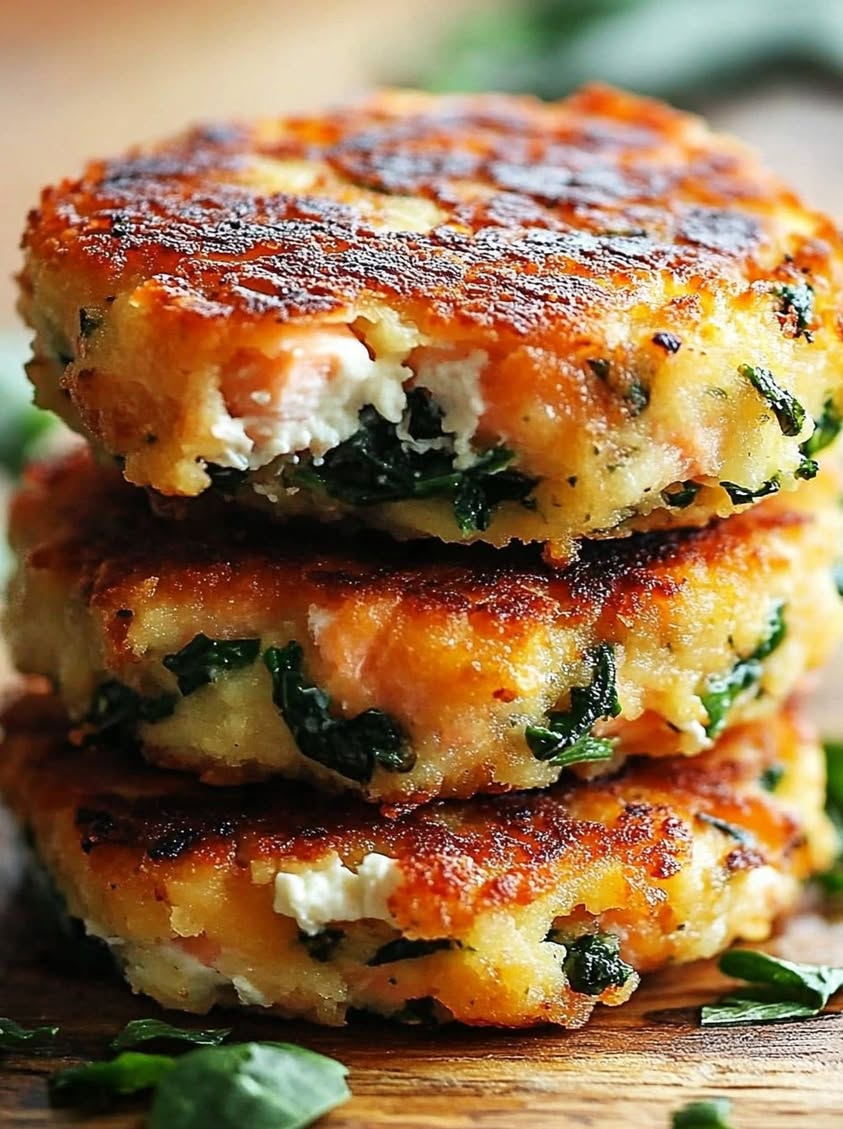
Golden Mediterranean Salmon Cakes with Spinach and Feta Sauce: A Flavorful Weeknight Wonder
Imagine a dish that perfectly captures the sunny, vibrant flavors of the Mediterranean coast, yet comes together in your kitchen in under thirty minutes. That is the magic of these Golden Mediterranean Salmon Cakes with Spinach and Feta Sauce. This recipe transforms simple, wholesome ingredients into a restaurant-worthy meal that feels both indulgent and nourishing. Each bite offers a beautiful harmony of flaky, seasoned salmon, fresh spinach, and a creamy, tangy sauce that will have everyone asking for seconds.
Furthermore, these salmon cakes are incredibly versatile. They work beautifully as a quick family dinner, an impressive appetizer for guests, or even a delicious next-day lunch. The combination of protein-rich salmon and iron-packed spinach makes this a meal that truly fuels your body. Ultimately, the golden, crispy exterior gives way to a tender, flavorful interior, creating a textural experience that is simply irresistible.
Quick Recipe Highlights
- Flavor Profile: These cakes deliver a savory, herbaceous punch from fresh dill and parsley, balanced by the briny saltiness of capers and the rich, creamy tang of the feta sauce. The lemon zest brightens every component beautifully.
- Texture: Expect a delightful contrast between the crispy, golden-brown pan-seared crust and the tender, flaky interior of the salmon cake. Meanwhile, the creamy feta sauce adds a luxurious, smooth element that coats each bite.
- Aroma: As the cakes cook, your kitchen will fill with the enticing scent of toasting panko, fresh herbs, and sautéed onion. The aroma is unmistakably fresh and savory, promising a delicious meal.
- Visual Appeal: The golden-brown patties perched on a bed of vibrant green spinach, all drizzled with a creamy white sauce, create a stunning plate. It’s a colorful dish that looks as good as it tastes.
- Skill Level Needed: This is a beginner-friendly recipe. Basic skills like chopping, mixing, and pan-frying are all you need. The process is straightforward and forgiving, making it perfect for cooks of any level.
- Special Equipment: You only need a food processor to quickly pulse the salmon and combine the cake mixture. A good non-stick or cast-iron skillet is also essential for achieving that perfect golden crust without sticking.
Recipe Overview
- Difficulty Level: We rate this recipe as easy because it uses simple techniques and common ingredients. The most complex step involves pulsing the salmon in a food processor, which is a quick and foolproof process. Additionally, the pan-frying method is standard and easy to monitor for perfect doneness.
- Category: This dish fits perfectly into the main course category for lunch or dinner. Alternatively, you can shape smaller patties to serve as a sophisticated appetizer or party hors d’oeuvre. It’s a flexible recipe that suits multiple meal contexts.
- Cuisine: The recipe draws direct inspiration from the coastal cuisines of Greece and the wider Mediterranean. Key ingredients like feta cheese, olive oil, lemon, and fresh herbs are hallmarks of this healthy, flavor-forward culinary tradition. It’s a modern take on classic flavors.
- Cost: Using canned salmon makes this a very economical seafood dish. Fresh spinach, herbs, and pantry staples like breadcrumbs and eggs keep the cost reasonable. Consequently, you get a gourmet-tasting meal without a gourmet price tag.
- Season: This is truly a year-round recipe. The bright flavors feel perfect for spring and summer, while the warm, satisfying nature of the cakes is ideal for fall and winter. It’s a versatile dish for any season.
- Occasion: Serve these for a busy weeknight family dinner, a casual weekend lunch, or even a dinner party where you want to impress without stress. They are elegant enough for guests but simple enough for any night.
Why You’ll Love This Recipe
First and foremost, the taste and texture combination is absolutely winning. The savory, herb-infused salmon cakes provide a substantial and satisfying base. Then, the creamy feta sauce introduces a cool, tangy contrast that elevates the entire dish. Each component complements the others, creating a balanced and memorable flavor profile that feels both familiar and exciting. You will find yourself savoring every single bite.
From a practical standpoint, the convenience factor is a major win. These Golden Mediterranean Salmon Cakes with Spinach and Feta Sauce come together in one bowl and cook in one pan. Cleanup is a breeze, which is a huge benefit after a long day. Moreover, you can prepare the mixture ahead of time, making the actual cooking process lightning-fast. It is the definition of a quick and easy gourmet meal.
Nutritionally, this recipe is a powerhouse. Salmon is loaded with high-quality protein and omega-3 fatty acids, which are essential for heart and brain health. Spinach adds a boost of iron, fiber, and vitamins A and C. Using whole ingredients means you are avoiding processed additives. You are essentially serving a meal that is as good for your body as it is for your taste buds.
For entertaining, these salmon cakes are a fantastic choice. They look elegant and taste sophisticated, yet they are surprisingly simple to execute. You can chat with your guests while the cakes cook, rather than being stuck with complicated last-minute steps. Serving them on a platter with the sauce drizzled over top always garners compliments and recipe requests.
Finally, this recipe is incredibly cost-effective. Canned salmon is an affordable way to enjoy the benefits of seafood regularly. The other ingredients are pantry staples or inexpensive fresh produce. You can feed a family a restaurant-quality meal for a fraction of the cost of dining out. It is a smart, delicious, and accessible recipe for any budget.
Historical Background and Cultural Significance
The concept of fish cakes appears in countless coastal cultures worldwide, from Thai tod mun pla to British fishcakes. In the Mediterranean, specifically, recipes for combining fish with herbs, bread, and binding agents date back centuries. These dishes were born from practicality, utilizing fresh catches and available staples to create filling, transportable meals for fishermen and families. The modern interpretation, like our Golden Mediterranean Salmon Cakes with Spinach and Feta Sauce, builds on this timeless tradition of making seafood both accessible and celebratory.
Culturally, dishes featuring feta cheese and olive oil are deeply rooted in Greek culinary identity. Feta, a brined curd cheese, has been produced in Greece for millennia and holds a Protected Designation of Origin status. Its inclusion transforms a simple fish cake into something distinctly Mediterranean. Similarly, the use of fresh dill, parsley, and lemon reflects the region’s emphasis on bright, garden-fresh flavors that enhance without overpowering the main ingredient.
The evolution of this recipe mirrors broader food trends toward health-conscious and globally-inspired home cooking. While traditional fish cakes might have used simpler, local bindings, the incorporation of panko breadcrumbs adds a contemporary, extra-crispy texture. The addition of spinach directly into the cake mixture also reflects a modern desire to pack more vegetables into every meal. This recipe is a beautiful fusion of old-world technique and new-world convenience.
Regional variations of this concept are endless. In the eastern Mediterranean, you might find similar patties with mint and pine nuts. Italian versions could include Parmesan and basil. The beauty of the basic formula is its adaptability. Our version, with its creamy feta sauce, leans into the iconic flavors of the Greek islands. It is a culinary postcard from the Aegean Sea, designed for your weeknight table.
Ingredient Deep Dive
Canned Salmon: A pantry superstar, canned salmon is typically wild-caught, making it a sustainable and nutrient-dense choice. It is packed with protein, calcium (if you use the soft, edible bones), and those all-important omega-3s. For the best flavor and texture in your Golden Mediterranean Salmon Cakes with Spinach and Feta Sauce, look for boneless, skinless pink or sockeye salmon packed in water. Always drain it well and flake it with a fork before using. You can substitute with an equal amount of cooked, flaked fresh salmon or even well-drained canned tuna in a pinch.
Fresh Spinach: This leafy green adds moisture, color, and a wealth of nutrients. Spinach is rich in iron, vitamins K and A, and antioxidants. When wilted and squeezed dry, it integrates seamlessly into the cake mixture without making it soggy. For the best results, use fresh baby spinach and wilt it quickly in a pan. You can also use thawed and thoroughly squeezed frozen chopped spinach. As a substitute, try Swiss chard or kale, but ensure they are finely chopped and well-drained.
Feta Cheese: Authentic Greek feta, made from sheep’s milk or a sheep/goat blend, provides a tangy, salty complexity that is irreplaceable. It is a good source of calcium and protein. For the sauce, a block feta that you crumble yourself is superior to pre-crumbled varieties, which often contain anti-caking agents. The brine it sits in helps create a creamier sauce when blended. If you need a dairy-free alternative, a firm, salted tofu blended with lemon juice and nutritional yeast can mimic the tang, though the flavor profile will differ.
Panko Breadcrumbs: These Japanese-style breadcrumbs are flakier and airier than traditional breadcrumbs, resulting in a lighter, crispier coating. They help bind the mixture while absorbing minimal moisture, keeping the interior tender. For a gluten-free version, use certified gluten-free panko or crushed gluten-free crackers. Regular breadcrumbs can be used, but the texture will be denser. Toasting the panko before adding it to the mixture, as the recipe suggests, is a pro tip that deepens the flavor and improves texture.
Common Mistakes to Avoid
- Not Draining the Salmon and Spinach Enough: Excess moisture is the enemy of a good salmon cake. If your canned salmon or wilted spinach is too wet, the mixture will be loose and the cakes may fall apart during cooking. Always take the time to press the salmon in a fine-mesh strainer and squeeze the spinach in a clean kitchen towel until it’s very dry.
- Overprocessing the Salmon: When pulsing the salmon in the food processor, you want it flaky, not pasty. A few quick pulses are all you need. Over-processing will turn the salmon into a dense, mousse-like texture, resulting in rubbery, heavy cakes. The goal is to break it down just enough to bind with the other ingredients.
- Skipping the Toasted Panko: Toasting the panko breadcrumbs before adding them to the mix is a crucial step for flavor and texture. Raw panko can taste bland and absorb too much moisture from the mixture. Toasting it in a dry pan until golden brown adds a nutty depth and helps the cakes hold their shape better.
- Using a Cold Pan or Incorrect Heat: For a perfect golden crust, your oil should be shimmering in a preheated pan over medium heat. If the pan is too cold, the cakes will soak up oil and become greasy. If it’s too hot, the outside will burn before the inside is cooked through. Medium heat allows for even, controlled browning.
- Flipping the Cakes Too Soon: Patience is key. Let the cakes cook undisturbed for the full 3-4 minutes on the first side to develop a sturdy, caramelized crust. If you try to flip them too early, they will stick and break apart. Wait until the edges look cooked and the bottom releases easily from the pan.
- Overcrowding the Pan: Cooking too many cakes at once drops the pan temperature and causes them to steam rather than sear. Cook in batches if necessary, giving each cake plenty of space. This ensures each one gets that desirable crispy, golden-brown exterior.
- Underseasoning the Mixture: Canned salmon and breadcrumbs need help in the flavor department. Do not be shy with the herbs, lemon zest, and capers. Always taste a tiny bit of the raw mixture (or cook a mini test patty) to check the seasoning before forming all the cakes.
- Not Letting the Mixture Chill: While not always mandatory, a 15-20 minute chill in the fridge after forming the patties helps them firm up and hold together during cooking. This is especially helpful if your mixture feels a bit soft after combining all ingredients.
Essential Techniques
Wilt and Wring Spinach: This technique removes water that would otherwise make your salmon cakes soggy. Simply sauté fresh spinach in a pan until it just wilts, which takes only a minute. Then, transfer it to a clean kitchen towel or paper towels and squeeze firmly until no more liquid is released. The spinach will be a compact, dry mass that incorporates beautifully into the mix without compromising texture.
Pulse, Don’t Puree: When using a food processor for the salmon, the technique is everything. Add the drained, flaked salmon and pulse in very short, one-second bursts. Check the texture after every 2-3 pulses. You are looking for a mixture that is broken down into small, pea-sized flakes, not a smooth paste. This preserves the flaky texture of the final cake.
Toast Panko for Depth: Toasting panko in a dry skillet over medium heat until golden brown is a simple step with major impact. It not only deepens the flavor with a nutty taste but also helps the breadcrumbs absorb moisture more effectively during cooking, leading to a better bind and a crisper exterior. Stir constantly to prevent burning, as it can go from golden to burnt quickly.
The Perfect Pan Sear: Achieving a golden crust requires proper heat management. Heat your oil over medium heat until it shimmers. Gently place the formed patties in the pan and do not move them. Cook for 3-4 minutes until a deep golden-brown crust forms on the bottom. The cake should release easily when you slide a spatula underneath. Flip once and cook until golden on the second side and heated through.
Pro Tips for Perfect Golden Mediterranean Salmon Cakes
Chill for Stability: If you have time, cover and refrigerate the formed patties for 20-30 minutes before cooking. This allows the breadcrumbs to fully hydrate and the mixture to firm up, minimizing the risk of breakage in the pan.
Uniform Size for Even Cooking: Use a measuring cup or an ice cream scoop to portion the mixture. This ensures all your cakes are the same size and thickness, so they cook at the same rate and are all ready simultaneously.
Test Your Seasoning: Before forming all the patties, cook a teaspoon-sized portion of the mixture in your preheated pan. Taste it and adjust the seasoning of the main batch with more salt, pepper, or lemon zest if needed.
Double-Batch for Later: This recipe freezes beautifully. Form the uncooked patties, place them on a parchment-lined baking sheet to freeze solid, then transfer to a freezer bag. Cook from frozen, adding a few extra minutes to the cooking time.
Maximize Flavor with Lemon: Do not just use the zest; serve with extra lemon wedges on the side. A fresh squeeze of lemon juice over the hot cakes and sauce right before eating brightens all the flavors dramatically.
Make the Sauce Ahead: The creamy feta sauce can be made up to two days in advance and stored in the refrigerator. The flavors actually meld and improve over time. Let it sit at room temperature for 15 minutes before serving to soften.
Variations and Adaptations
Regional Variations: For an Italian twist, replace the dill with basil, use Parmesan in the cakes, and make a sauce with ricotta and lemon. For a Nordic version, use fresh dill abundantly and serve with a mustard-dill sour cream sauce instead of feta.
Seasonal Adaptations: In spring, add finely chopped asparagus tips to the mixture. In summer, mix in fresh sweet corn kernels. For fall, incorporate roasted, mashed sweet potato for a hint of sweetness and extra moisture.
Dietary Modifications: For a gluten-free version, use certified gluten-free panko breadcrumbs. To make it dairy-free, omit the feta sauce and serve with a dairy-free tzatziki or a lemon-tahini sauce. For a lower-carb option, replace the panko with 1/4 cup of almond flour or crushed pork rinds.
Flavor Variations: Add a teaspoon of smoked paprika or Old Bay seasoning to the cake mix for a different flavor profile. For a spicy kick, mix in a finely chopped jalapeño or a pinch of red pepper flakes.
Texture Modifications: For a chunkier texture, skip the food processor and simply flake the salmon by hand with a fork, mixing it gently with the other ingredients. For an extra-crispy exterior, lightly dredge the formed patties in additional toasted panko before pan-frying.
Presentation Alternatives: Instead of patties, form the mixture into smaller, bite-sized balls and bake them for a party appetizer. Alternatively, bake the entire mixture in a greased muffin tin for perfectly portioned “salcake” muffins.
Serving and Presentation Guide
Plating Techniques: For a restaurant-style presentation, spoon a pool of the creamy feta sauce onto the center of each plate. Place a small bed of fresh baby spinach or arugula on the sauce. Then, carefully lean one or two golden salmon cakes against the greens. This creates height and visual interest.
Garnishing Ideas: A final flourish makes the dish pop. Sprinkle with extra fresh dill or parsley, a few extra capers, a drizzle of high-quality olive oil, or a sprinkle of smoked paprika for color. A thin slice of lemon perched on the side is both functional and decorative.
Traditional Accompaniments: In the Mediterranean spirit, serve with a simple Greek salad of tomato, cucumber, red onion, and olives. Orzo pasta tossed with lemon and herbs, or roasted lemon-oregano potatoes also make excellent, traditional sides.
Modern Serving Suggestions: For a low-carb plate, serve the salmon cakes over a large, colorful salad with a lemon vinaigrette. Alternatively, place them in toasted whole-wheat pita pockets with the feta sauce, spinach, and sliced tomatoes for a delicious handheld meal.
Temperature Considerations: Serve the salmon cakes hot from the pan for the best texture contrast. The feta sauce can be cool or at room temperature; the difference in temperature between the hot cake and cool sauce is delightful. Warm plates help keep everything at an ideal eating temperature longer.
Portion Control Tips: This recipe makes four generous patties as a main course. For a lighter meal or as part of a larger spread, you can easily form six smaller patties. Using a 1/3-cup measure for portioning ensures consistent size and helps with calorie management.
Wine and Beverage Pairing
Wine Pairings: The rich salmon and tangy feta call for a wine with good acidity to cut through the fat. A crisp, dry Greek Assyrtiko or a Sauvignon Blanc from New Zealand are perfect matches. Their citrus notes echo the lemon in the dish. For red wine lovers, a light-bodied, low-tannin Pinot Noir can also complement the salmon without overpowering it.
Non-Alcoholic Alternatives: Sparkling water with a squeeze of lemon or lime is a classic, refreshing choice. For something more complex, try a chilled herbal iced tea with mint and lemon verbena, or a tart pomegranate spritzer. These drinks cleanse the palate and highlight the fresh herbs in the cakes.
Coffee/Tea Pairings: While not a typical pairing for this meal, if serving for lunch, a lightly brewed iced green tea with a hint of mint would follow the Mediterranean theme. After dinner, a cup of herbal chamomile or lemon-ginger tea would be a soothing, digestif-friendly end to the meal.
Temperature Considerations: White wines and non-alcoholic spritzers should be served well-chilled, around 45-50°F. This crisp temperature provides a refreshing contrast to the warm, savory cakes. If serving a light red like Pinot Noir, a slight chill (55°F) can actually enhance its fruitiness and make it more food-friendly.
Serving Suggestions: Always offer water on the table alongside your chosen beverage. The saltiness of the capers and feta can make guests thirsty. Having a carafe of cool water with lemon slices ensures everyone stays refreshed and can fully appreciate the layered flavors of the dish.
Storage and Shelf Life
Storage Methods: Store leftover cooked salmon cakes in an airtight container in the refrigerator for up to 3 days. Keep the creamy feta sauce in a separate container. For best results, place a piece of parchment paper between cakes if stacking to prevent them from sticking together.
Temperature Requirements: Both the cakes and sauce must be refrigerated at 40°F or below. Do not leave them at room temperature for more than two hours after cooking. The dairy-based sauce is particularly perishable and should be kept cold.
Container Recommendations: Use shallow, airtight glass containers for storage. Glass does not absorb odors and allows you to see the contents easily. For the sauce, a small mason jar with a lid is perfect for shaking to recombine before serving.
Signs of Spoilage: Discard the salmon cakes or sauce if you notice an off, sour, or fishy smell, significant discoloration, or any signs of mold. The sauce may separate when cold, which is normal, but if it develops an unpleasant odor or texture, it should be thrown out.
Reheating Instructions: To retain crispiness, reheat salmon cakes in a toaster oven, air fryer, or conventional oven at 375°F for 8-10 minutes until heated through. You can also reheat them in a non-stick skillet over medium-low heat for a few minutes per side. Avoid the microwave, as it will make them soggy.
Freezing Guidelines: Freeze uncooked, formed patties for best results. Place them on a parchment-lined baking sheet until solid, then transfer to a freezer bag for up to 3 months. Cook from frozen, adding 2-3 minutes per side. Cooked cakes can also be frozen but may lose some texture upon reheating.
Make Ahead Strategies
Prep Timeline: You can prepare the entire salmon cake mixture up to 24 hours in advance. Simply mix all ingredients, cover the bowl tightly with plastic wrap, and refrigerate. The flavors will meld beautifully. Form the patties just before you are ready to cook for the best structural integrity.
Storage Between Steps: If preparing components separately, store the drained/wrung spinach and the toasted, cooled panko in separate containers in the fridge. The feta sauce can be made 2-3 days ahead. This “mise en place” approach makes final assembly on a busy night incredibly fast.
Quality Impact Assessment: Making the mixture a day ahead typically improves the flavor as the herbs and seasonings permeate the salmon. The texture may become slightly more cohesive, which can actually help the cakes hold together better during cooking. It is a win-win for taste and convenience.
Assembly Tips: If you formed the patties ahead of time, layer them between sheets of parchment or wax paper in a container before refrigerating. This prevents them from sticking together and makes it easy to remove just the number you need.
Reheating Guidelines: For make-ahead cooked cakes, let them cool completely before storing. Reheat using dry-heat methods (oven, toaster oven, air fryer) to restore crispiness. Add a fresh garnish of herbs and a new drizzle of sauce after reheating to refresh the presentation.
Fresh Element Additions: Even with make-ahead components, always add a final touch of freshness. A new sprinkle of chopped herbs, a final zest of lemon over the plated dish, or a drizzle of extra virgin olive oil just before serving wakes up all the pre-prepared flavors.
Scaling Instructions
Halving the Recipe: Halving this recipe for two people is straightforward. Use one 6-ounce can of salmon, half an egg (beat a whole egg and use half), and precisely halve all other ingredients. The cooking time may reduce by about a minute per side due to the smaller batch size. A small skillet is perfect for this.
Doubling or Tripling: For a crowd, simply multiply all ingredients. Use a very large bowl for mixing. Cook in batches to avoid overcrowding the pan, and keep finished cakes warm on a baking sheet in a 200°F oven. Consider baking a double batch: place patties on a parchment-lined baking sheet, brush with oil, and bake at 400°F for 12-15 minutes, flipping halfway.
Equipment Adjustments: When scaling up, you may need a larger food processor bowl or may need to process the salmon in batches. For very large batches, mixing by hand in a large basin is effective. Ensure you have enough skillet space or plan to use the oven-baking method.
Timing Modifications: The prep time will increase linearly when doubling or tripling. However, cooking time per batch remains the same. Factor in the time needed to cook multiple batches. Using two skillets simultaneously can drastically cut down total cook time for large quantities.
Storage Considerations: When making a large batch, have your storage containers ready. If not serving all immediately, follow the freezing instructions for uncooked patties. This allows you to enjoy the effort of a big prep session over several future meals without quality loss.
Nutritional Deep Dive
Macro Breakdown: One serving of these Golden Mediterranean Salmon Cakes with Spinach and Feta Sauce is an excellent source of high-quality protein from the salmon and egg, supporting muscle repair and satiety. The healthy fats come primarily from the salmon (omega-3s) and olive oil (monounsaturated fats). Carbohydrates are modest, coming mainly from the panko breadcrumbs and vegetables, providing energy and fiber.
Micronutrient Analysis: This dish is rich in several key micronutrients. Salmon provides Vitamin D and B12. Spinach contributes significant amounts of Vitamin K, Vitamin A (as beta-carotene), and folate. The feta cheese adds calcium and phosphorus for bone health. The lemon and herbs provide Vitamin C and various antioxidants.
Health Benefits: The combination of omega-3 fatty acids, lean protein, and leafy greens makes this a heart-healthy meal. Omega-3s help reduce inflammation and support cognitive function. The fiber from spinach aids digestion. Together, the ingredients promote sustained energy, muscle health, and overall cellular function.
Dietary Considerations: This recipe is naturally high in protein and can fit into many balanced eating plans. For those monitoring sodium, you can choose low-sodium canned salmon and rinse the capers. The dish contains dairy (feta) and gluten (from standard panko), but adaptations for these are simple, as outlined in the variations section.
Portion Analysis: One cake (a quarter of the recipe) is a satisfying main course portion. For a lighter meal, one cake with a large side salad is sufficient. The portion size provides a balanced ratio of macros, making it a complete meal that should keep you full for hours without being overly heavy.
Weight Management Tips: This is an excellent recipe for weight management due to its high protein and fiber content, which increase feelings of fullness. To reduce calories slightly, you can use an olive oil cooking spray instead of pouring oil into the pan, or bake the cakes instead of pan-frying. The sauce is flavorful but use it sparingly if watching fat intake.
Dietary Adaptations
Gluten-Free: Use certified gluten-free panko breadcrumbs. Check that your canned salmon has no gluten-containing additives. All other ingredients are naturally gluten-free. The recipe will work perfectly with this one simple swap.
Dairy-Free: Omit the feta sauce. For a creamy alternative, make a sauce by blending soaked cashews with lemon juice, water, a pinch of salt, and a teaspoon of nutritional yeast for a “cheesy” tang. Ensure the canned salmon is packed in water, not oil with dairy-based additives.
Vegan: A vegan adaptation requires more significant changes. Replace the salmon with two 15-oz cans of well-drained and mashed chickpeas or hearts of palm. Use a flax egg (1 tbsp ground flax + 3 tbsp water) instead of the egg. Follow the dairy-free sauce suggestion above. The texture will be different but still delicious.
Low-Carb/Keto: Replace the panko breadcrumbs with 1/4 cup of almond flour or crushed pork rinds (for keto). Ensure the spinach is very well-drained. The feta sauce is keto-friendly as is. This adaptation significantly reduces the net carbohydrate count per serving.
Paleo: Use almond flour instead of panko. Omit the dairy-based feta sauce and serve with a compliant avocado crema or simply with lemon wedges. Ensure your canned salmon has no unwanted additives, and use capers packed in salt or vinegar, not brine with sugar.
Low-FODMAP: This recipe can be adapted for a low-FODMAP diet. Use garlic-infused olive oil instead of sautéing fresh onion and garlic. Omit the regular onion entirely. Ensure the spinach is limited to a 1/2 cup serving (wilted) per person. Capers and feta are low-FODMAP in typical serving sizes.
Troubleshooting Guide
Texture Issues (Too Wet/Falls Apart): If your mixture is too wet, add an extra tablespoon of toasted panko. If cakes fall apart while cooking, the pan likely wasn’t hot enough, or you flipped too soon. Carefully scoop the broken mixture back into a bowl, mix in another egg or more panko to bind, let it chill for 10 minutes, and try again with a properly preheated pan.
Flavor Balance (Too Bland): Underseasoning is common. If the cooked cakes taste bland, it is easily fixed next time. Remember to season each component: salt the wilted spinach, season the salmon mixture well, and ensure your sauce has enough lemon and pepper. Serving with extra lemon wedges is a quick fix for already-cooked cakes.
Temperature Problems (Burnt Outside/Raw Inside): This indicates your heat is too high. The outside sears before the heat can penetrate. Always cook over medium heat. If cakes are browning too fast, reduce the heat slightly and cover the pan for a minute to help the interior cook through without further browning the exterior.
Equipment Challenges (Sticking to Pan): Ensure you are using a good non-stick or well-seasoned cast iron skillet. The oil must be hot before adding the cakes. If they still stick, be patient and wait for a full crust to form; they will release naturally when ready. Using a thin metal spatula helps get under the crust cleanly.
Ingredient Substitutions: If you had to make a substitution that altered the outcome, note it for next time. For example, using regular breadcrumbs instead of panko will yield a denser texture. Using fresh salmon instead of canned may require a longer cook time if the moisture content is higher. Treat the first attempt as a learning experience.
Timing Concerns (Cooking for a Crowd): To manage timing for guests, cook the salmon cakes in batches and keep them warm on a wire rack set over a baking sheet in a 250°F oven. This keeps them crispy. Make the sauce ahead and have all garnishes pre-chopped. You can then plate and serve quickly once the final batch is done.
Recipe Success Stories
We have received wonderful feedback from our community about these Golden Mediterranean Salmon Cakes with Spinach and Feta Sauce. One reader, Sarah, shared that they have become her family’s “Meatless Monday” staple, even though they contain fish, because they feel like such a light and vegetable-forward change. She loves that her kids devour the spinach hidden inside. Another home cook, Mark, told us he made them for a book club dinner and received rave reviews; he doubled the recipe and baked them on sheet pans to serve eight people effortlessly.
Many have shared their successful adaptations. A follower with a gluten intolerance used crushed gluten-free crackers with excellent results. Another used fresh grilled salmon leftovers instead of canned, pulsing it lightly for a special occasion version. The common thread in all the stories is how the recipe feels both special and approachable, a combination that is hard to beat.
Photography tips from our community are also inspiring. Several readers have noted that natural light and a simple white plate make the golden color of the cakes and the green spinach truly pop. A sprinkle of bright green fresh dill just before taking the photo adds a professional touch. The key{“success”:true,”message”:”Recipe created successfully”,”post_id”:8381,”tasty_recipe_id”:8381,”shortcode”:” Print
Golden Mediterranean Salmon Cakes with Spinach & Creamy Feta
Description
A light and flavorful dish featuring tender salmon cakes packed with fresh spinach and tangy feta, pan-fried to a golden crisp and served with a creamy sauce.
Ingredients
For the Crust:
- 1 lb fresh salmon fillet, skin removed and finely chopped
- 1 cup fresh spinach, chopped
- 1/2 cup crumbled feta cheese
- 1/4 cup breadcrumbs
- 1 large egg, beaten
- 2 tbsp fresh dill, chopped
- 1 lemon, zested and juiced
- 2 cloves garlic, minced
- Salt and black pepper to taste
- 2 tbsp olive oil for frying
- 1/4 cup Greek yogurt for serving
Instructions
1. Prepare the Crust:
- In a large bowl, combine the chopped salmon, spinach, feta, breadcrumbs, egg, dill, lemon zest, garlic, salt, and pepper. Mix gently until well combined.
- Form the mixture into 8 equal-sized patties, about 1/2-inch thick, and place them on a plate.
- Heat olive oil in a large skillet over medium heat. Add the salmon cakes and cook for 4-5 minutes per side, until golden brown and cooked through.
- While the cakes cook, mix Greek yogurt with a squeeze of lemon juice to create a creamy sauce.
- Serve the salmon cakes warm, drizzled with the creamy yogurt sauce and garnished with extra dill if desired.
Notes
You can customize the seasonings to taste.

I’m Billy, a classically trained culinary school graduate from The Culinary Institute of America with over 12 years in the restaurant industry and over 19 years of cooking experience.