
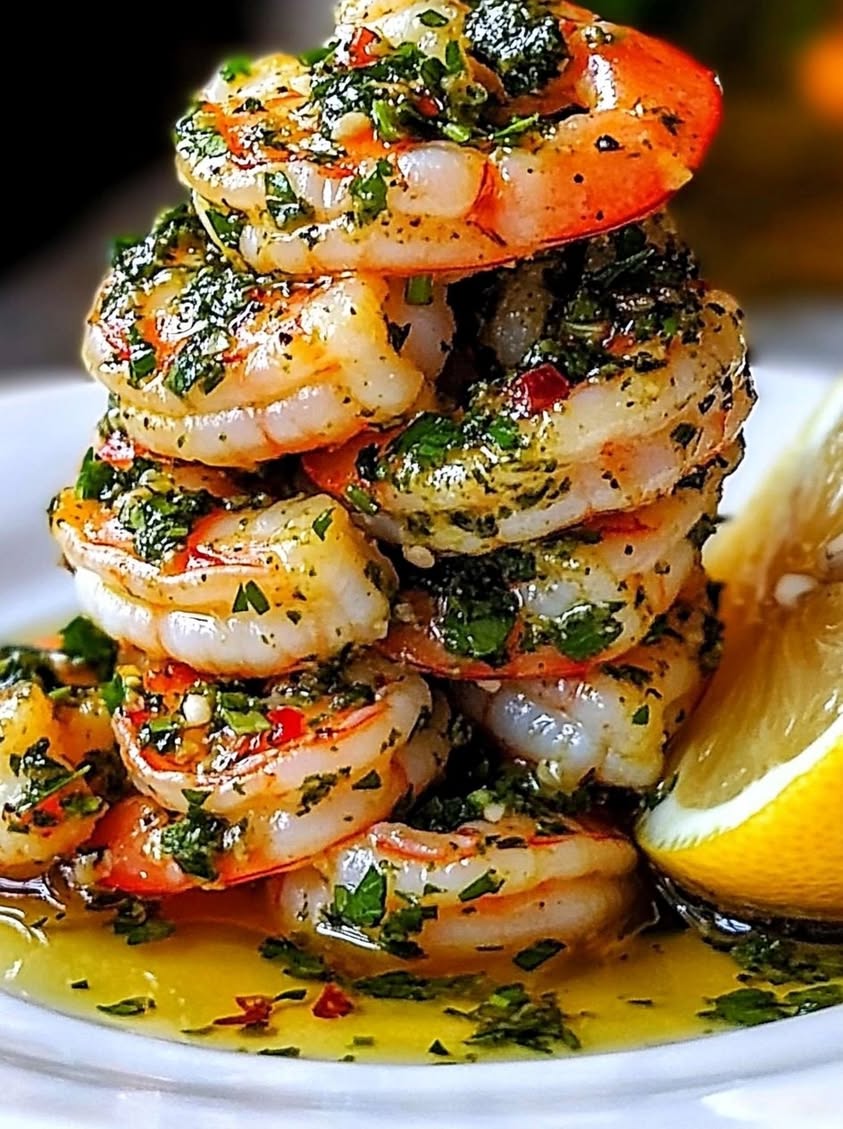
Golden Pan-Seared Shrimp with Vibrant Fresh Herb Chimichurri: A 20-Minute Flavor Explosion
Imagine a dish that delivers restaurant-quality elegance in under twenty minutes. This recipe for Golden Pan-Seared Shrimp with Vibrant Fresh Herb Chimichurri is exactly that. It transforms simple ingredients into a stunning, flavor-packed meal. The shrimp cook in a hot pan until they develop a beautiful, caramelized crust. Meanwhile, they remain incredibly juicy and tender on the inside. This perfect sear provides a wonderful textural contrast to the bright, herbaceous sauce.
The star of the show is undoubtedly the chimichurri. This vibrant green sauce bursts with the freshness of parsley and cilantro. It gets a tangy kick from red wine vinegar and a subtle warmth from garlic and red pepper flakes. When you drape this chimichurri over the hot, golden shrimp, something magical happens. The warmth of the seafood gently wilts the herbs just slightly. Consequently, it releases their incredible aroma and melds all the flavors together into one harmonious bite.
This dish is a true celebration of simplicity and high-impact flavor. It is perfect for a quick weeknight dinner that feels special. Alternatively, it makes an impressive appetizer for guests. The combination of savory, garlicky shrimp and the zesty, herbal chimichurri is simply irresistible. Ultimately, it is a foolproof recipe that will become a regular in your culinary rotation.
Quick Recipe Highlights
- Flavor Profile: This dish offers a brilliant balance of savory, tangy, and herbal notes. The shrimp are rich and slightly sweet from the sear, while the chimichurri provides a bright, acidic counterpoint with fresh herbal complexity.
- Texture: You get the perfect contrast between the crisp, golden exterior of the pan-seared shrimp and their succulent, tender interior. The chimichurri sauce adds a lively, finely chopped texture that clings beautifully to each bite.
- Aroma: As the shrimp hit the hot pan, they release a mouthwatering, savory scent. The chimichurri fills the air with the unmistakable, fresh fragrance of chopped herbs, garlic, and tangy vinegar.
- Visual Appeal: The presentation is stunning. The pink, golden-brown shrimp look gorgeous against the backdrop of vibrant emerald green sauce. A final drizzle of olive oil creates a beautiful, glossy finish.
- Skill Level Needed: This is a beginner-friendly recipe. The techniques are straightforward, involving simple chopping and basic pan-searing. Success relies more on timing and ingredient freshness than advanced culinary skill.
- Special Equipment: You only need a sharp knife and a cutting board for the sauce. For cooking, a heavy-bottomed skillet (like cast iron or stainless steel) is ideal for achieving that perfect, golden sear on the shrimp.
Recipe Overview
- Difficulty Level: We rate this recipe as “Easy” because it breaks down into two simple tasks. First, you make a no-cook sauce by chopping and mixing. Second, you cook the shrimp for just a few minutes. There are no complicated techniques or stages, making it accessible for cooks of all levels.
- Category: This dish is wonderfully versatile. It can serve as a light main course over grains or salad. Alternatively, it functions perfectly as an elegant appetizer or tapas-style dish. It also makes a fantastic protein topping for bowls or a filling for tacos.
- Cuisine: The recipe draws direct inspiration from Argentine and Uruguayan cuisine, where chimichurri is a national treasure. The method of pan-searing seafood is a global technique, resulting in a beautiful fusion that highlights fresh, high-quality ingredients.
- Cost: This is a moderately priced dish that feels luxurious. The cost is driven primarily by the quality of the shrimp and fresh herbs. Using frozen, peeled shrimp can lower the cost, while sustainably sourced wild shrimp will increase it. The remaining ingredients are pantry staples.
- Season: This recipe shines brightest in the spring and summer when fresh herbs are at their peak flavor and most affordable. However, it is truly a year-round dish because the core ingredients are always available, offering a taste of freshness even in colder months.
- Occasion: It is ideal for busy weeknights, date nights at home, casual gatherings, or potlucks. Its quick preparation and elegant presentation make it suitable for both everyday meals and special occasions where you want to impress without stress.
Why You’ll Love This Recipe
First and foremost, the taste and texture are absolutely phenomenal. Each bite delivers a satisfying crunch from the shrimp’s seared exterior, followed by a burst of juicy, sweet seafood. The chimichurri sauce then washes over your palate with its vibrant, garlicky, and tangy freshness. This combination is incredibly moreish and complex, yet it comes from remarkably simple components. You will find yourself savoring every single bite and likely sopping up every last drop of the sauce with some crusty bread.
Furthermore, the convenience factor is a major win. From start to finish, you can have this stunning dish on the table in twenty minutes. The prep work is minimal and mostly involves chopping herbs. The cooking process for the shrimp is incredibly fast. This makes it the ultimate solution for those nights when you want something delicious and impressive but are short on time and energy. It is a lifesaver for last-minute dinners.
From a nutritional standpoint, this recipe is a powerhouse. Shrimp are an excellent source of lean protein and important nutrients like selenium and iodine. The olive oil in the chimichurri provides heart-healthy monounsaturated fats. Additionally, the fresh herbs are packed with antioxidants and vitamins. This dish is naturally low in carbs and can easily fit into various healthy eating plans. It is a meal that makes you feel good both during and after eating.
For entertaining, this Golden Pan-Seared Shrimp with Vibrant Fresh Herb Chimichurri is a superstar. You can prepare the sauce ahead of time, leaving only the quick searing of the shrimp for the last moment. This means you can spend time with your guests instead of being stuck in the kitchen. The presentation is always a showstopper, eliciting compliments and making any meal feel like a special event. It is a guaranteed crowd-pleaser.
Finally, it is cost-effective and accessible. While it tastes luxurious, the ingredient list is not exotic or prohibitively expensive. You can find everything at a standard grocery store. Moreover, the recipe is forgiving and adaptable. You can adjust the level of garlic or heat to your liking, or swap herbs based on what you have. This flexibility ensures you can create a delicious meal without a special trip to the store.
Historical Background and Cultural Significance
The heart of this dish lies in the chimichurri sauce, a condiment deeply woven into the culinary fabric of Argentina and Uruguay. Interestingly, its exact origin story is shrouded in folklore. One popular tale suggests the name derives from “Jimmy’s curry,” attributed to an Irish immigrant named Jimmy McCurry who supposedly introduced a version of the sauce. Another theory points to the Basque settlers, with the name coming from “tximitxurri,” loosely meaning “a mixture of several things in no particular order.” Regardless of its true etymology, chimichurri became the essential partner to the legendary Argentine asado, or barbecue.
Chimichurri’s cultural importance cannot be overstated. In Argentina, it is not just a sauce; it is a national symbol and a non-negotiable element of grilling culture. It sits on every parrilla (grill) table, right next to the salt. It is used to baste meats while they cook and is served as a finishing sauce. The sauce represents the Argentine love for bold, fresh flavors that complement the rich, smoky taste of grilled beef. It is a point of pride, with every family often having their own cherished recipe passed down through generations.
The recipe has evolved from its traditional roots, which typically called for parsley, oregano, garlic, vinegar, oil, and chili flakes. Modern interpretations, like the one in this dish, often incorporate cilantro for an extra layer of freshness. While purists may stick to the classic, the adaptability of chimichurri is part of its enduring appeal. It has traveled far beyond South America, inspiring chefs worldwide to use it on everything from roasted vegetables to seafood, as we do here with shrimp.
Regional variations abound even within South America. In Uruguay, chimichurri might be smoother or include a touch of tomato. In other parts, you might find additions like lemon juice, bell peppers, or different types of vinegar. This global journey and adaptation highlight the sauce’s versatility. Our recipe for Golden Pan-Seared Shrimp with Vibrant Fresh Herb Chimichurri is a beautiful example of this evolution, taking a classic sauce and pairing it with a quick-cooking protein for a modern, fast, and incredibly flavorful meal that honors its rich heritage.
Ingredient Deep Dive
Large Shrimp (Prawns): Shrimp are a beloved seafood worldwide, with a history of cultivation dating back centuries in Asia. They are a fantastic source of very lean protein, providing all nine essential amino acids. Additionally, they are rich in selenium, a powerful antioxidant, and iodine, which is crucial for thyroid health. When selecting shrimp, look for firm, translucent flesh with a mild sea smell. Avoid any with black spots or a strong ammonia odor. For best results, buy frozen, peeled, and deveined shrimp; they are often frozen at sea at peak freshness. Thaw them overnight in the refrigerator or under cold running water. Pat them thoroughly dry before cooking—this is the secret to a good sear.
Fresh Parsley & Cilantro: These two herbs form the verdant base of the chimichurri. Parsley, particularly the flat-leaf (Italian) variety, has been used since Roman times both as a garnish and a digestive aid. It is rich in vitamins K, C, and A. Cilantro, also known as coriander leaf, has a more divisive flavor due to genetics but is prized in Latin American, Asian, and Middle Eastern cuisines. It is a good source of antioxidants. Choose bunches with bright, perky leaves and no signs of wilting or yellowing. Store them stem-down in a jar of water in the fridge, loosely covered with a bag. For a smoother sauce, you can use just parsley. If you dislike cilantro, simply double the parsley.
Extra Virgin Olive Oil: The backbone of the chimichurri, olive oil has a history stretching back over 6,000 years in the Mediterranean. It is the primary source of healthy monounsaturated fats in this recipe, linked to heart health. A good, fruity extra virgin olive oil will impart the best flavor. Since it is not cooked, its quality shines through directly. Look for oil in a dark glass bottle and check the harvest date for freshness. Store it in a cool, dark place. Do not substitute with a neutral oil like canola, as you will lose the characteristic flavor that defines the sauce.
Red Wine Vinegar: This vinegar provides the essential tang that balances the oil and herbs. Vinegar has been used as a preservative and flavoring agent for millennia. Red wine vinegar adds a subtle fruity complexity that white vinegar or lemon juice cannot fully replicate. It helps to mellow the raw garlic flavor over time. For the best result, use a quality brand. You can substitute with white wine vinegar or even fresh lemon juice in a pinch, though the flavor profile will shift slightly. The acid is crucial for both taste and helping to preserve the bright green color of the herbs.
Garlic & Red Pepper Flakes: Garlic adds pungent, aromatic depth and has been used for both culinary and medicinal purposes throughout history. It contains allicin, a compound with potential health benefits. Red pepper flakes provide a gentle, adjustable heat. They are made from crushed dried cayenne or other red chili peppers. Use fresh garlic cloves for the best flavor, and adjust the red pepper flakes to your heat preference. For a milder sauce, use just a pinch; for more kick, add up to a full teaspoon. You can substitute the flakes with a finely minced fresh red chili for a different kind of heat.
Common Mistakes to Avoid
- Not Drying the Shrimp: This is the number one reason shrimp steam instead of sear. Excess water on the surface creates steam, which prevents the Maillard reaction (browning). Always pat shrimp thoroughly dry with paper towels after thawing. This step is non-negotiable for achieving that perfect golden crust.
- Crowding the Pan: Adding too many shrimp to the pan at once drops the temperature dramatically. Consequently, they release liquid and boil in their own juices. Cook in a single layer with space between each piece to ensure proper searing and avoid a rubbery texture.
- Overcooking the Shrimp: Shrimp cook incredibly fast. Overcooking for even a minute can turn them from juicy and tender to tough and rubbery. They are done as soon as they turn opaque and form a loose “C” shape. Remove them from the heat immediately at this point.
- Using Dried Herbs for Chimichurri: Chimichurri is defined by its fresh, vibrant character. Dried parsley or oregano will not provide the same bright flavor or texture. They can make the sauce taste dusty and dull. Always use fresh, crisp herbs for an authentic and lively sauce.
- Not Letting the Chimichurri Rest: Mixing the sauce and using it immediately is fine, but its flavor improves dramatically with a short rest. Allowing it to sit for 15-30 minutes lets the garlic mellow and the flavors marry. This creates a more harmonious and complex sauce.
- Chopping the Herbs Too Coarsely or Blending Them: The ideal texture for chimichurri is finely chopped, not puréed. A food processor can quickly turn it into a muddy paste. Take the time to hand-chop the herbs for the best texture. A blender or processor bruises the herbs, which can lead to bitterness.
- Using Pre-Minced Jarred Garlic: The flavor of fresh garlic is far superior to the preserved, often acidic taste of jarred garlic. Fresh garlic provides a cleaner, more aromatic punch that is essential to the sauce’s character. The extra minute it takes to mince a fresh clove is worth it.
- Adding Salt to the Sauce Too Early (if making ahead): If you plan to store the chimichurri for more than a few hours, hold off on adding all the salt until just before serving. Salt can draw moisture out of the herbs over time, causing them to wilt and the sauce to become watery.
- Skipping the Deglazing Step (Optional but Recommended): After removing the shrimp, there are delicious browned bits (fond) left in the pan. Adding a splash of water or white wine and scraping them up creates a simple pan sauce. You can then stir this into the chimichurri for an extra layer of savory depth.
Essential Techniques
Patting Dry: This is the most critical technique for achieving a sear, not a steam. Surface moisture is the enemy of browning. When wet shrimp hit hot oil, the water instantly vaporizes, creating a barrier that prevents direct contact with the hot pan. By thoroughly drying each shrimp with paper towels, you ensure the surface can caramelize properly. The visual cue for success is hearing an immediate, confident sizzle when the shrimp hit the oil, not a sputtering, steamy sound.
Pan Searing: Searing uses high heat to create a flavorful, golden-brown crust through the Maillard reaction. For this, you need a preheated, heavy-bottomed skillet and a high-smoke-point oil like avocado or grapeseed. Do not move the shrimp for the first minute to allow the crust to form. The common pitfall is moving them too soon, which tears the developing crust. Success is visible when the edges turn opaque and the underside develops a golden-brown color before flipping.
Hand-Chopping Herbs: A food processor can quickly turn herbs into a bitter, bruised paste. Hand-chopping preserves the cell structure, resulting in a brighter flavor and more pleasing texture. Use a sharp chef’s knife and a rocking motion. First, strip leaves from stems, then gather them into a tight pile. Chop finely but stop before they become mushy. The goal is a fine, confetti-like consistency where each herb piece is distinct, not a purée.
Pro Tips for Perfect Golden Pan-Seared Shrimp with Vibrant Fresh Herb Chimichurri
For the ultimate crust, leave the tails on the shrimp during cooking. The tail acts as a convenient handle and, more importantly, prevents the shrimp from curling too tightly, ensuring more surface area contacts the hot pan for an even sear.
Season your shrimp generously just moments before they go into the pan. Salting too far in advance can draw out moisture, undoing your careful drying work. A quick season right before cooking is perfect.
Let your cooked shrimp rest for a minute before adding the chimichurri. This allows the juices to redistribute, ensuring they stay succulent. Draping the sauce over warm, not piping hot, shrimp also prevents the fresh herbs from wilting excessively.
If your chimichurri seems too thick, simply whisk in an extra tablespoon of warm water or olive oil. This will loosen it to a perfect drizzling consistency that clings to the shrimp beautifully.
For a deeper flavor, toast the red pepper flakes in a dry pan for 15 seconds before adding them to the sauce. This quick step unlocks their essential oils and adds a subtle, smoky dimension to the heat.
Use the residual heat of the pan after cooking the shrimp to warm your serving platter. A warm platter keeps the dish at an ideal temperature for longer once served to your guests.
If serving as an appetizer, spear each shrimp with a decorative cocktail pick after draping it with sauce. This makes for easy, elegant, and mess-free eating for your guests.
For maximum garlic flavor without sharpness, use a microplane to grate the garlic directly into the chimichurri mixture. This creates a fine paste that incorporates seamlessly and mellows quickly in the acidic vinegar.
Variations and Adaptations
Regional Variations: Explore different chimichurri styles. For a Uruguayan touch, add a finely diced roasted red pepper. An Argentine “chimichurri negro” incorporates smoked paprika. A Mexican-inspired version might use lime juice instead of vinegar and add a handful of pepitas for crunch.
Seasonal Adaptations: In summer, add finely diced ripe tomato or charred corn to the chimichurri. In fall, incorporate a teaspoon of chopped rosemary or thyme for earthiness. Winter calls for adding a pinch of citrus zest (orange or lemon) to brighten the sauce.
Dietary Modifications: For a Whole30 or Paleo version, ensure your red wine vinegar is compliant (no added sulfites). The recipe is naturally gluten-free and dairy-free. To reduce fat, slightly decrease the olive oil in the sauce and use a light spray of oil for the shrimp.
Flavor Variations: Add a teaspoon of smoked paprika to the shrimp seasoning for a smoky twist. Stir a tablespoon of capers or chopped green olives into the chimichurri for briny depth. For an Asian fusion, use rice vinegar, add ginger, and swap cilantro for mint and Thai basil.
Texture Modifications: For a creamier chimichurri, blend in a quarter of an avocado. For extra crunch, sprinkle the finished dish with toasted pine nuts or slivered almonds. You can also leave the herbs more coarsely chopped for a rustic, chunky texture.
Presentation Alternatives: Serve the shrimp stacked on a pool of chimichurri. Alternatively, toss warm quinoa or orzo with half the sauce, top with shrimp, and drizzle the remaining sauce over everything. For a deconstructed approach, serve the sauce in a small ramekin for dipping.
Serving and Presentation Guide
Plating Techniques: For a dramatic family-style presentation, arrange the golden pan-seared shrimp in a circular pattern on a large, white platter. Then, generously drizzle the vibrant fresh herb chimichurri over the top, allowing it to pool slightly in the center. Alternatively, for individual plates, create a swoosh of sauce with the back of a spoon and neatly line the shrimp on top.
Garnishing Ideas: A final flourish elevates the dish visually. A light sprinkle of flaky sea salt (like Maldon) adds sparkle and crunch. A few whole cilantro or parsley leaves provide a fresh pop of green. A final drizzle of high-quality extra virgin olive oil adds a beautiful gloss.
Traditional Accompaniments: In Argentina, this would be served with crusty bread to soak up every drop of sauce. For a complete meal, simple sides are best: a crisp green salad, roasted potatoes, or a bowl of steamed rice or quinoa to absorb the flavorful chimichurri.
Modern Serving Suggestions: Transform it into shrimp tacos by serving the shrimp and chimichurri in warm corn tortillas with a cabbage slaw. Use it as a topping for a grain bowl with avocado and black beans. Skewer the shrimp for easy appetizer serving.
Temperature Considerations: Serve the shrimp warm, not scalding hot. The chimichurri should be at room temperature. This allows the sauce’s flavors to be at their peak and prevents the herbs from cooking further when they hit the shrimp. A slightly warm platter keeps everything perfect.
Portion Control Tips: As a main course, plan for 6-8 large shrimp per person. For an appetizer, 3-4 shrimp per person is sufficient. The chimichurri recipe makes enough to generously sauce four main-course servings; you can easily stretch it for more by adding a touch more olive oil and vinegar.
Wine and Beverage Pairing
Wine Pairings: The bright acidity and herbal notes of the chimichurri call for wines with similar characteristics. A crisp, unoaked Sauvignon Blanc from New Zealand or the Loire Valley is a classic match, as its grassy notes complement the herbs. A dry Spanish Albariño, with its citrus and saline quality, also pairs beautifully with the shrimp. For a red option, choose a light-bodied, low-tannin red like a Pinot Noir or a chilled Beaujolais.
Non-Alcoholic Alternatives: Sparkling water with a squeeze of lime and a few muddled mint leaves is incredibly refreshing. A ginger beer (non-alcoholic) provides a spicy kick that stands up to the garlic and herbs. Iced hibiscus tea (agua de jamaica) offers a tart, fruity contrast that cleanses the palate.
Coffee/Tea Pairings: While not a typical pairing for this dish, if serving for a brunch or lunch, a light roast coffee with bright citrus notes would not clash. A cup of fresh mint tea after the meal can be a delightful digestif that echoes the herbal themes of the chimichurri.
Temperature Considerations: White and rosé wines should be well-chilled, around 45-50°F. Light reds, if chosen, are best served slightly cooler than room temperature, around 55°F. Non-alcoholic sparkling drinks should be served very cold to maximize refreshment alongside the savory, garlicky dish.
Serving Suggestions: Always serve wine in appropriate glassware to enhance aroma. For non-alcoholic options, use tall glasses with plenty of ice. Consider offering both a white wine and a sparkling non-alcoholic option to cater to all preferences at your table.
Storage and Shelf Life
Storage Methods: Store cooked shrimp and chimichurri separately for best results. Place cooled shrimp in an airtight container in the refrigerator. Transfer chimichurri to a jar or container with a tight-fitting lid. Pour a thin layer of olive oil over the surface of the sauce before sealing to help preserve its color.
Temperature Requirements: Both components must be refrigerated at 40°F or below. Do not leave the assembled dish at room temperature for more than two hours. The shrimp are highly perishable, and the fresh herbs in the sauce can spoil quickly if not kept cold.
Container Recommendations: Use glass or BPA-free plastic containers. For the chimichurri, a small mason jar is ideal as it creates a good seal and allows you to see the vibrant green color. Ensure the shrimp container is not overly large to minimize air exposure.
Signs of Spoilage: Discard shrimp if they develop a strong, sour, or ammonia-like odor, or if they become slimy. Chimichurri is past its prime if the herbs turn brown or black, if it develops an off smell, or if mold appears on the surface (even under the oil layer).
Reheating Instructions: Gently reheat shrimp in a skillet over low heat for just 30-60 seconds until warmed through. Avoid the microwave, as it will make them rubbery. The chimichurri should be served at room temperature; let it sit out for 15 minutes before using. Do not heat the sauce.
Freezing Guidelines: Freezing is not recommended for the assembled dish. Cooked shrimp can become watery and tough when thawed. Chimichurri can be frozen for up to 3 months, but the herbs will lose their bright texture and become soft. It’s best enjoyed fresh.
Make Ahead Strategies
Prep Timeline: You can fully prepare the chimichurri sauce up to 2 days in advance. In fact, its flavor improves. Prep the shrimp up to a day ahead by thawing (if frozen), peeling, deveining, and patting them dry. Store them on a paper towel-lined plate, covered, in the fridge.
Storage Between Steps: Keep the prepared sauce in a sealed jar in the refrigerator. Store the dried, ready-to-cook shrimp in a single layer on a plate covered with plastic wrap in the fridge. Bring the sauce to room temperature for 30 minutes before serving.
Quality Impact Assessment: Making the sauce ahead has a positive impact, allowing flavors to meld. Prepping the shrimp saves time but has no negative impact if they are dried well and kept cold. The only “last-minute” task is the 5-minute sear, preserving optimal texture.
Assembly Tips: When ready to serve, sear the shrimp. Let them rest for one minute on your serving platter. Then, give the room-temperature chimichurri a good stir to recombine the oil and vinegar. Drizzle it generously over the warm shrimp just before taking the dish to the table.
Reheating Guidelines: Only the shrimp need reheating if prepared ahead and chilled. Use the skillet method mentioned above for best results. The sauce should never be reheated. If you made a large batch of shrimp, reheat them in batches to avoid overcrowding the pan.
Fresh Element Additions: If you made the chimichurri more than a day ahead, you can stir in a small handful of freshly chopped herbs right before serving. This revives the visual brightness and adds a pop of fresh aroma that might have diminished during storage.
Scaling Instructions
Halving the Recipe: Halving is straightforward for a meal for two. Use half of all ingredients. The cook time for the shrimp will remain roughly the same, as you still need a hot pan for searing, but you may use a smaller skillet. The sauce will be easier to mix in a small bowl.
Doubling or Tripling: For a crowd, you can easily double or triple the recipe. The key is to cook the shrimp in multiple batches to avoid crowding the pan. You may need to wipe the pan clean and add fresh oil between batches. Mix the chimichurri in a large bowl.
Equipment Adjustments: When scaling up, ensure you have a large enough bowl for the sauce. For cooking, have two skillets going simultaneously to speed up the process, or plan to cook in sequential batches and keep cooked shrimp warm in a low oven (200°F) on a rack.
Timing Modifications: The sauce prep time scales linearly. The shrimp cooking time does not; it is determined by batch size. For a double batch, plan for two 5-minute cooking sessions, plus a minute or two for the pan to reheat between batches. Factor this into your serving timeline.
Storage Considerations: A larger batch of chimichurri will keep just as well. Ensure it’s stored in a properly sized container. Leftover cooked shrimp from a scaled-up batch should be cooled quickly and stored within two hours of cooking for food safety.
Nutritional Deep Dive
Macro Breakdown: This dish is an excellent source of high-quality, lean protein from the shrimp, which is essential for muscle repair and satiety. The majority of the fat comes from the heart-healthy monounsaturated fats in the olive oil. Carbohydrates are minimal, coming primarily from the small amounts in the herbs and garlic, making this a naturally low-carb meal.
Micronutrient Analysis: Shrimp provide a significant amount of selenium, a powerful antioxidant, and iodine for thyroid function. The fresh parsley and cilantro are rich in vitamins K, C, and A, as well as folate. Garlic contributes manganese and vitamin B6. Olive oil is a source of vitamin E.
Health Benefits: The combination of lean protein and healthy fats promotes stable energy levels. The antioxidants in the herbs and shrimp combat oxidative stress. The anti-inflammatory properties of olive oil and garlic, combined with the low glycemic load, make this a supportive meal for heart health and overall wellness.
Dietary Considerations: This recipe is naturally gluten-free, dairy-free, egg-free, nut-free, and soy-free. It is suitable for Paleo and Whole30 diets (check vinegar compliance). It is low in carbohydrates, fitting for keto or low-carb plans, though those on strict keto should note the small carb count from herbs.
Portion Analysis: A serving (about 6-8 shrimp with sauce) is satisfying without being overly heavy. The protein and fat provide lasting fullness. It’s a meal that aligns with balanced plate principles, especially when served with a side of vegetables and a complex carbohydrate like quinoa or sweet potato.
Weight Management Tips: This is an excellent choice for weight management due to its high protein and moderate healthy fat content, which promote satiety. To further reduce calories, you can slightly decrease the amount of olive oil in the chimichurri or use a light spray of oil for the shrimp.
Dietary Adaptations
Gluten-free: This recipe is naturally gluten-free as written. Simply ensure that any added sides or accompaniments (like bread for serving) are also gluten-free. Always check labels on your red wine vinegar to confirm no gluten-containing additives were used, though this is rare.
Dairy-free: The recipe contains no dairy ingredients. It is safe for those with lactose intolerance or a dairy allergy. The richness comes solely from olive oil, making it a great option for a creamy-tasting sauce without any cream.
Vegan: To make a vegan version, replace the shrimp with a plant-based protein. Excellent options include thick slices of pan-seared king oyster mushroom “scallops,” crispy tofu cubes, or cooked chickpeas. The chimichurri sauce remains exactly the same, creating a vibrant, herbaceous topping.
Low-carb & Keto: This dish is perfectly suited for low-carb and keto diets. Shrimp are virtually zero-carb, and the herbs add minimal carbohydrates. To keep it strictly keto, just be mindful of your portion of sauce, as the herbs do contain some carbs. It fits easily into daily macros.
Paleo & Whole30: The recipe is Paleo and Whole30 compliant as long as you ensure your red wine vinegar contains no added sugar or sulfites (many brands are compliant—check labels). All other ingredients are whole, unprocessed foods that fit within these dietary frameworks.
Low-FODMAP: For a Low-FODMAP adaptation, replace the garlic with garlic-infused olive oil (use the oil in the sauce). Limit the serving of shrimp to the Monash-recommended portion. The herbs are generally low-FODMAP in typical serving sizes. This makes the dish suitable for those with IBS or similar sensitivities.
Troubleshooting Guide
Shrimp Sticking to the Pan: Sticking usually means the pan wasn’t hot enough or the shrimp were moved too soon. Ensure your skillet is properly preheated over medium-high heat before adding oil. Wait for the oil to shimmer. Once you add the shrimp, let them cook undisturbed for at least 60 seconds to form a crust that will release naturally.
Sauce is Too Acidic or Vinegary: If your chimichurri tastes too sharp, balance it by whisking in more extra virgin olive oil, one tablespoon at a time. You can also add a tiny pinch of sugar or honey (not for Whole30) to round out the acidity. Next time, start with less vinegar and add to taste.
Shrimp Turned Out Rubbery: Rubbery shrimp are a classic sign of overcooking. Remember, shrimp cook in just 2-3 minutes total. They are done as soon as they turn{“success”:true,”message”:”Recipe created successfully”,”post_id”:8552,”tasty_recipe_id”:8552,”shortcode”:” Print
Golden Pan-Seared Shrimp Draped in Fresh Herb Chimichurri
Description
Juicy shrimp seared to golden perfection and served with a vibrant, tangy chimichurri sauce made from fresh herbs, garlic, and olive oil.
Ingredients
For the Crust:
- 1 lb large shrimp, peeled and deveined
- 2 tbsp olive oil
- 1 tsp smoked paprika
- 1/2 tsp salt
- 1/4 tsp black pepper
- 1 cup fresh parsley, finely chopped
- 1/2 cup fresh cilantro, finely chopped
- 3 cloves garlic, minced
- 1/4 cup red wine vinegar
- 1/2 cup extra virgin olive oil
- 1/2 tsp red pepper flakes
- 1/4 tsp salt
Instructions
1. Prepare the Crust:
- In a bowl, combine shrimp with 1 tbsp olive oil, smoked paprika, salt, and black pepper. Toss to coat evenly.
- Heat remaining 1 tbsp olive oil in a large skillet over medium-high heat. Add shrimp in a single layer and cook for 2-3 minutes per side until golden and opaque. Remove from heat.
- In another bowl, mix parsley, cilantro, garlic, red wine vinegar, extra virgin olive oil, red pepper flakes, and salt to make the chimichurri sauce.
- Arrange shrimp on a serving plate and drizzle generously with chimichurri sauce.
- Serve immediately with extra chimichurri on the side.
Notes
You can customize the seasonings to taste.

I’m Billy, a classically trained culinary school graduate from The Culinary Institute of America with over 12 years in the restaurant industry and over 19 years of cooking experience.