
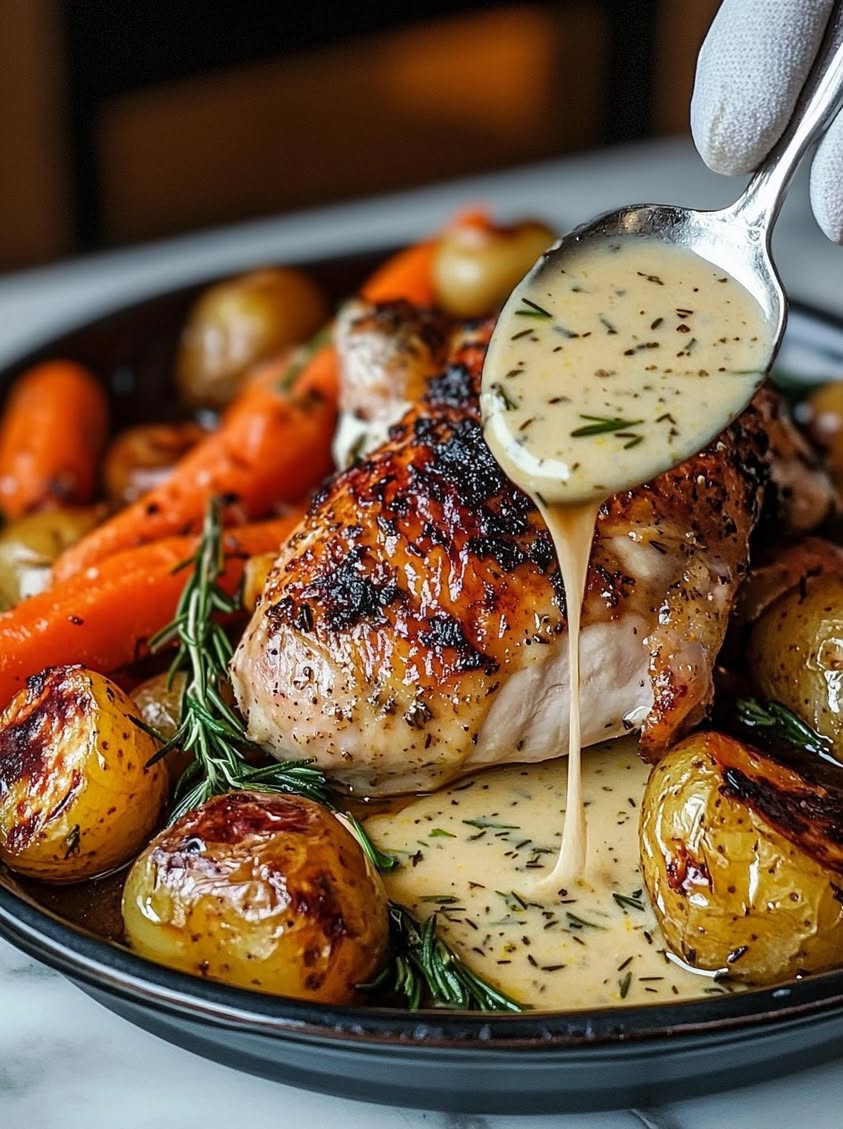
Golden Rosemary-Lemon Roast Chicken with Creamy Herb Drizzle: A Crispy, Juicy Masterpiece
Imagine pulling a perfectly golden roast chicken from your oven, its skin crackling and its aroma filling your kitchen with the scents of lemon and rosemary. This Golden Rosemary-Lemon Roast Chicken with Creamy Herb Drizzle is that dream meal made real. It transforms simple, wholesome ingredients into a show-stopping centerpiece that feels both rustic and elegant. Ultimately, this recipe delivers juicy, flavorful meat and crispy skin every single time, thanks to a few key techniques.
The magic of this dish lies in its beautiful balance. Bright, citrusy lemon cuts through the richness of the chicken, while earthy rosemary provides a fragrant, piney backbone. Meanwhile, the creamy herb drizzle adds a cool, tangy finish that ties every element together. This Golden Rosemary-Lemon Roast Chicken is more than just dinner; it’s a comforting experience. It’s perfect for a cozy family Sunday supper, yet impressive enough for a dinner party with friends.
Furthermore, mastering a great roast chicken is a foundational skill for any home cook. This version, with its straightforward method and incredible payoff, builds confidence in the kitchen. You will learn how to achieve that coveted crispy skin and how to make a pan sauce that amplifies every flavor. Let’s walk through how to create this timeless, delicious Golden Rosemary-Lemon Roast Chicken with Creamy Herb Drizzle.
Quick Recipe Highlights
- Flavor Profile: This Golden Rosemary-Lemon Roast Chicken boasts a vibrant, herby-citrus flavor. The lemon permeates the meat with brightness, while the rosemary offers a warm, woodsy note. Additionally, the creamy drizzle introduces a fresh, garlicky tang that complements the savory chicken perfectly.
- Texture: Expect the ultimate contrast in textures. The skin roasts to a shatteringly crisp, golden-brown finish. Conversely, the meat underneath remains incredibly juicy and tender. The creamy drizzle then adds a smooth, velvety component that coats each bite.
- Aroma: As it roasts, the chicken fills your home with an irresistible fragrance. First, you’ll smell the savory notes of roasting poultry and garlic. Then, the bright, clean scent of lemon and the earthy, pine-like aroma of rosemary will take over.
- Visual Appeal: The presentation is stunning. The chicken emerges from the oven with a deep, golden-brown, crispy skin. Fresh lemon slices and rosemary sprigs caramelize on top, creating a beautiful, rustic look. Finally, a generous drizzle of the vibrant green sauce adds a pop of color.
- Skill Level Needed: This is an accessible recipe for most skill levels. It requires basic knife work for chopping herbs and simple roasting techniques. Importantly, patience is the main skill needed to let the chicken cook undisturbed for perfect results.
- Special Equipment: You only need a few key tools. A reliable roasting pan or large oven-safe skillet is essential. Additionally, a digital meat thermometer guarantees perfectly cooked, juicy meat every time. Finally, a small blender or food processor makes the creamy drizzle silky smooth.
Recipe Overview
- Difficulty Level: We rate this Golden Rosemary-Lemon Roast Chicken as “Easy.” The steps are simple and sequential, with no complicated techniques. However, achieving perfection requires attention to a few details, like properly drying the skin and using a thermometer. Overall, it’s a fantastic recipe for beginners to learn foundational roasting skills.
- Category: This dish firmly sits in the “Main Course” category. It’s a protein-centric, hearty meal that serves as the star of the dinner table. Furthermore, it fits into “Comfort Food” and “Sunday Dinner” categories, offering a sense of tradition and home-cooked warmth.
- Cuisine: The recipe draws inspiration from rustic Mediterranean and American farmhouse cuisines. The combination of lemon, rosemary, and garlic is classic in Italian and Provençal cooking. Meanwhile, the concept of a simple, herb-roasted whole chicken is a cornerstone of American home cooking.
- Cost: This is a cost-effective meal, especially when feeding a family. A whole chicken is typically one of the most affordable protein options per serving. The fresh herbs, lemon, and dairy for the drizzle are inexpensive pantry staples. Consequently, you can create a restaurant-quality meal for a fraction of the price.
- Season: While delicious year-round, this Golden Rosemary-Lemon Roast Chicken truly shines in the spring and summer. The bright lemon and fresh herbs mirror the season’s flavors. Conversely, it also brings a welcome burst of freshness to colder fall and winter months.
- Occasion: It’s incredibly versatile for any occasion. It’s ideal for a low-key family dinner or a weekly meal prep strategy. Simultaneously, it’s elegant enough for holiday gatherings like Easter or a special birthday dinner. It’s a universally appealing centerpiece.
Why You’ll Love This Recipe
First and foremost, the taste and texture combination is utterly irresistible. Each bite of this Golden Rosemary-Lemon Roast Chicken offers a symphony of sensations. You get the initial crunch of the perfectly salted, crispy skin, followed by the burst of juicy, lemon-infused meat. The creamy herb drizzle then swoops in, adding a cool, tangy contrast that makes the savory flavors pop. This interplay keeps every mouthful interesting and deeply satisfying from the first slice to the last.
From a convenience standpoint, this recipe is a home cook’s dream. The active prep time is surprisingly short—just about 15 minutes of hands-on work. After that, the oven does the heavy lifting, freeing you up to prepare sides or simply relax. Moreover, the ingredients are simple and easy to find at any grocery store. You don’t need any obscure items; just fresh chicken, a lemon, some herbs, and basic pantry staples. This accessibility makes it a reliable go-to recipe.
Nutritionally, this Golden Rosemary-Lemon Roast Chicken is a wholesome choice. Chicken is an excellent source of lean protein, essential for muscle repair and keeping you full. Cooking it with healthy fats like olive oil and loading it with fresh herbs and lemon adds antioxidants and vitamins without empty calories. By making the creamy drizzle with Greek yogurt, you add a probiotic boost and extra protein, creating a more balanced and gut-friendly sauce.
For entertaining, this dish is a true superstar. A whole roast chicken presented on a platter has undeniable visual drama and a welcoming, communal feel. It tells your guests you cared enough to prepare something special. The aroma alone builds anticipation. Plus, it’s easy to scale up if needed; you can roast two chickens side-by-side for a larger crowd. It fosters a shared dining experience that’s both impressive and comforting.
Finally, the cost-effectiveness and accessibility are major wins. A whole chicken is one of the most economical ways to buy quality protein. This recipe stretches that budget-friendly ingredient into a magnificent meal that feels luxurious. You likely have many of the seasoning ingredients already. Therefore, this Golden Rosemary-Lemon Roast Chicken allows you to create a beautiful, nourishing meal without straining your grocery budget, proving that eating well doesn’t have to be expensive.
Historical Background and Cultural Significance
The tradition of roasting a whole bird over a fire is as old as cooking itself. However, the specific combination of lemon and rosemary with chicken has deep roots in the culinary traditions of the Mediterranean basin. In Italy, “pollo al limone” is a classic, celebrating the abundant citrus groves of the south. Similarly, in the Provence region of France, “poulet rôti aux herbes de Provence” almost always includes rosemary, a hardy native shrub. Our Golden Rosemary-Lemon Roast Chicken is a direct descendant of these sunny, rustic dishes.
Culturally, a roast chicken holds a place of honor as a symbol of home, family, and nourishment across many societies. In America, it became a Sunday dinner staple in the mid-20th century, representing a time for families to gather. The act of preparing and sharing a whole bird is inherently communal. This Golden Rosemary-Lemon Roast Chicken carries that tradition forward, updating it with a bright, herby drizzle that reflects modern tastes for vibrant, fresh flavors.
The recipe has evolved significantly with changes in kitchen technology and ingredient availability. Historically, chickens were tougher birds, requiring longer, slower cooking often with added liquid. Today’s farm-raised birds are more tender, allowing for the high-heat method that gives our Golden Rosemary-Lemon Roast Chicken its signature crispy skin. The creamy drizzle, often made with mayonnaise or yogurt, is a more recent innovation, showcasing the contemporary love for bold, accompanying sauces.
Regional variations of this concept are endless, which speaks to its universal appeal. In Greece, you might find oregano and garlic stuffed under the skin. In Morocco, preserved lemons and olives could join the party. Our version focuses on the clean, powerful trio of rosemary, lemon, and garlic, a combination celebrated for its simplicity and effectiveness. This Golden Rosemary-Lemon Roast Chicken is a versatile template, inviting cooks to explore these global influences while enjoying a timeless classic.
Ingredient Deep Dive
Let’s start with the star: the whole chicken. Choosing a good-quality bird is the most critical step for your Golden Rosemary-Lemon Roast Chicken. Look for a chicken labeled “air-chilled,” if possible, as this process results in crispier skin. A 4 to 5-pound bird is ideal, providing ample meat without overly long cooking. From a nutritional standpoint, chicken is rich in complete protein, B vitamins, and selenium. Always pat the skin completely dry with paper towels before seasoning; this is the non-negotiable secret to achieving that golden, crackling crust.
Fresh rosemary is the herbal soul of this dish. This woody, aromatic herb has been used since ancient times for culinary and medicinal purposes. Its piney fragrance stands up beautifully to long roasting times. Nutritionally, rosemary contains antioxidants like rosmarinic acid and is a source of iron and calcium. Choose sprigs that are vibrant green and firm, not dry or brittle. You can store fresh rosemary in a damp paper towel in the refrigerator for over a week. If you must substitute, thyme is the best alternative, though the flavor profile will shift.
Lemons bring the essential bright, acidic balance to the rich chicken. Historically, lemons traveled from Asia along trade routes, becoming integral to Mediterranean cuisine. They are packed with vitamin C and citric acid. For this Golden Rosemary-Lemon Roast Chicken, you’ll use both the zest and the juice, maximizing the flavorful oils in the peel and the tart juice inside. Always zest your lemon before juicing it—it’s much easier. Choose lemons that are heavy for their size with smooth, bright yellow skin, indicating juiciness.
The creamy herb drizzle relies on a base of Greek yogurt or mayonnaise. Greek yogurt adds a tangy, protein-rich element, while mayonnaise offers a richer, more unctuous texture. Both are excellent carriers for the fresh herbs and garlic. Fresh parsley and chives are key here; they provide a vibrant green color and a fresh, grassy flavor that contrasts the roasted elements. Garlic, of course, adds its pungent, savory depth. For the smoothest drizzle, blend these ingredients thoroughly until completely homogenous.
Common Mistakes to Avoid
- Not Drying the Chicken Skin: This is the number one error. Moist skin steams instead of roasting, resulting in pale, rubbery skin. Always pat the entire bird, especially the cavity, thoroughly dry with paper towels before applying oil or seasoning.
- Using Cold Chicken: Placing a cold chicken straight from the fridge into the hot oven leads to uneven cooking. For more consistent results, let your chicken sit at room temperature for about 30 minutes before roasting. This helps it cook more evenly from edge to center.
- Skipping the Meat Thermometer: Guessing doneness is a recipe for dry chicken or, worse, undercooked meat. The only reliable method is using a digital instant-read thermometer. Insert it into the thickest part of the thigh without touching bone; it should read 165°F.
- Overcrowding the Pan: You need space for hot air to circulate around the chicken. If using vegetables, cut them into large chunks so they don’t steam. A crowded pan creates steam, which prevents the skin from crisping properly.
- Not Letting it Rest: Slicing into the chicken immediately after roasting lets all the precious juices flow out onto the cutting board. Always tent the bird with foil and let it rest for at least 15 minutes. This allows the juices to redistribute, ensuring every bite is moist.
- Using Dried Rosemary Instead of Fresh: Dried rosemary becomes tough and prickly when roasted. Its flavor is also much more muted and dusty. Fresh rosemary is essential for the fragrant, aromatic quality that defines this Golden Rosemary-Lemon Roast Chicken.
- Neglecting to Season the Cavity: Seasoning only the outside leaves the interior meat bland. Be sure to rub salt, pepper, and aromatics like lemon halves and garlic inside the cavity. This seasons the bird from the inside out.
- Basting Too Frequently: While basting can promote color, opening the oven door too often causes dramatic temperature drops. This extends cooking time and can hinder crisping. For this recipe, trust the process and limit oven door openings.
Essential Techniques
Properly Drying the Chicken: This technique is paramount for crispy skin. After unwrapping the chicken, use several sheets of paper towel to pat the entire exterior completely dry. Also, reach inside the cavity to remove any moisture. Any remaining water will create steam during roasting, which is the enemy of crispness. Think of the dry skin as a canvas that will perfectly crisp and brown, while wet skin will simply turn rubbery and pale.
Trussing the Chicken: Trussing—tying the legs together—isn’t just for looks. It helps the chicken cook evenly by creating a more uniform shape. This prevents the thinner wing and leg tips from burning before the thicker breast is done. Simply take a piece of kitchen twine, tuck the wing tips under the body, and tie the legs together at the ankles. This simple step ensures a more beautiful presentation and even cooking for your Golden Rosemary-Lemon Roast Chicken.
Using a Meat Thermometer Correctly: This is the single most important tool for perfect doneness. Insert the probe of your digital thermometer into the thickest part of the chicken thigh, making sure not to touch the bone, as bone conducts heat differently and will give a false reading. Wait for the reading to stabilize. The USDA recommends 165°F for safety, but you can pull the chicken at 160°F; the residual heat will carry it to the safe temperature while resting, preserving maximum juiciness.
Creating an Emulsion for the Drizzle: For a creamy, smooth, non-separated sauce, you need to create an emulsion. If using Greek yogurt, ensure all ingredients are at a similar cool temperature. Blend the herbs, garlic, and lemon juice first to create a paste, then slowly add the yogurt or mayonnaise while the blender or food processor is running. This slowly incorporates the fats and liquids, creating a stable, velvety sauce that will coat the back of a spoon beautifully.
Pro Tips for Perfect Golden Rosemary-Lemon Roast Chicken
For the crispiest skin imaginable, after patting the chicken dry, place it uncovered on a plate in your refrigerator for a few hours or even overnight. This air-drying effect further desiccates the skin, leading to an incredibly crackling finish.
Boost the lemon flavor by carefully loosening the skin over the breast meat with your fingers. Then, slide thin slices of lemon and sprigs of rosemary directly under the skin. This infuses the meat with flavor as it cooks.
Elevate your pan juices into a simple gravy. After removing the chicken to rest, place the roasting pan on the stovetop over medium heat. Add a splash of white wine or chicken broth, scrape up the browned bits, and simmer for a few minutes. Strain and serve alongside.
To prevent the breast meat from drying out before the thighs are done, start the chicken roasting breast-side down for the first 30 minutes. Then, carefully flip it breast-side up for the remainder of the cooking time. This protects the delicate white meat.
If the skin is browning too quickly, tent the entire chicken loosely with a sheet of aluminum foil. This will slow down the browning without stopping the cooking process, preventing burnt skin.
For the herb drizzle, if you want a brighter green color, add a handful of fresh spinach or arugula to the blender with the herbs. It won’t overpower the flavor but will give the sauce a vibrant, restaurant-quality hue.
Season aggressively. Do not be shy with the salt and pepper, both on the outside of the skin and inside the cavity. The seasoning needs to penetrate the meat and flavor the skin thoroughly.
Let your roasted chicken rest on a cutting board, not on a plate or back in the pan. A board allows air to circulate underneath, preventing the bottom skin from getting soggy from accumulated juices.
Variations and Adaptations
For regional variations, explore different herb combinations. A Provençal version might include herbes de Provence alongside the rosemary. A Greek adaptation could use oregano, garlic, and Kalamata olives in the pan. For an Asian-inspired twist, substitute lemon with yuzu or Meyer lemon, and add slices of ginger and a splash of soy sauce to the cavity, serving the drizzle with a hint of sesame oil.
Seasonal adaptations are simple and rewarding. In spring, add fresh asparagus or new potatoes to the roasting pan during the last 20 minutes of cooking. In summer, serve the chicken at room temperature with a tomato and cucumber salad. For fall, roast with root vegetables like carrots, parsnips, and onions, and add a touch of sage to the herb blend. In winter, incorporate hearty fennel bulbs or Brussels sprouts into the pan.
Dietary modifications are straightforward. For a dairy-free creamy drizzle, use a high-quality vegan mayonnaise or a soaked cashew base blended until smooth. To make the entire dish Whole30 or Paleo compliant, ensure your chicken is compliant, use avocado oil, and make the drizzle with a compliant mayonnaise. For a lower-fat version, skip the drizzle entirely and simply serve with the pan juices and extra lemon wedges.
Flavor variations can keep this recipe exciting. Swap the lemon for oranges or blood oranges for a sweeter citrus note. Add heat with crushed red pepper flakes mixed into the salt rub or a diced jalapeño in the creamy drizzle. For a smoky element, add a teaspoon of smoked paprika to the dry rub. You can also incorporate other fresh herbs like tarragon or thyme into the butter or oil under the skin.
Serving and Presentation Guide
For a beautiful presentation, transfer the rested Golden Rosemary-Lemon Roast Chicken to a large wooden cutting board or a rustic platter. Scatter the roasted lemon slices and rosemary from the pan around it. Do not carve the entire bird at the table if you want it to stay warm; instead, carve it in the kitchen and arrange the slices neatly, then drizzle with the creamy sauce. Alternatively, present the whole bird and carve it tableside for dramatic effect.
Garnishing is key for visual appeal. Beyond the roasted elements, add a final flourish of freshly chopped parsley, chives, or microgreens over the carved chicken or around the platter. A final drizzle of high-quality extra virgin olive oil adds shine. Place a small bowl of the extra creamy herb drizzle on the side so guests can add more as desired.
Traditional accompaniments include simple, starchy sides that soak up the delicious juices. Creamy mashed potatoes, buttery polenta, or crusty bread are classic choices. For vegetables, roasted carrots, green beans almondine, or a simple arugula salad with a lemon vinaigrette complement the flavors perfectly. These sides round out the meal without competing with the star of the show.
For modern serving, deconstruct the elements. Shred the chicken and serve it in grain bowls with quinoa, the creamy drizzle, and roasted vegetables. Use leftovers to make incredible chicken salad sandwiches with the herb drizzle mixed in. You can also slice the cold chicken and serve it over a hearty salad for a next-day lunch, using the drizzle as the salad dressing.
Wine and Beverage Pairing
Wine pairings for this Golden Rosemary-Lemon Roast Chicken should complement its bright acidity and herbal notes. A crisp, unoaked Chardonnay from California or a French Chablis mirrors the lemon flavors beautifully. Alternatively, a light-bodied Pinot Noir with red fruit notes can stand up to the savory chicken without overwhelming it. For a more adventurous pairing, try a dry Rosé from Provence, which often has herbal characteristics that echo the rosemary.
Non-alcoholic alternatives can be just as sophisticated. A sparkling lemonade or a homemade rosemary-lemonade directly echoes the dish’s core flavors. Kombucha, particularly a ginger or citrus flavor, offers a tangy, probiotic pairing. For something warmer, a delicate herbal tea like lemon verbena or chamomile with a slice of lemon can be a lovely, calming complement to the meal.
If considering beer, opt for styles that are crisp and not too bitter. A Belgian Saison with its peppery, citrusy notes pairs wonderfully with the herbal chicken. A German Helles lager or a Pilsner provides a clean, refreshing contrast that cleanses the palate. Avoid heavily hopped IPAs, as their bitterness can clash with the lemon and the richness of the dish.
Storage and Shelf Life
Proper storage is crucial for food safety and quality. Once cooled, carve the leftover chicken meat from the bones. Store the meat in an airtight container in the refrigerator for up to 3-4 days. Store the creamy herb drizzle in a separate sealed container for up to 5 days. Never leave the chicken at room temperature for more than two hours after cooking to prevent bacterial growth.
For longer storage, freezing is an excellent option. Place carved chicken portions in a single layer on a baking sheet to freeze individually, then transfer to a freezer-safe bag or container. This prevents them from freezing into a solid block. The chicken will maintain best quality for up to 3 months. The creamy drizzle does not freeze well, as the dairy or mayonnaise base will separate and become grainy upon thawing.
Reheating requires care to avoid drying out the meat. For the best results, reheat chicken in a 325°F oven. Place the slices in a baking dish with a splash of chicken broth or water, cover with foil, and warm for 10-15 minutes until heated through. You can also reheat gently in a skillet with a bit of broth. Avoid using the microwave for large pieces, as it tends to make the meat rubbery.
Make Ahead Strategies
You can prep several components a day in advance to streamline your cooking process. The night before, pat your chicken dry, truss it, and place it on a rack in a baking sheet in the refrigerator uncovered. This air-dries the skin perfectly. You can also make the entire creamy herb drizzle and store it in the fridge. Chop any vegetables you plan to roast and keep them in a bag in the crisper.
For the day of, simply take the chicken out 30 minutes before roasting to come to room temperature. Season it generously, stuff it with the lemon and garlic, and it’s ready for the oven. Having the drizzle already made means you can focus on the roasting process and preparing any side dishes. This strategy turns active cooking time into mere minutes.
If you want to fully cook ahead, the entire Golden Rosemary-Lemon Roast Chicken can be roasted, cooled, and refrigerated. To serve, reheat it gently in a covered dish in the oven as described above. Note that the skin will lose its ultimate crispiness when reheated, but the flavor will still be exceptional. The make-ahead approach is ideal for stress-free entertaining.
Scaling Instructions
Halving this recipe is not typically practical with a whole chicken, but you can adapt it for chicken parts. Use 2-3 pounds of bone-in, skin-on chicken thighs or a split chicken breast. Reduce the roasting time to 35-45 minutes, still using a thermometer to check for doneness (165°F). The herb drizzle recipe can easily be halved, or make the full batch as it keeps well and is delicious on salads and sandwiches.
Doubling or tripling for a crowd is straightforward. Simply use two or three whole chickens. You will need to use multiple roasting pans or very large sheet pans to ensure the birds aren’t touching. Rotate the pans in the oven halfway through cooking for even browning. The cooking time may increase slightly, so rely even more heavily on your meat thermometer. You can multiply the drizzle recipe as needed.
Equipment adjustments are necessary when scaling. For multiple chickens, ensure your oven racks are positioned to allow for good air circulation. You may need to roast in batches if oven space is limited. In this case, hold the cooked chickens tented with foil in a warm (200°F) oven while the others finish. A large batch of the creamy drizzle is best made in a standard blender or in batches in a food processor.
Nutritional Deep Dive
This Golden Rosemary-Lemon Roast Chicken is a nutritionally balanced meal. A typical serving (about 6 ounces of meat with skin) provides approximately 35-40 grams of high-quality, complete protein, essential for muscle maintenance and satiety. The use of olive oil and the natural fats in the chicken skin contribute healthy monounsaturated fats. If using Greek yogurt in the drizzle, you add additional protein and probiotics, supporting gut health.
The micronutrient profile is impressive thanks to the fresh ingredients. Lemon provides a boost of vitamin C and antioxidants. Rosemary contains anti-inflammatory compounds like rosmarinic acid. Garlic offers allicin, which has been studied for its potential heart health benefits. Together, these ingredients transform a simple protein into a meal with functional health benefits beyond basic nutrition.
For those monitoring calories or macronutrients, you can easily modify the dish. Removing the skin before eating significantly reduces fat and calorie content while retaining the flavorful, juicy meat. Serving the creamy drizzle on the side allows for portion control. Pairing the chicken with a large portion of non-starchy vegetables like broccoli or a green salad creates a volume-rich, nutrient-dense plate that is very satisfying.
Dietary Adaptations
For a gluten-free diet, this Golden Rosemary-Lemon Roast Chicken is naturally compliant. Always check labels on your chicken for any added solutions or brines that might contain gluten, though this is rare. The creamy drizzle is also naturally gluten-free when made with standard yogurt, mayo, and fresh herbs.
To make it dairy-free, the adaptation is simple in the main dish—just use oil instead of butter under the skin. For the drizzle, substitute the Greek yogurt or mayonnaise with a high-quality vegan mayonnaise or a soaked and blended cashew cream. Ensure all other ingredients are dairy-free, and you have a completely dairy-free feast.
A low-carb or keto adaptation is inherent to the recipe. The chicken itself is zero-carb. The drizzle, if made with full-fat mayonnaise or Greek yogurt, is also very low in carbs. Simply avoid serving it with starchy sides like potatoes or bread. Instead, pair with cauliflower mash, roasted Brussels sprouts, or a zucchini noodle salad to keep the meal within keto guidelines.
Troubleshooting Guide
If the skin isn’t crispy, the culprit is almost always moisture. Next time, be more thorough in drying the skin, and consider the refrigerator air-drying method. Also, ensure your oven is fully preheated and you’re not overcrowding the pan with watery vegetables that create steam. If the skin is browning too fast before the meat is done, tent it loosely with foil for the remainder of cooking.
If the chicken is dry, it was likely overcooked. Invest in a reliable digital meat thermometer and pull the chicken at 160°F in the thigh. Also, ensure you let it rest fully; cutting too soon releases juices. Using a higher-quality, air-chilled chicken can also make a difference in moisture retention. Brining the chicken for a few hours before drying and roasting can also safeguard against dryness.
If the herb drizzle is too thin, you can thicken it. Add more Greek yogurt or mayonnaise. If it’s too thick, thin it with a teaspoon of lemon juice or water at a time until it reaches your desired consistency. If it separates, it likely wasn’t emulsified properly. Try blending it again slowly, drizzling in the oil or yogurt base while the machine runs.
Recipe Success Stories
We love hearing from our community of home cooks who have tried this Golden Rosemary-Lemon Roast Chicken. One reader, Sarah from Ohio, shared that this recipe gave her the confidence to host her first dinner party. She said the step-by-step instructions and the tip about using a thermometer took away all her anxiety. The chicken was a massive hit, and her guests couldn’t believe she made it herself.
Another home cook, Mark, adapted the recipe for his smoker. He followed the same drying and seasoning steps but cooked the chicken low and slow with applewood chips. He then made the creamy drizzle as written and reported it was an incredible combination of smoky, citrusy, and herby flavors. This shows the wonderful versatility of the core technique and flavor profile.
Many readers with families have noted that the creamy herb drizzle is a game-changer for getting kids to eat their protein. The fun, green sauce makes the meal more interactive and appealing. One parent said her picky eater now requests “the chicken with the green sauce” weekly, making meal planning easier and more enjoyable for everyone.
Frequently Asked Questions
Can I use chicken breasts instead of a whole chicken? Yes, you can adapt it for bone-in, skin-on chicken breasts. Reduce the roasting time to about 35-45 minutes, still roasting at 425°F, and use a meat thermometer to ensure they reach 165°F internally. The flavor will be slightly less complex without the bones and dark meat, but still delicious.
What can I use if I don’t have fresh rosemary? Fresh thyme is the best substitute, offering a different but equally lovely earthy note. Do not use dried rosemary, as it becomes tough and unpleasant. If you must use dried herbs, dried thyme is a better option, but use half the amount since dried herbs are more potent.
How do I know when the chicken is done without a thermometer? While we strongly recommend a thermometer, you can check by piercing the thigh with a knife. The juices should run completely clear, not pink. Also, the leg should wiggle freely in its joint. However, these are less reliable signs than a precise temperature reading.
Can I make the creamy drizzle ahead of time? Absolutely. In fact, making it a few hours or even a day ahead allows the flavors to meld beautifully. Store it in an airtight container in the refrigerator. Give it a good stir before serving, as it may separate slightly.
Why is my chicken skin rubbery? Rubbery skin is caused by moisture and/or low oven temperature. Ensure you pat the skin completely dry before roasting and that your oven is fully preheated to the high temperature of 425°F. Starting with a cold chicken can also contribute to this issue.
What sides go best with this chicken? Simple, starchy sides are classic: roasted potatoes, mashed potatoes, or crusty bread to soak up juices. For vegetables, try roasted carrots, asparagus, green beans, or a simple arugula salad with lemon vinaigrette. The goal is to complement, not compete with, the main dish.
Is it necessary to truss the chicken? It’s not strictly necessary, but it is highly recommended. Trussing helps the chicken cook evenly, resulting in juicier breast meat and properly cooked thighs simultaneously. It also makes for a more attractive presentation on the table.
Can I use bottled lemon juice? We do not recommend it for this recipe. Fresh lemon juice and zest are integral to the bright, vibrant flavor. Bottled juice lacks freshness and can have a bitter, preserved taste. The fresh lemon slices in the pan also contribute to the aroma and presentation.
How long should I let the chicken rest? Let it rest for a minimum of 15 minutes, tented loosely with foil. For a larger bird (over 5 pounds), aim for 20-25 minutes. This resting period is non-negotiable for juicy meat, as it allows the muscle fibers to relax and reabsorb the internal juices.
Can I cook this in a convection oven? Yes, and it will promote even crispier skin. If using a convection setting, reduce the oven temperature by 25 degrees (to 400°F) and check for doneness a bit earlier, as convection cooking is more efficient and faster. Still use your meat thermometer for the final check.
Additional Resources
If you loved this Golden Rosemary-Lemon Roast Chicken, explore our other foundational recipes. Our guide to Perfect Pan-Seared Chicken Breasts teaches essential searing techniques. For more herb-forward dishes, try our Lemon Herb Orzo Salad or our Garlic Rosemary Focaccia. Learning to make your own chicken stock from the leftover carcass of this roast is another fantastic skill that reduces waste and elevifies your cooking.
For technique guides that will improve all your cooking, we have detailed posts on How to Use a Meat Thermometer, The Science of Crispy Chicken Skin, and Mastering Five Basic Knife Cuts. Understanding these fundamentals will make you a more confident and efficient cook in the kitchen, allowing you to tackle more complex recipes with ease.
Finally, for equipment, we recommend investing in a few key items: a sturdy roasting pan with a rack, a high-quality digital instant-read thermometer, and a good chef’s knife. These tools will serve you for years and improve the outcome of countless recipes, from weeknight dinners to holiday feasts. Happy cooking!
{“success”:true,”message”:”Recipe created successfully”,”post_id”:8572,”tasty_recipe_id”:8572,”shortcode”:” Print
Golden Rosemary-Lemon Roast Chicken with Creamy Herb Drizzle
Description
A succulent whole chicken roasted to golden perfection with fragrant rosemary and zesty lemon, served with a velvety herb-infused drizzle for an elegant yet comforting meal.
Ingredients
For the Crust:
- 1 whole chicken (4–5 lbs), patted dry
- 2 lemons, one sliced and one juiced
- 4 sprigs fresh rosemary, plus 1 tbsp chopped
- 4 cloves garlic, minced
- 3 tbsp olive oil, divided
- 1 tsp salt
- 1/2 tsp black pepper
- 1/2 cup sour cream
- 1/4 cup mayonnaise
- 1 tbsp fresh parsley, chopped
- 1 tsp lemon zest
Instructions
1. Prepare the Crust:
- Preheat oven to 425°F (220°C). Place chicken in a roasting pan.
- Rub chicken with 2 tbsp olive oil, salt, and pepper. Stuff cavity with lemon slices and rosemary sprigs.
- Roast for 1 hour 15 minutes, until golden and internal temperature reaches 165°F (74°C). Let rest 10 minutes.
- While chicken rests, whisk sour cream, mayonnaise, chopped rosemary, parsley, lemon juice, lemon zest, and remaining olive oil in a bowl.
- Carve chicken and serve drizzled with the creamy herb sauce.
Notes
You can customize the seasonings to taste.

I’m Billy, a classically trained culinary school graduate from The Culinary Institute of America with over 12 years in the restaurant industry and over 19 years of cooking experience.