
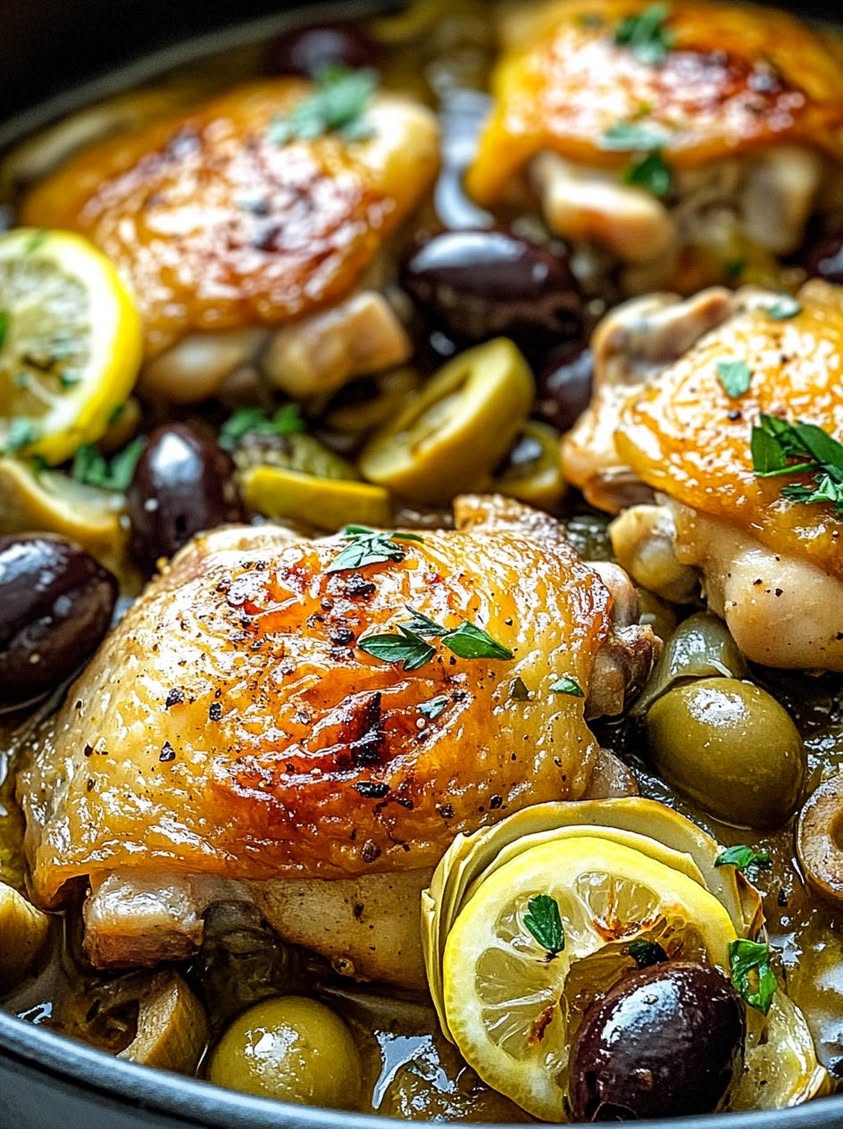
Golden Skillet Chicken Thighs Braised in White Wine, Lemon, and Olive Broth: A One-Pan Wonder
Imagine a dish that fills your kitchen with the most incredible aroma, a promise of a meal that is both comforting and elegant. This recipe for Golden Skillet Chicken Thighs Braised in White Wine, Lemon, and Olive Broth delivers exactly that. It transforms simple, affordable ingredients into a stunning centerpiece. The process is straightforward, yet the result feels like something from a cozy bistro. Ultimately, you get tender, juicy chicken bathed in a vibrant, silky sauce that begs to be sopped up with crusty bread.
The magic of this dish lies in its layers of flavor. First, you achieve a deeply golden, crispy skin on the chicken thighs. Then, you build a broth in that same pan, using the flavorful fond left behind. White wine adds a bright acidity, lemon provides a sunny zing, and briny olives contribute a savory depth. Meanwhile, the gentle braising process ensures the chicken becomes impossibly tender. Every bite is a perfect balance of rich, tangy, and herbal notes. This one-pan wonder is a testament to how a few good techniques can create a restaurant-quality meal at home.
Furthermore, this recipe is incredibly versatile. It suits a casual weeknight dinner but is special enough for weekend guests. The hands-on time is minimal, allowing you to relax while the oven does the work. The final presentation, with the golden chicken nestled in the glossy broth, is genuinely impressive. In short, this dish is a reliable favorite that you will turn to again and again. It teaches foundational cooking skills while delivering extraordinary flavor with minimal fuss.
Quick Recipe Highlights
- Flavor Profile: This dish offers a sophisticated balance. The rich, savory flavor of the chicken thighs meets the bright acidity of white wine and fresh lemon. Additionally, briny olives and aromatic herbs create a complex, Mediterranean-inspired taste that is both refreshing and deeply satisfying.
- Texture: You get the perfect textural contrast. The chicken skin becomes irresistibly crispy and golden during the initial sear. Then, the braising process renders the meat underneath incredibly tender and juicy, practically falling off the bone. The broth itself is light yet luscious.
- Aroma: As it cooks, the aroma is absolutely intoxicating. First, you smell the savory scent of browning chicken. Then, the white wine deglazes the pan with a sharp, pleasant alcohol scent that quickly mellows. Finally, the lemon, garlic, and herbs meld into a warm, inviting fragrance that fills your entire home.
- Visual Appeal: The presentation is beautiful and rustic. The chicken thighs boast a deep, appetizing golden-brown color. They sit proudly in a shallow, olive-studded broth that glistens with droplets of olive oil. Fresh lemon slices and herbs add vibrant pops of green and yellow, making it perfect for the table.
- Skill Level Needed: This is an accessible recipe for most home cooks. It requires basic techniques like patting meat dry, seasoning, and searing. The braising step is largely hands-off. Therefore, even a beginner can achieve fantastic results by following the steps carefully and trusting the process.
- Special Equipment: You need a reliable, oven-safe skillet. A 12-inch cast iron or stainless steel skillet is ideal because it can go from stovetop to oven seamlessly. Other than that, basic kitchen tools like tongs, a cutting board, and a knife are all you require.
Recipe Overview
- Difficulty Level: We rate this recipe as easy. The steps are sequential and logical, building flavor in a clear way. While searing requires attention, it is not a difficult skill. The braising itself is passive cooking. Consequently, the active work is concentrated in the first 15 minutes, making the overall effort very manageable for any cook.
- Category: This dish is a brilliant main course. It is protein-focused and substantial enough to anchor a meal. It pairs wonderfully with a variety of sides, from simple roasted vegetables to buttery mashed potatoes or crusty bread for soaking up every last drop of the delicious lemon white wine broth.
- Cuisine: The flavors are firmly rooted in Mediterranean cuisine, drawing inspiration from the coastal regions of Italy, Greece, and southern France. The use of olive oil, lemon, olives, and white wine is classic to this area. It is a celebration of bright, fresh ingredients and simple, impactful cooking methods.
- Cost: This is a very cost-effective meal. Chicken thighs are an affordable cut of protein. The aromatics like onion, garlic, and lemon are inexpensive staples. A modest amount of dry white wine and a handful of olives elevate the dish without breaking the bank. Overall, it delivers high-end flavor on a sensible budget.
- Season: This recipe shines year-round but feels particularly fitting in spring and summer. The lemon and white wine broth is light and vibrant, cutting through the richness of the chicken. However, its comforting, braised nature also makes it wonderful in cooler fall and winter months, offering a taste of sunshine.
- Occasion: Its versatility is a key strength. It is quick enough for a stress-free Tuesday night dinner yet elegant enough for a dinner party with friends. The one-pan nature means cleanup is easy, which is a bonus for any occasion. It is a truly adaptable recipe for your repertoire.
Why You’ll Love This Recipe
First and foremost, the taste and texture are utterly irresistible. The combination of crispy-skinned, succulent chicken with a bright, lemony, olive-flecked broth is a match made in heaven. Each component complements the others perfectly. The white wine adds a subtle fruitiness and acidity that lifts the entire dish, preventing it from feeling heavy. Every forkful is a delightful mix of savory, tangy, and herbal notes that will have everyone at the table asking for seconds. This Golden Skillet Chicken Thighs with Lemon White Wine Broth is a masterclass in balanced flavor.
From a convenience standpoint, this recipe is a dream. It utilizes a single skillet from start to finish, which translates to minimal cleanup. The prep work is simple and quick, involving mostly chopping a few aromatics. After the initial sear, the oven takes over, giving you time to prepare sides, set the table, or simply relax. It is the definition of “set it and forget it” cooking that yields impressive results. For busy home cooks, this efficient method is a game-changer.
Nutritionally, chicken thighs offer excellent benefits. They are a great source of high-quality protein and essential nutrients like iron and zinc. While slightly higher in fat than breasts, the fat contributes to flavor, juiciness, and satiety. The cooking method of braising in broth, as opposed to frying, keeps added fats in check. The broth itself, infused with lemon and herbs, is light and flavorful without being cream-laden or overly rich. It is a satisfying meal that feels nourishing and wholesome.
For entertaining, this dish is a superstar. It looks beautiful served directly from the skillet, offering a rustic, family-style presentation that feels welcoming and generous. The aroma that wafts from the oven as guests arrive is the best welcome you can give. Moreover, because it is not overly fussy, you can enjoy your company instead of being stuck with last-minute kitchen tasks. It is a reliably impressive recipe that will make you look like a culinary pro.
Finally, the cost-effectiveness and accessibility of the ingredients cannot be overstated. Chicken thighs are a budget-friendly protein that is hard to overcook. The other ingredients are pantry staples or easy-to-find fresh items. You do not need any rare or expensive components to create something truly special. This recipe demonstrates that incredible food does not require a huge investment, just smart technique and good flavors. It is an accessible path to a delicious, restaurant-quality dinner at home.
Historical Background and Cultural Significance
The technique of braising chicken in a flavorful liquid is ancient and universal, found in culinary traditions across the globe. However, the specific combination of chicken with lemon, white wine, and olives has deep roots in the Mediterranean basin. For centuries, cooks in coastal regions from Italy to Greece have utilized these bright, preserved, and fermented ingredients to enhance simple proteins. This method was born from necessity and abundance, using what was locally available like citrus, olives, and wine to create meals that were both practical and delicious.
Culturally, this style of cooking represents the heart of Mediterranean home cooking. It is not typically elaborate restaurant fare but the food of families and gatherings. The dish embodies principles of the much-celebrated Mediterranean diet, which emphasizes fresh produce, healthy fats like olive oil, lean proteins, and flavorful herbs. Meals like this are central to a lifestyle that values leisurely, shared dining experiences. The act of simmering ingredients together in one pot fosters a sense of community and comfort.
The recipe has evolved with trade and exploration. Lemons, originally from Asia, became staples in Mediterranean cuisine. Wine, integral to the region’s culture for millennia, naturally found its way into cooking pots as a way to add depth and acidity. Olives, one of the oldest cultivated crops in the area, provided saltiness and richness. Over time, these ingredients coalesced into the classic flavor profile we know today. Modern versions, like this Golden Skillet Chicken Thighs Braised in White Wine, Lemon, and Olive Broth, refine the technique but honor the original spirit.
Regional variations are plentiful and delightful. In Greece, you might find oregano and Kalamata olives starring in a similar dish. In Italy, capers, rosemary, and dry vermouth could be used. The French version, perhaps cooked with Herbes de Provence and niçoise olives, is equally iconic. Each coastal community adds its own signature touch based on local herbs and olive varieties. This adaptability is a testament to the recipe’s solid foundation. Ultimately, it is a timeless method that celebrates regional flavors and simple, honest cooking.
Ingredient Deep Dive
Chicken Thighs (Bone-In, Skin-On): This cut is the undisputed champion for braising. The bone contributes immense flavor to the broth during cooking, while the skin, when properly seared, provides a protective layer that keeps the meat incredibly juicy and adds essential textural contrast. Culturally, using the whole animal and appreciating flavorful, economical cuts like thighs is a cornerstone of traditional cooking worldwide. Nutritionally, thighs offer more iron and zinc than white meat. For selection, look for thighs with evenly distributed fat and plump, pink flesh. Store them in the coldest part of your refrigerator and use within 1-2 days of purchase. For a substitution, bone-in, skin-on chicken legs (drumstick and thigh together) work perfectly. Boneless, skinless thighs can be used but will cook faster and lack the crispy skin element.
Dry White Wine: The wine serves multiple critical functions. It deglazes the pan, lifting the flavorful browned bits (fond) from the chicken sear. Its acidity balances the richness of the dish and adds a layer of complex fruitiness. Choose a dry, crisp white wine that you would enjoy drinking, such as Sauvignon Blanc, Pinot Grigio, or an unoaked Chardonnay. Avoid “cooking wine” as it contains added salt. The alcohol cooks off during braising, leaving only the flavor. If you need a non-alcoholic substitute, use a combination of chicken broth and a tablespoon of white wine vinegar or fresh lemon juice to mimic the acidity.
Fresh Lemon: Lemon is the bright, sunny soul of this broth. It provides a sharp, clean acidity that cuts through fat and enlivens every other ingredient. Historically, lemons have been used around the Mediterranean for both culinary and preservative purposes. They are packed with vitamin C and antioxidants. For the best flavor, use organic lemons if you are using the zest, and always roll them on the counter before juicing to maximize yield. Select lemons that are heavy for their size with smooth, vibrant skin. Both the juice and the thin slices added to the pan infuse the broth with essential citrus oil and flavor.
Castelvetrano Olives: These bright green olives are known for their buttery, mild, and slightly sweet flavor with a crisp texture. They are less briny than many other olives, making them a fantastic, crowd-pleasing addition that does not overpower the broth. Originating from Sicily, they add a authentic Mediterranean touch. They contribute healthy monounsaturated fats and a satisfying salty note. You can find them pitted or unpitted at most grocery stores. If unavailable, other green olives like Cerignola or a mild black olive like Kalamata (though they will darken the broth) can be used. Rinse them if they seem overly salty from the brine.
Common Mistakes to Avoid
- Not Drying the Chicken Skin: This is the most crucial step for achieving crispy skin. If the skin is damp, it will steam instead of sear, resulting in rubbery, pale skin. Always pat the thighs thoroughly dry with paper towels on both sides before seasoning.
- Crowding the Skillet: Searing all four thighs at once in a standard skillet often leads to steaming. The chicken releases moisture, and if the pan is too crowded, the temperature drops. For a proper sear, cook in two batches or use a very large skillet to ensure each thigh has ample space.
- Moving the Chicken Too Soon: After placing the chicken in the hot pan, resist the urge to move it around. Let it sear undisturbed for a full 5-7 minutes. This allows a proper crust to form, which will release naturally from the pan when it is ready.
- Using a Sweet or Oaky Wine: A sweet Riesling or heavily oaked Chardonnay can make the broth cloying or bitter. Stick to a dry, neutral white wine. The goal is acidity and flavor, not a pronounced wine taste.
- Skipping the Deglazing Step: After removing the chicken, those browned bits at the bottom of the pan are pure flavor gold. Pouring the wine in and scraping vigorously incorporates this fond into your sauce, building a deep, savory base that water or broth alone cannot achieve.
- Overcooking the Garlic: Garlic burns easily and becomes bitter. When sautéing the sliced garlic with the onions, cook it just until fragrant, about 30-60 seconds. Adding it at the right moment ensures a sweet, mellow garlic flavor in the finished broth.
- Not Letting it Rest: After pulling the skillet from the oven, let the chicken rest in the pan for 5-10 minutes. This allows the juices to redistribute throughout the meat. If you cut into it immediately, those precious juices will run out into the pan.
- Forgetting to Season in Layers: Season the chicken well before searing. Then, taste the broth before it goes into the oven and adjust the seasoning. Finally, taste again before serving. Seasoning at each major stage ensures a perfectly balanced final dish.
Essential Techniques
Patting Dry & Seasoning: This foundational step is non-negotiable for success. Moisture is the enemy of browning. By using paper towels to thoroughly pat the chicken skin dry, you ensure direct contact between the skin and the hot pan. This allows the Maillard reaction—the chemical process that creates browning and complex flavor—to occur efficiently. Season generously with salt and pepper just before cooking; seasoning too early can draw out moisture, defeating the purpose of drying. The visual cue for readiness is skin that looks matte and dry to the touch.
Searing for Golden Skin: Searing is not just about color; it is about flavor and texture. Use a preheated skillet with just enough oil to coat the bottom. Place the chicken skin-side down and do not move it. You should hear a steady sizzle. This process renders fat from the skin, making it crisp, and creates the flavorful fond in the pan. A common pitfall is flipping too early. Wait until the skin releases easily from the pan and has achieved a deep, uniform golden-brown color, which typically takes 5-7 minutes over medium heat.
Deglazing the Pan: This technique unlocks the concentrated flavor stuck to the pan after searing. After removing the chicken, there will be browned bits. Over medium heat, pour in your white wine. As it simmers, use a wooden spoon or spatula to vigorously scrape the bottom of the pan. You will see the fond dissolve into the liquid, creating an instant, deeply flavored base for your sauce. This step is what transforms simple pan drippings into a complex sauce foundation. Ensure you scrape every corner of the skillet.
Braising: Braising is a two-step cooking method: searing followed by gentle simmering in liquid. Here, after building the broth, the seared chicken is returned to the skillet and the whole thing goes into the oven. The moist, enclosed heat of the oven gently cooks the chicken through, making it tender while allowing the flavors to meld. The key is maintaining a gentle simmer, not a boil. The liquid should just bubble lightly around the edges. This slow, even cooking is what yields fall-off-the-bone tenderness without drying out the meat.
Pro Tips for Perfect Golden Skillet Chicken Thighs
Bring your chicken thighs to room temperature for 15-20 minutes before cooking. This promotes more even cooking, ensuring the inside is done without overcooking the outside during the sear.
Use a splatter screen when searing the chicken. Chicken thighs have a higher fat content, and the rendered fat can pop and splatter, making a mess and posing a burn risk.
After searing, pour off all but about one tablespoon of the rendered chicken fat before sautéing the onion. This prevents the vegetables from frying in too much grease, resulting in a cleaner-tasting, less oily final broth.
If your white wine is very acidic, a tiny pinch of sugar (about 1/4 teaspoon) added with the broth can help balance the sauce without making it sweet. Always taste and adjust.
For an extra layer of herbal flavor, add a whole sprig of rosemary or thyme to the broth along with the olives before it goes in the oven. Remove the woody stem before serving.
To thicken the broth slightly without flour, remove the chicken after braising and place the skillet back on the stovetop. Simmer the broth over medium-high heat for 3-5 minutes until it reduces and slightly concentrates.
For maximum crispy skin, you can briefly place the seared and braised chicken under a preheated broiler for 1-2 minutes at the very end. Watch it closely to prevent burning.
Let the finished dish rest for a full 10 minutes after removing it from the oven. This allows the chicken to reabsorb its juices and the broth’s flavors to settle and intensify.
Variations and Adaptations
Regional Variations: Explore the Mediterranean by swapping ingredients. For a Greek twist, use Kalamata olives and fresh oregano. An Italian version might include capers, rosemary, and cannellini beans added with the broth. A French Provençal take could feature Herbes de Provence and niçoise olives. Each variation stays true to the core technique while offering a new flavor journey.
Seasonal Adaptations: In spring, add fresh artichoke hearts or asparagus tips to the skillet for the last 10 minutes of braising. In summer, toss in halved cherry tomatoes and fresh basil after cooking. For fall, incorporate sliced mushrooms when sautéing the onion, and use sage as the primary herb. Winter calls for adding hearty cannellini beans or small potatoes to make it more stew-like.
Dietary Modifications: For a Whole30 or Paleo version, omit the wine and use additional chicken broth mixed with a tablespoon of fresh lemon juice or apple cider vinegar. To make it gluten-free, ensure your broth is certified gluten-free—this recipe is naturally compliant. For a dairy-free dish, it already is; just use olive oil or a dairy-free butter alternative if you choose to finish the sauce with fat.
Flavor Variations: Add a teaspoon of fennel seeds or red pepper flakes to the oil when sautéing the onion for a spicy, aromatic kick. Swap the lemon for orange slices and juice for a sweeter, different citrus profile. A tablespoon of tomato paste added after the onions can create a richer, deeper broth base with a hint of sweetness.
Texture Modifications: For a thicker, gravy-like sauce, dust the seared chicken lightly with flour before removing it from the pan, or make a quick slurry with a tablespoon of flour and some broth before adding the rest of the liquid. For a clearer, more brothy consistency, simply strain the broth before serving for an elegant, refined presentation.
Presentation Alternatives: Serve the chicken and broth over a bed of creamy polenta, soft mashed potatoes, or couscous to soak up the sauce. For a low-carb option, serve with cauliflower mash or zucchini noodles. You can also shred the braised chicken off the bone and mix it back into the reduced broth for a stunning, rustic pasta sauce.
Serving and Presentation Guide
Plating Techniques: For a family-style presentation, bring the entire skillet to the table—it is dramatic and minimizes dishes. For individual plates, place a chicken thigh in a shallow, wide bowl. Ladle the broth, olives, and lemon slices generously around it. Ensure some of the vibrant ingredients are visible on top, not hidden underneath the chicken.
Garnishing Ideas: Fresh herbs are essential for a final pop of color and flavor. Chopped fresh parsley, dill, or chives sprinkled over the top add brightness. A final drizzle of high-quality extra virgin olive oil just before serving adds sheen and richness. A light grating of lemon zest over the dish amplifies the citrus aroma.
Traditional Accompaniments: Crusty, toasted bread is non-negotiable for mopping up every last drop of the lemony white wine broth. A simple arugula salad with a lemon vinaigrette complements the meal perfectly without competing. Roasted potatoes or a simple orzo pilaf also make excellent, traditional sides that absorb the sauce beautifully.
Modern Serving Suggestions: For a lighter meal, serve alongside a quinoa salad with chopped cucumbers and tomatoes. Spoon the chicken and broth over a bowl of creamy risotto for ultimate comfort. A side of roasted broccolini or grilled asparagus adds a healthy, colorful vegetable component that pairs wonderfully with the flavors.
Temperature Considerations: This dish is best served hot, immediately after its resting period. The broth should be steaming, and the chicken should be warm throughout. If serving family-style, the cast iron skillet will retain heat well at the table. Warm your serving bowls or plates beforehand to keep everything hot longer.
Portion Control Tips: One bone-in, skin-on chicken thigh per person is a standard and satisfying portion. For larger appetites or if serving with lighter sides, consider 1.5 thighs per person. The broth is light, so you can be generous with it. Balance the plate with a substantial vegetable side and a complex carbohydrate to create a well-rounded meal.
Wine and Beverage Pairing
Wine Pairings: The ideal wine to drink with this dish is the same dry white wine you used in the recipe. A Sauvignon Blanc or Pinot Grigio, with their crisp acidity and citrus notes, will mirror and enhance the flavors in the broth. A dry rosé from Provence is another fantastic choice, offering berry notes that complement the olives. For a richer option, an unoaked Chardonnay provides body without overwhelming the lemon’s brightness.
Non-Alcoholic Alternatives: Sparkling water with a twist of lemon or lime is a classic and refreshing pairing. For something more complex, try a high-quality lemonade or an artisanal ginger beer; the ginger’s spice plays nicely with the savory notes. Iced herbal tea, such as mint or verbena, can also be a delightful, palate-cleansing companion to the rich chicken and tangy broth.
Coffee/Tea Pairings: While not a typical pairing for the meal itself, a post-dinner espresso or a cup of herbal tea would be lovely. A lemon verbena or chamomile tea would echo the citrus and floral notes of the dish in a calming way. Avoid strong, bitter coffees or teas that might clash with the delicate broth.
Temperature Considerations: White wines and non-alcoholic sparklers should be served well-chilled, between 45-50°F. This cool temperature provides a refreshing contrast to the warm, savory chicken. If serving water, offer it with ice on the side. The goal is to have a beverage that cleanses the palate between bites of the flavorful, rich dish.
Serving Suggestions: Always offer water on the table alongside your chosen beverage. For a dinner party, consider setting out both a white wine and a non-alcoholic sparkler so guests have options. Pour wine glasses only half-full to allow the aromas to collect and to keep the wine at an optimal temperature longer.
Storage and Shelf Life
Storage Methods: Allow the dish to cool completely to room temperature before storing, but do not leave it out for more than two hours. Separate the chicken from the broth for best results. Place the chicken and the broth (with olives and lemon) in separate airtight containers. This prevents the chicken skin from becoming soggy in the liquid during storage.
Temperature Requirements: Refrigerate the containers promptly. The safe storage temperature for cooked poultry is at or below 40°F. Use the back of the refrigerator, which is typically the coldest and most consistent area, rather than the door.
Container Recommendations: Glass containers with tight-sealing lids are ideal as they do not absorb odors and allow you to see the contents. If using plastic, ensure it is BPA-free and designed for food storage. For the broth, a jar or a container with a pour spout can be convenient for reheating.
Signs of Spoilage: Discard the chicken and broth if you notice an off or sour smell, a slimy texture on the chicken, or mold growth. If the broth becomes cloudy or develops bubbles, it is likely fermenting and should not be consumed. When in doubt, throw it out.
Reheating Instructions: For best results, reheat gently. Place the broth in a saucepan over medium-low heat until simmering. Add the chicken to the simmering broth to warm through for about 5-10 minutes, ensuring the internal temperature reaches 165°F. You can also reheat in a covered skillet in a 300°F oven until warmed through. Avoid microwaving, as it can make the chicken rubbery and heat unevenly.
Freezing Guidelines: This dish freezes reasonably well for up to 2-3 months. Freeze the broth and chicken separately in freezer-safe bags or containers, removing as much air as possible. Thaw overnight in the refrigerator before reheating. Note that the texture of the olives and lemon may soften slightly upon thawing, but the flavor will remain excellent.
Make Ahead Strategies
Prep Timeline: You can do most of the prep work 1 day in advance. Pat the chicken dry, season it, and store it covered on a plate in the refrigerator. Chop the onion, slice the garlic and lemon, and measure out the olives and herbs. Store each component in separate small containers in the fridge. This reduces your active cooking time to just searing and assembling.
Storage Between Steps: If you prep ahead, keep the seasoned chicken on a tray in the fridge, uncovered, to allow the skin to dry out further, which promotes even better crisping. Keep the chopped vegetables sealed. Bring the chicken out about 20 minutes before you plan to cook to take the chill off, which helps with even searing.
Quality Impact Assessment: Prepping the vegetables ahead has no negative impact. Pre-seasoning the chicken can actually enhance flavor penetration. The only step that must be done just before cooking is the searing of the chicken to ensure the skin is perfectly crisp. The final braising should also be done just before serving for optimal texture.
Assembly Tips: When ready to cook, simply follow the recipe from the searing step. Having all your prepped ingredients (wine measured, broth ready) in small bowls or containers next to the stove (mise en place) makes the cooking process smooth and fast, turning what seems like a project into a simple 15-minute assembly before the oven takes over.
Reheating Guidelines: If you fully cook the dish a day ahead, follow the gentle reheating instructions in the storage section. To refresh the flavors, add a fresh squeeze of lemon juice and a sprinkle of fresh herbs just before serving the reheated dish. This brings back the bright, vibrant notes that can mellow during storage.
Fresh Element Additions: Regardless of make-ahead level, always plan to add a final garnish of fresh, chopped herbs and a drizzle of good olive oil right before serving. These fresh elements are not just decorative; they provide a burst of aroma and flavor that elevates the entire dish and makes it taste freshly made.
Scaling Instructions
Halving the Recipe: To serve two, use two chicken thighs and halve all other ingredients. Use a 10-inch skillet to maintain the proper depth of broth for braising. Cooking times will remain largely the same, as the oven temperature and the size of the chicken pieces dictate the braising time. Always check for doneness a few minutes early with a meat thermometer.
Doubling or Tripling: For a crowd, you can easily double or triple the recipe. The key is to use multiple skillets or a very large, wide braising pan or Dutch oven. Do not stack the chicken thighs; they must be in a single layer for proper braising and to ensure the skin stays above the broth line. You may need to sear the chicken in more batches. Increase the oven time slightly and check for doneness.
Equipment Adjustments: Scaling up requires appropriate equipment. A large roasting pan can work if it is oven-safe and you can use two burners to sear the chicken and build the broth before transferring it to the oven. Ensure your chosen vessel has a lid or can be tightly covered with foil to trap steam during braising.
Timing Modifications: When doubling, the time to build the broth on the stovetop will increase slightly due to more ingredients. The oven braising time may need an extra 5-10 minutes for a very full pan, as the increased volume takes longer to come to a simmer. Always rely on the internal temperature of the chicken (165°F) as your final guide, not just the clock.
Storage Considerations: When cooking larger batches, proper cooling is even more critical for food safety. Divide the large quantity of finished dish into several smaller, shallow containers before refrigerating. This allows it to cool quickly and evenly, reducing the risk of bacterial growth. Label containers with the date.
Nutritional Deep Dive
Macro Breakdown: A serving of this Golden Skillet Chicken Thighs with Lemon White Wine Broth is a balanced meal. The chicken thighs provide a substantial amount of high-quality protein, essential for muscle repair and satiety. The fat content comes primarily from the chicken skin and olive oil, which are sources of monounsaturated fats. The carbohydrates in this dish are minimal, coming from the onions, wine, and lemon, making it a naturally lower-carb option. The broth is light and not thickened with flour, keeping added carbs and calories in check.
Micronutrient Analysis: This dish is a good source of several key vitamins and minerals. Chicken thighs provide iron, zinc, and B vitamins, particularly B12 and niacin. Lemon juice is rich in vitamin C, a powerful antioxidant. Onions and garlic contain beneficial compounds like allicin and quercetin. Olives contribute vitamin E and iron. Using the bone-in chicken also means minerals like calcium and phosphorus may leach into the broth in small amounts.
Health Benefits: The cooking method of braising is gentler than frying. The monounsaturated fats from olive oil are heart-healthy. The herbs and garlic have anti-inflammatory properties. The dish is rich in protein, which promotes fullness and helps maintain muscle mass. The absence of cream or butter keeps saturated fat lower than in many other braised dishes. The lemon and wine provide acidity that can aid digestion.
Dietary Considerations: This recipe is naturally gluten-free and dairy-free, making it suitable for those with common intolerances. It is also a whole-food-based recipe with no processed ingredients. For those on specific low-carb or keto diets, it fits well, especially if served with non-starchy vegetables. The sodium content can be controlled by using low-sodium broth and moderating added salt.
Portion Analysis: One chicken thigh with a generous portion of broth is a satisfying single serving. To manage calorie intake, you can remove the chicken skin after cooking, though you sacrifice flavor and texture. The broth itself is very low in calories, allowing you to enjoy a flavorful, voluminous component of the meal without significant caloric addition.
Weight Management Tips: This dish is excellent for weight management due to its high protein and satiating fat content. Pair it with a large side of non-starchy vegetables like a big green salad or steamed broccoli to increase volume and fiber without many calories. Be mindful of what you use to soak up the broth; choose a small piece of whole-grain bread over a large portion of mashed potatoes if watching carbohydrates.
Dietary Adaptations
Gluten-Free: This recipe is naturally gluten-free as written. The only potential source of gluten would be{“success”:true,”message”:”Recipe created successfully”,”post_id”:8444,”tasty_recipe_id”:8444,”shortcode”:” Print
Golden Skillet Chicken Thighs Braised in White Wine, Lemon, and Olive Broth
Description
Juicy chicken thighs are seared until golden, then braised in a bright, aromatic broth of white wine, lemon, garlic, and olives for a simple yet elegant one-pan meal.
Ingredients
For the Crust:
- 4 bone-in, skin-on chicken thighs
- 1 teaspoon kosher salt
- 1/2 teaspoon black pepper
- 2 tablespoons olive oil
- 4 cloves garlic, minced
- 1 cup dry white wine
- 1 cup chicken broth
- 1 lemon, thinly sliced
- 1/2 cup pitted green olives
- 2 sprigs fresh thyme
- 2 tablespoons chopped fresh parsley
Instructions
1. Prepare the Crust:
- Season chicken thighs with salt and pepper. Heat olive oil in a large skillet over medium-high heat. Add chicken skin-side down and cook until golden brown, about 6-8 minutes. Flip and cook for 3 more minutes, then remove from skillet.
- Reduce heat to medium. Add garlic to the skillet and sauté for 30 seconds until fragrant. Pour in white wine, scraping up any browned bits from the bottom. Simmer for 2 minutes.
- Add chicken broth, lemon slices, olives, and thyme. Return chicken to the skillet, skin-side up. Bring to a simmer, then cover and cook for 20-25 minutes, until chicken is cooked through. Garnish with parsley before serving.
Notes
You can customize the seasonings to taste.

I’m Billy, a classically trained culinary school graduate from The Culinary Institute of America with over 12 years in the restaurant industry and over 19 years of cooking experience.