
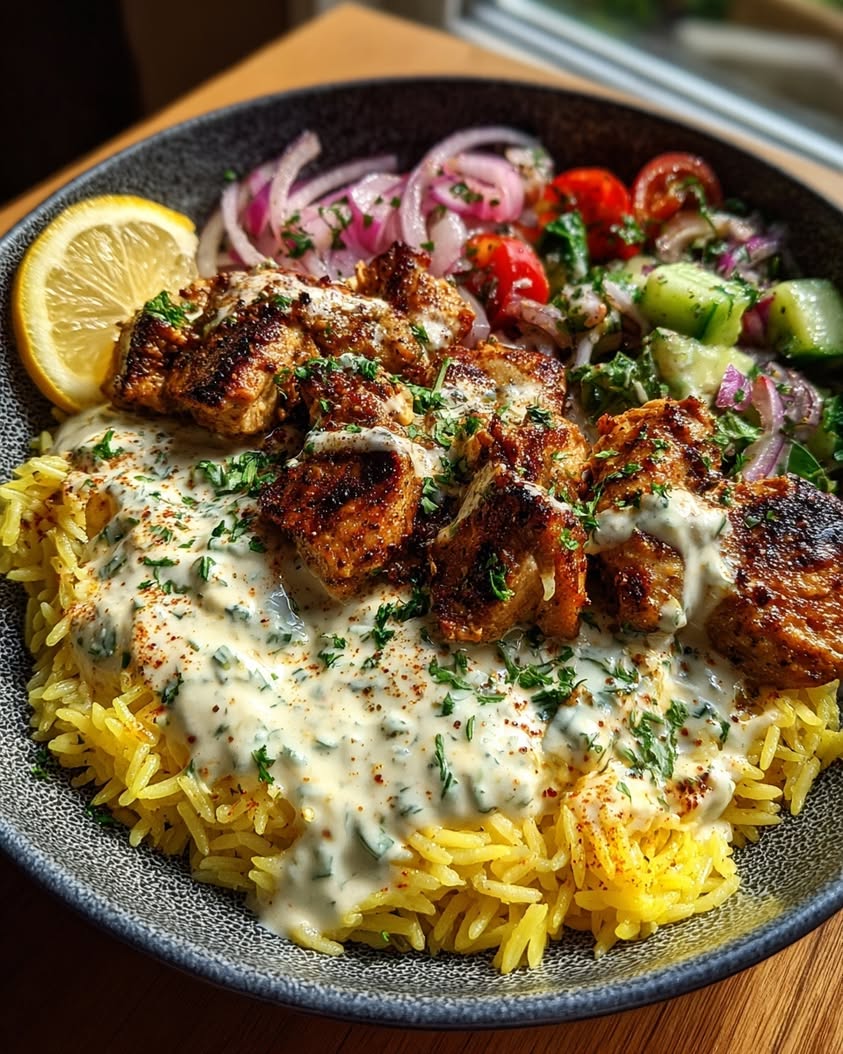
Greek Chicken Souvlaki Bowls: A Flavorful Mediterranean Feast at Home
Imagine the sun-drenched flavors of the Mediterranean arriving right on your dinner table. This Greek Chicken Souvlaki Bowl recipe delivers exactly that experience. Moreover, it combines tender, marinated chicken with crisp vegetables and a vibrant, creamy lemon garlic sauce. Consequently, you get a meal that is both incredibly satisfying and surprisingly simple to prepare. Ultimately, this dish brings the essence of a Greek taverna into your kitchen with minimal fuss.
The magic of this Greek Chicken Souvlaki Bowl recipe lies in its perfect balance. First, you have succulent chicken pieces, charred and juicy from the grill or skillet. Next, a bed of fluffy rice or quinoa anchors the bowl. Then, fresh toppings like tomato, cucumber, and red onion add a crucial crunch. Finally, the crowning glory is a tangy, herbaceous lemon garlic sauce that ties every single component together beautifully. Each bite offers a symphony of textures and bright, clean flavors.
Furthermore, this meal is a fantastic solution for busy weeknights or impressive weekend entertaining. It is highly adaptable, allowing you to use what you have on hand. Additionally, the components can be prepared ahead of time for easy assembly. Therefore, whether you are cooking for your family or hosting friends, these bowls guarantee a delicious and colorful result. They are a complete, well-rounded meal that everyone will love.
Quick Recipe Highlights
- Flavor Profile: This Greek Chicken Souvlaki Bowl recipe bursts with classic Mediterranean tastes. Expect the bright acidity of lemon, the earthy depth of oregano, and the savory punch of garlic. The marinade penetrates the chicken thoroughly, ensuring every piece is packed with flavor.
- Texture: You will enjoy a wonderful contrast in every mouthful. Tender, charred chicken sits alongside crisp, fresh vegetables and creamy, cool tzatziki. The base of rice or quinoa provides a soft, comforting foundation that soaks up the delicious sauces.
- Aroma: As the chicken cooks, your kitchen will fill with an irresistible scent. The aromatic blend of lemon, garlic, and dried oregano is unmistakably Greek. It is a warm, inviting fragrance that promises a delicious meal to come.
- Visual Appeal: These bowls are a feast for the eyes with their vibrant colors. The golden brown chicken, red tomatoes, green cucumbers, and white sauce create a stunning, Instagram-worthy presentation. It is a colorful dish that looks as good as it tastes.
- Skill Level Needed: This is an accessible recipe perfect for cooks of all levels. The techniques involve simple chopping, mixing, and grilling or pan-searing. No advanced culinary skills are required to achieve a fantastic, restaurant-quality result at home.
- Special Equipment: You only need basic kitchen tools. A grill, grill pan, or regular skillet works perfectly for cooking the chicken. Additionally, you will need a mixing bowl, a few measuring tools, and a sharp knife for prepping the vegetables.
Recipe Overview
- Difficulty Level: We rate this Greek Chicken Souvlaki Bowl recipe as easy. The steps are straightforward and logical, involving marinating, chopping, and cooking. There are no complex techniques or hard-to-find ingredients. Even a beginner cook can follow this guide and create an impressive, flavorful meal with confidence.
- Category: This dish falls squarely into the category of a healthy, complete main course. It is a balanced bowl meal featuring protein, complex carbs, and plenty of fresh vegetables. You can also consider it a fantastic meal prep option for lunches throughout the week.
- Cuisine: This recipe is firmly rooted in Greek and broader Mediterranean cuisine. It draws inspiration from traditional souvlaki, which is skewered and grilled meat. We adapt the concept into a convenient, deconstructed bowl format while honoring the core flavor principles of the region.
- Cost: Preparing this Greek Chicken Souvlaki Bowl recipe is very cost-effective. Chicken thighs or breasts are an affordable protein source. The vegetables and pantry staples like rice, lemon, and spices are typically inexpensive. You can feed a family for a fraction of the cost of takeout.
- Season: This is truly a year-round dish. It feels light and refreshing for spring and summer meals. Conversely, it also provides comforting warmth during fall and winter. The bright flavors can lift your spirits no matter the season outside your window.
- Occasion: These bowls are incredibly versatile for any dining event. They make a quick and healthy weeknight dinner for the family. Simultaneously, they are impressive enough for casual weekend gatherings or dinner parties. You can easily scale the recipe up or down to suit your needs.
Why You’ll Love This Recipe
First and foremost, the taste and texture combination is absolutely unbeatable. Each component of this Greek Chicken Souvlaki Bowl recipe serves a specific purpose. The marinated chicken offers savory, herby juiciness. The fresh vegetables contribute a necessary crisp and cool contrast. Meanwhile, the lemon garlic sauce adds a creamy, tangy element that binds everything together. Consequently, every forkful delivers a complex and satisfying experience that will keep you coming back for more.
Next, consider the sheer convenience and preparation benefits. This recipe uses simple, whole ingredients that are easy to find. Furthermore, the active cooking time is relatively short, especially if you marinate the chicken ahead of time. You can also prep all the vegetables and sauce components in advance. Therefore, when dinner time arrives, assembly takes just minutes. It is a strategic approach that makes healthy eating effortless on even the busiest of nights.
From a nutritional standpoint, this meal is a clear winner. It provides a excellent balance of lean protein, fiber-rich vegetables, and wholesome carbohydrates. The chicken fuels your muscles, the veggies deliver essential vitamins and antioxidants, and the base offers sustained energy. Additionally, using olive oil and yogurt in the sauce contributes healthy fats and probiotics. Ultimately, this Greek Chicken Souvlaki Bowl recipe supports a balanced diet without sacrificing any flavor whatsoever.
Moreover, this dish holds tremendous social and entertaining value. Serving meals in bowls is inherently interactive and fun for guests. Everyone can customize their portion to their liking. The vibrant, colorful presentation is always a conversation starter. Because the recipe is easy to double or triple, it is perfect for feeding a crowd without stress. You get to enjoy your company instead of being stuck in the kitchen all evening.
Finally, the cost-effectiveness and accessibility are major advantages. You can create a restaurant-quality Mediterranean meal for a fraction of the price. The ingredients are pantry-friendly and often already on hand. If you need substitutions, the recipe is flexible. For example, you can use different vegetables or a different grain base. This adaptability makes the Greek Chicken Souvlaki Bowl recipe a reliable, budget-friendly staple in your cooking rotation.
Historical Background and Cultural Significance
The origin story of souvlaki stretches back centuries in Greek cuisine. Historically, the concept of cooking small pieces of meat on skewers over an open flame is ancient. The word “souvlaki” itself comes from the Greek word “souvla,” meaning skewer. Originally, this was a simple, portable food for soldiers, travelers, and working people. It was a practical way to cook meat quickly with intense flavor from the fire and basic marinades.
In terms of cultural importance, souvlaki is a cornerstone of Greek street food culture. You will find souvlaki stands and shops throughout Greece, serving it wrapped in soft pita bread with tomatoes, onions, and tzatziki. It is a food of the people, enjoyed by everyone from all walks of life. The experience of eating souvlaki is deeply social, often shared with friends and family. It represents conviviality, simplicity, and the vibrant flavors of the Mediterranean lifestyle.
The evolution of the recipe into a bowl format is a modern, global adaptation. While traditional souvlaki is always served on a skewer or in a pita, the bowl style caters to contemporary dining trends. It embraces the desire for deconstructed, customizable, and often gluten-free or low-carb meals. This evolution maintains the soul of the dish—the marinated meat and classic accompaniments—while presenting it in a new, convenient way. The Greek Chicken Souvlaki Bowl recipe is a perfect example of how traditional foods can adapt while staying true to their roots.
Regarding regional variations, you will find differences throughout Greece and the Mediterranean. In some areas, pork is the preferred meat for souvlaki. In others, like Cyprus, they use a special dried oregano called “rigani.” The accompanying sauces and sides can also vary. Some regions add fried potatoes to the pita, while others include different herb mixes in the marinade. Our bowl recipe takes inspiration from these variations, focusing on the most universally loved flavors to create a accessible and delicious version for home cooks everywhere.
Ingredient Deep Dive
Starting with the chicken, boneless, skinless thighs are ideal for this Greek Chicken Souvlaki Bowl recipe. Thighs remain incredibly juicy and flavorful during high-heat cooking, more so than breast meat. Culturally, various meats have been used in souvlaki throughout history, but chicken is a modern, lean, and widely available choice. Nutritionally, it is an excellent source of protein and essential B vitamins. For the best results, trim any excess fat and cut the chicken into uniform pieces to ensure even cooking and marination.
Next, the marinade relies on extra virgin olive oil, lemon juice, garlic, and dried oregano. Olive oil is the heart of Mediterranean cooking, prized for its healthful monounsaturated fats and fruity flavor. Fresh lemon juice provides crucial acidity that tenderizes the chicken and brightens the entire dish. Garlic adds its unmistakable savory depth, while dried oregano delivers the authentic, earthy aroma that defines Greek cuisine. Always use the best quality olive oil you can for dressing, as its flavor shines through.
The lemon garlic sauce, often similar to tzatziki, is a star component. Its base is typically Greek yogurt, which is thick, tangy, and packed with probiotics. Combined with fresh garlic, lemon juice, and herbs, it creates a cool, creamy contrast to the warm chicken. Culturally, yogurt-based sauces are prevalent across the Eastern Mediterranean. They offer a refreshing balance to grilled meats. For a dairy-free version, you can use a thick coconut milk yogurt or a tahini-lemon sauce as a flavorful alternative.
Finally, the vegetable toppings are non-negotiable for freshness. Ripe tomatoes, crisp cucumber, and sharp red onion are the classic trio. They add vital texture, color, and hydration to the bowl. In Greece, the quality of these simple vegetables is paramount, as they are often eaten raw. Selecting ripe, in-season produce will elevate your bowl immensely. For storage, keep chopped vegetables separate in airtight containers in the fridge until ready to assemble to maintain their crispness.
Common Mistakes to Avoid
- Skimping on Marinating Time: Rushing the marinating step is a common error. The chicken needs at least 30 minutes, but ideally 2-4 hours, to absorb the flavors fully. Without proper marination, the chicken will taste bland and lack the authentic Greek essence.
- Overcrowding the Pan or Grill: When cooking the chicken, give the pieces space. Crowding them causes steaming instead of searing. Consequently, you will miss out on those delicious, caramelized, charred bits that add so much flavor and texture.
- Using Low-Fat Yogurt for the Sauce: Non-fat Greek yogurt can make the sauce thin and watery. Always use full-fat or at least 2% Greek yogurt for a luxuriously thick and creamy consistency that will coat the ingredients perfectly.
- Adding Fresh Herbs Too Early: If you add fresh dill or mint to the sauce hours in advance, it can wilt and turn bitter. For the best flavor and vibrant color, stir fresh herbs into the lemon garlic sauce just before serving.
- Neglecting to Season the Base: Do not forget to season your rice or quinoa with a pinch of salt. A bland base can make the entire bowl taste flat. Seasoning each layer is key to a well-rounded final dish.
- Cutting Vegetables Too Far Ahead: Dicing tomatoes and cucumbers hours in advance can lead to a soggy, watery bowl. For the freshest texture, chop your vegetables right before you assemble the bowls for serving.
- Not Letting the Chicken Rest: After cooking, let the chicken rest for a few minutes before slicing or adding to the bowl. This allows the juices to redistribute throughout the meat, ensuring every bite is moist and tender.
- Forgetting the Acidic Balance: The lemon juice in the marinade and sauce is critical. If your bowl tastes like it is missing something, it is often a splash of fresh lemon juice. Always taste and adjust the acidity at the end.
Essential Techniques
Marinating for Maximum Flavor: This technique is fundamental for infusing the chicken with taste. The acid in the lemon juice gently breaks down surface proteins, allowing the oil, garlic, and herbs to penetrate. To master it, use a zip-top bag or shallow dish, ensuring all chicken pieces are fully coated. A common pitfall is using a metallic bowl with acidic marinade, which can impart a metallic taste. Use glass or plastic instead. Success is visible when the chicken has visibly absorbed the marinade’s color and smells intensely of garlic and oregano.
Achieving the Perfect Sear: A proper sear creates flavorful caramelization via the Maillard reaction. It is important because it adds complex, savory notes and appealing texture. To master it, ensure your skillet or grill is very hot before adding the oil and chicken. Do not move the pieces for the first few minutes, allowing a crust to form. The common pitfall is flipping too early, causing the chicken to stick and tear. Visual cues for success include golden-brown edges and easy release from the cooking surface when the chicken is ready to flip.
Preventing a Watery Sauce: A thick, creamy lemon garlic sauce is essential for coating, not drowning, your bowl. The key technique here is straining the yogurt and preparing the cucumber properly. If using cucumber, grate it and squeeze out all excess water in a clean kitchen towel before adding it to the yogurt. For masterful results, also mince the garlic finely and let the finished sauce sit for 15 minutes to allow flavors to meld. The visual cue for success is a sauce that holds its shape on a spoon and does not pool liquid.
Pro Tips for Perfect Greek Chicken Souvlaki Bowls
First, for the most authentic flavor, seek out Greek dried oregano. It often has a more robust and floral aroma compared to standard varieties. This small detail makes a significant difference in the marinade.
Second, if you have wooden skewers for a traditional presentation, soak them in water for at least 30 minutes before threading the chicken. This prevents them from burning on the grill or in the oven.
Third, let all the components come to room temperature for about 10 minutes before assembling the bowls. Cold chicken straight from the fridge on hot rice can create condensation and make the base soggy.
Fourth, add a sprinkle of sumac or smoked paprika over the assembled bowl just before serving. These spices add a beautiful color and an extra layer of tangy or smoky flavor.
Fifth, reserve a little of the fresh marinade (before adding the raw chicken) or make a small extra batch to drizzle over the assembled bowls. This boosts the lemony, herby flavor right at the end.
Sixth, if using pita bread, warm it briefly in a dry skillet or oven. Then, you can either tear it into pieces and add it to the bowl or serve it on the side for scooping.
Variations and Adaptations
For regional variations, consider a Cypriot twist by adding a pinch of cinnamon and allspice to the chicken marinade. Alternatively, for a Turkish-inspired version, replace the oregano with mint and paprika, and serve the bowl with a spoonful of spicy chili paste on the side. These small changes reflect the beautiful diversity of Eastern Mediterranean cuisines while keeping the bowl format intact.
Seasonal adaptations are easy and encouraged. In summer, add grilled zucchini, eggplant, or bell peppers to the bowl. During fall, incorporate roasted sweet potatoes or squash. For winter, use a base of warm, creamy lemon-herb rice instead of plain grains. Spring welcomes additions like fresh peas, artichoke hearts, or a handful of arugula. Let the produce guide your creativity.
Dietary modifications are straightforward. For a gluten-free Greek Chicken Souvlaki Bowl, ensure your sauces are gluten-free and use quinoa, rice, or a lettuce base. For dairy-free, make the sauce with coconut yogurt or a tahini-lemon blend. For a vegetarian version, substitute the chicken with marinated and grilled chickpeas, halloumi cheese, or large portobello mushroom caps. The framework is highly adaptable.
Flavor variations can keep the recipe exciting. Try a spicy version by adding red pepper flakes or harissa to the marinade. For a herb-forward bowl, double the fresh dill and mint in the sauce and add fresh oregano to the vegetables. A smoky variation can use smoked paprika in the marinade and grill the lemon halves before juicing them for the sauce.
Serving and Presentation Guide
Plating techniques matter for visual appeal. Start with a warm, shallow bowl. Create a base layer with your grain, then arrange the sliced chicken neatly on one side. Artfully group the vegetable toppings in separate little piles around the bowl. This method, called “component plating,” keeps flavors distinct and looks professional. Drizzle the lemon garlic sauce generously over everything just before serving.
Garnishing adds the final touch. A sprinkle of fresh chopped parsley, dill, or mint adds color and freshness. A few Kalamata olives and a wedge of lemon on the side are classic. For a dramatic finish, add a light dusting of dried oregano or a drizzle of high-quality extra virgin olive oil over the entire bowl.
Traditional accompaniments include warm pita bread, either on the side or torn into the bowl. A simple Greek salad on the side is also perfect. For a more substantial meal, consider serving with a side of crispy, oven-baked lemon potatoes or a bowl of creamy fava bean puree.
Modern serving suggestions embrace the meal-prep trend. Layer the components in a mason jar for a portable lunch: sauce on the bottom, then grains, then chicken, with vegetables on top to stay crisp. For a party, set up a “souvlaki bowl bar” with all the components in separate dishes, allowing guests to build their own custom creations.
Wine and Beverage Pairing
Wine pairings for this Greek Chicken Souvlaki Bowl recipe should complement the bright acidity and herbal notes. A crisp, dry white wine like Assyrtiko from Santorini is the ultimate authentic choice. Its citrus and mineral flavors mirror the lemon in the dish. Alternatively, a Sauvignon Blanc or a dry Rosé also works beautifully, cutting through the richness of the yogurt sauce and complementing the fresh vegetables.
For non-alcoholic alternatives, consider homemade lemonade infused with fresh mint or basil. Sparkling water with a squeeze of lemon and a cucumber slice is incredibly refreshing. A tart cherry juice spritzer or a chilled herbal iced tea, like mint or chamomile, also pairs wonderfully with the Mediterranean flavors.
If you prefer beer, a light, crisp lager or a German-style pilsner is an excellent choice. The clean, effervescent quality cleanses the palate between bites. For a more robust option, a citrusy IPA can stand up to the garlic and herbs without overwhelming the chicken.
Storage and Shelf Life
Store all components separately in airtight containers in the refrigerator for the best results. The cooked chicken will keep for 3-4 days. The lemon garlic sauce will stay fresh for up to 5 days. Chopped vegetables are best used within 1-2 days for optimal crispness. The grain base will last for 4-5 days. Signs of spoilage include an off smell, slimy texture on the chicken or vegetables, or mold.
For reheating, gently warm the chicken in a skillet over medium heat with a splash of water or broth to prevent drying out. You can also reheat it in the microwave at a reduced power. Always reheat the chicken separately from the cold vegetables and sauce. The grain can be eaten cold or reheated.
Freezing is possible for the cooked, marinated chicken. Let it cool completely, then freeze in a single layer on a baking sheet before transferring to a freezer bag. It will keep for up to 3 months. Thaw overnight in the refrigerator before reheating. We do not recommend freezing the assembled bowls, the fresh vegetables, or the yogurt-based sauce, as the textures will degrade significantly.
Make Ahead Strategies
You can efficiently prep this entire Greek Chicken Souvlaki Bowl recipe over the weekend for easy weekday meals. Marinate and cook the chicken up to 4 days in advance. Cook a large batch of rice or quinoa. Prepare the lemon garlic sauce and store it in a container. Chop sturdy vegetables like red onion; wait to chop tomatoes and cucumber until the day of serving. This timeline ensures maximum freshness and flavor.
For storage between steps, use clear, stackable containers. Keep the chicken, grains, sauce, and each vegetable type in its own container. This modular approach prevents sogginess and allows for easy assembly. The quality impact is minimal if you follow these guidelines; the chicken may even taste better as the flavors continue to develop.
Assembly tips for make-ahead meals are simple. For lunches, layer the components in this order from the bottom up: sauce, grain, chicken, then sturdy vegetables (onions, peppers), with the most delicate items (tomatoes, cucumber) at the very top. This keeps the grain from getting soggy. When ready to eat, simply shake or stir to combine.
Scaling Instructions
Halving the recipe for one or two people is simple. Precisely divide all ingredient quantities by two. Use a smaller skillet for cooking the chicken to maintain proper heat distribution. The marinating time remains the same, but the cooking time may be slightly shorter due to less crowding in the pan. Storage considerations are the same, just with smaller portions.
Doubling or tripling for a crowd requires minor adjustments. Multiply all ingredients consistently. You may need to cook the chicken in multiple batches to avoid overcrowding the pan, which is crucial for a good sear. Consider using two skillets simultaneously or utilizing your oven’s broiler for larger quantities. The prep time will increase linearly, so plan accordingly.
Equipment adjustments for scaling up might include using a very large mixing bowl for marinating or a sheet pan under the broiler for cooking the chicken in a single layer. For very large groups, grilling the chicken outdoors is the most efficient method. Timing modifications are minimal for active cooking, but the pre-chopping of vegetables will take longer.
Nutritional Deep Dive
This Greek Chicken Souvlaki Bowl recipe provides a excellent macro breakdown. A typical serving offers a substantial amount of high-quality protein from the chicken and yogurt, which supports muscle repair and satiety. The complex carbohydrates from the rice or quinoa deliver sustained energy. Healthy fats from the olive oil promote nutrient absorption and heart health. The vegetables contribute minimal calories but maximum fiber, vitamins, and antioxidants.
The micronutrient profile is impressive. You will get a boost of Vitamin C from the lemon and tomatoes, B vitamins from the chicken and grains, and calcium from the yogurt. Cucumbers provide hydration and silica, while garlic offers allicin, a compound with noted health benefits. Oregano is rich in antioxidants. Together, they create a nutrient-dense meal that supports overall wellness.
For dietary considerations, this bowl is naturally high in protein and can be adjusted to be lower in carbs by using a cauliflower rice base. It contains dairy in the traditional sauce. For portion analysis, a standard bowl is very filling and often sufficient as a complete meal. For weight management, the high protein and fiber content promote feelings of fullness, which can help prevent overeating later.
Dietary Adaptations
For a gluten-free version, this Greek Chicken Souvlaki Bowl recipe is easily adaptable. Simply ensure your soy sauce or other condiments are certified gluten-free, and use a base of quinoa, rice, or greens. All other core ingredients are naturally gluten-free.
For a dairy-free adaptation, replace the Greek yogurt in the sauce. A fantastic alternative is a sauce made from blended soaked cashews, lemon juice, garlic, and water. Alternatively, a tahini sauce (tahini, lemon, water, garlic) provides a rich, creamy texture and authentic Mediterranean flavor.
For a vegan version, omit the chicken and yogurt. Use marinated and grilled extra-firm tofu or a mix of hearty chickpeas and roasted vegetables as the protein. Top with the dairy-free tahini sauce mentioned above. The bowl will still be packed with flavor, protein, and texture.
For low-carb or keto diets, replace the grain base with cauliflower rice or a bed of leafy greens like romaine or spinach. Double the portion of chicken and high-fat toppings like olives. Ensure the marinade and sauce use full-fat ingredients and check that any added sauces contain no sugar.
Troubleshooting Guide
If your chicken is dry, the likely cause is overcooking. Chicken thighs are forgiving, but breasts cook quickly. Use a meat thermometer and pull the chicken off the heat at 165°F internally. Let it rest for 5 minutes before slicing. For future attempts, consider brining the chicken briefly before marinating to add extra moisture retention.
If the bowl tastes bland, you probably underseasoned at multiple stages. Remember to season the marinade well, season the grain base, and season the vegetables with a pinch of salt. The solution is to taste each component as you go. A final squeeze of fresh lemon juice and a sprinkle of flaky sea salt over the assembled bowl can often rescue the flavors.
If your sauce is too thin, the yogurt may have had too much whey, or the cucumber was not drained properly. To fix it, strain the sauce through a fine-mesh sieve lined with a paper towel for 15-30 minutes. For next time, use thicker, full-fat yogurt and always squeeze grated cucumber in a towel until no more water comes out.
If the vegetables make the bowl watery, you likely assembled it too far in advance. Assemble the bowls just before eating. If prepping for lunch, pack the wetter vegetables (tomatoes, cucumbers) in a separate small container and add them at the last minute. This keeps everything crisp and prevents the grain from becoming soggy.
Recipe Success Stories
Community feedback on this Greek Chicken Souvlaki Bowl recipe has been overwhelmingly positive. Many readers report it becoming a weekly staple in their homes. One common theme is how much children enjoy building their own bowls, making it a fun family dinner activity. Others love the meal-prep aspect, noting that the flavors hold up beautifully throughout the week, with the chicken often tasting even better on day two or three.
Variation successes from readers are inspiring. Some have successfully used the marinade on shrimp for a quicker-cooking option. Others have added roasted red peppers or artichoke hearts from a jar for extra convenience. A popular adaptation is using the leftover chicken and sauce in a wrap for lunch the next day, proving the recipe’s versatility.
Photography tips from successful makers highlight natural light. They suggest assembling the bowl on a neutral background and using a macro lens to capture the texture of the seared chicken and the drizzle of the creamy sauce. The most appealing photos often show a hand holding a forkful of the bowl, inviting the viewer to imagine taking that first delicious bite.
Frequently Asked Questions
Can I use chicken breasts instead of thighs? Absolutely. Chicken breasts work well but require more careful cooking to avoid dryness. Pound them to an even thickness and reduce cooking time by a few minutes. Using a meat thermometer to check for 165°F is highly recommended.
How long can I marinate the chicken? You can marinate it for up to 24 hours in the refrigerator. Beyond that, the acid in the lemon juice can start to break down the chicken too much, resulting in a mushy texture. The ideal window is 2 to 8 hours.
What can I use if I don’t have Greek yogurt? You can use regular plain yogurt strained through a cheesecloth for a few hours. For a dairy-free version, coconut yogurt or a tahini-lemon sauce are excellent substitutes that maintain the creamy, tangy profile.
Can I cook this in the oven? Yes. Arrange the marinated chicken pieces on a parchment-lined baking sheet. Broil on high for 5-7 minutes per side, watching closely to prevent burning, until the chicken is cooked through and nicely charred in spots.
Is this recipe meal-prep friendly? Extremely. It is one of the best meal-prep recipes. Store components separately and assemble just before eating to maintain the best texture. The flavors meld and improve over a couple of days.
What’s the best rice to use? Long-grain white rice like jasmine or basmati is classic. For more fiber, use brown rice, quinoa, or farro. Each will add a slightly different nutty flavor and chewy texture that complements the other ingredients.
Can I make the sauce ahead of time? Definitely. Making the lemon garlic sauce a day ahead allows the garlic flavor to mellow and the herbs to infuse. Just give it a good stir before serving. Keep it refrigerated in an airtight container.
My sauce is too garlicky. How can I fix it? The raw garlic flavor will mellow over time. If you need to fix it immediately, add more yogurt and lemon juice to dilute it. A pinch of sugar can also help balance sharp garlic heat.
Can I freeze the cooked chicken? Yes, the cooked, marinated chicken freezes very well for up to 3 months. Thaw overnight in the refrigerator and reheat gently in a skillet or microwave. The texture remains good.
What are some other protein options? This marinade and bowl concept works wonderfully with pork tenderloin cubes, large shrimp, or even firm fish like swordfish or salmon. Adjust cooking times accordingly for the different proteins.
Additional Resources
If you loved this Greek Chicken Souvlaki Bowl recipe, explore other Mediterranean-inspired dishes on our site. A classic Greek salad, spanakopita, or lemon-herb roasted potatoes would make fantastic side dishes or future main courses. We also have guides for mastering other grilling techniques and building perfect grain bowls with global flavors.
For technique guides, we recommend reading our deep dive on how to properly marinate different types of meat and our tutorial on making perfect, fluffy rice every time. Understanding these foundational skills will improve all your cooking, not just this recipe.
For ingredient information, learn more about the health benefits of extra virgin olive oil and Greek yogurt. Knowing why these ingredients are so valuable can inspire you to use them more often in your daily cooking for both flavor and nutrition.
For equipment recommendations, a good quality grill pan is a worthwhile investment if you cook indoors often. It provides those coveted grill marks and smoky flavor. A set of stainless steel skewers is also useful for traditional presentation and even cooking.
{“success”:true,”message”:”Recipe created successfully”,”post_id”:8754,”tasty_recipe_id”:8754,”shortcode”:” Print
Greek Chicken Souvlaki Bowls with Lemon Garlic Sauce
Description
A vibrant and healthy Mediterranean-inspired bowl featuring tender grilled chicken souvlaki, fresh vegetables, and a zesty lemon garlic sauce, served over fluffy rice or quinoa.
Ingredients
For the Crust:
- 1.5 lbs boneless, skinless chicken breasts, cut into 1-inch cubes
- 1/4 cup olive oil
- 3 cloves garlic, minced
- 1 tbsp dried oregano
- 1 tsp dried thyme
- 1 lemon, juiced and zested
- Salt and black pepper to taste
- 2 cups cooked rice or quinoa
- 1 cucumber, diced
- 1 cup cherry tomatoes, halved
- 1/2 red onion, thinly sliced
- 1/2 cup Kalamata olives, pitted
- 1/2 cup crumbled feta cheese
- Fresh parsley for garnish
- For the Lemon Garlic Sauce: 1/2 cup Greek yogurt, 2 tbsp lemon juice, 1 clove garlic, minced, 1 tbsp olive oil, 1 tbsp fresh dill, chopped
Instructions
1. Prepare the Crust:
- In a bowl, combine olive oil, minced garlic, oregano, thyme, lemon juice, zest, salt, and pepper. Add chicken cubes, toss to coat, and marinate for at least 30 minutes.
- Preheat grill or grill pan over medium-high heat. Thread chicken onto skewers if using, then grill for 6-8 minutes per side until cooked through and slightly charred.
- While chicken cooks, prepare the lemon garlic sauce by whisking together Greek yogurt, lemon juice, minced garlic, olive oil, and dill in a small bowl. Season with salt to taste.
- Assemble bowls by dividing cooked rice or quinoa among four bowls. Top with grilled chicken, cucumber, tomatoes, red onion, olives, and feta cheese.
- Drizzle with lemon garlic sauce, garnish with fresh parsley, and serve immediately.
Notes
You can customize the seasonings to taste.

I’m Billy, a classically trained culinary school graduate from The Culinary Institute of America with over 12 years in the restaurant industry and over 19 years of cooking experience.