
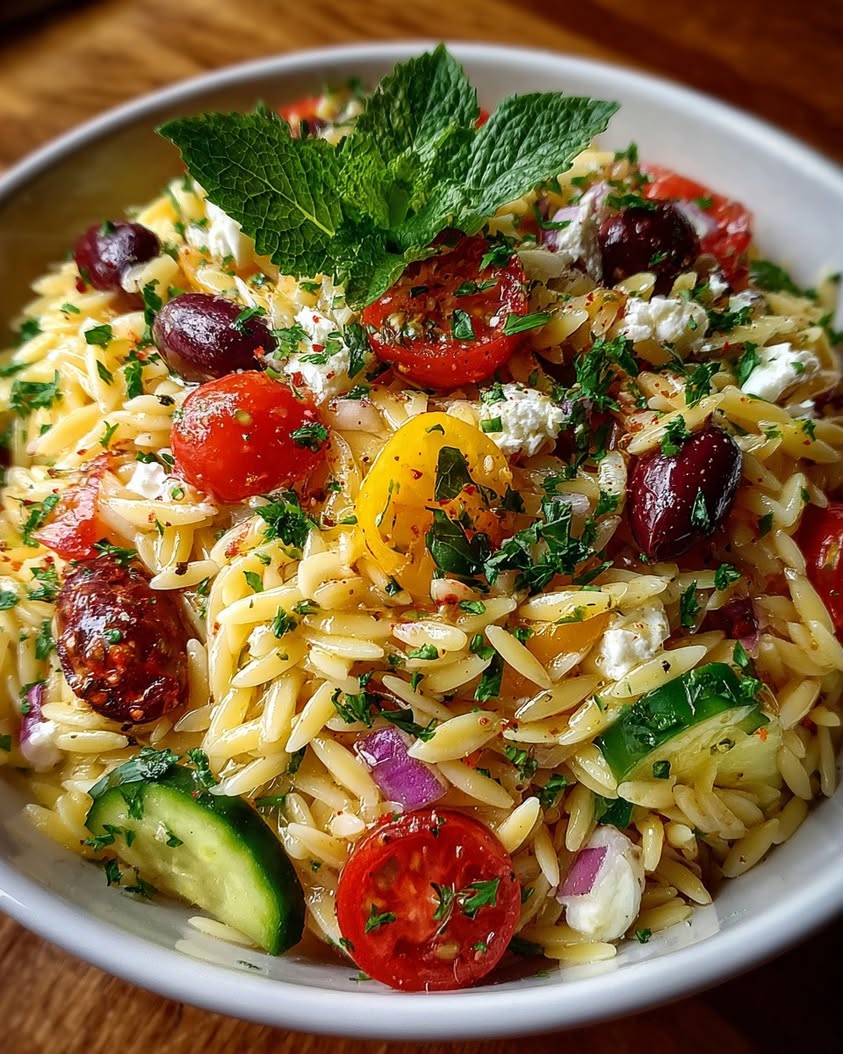
Greek-Style Orzo Salad with Olives, Cucumber & Feta: A Mediterranean Masterpiece
Imagine a dish that captures the essence of a sun-drenched Greek island in a single, refreshing bite. This vibrant Greek Orzo Salad with Feta does exactly that. Moreover, it combines tender orzo pasta with the crisp freshness of cucumber, the salty punch of Kalamata olives, and creamy, tangy feta cheese. Consequently, every forkful delivers a symphony of Mediterranean flavors that is both satisfying and light.
This recipe is more than just a side dish; it is a versatile culinary star. For instance, you can serve it as a hearty main for a light lunch, a stunning side at your next barbecue, or a make-ahead potluck champion. Ultimately, the bright lemon-herb vinaigrette ties everything together, creating a salad that improves as it chills. Therefore, let us dive into creating this simple yet spectacular Greek Orzo Salad with Feta.
Quick Recipe Highlights
- Flavor Profile: This Greek Orzo Salad with Feta bursts with tangy, salty, and fresh notes. The lemon dressing and oregano provide a classic Greek foundation. Meanwhile, the briny olives and sharp feta create a deliciously savory depth.
- Texture: You will enjoy a delightful contrast in every bite. The orzo offers a pleasing, al dente chew. Conversely, the cucumber and bell pepper add a juicy crunch that is incredibly refreshing.
- Aroma: Fresh herbs like dill and oregano release a fragrant, earthy scent. Additionally, the bright zest of lemon immediately awakens the senses. This aroma promises a clean, vibrant eating experience.
- Visual Appeal: The salad presents a beautiful mosaic of colors. Vibrant red tomatoes, green cucumbers, and purple olives pop against the white feta and pale orzo. As a result, it looks as incredible as it tastes.
- Skill Level Needed: This is a perfect beginner-friendly recipe. Basically, it requires simple chopping, boiling pasta, and whisking a dressing. No advanced techniques are necessary for success.
- Special Equipment: You only need basic kitchen tools. A pot for boiling orzo, a sharp knife, and a mixing bowl are essential. A whisk for the dressing is helpful but not mandatory.
Recipe Overview
- Difficulty Level: This Greek Orzo Salad with Feta earns an easy rating. The steps are straightforward and sequential. Primarily, you cook pasta, chop vegetables, and mix a simple vinaigrette. Consequently, even novice cooks can achieve fantastic results without stress.
- Category: This dish fits multiple meal categories beautifully. It shines as a vegetarian main course or a substantial side dish. Furthermore, it is ideal for picnics, potlucks, and packed lunches due to its portability.
- Cuisine: The recipe is firmly rooted in Greek and broader Mediterranean culinary traditions. It uses hallmark ingredients like feta, olives, oregano, and olive oil. These elements combine to create an authentic taste of the region.
- Cost: This is a very budget-friendly meal. Pantry staples like orzo and dried oregano form the base. Fresh vegetables and block feta offer high value without a high price tag.
- Season: This salad is perfect for warm spring and summer months. Its refreshing, cool nature is ideal for hot days. However, it works year-round as a bright counterpoint to heavier winter meals.
- Occasion: It is incredibly versatile for social gatherings. Serve it at casual weeknight dinners, festive barbecues, or elegant brunches. Its crowd-pleasing flavor profile suits almost any event.
Why You’ll Love This Recipe
First, the taste and texture are utterly irresistible. This Greek Orzo Salad with Feta delivers a perfect balance in every mouthful. You get the creamy, tangy burst of feta cheese against the salty bite of Kalamata olives. Simultaneously, the crisp vegetables provide a refreshing crunch. The lemon-herb vinaigrette coats each ingredient, ensuring a cohesive and bright flavor profile that is never boring.
Next, consider the sheer convenience of this dish. You can prepare the entire Greek Orzo Salad with Feta in under thirty minutes. Furthermore, it is an excellent make-ahead option. In fact, the flavors meld and intensify when chilled for a few hours. Therefore, it eliminates last-minute kitchen stress before guests arrive or a busy weeknight dinner.
Nutritionally, this salad is a wholesome choice. Orzo provides energizing carbohydrates, while the vegetables load it with vitamins, minerals, and fiber. Additionally, olive oil and feta contribute healthy fats. This combination helps you feel satisfied and nourished. It is a meal that supports your well-being without sacrificing an ounce of flavor.
For entertaining, this recipe is a true superstar. A large bowl of this vibrant Greek Orzo Salad with Feta always draws compliments. It pairs seamlessly with grilled meats, fish, or stands proudly on its own. Because it serves a crowd easily and travels well, it becomes your go-to potluck contribution. People will consistently ask you for the recipe.
Finally, it is remarkably cost-effective and accessible. The ingredients are common and often already in your pantry or local grocery store. You can easily adapt it based on what is seasonal or on sale. This flexibility makes the Greek Orzo Salad with Feta a practical staple for any home cook looking to eat deliciously on a budget.
Historical Background and Cultural Significance
Orzo, despite its rice-like shape, is a form of pasta with roots in Italian cuisine. However, its adoption into Greek cooking showcases the beautiful culinary exchange across the Mediterranean. Greeks expertly incorporated this pasta into their rich tradition of hearty salads, often using local ingredients like feta cheese and olives. Consequently, this fusion created a beloved modern classic.
The cultural significance lies in the salad’s embodiment of Greek “philoxenia,” or hospitality. A table featuring a generous bowl of Greek Orzo Salad with Feta signals welcome and sharing. These communal, mezze-style dishes are central to social and family gatherings. They represent a lifestyle centered around fresh, simple ingredients and enjoying meals together.
The recipe has evolved to suit contemporary tastes and global kitchens. While traditional Greek salads feature chunks of tomato, cucumber, and onion, the addition of orzo transforms it into a more substantial, pilaf-like dish. This evolution reflects a desire for heartier vegetarian options and convenient, one-bowl meals. The core flavors, however, remain authentically Greek.
Regional variations abound within Greece and beyond. Some islands might add capers or caper leaves for extra brininess. In other areas, you may find fresh mint or parsley alongside dill. The type of olive oil, from the robust Koroneiki to the milder Arbequina, can also change the profile. This adaptability is a testament to the recipe’s solid foundation and enduring appeal.
Ingredient Deep Dive
Orzo, the star of this Greek Orzo Salad with Feta, is a rice-shaped pasta. Its name means “barley” in Italian, referencing its size and shape. When cooked al dente, it provides a delightful, slightly chewy texture that holds dressings well. For the best results, use a high-quality semolina orzo and be sure to salt the boiling water generously. This pasta acts as the perfect canvas, absorbing the vibrant flavors of the lemon and herbs.
Feta cheese is the soul of this dish. Authentic Greek feta is a Protected Designation of Origin (PDO) product, made from at least 70% sheep’s milk, often blended with goat’s milk. This process gives it a distinctive tangy, salty flavor and crumbly texture. Nutritionally, it is a good source of calcium and protein. For the best taste in your Greek Orzo Salad with Feta, always buy a block stored in brine and crumble it yourself.
Kalamata olives are another non-negotiable ingredient. These dark purple, almond-shaped olives from the Messinia region of Greece have a rich, fruity, and wine-like flavor. They are typically preserved in vinegar or wine. Their deep, complex brininess is irreplaceable. If you cannot find Kalamatas, other black olives like Gaeta can work, but the flavor profile will shift. Remember to pit them for easier eating.
Extra virgin olive oil forms the base of the dressing. It contributes a fruity, peppery backbone that carries the other flavors. High-quality olive oil is rich in monounsaturated fats and antioxidants. For a true Greek taste, seek out oil labeled as Greek. In your Greek Orzo Salad with Feta, it emulsifies with lemon juice to coat every ingredient evenly, preventing dryness.
Fresh dill and dried oregano provide the herbal signature. Dill offers a bright, grassy, and slightly anise-like freshness that is quintessential in Greek cuisine. Dried oregano, preferably Greek or Mediterranean, delivers an earthy, aromatic punch that intensifies in the dressing. Together, they create a layered herbaceousness that makes the salad smell and taste authentically Mediterranean.
Common Mistakes to Avoid
- Overcooking the Orzo: Mushy orzo will ruin the salad’s texture. Always cook it al dente, as it will continue to absorb dressing and soften slightly while chilling. Follow package instructions but start testing a minute or two early.
- Not Salting the Pasta Water: Orzo needs to be seasoned from the inside out. The boiling water should taste like the sea. Underseasoned pasta will make the entire Greek Orzo Salad with Feta taste bland, no matter how flavorful the dressing is.
- Using Pre-Crumbled Feta: These products often contain anti-caking agents and lack the creamy, moist texture of a block feta in brine. The flavor is also milder. For superior taste and texture, always buy a block and crumble it yourself just before adding.
- Dressing the Salad While Hot: Pouring vinaigrette over warm orzo causes it to absorb too much oil and become greasy. It can also wilt the fresh vegetables. Always rinse the cooked orzo with cool water and ensure it is at room temperature before assembling.
- Skipping the Red Wine Vinegar: While lemon is the primary acid, a splash of red wine vinegar adds necessary complexity and brightness. It balances the richness of the olive oil and feta. Omitting it can result in a one-dimensional dressing.
- Chopping Vegetables Too Finely: You want distinct pieces that provide texture and visual appeal. Dicing the cucumber, tomato, and pepper too small will make them disappear and turn the salad mushy. Aim for a hearty, half-inch dice.
- Forgetting to Taste and Adjust: Seasoning is not a one-time step. After mixing everything, taste the salad. It likely needs more salt, pepper, lemon juice, or herbs. Adjusting at the end is the key to a perfectly balanced Greek Orzo Salad with Feta.
- Not Letting it Rest: Serving immediately is fine, but the magic happens after an hour in the fridge. This rest allows the flavors to marry and develop depth. For the best experience, plan ahead and let your salad chill.
Essential Techniques
Cooking Orzo to Al Dente Perfection is crucial. Al dente, meaning “to the tooth,” describes pasta that is tender but still offers a slight resistance when bitten. To achieve this, use a large pot of well-salted boiling water and stir frequently to prevent sticking. Start tasting a minute or two before the package’s suggested time. Perfect orzo should not have a hard center but should not be soft or mushy either. Immediately drain and rinse with cool water to stop the cooking process.
Creating an Emulsified Vinaigrette is a simple but vital skill. An emulsion is a stable mixture of two liquids that normally do not mix, like oil and vinegar. To create one for your Greek Orzo Salad with Feta, start by whisking the lemon juice, vinegar, and seasonings in a bowl. Then, add the olive oil in a slow, steady stream while whisking constantly. This technique creates a creamy, unified dressing that coats ingredients evenly instead of separating and pooling at the bottom of the bowl.
Proper Vegetable Prep ensures optimal texture and flavor. For the cucumber, if it has thick skin or wax, peeling it is advisable. Seeding the cucumber and tomatoes prevents excess water from diluting your dressing and making the salad soggy. Use a spoon to scoop out the seedy pulp from tomato halves. For the bell pepper, cut flat sides off the core for easy, even dicing. Uniform pieces guarantee a consistent bite and professional appearance.
Pro Tips for Perfect Greek-Style Orzo Salad
Toast your orzo in a dry pan for a few minutes before boiling. This step adds a subtle, nutty depth to the pasta’s flavor. Simply stir the dry orzo in a skillet over medium heat until it becomes lightly golden. Then, proceed to boil it as usual.
Add a whole garlic clove to the pasta water. This infuses the orzo itself with a gentle, aromatic garlic essence. You can remove the clove after draining, or mash it and mix it into the dressing for an extra punch.
Use the brine from the feta container. A teaspoon of this salty, tangy liquid added to the dressing amplifies the cheesy flavor throughout the entire Greek Orzo Salad with Feta. It is a chef’s secret for maximizing taste.
Chop your herbs at the very last minute. Dill, in particular, can wilt and darken if chopped too far in advance. Keeping the leaves whole until you are ready to mix preserves their vibrant color and potent aroma.
Let the dressed salad sit for 10 minutes before the final taste test. The salt and acid will draw out natural juices from the vegetables, which then mingle with the dressing. You may find you need less additional seasoning than you initially thought.
For a creamier texture, stir in a tablespoon of plain Greek yogurt or mayonnaise into the dressing. This creates a richer, more cohesive coating that clings beautifully to every piece of orzo and vegetable.
Variations and Adaptations
For regional variations, consider adding different Greek touches. Incorporate a handful of chopped fresh mint or flat-leaf parsley for an herbal twist. Add a half-cup of cooked chickpeas or white beans for extra protein and heartiness. Some versions include thinly sliced red onion soaked in ice water to tame its bite. For a truly coastal feel, mix in a few tablespoons of chopped capers or sun-dried tomatoes.
Seasonal adaptations keep this salad exciting year-round. In summer, use sweet cherry tomatoes and fresh basil. For fall, add roasted cubes of butternut squash and swap dill for sage. Winter versions can include roasted broccoli and a lemon-tahini dressing. Spring welcomes tender asparagus tips and fresh peas. The base recipe for Greek Orzo Salad with Feta is wonderfully flexible.
Dietary modifications are straightforward. For a vegan Greek Orzo Salad, omit the feta or use a high-quality vegan feta alternative. Add extra olives or toasted pine nuts for savoriness. To make it gluten-free, simply substitute the orzo with an equal amount of cooked gluten-free pasta like rice or corn-based small shapes. Always check labels on pre-packaged ingredients like olives to ensure they meet your dietary needs.
Flavor variations can take this dish around the Mediterranean. Add za’atar and sumac for a Levantine flair. Incorporate preserved lemons and harissa for a North African kick. For an Italian spin, use basil, mozzarella pearls, and balsamic vinegar. The structure of the salad welcomes global inspiration while maintaining its refreshing, pasta-salad identity.
Serving and Presentation Guide
Plating techniques elevate this humble salad. For individual servings, use a round mold or a small bowl to create a neat, domed shape in the center of the plate. Alternatively, serve it family-style in a wide, shallow bowl to showcase all the colorful ingredients. Garnish the top with a final sprinkle of crumbled feta, a few whole olives, and a sprig of fresh dill for a professional touch.
Consider traditional and modern accompaniments. Classically, this Greek Orzo Salad with Feta pairs with grilled lamb chops, chicken souvlaki, or whole fish. For a modern, vegetarian spread, serve it alongside grilled halloumi, stuffed grape leaves (dolmades), and a bowl of tzatziki. It also makes a fantastic filling for hollowed-out tomatoes or bell peppers for a portable lunch option.
Temperature considerations are important. This salad is best served cold or at cool room temperature. If it has been in the fridge, let it sit out for about 15 minutes before serving to take the extreme chill off, which can mute flavors. Never serve it warm, as the textures will be compromised. For outdoor events, keep the serving bowl nestled in a larger bowl of ice to maintain freshness.
Wine and Beverage Pairing
Wine pairings should complement the salad’s bright acidity and salty components. A crisp, dry white wine like Assyrtiko from Santorini is a perfect regional match. Its citrus notes and mineral quality echo the lemon in the dressing. Alternatively, a Greek Rosé or a Sauvignon Blanc with its grassy notes works beautifully. For red wine lovers, a light, chilled Beaujolais or Pinot Noir can handle the dish’s flavors without overwhelming it.
Non-alcoholic alternatives are just as important. A sparkling lemonade or limeade mirrors the citrus dressing. Iced herbal teas, like mint or lemon verbena, are refreshing companions. For a more sophisticated option, try a cucumber-infused water or a non-alcoholic Greek “Shandy” made with lemon soda and iced tea. These drinks cleanse the palate between bites of the savory feta and olives.
Storage and Shelf Life
Proper storage methods are key to longevity. Store your Greek Orzo Salad with Feta in a rigid, airtight container in the refrigerator. Glass containers are ideal as they do not absorb odors. Press a piece of plastic wrap directly onto the surface of the salad before sealing the lid. This minimizes air exposure and helps prevent the orzo from drying out and the vegetables from wilting.
Understand the signs of spoilage. A properly stored salad will stay fresh for 3 to 4 days. Discard it if you notice an off smell, significant liquid separation that appears cloudy, or any signs of mold. The vegetables will gradually lose their crispness over time, but the salad will still be safe to eat within the timeframe if stored correctly. Do not freeze this salad, as the texture of the cucumbers and tomatoes will become unpleasantly mushy upon thawing.
Make Ahead Strategies
You can efficiently prep this salad in stages. Cook and rinse the orzo up to a day in advance; store it separately in the fridge. Chop all the vegetables and store them together in a sealed container. Whisk the dressing and keep it in a jar. One hour before serving, combine the cold orzo, vegetables, and dressing. Finally, add the fresh herbs and feta cheese. This strategy keeps every element at its peak.
Assessing quality impact is important. When made ahead, the flavors of your Greek Orzo Salad with Feta will actually improve over the first 24 hours as they meld. The primary trade-off is a slight softening of the crisp vegetables. To combat this, you can reserve a portion of the chopped cucumber and pepper to stir in just before serving. This maintains a fresh crunch alongside the developed flavors.
Scaling Instructions
Halving or doubling the recipe is simple. The ingredients scale in a linear fashion. However, when doubling, use a larger pot for the orzo to ensure it cooks evenly, and consider mixing the salad in a very large bowl or even a clean pot. The dressing may require extra whisking to emulsify properly when made in a larger quantity. Taste carefully, as seasoning needs may not scale exactly 1:1.
Consider timing and storage modifications. Cooking time for the orzo remains the same regardless of batch size. However, the time needed to chop vegetables will increase. When making a large batch for a party, build in extra prep time. Storage space is also a consideration; ensure you have enough refrigerator space for a very large container or multiple smaller ones.
Nutritional Deep Dive
This Greek Orzo Salad with Feta offers a balanced macronutrient profile. The orzo provides complex carbohydrates for sustained energy. Olive oil and feta contribute healthy monounsaturated and saturated fats, which aid in nutrient absorption and satiety. The vegetables add minimal calories but significant volume and fiber, making this a filling dish. It is a well-rounded meal that supports stable blood sugar levels when portioned appropriately.
Micronutrient analysis reveals a wealth of vitamins and minerals. Tomatoes and bell peppers are excellent sources of Vitamin C and antioxidants like lycopene. Cucumbers provide hydration and silica. Olive oil is rich in Vitamin E and polyphenols. Feta cheese offers a good dose of calcium and protein. Together, these ingredients create a nutrient-dense dish that supports overall health, from bone strength to immune function.
Dietary Adaptations
For a gluten-free version, substitute the orzo with an equal amount of cooked gluten-free pasta. Brown rice orzo or quinoa-based small pasta works well. Ensure all other packaged ingredients, like olives, are certified gluten-free. The texture will be nearly identical, allowing everyone to enjoy this Mediterranean favorite.
Creating a vegan Greek Orzo Salad is easy. Omit the feta cheese. To replicate the tangy, salty flavor, use a vegan feta alternative or make a tofu-based version marinated in lemon juice and salt. Add extra olives, capers, or toasted nuts like almonds or walnuts for richness and texture. The dressing remains the same, relying on high-quality olive oil for its luxurious mouthfeel.
Troubleshooting Guide
If your salad is too dry, the orzo may have absorbed too much dressing. Simply whisk together an extra tablespoon each of lemon juice and olive oil, then gently fold it into the salad. If it is too wet, you likely added the dressing while the orzo was too warm or did not seed the tomatoes and cucumber. Drain any excess liquid from the bowl, and in the future, ensure ingredients are cool and properly prepped.
For flavor balance issues, identify what is lacking. If it tastes bland, it likely needs more salt. Add it gradually. If it is flat, it needs acid; add a squeeze of fresh lemon juice. If it is too sharp, balance it with a drizzle of olive oil or a pinch of sugar. Troubleshooting is about tasting and adjusting incrementally until the flavors of your Greek Orzo Salad with Feta sing in harmony.
Recipe Success Stories
Community feedback on this Greek Orzo Salad with Feta has been overwhelmingly positive. Many readers report it becoming their default potluck dish, consistently earning rave reviews. One home cook shared how she added grilled shrimp to turn it into a complete dinner, while another used it as a filling for wraps for her children’s school lunches. These adaptations showcase the recipe’s incredible versatility and crowd-pleasing nature.
Reader suggestions have inspired delicious variations. A common tip is to add a can of drained, flaked tuna or rotisserie chicken for a protein boost. Others recommend using quinoa instead of orzo for a whole-grain alternative. Several readers have successfully made it dairy-free with great results. These shared experiences prove that this recipe is a fantastic foundation for personal culinary creativity.
Frequently Asked Questions
Can I use a different pasta? Yes, you can. Small shapes like ditalini, small shells, or even couscous work well. However, the cooking time will vary, so adjust accordingly. The rice-like shape of orzo is traditional and ideal for holding the dressing.
How long does this salad last in the fridge? It stays fresh for 3 to 4 days when stored in an airtight container. The flavors actually improve on the second day. I do not recommend freezing it, as the vegetables will become watery and mushy upon thawing.
Can I make it without olives? Absolutely. If you dislike olives, simply omit them. You might add a tablespoon of capers for a similar briny note, or just increase the other vegetables. The salad will still be delicious.
Is there a substitute for fresh dill? If you cannot find fresh dill, you can use 1 to 2 teaspoons of dried dill weed. Alternatively, fresh parsley or mint makes a lovely, though different, herbal substitution. The flavor profile will shift but remain tasty.
My salad seems watery after chilling. What happened? This is usually caused by not seeding the tomatoes and cucumber, or by adding the dressing while the orzo was still warm. For future batches, ensure those steps are followed. For now, you can drain off the excess liquid.
Can I add meat to this salad? Definitely. Grilled chicken, shrimp, or flaked tuna are excellent additions. Add the cooked protein just before serving to prevent it from becoming soggy. This turns the side dish into a hearty main course.
What can I use instead of red wine vinegar? White wine vinegar or even a mild apple cider vinegar are fine substitutes. Avoid strongly flavored vinegars like balsamic, as they will darken the salad and overpower the other flavors.
How do I know when the orzo is done? Taste it! Al dente orzo should be tender but still have a slight bite or firmness at its center. It should not be crunchy, but it should also not be soft or mushy. Start testing a minute before the package’s minimum time.
Additional Resources
If you loved this Greek Orzo Salad with Feta, explore other Mediterranean recipes on the site. A classic Horiatiki (Greek Village Salad) is a must-try for purists. For a warm option, our Greek Lemon Chicken and Rice Soup (Avgolemono) is comforting and flavorful. Additionally, a guide to building a Mediterranean mezze platter can help you create an entire feast around this star salad.
For mastering core techniques, check out our detailed guides. Learn how to cook pasta perfectly every time, or dive into the art of making homemade vinaigrettes. Understanding these foundational skills will make you more confident and creative in the kitchen, allowing you to adapt not just this recipe, but countless others with ease and success.
{“success”:true,”message”:”Recipe created successfully”,”post_id”:9114,”tasty_recipe_id”:9114,”shortcode”:”“}

I’m Billy, a classically trained culinary school graduate from The Culinary Institute of America with over 12 years in the restaurant industry and over 19 years of cooking experience.