
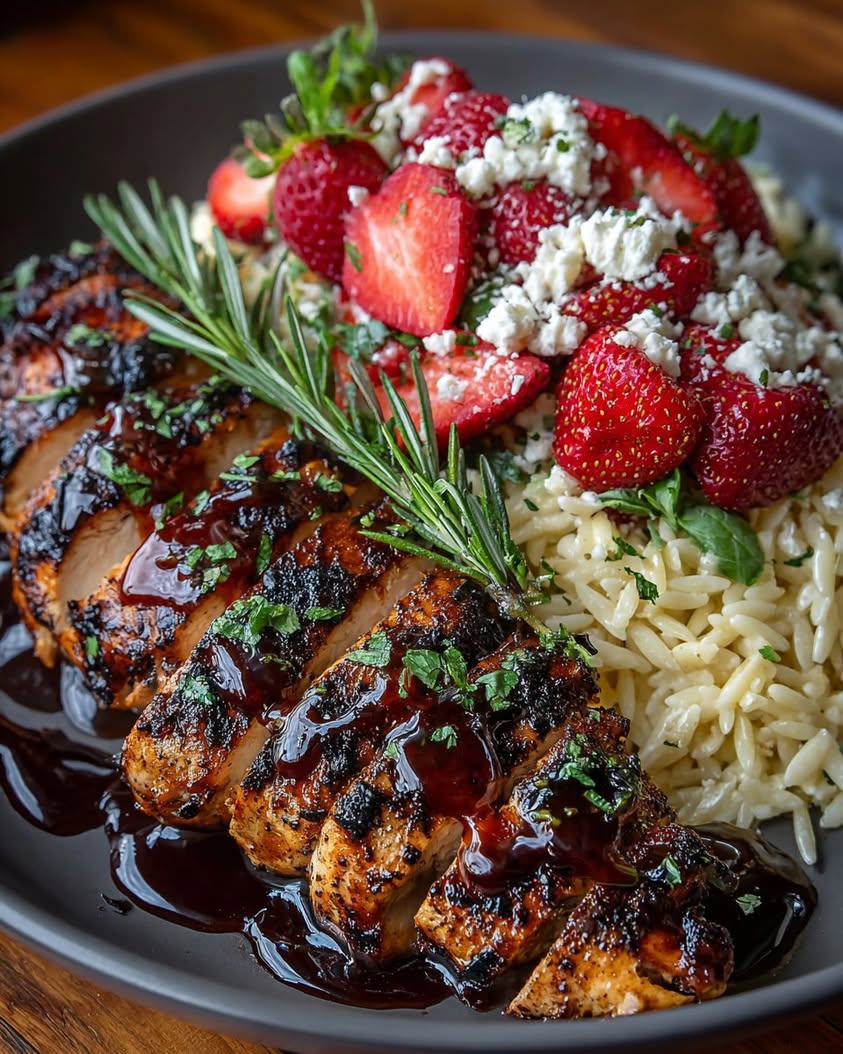
Grilled Chicken with Strawberry Balsamic Glaze: A Sweet and Savory Summer Feast
Imagine the smoky aroma of perfectly charred chicken mingling with the sweet, tangy scent of bubbling strawberries and balsamic vinegar. This Grilled Chicken with Strawberry Balsamic Glaze is not just a meal; it is a vibrant celebration of summer flavors on a single plate. Consequently, it transforms simple, accessible ingredients into a restaurant-worthy dish that will impress your family and guests alike. The magic lies in the harmonious contrast: the savory, juicy chicken pairs brilliantly with a glossy, fruit-forward glaze that is both sophisticated and comforting.
Furthermore, the accompanying Cotija Cheese Orzo Salad completes this culinary picture with its creamy, salty, and fresh components. This recipe is designed for maximum flavor with minimal fuss, making it an ideal choice for weeknight dinners or weekend entertaining. Ultimately, it showcases how seasonal produce can elevate a classic protein into something extraordinary. Each bite delivers a complex play of sweet, savory, tangy, and smoky notes, ensuring that this Grilled Chicken with Strawberry Balsamic Glaze becomes a fast favorite in your recipe rotation.
Quick Recipe Highlights
- Flavor Profile: This dish masterfully balances sweet and savory. The strawberry balsamic glaze offers a bright, jammy fruitiness cut by the sharp acidity of balsamic, while the grilled chicken provides a hearty, smoky base. Meanwhile, the Cotija cheese in the orzo salad adds a crucial salty, tangy counterpoint that ties everything together.
- Texture: You will enjoy a fantastic textural journey. Expect tender, juicy chicken with a slightly crisp exterior from the grill, coated in a sticky, luxurious glaze. The orzo salad contributes a pleasingly chewy pasta base studded with crisp vegetables and crumbly cheese for a satisfying mouthfeel.
- Aroma: The cooking process fills your kitchen and backyard with an irresistible fragrance. Initially, you will smell the earthy charcoal or grill marks, followed by the caramelizing sugars of the strawberry glaze. Finally, the fresh herbs from the salad complete the aromatic experience.
- Visual Appeal: This plate is a feast for the eyes with stunning color contrast. The golden-brown chicken glistens with a deep red glaze, beautifully complemented by the vibrant green herbs and white cheese in the pale orzo salad. It is a picture-perfect dish that looks as good as it tastes.
- Skill Level Needed: This is an accessible recipe for most home cooks. Basic grilling skills and the ability to make a simple reduction sauce are the primary techniques required. Therefore, even beginners can achieve fantastic results by following the straightforward steps for timing and temperature.
- Special Equipment: You will need a reliable grill (charcoal, gas, or indoor grill pan) to achieve the signature char. Additionally, a small saucepan for the glaze and a pot for boiling orzo are essential. A sharp knife and cutting board for prep round out the necessary tools.
Recipe Overview
- Difficulty Level: We rate this Grilled Chicken with Strawberry Balsamic Glaze as easy. The steps are sequential and simple: marinate, grill, simmer a glaze, and toss a salad. There are no advanced techniques like sous-vide or intricate knife work required. However, paying attention to the glaze’s consistency and the chicken’s internal temperature is key to perfect execution.
- Category: This recipe fits beautifully into multiple categories. It is a fantastic main course for dinner, a standout dish for summer barbecues and picnics, and elegant enough for date nights or casual entertaining. The components also work well for meal prep when stored separately.
- Cuisine: This dish is a contemporary American fusion creation. It draws inspiration from Italian influences seen in the balsamic reduction and orzo pasta, while incorporating Mexican Cotija cheese. The use of fresh strawberries and grilling techniques firmly roots it in modern, seasonal American cooking.
- Cost: The recipe is moderately priced and cost-effective. Chicken thighs are an affordable cut, and seasonal strawberries keep costs down. Cotija cheese and balsamic vinegar are the only specialty items, but both are used in modest amounts and have long shelf lives, making them worthwhile pantry investments.
- Season: This Grilled Chicken with Strawberry Balsamic Glaze is quintessentially a late spring and summer recipe. It is when strawberries are at their peak of sweetness and flavor. The grilling method also makes it ideal for warm weather cooking, keeping the heat out of your kitchen.
- Occasion: It is perfectly suited for a variety of events. Serve it at a backyard barbecue, a festive Fourth of July gathering, a relaxed Sunday family dinner, or even a dinner party where you want to showcase beautiful, flavorful food without being stuck in the kitchen all day.
Why You’ll Love This Recipe
First and foremost, the taste and texture appeal is undeniable. This Grilled Chicken with Strawberry Balsamic Glaze delivers an exciting symphony of flavors that dance on your palate. The savory, umami-rich chicken perfectly complements the sweet and tangy glaze, creating a balance that is both sophisticated and deeply satisfying. Moreover, the creamy, salty orzo salad provides a cooling and texturally interesting base that soaks up any extra glaze. Every forkful is a deliberate combination of smoky, sweet, tangy, and fresh, ensuring you never get bored with a single bite.
Next, consider the convenience and preparation benefits. Despite its impressive presentation, this recipe comes together in under an hour with mostly hands-off cooking time. You can marinate the chicken in advance and prepare the orzo salad components while the grill heats up. The glaze is a simple simmer-and-reduce situation that requires minimal attention. Consequently, you can manage the entire cooking process smoothly without stress, making it ideal for busy cooks who still want to serve a spectacular meal.
Furthermore, the nutritional advantages are a significant plus. Chicken thighs provide high-quality protein and essential nutrients like iron and zinc. Strawberries are packed with vitamin C, antioxidants, and fiber. Using whole ingredients and controlling the sugar in the glaze allows you to create a meal that is indulgent yet made from wholesome components. You are not relying on processed sauces or hidden unhealthy fats, which means you can feel good about serving this dish regularly.
Additionally, the social and entertaining value of this dish is high. This Grilled Chicken with Strawberry Balsamic Glaze is a guaranteed conversation starter. Its unique flavor combination and beautiful plating make guests feel special and well-cared-for. It is adaptable for scale, so you can easily double it for a crowd. Serving a meal that looks and tastes this good inevitably boosts your confidence as a host and creates memorable dining experiences for everyone at the table.
Finally, the cost-effectiveness and accessibility seal the deal. You do not need expensive or hard-to-find ingredients to create this restaurant-quality meal. The recipe utilizes affordable chicken thighs and seasonal produce. While good balsamic vinegar is recommended, a modestly priced one will still yield delicious results. This approachability means you can enjoy gourmet flavors without the gourmet price tag, making it a practical choice for everyday cooking as well as for special occasions.
Historical Background and Cultural Significance
The concept of fruit-based glazes for meat has a long and global history. In medieval European cooking, fruits like berries and plums were often used in sauces for game meats to cut through their gaminess and add sweetness, which was a prized flavor. The introduction of balsamic vinegar from Modena, Italy, added a complex acidity that chefs later paired with fruits. The modern iteration of a strawberry balsamic glaze, therefore, is a contemporary twist on these ancient culinary principles, combining Old World technique with New World ingredients like the cultivated strawberry.
Grilling chicken, of course, is a universal cooking method with roots in virtually every culture that had access to fire. The American backyard barbecue tradition, particularly in the post-World War II era, cemented grilled chicken as a staple of casual dining and celebration. Fusing this tradition with a glossy, reduction-style glaze represents an evolution in home cooking, where global pantry items become part of the everyday repertoire. This Grilled Chicken with Strawberry Balsamic Glaze sits at the intersection of these historical threads.
The use of Cotija cheese in the orzo salad introduces a Mexican influence to the dish. Cotija, named after the town of Cotija in Michoacán, is an aged, crumbly cheese traditionally made from cow’s milk. Its salty, tangy profile and ability to not fully melt make it a perfect garnish for salads and grains. Incorporating it into an orzo pasta salad is a fusion move, blending Italian pasta with a Mexican cheese to create a side dish that is uniquely suited to complement the sweet and savory main component.
Ultimately, this recipe is a testament to the modern, fusion-driven food culture. It does not strictly belong to one cuisine but borrows confidently from several to create something new and exciting. It reflects how contemporary cooks freely mix ingredients and techniques from around the world, guided by flavor harmony and seasonal availability rather than strict tradition. This Grilled Chicken with Strawberry Balsamic Glaze is a delicious product of our interconnected culinary landscape.
Ingredient Deep Dive
Chicken Thighs: Chicken thighs are the preferred cut for this Grilled Chicken with Strawberry Balsamic Glaze due to their higher fat content and connective tissue. This composition makes them incredibly forgiving on the grill, staying juicy and tender even if slightly overcooked. Historically, darker meat was often less prized than breast meat, but modern appreciation for flavor and texture has rightfully elevated it. Nutritionally, thighs provide more iron and zinc than breasts. For best results, choose bone-in, skin-on thighs for maximum flavor, or boneless/skinless for quicker cooking. Pat them dry before seasoning to ensure a good sear.
Fresh Strawberries: Strawberries, the star of the glaze, have been cultivated since Roman times for their medicinal and culinary uses. The modern garden strawberry originated in 18th-century Europe. They are an excellent source of vitamin C, manganese, folate, and antioxidants. For the glaze, select ripe, fragrant berries with a deep red color for the best sweetness and flavor. Avoid mushy or white-shouldered berries. Since they are cooked, you can use slightly overripe ones perfectly. To store, keep them unwashed in the refrigerator and rinse just before using. Frozen strawberries can be substituted in a pinch, but they may release more water and require a longer reduction time.
Balsamic Vinegar: Authentic Traditional Balsamic Vinegar (Aceto Balsamico Tradizionale) is a protected, aged product from Modena or Reggio Emilia, Italy, but for cooking, a moderately priced “balsamic vinegar of Modena” is perfect. Its sweet-and-sour complexity comes from reducing cooked grape must. The acidity balances the sweetness of the strawberries and helps tenderize the chicken slightly in the glaze. When reducing, it thickens and concentrates in flavor. For this recipe, avoid the overly thick, sweet “balsamic glaze” products sold in stores, as they can become too syrupy and sweet when reduced further. A good mid-range cooking balsamic will yield the best results.
Orzo: Orzo, meaning “barley” in Italian, is a rice-shaped pasta. It has been a staple in Italian and Greek cuisines for centuries, often used in soups and salads. Its small size and smooth texture make it ideal for absorbing dressings and mingling with other ingredients. Nutritionally, it is similar to other pastas, providing carbohydrates for energy. For the salad, cook it al dente so it retains a slight bite and does not become mushy when mixed. After draining, rinse it briefly with cool water to stop the cooking and remove excess starch, preventing clumping. You can find whole-wheat orzo for added fiber.
Cotija Cheese: Cotija is a Mexican cheese that is dry, crumbly, and quite salty, often compared to a dry feta or Parmesan. It originated as a way to preserve milk. It does not melt well, which makes it perfect for sprinkling over salads, tacos, and, in this case, orzo. Its bold saltiness is crucial for balancing the sweetness of the strawberry glaze across the whole meal. If you cannot find Cotija, a good substitute is feta cheese (though it is tangier) or finely grated Pecorino Romano (which is harder). Always crumble it just before serving to maintain its distinct texture.
Common Mistakes to Avoid
- Over-Reducing the Glaze: A common error is cooking the strawberry balsamic glaze for too long. Consequently, it can become overly thick, sticky, and bitter as the sugars burn. The ideal consistency is similar to warm honey; it should coat the back of a spoon and slowly drip off. Remember, it will thicken slightly more as it cools.
- Underseasoning the Chicken: Chicken thighs need ample seasoning. Do not be shy with salt and pepper, both under the skin and on the meat itself. Since the glaze is sweet, a well-seasoned savory base is essential for contrast. Season at least 15 minutes before grilling, or even the night before, to allow the salt to penetrate.
- Grilling on Too High Heat: Starting with a screaming-hot grill will cause the exterior of the chicken to char before the interior cooks through. Instead, aim for a medium-high heat. This allows for beautiful grill marks and caramelization while giving the fat time to render and the inside to reach a safe 165°F without burning.
- Overcooking the Orzo: Mushy orzo ruins the salad’s texture. Cook it in well-salted water just until al dente, as it will continue to soften slightly after draining and when it absorbs the dressing. Immediately rinse it with cool water to halt the cooking process and then drain it thoroughly to avoid a watery salad.
- Adding Cheese While Hot: If you mix the crumbled Cotija cheese into the hot orzo, it will melt and become greasy, losing its delightful crumbly texture. Always let the orzo cool to at least room temperature before folding in the cheese, herbs, and vegetables to maintain distinct, fresh components.
- Not Tasting the Glaze for Balance: The strawberry balsamic glaze should have a perfect sweet-tangy balance. Always taste it after reducing. If it is too tart, a tiny pinch of sugar can help. If it is too sweet, a small splash of fresh balsamic vinegar or lemon juice can brighten it up. Adjusting to your preference is key.
- Skipping the Resting Time for Chicken: Cutting into the chicken immediately after grilling causes all the precious juices to run out, leaving you with dry meat. Let the Grilled Chicken with Strawberry Balsamic Glaze rest for 5-10 minutes after it comes off the grill. This allows the juices to redistribute throughout the meat for maximum juiciness.
- Using Low-Quality Balsamic: Extremely cheap balsamic vinegar can be harsh and overly acidic without the necessary sweetness and complexity. Investing in a decent mid-range bottle of balsamic vinegar of Modena makes a dramatic difference in the depth of flavor in your glaze without breaking the bank.
Essential Techniques
Creating a Reduction Glaze: The technique of reducing a liquid mixture is central to this recipe. You combine strawberries, balsamic vinegar, and a sweetener, then simmer to evaporate water. This concentrates the flavors, thickens the consistency, and creates a glossy sauce that clings to the chicken. The key is to maintain a gentle simmer, not a rolling boil, to prevent scorching. Stir occasionally and watch as the bubbles become slower and more syrupy. The final visual cue is when the glaze coats the back of a spoon and leaves a clear path when you run your finger through it.
Grilling for Juicy Chicken: Proper grilling ensures juicy, flavorful chicken with attractive marks. First, pat the chicken completely dry to promote browning, not steaming. Preheat your grill to medium-high and clean the grates well to prevent sticking. Place the chicken skin-side down first and do not move it for several minutes to achieve a good sear. Use a thermometer to check for doneness (165°F at the thickest part), avoiding cutting into it. Mastering this technique gives you perfectly cooked chicken every time, which is the foundation for the Grilled Chicken with Strawberry Balsamic Glaze.
Building a Flavorful Grain Salad: A great pasta salad is more than just mixed ingredients. The technique involves seasoning each component. Salt the orzo cooking water generously, as this is your best chance to season the pasta itself. While the orzo is still warm, toss it with a simple vinaigrette or olive oil so it absorbs the flavor. Finally, add delicate ingredients like fresh herbs, cheese, and vegetables off-heat to preserve their texture and brightness. This layered approach to seasoning creates a side dish where every bite is perfectly balanced.
Pro Tips for Perfect Grilled Chicken with Strawberry Balsamic Glaze
First, score the fat on the chicken thighs. Make a few shallow cuts through the skin and fat layer, being careful not to cut into the meat. This helps the fat render more efficiently during grilling, resulting in crispier skin and prevents the chicken from curling up.
Second, use an immersion blender for a smoother glaze. If you prefer a completely smooth, restaurant-style glaze, after simmering, carefully blend the strawberry-balsamic mixture with an immersion blender or in a standard blender until silky. Then return it to the pan to thicken slightly.
Third, add a sprig of fresh thyme or rosemary to the glaze while it simmers. This introduces a subtle, aromatic herbaceous note that complements the fruit and vinegar beautifully. Simply remove the sprig before serving or brushing onto the chicken.
Fourth, toast the orzo before boiling. For a deeper, nuttier flavor in your salad, toast the dry orzo in a skillet with a little olive oil until it turns light golden brown. Then proceed to boil it as usual. This extra step adds incredible depth.
Fifth, let components come to room temperature before serving. Both the grilled chicken (after resting) and the orzo salad taste best at room temperature. This allows the flavors to open up fully and prevents the cheese in the salad from sweating or melting.
Sixth, reserve a little glaze for serving. Do not use all the glaze to brush the chicken on the grill. Set aside a small amount in a separate bowl to drizzle over the plated dish just before serving. This ensures a vibrant, fresh glaze flavor and a beautiful presentation.
Variations and Adaptations
Regional Variations: To give this dish a different regional twist, consider swapping the Cotija cheese. For a Greek variation, use feta cheese, Kalamata olives, and oregano in the orzo salad. For an Italian spin, use grated Parmesan, sun-dried tomatoes, and basil. You could even turn it into a Southern-inspired dish by using a peach balsamic glaze and adding fresh corn and black-eyed peas to the salad.
Seasonal Adaptations: The beauty of this recipe framework is its adaptability to the seasons. In fall, try a glaze made with blackberries or figs. For winter, a cranberry-orange balsamic glaze would be stunning. In spring, rhubarb or early apricots make excellent alternatives to strawberries. Simply adjust the sweetener in the glaze based on the natural sweetness of the fruit you choose.
Dietary Modifications: For a gluten-free version, ensure your balsamic vinegar is gluten-free (most are) and substitute the orzo with a gluten-free pasta like brown rice orzo or quinoa. For dairy-free, omit the Cotija cheese or use a vegan Parmesan alternative. The salad will still be flavorful with extra herbs and a squeeze of lemon.
Flavor Variations: Infuse the glaze with other flavors. Add a tablespoon of bourbon or port wine to the simmering strawberries for complexity. A pinch of red pepper flakes will introduce a gentle heat that contrasts the sweetness. A teaspoon of Dijon mustard whisked into the finished glaze can add a pleasant sharpness and help emulsify it further.
Texture Modifications: If you prefer more texture in your salad, add toasted pine nuts, slivered almonds, or pepitas. For extra creaminess without more cheese, mix in a few spoonfuls of plain Greek yogurt or avocado cubes. To make the chicken even crispier, finish it under a broiler for a minute after glazing to set the glaze into a shiny lacquer.
Presentation Alternatives: Instead of serving the chicken whole, slice it and fan it over a bed of the orzo salad. Alternatively, chop the grilled chicken and toss it directly with the orzo salad for a hearty, all-in-one pasta bowl. For individual servings, use ring molds to create neat towers of orzo salad topped with a piece of chicken.
Serving and Presentation Guide
Plating Techniques: For an elegant presentation, place a generous scoop of the Cotija Cheese Orzo Salad slightly off-center on a warm plate. Lean one or two pieces of the Grilled Chicken with Strawberry Balsamic Glaze against the salad. Use a spoon to drizzle a little extra glaze in artistic swoops or dots around the plate. This creates height and visual interest.
Garnishing Ideas: Fresh garnishes add color and a final flavor pop. Sprinkle the entire plate with additional crumbled Cotija cheese and finely sliced fresh basil or mint leaves. A few whole, perfect strawberries sliced in half or a small cluster of microgreens also makes a beautiful and edible garnish that hints at the flavors within.
Traditional Accompaniments: While the orzo salad is a complete side, you can add other simple accompaniments. A crusty baguette is perfect for soaking up any remaining glaze on the plate. A simple arugula salad with a lemon vinaigrette provides a peppery, fresh contrast that cleanses the palate between bites of the rich chicken.
Modern Serving Suggestions: For a family-style or casual gathering, serve the grilled chicken on a large wooden board or platter, drizzled with glaze. Place the orzo salad in a large, colorful bowl nearby. This encourages guests to serve themselves and creates a relaxed, inviting tablescape. Provide small bowls of extra glaze, cheese, and herbs for customization.
Temperature Considerations: This dish is best served warm or at room temperature. Avoid serving the chicken piping hot directly from the grill, as it needs its resting time. Similarly, a fridge-cold orzo salad will mute the flavors. Aim to assemble the salad and grill the chicken so they are both ready to serve at a perfect, palatable temperature.
Portion Control Tips: A standard serving is one to two chicken thighs per person, depending on size, alongside about ¾ to 1 cup of orzo salad. If serving as part of a larger buffet with other dishes, you can reduce the portion size accordingly. The orzo salad is quite filling, so a little goes a long way.
Wine and Beverage Pairing
Wine Pairings: The sweet and savory profile of the Grilled Chicken with Strawberry Balsamic Glaze calls for wines with good acidity and some fruitiness. A dry Rosé from Provence is a fantastic match, as its berry notes and crisp finish complement the strawberries without overpowering the dish. Alternatively, a light-bodied Pinot Noir with red fruit flavors can handle the savory chicken and tangy glaze beautifully. For white wine lovers, an off-dry Riesling or a Viognier provides enough body and stone fruit character to stand up to the meal.
Non-Alcoholic Alternatives: Craft sodas are a wonderful pairing. A strawberry or ginger-based artisanal soda echoes the glaze’s flavors. Sparkling water with muddled fresh berries and a sprig of mint is a refreshing and elegant choice. For a more substantial drink, a slightly sweetened hibiscus iced tea (agua de jamaica) offers a tart, floral note that pairs exceptionally well with the Cotija cheese and grilled elements.
Coffee/Tea Pairings: While not a typical dinner pairing, for a late summer lunch, a glass of cold brew coffee can be surprisingly good. Its low acidity and chocolatey notes can complement the charred, savory notes of the chicken. For tea, a lightly smoked Lapsang Souchong tea, served cool, would accentuate the grilled flavor in a unique way.
Temperature Considerations: All beverages should be served well-chilled (for white, rosé, and non-alcoholic options) or slightly below room temperature (for red wine). The contrast between the cool drink and the warm, flavorful food enhances both experiences. Avoid serving overly sweet drinks, as they can compete with the glaze rather than cleanse the palate.
Serving Suggestions: Present wines in appropriate stemware to appreciate their aroma. For non-alcoholic options, use tall glasses with plenty of ice and attractive garnishes like citrus wheels or herb sprigs. Offering a choice between a wine and a crafted non-alcoholic drink ensures all your guests have a special beverage to enjoy with this memorable meal.
Storage and Shelf Life
Storage Methods: Store the grilled chicken and orzo salad separately in airtight containers in the refrigerator. Place the chicken in a shallow container to cool quickly. Keep any remaining glaze in a small sealed jar or container. Do not store the glazed chicken with extra pooled glaze, as it can make the skin soggy; add fresh glaze only when reheating or serving.
Temperature Requirements: Refrigerate all components within two hours of cooking. The safe refrigerator temperature is 40°F or below. For longer storage, you can freeze the unglazed grilled chicken for up to 3 months. The orzo salad and the glaze are best enjoyed fresh and do not freeze well due to texture changes in the pasta and dairy.
Container Recommendations: Glass containers are ideal as they do not absorb odors and allow you to see the contents. For the orzo salad, a wide, shallow container prevents the bottom layer from becoming compressed and mushy. For the glaze, a small mason jar works perfectly for shaking and reheating.
Signs of Spoilage: Discard the chicken if it develops an off odor, becomes slimy, or has been in the refrigerator for more than 3-4 days. The orzo salad should be eaten within 2-3 days; discard if the vegetables become excessively wilted or the salad smells sour. Mold growth on the glaze is a clear sign it must be thrown out.
Reheating Instructions: Reheat chicken gently to avoid drying it out. The best method is in a preheated 325°F oven, covered with foil, until warmed through (about 10-15 minutes). You can also use the microwave on medium power in short bursts. Warm the glaze separately in a saucepan or microwave until fluid. Toss the reheated chicken in the warm glaze just before serving. The orzo salad is best served cold or at room temperature; reheating it will melt the cheese.
Freezing Guidelines: To freeze, cook and cool the chicken thighs without the glaze. Wrap each piece individually in plastic wrap and then place in a freezer bag, removing as much air as possible. Thaw overnight in the refrigerator before reheating and glazing. This method preserves the quality of the Grilled Chicken component for future quick meals.
Make Ahead Strategies
Prep Timeline: You can break this recipe into stages over two days. Day 1: Prepare the strawberry balsamic glaze completely and let it cool before refrigerating. Chop all vegetables and herbs for the orzo salad, storing them separately in bags or containers. You can also cook the orzo, rinse it, toss it with a little oil to prevent sticking, and refrigerate it. Day 2 (2-3 hours before serving): Remove the glaze from the fridge to come to room temperature. Assemble the orzo salad with the pre-chopped ingredients and cheese. Grill the chicken and finish with the glaze.
Storage Between Steps: Store the cooled glaze in a jar in the fridge. Keep pre-chopped veggies in airtight containers with a paper towel to absorb moisture. Store cooked, cooled orzo in a container with a drizzle of oil mixed in. Keep herbs wrapped in a damp paper towel inside a bag. This keeps everything fresh and crisp.
Quality Impact Assessment: Making the glaze ahead actually improves its flavor, allowing the ingredients to meld. Pre-chopping vegetables saves significant time with minimal quality loss if stored properly. Cooking orzo a day ahead is fine, but it may absorb dressing more aggressively, so you may need to refresh it with a little extra olive oil and lemon juice before final assembly.
Assembly Tips: For the freshest result, combine the cold orzo with the vegetables, herbs, and dressing about 30 minutes before serving. Fold in the Cotija cheese at the very last moment to maintain its crumbly texture. Gently reheat the glaze until it is pourable before brushing it on the chicken during the final minutes of grilling or serving.
Reheating Guidelines: If you grilled the chicken ahead, let it cool completely before refrigerating. Reheat it gently in the oven as described in the storage section. Do not glaze it before reheating; apply the warm glaze after the chicken is heated through to restore its glossy, fresh flavor.
Fresh Element Additions: No matter how much you prep ahead, always add certain elements just before serving. Crumble the Cotija cheese fresh. Add delicate herbs like basil or mint. Give the orzo salad a final seasoning with salt and pepper. Drizzle the plated dish with a little extra room-temperature glaze for maximum visual and flavorful impact.
Scaling Instructions
Halving the Recipe: Halving this Grilled Chicken with Strawberry Balsamic Glaze is straightforward for a smaller meal. Use two chicken thighs and halve all other ingredients precisely. The cooking times for the chicken will remain similar, but the glaze will reduce much faster due to the smaller volume, so watch it carefully. The orzo salad can be halved easily; just ensure you have a small enough pot to cook the pasta properly.
Doubling or Tripling: For a crowd, doubling or tripling works well. Use multiple baking sheets to season all the chicken without crowding. You may need to grill in batches; keep cooked chicken warm in a 200°F oven tented with foil. For the glaze, use a wider, heavy-bottomed saucepan to increase surface area for faster, more even reduction. For the orzo, cook it in batches to avoid overcrowding the pot, which leads to uneven cooking.
Equipment Adjustments: Scaling up requires planning. Ensure you have enough grill space or plan a staggered cooking schedule. Use a large Dutch oven or stockpot for making a big batch of glaze. For a large orzo salad, mix everything in an extra-large bowl or even a clean, food-safe storage container to have enough room to toss everything evenly without spilling.
Timing Modifications: When cooking multiple batches of chicken, the total active time will increase. However, the glaze and salad prep time do not scale linearly; making a double batch of glaze takes only marginally longer than a single batch. Start the glaze early, as a larger volume will take more time to reduce to the proper consistency. Prep all salad components before you start grilling to streamline the process.
Storage Considerations: If scaling up for leftovers, store components separately as advised. Having larger quantities means you will likely have more leftovers, so ensure you have adequate refrigerator space and appropriate containers. Consider that the orzo salad is best within 2-3 days, so only make as much as you can reasonably consume in that timeframe for the best quality.
Nutritional Deep Dive
Macro Breakdown: A serving of this Grilled Chicken with Strawberry Balsamic Glaze with a side of orzo salad provides a balanced macronutrient profile. The chicken thighs offer high-quality protein and healthy fats essential for muscle repair and satiety. The orzo contributes complex carbohydrates for sustained energy. The glaze adds minimal sugars, primarily from the natural fructose in the strawberries. The Cotija cheese provides additional protein and fat. This balance helps keep you full and energized.
Micronutrient Analysis: This meal is rich in several key micronutrients. Chicken thighs are an excellent source of B vitamins, particularly B12 and niacin, which support energy metabolism. Strawberries provide a hefty dose of vitamin C and manganese. The fresh herbs and vegetables in the salad contribute various antioxidants and phytonutrients. Using olive oil in the dressing adds heart-healthy monounsaturated fats and vitamin E.
Health Benefits: Consuming this meal supports overall health in several ways. The lean protein aids in maintaining muscle mass. The antioxidants from the strawberries and herbs combat oxidative stress. The fiber from the orzo (especially if whole wheat) and vegetables promotes digestive health. Furthermore, cooking at home allows you to control sodium and sugar levels, making it a healthier alternative to similar restaurant dishes.
Dietary Considerations: For those monitoring specific intake, note that chicken thighs contain more fat than breasts, though it is largely unsaturated. The glaze contains natural and added sugars. The Cotija cheese adds sodium. However, these elements are part of a balanced plate. You can modify each component to fit dietary goals, such as using less cheese or a sugar substitute in the glaze, without compromising the core flavor concept.
Portion Analysis: A standard portion as described provides a satisfying meal. If you are managing caloric intake, you can adjust portions easily: serve one chicken thigh instead of two, increase the ratio of salad to chicken, or use a lighter hand with the glaze and cheese. The recipe is modular, giving you control over your plate composition.
Weight Management Tips: This recipe{“success”:true,”message”:”Recipe created successfully”,”post_id”:9247,”tasty_recipe_id”:9247,”shortcode”:”“}

I’m Billy, a classically trained culinary school graduate from The Culinary Institute of America with over 12 years in the restaurant industry and over 19 years of cooking experience.