
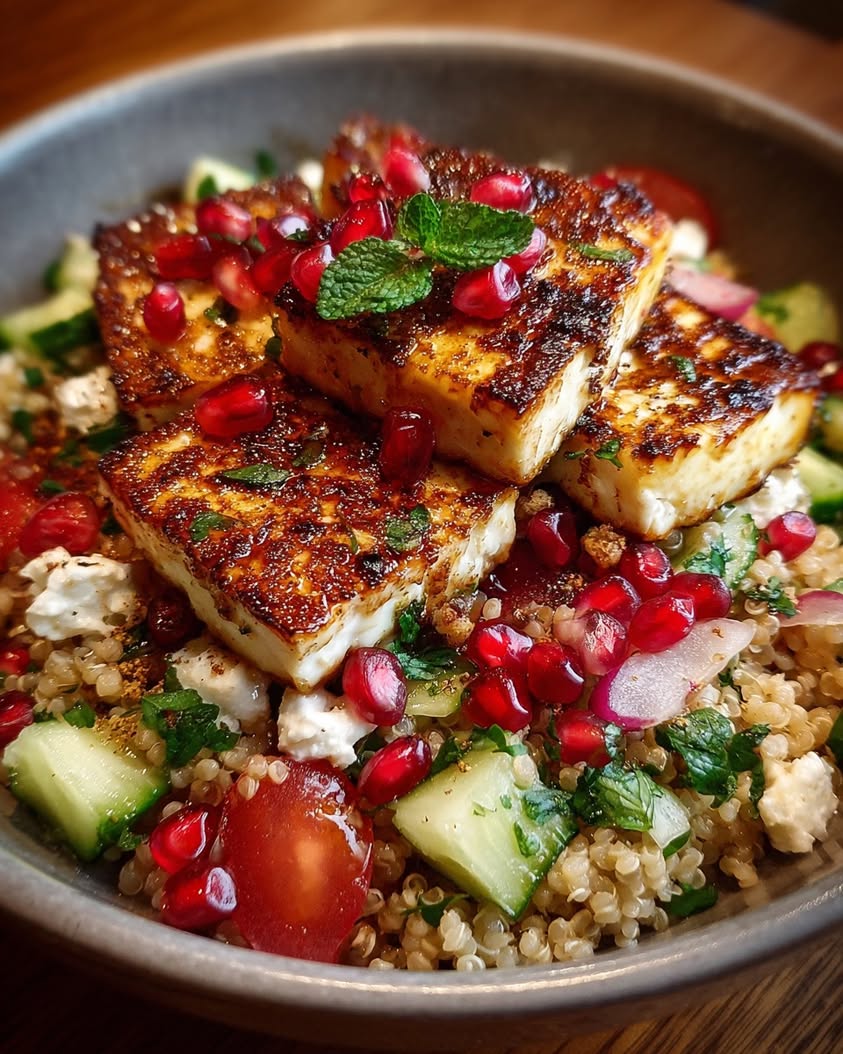
Grilled Feta & Pomegranate Grain Bowl with Lemon Dressing: A Vibrant Mediterranean Feast
Imagine a dish that captures the essence of a sun-drenched Mediterranean coastline. This Grilled Feta & Pomegranate Grain Bowl does exactly that. It brings together smoky, creamy cheese with the bright, jewel-like burst of pomegranate seeds. Moreover, it sits atop a hearty base of wholesome grains, all tied together with a zesty lemon dressing. Ultimately, this recipe is a celebration of texture, color, and vibrant flavor in one beautiful, satisfying bowl.
This Grilled Feta & Pomegranate Grain Bowl is more than just a meal. It is a complete sensory experience. The warm, charred feta offers a delightful contrast to the cool, crisp vegetables. Simultaneously, the sweet-tart pomegranate arils pop with every bite, cutting through the richness. Furthermore, the lemon dressing acts as the perfect unifying agent, brightening every component. Consequently, you get a lunch or dinner that is both nourishing and incredibly exciting to eat.
Perfect for busy weeknights or elegant entertaining, this bowl comes together with surprising ease. You likely have most of the ingredients already in your pantry. Additionally, the method is straightforward, requiring minimal active cooking time. Therefore, you can create a restaurant-quality, healthy dish without any stress. This Grilled Feta & Pomegranate Grain Bowl is your ticket to a flavorful and fulfilling meal any day of the week.
Quick Recipe Highlights
- Flavor Profile: This bowl masterfully balances salty, creamy feta with sweet-tart pomegranate and a bright, herbaceous lemon dressing. The combination creates a complex and refreshing taste that is deeply satisfying.
- Texture: Enjoy a wonderful play of textures, from the soft, warm feta and chewy grains to the crunchy cucumber and the explosive pop of the pomegranate seeds. Every bite offers a new and delightful sensation.
- Aroma: The scent of charred feta and fresh herbs like mint or parsley fills the air, complemented by the bright, citrusy notes of the lemon dressing. It smells as fresh and inviting as it tastes.
- Visual Appeal: This dish is a feast for the eyes with its stunning color contrast: white feta, ruby-red pomegranate, green herbs, and golden grains. Presentation is effortless and impressive.
- Skill Level Needed: This is a beginner-friendly recipe. Basic skills like chopping vegetables, cooking grains, and using a grill pan are all that’s required. The steps are simple and clearly outlined.
- Special Equipment: A grill pan or outdoor grill is ideal for achieving those beautiful char marks on the feta. However, a regular non-stick skillet will work in a pinch for a softer result.
Recipe Overview
- Difficulty Level: We rate this Grilled Feta & Pomegranate Grain Bowl as “Easy.” The techniques are fundamental—no advanced culinary skills are needed. The assembly is intuitive, and most components can be prepared ahead of time. Overall, it’s a very approachable recipe for cooks of all levels.
- Category: This versatile dish fits into multiple categories beautifully. It works perfectly as a hearty main course salad, a nutritious lunch bowl, or a stunning side dish for a larger Mediterranean-inspired feast. It’s truly an all-purpose meal.
- Cuisine: The recipe draws direct inspiration from the vibrant flavors of the Eastern Mediterranean, particularly Greek and Middle Eastern cuisines. Ingredients like feta, pomegranate, olive oil, and lemon are staples in these regions, creating an authentic taste profile.
- Cost: This is a very cost-effective meal to prepare. Grains like farro or quinoa are inexpensive staples. Seasonal vegetables and a block of feta are budget-friendly. Pomegranate seeds might be the priciest item, but a little goes a long way for maximum visual and flavor impact.
- Season: While delicious year-round, this bowl truly shines in the late summer and fall. This is when pomegranates are at their peak, and the hearty grains feel comforting as the weather cools. Conversely, it’s also a refreshing option for a warm spring day.
- Occasion: It’s ideal for a quick, healthy weeknight dinner, a make-ahead lunch, or a beautiful dish for casual entertaining. The colorful presentation makes it special enough for guests, yet it’s simple enough for a quiet night in.
Why You’ll Love This Recipe
First and foremost, the taste and texture appeal of this Grilled Feta & Pomegranate Grain Bowl is undeniable. The creamy, salty feta becomes something magical when grilled, developing a slightly smoky crust. Then, the juicy burst of pomegranate seeds cuts through that richness perfectly. Additionally, the medley of grains and fresh vegetables provides a satisfying chew and crunch. Every single forkful delivers a harmonious balance that will keep you coming back for more.
Next, consider the sheer convenience and preparation benefits. This entire meal comes together in about 35 minutes, with much of that time being passive while grains cook or feta grills. Furthermore, you can easily cook a large batch of grains at the start of the week. Consequently, assembling this bowl on a busy evening becomes a five-minute affair. It’s the ultimate solution for eating well without spending hours in the kitchen.
From a nutritional standpoint, this bowl is a powerhouse. Whole grains provide sustained energy and fiber, while the vegetables offer essential vitamins and antioxidants. Importantly, feta cheese is a good source of calcium and protein. The olive oil and lemon dressing contribute healthy fats and vitamin C. Therefore, you are nourishing your body with every delicious bite, making it a guilt-free pleasure.
This Grilled Feta & Pomegranate Grain Bowl also holds incredible social and entertaining value. Its stunning, colorful presentation is guaranteed to impress guests. Moreover, you can easily double or triple the recipe to feed a crowd. Since it’s served at room temperature, there’s no last-minute stress about keeping things hot. It’s a stress-free, show-stopping centerpiece for any casual gathering or potluck.
Finally, the cost-effectiveness and accessibility of the ingredients make this a repeat-worthy recipe. You don’t need any rare or expensive specialty items. Most components are pantry staples or easily found at any grocery store. Even the pomegranate seeds are often available pre-packaged. This accessibility means you can enjoy a taste of the Mediterranean anytime, without breaking the bank.
Historical Background and Cultural Significance
The origins of grain bowls are ancient, rooted in the simple, nourishing meals of agrarian societies across the Mediterranean and Middle East. Historically, people combined what was readily available—cooked grains, local cheese, seasonal fruits, and wild herbs—into a single, satisfying vessel. This practical approach to eating forms the foundation of modern bowls. Our Grilled Feta & Pomegranate Grain Bowl is a direct descendant of this tradition, celebrating regional flavors in a contemporary format.
Feta cheese holds a place of great cultural importance in Greece, where it has been produced for centuries. In fact, it holds a Protected Designation of Origin (PDO) status in the European Union, meaning true feta must come from specific regions of Greece and be made primarily from sheep’s milk. Its salty, tangy flavor is a cornerstone of Greek cuisine. Incorporating it into a grilled dish is a modern twist on a classic ingredient, highlighting its versatility beyond the traditional Greek salad.
Pomegranates are deeply symbolic across many cultures surrounding the Mediterranean and into the Middle East and Persia. They often represent fertility, abundance, and prosperity. In Greek mythology, the pomegranate is linked to the story of Persephone. In Iranian cuisine, its seeds are used as a garnish to add color and a sweet-sour note to savory dishes. The use of pomegranate in this grain bowl connects it to these rich cultural histories, adding a layer of meaning to its vibrant crunch.
The evolution of this specific recipe is a testament to modern global fusion cooking. It takes the ancient concept of a grain-based meal and combines iconic ingredients from Greek (feta, lemon, olive oil) and Persian/Middle Eastern (pomegranate, fresh herbs) culinary traditions. This fusion creates a dish that feels both timeless and entirely of the moment. It’s a beautiful example of how food traditions can blend to create something new and exciting.
Ingredient Deep Dive
Feta Cheese is the star of this Grilled Feta & Pomegranate Grain Bowl. Traditionally made from sheep’s or goat’s milk, it has a crumbly texture and a distinctive salty, tangy flavor. Nutritionally, it provides a good dose of calcium, protein, and beneficial fats. When selecting feta, look for a block stored in brine for the best flavor and texture. For storage, keep it submerged in its brine in an airtight container in the refrigerator. If you need a substitute, halloumi is excellent for grilling, or for a vegan option, try a firm, marinated tofu block.
Pomegranate Seeds, or arils, bring a vital pop of color and flavor. They are rich in antioxidants, vitamin C, and fiber, supporting heart health and reducing inflammation. To select a good pomegranate, choose one that feels heavy for its size with smooth, unblemished skin. You can store whole pomegranates at room temperature for a few days or refrigerate them for weeks. Pre-packaged arils are a huge time-saver. If pomegranate is out of season, dried cranberries or fresh cherries make a sweet-tart substitute, though the texture will differ.
The Grain Base, typically farro, quinoa, or bulgur, is the nourishing foundation. Farro, an ancient wheat, offers a nutty flavor and chewy texture along with fiber and protein. Quinoa is a complete protein, making the bowl more filling. Bulgur provides a light, fluffy texture. When selecting grains, opt for whole grains for maximum nutritional benefit. Store uncooked grains in a cool, dry pantry. Cooked grains can be refrigerated for up to 5 days or frozen for months. You can freely substitute based on preference or dietary need—brown rice, couscous, or even cauliflower rice are all excellent alternatives.
The Lemon Dressing is the unifying element that brightens the entire Grilled Feta & Pomegranate Grain Bowl. Fresh lemon juice is key, providing vibrant acidity and vitamin C. Paired with extra virgin olive oil, it creates an emulsion that coats every ingredient. Use the best olive oil you have for a fruity, peppery note. Fresh herbs like oregano, mint, or parsley are essential for an aromatic lift. For storage, the dressing can be made ahead and kept in the fridge for 2-3 days. If you’re out of lemons, a good quality red wine vinegar or white balsamic can work in a pinch.
Common Mistakes to Avoid
- Using pre-crumbled feta for grilling. This is a critical error. Pre-crumbled feta contains anti-caking agents and lacks the structural integrity to hold together on a grill. Always start with a solid block of feta stored in brine for the best grilling results.
- Overcooking the grains. Soggy, mushy grains ruin the texture of the bowl. Follow package instructions precisely and taste for doneness—grains should be tender but still have a slight chew. Immediately fluff them with a fork after cooking to prevent clumping.
- Skipping the resting time for the grilled feta. Pulling the feta straight from the grill and trying to slice it will cause it to crumble apart. Let it rest for 5-7 minutes to allow the proteins to set, ensuring clean, beautiful slices.
- Dressing the grain bowl too early. Pouring the lemon dressing over the warm grains and vegetables long before serving can make everything soggy. For the best texture, dress the grains lightly while warm, then add the fresh vegetables and feta just before serving.
- Using bottled lemon juice. The flavor of fresh lemon juice is incomparably bright and clean. Bottled juice often has a metallic or stale taste that will dull the entire dish. Always squeeze fresh lemons for your dressing.
- Not patting the feta block dry. Excess moisture on the surface of the feta will steam it instead of allowing it to develop a proper sear. Thoroughly pat the block dry with paper towels before brushing it with oil and placing it on the grill.
- Neglecting to season each component. Season the grains as they cook, season the vegetables, and season the dressing. Building layers of seasoning at every stage is what creates a deeply flavorful Grilled Feta & Pomegranate Grain Bowl.
- Forgetting to add an element of freshness. The bowl relies on the contrast between warm and cool, soft and crisp. Don’t omit the fresh herbs or the crunchy vegetables like cucumber or radish, as they provide essential balance.
Essential Techniques
Grilling the Feta is the signature technique for this bowl. It’s important because it transforms the texture and flavor, creating a warm, slightly smoky exterior while keeping the inside soft. To master it, use medium heat and a well-oiled grill pan. Place the whole, patted-dry block of feta and do not move it for 3-4 minutes to achieve defined grill marks. The common pitfall is using heat that’s too high, which will cause the feta to melt too quickly. Visual cues for success are golden-brown grill marks and a block that holds its shape when gently lifted with a spatula.
Preparing Fluffy Grains is the foundation of a good bowl. Proper technique ensures each grain is separate and pleasantly chewy, not gummy. The key is to use the correct water-to-grain ratio and to refrain from stirring too much while cooking. After cooking, let the grains steam off the heat, then fluff them vigorously with a fork. A common mistake is lifting the lid repeatedly during cooking, which releases essential steam. Success is visible when the grains have absorbed all the water and appear plump and distinct from one another.
Emulsifying the Dressing creates a cohesive sauce that clings to the ingredients. Simply whisking oil and lemon juice can lead to separation. The important step is to start with your acid (lemon juice) and seasonings in a bowl, then whisk continuously while slowly drizzling in the olive oil. This slowly bonds the fat and liquid. The pitfall is adding the oil too quickly. A successful emulsion will be slightly thickened, opaque, and will not separate immediately when you stop whisking.
Pro Tips for Perfect Grilled Feta & Pomegranate Grain Bowl
Use a fish spatula or a thin, flexible metal spatula to flip the feta. Its thin edge slides easily underneath the delicate cheese without breaking it.
Toast your grains in a dry saucepan for a minute before adding water. This enhances their nutty flavor and can improve texture.
Add a teaspoon of honey or maple syrup to your lemon dressing. A touch of sweetness perfectly balances the acidity and complements the pomegranate.
If using quinoa, rinse it thoroughly in a fine-mesh strainer under cold water. This removes its natural bitter coating called saponin.
Let all components come to room temperature before assembling the final bowl. This allows the flavors to meld beautifully without wilting the fresh herbs.
Garnish with a sprinkle of za’atar or sumac just before serving. These Middle Eastern spices add an incredible layer of earthy, tangy complexity.
For extra creaminess, serve with a dollop of plain Greek yogurt or tzatziki on the side. It makes a wonderful dipping sauce for the grilled feta.
Double the dressing recipe and save half. It makes an excellent marinade for chicken or a salad dressing for lunches later in the week.
Variations and Adaptations
For regional variations, take inspiration from different Mediterranean coasts. A Turkish version might include bulgur, chopped tomatoes, and a sprinkle of pul biber (Aleppo pepper). A Lebanese adaptation could feature toasted pine nuts, chickpeas, and a drizzle of pomegranate molasses in the dressing. These small twists honor the diverse culinary landscape of the region while keeping the spirit of the bowl intact.
Seasonal adaptations are simple and effective. In spring, use asparagus tips and fresh peas. For summer, add grilled zucchini or corn kernels. In autumn, roasted squash or sweet potato cubes are wonderful. Winter calls for hearty roasted root vegetables like beets or parsnips. The Grilled Feta & Pomegranate Grain Bowl framework is perfect for showcasing the best produce of any season.
Dietary modifications are straightforward. For a vegan bowl, substitute the feta with grilled, marinated extra-firm tofu or a vegan feta alternative. To make it gluten-free, ensure you use a certified gluten-free grain like quinoa, rice, or buckwheat. For a higher-protein version, add a can of rinsed chickpeas or lentils to the grain base, or top with grilled shrimp or chicken.
Flavor variations can keep the recipe exciting. Swap the lemon dressing for a tahini-lemon sauce for a richer, creamier element. Add olives or capers for a briny punch. Incorporate different fresh herbs—dill, basil, or cilantro can each create a unique profile. A spoonful of harissa paste mixed into the dressing will bring a warm, spicy kick.
Serving and Presentation Guide
Plating techniques matter for this visually stunning dish. Start by spreading a generous base of grains in a wide, shallow bowl to create a canvas. Artfully arrange the vegetable components in small piles or sections around the bowl, rather than mixing everything together. Place the sliced grilled feta prominently in the center or off to one side. This method showcases each beautiful ingredient and allows diners to combine flavors as they eat.
Garnishing is the final touch that elevates the bowl. A generous sprinkle of fresh pomegranate arils and chopped herbs (mint, parsley, dill) is essential. Additionally, a final drizzle of high-quality extra virgin olive oil over everything adds a lovely sheen. For texture contrast, consider adding a small handful of toasted nuts or seeds, such as sliced almonds, pistachios, or pumpkin seeds.
Consider traditional accompaniments to turn the bowl into a feast. Serve with warm pita bread or crispy lavash chips on the side for scooping. A small bowl of Greek olives and a simple side of marinated gigante beans would complement the flavors perfectly. For a more substantial meal, grilled lamb chops or lemon-oregano chicken skewers make excellent protein partners.
Wine and Beverage Pairing
Wine pairings should complement the bowl’s salty, tangy, and fresh characteristics. A crisp, dry white wine like Assyrtiko from Greece or a Sauvignon Blanc works wonderfully, as their acidity matches the lemon dressing. For a red option, choose a light-bodied, low-tannin wine like a Beaujolais or a Greek Xinomavro, which won’t overpower the feta. Rosé is also a fantastic all-around choice, especially a dry Provençal style, bridging the gap between the red fruit notes and the fresh herbs.
For non-alcoholic alternatives, consider drinks that are equally refreshing. Sparkling water with a squeeze of lemon or a few muddled mint leaves is perfect. A homemade pomegranate iced tea, either sweetened or unsweetened, echoes the fruit in the dish. A cucumber-mint infused water or a tart cherry spritzer would also be delightful and hydrating companions to the meal.
Storage and Shelf Life
Storage methods are crucial for maintaining quality. Store all components separately in airtight containers in the refrigerator. The dressed grains will keep for 3-4 days. The grilled feta can be stored for up to 3 days but is best enjoyed within 24 hours for optimal texture. Fresh vegetables like cucumber and herbs should be stored in their own containers. This prevents sogginess and allows you to assemble fresh bowls throughout the week.
Signs of spoilage include an off smell (sour or unpleasant), visible mold, or a slimy texture on any component, especially the grains or vegetables. The feta may become excessively dry or develop an ammonia-like odor. Always discard anything that seems questionable. For reheating, the grains can be gently warmed in the microwave with a splash of water. The feta is best enjoyed cold or at room temperature after storage, as reheating will cause it to melt.
Make Ahead Strategies
A smart prep timeline makes weeknight meals effortless. On a weekend or quiet evening, cook a large batch of your chosen grain and let it cool. Prepare the lemon dressing and store it in a jar. Wash and chop sturdy vegetables like bell peppers or red onion. You can even grill the feta block a few hours ahead and let it come to room temperature. Store each component in its own container in the fridge.
When ready to serve, simply assemble the bowls. Add the fresh, delicate elements at the last minute: the pomegranate seeds, fresh herbs, and any quick- wilting veggies like cucumber. This strategy ensures every bite has the perfect texture. The quality impact is minimal if you follow these steps; in fact, the grains often absorb the dressing flavors more deeply when made a day ahead.
Scaling Instructions
Halving the recipe is simple for a single serving. Use a small block of feta (about 4 oz) and reduce all other ingredients proportionally. Cooking times for the grain and feta will remain roughly the same, though you may need a smaller saucepan. Storage considerations are the same, though leftovers will be minimal.
Doubling or tripling the recipe for a crowd is easy. Use multiple grill pans or cook the feta in batches to avoid overcrowding, which leads to steaming. You may need to cook the grains in separate batches or use a very large pot to ensure they cook evenly. When adjusting timing, the grain cooking time is constant, but the feta grilling will take longer in batches. Consider setting up a bowl assembly line for efficient serving.
Nutritional Deep Dive
This Grilled Feta & Pomegranate Grain Bowl offers a well-rounded macro profile. The whole grains provide complex carbohydrates and fiber for sustained energy. The feta cheese contributes protein and healthy fats, while the olive oil in the dressing adds monounsaturated fats. The vegetables add minimal calories but maximum micronutrients and fiber. Overall, it’s a balanced meal that supports stable blood sugar and keeps you full for hours.
The micronutrient analysis is impressive. Pomegranate seeds are rich in Vitamin C and antioxidants. Dark leafy greens like spinach or arugula provide Vitamin K, folate, and iron. The lemon juice offers a boost of Vitamin C, and the olive oil contains Vitamin E. Feta is a significant source of calcium and phosphorus. This combination supports immune function, bone health, and overall cellular protection.
Dietary Adaptations
For a gluten-free version, simply choose a certified gluten-free grain like quinoa, brown rice, millet, or buckwheat. Ensure all other packaged ingredients, like dressings or pre-packaged pomegranate seeds, are labeled gluten-free. The rest of the recipe is naturally gluten-free.
To make this dairy-free and vegan, replace the feta cheese with a block of extra-firm tofu. Press the tofu to remove water, marinate it in a mixture of lemon juice, olive oil, and salt, then grill it as you would the feta. Alternatively, use a store-bought vegan feta alternative. The result is a plant-powered bowl that’s just as satisfying.
For a lower-carb or keto adaptation, replace the grains with a base of cauliflower rice. Sauté the cauliflower rice in a pan until tender. Increase the portion of non-starchy vegetables like cucumber and bell peppers, and consider adding avocado for healthy fats. The grilled feta and pomegranate seeds (in moderation) can remain.
Troubleshooting Guide
If your feta falls apart on the grill, the heat is likely too high or the block was too thin. Next time, use a lower medium heat and ensure your block is at least 3/4-inch thick. If it’s crumbling, you can still use it—simply scatter the delicious grilled pieces over the bowl. It will taste just as good, even if the presentation is different.
If the grain bowl tastes bland, you likely under-seasoned during the process. Remember to salt the cooking water for the grains generously. Ensure your lemon dressing is well-balanced with enough salt and a pinch of black pepper. Just before serving, taste and add an extra pinch of flaky sea salt or a squeeze of fresh lemon to brighten everything up.
If your dressing separates, it simply needs to be re-emulsified. Give it a vigorous shake in its jar or whisk it again just before drizzling. To prevent this, you can add a small teaspoon of Dijon mustard or honey to the lemon juice before whisking in the oil; these act as natural emulsifiers and help stabilize the mixture.
Recipe Success Stories
Community feedback on this Grilled Feta & Pomegranate Grain Bowl has been overwhelmingly positive. Many readers report it has become a weekly staple in their homes due to its simplicity and crowd-pleasing flavors. One home cook shared that she served it at a book club meeting, and several guests asked for the recipe before they left. It’s consistently praised for being a recipe that looks far more impressive than the effort required.
Variation successes are fun to hear about. One family added leftover grilled chicken to make it more filling for teenagers. Another reader used barley instead of farro and loved the extra-chewy texture. A creative cook used watermelon radishes for an extra pop of pink color. These adaptations show the recipe’s fantastic flexibility and how it can be tailored to personal taste and what’s in the fridge.
Frequently Asked Questions
Can I use a different cheese besides feta? Yes, halloumi is the best direct substitute as it grills beautifully. For a non-grilling option, try large chunks of fresh mozzarella or burrata added at the end.
I can’t find pomegranate seeds. What can I use instead? Dried cranberries, chopped fresh cherries, or even segmented oranges or grapefruit provide a similar sweet-tart contrast. The texture will be different, but the flavor role is similar.
Can I make this grain bowl ahead of time? Absolutely. Prepare all components separately and store them in the fridge. Assemble the bowls just before serving to keep the vegetables crisp and the feta from making the grains soggy.
What’s the best way to cook the grains? Follow the package instructions for your specific grain (farro, quinoa, etc.). The key is to use broth instead of water for more flavor and to let the grains rest covered after cooking before fluffing.
My feta stuck to the grill pan. How do I prevent this? Ensure your grill pan is very hot before adding the oil, and make sure the feta block is thoroughly patted dry and well-coated in oil. A well-seasoned cast iron or non-stick grill pan is ideal.
Is this recipe served warm or cold? It’s best served at room temperature. The grains and feta can be slightly warm, with the fresh vegetables cool. This temperature contrast is part of the appeal.
Can I add meat to this bowl? Certainly. Grilled chicken, shrimp, or lamb are excellent additions. Cook the protein separately with Mediterranean herbs and lemon, then slice and arrange it on top of the bowl.
How do I get perfect grill marks on the feta? Start with a clean, hot grill pan. Place the feta and do not move it for a full 3-4 minutes. When you lift the spatula, it should release easily. If it sticks, it needs more time to sear.
What herbs work best in the dressing? Fresh oregano, mint, dill, and flat-leaf parsley are all classic choices. Use one or a combination. Dried herbs are not recommended for the fresh dressing.
Can I freeze leftovers? We do not recommend freezing the assembled bowl, as the textures of the fresh vegetables and feta will suffer. However, you can freeze cooked grains successfully for up to 3 months.
Additional Resources
For related recipes, explore other Mediterranean-inspired bowls. A Greek quinoa bowl with tzatziki and olives, or a Lebanese fattoush salad with grilled halloumi, would be delightful next steps. These recipes share a similar philosophy of combining fresh, vibrant ingredients with hearty bases and zesty dressings.
For technique guides, consider looking up videos on “how to cook perfect quinoa” or “how to grill halloumi cheese.” The principles are very similar to grilling feta. Mastering these fundamental skills will make you confident in preparing a wide variety of healthy and delicious meals.
For ingredient information, learn more about the different types of ancient grains like farro, freekeh, and bulgur. Understanding their unique cooking times and nutritional profiles allows you to customize your grain bowls endlessly. Also, exploring different types of olive oil and their flavor notes can elevate your dressings from good to extraordinary.
{“success”:true,”message”:”Recipe created successfully”,”post_id”:8859,”tasty_recipe_id”:8859,”shortcode”:” Print
Grilled Feta & Pomegranate Grain Bowl with Lemon Dressing
Description
A vibrant, Mediterranean-inspired grain bowl featuring grilled feta, fresh pomegranate seeds, and a zesty lemon dressing.
Ingredients
For the Crust:
- 1 cup quinoa, cooked
- 8 oz block of feta cheese
- 1/2 cup pomegranate seeds
- 2 cups baby spinach
- 1/4 cup sliced almonds
- 1/4 cup fresh mint leaves
- 2 tbsp olive oil
- 1 lemon, juiced
- 1 tsp honey
- Salt and pepper to taste
Instructions
1. Prepare the Crust:
- Cook quinoa according to package instructions and let cool.
- Brush feta block with olive oil and grill for 2-3 minutes per side until lightly charred.
- Whisk together lemon juice, remaining olive oil, honey, salt, and pepper to make the dressing.
- Assemble bowls with quinoa, spinach, grilled feta, pomegranate seeds, almonds, and mint.
- Drizzle with lemon dressing and serve immediately.
Notes
You can customize the seasonings to taste.

I’m Billy, a classically trained culinary school graduate from The Culinary Institute of America with over 12 years in the restaurant industry and over 19 years of cooking experience.