
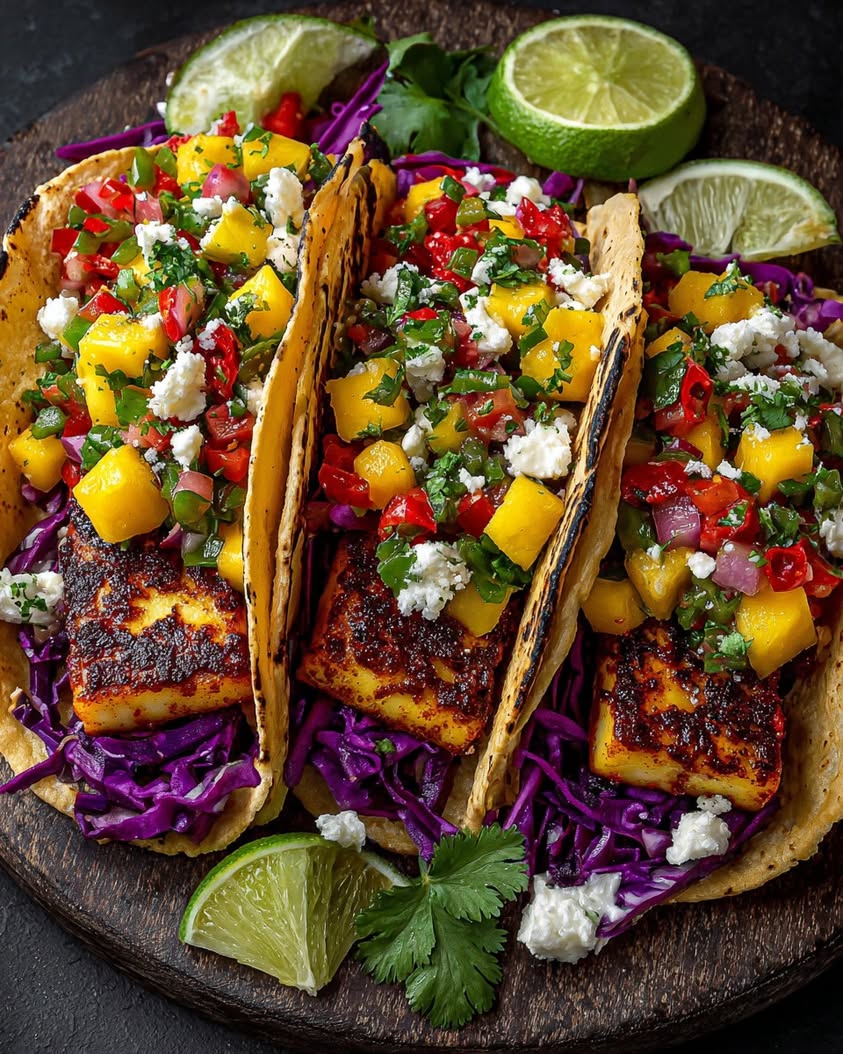
Grilled Halloumi Tacos with Spicy Ginger-Mango Salsa: A Flavor Explosion
Imagine a taco that perfectly balances salty, savory, sweet, and spicy all in one incredible bite. These Grilled Halloumi Tacos with Spicy Ginger-Mango Salsa deliver exactly that experience. This recipe transforms simple ingredients into a vibrant, restaurant-quality meal right in your own kitchen. Moreover, it offers a fantastic vegetarian option that even the most dedicated meat-lovers will crave. The star, halloumi cheese, grills into golden, squeaky perfection, while the fresh mango salsa adds a juicy, tropical counterpoint. Ultimately, this dish is a celebration of texture and flavor that comes together in under thirty minutes.
The magic of these Grilled Halloumi Tacos lies in their stunning simplicity and bold contrasts. You start with halloumi, a uniquely grillable cheese from Cyprus that holds its shape beautifully under heat. Then, you pair it with a homemade salsa bursting with ripe mango, spicy jalapeño, and zesty fresh ginger. This combination creates a symphony in your mouth. Additionally, the warm, soft tortilla wraps everything together, making each bite a perfect package. Consequently, this meal is ideal for busy weeknights, casual summer gatherings, or whenever you need a quick flavor upgrade. Finally, it’s a visually stunning dish, with the bright yellow mango and fresh green herbs creating a feast for the eyes before you even take a bite.
Quick Recipe Highlights
- Flavor Profile: These tacos masterfully combine the salty, savory punch of grilled halloumi with the sweet, spicy, and tangy notes of the ginger-mango salsa. Fresh lime juice and cilantro brighten the entire dish, creating a complex and utterly satisfying taste experience.
- Texture: Enjoy a fantastic textural play between the firm, slightly squeaky halloumi with its deliciously crispy grilled exterior and the soft, juicy chunks of mango salsa. The warm tortilla provides a comforting, pliable base that holds it all together perfectly.
- Aroma: As the halloumi grills, it releases a savory, salty aroma that is immediately inviting. Meanwhile, the fresh salsa fills the air with the sweet scent of mango, the sharp bite of ginger, and the herbal freshness of chopped cilantro.
- Visual Appeal: The presentation is vibrant and colorful. You see golden-brown strips of halloumi against the bright yellow and red of the mango salsa, all accented by flecks of green cilantro and red onion. It’s a truly Instagram-worthy meal.
- Skill Level Needed: This is a beginner-friendly recipe. The techniques involve simple chopping for the salsa and basic grilling or pan-searing. No advanced culinary skills are required, making it accessible for cooks of all levels.
- Special Equipment: A grill pan, skillet, or outdoor grill is essential for cooking the halloumi. Otherwise, you only need basic kitchen tools: a sharp knife, cutting board, and mixing bowl for the salsa.
Recipe Overview
- Difficulty Level: We rate this recipe as “Easy” because it involves straightforward, non-technical steps. Primarily, you chop ingredients for a fresh salsa and cook cheese in a pan. There is no complex dough to make or intricate sauces to emulsify. Consequently, even a novice cook can achieve excellent results on the first try.
- Category: These Grilled Halloumi Tacos fit beautifully into multiple meal categories. They are perfect as a quick and satisfying main course for lunch or dinner. Alternatively, you can serve them as a standout appetizer or party food. Furthermore, they make an excellent meatless Monday option or a vibrant addition to a taco bar spread.
- Cuisine: This dish is a delicious fusion of Mediterranean and Mexican culinary traditions. It takes halloumi, a classic Cypriot cheese, and presents it in the universally loved format of a Mexican taco. The spicy ginger-mango salsa adds a tropical, pan-Asian twist, making this a truly global and modern recipe.
- Cost: This is a moderately priced meal. Halloumi cheese is often the most expensive component, but a little goes a long way. Fresh mango, lime, cilantro, and basic vegetables are very affordable, especially in season. Overall, you can create a restaurant-quality meal for a fraction of the cost of dining out.
- Season: These tacos shine brightest in late spring and summer when mangoes are at their peak sweetness and flavor. However, they work year-round because mangoes are typically available in grocery stores. The fresh, bright flavors also provide a wonderful escape during colder months, bringing a taste of sunshine to your table.
- Occasion: This versatile recipe suits many occasions. It’s quick enough for a casual family weeknight dinner yet impressive enough for entertaining guests at a backyard barbecue or casual dinner party. The interactive, build-your-own nature of tacos also makes them fun for social gatherings.
Why You’ll Love This Recipe
First and foremost, the taste and texture combination is absolutely irresistible. The halloumi cheese offers a uniquely satisfying salty and savory flavor with a firm, grill-marked exterior that gives way to a soft interior. Paired with the salsa, each bite delivers a burst of sweet mango, sharp ginger, and spicy jalapeño. This contrast keeps your palate excited and engaged from the first taco to the last. Furthermore, the fresh lime juice and cilantro cut through the richness, ensuring the dish feels light and vibrant rather than heavy.
From a convenience standpoint, this recipe is a true weeknight hero. You can prepare the entire meal from start to finish in about thirty minutes. The majority of that time is passive, spent chopping the salsa ingredients while your grill pan heats up. There is no marinating or long cooking time involved. Additionally, the ingredient list is simple and relies on fresh, whole foods you can find at any standard grocery store. You likely have many of the pantry staples like lime and spices already on hand.
Nutritionally, these Grilled Halloumi Tacos with Mango Salsa offer several benefits. Halloumi is a good source of protein and calcium, helping to keep you full and satisfied. Mango is packed with vitamins A and C, powerful antioxidants that support immune health. The fresh vegetables in the salsa add fiber and additional micronutrients. By using corn or whole wheat tortillas, you can increase the fiber content even further. This makes the meal a more balanced option compared to many traditional taco fillings.
For social and entertaining value, this dish is a guaranteed crowd-pleaser. The colorful, build-your-own format encourages interaction and lets guests customize their plates. It accommodates various dietary preferences seamlessly, serving as a fantastic vegetarian centerpiece. You can easily set up a taco bar with extra toppings like shredded cabbage, avocado crema, or black beans, allowing everyone to create their perfect meal. Consequently, it takes the pressure off the host and creates a fun, engaging dining experience.
Finally, this recipe is cost-effective and accessible. You do not need any specialty equipment beyond a basic skillet. While halloumi can be pricier than other cheeses, one block generously fills multiple tacos. The remaining ingredients are inexpensive pantry staples and fresh produce. Compared to ordering takeout or going to a restaurant, making these vibrant Grilled Halloumi Tacos at home saves significant money. You also gain complete control over the quality and freshness of every component.
Historical Background and Cultural Significance
The story of this dish begins with its two core components, each from distinct culinary traditions. Halloumi cheese originates from Cyprus, with a history dating back to the Byzantine era. Traditionally made from a mixture of sheep’s and goat’s milk, its unique characteristic is a high melting point. This property allowed Cypriot shepherds to preserve milk in a durable, transportable form that could withstand the Mediterranean heat. The cheese was often grilled over open fires, a cooking method that highlights its salty flavor and creates a delicious crust. This ancient technique is the very foundation of our modern taco filling.
Conversely, the taco is a cornerstone of Mexican cuisine, with origins tracing back to the silver mines of 18th-century Mexico. The word “taco” initially referred to small charges used in mining, a playful metaphor for the folded food. Traditionally, tacos were a food of the working class, utilizing simple, available ingredients like corn tortillas and local fillings. Their genius lies in their portability and versatility. Over centuries, the taco evolved and spread globally, becoming a canvas for endless culinary creativity. Our recipe represents a beautiful fusion of this portable, versatile format with Mediterranean ingredients.
The evolution of this specific recipe is a testament to modern global fusion cooking. As world cuisines became more accessible, chefs and home cooks began experimenting with cross-cultural combinations. The idea of using halloumi as a taco filling likely emerged from the growing popularity of vegetarian cuisine and the search for satisfying, grillable meat alternatives. Meanwhile, mango salsa gained fame as a fresh, tropical condiment that pairs wonderfully with spicy and savory foods. Combining these two elements—a grillable Mediterranean cheese and a vibrant, sweet-spicy salsa—in a Mexican format is a relatively recent, and brilliantly successful, innovation in home cooking.
Regional variations of this concept are already appearing. In coastal areas, you might find grilled halloumi tacos topped with a pineapple-jalapeño salsa or a citrus-avocado crema. Some versions incorporate Mediterranean herbs like oregano or mint directly into the salsa. Others use different cheeses that share halloumi’s grilling properties, like Indian paneer. This adaptability proves the recipe’s strength. It is not a static dish but a concept that welcomes interpretation based on local ingredients and personal taste, continuing the long tradition of culinary evolution that both tacos and halloumi represent.
Ingredient Deep Dive
Let’s start with the star: halloumi cheese. This brined cheese from Cyprus is traditionally made from a blend of sheep’s and goat’s milk, though cow’s milk versions are now common. Its high melting point is due to the way the curds are heated during production, allowing it to be fried or grilled without turning into a puddle. Nutritionally, it’s a good source of protein and calcium, though it is also high in sodium and saturated fat, so moderation is key. When selecting halloumi, look for a firm, white block stored in brine. For storage, keep it submerged in its brine in an airtight container in the refrigerator for up to several weeks. If you cannot find halloumi, a good substitute is paneer or extra-firm tofu, pressed and marinated for flavor.
Next, the mango brings essential sweetness and tropical flair. Cultivated in South Asia for thousands of years, the mango is rich in cultural significance, often called the “king of fruits.” It is an excellent source of vitamins A and C, fiber, and antioxidants like mangiferin. For this salsa, choose a ripe but firm mango like an Ataulfo (Honey) or Tommy Atkins variety. It should yield slightly to gentle pressure and have a fragrant smell at the stem. Store unripe mangoes at room temperature until they soften, then refrigerate. For a substitution, ripe peaches or nectarines can work in a pinch, though the flavor profile will shift slightly.
The fresh ginger and jalapeño provide the “spicy” element in the salsa. Ginger, a rhizome native to Southeast Asia, has been used for millennia in both cooking and traditional medicine. It adds a warm, sharp, and slightly sweet pungency. Ginger contains gingerol, a compound with potent anti-inflammatory properties. Select ginger with smooth, taut skin and a firm feel; avoid pieces that are wrinkled or soft. Jalapeños, a medium-heat chili pepper from Mexico, contribute a fresh, grassy heat. Their capsaicin content can boost metabolism. For a milder salsa, remove the seeds and white ribs. Store both ginger and jalapeños in the vegetable crisper of your refrigerator. In a pinch, serrano peppers can substitute for jalapeños for more heat, or use a pinch of cayenne or chili flakes.
Common Mistakes to Avoid
- Using Overripe Mango: An overly soft, mushy mango will make your salsa watery and lack texture. Always select a mango that is fragrant and yields slightly to pressure but is still firm enough to dice cleanly.
- Not Draining the Halloumi: Halloumi is packed in brine. If you do not pat it thoroughly dry with paper towels before grilling, it will steam instead of sear, preventing those beautiful, crispy grill marks.
- Overcrowding the Pan: When cooking the halloumi, give each piece space in the pan. Crowding will lower the pan’s temperature, causing the cheese to release moisture and boil rather than achieving a proper sear.
- Moving the Halloumi Too Soon: Place the halloumi in the hot pan and let it cook undisturbed for 1-2 minutes. If you try to move it immediately, it will likely stick and tear. Wait for a golden crust to form before flipping.
- Skipping the Rest Time for Salsa: While you can serve the salsa immediately, letting it sit for 10-15 minutes allows the flavors to meld and the ginger and jalapeño heat to mellow and integrate beautifully.
- Using Cold Tortillas: A cold, stiff tortilla can crack when folded. Always warm your tortillas briefly in a dry skillet, over a gas flame, or wrapped in a damp towel in the microwave for a few seconds to make them pliable.
- Overcomplicating the Salsa: The beauty of this salsa is its freshness. Avoid cooking the salsa or adding too many extra ingredients that can muddy the bright, clean flavors of mango, lime, and ginger.
- Forgetting to Season: While halloumi is salty, the salsa and overall dish still need seasoning. Always taste your salsa and add a pinch of salt if needed to make the flavors pop.
Essential Techniques
Mastering the grill on halloumi is the most crucial technique. It is important because proper searing creates a flavorful Maillard reaction crust while keeping the interior pleasantly soft. To master it, ensure your grill pan or skillet is very hot before adding the cheese. Pat the halloumi slices completely dry, then add them to the hot pan with a tiny amount of oil. Do not move them for at least 90 seconds. A common pitfall is a pan that isn’t hot enough, leading to sticking and a pale, steamed result. The visual cue for success is deep golden-brown grill marks and a slightly crispy edge before you flip each piece.
Creating a balanced fresh salsa is another key skill. This technique is important because a salsa should have harmony between sweet, acidic, spicy, and salty elements. To master it, dice all ingredients to a consistent, small size for even distribution in every bite. Start with the recipe’s ratios, then taste and adjust. Perhaps you need more lime juice for acidity or a pinch more salt to elevate the mango’s sweetness. A common pitfall is dicing ingredients too large, making the salsa difficult to eat in a taco. The visual cue for a great salsa is a vibrant, jewel-like mixture where each component is distinct but coated in a glossy sheen from the lime juice.
Pro Tips for Perfect Grilled Halloumi Tacos
Cut your halloumi into slices no thicker than 1/2 inch. Thicker slices will take longer to cook through and may not develop an optimal crust before the interior becomes too soft.
Let your grilled halloumi rest for a minute after cooking. This allows the proteins to relax slightly, making the cheese even more tender when you bite into the taco.
For an extra flavor dimension, brush your warming tortillas very lightly with a neutral oil and toast them in a hot pan until they have a few light brown spots and are pliable.
If your mango is very juicy, consider draining the diced pieces in a fine-mesh strainer for a few minutes before mixing the salsa to prevent a soggy taco.
Add a handful of finely shredded purple cabbage or baby spinach to your taco for an extra crunch, a pop of color, and a boost of nutrients.
For a creamy element without dairy, mash a ripe avocado with a squeeze of lime and a pinch of salt to create a simple spread for the tortilla before adding the halloumi and salsa.
Variations and Adaptations
For regional twists, consider a Greek variation by adding chopped Kalamata olives and fresh oregano to the salsa. A Caribbean-inspired version could include a pinch of allspice and a splash of rum in the mango salsa. For a more Mexican-focused profile, add roasted corn and black beans to the filling.
Seasonal adaptations are simple. In winter, use roasted sweet potato cubes instead of mango for a warm, hearty salsa. During summer berry season, try a strawberry-jalapeño salsa. For autumn, a salsa with roasted diced butternut squash and a hint of cinnamon can be delightful.
Dietary modifications are straightforward. For a vegan version, substitute well-pressed, marinated extra-firm tofu or a store-bought vegan halloumi. To make it gluten-free, use certified gluten-free corn tortillas. For a lower-carb option, serve the halloumi and salsa in large lettuce cups like butter lettuce or romaine hearts.
Experiment with flavor variations by adding different herbs to the salsa, such as mint or basil. A teaspoon of honey or agave can enhance the sweetness if your mango is tart. For a smoky note, use a chipotle pepper in adobo sauce instead of the fresh jalapeño.
Serving and Presentation Guide
For beautiful plating, lay two warm tortillas slightly overlapping on a plate. Arrange the grilled halloumi slices neatly down the center. Then, spoon a generous amount of the vibrant mango salsa over the cheese, allowing some to spill onto the plate. Finally, garnish with a few extra cilantro leaves and a lime wedge on the side. This creates a structured yet inviting presentation.
Consider traditional accompaniments like a side of black beans or cilantro-lime rice. For a modern, lighter meal, pair the tacos with a simple green salad dressed with a lime vinaigrette. A bowl of tortilla chips with the extra salsa on the side is always a welcome addition.
Temperature is crucial. Serve the tacos immediately after assembling. The halloumi should be hot and slightly crisp, the tortillas warm and soft, and the salsa cool and refreshing. This contrast is a key part of the experience. If you need to serve a crowd, keep components warm or cool in separate dishes and let guests assemble their own.
Wine and Beverage Pairing
The salty halloumi and spicy-sweet salsa create an interesting pairing challenge. A crisp, slightly sweet white wine like an off-dry Riesling or Gewürztraminer works wonderfully. Their acidity cuts through the cheese’s richness, while their fruitiness complements the mango. A dry rosé with good acidity is another excellent choice, bridging the gap between the savory and sweet elements.
For non-alcoholic alternatives, a sparkling limeade or ginger beer provides effervescence and flavor echoes. Iced hibiscus tea (agua de jamaica) offers a tart, floral counterpoint. A classic margarita mocktail with fresh lime and a salt rim is always a festive fit. Ensure all beverages are served well-chilled to refresh the palate between bites.
Storage and Shelf Life
Store components separately for best results. Keep leftover grilled halloumi in an airtight container in the refrigerator for up to 3 days. Note that it will lose its crispy texture but remains tasty. The mango salsa is best consumed within 24 hours, as the mango will continue to release juice and the herbs will wilt. Store it in a sealed container in the fridge.
Assembled tacos do not store well and should be eaten immediately. The moisture from the salsa will make the tortilla soggy. For reheating, warm the halloumi in a dry skillet over medium heat to re-crisp it slightly. The salsa is best served cold. I do not recommend freezing any component of this recipe, as the textures of both the cheese and fresh salsa will degrade significantly upon thawing.
Make Ahead Strategies
You can significantly speed up dinner time by prepping components ahead. The mango salsa can be chopped and mixed (minus the fresh cilantro) up to 4 hours in advance. Store it covered in the refrigerator. Add the fresh cilantro just before serving to keep it bright and green. The halloumi can be sliced and patted dry, then stored between layers of paper towels in an airtight container in the fridge for a day.
When ready to cook, simply pull your prepped ingredients from the fridge. The halloumi may need a quick re-pat with a paper towel if any moisture has beaded on it. This strategy has minimal impact on quality, as the core cooking step—grilling the cheese—is still done fresh. The warm, crisp halloumi against the cool, make-ahead salsa creates the perfect contrast.
Scaling Instructions
This recipe scales beautifully for a crowd. To double or triple it, use a larger skillet or cook the halloumi in batches to avoid overcrowding. Keep cooked batches warm on a baking sheet in a 200°F oven. For the salsa, simply multiply the ingredients in a large bowl. The one adjustment is to be cautious with the jalapeño and ginger; you may not need to double them exactly. Start with 1.5 times the amount, then taste and add more if desired.
To halve the recipe for one or two people, use a small skillet for the halloumi. The salsa can be tricky to halve perfectly, but any extra makes a fantastic topping for grilled chicken or fish the next day. No equipment adjustments are needed for scaling down. Timing remains the same, as you are still cooking the same surface area of halloumi in the pan.
Nutritional Deep Dive
A serving of these Grilled Halloumi Tacos provides a balance of macronutrients. The halloumi offers a significant amount of protein and fat, primarily saturated, which contributes to satiety. The mango and vegetables in the salsa contribute carbohydrates, primarily in the form of natural sugars and fiber. Using a whole-grain or corn tortilla adds complex carbohydrates and more fiber.
Micronutrient-wise, this meal is rich in Vitamin C from the mango and lime, Vitamin A from the mango, and calcium from the cheese. The fresh ginger and jalapeño provide beneficial plant compounds like gingerol and capsaicin. For dietary considerations, it is naturally vegetarian and can be made gluten-free with the right tortilla choice. For weight management, be mindful of portion size with the cheese due to its calorie density, and consider loading up on extra salsa and greens for volume.
Dietary Adaptations
For a gluten-free version, simply use certified gluten-free corn tortillas. Check the labels on your halloumi, as very rarely some brands might include wheat-based additives, but this is uncommon.
To make these tacos vegan, replace the halloumi with extra-firm tofu. Press the tofu thoroughly, slice it, and marinate it in a mixture of lemon juice, salt, and a touch of miso paste for umami before grilling. There are also several brands of excellent vegan “halloumi-style” cheeses now available in stores.
For a dairy-free adaptation, follow the vegan substitution above. The rest of the recipe is naturally dairy-free. For a lower-carb or keto adaptation, serve the halloumi and salsa in large, sturdy lettuce leaves like romaine hearts or butter lettuce instead of tortillas.
Troubleshooting Guide
If your halloumi is sticking to the pan, the pan likely wasn’t hot enough, or the cheese wasn’t dry. For a pan that’s already in use, let it cook a bit longer; it will often release once a proper crust forms. Next time, ensure both the pan and oil are hot before adding the dry cheese slices.
If your salsa is too watery, your mango was likely very ripe. Drain the diced mango in a strainer for 10 minutes before mixing. You can also add a tablespoon of finely minced red onion or bell pepper to help absorb excess moisture.
If the tacos taste bland, you probably under-seasoned. The halloumi provides salt, but the salsa needs its own seasoning. Add another pinch of salt and a squeeze of lime juice to the salsa and stir. Often, a lack of acidity is the issue, so the lime juice is key.
Recipe Success Stories
Readers and home cooks have shared wonderful adaptations of this recipe. One family reported adding the leftover mango salsa to their morning yogurt for a tropical twist. Another cook successfully used the halloumi and salsa as a topping for a hearty grain bowl with quinoa and spinach, turning it into a different meal entirely.
Many have noted that this recipe is a “gateway” dish for introducing halloumi to friends and family who have never tried it. The familiar taco format makes the unique cheese approachable and exciting. Several readers have also made it for potlucks by bringing the components separately and assembling on-site, receiving rave reviews every time.
Frequently Asked Questions
Can I bake the halloumi instead of grilling it? Yes, you can. Arrange the slices on a parchment-lined baking sheet and broil on high for 2-3 minutes per side, watching closely to prevent burning. The result will be less crispy than pan-grilling but still delicious.
What can I use if I can’t find halloumi? The best substitute is paneer, an Indian cheese with similar grilling properties. Extra-firm tofu, pressed and marinated in lemon juice and salt, also works well for a vegan version.
How do I know if a mango is ripe? A ripe mango will yield slightly to gentle pressure, similar to a ripe avocado. It should also have a fruity aroma at the stem end. Avoid mangoes that are overly soft or have wrinkled skin.
Can I make the salsa less spicy? Absolutely. Remove the seeds and white membranes from the jalapeño before dicing, as that’s where most of the heat resides. You can also start with half a jalapeño or omit it entirely.
What type of tortilla is best? Corn tortillas offer an authentic flavor and are naturally gluten-free. Small flour tortillas (street taco size) are softer and more pliable. You can also use whole wheat tortillas for extra fiber. The choice is yours!
Is halloumi healthy? Halloumi is a good source of protein and calcium. However, it is high in saturated fat and sodium, so it’s best enjoyed in moderation as part of a balanced diet like this one, packed with fresh vegetables.
Can I prepare this for a party? Yes, it’s a fantastic party food. Prep the salsa and slice the halloumi ahead of time. Cook the halloumi in batches just before guests arrive and keep it warm in a low oven. Let everyone assemble their own tacos.
My salsa turned brownish. What happened? The mango may have oxidized. Always use fresh lime juice in the salsa, as the citric acid helps prevent browning. Stirring in the cilantro last also helps protect the mango.
Can I add other proteins? Certainly. These tacos are delicious with added black beans, grilled shrimp, or shredded chicken. The halloumi and salsa combo is versatile enough to complement many proteins.
How do I prevent my tortillas from cracking? Always warm your tortillas before serving. Heat them in a dry skillet for 20-30 seconds per side, over a low gas flame with tongs, or wrapped in a damp paper towel in the microwave for 20 seconds.
Additional Resources
If you loved the fusion concept here, explore other recipes that blend culinary traditions. Consider trying a Thai-inspired taco with peanut sauce or a Korean BBQ jackfruit taco. For more halloumi ideas, look for recipes for halloumi fries, halloumi salads, or halloumi burgers.
To improve your technique, practice knife skills for consistent dicing, which is key for salsas and salads. Learning to properly heat a skillet for searing is another fundamental skill that applies to countless recipes, from proteins to vegetables.
For seasonal variations, visit your local farmer’s market. Let the freshest produce of the season inspire your salsa. In summer, try a peach and corn salsa. In fall, a pear and cranberry version could be stunning. This recipe is a template for creativity.
{“success”:true,”message”:”Recipe created successfully”,”post_id”:9180,”tasty_recipe_id”:9180,”shortcode”:”“}

I’m Billy, a classically trained culinary school graduate from The Culinary Institute of America with over 12 years in the restaurant industry and over 19 years of cooking experience.