
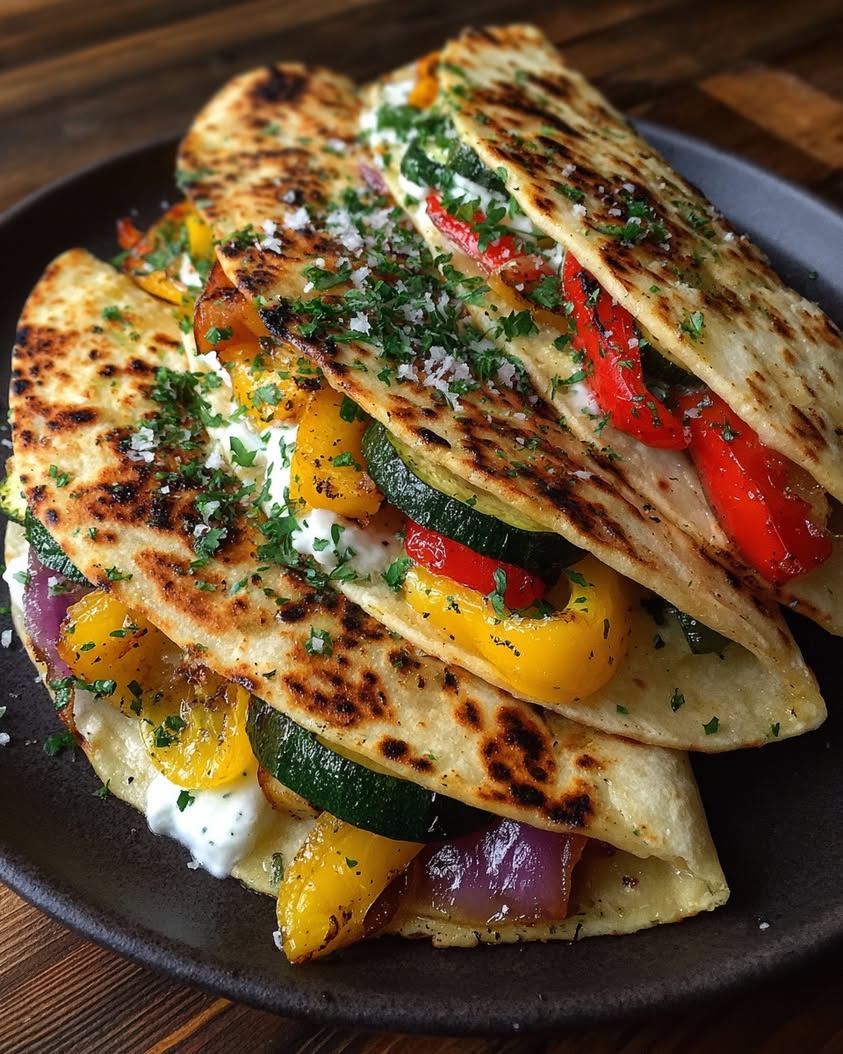
Grilled Mediterranean Veggie Quesadillas: A Flavorful Fusion Recipe
Imagine the smoky char of grilled vegetables meeting the gooey, comforting embrace of melted cheese inside a crispy tortilla. That is the magic of these Grilled Mediterranean Veggie Quesadillas. This recipe masterfully bridges two beloved culinary worlds, creating a quick and satisfying meal that bursts with color and flavor. Furthermore, it transforms simple, wholesome ingredients into a dish that feels both gourmet and incredibly approachable. Ultimately, you get a handheld feast perfect for busy weeknights, casual entertaining, or a fun weekend lunch.
The beauty of these Mediterranean Veggie Quesadillas lies in their vibrant harmony. You start with a colorful medley of zucchini, bell peppers, and red onion, all kissed by the flames of a grill or grill pan. Consequently, they develop a sweet, caramelized depth that raw vegetables simply cannot achieve. Then, you layer them with tangy feta cheese, briny Kalamata olives, and fresh herbs inside a flour tortilla. Finally, a quick toast in a hot pan melds everything into a golden, crispy package. The result is a symphony of textures and tastes in every single bite.
This dish is more than just food; it is a versatile culinary solution. For instance, it easily adapts to various dietary needs and pantry staples. Moreover, it delivers impressive restaurant-quality results with minimal effort and time. Whether you are cooking for a family dinner or need an impressive appetizer for guests, these quesadillas consistently deliver. They are a testament to how global flavors can come together in the most delicious and convenient way possible.
Quick Recipe Highlights
- Flavor Profile: These Grilled Mediterranean Veggie Quesadillas offer a bold and balanced taste. You experience the sweet smokiness of grilled vegetables first, followed by the salty punch of feta and olives. A final note of fresh herbs like oregano or parsley brightens the entire dish beautifully.
- Texture: This recipe is a textural masterpiece. Expect a satisfying contrast between the crispy, golden-brown tortilla exterior and the tender, juicy vegetable filling inside. The melted cheese provides a creamy glue, while the occasional olive adds a pleasant, meaty bite.
- Aroma: The cooking process fills your kitchen with an irresistible fragrance. Initially, the scent of charring vegetables and onions wafts through the air. Then, as the quesadilla toasts, the aroma of warming herbs and melting cheese takes over, creating an unmistakably inviting smell.
- Visual Appeal: These quesadillas are a feast for the eyes with their vibrant cross-section. The green zucchini, red peppers, and purple onions create a stunning mosaic against the white feta cheese. When sliced, the colorful interior makes for a stunning and Instagram-worthy presentation on any plate.
- Skill Level Needed: This is a fantastically beginner-friendly recipe. Basically, it requires simple chopping, straightforward grilling, and basic assembly. If you can use a knife and manage a skillet, you can absolutely create perfect Grilled Mediterranean Veggie Quesadillas with confidence.
- Special Equipment: A grill pan or outdoor grill is ideal for achieving the signature smoky flavor. However, a regular large skillet works perfectly well for both cooking the veggies and toasting the final quesadillas. You also need a good chef’s knife and cutting board for prep.
Recipe Overview
- Difficulty Level: We rate these Grilled Mediterranean Veggie Quesadillas as “Easy” for several clear reasons. The techniques involved—chopping, sautéing or grilling, and assembling—are fundamental. There is no intricate dough to make or complex sauces to prepare. The process is linear and forgiving, making it perfect for cooks of all levels to execute successfully on the first try.
- Category: This versatile dish fits multiple meal categories seamlessly. It shines as a quick and hearty main course for a vegetarian lunch or dinner. Alternatively, you can slice them into smaller wedges to serve as a crowd-pleasing appetizer or party snack. They also make excellent picnic or packed lunch fare.
- Cuisine: This is a brilliant fusion recipe that marries Mexican and Mediterranean culinary traditions. It uses the Mexican format of a toasted tortilla with melted cheese. Meanwhile, it fills that format with classic Greek and Italian ingredients like feta, olives, oregano, and grilled summer vegetables. The result is a globally-inspired, modern dish.
- Cost: These quesadillas are incredibly budget-friendly, especially when you use seasonal vegetables. The main costs are cheese, tortillas, and fresh produce, all of which are generally inexpensive. You can easily feed a family of four a satisfying meal for a fraction of the cost of takeout, making it a smart weekly staple.
- Season: This recipe is ideal for late spring through early fall when zucchini, bell peppers, and eggplant are at their peak freshness and affordability. However, it works year-round because these vegetables are readily available in supermarkets. The bright, sunny flavors also provide a wonderful taste of summer during colder months.
- Occasion: These quesadillas are suited for almost any casual gathering. They are perfect for busy weeknight dinners, relaxed weekend lunches, or game-day snacking. Moreover, they are a fantastic option for casual entertaining because you can prep the filling ahead and cook them quickly when guests arrive.
Why You’ll Love This Recipe
First and foremost, the taste and texture combination is utterly addictive. Each bite of these Grilled Mediterranean Veggie Quesadillas delivers a complex flavor journey. You get the deep, caramelized sweetness from the grilled vegetables, which contrasts perfectly with the salty, tangy feta cheese. The fresh herbs cut through the richness, while the crispy tortilla provides the ideal edible vessel. It is a satisfying meal that feels indulgent yet remains packed with nutritious vegetables. You will find yourself craving this specific blend of smoky, salty, and fresh flavors regularly.
From a practical standpoint, the convenience factor is a major win. This entire recipe comes together in about twenty-five minutes from start to finish. The prep is simple, involving mostly chopping, and the cooking process is fast. Because everything cooks in just a couple of pans, cleanup is a breeze. This makes it an ideal solution for those nights when you want a delicious, homemade meal without spending hours in the kitchen. It is significantly faster than waiting for delivery, and the results are far superior.
Nutritionally, these quesadillas pack a powerful punch. They are loaded with vitamins, minerals, and fiber from the colorful array of vegetables. Using a whole-grain tortilla boosts the fiber content even further, promoting good digestive health and providing sustained energy. The cheese offers a dose of calcium and protein. When you compare this to a standard cheese quesadilla, this Mediterranean version is a much more balanced and nutrient-dense choice. It is a meal that truly fuels your body while delighting your taste buds.
For social and entertaining purposes, this recipe is incredibly versatile and always a hit. You can easily double or triple the ingredients to feed a crowd. Additionally, the assembly-line nature of making quesadillas allows guests to customize their own if you set up a “quesadilla bar” with different fillings. They are easy to eat with your hands, making them perfect for casual parties, potlucks, or family movie nights. The vibrant colors and fantastic aroma are guaranteed to draw people to the kitchen.
Finally, the cost-effectiveness and accessibility of the ingredients cannot be overstated. You do not need any rare or expensive items to make spectacular Grilled Mediterranean Veggie Quesadillas. The base vegetables and tortillas are pantry staples for many, and the cheese and olives are affordable splurges. You can also adapt the recipe based on what you have on hand, reducing food waste. This approach makes gourmet-tasting, healthy eating accessible and sustainable for everyday life, which is perhaps the best reason of all to love this recipe.
Historical Background and Cultural Significance
The story of this dish begins with two distinct and beloved culinary traditions. The quesadilla, of course, has its roots in Mexico, dating back to colonial times. Traditionally, it was a simple corn tortilla folded over Oaxaca cheese and cooked on a comal. Meanwhile, the practice of grilling vegetables with olive oil and herbs is a cornerstone of Mediterranean cuisine, particularly in countries like Greece, Italy, and Spain. These two worlds began to merge in modern fusion cooking, where chefs and home cooks started experimenting with global flavor combinations. Thus, the Grilled Mediterranean Veggie Quesadilla was born from this creative, cross-cultural exchange.
Culturally, this fusion dish represents the beautiful evolution of food in a connected world. It respects the foundational structure of the Mexican quesadilla—a portable, cheese-filled tortilla. Simultaneously, it celebrates the Mediterranean emphasis on fresh, seasonal produce, healthy fats, and bold, simple flavors. This blend is more than just trendy; it is a logical and delicious pairing. The Mediterranean diet is globally praised for its health benefits, while the quesadilla format offers universal comfort and convenience. Combining them creates a meal that is both nourishing and deeply satisfying.
The evolution of this specific recipe follows the broader trend of vegetarian and vegetable-forward cooking gaining prominence. As more people seek to reduce meat consumption without sacrificing flavor, dishes like this one have soared in popularity. Cooks began substituting the typical chicken or beef in a quesadilla with richly flavored, hearty vegetables. The grilled Mediterranean mix, with its meaty eggplant and substantial peppers, proved to be the perfect fit. Over time, this combination solidified into a staple of modern vegetarian cookbooks and food blogs, appreciated for its reliability and crowd-pleasing nature.
Regional variations of this concept are endless, which speaks to its adaptability. In the American Southwest, you might find versions with added jalapeños or a sprinkle of cumin. In a more Greek-inspired take, spinach and artichoke hearts might join the filling, with a dollop of tzatziki for serving. Some Italian variations use mozzarella and sun-dried tomatoes with a basil pesto spread. This flexibility is the hallmark of a great fusion recipe. It provides a solid template that invites personalization based on local ingredients and personal taste, ensuring the Grilled Mediterranean Veggie Quesadilla remains a dynamic and ever-evolving dish.
Ingredient Deep Dive
Zucchini & Bell Peppers: These summer squash and colorful capsicums are the backbone of the vegetable filling. Zucchini, native to the Americas but deeply integrated into Mediterranean cooking, provides a mild, slightly sweet base that absorbs the smoky grill flavors beautifully. It is rich in water, fiber, and antioxidants like vitamin C. Bell peppers, especially the red and yellow varieties, are vitamin C powerhouses and add a crucial sweetness when caramelized. Always choose firm, glossy vegetables without soft spots. Store them unwashed in your refrigerator’s crisper drawer. For a twist, try yellow squash or diced eggplant as a substitute.
Red Onion: The red onion is not just for color; it is essential for building flavor complexity. When grilled, its sharp pungency mellows into a remarkable sweetness with a subtle bite. Historically, onions have been a dietary staple for thousands of years across countless cultures due to their storage longevity and health benefits. They provide quercetin, a potent antioxidant. Select onions that are firm with dry, papery skins and no green sprouts. Store them in a cool, dark, well-ventilated place. If you are out of red onion, a sweet Vidalia or a standard yellow onion can work, though you will lose the vibrant purple hue.
Feta Cheese: This brined curd cheese from Greece is the salty, tangy soul of the filling. Made traditionally from sheep’s or goat’s milk, feta has a crumbly texture and a distinctive flavor that stands up to the bold vegetables. It is a good source of calcium and protein. When shopping, look for feta stored in brine for the best flavor and texture; pre-crumbled feta often contains anti-caking agents and can be drier. For a dairy-free version, a firm, salty tofu crumble or a vegan feta alternative can mimic the tangy saltiness. Always add feta just before assembling so it doesn’t melt away completely.
Kalamata Olives: These dark purple, almond-shaped olives from Greece contribute a deep, fruity, and winey bitterness that balances the dish. They are a hallmark of Mediterranean cuisine, often preserved in vinegar or olive oil. Nutritionally, they are rich in heart-healthy monounsaturated fats and antioxidants. Purchase them pitted for convenience, or pit them yourself for superior flavor. Store opened olives in their brine in the refrigerator. If you do not have Kalamatas, other black olives like Niçoise can work, though the flavor profile will be slightly different. Capers can also provide a similar briny punch in a pinch.
Flour Tortillas: The tortilla is the vehicle that holds everything together. For the best Grilled Mediterranean Veggie Quesadillas, use large burrito-size tortillas (10-inch). They provide ample space for filling and are easier to fold. Look for tortillas with minimal ingredients; ideally, they should contain just flour, water, oil, salt, and a leavening agent. For a whole-grain boost, choose a 100% whole wheat variety. To store, keep them in their original package in a cool pantry or freeze them for longer shelf life. For a gluten-free adaptation, use certified gluten-free tortillas or large corn tortillas, though corn tortillas are more fragile when folded.
Common Mistakes to Avoid
- Overfilling the Quesadilla: This is the top mistake. Piling on too many veggies and cheese makes the tortilla difficult to fold and causes filling to spill out during flipping. It also prevents even heating and crisping. Aim for a single, even layer of filling, leaving a clear border around the edges for sealing.
- Undercooking the Vegetables: Soggy, raw-tasting veggies ruin the texture. You must cook the vegetables until they are tender and have developed some caramelized, browned spots. This step drives off excess moisture and concentrates their sweetness. Do not rush the grilling or sautéing process.
- Using a Cold Pan: Starting with a cold skillet means your tortilla will soak up oil and become greasy instead of crisping beautifully. Always preheat your pan over medium heat for a minute or two before adding the assembled quesadilla. You should hear a gentle sizzle when it hits the surface.
- Flipping Too Early or Too Roughly: Impatience leads to a messy flip and un-melted cheese. Wait until the bottom tortilla is golden brown and crisp, and the cheese on the edges has visibly started to melt. Then, use a wide, flexible spatula to confidently flip it in one smooth motion.
- Neglecting to Dry the Vegetables: If you wash your veggies and chop them while still wet, that extra water will steam in the pan. This prevents proper browning and can make your filling watery. Always pat chopped vegetables dry with a clean kitchen towel before cooking.
- Skipping the Seasoning: The vegetables need seasoning beyond just salt and pepper. Mediterranean flavors come from dried oregano, thyme, or an Italian herb blend. Do not be shy with these dried herbs during the grilling stage, as they bloom in the oil and coat the vegetables evenly.
- Cutting Immediately After Cooking: Slicing into a quesadilla right out of the pan releases steam and makes the tortilla soggy. Let it rest on a cutting board for 1-2 minutes after cooking. This allows the cheese to set slightly and ensures clean, crisp slices.
- Using the Wrong Cheese: While mozzarella melts well, it lacks the tangy punch needed. Using only a mild cheese can result in a bland quesadilla. The combination of a melty cheese (like Monterey Jack) with the crumbly feta is key for both texture and the signature Mediterranean flavor.
Essential Techniques
Proper Vegetable Grilling/Sautéing: This technique is crucial for building the foundational flavor of your Grilled Mediterranean Veggie Quesadillas. The goal is to achieve caramelization—the Maillard reaction—where natural sugars brown and create complex, savory notes. To master it, ensure your pan is hot before adding oil, then add the vegetables in a single, uncrowded layer. Crowding steams them. Let them sit undisturbed for a few minutes to develop a sear before stirring. Common pitfalls include stirring too often and adding vegetables to a cold pan. Visual success cues are tender vegetables with distinct browned edges and a reduced volume.
Quesadilla Assembly and Sealing: Correct assembly ensures your creation holds together during cooking. Place your tortilla flat and spread filling over only one half, leaving a one-inch border from the edge. This border is for sealing. Sprinkle cheese over the filling, as it acts as the glue. Then, fold the empty half over the filling. You can lightly press the edges to help them adhere before cooking. The importance lies in creating a secure pocket so the filling doesn’t escape. A common mistake is spreading filling over the entire tortilla, which makes folding impossible. The visual cue is a neat, half-moon shape ready for the pan.
Pan-Toasting to Golden Perfection: This technique transforms the assembled quesadilla into a crispy, golden package. Use medium heat and a light coating of oil or butter in the pan. The medium heat allows the inside to heat through and the cheese to melt before the outside burns. Place the quesadilla in the pan and press down lightly with a spatula for even contact. Do not move it for 2-3 minutes. The key is patience. The common pitfall is high heat, which chars the tortilla before the inside is warm. Visual cues for flipping are a deeply golden-brown crust and melted cheese visible at the seams.
Pro Tips for Perfect Grilled Mediterranean Veggie Quesadillas
Pre-cook and Cool Your Veggies: Always cook your vegetable filling completely and let it cool slightly before assembling. Hot vegetables will steam the tortilla from the inside, resulting in a soggy quesadilla. Cooling them also makes the assembly process much easier and safer for your hands.
Use a Two-Cheese Blend: Combine a melty cheese like Monterey Jack, mozzarella, or provolone with the crumbled feta. The melty cheese creates the gooey texture that holds everything together, while the feta provides the iconic salty, tangy flavor pop. This blend gives you the best of both worlds.
Brush the Tortilla with Oil: Instead of just adding oil to the pan, lightly brush the outside of the tortilla with olive oil or melted butter before placing it in the hot skillet. This method ensures even coverage and promotes an all-over, crispy, golden-brown finish without greasiness.
Weight It Down: For ultimate crispness and even cooking, place a second, smaller skillet or a heat-proof plate on top of the quesadilla while it cooks in the pan. This gentle pressure ensures full contact with the cooking surface and helps melt the cheese evenly throughout.
Rest Before Cutting: Resist the urge to slice immediately. Transfer the cooked quesadilla to a cutting board and let it rest for 1-2 minutes. This allows the molten cheese to set slightly, which prevents a messy, oozing cut and helps the layers hold together when you serve them.
Customize with a Spread: Add an extra layer of flavor by spreading a thin layer of hummus, sun-dried tomato pesto, or a garlic-herb yogurt sauce on the inside of the tortilla before adding the filling. This adds moisture, richness, and an extra dimension of Mediterranean flair.
Keep Cooked Quesadillas Warm: If making multiple quesadillas for a crowd, keep finished ones warm and crisp in a single layer on a baking sheet in a 200°F oven. Do not stack them, or they will become soft from trapped steam. This keeps everything perfect until serving time.
Variations and Adaptations
Regional Variations: Travel the world from your kitchen by tweaking the ingredients. For a Spanish twist, add chorizo (or vegan chorizo) and manchego cheese. An Italian version could feature roasted tomatoes, fresh mozzarella, and basil pesto. For a Middle Eastern flair, use za’atar-spiced vegetables, halloumi cheese, and a drizzle of tahini sauce after cooking. These regional swaps keep the core concept fresh and exciting.
Seasonal Adaptations: Embrace what is fresh. In fall, use grilled cubes of butternut squash and kale with sage. For winter, try a combination of roasted mushrooms and caramelized onions. Spring welcomes asparagus and leeks. Summer is prime time for the classic zucchini and pepper mix, but you can also add fresh corn or grilled peach slices for sweetness.
Dietary Modifications: This recipe is a fantastic template for various diets. For vegan Grilled Mediterranean Veggie Quesadillas, omit the feta and use a vegan melty cheese or a cashew-based “ricotta.” A gluten-free version simply requires certified gluten-free tortillas. To lower carbs, use a low-carb tortilla or even make a “quesadilla” by using two large portobello mushroom caps as the “shell.”
Flavor Variations: Change up the flavor profile easily. Add heat with sliced jalapeños, crushed red pepper flakes, or a chipotle pepper in adobo sauce mixed into the veggies. For more umami, include a handful of chopped sun-dried tomatoes or a sprinkle of nutritional yeast. A squeeze of lemon juice over the filling just before sealing brightens everything up.
Texture Modifications: Play with textures for interest. Add crunch with toasted pine nuts or chopped walnuts inside the quesadilla. For creaminess, dollops of ricotta or goat cheese work wonderfully. Including a handful of fresh baby spinach that wilts slightly from the heat adds a different, tender texture layer.
Presentation Alternatives: Think beyond the half-moon. Make “quesadilla rolls” by placing filling down the center of a tortilla, rolling it up tightly, and toasting the seam-side down first. Alternatively, use smaller tortillas to make appetizer-sized “quesadilla bites.” For a deconstructed approach, serve the grilled vegetable and cheese mixture as a topping for crispy tortilla chips or a salad.
Serving and Presentation Guide
Plating Techniques: Presentation elevates this casual dish. Always use a sharp serrated knife to cleanly cut each quesadilla into three or four wedges. Arrange the wedges standing up in a fan or overlapping in a circle on a large platter or individual plates. This showcases the colorful interior filling. For individual servings, place two wedges leaning against each other with a small ramekin of dipping sauce in the center.
Garnishing Ideas: A simple garnish adds freshness and color. A scattering of chopped fresh parsley, cilantro, or dill is classic. For more impact, add a few whole leaves of fresh basil or oregano. A light drizzle of high-quality extra virgin olive oil or a balsamic glaze over the plated wedges adds shine and a touch of acidity. A final sprinkle of flaky sea salt also enhances flavor.
Traditional Accompaniments: In the Mediterranean spirit, serve with classic sides. A simple Greek salad of cucumber, tomato, and red onion is perfect. A bowl of lemon-herb rice or orzo pilaf makes it a heartier meal. For a truly casual feel, a basket of warm pita bread or additional tortilla chips on the side is always welcome.
Modern Serving Suggestions: For a contemporary twist, offer an array of dipping sauces. Tzatziki, roasted red pepper sauce, garlic aioli, or a spicy harissa yogurt are all fantastic choices. Serve the quesadilla wedges alongside a vibrant grain bowl base like quinoa or farro for a deconstructed meal. A crisp, green salad with a lemony vinaigrette balances the richness perfectly.
Temperature Considerations: Grilled Mediterranean Veggie Quesadillas are best served immediately, hot and crispy from the pan. If you must hold them, keep them in a single layer in a warm oven as described earlier. The accompanying sauces and salads, however, should be served cool or at room temperature to provide a refreshing contrast to the warm, cheesy main event.
Portion Control Tips: One large 10-inch quesadilla typically serves one as a main course or two as an appetizer when cut into wedges. For a lighter meal, consider making smaller 6-inch quesadillas. If serving as part of a larger spread with multiple sides and dips, one large quesadilla can comfortably serve 2-3 people as part of a shared meal.
Wine and Beverage Pairing
Wine Pairings: The vibrant, savory, and slightly salty flavors of these quesadillas pair beautifully with a variety of wines. A crisp, high-acid white like Sauvignon Blanc or a Greek Assyrtiko cuts through the richness and complements the herbs. A dry Rosé, with its red fruit notes and refreshing finish, is another stellar match. For red wine lovers, a light-bodied, low-tannin red like a Pinot Noir or a Grenache-based Spanish Rosado won’t overpower the vegetables and will harmonize with the smoky notes.
Non-Alcoholic Alternatives: Craft sophisticated “mocktails” or choose beverages that mirror the pairing principles. Sparkling water with a squeeze of lemon or lime and a sprig of fresh mint is always refreshing. Iced herbal tea, like mint or lemon verbena, works wonderfully. For something more complex, a virgin Mediterranean-inspired drink like a cucumber-mint cooler or a pomegranate spritzer balances the dish’s flavors beautifully.
Coffee/Tea Pairings: While not a classic pairing for the meal itself, a post-dinner coffee or tea can be lovely. A medium-roast coffee with low acidity would be a gentle finish. For tea, consider an herbal infusion like chamomile or lemon ginger for digestion, or a light, floral green tea. These are best enjoyed after the meal, allowing the savory flavors to settle first.
Temperature Considerations: Always serve white wines, rosés, and non-alcoholic sparklers well-chilled, around 45-50°F. Light reds like Pinot Noir should be slightly cool, at about 55°F. Iced beverages should be cold but not diluted; use large ice cubes or frozen fruit to keep them cool without watering them down too quickly as you eat.
Serving Suggestions: Serve wine in appropriate glassware to enhance the experience—a white wine glass for whites and rosés, a Burgundy glass for Pinot Noir. For non-alcoholic drinks, use tall, elegant glasses with plenty of ice. Always offer water on the side to cleanse the palate. Setting out drinks before the food arrives allows guests to sip and anticipate the meal.
Storage and Shelf Life
Storage Methods: Store leftover Grilled Mediterranean Veggie Quesadillas properly to maintain quality. First, let them cool completely to room temperature to prevent condensation inside the container, which causes sogginess. Then, place them in a single layer in an airtight container, separating layers with parchment paper if stacking is necessary. You can also wrap each quesadilla or wedge tightly in aluminum foil. Always refrigerate within two hours of cooking.
Temperature Requirements: Refrigeration is mandatory for any leftovers containing dairy and vegetables. Store them in the main body of your refrigerator, not in the door, where temperatures fluctuate more. The ideal fridge temperature is at or below 40°F. At this temperature, properly stored cooked quesadillas are safe to eat for 3-4 days.
Container Recommendations: A rigid, shallow airtight container is best as it protects the quesadillas from being crushed. Glass containers are ideal because they do not retain odors. If using a plastic container, ensure it is BPA-free and has a tight-sealing lid. For individual portions, reusable silicone bags are a good space-saving option.
Signs of Spoilage: Before eating leftovers, inspect them carefully. Discard any quesadillas that have an off or sour smell, visible mold (often appearing as fuzzy spots), or a slimy texture on the tortilla or filling. If the vegetables inside taste excessively sour or fermented, they have likely spoiled and should not be consumed.
Reheating Instructions: The best way to reheat is in an oven, toaster oven, or air fryer to restore crispness. Preheat to 375°F and place quesadillas on a baking sheet. Heat for 5-10 minutes, flipping once, until hot and crispy. The microwave will make them soft and chewy, but if you must use it, do so for 30-60 seconds and then finish in a hot skillet for a minute to crisp up the tortilla.
Freezing Guidelines: These quesadillas freeze quite well for up to 2 months. Cool them completely, then wrap each one individually tightly in plastic wrap, followed by a layer of aluminum foil or place in a freezer bag, squeezing out all air. Thaw overnight in the refrigerator before reheating in the oven or toaster oven as described above.
Make Ahead Strategies
Prep Timeline: You can prep almost every component ahead of time. Up to 2 days in advance, wash, chop, and store your vegetables in sealed containers in the fridge. You can also cook the vegetable filling completely, let it cool, and store it in an airtight container for 2-3 days. Grate or crumble your cheeses and store them separately. This turns active cooking time into a simple 5-minute assembly job.
Storage Between Steps: Keep prepped ingredients in separate containers to maintain texture and prevent sogginess. Cooked vegetables should be stored separately from cheeses. Keep tortillas in their original package. This modular approach lets you control moisture and assemble fresh quesadillas quickly without any component degrading the others.
Quality Impact Assessment: Pre-cooking the vegetables actually improves the flavor, as the flavors meld and develop overnight. The texture of the veggies may soften slightly, but since they are inside a crispy tortilla, this is not a major issue. The key is to ensure they are thoroughly cooled and drained of any excess liquid before storing to prevent mushiness.
Assembly Tips: When ready to cook, take your pre-cooked, chilled vegetable filling and let it sit at room temperature for 10-15 minutes. This takes the chill off and promotes even heating. Assemble your quesadillas just before cooking. Do not assemble them hours in advance, as the moisture from the filling will seep into the tortilla and make it gummy.
Reheating Guidelines: If you have fully cooked and cooled quesadillas you want to reheat, use the oven/air fryer method for best results. However, for make-ahead, it’s better to store the components separately and cook the assembled quesadillas fresh. The texture difference between a freshly cooked one and a reheated one is noticeable, with fresh being far superior in crispness.
Fresh Element Additions: Even with pre-cooked filling, you can add fresh elements at assembly for a brightness boost. Consider adding a handful of fresh baby spinach or arugula to the filling just before folding. Or, after cooking, garnish with freshly chopped herbs, a squeeze of lemon, or a drizzle of good olive oil that hasn’t been cooked.
Scaling Instructions
Halving the Recipe: Halving this recipe for one or two people is straightforward. Simply divide all ingredient quantities by two. Use a medium skillet instead of a large one for cooking the vegetables and toasting the quesadillas. The cooking times will remain roughly the same, as the volume in the pan is reduced. This is a perfect way to enjoy a fresh, single-serving meal without leftovers.
Doubling or Tripling: For a crowd, doubling or tripling works well. Multiply all ingredients consistently. The main adjustment is to cook the vegetables in batches to avoid overcrowding and steaming; use multiple skillets or cook in sequential batches. You may also need to use two skillets simultaneously to toast multiple quesadillas, or keep a baking sheet in a warm oven to hold finished ones as you work through the batch.
Equipment Adjustments: Scaling up requires planning. Ensure you have a large enough mixing bowl for the combined vegetable filling. Have multiple skillets or a large electric griddle ready to cook several quesadillas at once. For very large batches, consider using sheet pans in the oven: assemble quesadillas on a parchment-lined sheet pan, brush with oil, and bake at 400°F for 10-12 minutes, flipping halfway through.
Timing Modifications: While active hands-on time increases when scaling up, the per-unit time decreases due to efficiency. Prepping a large volume of vegetables at once is faster per vegetable. However, allow extra time for cooking the filling in batches and toasting the quesadillas in rounds. Organization is key—have all your stations (prep, filling, cooking) set up in an assembly line.
Storage Considerations: If you make a large batch with plans for leftovers, follow the storage guidelines closely. Cool components or fully cooked quesadillas completely before storing. For meal prep, consider storing the cooked vegetable filling separately from the tortillas and cheese, assembling and cooking fresh portions throughout the week for the best texture.
Nutritional Deep Dive
Macro Breakdown: A typical serving of one Grilled Mediterranean Veggie Quesadilla (using a 10-inch whole wheat tortilla and moderate cheese) provides a balanced macronutrient profile. You get complex carbohydrates and fiber from the tortilla and vegetables, offering sustained{“success”:true,”message”:”Recipe created successfully”,”post_id”:7739,”tasty_recipe_id”:7739,”shortcode”:” Print
Grilled Mediterranean Veggie Quesadillas
Description
A fusion dish combining grilled Mediterranean vegetables with melted cheese in a crispy tortilla, perfect for a quick and flavorful meal.
Ingredients
For the Crust:
- 4 large flour tortillas
- 1 red bell pepper, sliced
- 1 zucchini, sliced
- 1 small red onion, sliced
- 1 cup cherry tomatoes, halved
- 1 cup crumbled feta cheese
- 1 cup shredded mozzarella cheese
- 2 tablespoons olive oil
- 1 teaspoon dried oregano
- Salt and black pepper to taste
- Fresh basil leaves for garnish
Instructions
1. Prepare the Crust:
- Preheat a grill or grill pan over medium-high heat. Toss the bell pepper, zucchini, red onion, and cherry tomatoes with olive oil, oregano, salt, and pepper. Grill the vegetables for 5-7 minutes until tender and slightly charred, then set aside.
- Place one tortilla on a clean surface. Sprinkle half of the mozzarella cheese evenly over the tortilla. Top with half of the grilled vegetables and half of the feta cheese. Cover with another tortilla.
- Heat a large skillet over medium heat. Carefully transfer the assembled quesadilla to the skillet and cook for 3-4 minutes per side, until golden brown and the cheese is melted. Repeat with the remaining tortillas and fillings.
- Remove the quesadillas from the skillet, cut into wedges, and garnish with fresh basil leaves. Serve immediately.
Notes
You can customize the seasonings to taste.

I’m Billy, a classically trained culinary school graduate from The Culinary Institute of America with over 12 years in the restaurant industry and over 19 years of cooking experience.