
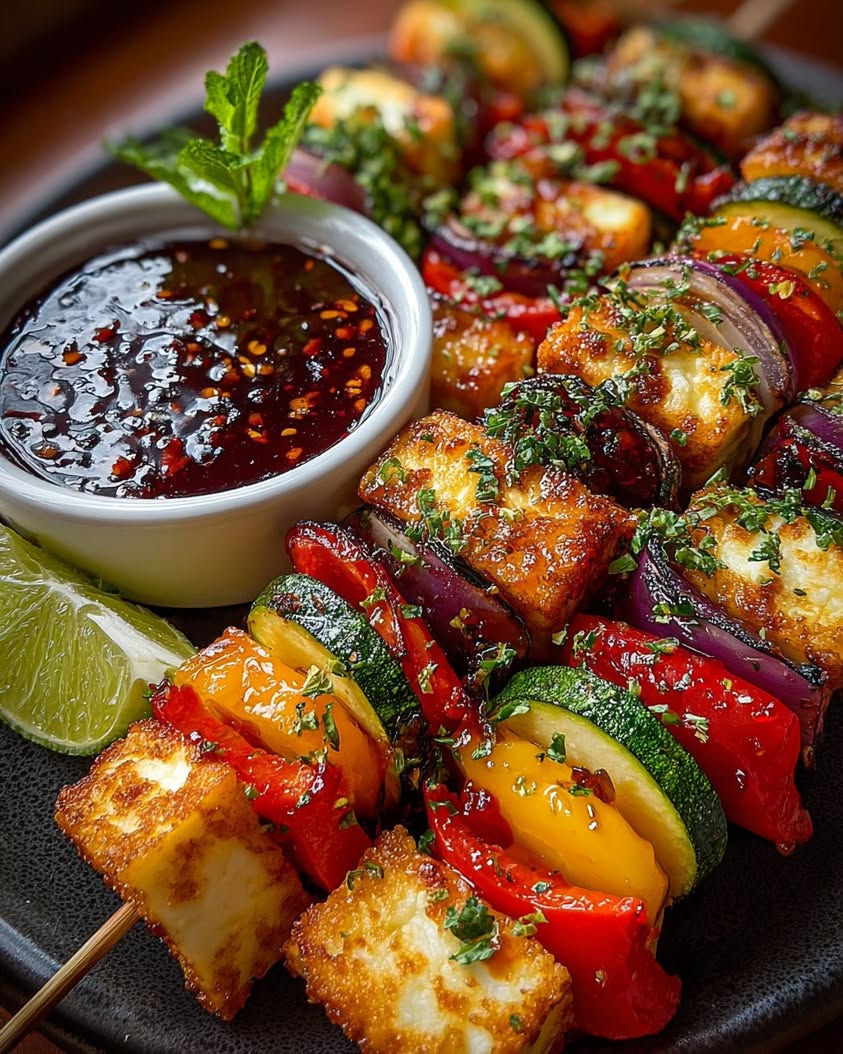
Grilled Halloumi Skewers with Apricot Glaze: A Sweet and Salty Summer Sensation
Imagine the sizzle of cheese hitting a hot grill, the sweet aroma of fruit glaze caramelizing, and the vibrant colors of fresh vegetables. That is the magic of these Grilled Halloumi Skewers with Apricot Glaze. This recipe transforms simple ingredients into an extraordinary appetizer or light meal that will impress any guest. Moreover, it masterfully balances the salty, squeaky halloumi with a sticky, sweet apricot glaze. Consequently, every bite delivers a perfect harmony of flavors and textures that is utterly irresistible.
These skewers are not just delicious; they are incredibly versatile and quick to prepare. Whether you are firing up the barbecue for a summer party or using a grill pan for a cozy indoor dinner, this dish comes together in under thirty minutes. The combination of charred peppers, juicy cherry tomatoes, and golden-brown halloumi creates a visually stunning presentation. Ultimately, this recipe proves that gourmet-level food does not require hours in the kitchen or complicated techniques.
Furthermore, the appeal of these Grilled Halloumi Skewers with Apricot Glaze lies in their universal likability. They cater to vegetarians and meat-eaters alike, offering a satisfying, protein-rich option that feels indulgent. The process is straightforward, involving simple assembly and a quick grill. As a result, you can spend less time cooking and more time enjoying the company of your friends and family. This dish is a guaranteed crowd-pleaser that will have everyone asking for the recipe.
Quick Recipe Highlights
- Flavor Profile: These skewers offer a dynamic taste experience. The primary flavor is a beautiful contrast between the salty, savory halloumi cheese and the sweet, tangy apricot glaze. Additionally, the char from the grill adds a subtle smokiness that ties all the elements together perfectly.
- Texture: The texture is a delightful play of contrasts. You get the firm, squeaky bite of the grilled halloumi, the juicy pop of the cherry tomatoes, and the tender-crisp flesh of the bell peppers. The glaze adds a lovely sticky coating that enhances every component.
- Aroma: As the skewers cook, they release an incredible aroma. Initially, you will smell the savory scent of halloumi browning. Then, the sweet, fruity notes of the apricot glaze will caramelize and mingle with the smoky grill scents, creating an irresistible fragrance.
- Visual Appeal: The visual presentation is vibrant and inviting. The golden-brown cubes of halloumi, bright red tomatoes, and colorful bell peppers create a rainbow on a stick. A final brush of glossy apricot glaze makes the entire skewer shine beautifully.
- Skill Level Needed: This is a beginner-friendly recipe. The skills required are basic knife work for chopping vegetables and the ability to manage a grill or grill pan. No advanced culinary techniques are necessary, making it perfect for novice cooks.
- Special Equipment: You will need skewers, preferably metal for reuse or soaked wooden ones to prevent burning. A grill or stovetop grill pan is essential for achieving the characteristic char. A small saucepan is also needed for simmering the glaze.
Recipe Overview
- Difficulty Level: We rate this recipe as easy. The steps are simple and sequential: chop, thread, grill, and glaze. There is no complex timing or precision required. The most important task is watching the grill to prevent the halloumi from overcooking, which is a straightforward skill.
- Category: These skewers fit multiple categories beautifully. They are an excellent appetizer or starter for a dinner party. Alternatively, they can serve as a light main course when paired with a grain salad or flatbread. They also make fantastic party food for outdoor gatherings.
- Cuisine: The dish draws inspiration from Eastern Mediterranean and Middle Eastern cuisines, where halloumi and fruit-based glazes are common. However, it has a modern, fusion twist that makes it accessible and exciting for a global palate. It celebrates simple, fresh ingredients cooked over an open flame.
- Cost: This is a moderately priced recipe. Halloumi cheese is the primary cost, but a little goes a long way. Bell peppers, cherry tomatoes, and apricot preserves are generally affordable, especially in season. Overall, it delivers restaurant-quality flavor for a fraction of the price.
- Season: This recipe shines in the summer when grilling season is at its peak and fresh produce is abundant. However, it works wonderfully year-round because the main components are available in any season. Indoor grill pans make it a cozy winter option as well.
- Occasion: These skewers are perfect for casual summer barbecues, garden parties, and potlucks. They also make an elegant starter for a more formal dinner. Furthermore, they are a great quick weeknight meal when you want something special without much effort.
Why You’ll Love This Recipe
Firstly, the taste and texture are absolutely unbeatable. The magic of these Grilled Halloumi Skewers with Apricot Glaze lies in the perfect balance. You experience the savory, salty punch of the halloumi, which then melts into the sweet and slightly tangy apricot glaze. Each component, from the juicy tomato to the crisp pepper, adds its own note, creating a symphony in your mouth. The slight char from the grill introduces a whisper of smokiness that elevates the entire dish. Consequently, every bite is a complex and satisfying flavor journey that feels both familiar and excitingly new.
Secondly, the convenience factor is a major win. From start to finish, this dish takes about twenty-five minutes, with most of that time being hands-off grilling. The preparation is minimal, involving simple chopping and threading. Unlike many appetizers that require constant attention, you can assemble these skewers ahead of time. Then, you just pop them on the grill when your guests arrive. This means you can be a present host rather than a stressed cook stuck in the kitchen. Ultimately, it is the ideal recipe for effortless entertaining.
Thirdly, there are notable nutritional advantages. Halloumi is a good source of protein and calcium, providing a satisfying element that keeps you full. The vegetables add vitamins, antioxidants, and fiber. By grilling, you use minimal added fat compared to frying. While halloumi is salty, you control the additional seasoning. When served with a side salad, it becomes a well-rounded meal. Therefore, you can indulge in something delicious that also contributes positively to your diet.
Fourthly, the social and entertaining value is incredibly high. Food on sticks is inherently fun and interactive. These Grilled Halloumi Skewers with Apricot Glaze are easy to eat while standing and mingling. Their stunning visual appeal makes them a centerpiece on any appetizer table. They are a conversation starter, introducing many people to the joy of grilled cheese. They bridge dietary preferences seamlessly, pleasing both vegetarians and omnivores. As a result, they take the stress out of menu planning for mixed groups.
Finally, the cost-effectiveness and accessibility are key. You do not need expensive or hard-to-find ingredients. Halloumi is now widely available in most major grocery stores. The other components are pantry and produce aisle staples. This recipe teaches you how to transform a few simple items into something spectacular. It is a fantastic way to impress without overspending. In essence, it delivers maximum flavor and visual impact for a minimal investment of time and money.
Historical Background and Cultural Significance
The story of halloumi cheese begins on the island of Cyprus, where it has been produced for centuries. Traditionally made from a mixture of sheep’s and goat’s milk, its unique characteristic is a high melting point. This property allowed Cypriot shepherds to grill or fry the cheese over open fires without it losing form. Consequently, halloumi became a staple protein source, especially during fasting periods when meat was prohibited. Its durability and versatility made it essential for travel and preservation in the Mediterranean climate. The cheese’s history is deeply woven into Cypriot culture and identity.
Skewering and grilling food is one of humanity’s oldest cooking methods, spanning countless cultures. In the Eastern Mediterranean and Middle East, kebabs are a culinary cornerstone. The concept of threading marinated meat, and later vegetables and cheese, onto sticks for efficient cooking over coals is ancient. This method allowed for even cooking and easy serving. Our recipe for Grilled Halloumi Skewers with Apricot Glaze modernizes this tradition by focusing on a vegetarian option. It honors the historical technique while adapting it for contemporary tastes and dietary trends.
The use of fruit glazes and preserves in savory cooking also has deep roots, particularly in Persian and Ottoman cuisines. The combination of sweet and savory, known as “murabba” in some traditions, was a sign of sophistication and wealth. Apricots, originating in Central Asia, spread along trade routes and became beloved in Mediterranean cooking. Cooking down fruit with sweeteners created glazes that added shine, flavor, and complexity to roasted and grilled meats. Applying this concept to halloumi is a natural fusion, bridging the cheese’s saltiness with the fruit’s sweetness in a historically informed way.
Today, halloumi has achieved global popularity, moving far beyond its Cypriot origins. Its grill-able quality has made it a darling of the vegetarian and barbecue scenes worldwide. Recipes like these Grilled Halloumi Skewers with Apricot Glaze represent the evolution of traditional ingredients through global fusion. They take a centuries-old cheese and preparation method and pair them with accessible, modern flavors. This evolution speaks to the dynamic nature of food culture, where traditions are preserved not by staying static, but by adapting and inspiring new generations of cooks.
Ingredient Deep Dive
Halloumi cheese is the undisputed star. This semi-hard, brined cheese from Cyprus is famous for its ability to hold shape when heated. Traditionally made from sheep’s or goat’s milk, it offers a distinctive salty flavor and a satisfyingly squeaky texture. Nutritionally, it is rich in protein and calcium, though it is also high in sodium. When selecting halloumi, look for a firm block stored in brine. For storage, keep it submerged in its brine in the refrigerator. If you cannot find halloumi, firm tofu or paneer cheese can work as substitutes, though the flavor profile will differ.
Apricot preserves form the base of the sweet and sticky glaze. Apricots are stone fruits packed with vitamins A and C, and fiber. Using preserves provides concentrated fruit flavor and natural pectin for thickening. For the best glaze, choose a high-quality preserve with real fruit as the first ingredient. You can store an opened jar in the refrigerator for months. For a substitution, peach or mango preserves offer a similar sweet-tart profile. Alternatively, you can blend fresh apricots with a touch of honey and lemon juice, then simmer until thickened.
Bell peppers and cherry tomatoes provide freshness, color, and texture. Bell peppers are excellent sources of vitamin C and antioxidants. Their mild, sweet flavor and crisp-tender texture when grilled balance the rich cheese. Cherry tomatoes burst with juicy sweetness and umami, adding a delightful contrast. Select firm, glossy peppers and plump, unblemished tomatoes for the best results. Store them at room temperature until use. You can easily adapt the vegetable selection based on seasonality; zucchini, red onion, and mushrooms are all fantastic alternatives for these skewers.
Common Mistakes to Avoid
- Not soaking wooden skewers. This is a critical fire-prevention step. Dry wood will catch flame on a hot grill, burning your food. Always soak wooden skewers in water for at least 30 minutes before threading.
- Overcrowding the skewers. Threading ingredients too tightly prevents even cooking. Leave a small space between each piece to allow hot air to circulate, ensuring everything grills properly.
- Using a cold grill. Placing skewers on a grill that hasn’t preheated properly will cause the halloumi to stick and steam instead of sear. Always preheat your grill or grill pan to medium-high heat.
- Moving the skewers too soon. After placing halloumi on the grill, let it cook undisturbed for 1-2 minutes. Trying to move it immediately will cause it to tear. Wait for a proper sear to form before flipping.
- Overcooking the halloumi. Halloumi can go from perfectly golden to tough and rubbery quickly. Grill just until grill marks appear and the cheese is warmed through, usually 2-3 minutes per side.
- Applying glaze too early. Brushing the sugary apricot glaze on at the beginning will cause it to burn. Always apply the glaze in the last minute of cooking, just to warm and caramelize it slightly.
- Skipping the oil brush. Lightly brushing the vegetables and halloumi with oil before grilling prevents sticking and promotes beautiful char. Do not skip this simple but essential step.
- Using low-quality preserves. The glaze’s flavor depends entirely on the apricot preserves. A cheap product with artificial flavors will result in a lackluster, overly sweet glaze. Invest in a good brand.
Essential Techniques
Preparing and threading skewers correctly ensures even cooking. Cut all your ingredients into uniform, bite-sized pieces. This guarantees they will cook at the same rate. When threading, alternate ingredients for visual appeal and balanced flavors on each skewer. Pierce each piece firmly through its center to keep it secure. Leave a small gap between items; this allows heat to penetrate all sides. A well-assembled skewer is not only beautiful but also functional, making the grilling process smooth and predictable.
Grilling halloumi requires attention to heat and timing. Preheat your grill or grill pan to a consistent medium-high heat. Brush the halloumi lightly with oil to prevent sticking. Place the skewers on the grill and do not move them for at least 90 seconds. This allows a proper sear to form, which will release the cheese naturally. Flip carefully using tongs. The goal is warm, golden-brown cheese with distinct grill marks, not melted goo. Watch closely, as halloumi can transition from perfect to overdone in moments.
Creating and applying the apricot glaze is simple but technique-sensitive. In a small saucepan, combine the preserves with a liquid like water, lemon juice, or vinegar. Simmer gently until the mixture thickens slightly and becomes syrupy. Let it cool for a minute before using. Apply the glaze with a pastry brush during the last 60 seconds of grilling. Brushing it on too early causes burning due to the sugar content. The glaze should just warm through, become sticky, and add a glossy sheen to the skewers.
Pro Tips for Perfect Grilled Halloumi Skewers
First, pat the halloumi cubes completely dry with a paper towel before threading. This removes excess surface moisture, leading to a superior sear and preventing steaming. Second, if using wooden skewers, soak them in warm water for at least 30 minutes; for extra insurance, soak them for an hour. Third, lightly oil the grill grates or pan just before adding the skewers to create a non-stick surface. Fourth, use two skewers parallel to each other for larger pieces; this prevents the ingredients from spinning when you flip them. Fifth, let the grilled halloumi skewers rest for a minute off the heat before serving; this allows the cheese to set slightly. Sixth, have a clean plate ready for the finished skewers; never put cooked food back on the plate that held the raw ingredients. Seventh, garnish with fresh herbs like mint or parsley right before serving for a burst of color and freshness. Eighth, serve immediately for the best texture, as the halloumi will firm up as it cools.
Variations and Adaptations
For regional variations, explore different glaze flavors. A pomegranate molasses glaze offers a deeper, tangier Middle Eastern twist. A harissa-infused honey glaze introduces a sweet heat common in North African cuisine. For a Greek vibe, use an oregano and lemon glaze. Seasonal adaptations are easy; in autumn, try a fig glaze with squash cubes. In spring, a lemon-herb marinade with asparagus works beautifully. The basic formula of firm cheese and fresh vegetables is endlessly adaptable to what is fresh at your market.
Dietary modifications are straightforward. For a vegan version, use extra-firm tofu or a commercial vegan halloumi, pressed and marinated. To make it gluten-free, ensure your apricot preserves and any other condiments are certified gluten-free. For a lower-carb option, increase the halloumi and vegetable ratio and use a sugar-free apricot spread for the glaze. Flavor variations can include adding spice with a chili flake sprinkle or smokiness with a dash of paprika in the glaze. Experiment with different fresh herbs in the garnish to change the profile completely.
Serving and Presentation Guide
Plating techniques can elevate this simple dish. Arrange the skewers diagonally across a long, rectangular platter for a modern look. Alternatively, fan them out in a circular pattern on a round plate. Place a small bowl of extra glaze or a complementary dipping sauce, like tzatziki, in the center. For garnishing, a sprinkle of chopped fresh mint, parsley, or dill adds color and freshness. Toasted sesame seeds or crushed pistachios provide a delightful crunch. A final drizzle of high-quality olive oil or a squeeze of lemon juice just before serving enhances the flavors.
Consider traditional and modern accompaniments. Serve these Grilled Halloumi Skewers with Apricot Glaze over a bed of lemon-herb couscous or quinoa for a complete meal. Warm pita bread or flatbread on the side is perfect for scooping up any fallen bits. A simple side salad of arugula, cucumber, and red onion with a lemony vinaigrette cuts through the richness. For a party, they pair wonderfully with other Mediterranean mezze like hummus, olives, and stuffed grape leaves. Always serve the skewers immediately while the halloumi is still warm and slightly soft for the ideal texture experience.
Wine and Beverage Pairing
The salty-sweet profile of these skewers pairs wonderfully with a variety of wines. A crisp, dry rosé with notes of red fruit and citrus complements the dish without overpowering it. A Sauvignon Blanc, especially one with herbal and grapefruit notes, cuts through the richness of the cheese beautifully. For red wine lovers, a light-bodied, low-tannin Pinot Noir with bright acidity can work surprisingly well. Serve white and rosé wines well-chilled, around 45-50°F, and reds slightly cooler than room temperature, around 55°F.
For non-alcoholic alternatives, consider drinks that balance sweetness and acidity. Sparkling water with a squeeze of lemon or lime is a classic, refreshing choice. Iced herbal tea, like mint or peach, echoes the dish’s flavors. A ginger beer or a tart cherry spritzer provides a fun, fizzy contrast. If serving coffee or tea after the meal, a medium-roast coffee or a pot of mint tea would be delightful. The key is to choose beverages that refresh the palate between bites of the savory, sticky skewers.
Storage and Shelf Life
Grilled halloumi skewers are best enjoyed immediately. However, you can store leftovers in an airtight container in the refrigerator for up to two days. The halloumi will become firmer upon chilling. For reheating, avoid the microwave, as it will make the cheese rubbery. Instead, reheat gently in a dry skillet over low heat or under a low broiler until just warmed through. You can also enjoy them cold, straight from the fridge, as the texture will be different but still pleasant. The vegetables may soften slightly upon storage.
I do not recommend freezing the fully assembled and cooked skewers. Freezing and thawing will drastically alter the texture of both the halloumi and the vegetables, making them watery and mushy. If you need to make components ahead, you can prepare the apricot glaze and store it in a jar in the fridge for up to two weeks. You can also cut the vegetables and halloumi a day in advance and store them separately in containers in the refrigerator. Thread the skewers just before you are ready to grill for the best results.
Make Ahead Strategies
You can efficiently break down the preparation to minimize last-minute work. The day before, prepare the apricot glaze and store it in the refrigerator. Cut the halloumi and vegetables, storing them separately in airtight containers. This prevents the vegetables from drying out and the halloumi from absorbing other flavors. If using wooden skewers, you can soak them the night before and leave them wrapped in a damp towel in the fridge. On the day of serving, simply thread the skewers. This strategy reduces active prep time to just minutes before grilling.
For parties, consider a partial grill-ahead method. You can grill the skewers about 30 minutes before guests arrive. Then, hold them on a baking sheet in a single layer. Just before serving, flash them under a hot broiler for 60-90 seconds to re-crisp the exterior and re-melt the glaze. This method works well, though the halloumi will be slightly firmer than if served straight from the grill. Add any fresh herb garnishes after the final broiling step. This approach allows you to be fully present with your guests during the main event.
Scaling Instructions
This recipe scales up or down with simple math. For halving, simply divide all ingredient quantities by two. Use a smaller saucepan for the glaze. The cooking time may reduce slightly since the grill will be less crowded, so watch closely. For doubling or tripling for a crowd, multiply the ingredients accordingly. You may need to grill in batches to avoid overcrowding the grill surface, which leads to steaming. Keep the cooked batches warm on a sheet pan in a low oven (around 200°F) while you finish the rest.
When scaling up, equipment adjustments are key. Ensure you have enough skewers and a large enough platter for serving. If using a grill pan indoors, accept that batch cooking will be necessary. Consider using multiple burners and pans if available. For very large groups, you could use a sheet pan under the broiler, though you will lose the distinct grill marks. The most important scaling tip is to not compromise on the space between items on the skewers or on the grill; crowding is the enemy of perfect char.
Nutritional Deep Dive
A serving of these Grilled Halloumi Skewers with Apricot Glaze provides a good balance of macronutrients. Halloumi is the primary source of protein and fat, offering sustained energy and satiety. The vegetables contribute complex carbohydrates and fiber, aiding digestion. The apricot glaze adds simple sugars, so moderation is key. Micronutrient-wise, you get calcium from the cheese, vitamins A and C from the peppers and tomatoes, and various antioxidants from all the colorful plants. This makes the dish a nutrient-dense choice for an appetizer or light meal.
For health considerations, note that halloumi is high in sodium, so those monitoring salt intake should be mindful. The dish is naturally vegetarian and can be adapted to be gluten-free. For weight management, these skewers are satisfying and portion-controlled, helping to prevent overeating. Pairing them with a large green salad increases volume and nutrients without adding many calories. The cooking method—grilling—uses minimal added fat compared to frying. Overall, it is a flavorful way to enjoy a meal that includes protein, vegetables, and healthy fats.
Dietary Adaptations
For a gluten-free version, ensure your apricot preserves are certified gluten-free, as some thickeners may contain gluten. All other core ingredients are naturally gluten-free. For a dairy-free or vegan adaptation, substitute the halloumi with extra-firm tofu. Press the tofu thoroughly to remove water, then cut into cubes and marinate in a salty, umami-rich brine before threading and grilling. Several brands also make excellent vegan “halloumi” style cheeses from coconut oil or tofu.
For a keto or low-carb adaptation, focus on the halloumi and low-carb vegetables like bell peppers and zucchini. Replace the apricot preserves with a glaze made from a sugar-free apricot jam or a blend of unsweetened apricot puree with a keto-friendly sweetener like monk fruit or erythritol. For a Paleo version, use a cheese substitute like grilled slices of sweet potato or plantain, and ensure the glaze is made with honey instead of refined sugar. Always check labels on preserves and condiments to ensure they align with your specific dietary protocol.
Troubleshooting Guide
If your halloumi is sticking to the grill, the issue is likely insufficient heat or a lack of oil. Always preheat your grill properly and brush both the grates and the halloumi lightly with a high-heat oil like avocado or grapeseed. If the halloumi becomes tough and rubbery, it is overcooked. Halloumi needs only a brief grill to warm through and develop color; aim for 2-3 minutes per side maximum. If the glaze is burning, you applied it too early. Apply any sugar-based glaze in the final 60 seconds of cooking, just to warm and set it.
If your vegetables are undercooked while the halloumi is done, your pieces may be too large or the heat too high. Cut vegetables into uniform, small-ish pieces. You can also par-cook harder vegetables like bell peppers by microwaving them for 30 seconds before threading. If the skewers are falling apart, you may have threaded items too loosely or used undersized pieces. Ensure each piece is pierced firmly through its center. Using two parallel skewers provides excellent stability for larger or heavier components.
Recipe Success Stories
Readers consistently rave about how these skewers become the star of their summer gatherings. One home cook reported that her guests, who were skeptical of “grilled cheese,” devoured two platters and requested the recipe on the spot. Another found that the recipe was a perfect way to introduce her children to halloumi, and it is now a requested weekly meal. Many appreciate the flexibility, sharing their successful variations, such as using peach preserves or adding chunks of pineapple for a tropical twist.
Photography tips from successful makers include grilling in the late afternoon for beautiful golden-hour light and using a dark, rustic wooden board as a platter to make the colorful skewers pop. Several readers have made this recipe for potlucks, noting that transporting the ungrilled, assembled skewers in a pan and grilling on-site was a huge hit. The common thread in all success stories is the surprise and delight this simple combination brings, proving that great food does not need to be complicated.
Frequently Asked Questions
Can I make these skewers in the oven instead of on a grill? Yes, you can. Arrange the skewers on a baking sheet lined with parchment paper. Broil on high for 3-4 minutes per side, watching closely, until the halloumi is golden and the vegetables have some char. The flavor will be slightly different but still delicious.
What can I use instead of apricot preserves? Peach, mango, or even orange marmalade make excellent substitutes. For a savory twist, try a glaze of olive oil, lemon juice, and dried oregano. The key is a balance of sweetness to contrast the salty cheese.
Is halloumi cheese healthy? Halloumi is a good source of protein and calcium but is also high in saturated fat and sodium. It can be part of a balanced diet when enjoyed in moderation, as in this recipe where it is paired with plenty of vegetables.
Can I prepare the skewers the night before? You can cut the ingredients and store them separately overnight. However, I do not recommend threading them until just before grilling, as the salt from the halloumi can draw moisture out of the vegetables, making them soggy.
My halloumi didn’t get grill marks. What happened? This usually means the grill wasn’t hot enough, or you moved the skewers too soon. Ensure your grill is preheated to medium-high and let the skewers cook undisturbed to develop a proper sear.
How do I prevent the wooden skewers from burning? Soak them in water for at least 30 minutes before using. For extra protection, you can also keep a spray bottle of water handy to tame any flare-ups on the grill.
Are these skewers served hot or cold? They are best served immediately, warm from the grill. The halloumi has its ideal squeaky-yet-tender texture when warm. As it cools, it becomes firmer.
Can I add meat to these skewers? Absolutely. Cubes of chicken or shrimp would pair wonderfully with the apricot glaze. Just ensure you adjust cooking times accordingly to cook the meat fully through.
What’s the best way to cut halloumi? Use a sharp knife and cut the block into even cubes, about 1-inch thick. Wiping the knife between cuts can help prevent sticking from the cheese’s sticky texture.
Do I need to salt the vegetables? The halloumi is quite salty, so additional salting is usually not necessary. A light brush of oil is sufficient. You can always add a sprinkle of flaky sea salt at the end if desired.
Additional Resources
If you loved these Grilled Halloumi Skewers with Apricot Glaze, explore other recipes that celebrate halloumi. Try a Halloumi and Watermelon Salad for a refreshing summer side, or Pan-Fried Halloumi with Honey and Sesame for a quick snack. To master your grilling technique, our guide to perfect vegetable grilling temperatures is a great companion. For more on Mediterranean ingredients, read our deep dives on za’atar, sumac, and pomegranate molasses. Investing in a good quality grill pan or a set of reusable metal skewers will make this and many other recipes easier and more enjoyable to prepare all year round.
{“success”:true,”message”:”Recipe created successfully”,”post_id”:9084,”tasty_recipe_id”:9084,”shortcode”:”“}

I’m Billy, a classically trained culinary school graduate from The Culinary Institute of America with over 12 years in the restaurant industry and over 19 years of cooking experience.