
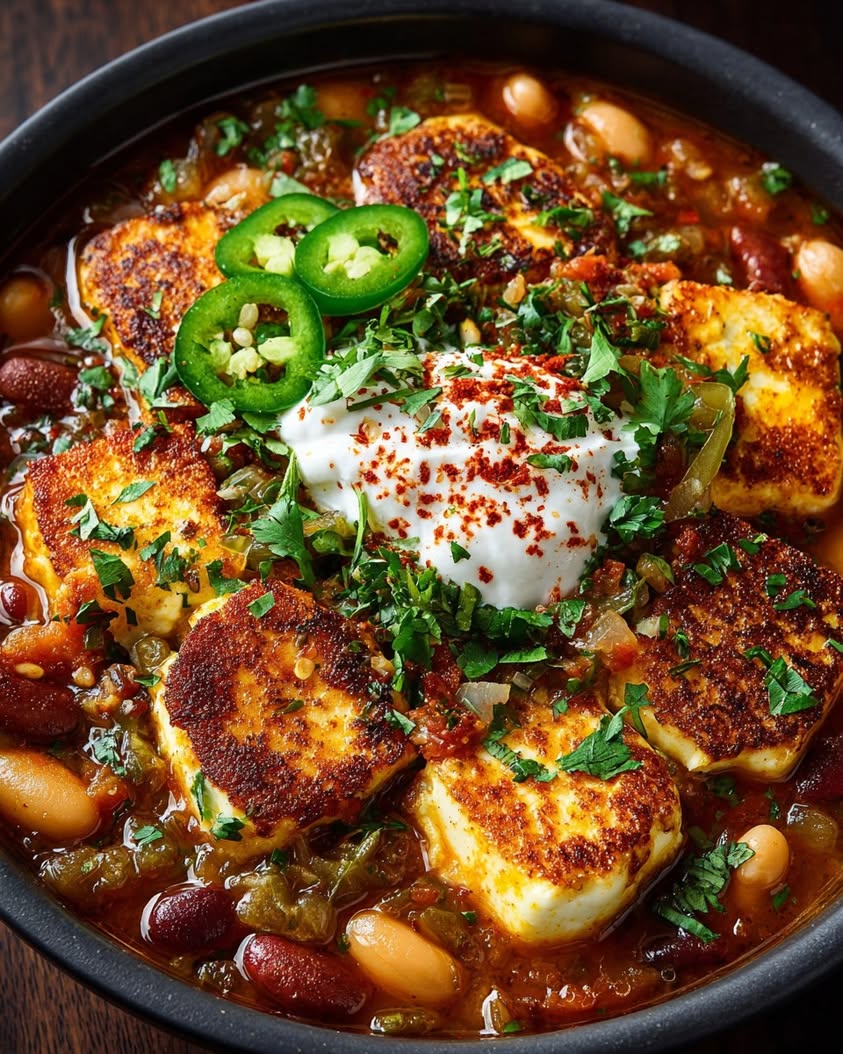
Halloumi and White Bean Chili: A Cozy Vegetarian Twist on a Classic
Imagine a bowl of classic chili, but with a surprising, delightful twist. This Halloumi and White Bean Chili recipe delivers exactly that. It swaps traditional ground meat for cubes of golden, pan-fried halloumi cheese. The result is a hearty, protein-packed vegetarian meal that satisfies even the most dedicated carnivores. Moreover, it comes together in one pot in about forty minutes. Consequently, it is perfect for busy weeknights when you crave something comforting and substantial.
The magic of this dish lies in its contrasting textures and bold flavors. Creamy white beans simmer in a rich, smoky tomato broth infused with garlic, cumin, and a touch of chili powder. Meanwhile, you prepare the star ingredient: halloumi. This unique cheese holds its shape beautifully when cooked, developing a crispy, golden exterior while staying wonderfully soft inside. Finally, you stir these savory cubes into the chili just before serving. The salty, squeaky cheese perfectly balances the smoky, savory broth, creating a truly unforgettable eating experience.
This Halloumi and White Bean Chili is more than just a meal; it is a celebration of smart, flavorful cooking. It proves that vegetarian food can be deeply satisfying and full of umami. Additionally, it is incredibly versatile. You can easily adjust the spice level, add different vegetables, or swap the beans to suit your pantry. Ultimately, this recipe will become a reliable favorite in your kitchen rotation, offering warmth and flavor in every single spoonful.
Quick Recipe Highlights
- Flavor Profile: This chili boasts a deep, smoky base from tomatoes and spices, beautifully contrasted by the salty, savory punch of pan-fried halloumi. The garlic and cumin add warmth, while a hint of chili powder provides a gentle background heat that builds slowly.
- Texture: Expect a wonderful contrast between the creamy, soft white beans, the rich, slightly chunky tomato broth, and the star of the show: halloumi with its crispy, golden crust and soft, chewy interior that squeaks delightfully with each bite.
- Aroma: As it simmers, your kitchen will fill with the irresistible scent of sautéed garlic and onions, toasted cumin, and smoky paprika. The final addition of fresh cilantro adds a bright, herbal top note that makes the dish smell incredibly fresh and inviting.
- Visual Appeal: This chili is a feast for the eyes with its vibrant red broth studded with creamy white beans and flecks of green cilantro. The golden-brown cubes of halloumi resting on top add a beautiful visual and textural contrast that makes the dish look restaurant-worthy.
- Skill Level Needed: This is a beginner-friendly, one-pot wonder. The techniques involve simple chopping, sautéing, and simmering. The only specific skill is pan-frying the halloumi to achieve a perfect golden sear without burning it, which is straightforward with a watchful eye.
- Special Equipment: You need only standard kitchen equipment: a sharp knife, a cutting board, a large pot or Dutch oven for the chili, and a non-stick skillet or frying pan for cooking the halloumi to perfection. No special gadgets are required.
Recipe Overview
- Difficulty Level: We rate this Halloumi and White Bean Chili recipe as “Easy.” The steps are sequential and simple, involving basic knife work and standard stovetop cooking. There is no complex timing or advanced techniques. The halloumi cooking is the only step requiring specific attention, but it is very manageable for cooks of any level.
- Category: This dish fits perfectly into several categories: it is a hearty main course, a fantastic vegetarian dinner, and an excellent one-pot meal. It also works wonderfully as a make-ahead lunch or a casual party food served in a slow cooker.
- Cuisine: While chili has roots in Tex-Mex cuisine, this version takes creative liberty by incorporating halloumi, a cheese from Cyprus. The result is a delicious fusion dish that blends the comforting, spicy stew tradition of the Americas with a beloved Mediterranean ingredient.
- Cost: This is a very cost-effective meal. Canned beans and tomatoes are pantry staples, and spices are a one-time investment. The primary cost is the halloumi cheese, which is often found in the specialty cheese section. Overall, it provides a restaurant-quality meal for a fraction of the price of eating out.
- Season: This chili is truly a year-round champion. It provides cozy warmth during fall and winter. Conversely, it is light enough for spring evenings. During summer, you can serve it with lighter sides for a satisfying meal that does not overheat the kitchen.
- Occasion: It is ideal for casual weeknight family dinners, effortless weekend lunches, or game-day gatherings. Furthermore, it is an impressive yet simple option for hosting vegetarian friends. Simply put, it suits any informal, comforting food occasion.
Why You’ll Love This Recipe
First and foremost, the taste and texture of this Halloumi and White Bean Chili are utterly captivating. The rich, smoky broth provides a familiar chili comfort, while the halloumi introduces a thrilling, salty surprise. Each spoonful delivers creaminess from the beans, tang from the tomatoes, and that incredible squeaky, savory bite from the cheese. This combination creates a deeply satisfying umami experience that makes you forget it is meatless. The flavors are bold yet balanced, offering a gentle heat that you can easily adjust to please everyone at the table.
From a convenience standpoint, this recipe is a true weeknight hero. It requires minimal prep—mostly just chopping an onion and mincing garlic. After that, the cooking process is largely hands-off simmering. You can multitask and prepare a side salad or slice some bread while the chili bubbles away. The one-pot nature also means cleanup is a breeze. In about forty minutes total, you go from ingredients on the counter to a steaming, impressive bowl of dinner on the table. It is the definition of efficient, flavorful cooking.
Nutritionally, this dish packs a powerful punch. White beans are an excellent source of plant-based protein and fiber, which aid digestion and promote long-lasting fullness. Halloumi provides protein and calcium, though it is higher in sodium and fat, so a little goes a long way flavor-wise. Tomatoes contribute vitamins C and K, along with the antioxidant lycopene. By using wholesome ingredients and controlling the sodium, you create a meal that is both indulgent and nourishing. It is a fantastic way to incorporate more plant-based meals into your routine without sacrificing satisfaction.
For social and entertaining value, this chili is a guaranteed crowd-pleaser. It is easy to double or triple for a large group and can sit happily in a slow cooker on the “warm” setting. The unique halloumi element sparks conversation and delights guests who may be expecting ordinary vegetarian chili. It accommodates various diets with simple tweaks and pairs wonderfully with a variety of toppings and sides, allowing everyone to customize their bowl. Serving this dish shows thoughtfulness and culinary creativity, making any gathering feel special.
Finally, its cost-effectiveness and accessibility are major wins. You likely have many of the pantry staples—canned beans, tomatoes, spices—already on hand. The star ingredient, halloumi, is increasingly available in most major supermarkets. Compared to a meal centered around meat or seafood, this recipe offers a gourmet taste experience for significantly less money. It demonstrates how a single special ingredient can transform humble, affordable staples into something extraordinary. This Halloumi and White Bean Chili proves that eating well does not require a complicated technique or a hefty budget.
Historical Background and Cultural Significance
The story of chili con carne is deeply woven into the fabric of Texan and Southwestern American cuisine. Its origins are humble, often traced back to the 19th century as a practical, hearty food for cowboys and pioneers. Traditionally, it involved dried beef, suet, chili peppers, and salt, pounded together and dried into bricks for travel. Later, cooks rehydrated and simmered these bricks with water. Over time, beans, tomatoes, and onions entered the picture, though their inclusion remains a topic of friendly debate among purists. This evolution reflects the adaptive nature of folk cooking, where available resources shape the recipe.
Culturally, chili holds a place of honor. It is the official state dish of Texas. Moreover, chili cook-offs are serious community events with fiercely guarded secret recipes. The dish symbolizes warmth, community, and resilience. It is food for gatherings, for fueling long days, and for sharing. While meat has been its historical cornerstone, the cultural shift toward diverse dietary preferences has opened the door for creative reinterpretations. Vegetarian and vegan chilis have gained immense popularity, reflecting a broader culinary inclusivity and innovation.
The evolution leading to this Halloumi and White Bean Chili recipe is a modern chapter in that story. It respects the chili tradition—a smoky, spicy, bean-and-tomato stew—while boldly incorporating a non-traditional protein. Halloumi cheese originates from Cyprus and has been a staple in Eastern Mediterranean and Middle Eastern diets for centuries. Known for its high melting point, it is traditionally grilled or pan-fried. The idea to cube and pan-fry it, then stir it into a stew, is a contemporary fusion technique. It marries the communal, comforting spirit of American chili with the salty, robust character of a Mediterranean cheese.
Regional variations of chili are vast, from Cincinnati chili with its unique spice blend served over spaghetti to green chili stews of New Mexico. This halloumi version adds to that rich tapestry. It does not seek to replace traditional chili but to offer a delicious alternative for those seeking meatless options or new flavor adventures. It represents how global pantries inspire modern home cooks. Consequently, this recipe is a testament to the living, breathing nature of food culture, where traditions provide a foundation for endless personal and creative expression.
Ingredient Deep Dive
Halloumi Cheese: Halloumi is a semi-hard, brined cheese traditionally made from a mixture of goat’s and sheep’s milk, though cow’s milk versions are common. Hailing from Cyprus, it dates back to the Byzantine era. Its unique property is its high melting point, thanks to the way the curds are heated during production. This allows it to be grilled or fried without losing shape. Nutritionally, it is a good source of protein and calcium but is also high in saturated fat and sodium. When selecting halloumi, look for a firm, white block stored in brine. For storage, keep it submerged in its brine in an airtight container in the refrigerator for up to a few weeks. If you cannot find halloumi, a good vegetarian substitute is extra-firm tofu that has been pressed, cubed, and pan-fried until golden. The texture will be different, but it will provide a savory element.
Cannellini Beans: Also known as white kidney beans, cannellini beans are a staple in Italian cuisine, particularly in minestrone and pasta e fagioli. They are larger and more elongated than great northern beans, with a creamy texture and mild, nutty flavor. They are a nutritional powerhouse, packed with plant-based protein, fiber, iron, and folate. Their creamy texture makes them ideal for purees and stews. When using canned beans, always rinse and drain them thoroughly to remove excess sodium and the starchy liquid that can cloud your chili. For storage, unused canned beans can be transferred to a sealed container and refrigerated for up to three days. If you cannot find cannellini, great northern beans or navy beans are excellent substitutes and will yield a very similar result.
Fire-Roasted Diced Tomatoes: These tomatoes are charred over an open flame before being diced and canned, which imparts a distinct, subtle smokiness that elevates the entire dish. This deep, caramelized flavor is the secret to a rich chili base without hours of simmering. They are a fantastic source of vitamins C and K, and the cooking process may increase the bioavailability of the antioxidant lycopene. Choose a brand with no added sugars or excessive seasonings for the best control over your final flavor. An unopened can stays good in the pantry for years. Once opened, transfer leftovers to a non-reactive container and refrigerate for up to five days. If you cannot find fire-roasted, regular diced tomatoes work perfectly fine; you can enhance the smoky flavor with a pinch more smoked paprika.
Common Mistakes to Avoid
- Not Draining the Halloumi: Halloumi sits in brine, so patting it very dry with paper towels is crucial. Otherwise, excess moisture will cause it to steam instead of sear in the pan. Consequently, you will miss out on the essential crispy, golden crust.
- Overcrowding the Pan When Frying Halloumi: Give the cheese cubes space. If you crowd them, they will release moisture and steam, again preventing proper browning. Cook in batches if necessary to ensure each piece gets direct contact with the hot pan.
- Using Old, Clumpy Spices: Ground spices lose their potency over time. If your cumin or chili powder has been in the cabinet for years, its flavor will be dull. Toasting fresh spices with the onions unlocks their essential oils and makes a world of difference in the depth of your chili.
- Adding the Halloumi Too Early: Stir the fried halloumi into the chili at the very end, just before serving. If you let it simmer in the hot liquid for too long, it will eventually start to soften and lose its delightful squeaky texture and distinct bite.
- Forgetting to Season in Layers: Do not wait until the end to add all your salt. Season the onions as they sauté, then taste and adjust the seasoning after the chili has simmered. The halloumi itself is salty, so final seasoning is key to avoid an overly salty dish.
- Rushing the Onion Cooking Step: Sauté the onion until it is truly soft and translucent, not just barely warmed. This foundational step builds sweetness and complexity in the base of your chili. Rushing it means missing out on that foundational flavor.
- Using the Wrong Type of Bean: While you can substitute, avoid using very soft beans like black-eyed peas or lentils in this specific recipe, as they may break down too much during the simmer. You want beans that hold their shape to contrast with the halloumi.
- Neglecting the Garnish: The fresh cilantro and lime juice are not just decoration. They add crucial brightness and acidity that cut through the richness of the cheese and beans. Skipping them results in a one-dimensional flavor profile.
Essential Techniques
Sweating Onions: This technique involves cooking diced onions over medium-low heat with a little fat until they become soft, translucent, and sweet, without taking on any color. It is important because it develops the foundational flavor layer of your chili, creating a complex sweetness that balances the acidity of the tomatoes and the heat of the spices. To master it, be patient and stir occasionally. A common pitfall is cranking the heat to speed up the process, which leads to browning or burning and a different, sharper flavor. Success is visual: look for the onions to lose their raw, white opacity and become uniformly soft and glossy.
Toasting Spices: This means cooking ground spices in oil for about 30-60 seconds after adding your aromatics. The technique is vital because heat unlocks the volatile essential oils in spices, dramatically intensifying their aroma and flavor. It transforms them from dusty and flat to vibrant and deep. To do it, simply add your cumin and chili powder to the cooked onions and stir constantly for half a minute until fragrant. The common mistake is leaving them in a hot pan without stirring, which can cause them to burn in seconds, becoming bitter. The visual cue is a fragrant steam and a slightly darker color, but never blackened specks.
Pan-Frying Halloumi: This is the signature technique for this recipe. It requires a dry, non-stick or well-seasoned pan over medium-high heat. The goal is to create a deep golden-brown crust on the outside while the inside stays soft. Its importance lies in creating the textural contrast that defines the dish. To master it, ensure the halloumi is patted completely dry and the pan is properly preheated. Do not move the cubes around constantly; let them sit to form a crust. The common pitfall is using too much oil; halloumi releases its own fat, so a light brush on the pan is sufficient. Visual cues are a golden-brown color on the contact side and easy release from the pan when ready to flip.
Pro Tips for Perfect Halloumi and White Bean Chili
For the crispiest halloumi, take the cheese out of the refrigerator about 15 minutes before cooking. This brings it closer to room temperature, helping it cook more evenly and quickly without overcooking the exterior.
Use the fond, or browned bits, left in the pan after frying the halloumi. Deglaze that pan with a splash of the chili broth or a little water, then pour those flavorful bits right into the simmering pot.
If you have time, let the chili rest for 10-15 minutes after simmering and before adding the halloumi. This allows the flavors to marry and deepen, resulting in a more cohesive and complex final dish.
For a richer, thicker broth, use a potato masher to gently mash about one-quarter of the beans against the side of the pot before adding the rest. This releases their starch and creates a luscious, velvety base.
Always taste your chili after it has simmered and again after adding the halloumi. The saltiness of the cheese varies by brand, so this final adjustment ensures perfect seasoning every single time.
If serving for a party, keep the fried halloumi separate in a warm oven and let guests add their own portion to their bowls. This preserves its perfect texture until the very last minute.
For a deeper smoky flavor without more heat, add a teaspoon of smoked paprika along with the other spices. It complements the fire-roasted tomatoes beautifully.
Variations and Adaptations
Regional Variations: For a Mediterranean twist, add a teaspoon of dried oregano and a pinch of cinnamon with the spices, and stir in a handful of chopped Kalamata olives at the end. For a Tex-Mex vibe, add a diced jalapeño with the onion and use a blend of chili powder that includes garlic and onion powder. Top with crushed tortilla chips and a dollop of sour cream.
Seasonal Adaptations: In summer, add fresh corn kernels cut from the cob or diced zucchini in the last 5 minutes of simmering. For a heartier winter version, add diced sweet potato or butternut squash with the beans, allowing extra simmering time for them to become tender. These additions bring seasonal freshness and color to the pot.
Dietary Modifications: To make this chili vegan, substitute the halloumi with seasoned, pan-fried extra-firm tofu or a store-bought vegan halloumi alternative. Ensure your vegetable broth is certified vegan. For a gluten-free version, the recipe is naturally compliant; just double-check that your vegetable broth and all canned products are labeled gluten-free.
Flavor Variations: Experiment with different spice profiles. Try adding a tablespoon of chipotle in adobo for a smoky heat, or use smoked sea salt as a finishing touch. For an herbal note, stir in a tablespoon of chopped fresh rosemary or thyme with the garlic. A splash of balsamic vinegar at the end can add a surprising sweet-tangy complexity.
Texture Modifications: For a smoother chili, use an immersion blender to partially puree the mixture before adding the whole beans and halloumi. For more texture, add a second bean like black beans or kidney beans. You can also top the chili with crunchy elements like toasted pepitas, chopped radishes, or crispy fried shallots for added contrast.
Presentation Alternatives: Serve the chili in individual bread bowls for a fun, edible presentation. Alternatively, layer it in a glass trifle dish with cornbread, cheese, and avocado for a deconstructed chili “parfait.” For a casual buffet, serve it straight from a slow cooker with all toppings in separate bowls for a build-your-own-bar experience.
Serving and Presentation Guide
Plating Techniques: For an elegant presentation, ladle the chili into wide, shallow bowls. This provides a canvas for artful garnishing. Place a small mound of the fried halloumi cubes deliberately in the center or scatter them around the perimeter. Avoid simply dumping everything in; a little intention makes the meal feel special.
Garnishing Ideas: Fresh cilantro is classic, but also consider thinly sliced green onions, a drizzle of crema or sour cream, a wedge of lime on the side, or a sprinkle of red pepper flakes for color. A small avocado slice or a few tortilla strips add different textures and flavors that enhance the overall experience.
Traditional Accompaniments: Cornbread is the quintessential partner, perfect for soaking up the flavorful broth. A simple side salad of crisp romaine with a lime vinaigrette provides a refreshing contrast. Warm flour or corn tortillas are also excellent for scooping.
Modern Serving Suggestions: For a fun twist, serve the chili over a baked sweet potato or a bowl of quinoa for added whole grains. You can also use it as a hearty topping for nachos or loaded fries. For a light lunch, serve a smaller portion in a mug with a side of crackers.
Temperature Considerations: Serve this chili piping hot. Warm your serving bowls by rinsing them with hot water before ladling. The halloumi is best when added at the last second so it retains its unique texture. If the dish sits, the cheese will soften but remain delicious.
Portion Control Tips: This recipe yields four generous main-course servings. For a lighter meal or as part of a larger spread, it can easily serve six. Use a measuring cup to portion evenly if needed. Remember, the beans and halloumi are filling, so a little goes a long way, especially when paired with sides.
Wine and Beverage Pairing
Wine Pairings: The salty halloumi and smoky, spicy chili call for wines with good acidity to cut through the richness. A crisp, citrusy Sauvignon Blanc or a dry Riesling works wonderfully. For red wine lovers, a fruity, low-tannin option like a Beaujolais or a Zinfandel complements the spices without clashing. Avoid heavily oaked wines, as they can compete with the dish’s complex flavors.
Non-Alcoholic Alternatives: Sparkling water with a squeeze of lime is always refreshing. For something more special, try a ginger beer; its spicy sweetness pairs excellently with the chili’s heat. A tart cherry juice spritzer or a cold-brewed hibiscus tea (agua de jamaica) also provides a beautiful balance of sweet and tart that cleanses the palate.
Coffee/Tea Pairings: While not a typical pairing, a cup of strong, black coffee after the meal can be delightful. The bitterness contrasts the savory richness. For tea, a smoky Lapsang Souchong can echo the chili’s smokiness, or a peppermint tea can provide a cool, cleansing finish that is very refreshing.
Temperature Considerations: Chilled beverages are generally best to counter the warmth of the chili. However, if you are enjoying this on a cold night, a warm mug of the suggested teas can be equally comforting. The key is to have a drink that refreshes the palate between bites.
Serving Suggestions: Offer a variety of beverages if serving guests. Place a pitcher of infused water (cucumber-mint or lemon-basil) on the table alongside a cooler with beer and wine options. This allows everyone to choose their preferred pairing and enhances the casual, communal feel of the meal.
Storage and Shelf Life
Storage Methods: Store leftover chili (without added garnishes) in an airtight container in the refrigerator. It is best to store the chili and any leftover pan-fried halloumi separately if possible. This preserves the halloumi’s texture, though it will soften upon reheating regardless.
Temperature Requirements: Refrigerate leftovers within two hours of cooking. The chili will keep safely for 3 to 4 days in the refrigerator at or below 40°F (4°C). For longer storage, freezing is the best option.
Container Recommendations: Use glass or BPA-free plastic containers with tight-fitting lids. For freezing, leave about an inch of headspace to allow for expansion. Alternatively, use heavy-duty freezer bags laid flat to save space.
Signs of Spoilage: Discard the chili if you notice an off or sour smell, visible mold, or significant changes in texture. If the liquid separates unusually and cannot be reincorporated, it may also be past its prime. When in doubt, throw it out.
Reheating Instructions: Reheat gently on the stovetop over medium-low heat, stirring occasionally, until steaming hot throughout. You can also use a microwave, stirring every 60 seconds to ensure even heating. If the chili has thickened too much, add a splash of water or broth while reheating.
Freezing Guidelines: This chili freezes exceptionally well for up to 3 months. Cool it completely before transferring to freezer-safe containers. Thaw overnight in the refrigerator before reheating. Note that the texture of the beans may become slightly softer after freezing and thawing, but the flavor remains excellent.
Make Ahead Strategies
Prep Timeline: You can fully prepare the chili base (through the simmering step) up to 2 days in advance. Simply cool it quickly and store it covered in the refrigerator. The flavors often improve with this rest. Cook the halloumi fresh just before serving for the best texture.
Storage Between Steps: Store the pre-cooked chili base in its cooking pot with a lid or transfer to a storage container. Keep chopped onions and minced garlic in separate small containers in the fridge for up to a day to speed up final assembly. Drain and rinse the beans ahead of time as well.
Quality Impact Assessment: Making the base ahead has a positive impact, allowing flavors to meld. The halloumi, however, does not hold well once cooked; it becomes rubbery when refrigerated and reheated. Therefore, plan to fry it fresh. The garnishes like cilantro and lime should always be prepared fresh.
Assembly Tips: On serving day, gently reheat the chili base on the stove. While it heats, pat the halloumi dry and pan-fry it. Stir the hot halloumi into the reheated chili, let it warm through for a minute, then serve immediately. This workflow ensures peak texture and temperature.
Reheating Guidelines: Reheat the chili base slowly over medium-low heat, stirring frequently to prevent sticking on the bottom. If it seems too thick, add a small amount of vegetable broth or water to reach your desired consistency. Do not boil vigorously, as this can break down the beans.
Fresh Element Additions: Always add the fresh halloumi and garnishes like cilantro, lime juice, and any creamy toppings (sour cream, avocado) at the very end, just before serving. This maintains their distinct textures and bright flavors, which can dull if mixed in and reheated.
Scaling Instructions
Halving the Recipe: Halving this Halloumi and White Bean Chili is straightforward for smaller households. Simply divide all ingredient quantities by two. Use a medium saucepan instead of a large pot. The cook times will remain roughly the same, though you may need to reduce the simmering time by a few minutes as the smaller volume heats and reduces faster. Keep a close eye on the halloumi when frying a smaller batch, as it can cook very quickly.
Doubling or Tripling: This recipe doubles and triples beautifully for a crowd. Use a very large stockpot or Dutch oven. You may need to increase the initial onion sauté time slightly, as a larger volume will take longer to soften evenly. The simmering time may also extend by 5-10 minutes to allow the flavors to fully develop in the larger batch. Fry the halloumi in multiple batches to avoid overcrowding the pan and ensure proper browning on every cube.
Equipment Adjustments: When scaling up, ensure your pot has enough room—it should be no more than two-thirds full to prevent bubbling over. You may need a second large skillet to fry the halloumi efficiently in batches. For very large batches, consider using two pots on the stove or transferring the finished chili to a slow cooker set on “warm” for serving.
Timing Modifications: While active prep time increases slightly with scaling, the majority of the cook time (simmering) does not scale linearly. A double batch may need only 5-10 extra minutes of simmering. The key timing factor is frying the halloumi in uncrowded batches, so allocate extra time for that step when cooking for many people.
Storage Considerations: A larger batch means more leftovers. Plan your storage containers in advance. Consider freezing portions in meal-sized containers for future easy dinners. Remember that the halloumi is best added fresh, so if freezing, freeze the chili base only and cook halloumi when you reheat and serve.
Nutritional Deep Dive
Macro Breakdown: A serving of this Halloumi and White Bean Chili provides a balanced mix of macronutrients. The cannellini beans are a prime source of complex carbohydrates and plant-based protein, offering sustained energy. The halloumi contributes additional protein and a significant amount of fat, primarily saturated. The tomatoes and onions add minimal carbs but valuable fiber. Overall, it is a filling meal that balances protein, fiber, and healthy fats from the olive oil, promoting satiety.
Micronutrient Analysis: This dish is rich in several key micronutrients. Cannellini beans provide iron, magnesium, and folate. Tomatoes are an excellent source of vitamin C, vitamin K, and the antioxidant lycopene. Onions and garlic offer quercetin, a flavonoid with anti-inflammatory properties. Halloumi contributes a notable amount of calcium, which is crucial for bone health. Using low-sodium broth and beans helps manage the overall sodium content, which is primarily driven by the halloumi and any added salt.
Health Benefits: The combination of fiber from beans and vegetables supports digestive health and helps regulate blood sugar levels. The plant-based compounds have anti-inflammatory and antioxidant effects. The protein from both beans and cheese supports muscle maintenance and repair. When consumed as part of a balanced diet, this chili can contribute to heart health, weight management due to its high satiety factor, and overall nutrient density.
Dietary Considerations: This recipe is naturally vegetarian. It can be adapted to be gluten-free and vegan with the substitutions mentioned. It is not suitable for a low-sodium diet due to the halloumi and canned goods, though you can use no-salt-added products. It is moderately high in saturated fat because of the cheese, so those monitoring saturated fat intake should be mindful of portion size.
Portion Analysis: One serving is approximately 1.5 to 2 cups of the chili mixture, including the halloumi. This is a substantial and satisfying portion for a main course. For a lighter meal, a one-cup serving with a large side salad is sufficient. The portion provides a significant amount of daily fiber and protein needs, making it a nutritionally complete centerpiece for a meal.
Weight Management Tips: To make this dish more weight-conscious, you can reduce the amount of halloumi by one-third and bulk up the chili with extra beans or vegetables like bell peppers and mushrooms. Use a cooking spray instead of oil to fry the halloumi. Ensure you include a large serving of a non-starchy vegetable on the side, such as a green salad or steamed broccoli, to increase volume and nutrients without many calories.
Dietary Adaptations
Gluten-Free: This Halloumi and White Bean Chili is naturally gluten-free as written. However, you must always check labels on canned vegetable broth, diced tomatoes, and spices, as some brands may include gluten-containing additives or be processed in facilities with cross-contamination. Opt for products certified gluten-free if you have celiac disease or a severe sensitivity.
Dairy-Free/Vegan: To make this recipe vegan and dairy-free, omit the halloumi. Substitute it with extra-firm tofu that has been pressed, cubed, and marinated in a mixture of soy sauce, nutritional yeast, and a pinch of kala namak (black salt) for a “eggy” flavor, then pan-fried. Alternatively, use a store-bought vegan halloumi. Ensure your vegetable broth is certified vegan.
Low-Carb/Keto: This recipe is not inherently low-carb due to the beans and onions. For a keto adaptation, significantly reduce or omit the cannellini beans. Increase the halloumi quantity and add low-carb vegetables like chopped cauliflower, bell peppers, and zucchini. Use diced tomatoes sparingly, as they contain natural sugars, and consider adding a splash of heavy cream for richness.
Paleo: A strict Paleo adaptation requires omitting the beans and dairy. Replace the cannellini beans with diced sweet potato or pumpkin. Omit the halloumi or replace it with pan-fried chunks of chicken or turkey sausage. Use homemade or compliant vegetable broth, and ensure all spices are pure without anti-caking agents.
Low-FODMAP: For a Low-FODMAP version, omit the onion and garlic. Use the{“success”:true,”message”:”Recipe created successfully”,”post_id”:9123,”tasty_recipe_id”:9123,”shortcode”:”“}

I’m Billy, a classically trained culinary school graduate from The Culinary Institute of America with over 12 years in the restaurant industry and over 19 years of cooking experience.