
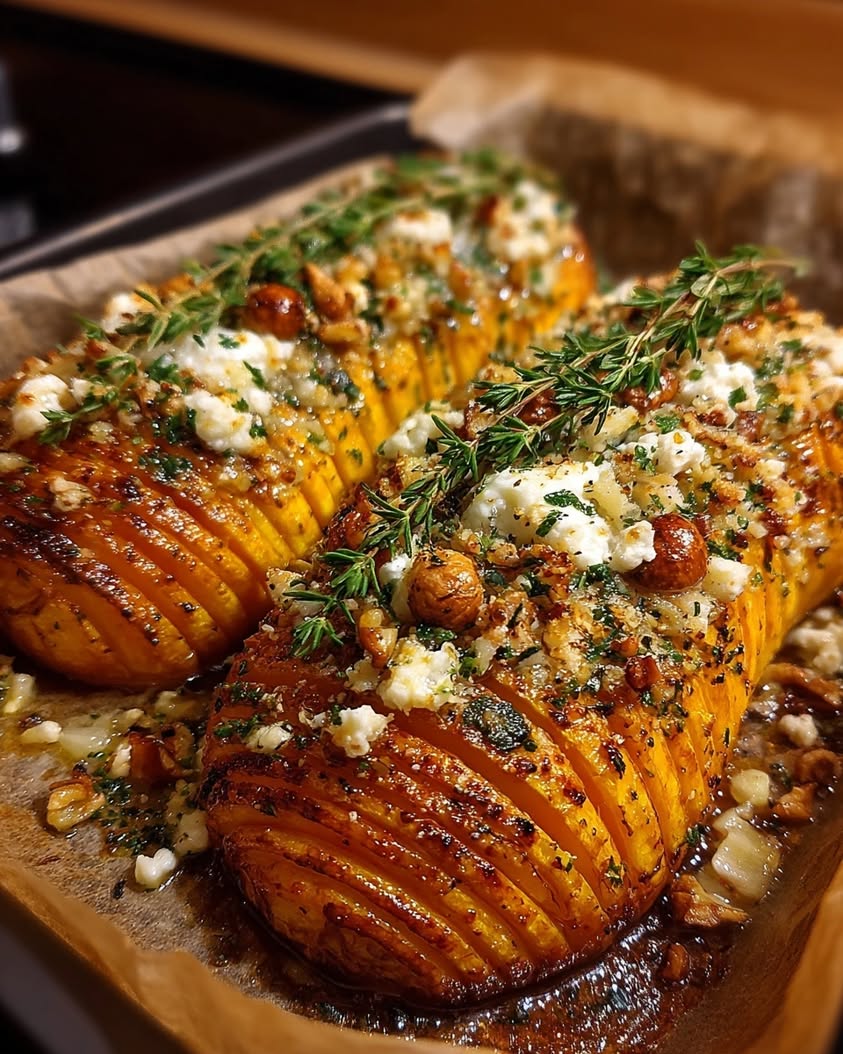
Hasselback Butternut Squash with Sage Butter: A Show-Stopping Fall Side Dish
This Hasselback Butternut Squash with Sage Butter, Feta & Toasted Hazelnuts is the ultimate autumnal centerpiece. Moreover, it transforms a humble vegetable into a stunning culinary masterpiece. The technique involves slicing the squash thinly without cutting all the way through, creating a beautiful accordion effect. Consequently, each slice crisps perfectly while the interior becomes meltingly tender. Ultimately, this recipe delivers an unforgettable combination of textures and flavors that will impress any guest.
Imagine sweet roasted squash infused with nutty browned butter and fragrant sage. Then, picture it topped with creamy, salty feta and crunchy toasted hazelnuts. This Hasselback Butternut Squash is not just a side dish; it is a celebration of fall on a plate. The presentation is dramatic, yet the process is surprisingly approachable. Therefore, it is perfect for both weeknight dinners and holiday feasts where you want to serve something truly special.
Furthermore, the beauty of this Hasselback Butternut Squash lies in its versatility. You can easily adapt the toppings based on what you have available. For instance, try goat cheese instead of feta or pecans instead of hazelnuts. The sage butter, however, is non-negotiable as it provides the aromatic foundation that ties everything together. This dish proves that plant-based cooking can be extraordinarily elegant and deeply satisfying.
Quick Recipe Highlights
- Flavor Profile: This Hasselback Butternut Squash offers a beautiful harmony of sweet, savory, and nutty notes. The natural caramelized sweetness of the squash pairs perfectly with the earthy sage and browned butter. Finally, the salty feta and rich hazelnuts create a complex and satisfying finish.
- Texture: You get a fantastic contrast of textures in every bite. The edges of the Hasselback slices become delightfully crisp and caramelized. Meanwhile, the interior of the squash turns incredibly soft and creamy. The crunchy hazelnuts and crumbly feta add the perfect finishing layers.
- Aroma: As this Hasselback Butternut Squash roasts, your kitchen will fill with an irresistible fragrance. First, you will smell the sweet, nutty scent of roasting squash. Then, the aroma of toasting sage and browning butter will take over, creating a warm and inviting atmosphere.
- Visual Appeal: The presentation is absolutely stunning. The Hasselback technique creates a beautiful fan-like appearance that looks professional. The golden-brown squash, vibrant green sage, white feta, and toasted hazelnuts make for a visually striking dish that is perfect for photography.
- Skill Level Needed: This recipe requires some basic knife skills for the Hasselback cuts and patience for the roasting process. However, the steps are straightforward and well-explained. With a little care during prep, even intermediate home cooks can achieve fantastic results.
- Special Equipment: You will need a sharp chef’s knife and a sturdy cutting board. Additionally, using chopsticks or wooden spoons as a guide for your knife cuts is a helpful trick. A good baking sheet and a small skillet for the sage butter are also essential.
Recipe Overview
- Difficulty Level: We rate this Hasselback Butternut Squash as medium difficulty. The primary challenge lies in making the thin, even slices without cutting through the squash. This requires a steady hand and a sharp knife. However, the guide method using chopsticks makes it much easier. The rest of the recipe involves simple roasting and sauce-making techniques.
- Category: This dish falls squarely into the side dish category, but it is substantial enough to be a vegetarian main course. It is perfect for holiday meals, Thanksgiving spreads, or elegant dinner parties. Furthermore, it complements proteins like roast chicken, turkey, or pork beautifully.
- Cuisine: While the Hasselback technique has Swedish origins, this recipe is a modern fusion of flavors. It combines European cooking methods with versatile, globally loved ingredients. The use of sage and brown butter nods to Italian and French traditions, creating a sophisticated profile.
- Cost: This is a very cost-effective dish, especially during the fall and winter when squash is in season. Butternut squash is inexpensive, and sage is often easy to grow or purchase in small amounts. Feta and hazelnuts are the pricier components, but you only need a small quantity for big impact.
- Season: This Hasselback Butternut Squash is the epitome of a fall and winter recipe. Butternut squash is at its peak sweetness during these cooler months. The warm, comforting flavors of sage and brown butter are perfectly suited for chilly weather dining.
- Occasion: It is ideal for Thanksgiving, Christmas, or any autumn gathering where you want a show-stopping side. It also works wonderfully for a cozy Sunday supper or a meatless Monday dinner. Its impressive appearance makes it suitable for entertaining, while its flavor makes it a family favorite.
Why You’ll Love This Recipe
First and foremost, the taste and texture of this Hasselback Butternut Squash are absolutely phenomenal. Each component brings something unique to the table. The squash caramelizes in the oven, becoming intensely sweet and tender. Then, the sage butter seeps into every slice, infusing it with an earthy, nutty richness. The final toppings of salty feta and crunchy hazelnuts provide the perfect counterpoints, creating a dish that is complex, balanced, and utterly delicious in every single bite.
From a convenience standpoint, this recipe is a winner. You can prepare most of it ahead of time. For example, you can make the Hasselback cuts on the squash a few hours before roasting. Additionally, the sage butter can be prepared in advance and gently reheated. This makes it an excellent choice for stress-free entertaining. While it roasts, you have ample time to prepare the rest of your meal, making your dinner party logistics much smoother.
Nutritionally, this Hasselback Butternut Squash is packed with benefits. Butternut squash is an excellent source of vitamin A, vitamin C, and fiber. Using a whole food as the base of your dish automatically boosts its nutritional profile. The hazelnuts add healthy fats and protein, while the feta provides calcium. This dish is naturally vegetarian and can be easily adapted to be gluten-free and vegan. It is a satisfying way to enjoy vegetables as the star of the show.
For social and entertaining value, this dish is unparalleled. Its dramatic Hasselback presentation is a guaranteed conversation starter. Guests are always impressed by the intricate slicing and beautiful plating. It shows care and effort, making people feel special. Serving a beautiful, homemade centerpiece like this creates a memorable dining experience. It elevates a simple meal into an event, perfect for celebrating the season with friends and family.
Finally, this Hasselback Butternut Squash is incredibly cost-effective and accessible. The main ingredient is one of the most affordable vegetables, especially in autumn. Sage is a hardy herb that is easy to find or even grow on a windowsill. While feta and hazelnuts are premium items, a little goes a very long way in terms of flavor and texture. This recipe delivers restaurant-quality presentation and taste without the restaurant price tag, making gourmet cooking achievable at home.
Historical Background and Cultural Significance
The Hasselback technique, named after the Hasselbacken restaurant in Stockholm, Sweden, originally referred to potatoes. The method involves making thin, parallel cuts along a potato, creating a fan-like shape that roasts up crispy on the edges and tender inside. This innovative preparation became a Swedish classic. Over time, creative cooks began applying the technique to other vegetables, leading to its current popularity. The adaptation to butternut squash is a more recent and brilliant evolution, leveraging the vegetable’s shape and sweet flavor.
Culturally, the dish represents a beautiful fusion. It takes a European culinary technique and applies it to a New World ingredient. Butternut squash is native to the Americas and has been a staple food for Indigenous peoples for centuries. Combining it with Old World herbs like sage and dairy products like feta creates a transcontinental dialogue on a plate. This Hasselback Butternut Squash is a testament to how global cuisine constantly evolves and inspires new creations.
The evolution of this specific recipe follows modern food trends towards vegetable-centric, visually appealing dishes. As home cooks and chefs alike seek to make plants the star, techniques that enhance their natural beauty and texture have surged in popularity. The Hasselback method does exactly that. Adding brown butter, a French technique, and Mediterranean ingredients like feta reflects the contemporary preference for layered, sophisticated flavors in otherwise simple preparations.
Regional variations of Hasselback vegetables are now endless. You might find Hasselback sweet potatoes with marshmallows in the American South, or Hasselback zucchini with Parmesan in Italy. The butternut squash version, particularly with sage and nuts, feels distinctly autumnal and North American. It often appears on modern Thanksgiving tables as a stylish alternative to traditional mashed or cubed squash. This recipe’s popularity continues to grow as more people discover its perfect blend of impressive looks and incredible taste.
Ingredient Deep Dive
Butternut Squash: This winter squash is a cultivar of Cucurbita moschata and is known for its sweet, nutty flavor and smooth texture. Historically, squash was one of the “Three Sisters” planted by Native Americans alongside corn and beans. It is incredibly nutritious, packed with beta-carotene (which converts to Vitamin A), Vitamin C, potassium, and fiber. When selecting, choose a squash that feels heavy for its size with a firm, unblemished beige skin and a deep orange flesh. Store whole squash in a cool, dark place for months; once cut, wrap tightly and refrigerate for up to five days. For substitutions, consider acorn squash or delicata squash, though cooking times may vary.
Fresh Sage: Sage (Salvia officinalis) has a long history of culinary and medicinal use, revered by ancient Romans and throughout Europe. Its earthy, slightly peppery flavor is quintessential to fall and holiday cooking. Nutritionally, it contains antioxidants and compounds with anti-inflammatory properties. Always choose sage with vibrant, firm green leaves without any black spots or wilting. Store it like a bouquet of flowers: trim the stems and place in a glass of water in the refrigerator, loosely covered with a bag. If you must substitute, fresh thyme or rosemary can work, though they will impart a different, more piney flavor profile.
Feta Cheese: Feta is a brined curd cheese with a crumbly texture and tangy, salty taste, traditionally made from sheep’s milk or a sheep-goat milk blend in Greece. Its history dates back to antiquity, and it holds a Protected Designation of Origin (PDO) status in the EU. It provides a good source of calcium and protein. For this Hasselback Butternut Squash, a block feta that you can crumble yourself is superior to pre-crumbled, which is often drier. Store feta in its brine in the refrigerator. Dairy-free alternatives include a firm tofu crumbled with nutritional yeast and salt, or a vegan almond-based feta.
Hazelnuts: Also known as filberts, hazelnuts have been foraged and cultivated for thousands of years across Europe and Asia. They are rich in healthy fats, Vitamin E, and manganese. Toasting is non-negotiable as it deepens their flavor and crunch. Look for raw, whole hazelnuts. Store them in an airtight container in a cool, dark place or the freezer to prevent their oils from going rancid. For substitutions, walnuts, pecans, or pine nuts would be excellent alternatives, each adding their own unique character to the dish.
Common Mistakes to Avoid
- Cutting All the Way Through: The most common error is slicing completely through the squash. To avoid this, use the chopstick guide method. Place chopsticks along either side of the squash; your knife will hit them and stop you from cutting through the bottom.
- Uneven Slices: Inconsistent slice thickness leads to uneven cooking. Some pieces will burn while others remain hard. Take your time and use a sharp knife to make slices about 1/8 to 1/4 inch apart for the best Hasselback effect.
- Not Roasting on a Preheated Pan: Placing the squash on a cold baking sheet can lead to steaming instead of roasting. For optimal caramelization, always preheat your baking sheet in the oven for 5-10 minutes before adding the oiled squash.
- Overcrowding the Pan: If the squash halves are too close together, they will steam in each other’s moisture. Ensure there is ample space between them on the baking sheet to allow hot air to circulate and promote browning.
- Burning the Sage Butter: Sage butter goes from perfectly nutty-brown to burnt very quickly. Use medium-low heat and watch it closely. The butter will foam, then the foam will subside, and milk solids at the bottom will turn golden brown. Remove it from heat immediately at this stage.
- Adding Toppings Too Early: If you add the feta and hazelnuts before the squash is fully roasted, the cheese will melt into a puddle and the nuts may burn. Always add these delicate toppings in the last 5-10 minutes of cooking or even after removing from the oven.
- Skipping the Toasting Step for Nuts: Raw hazelnuts lack the deep, rich flavor of toasted ones. Toasting is a quick step that makes a monumental difference. Do it in a dry skillet over medium heat until fragrant and lightly browned, shaking the pan frequently.
- Underseasoning: Butternut squash and feta need ample seasoning. Do not be shy with salt and pepper. Season the squash before roasting, and taste the finished dish before serving to see if it needs an extra pinch of flaky sea salt.
Essential Techniques
The Hasselback Cut: This is the defining technique for the dish. Its importance cannot be overstated, as it creates maximum surface area for crisping and allows the sage butter to penetrate deeply. To master it, place your peeled and halved squash cut-side down on a stable surface. Lay two chopsticks or wooden spoon handles parallel along its long sides. Using a sharp chef’s knife, make slices down to the chopsticks, about 1/4-inch apart. The chopsticks act as a guard, preventing you from slicing all the way through. The common pitfall is rushing, which leads to uneven slices. Success is visually clear: you will have a flexible, fan-like squash half that holds together at the base.
Making Brown Butter (Beurre Noisette): Browning butter transforms it from a simple fat into a complex, nutty sauce base. The technique is crucial because it unlocks deep flavors that pair perfectly with squash and sage. To do it, melt unsalted butter in a light-colored saucepan over medium heat. Swirl the pan occasionally. It will foam, then the foam will subside. Watch for tiny brown specks (the milk solids) forming at the bottom and a rich, nutty aroma. Immediately remove from heat and pour into a bowl to stop cooking. The pitfall is distraction, which leads to burning in seconds. Success is signaled by that distinctive nutty fragrance and a beautiful golden-brown color.
Roasting for Caramelization: Proper roasting is what develops the squash’s natural sugars. The goal is a tender interior and crispy, caramelized edges. Preheat your oven and baking sheet. Toss the squash in oil and season well. Roast cut-side down first to develop a sear, then flip and baste. The key is avoiding steam by not overcrowding the pan. A common mistake is under-roasting, leaving the squash starchy. Visual cues for success are deep golden-brown edges on the slices and a knife that slides easily into the thickest part.
Pro Tips for Perfect Hasselback Butternut Squash
Use a very sharp knife for the Hasselback cuts. A dull knife will crush the squash and make clean, thin slices impossible. Sharpen your knife before starting for the cleanest, most professional results.
Microwave the whole squash for 60-90 seconds before cutting. This slightly softens the skin and flesh, making it much safer and easier to peel and halve, especially if your squash is very firm.
Brush the sage butter between the slices halfway through roasting. Use a pastry brush to gently separate the slices and get the flavorful butter down into the crevices. This ensures every bite is infused with flavor.
Finish with a high-quality finishing salt. A sprinkle of flaky Maldon sea salt or fleur de sel over the dish just before serving enhances all the flavors and adds a delightful textural crunch.
Toast your hazelnuts in the oven while the squash roasts. Spread them on a small baking sheet and pop them in for the last 5-7 minutes of the squash’s cooking time. This saves time and dishes.
Let the squash rest for 5 minutes after roasting. This allows the juices to redistribute and makes it easier to handle when adding the final toppings. It also ensures it’s not scalding hot when served.
For extra crisp edges, gently fan out the slices on the baking sheet during the last 10-15 minutes of roasting. This exposes more surface area to the direct heat of the oven.
Use a spoon to scrape out the seeds and strings thoroughly. Any remaining fibers can burn during the long roasting time and create a bitter flavor in your beautiful Hasselback Butternut Squash.
Variations and Adaptations
For regional variations, consider a Mexican-inspired twist. Use ancho chili powder in the oil for roasting, swap sage for epazote or cilantro, and top with cotija cheese and pepitas. Alternatively, a Mediterranean version could feature oregano and lemon zest in the butter, topped with kalamata olives and crumbled goat cheese. These adaptations show the incredible flexibility of the Hasselback Butternut Squash foundation.
Seasonal adaptations are simple. In winter, incorporate chopped dried cranberries or cherries into the topping for a festive touch. For a spring version, use a delicata squash (no peeling needed) and top with fresh peas, mint, and lemon ricotta. Summer might call for a lighter topping of fresh corn salsa, basil, and a squeeze of lime.
Dietary modifications are straightforward. For a vegan Hasselback Butternut Squash, use vegan butter or olive oil for the sage sauce and top with a cashew-based “feta” or nutritional yeast. For a nut-free version, substitute toasted sunflower seeds or pumpkin seeds (pepitas) for the hazelnuts. A dairy-free version simply omits the feta or uses a plant-based alternative.
Flavor variations can change the entire profile. Try maple butter instead of sage butter for a sweeter dish. Infuse the butter with rosemary or thyme instead of sage. Add a sprinkle of smoked paprika or cayenne pepper to the oil before roasting for a smoky or spicy kick. A drizzle of balsamic glaze at the end adds a sweet-tart complexity.
Texture modifications can cater to different preferences. For extra crunch, add panko breadcrumbs toasted in the sage butter during the last few minutes of baking. For a creamier element, dollop with a herbed yogurt or labneh instead of feta. Adding chopped, crispy pancetta or bacon as a topping introduces a savory, meaty crunch.
Presentation alternatives include roasting smaller, individual-sized squash halves for a personalized plating. You can also slice and roast the squash rounds in a Hasselback style for a different shape. Serving it on a bed of creamy polenta or farro turns it into a hearty vegetarian main course with varied textures.
Serving and Presentation Guide
For plating, transfer the entire roasted Hasselback Butternut Squash half to a warm serving platter or individual plates. Use a wide, flat spatula to keep it intact. Drizzle any remaining sage butter from the pan over the top generously. Let the beautiful, fan-like slices be the star of the show; avoid covering them completely with toppings.
Garnishing is key for visual appeal. Sprinkle the crumbled feta and toasted hazelnuts deliberately, allowing some to fall into the crevices and some to rest on top. Add a few whole or roughly torn fresh sage leaves for a pop of green. A final drizzle of high-quality extra virgin olive oil or a balsamic reduction adds shine and sophistication.
Traditional accompaniments for this autumnal dish include a simple roast chicken, herb-crusted pork loin, or a Thanksgiving turkey. It pairs wonderfully with other fall sides like garlicky sautéed greens, wild rice pilaf, or a bright, acidic salad to cut through the richness.
Modern serving suggestions might feature this Hasselback Butternut Squash as a vegetarian centerpiece. Surround it with a kale and apple salad, creamy lentils, and crusty bread for sopping up the sage butter. For a brunch option, serve it alongside poached eggs and a bitter greens salad.
Temperature considerations are important. This dish is best served warm, not piping hot. Allowing it to rest for 5-10 minutes after roasting lets the flavors settle and makes it easier to eat. If preparing ahead, you can re-warm it gently in a 300°F oven until heated through before adding the cold toppings.
Portion control is simple: one squash half typically serves two people as a substantial side. For a larger crowd, simply prepare multiple squash halves. When serving as a main course for vegetarians, one half per person is appropriate, accompanied by other hearty sides like grains and legumes.
Wine and Beverage Pairing
Wine pairings should complement the squash’s sweetness and the butter’s richness. An off-dry white wine like a German Riesling or a Vouvray works beautifully, as the slight sweetness mirrors the squash and the acidity cuts the fat. For red wine lovers, a light-bodied, low-tannin red like a Pinot Noir or a Gamay (Beaujolais) is excellent. Their red fruit notes and bright acidity won’t overpower the dish. Avoid heavily oaked Chardonnays or big, tannic reds which can clash with the sweet and savory balance.
Non-alcoholic alternatives can be just as thoughtful. A sparkling apple cider provides festive effervescence and autumnal flavor. For a warmer option, a sage-infused tea or a creamy, slightly sweet cashew milk latte complements the herbal notes. A tart cherry or pomegranate spritzer made with soda water offers a refreshing contrast to the rich Hasselback Butternut Squash.
While not a classic coffee dish, a post-meal pairing could include a medium-roast coffee with notes of nut or caramel. The coffee’s bitterness can be a pleasant finish after the sweet and savory meal. For tea, consider a smoky Lapsang Souchong or a gentle Chamomile, both of which align with the cozy, autumnal vibe of the recipe.
Temperature is crucial for beverages. Serve white wines and spritzers well-chilled, around 45-50°F. Red wines should be slightly cool, at cellar temperature (55-60°F), not room temperature. Non-alcoholic sparkling drinks are best ice-cold to provide refreshment against the warm, roasted squash.
Serving suggestions include offering both a white and a red wine option if you have guests with different preferences. Always provide a non-alcoholic choice that feels just as special. Pour wines into appropriate glassware to enhance the aroma and experience, and consider a small carafe of water on the table to cleanse the palate.
Storage and Shelf Life
Store leftover Hasselback Butternut Squash in an airtight container in the refrigerator for up to 4 days. It is best to store the squash, sage butter, and toppings (feta, nuts) separately if possible to maintain optimal texture. If stored combined, the hazelnuts will soften and the feta may dissolve slightly. Allow the squash to cool completely before transferring to storage containers to prevent condensation and sogginess.
Temperature requirements are standard refrigerator temperatures, at or below 40°F. Do not leave the cooked squash at room temperature for more than two hours. For longer storage, freezing is an option for the roasted squash alone (without toppings). The texture of the squash may become slightly softer upon thawing, but it will still be usable in soups or purees.
Container recommendations include glass containers with tight-fitting lids, which are best for preventing odor transfer and reheating. For the separate sage butter, store it in a small jar or ramekin covered with plastic wrap. Toasted hazelnuts should be kept in a separate airtight container or bag at room temperature to retain crunch.
Signs of spoilage include an off or sour smell, visible mold (often fuzzy and green or white), or an excessively slimy texture. If the squash develops any of these characteristics, discard it immediately. The sage butter may separate when chilled; this is normal. Simply reheat it gently and whisk to re-emulsify.
Reheating instructions are simple for best results. Reheat the squash on a baking sheet in a 350°F oven until warmed through, about 10-15 minutes. This method helps re-crisp the edges. You can also reheat individual portions in an air fryer for a few minutes. Avoid microwaving if possible, as it will make the squash soggy. Add fresh toppings after reheating.
Freezing guidelines apply primarily to the plain roasted squash. Let it cool completely, then wrap tightly in plastic wrap and aluminum foil or place in a freezer-safe bag, removing as much air as possible. Label and freeze for up to 3 months. Thaw overnight in the refrigerator before reheating. Note that the Hasselback presentation may not hold its shape as perfectly after freezing and thawing.
Make Ahead Strategies
You can create a prep timeline to streamline your cooking day. Up to two days ahead, toast the hazelnuts and store them at room temperature. One day ahead, peel and halve the squash, scoop out the seeds, and make the Hasselback cuts. Submerge the prepped squash halves in cold water in a container, cover, and refrigerate. This prevents oxidation. You can also make the sage butter, let it cool, and store it in a jar in the fridge.
Storage between steps is key. The water-bath method for the cut squash is the best way to keep it fresh and prevent browning. For the sage butter, ensure it’s in an airtight container. If a thin film forms on top after refrigeration, simply remelt it gently before using. Keep the feta crumbled and ready in a separate container.
Assess the quality impact of make-ahead steps. The squash may absorb a tiny amount of water, so pat it very dry with paper towels before oiling and roasting. This ensures proper browning. The sage butter’s flavor may even improve as the herb infuses overnight. The nuts will stay perfectly crunchy if stored properly. The feta is best crumbled fresh to maintain its texture.
Assembly tips for the day of are simple. Remove the squash from the water and dry thoroughly. Take the sage butter out of the fridge to soften slightly. When ready to cook, proceed with oiling, seasoning, and roasting the squash as directed. Gently reheat the sage butter in a saucepan or the microwave until fluid again for basting.
Reheating guidelines for components are straightforward. Only reheat the sage butter, not the nuts or cheese. If you pre-roast the squash fully and need to reheat it, do so in the oven to restore texture. Add the cold feta and room-temperature nuts after reheating so they provide their intended contrast.
Fresh element additions are what make the dish sing. Always add the final toppings—the crumbled feta, toasted hazelnuts, and any fresh herb garnish—right before serving. This preserves their distinct textures and bright flavors, ensuring your make-ahead Hasselback Butternut Squash tastes freshly made.
Scaling Instructions
Halving the recipe is simple for smaller households. Use one small butternut squash (about 1.5 lbs) and halve all other ingredient quantities. The roasting time may be slightly reduced, so start checking for doneness around the 45-minute mark. Use a smaller baking sheet to ensure the oven environment stays hot and conducive to roasting, not steaming.
Doubling or tripling the recipe for a crowd is very feasible. You will need multiple baking sheets. Roast the squash on the upper and lower oven racks, and rotate the sheets front-to-back and top-to-bottom halfway through cooking to ensure even browning. You may need to extend the total roasting time by 5-10 minutes due to the increased volume in the oven. Make the sage butter in batches to avoid overcrowding the pan, which can lead to uneven browning.
Equipment adjustments are necessary when scaling. For larger batches, ensure you have enough sharp knives and cutting boards for prepping multiple squashes efficiently. Use heavy-duty, rimmed baking sheets to prevent warping. You may need a larger saucepan or to make the sage butter in two batches. Have multiple serving platters ready for presentation.
Timing modifications are minimal when scaling up. The prep time will increase linearly with the number of squashes. The active cook time for making the sage butter will also increase if done in batches. However, the passive roasting time in the oven will remain roughly the same per batch, though you may need to cook in successive rounds if your oven cannot fit all sheets at once with proper air circulation.
Storage considerations change with scale. For a large batch, it’s even more important to store components separately if you expect leftovers. Have ample airtight containers ready. Label them clearly if making for an event. Remember that a large quantity of hot squash will take longer to cool down to a safe refrigeration temperature; spread it out on a tray to cool quickly before packing away.
Nutritional Deep Dive
This Hasselback Butternut Squash provides a favorable macro breakdown. It is primarily a carbohydrate-rich dish from the squash, offering complex carbs and fiber for sustained energy. The fats come from the olive oil, butter, hazelnuts, and feta, providing a mix of monounsaturated and saturated fats. The protein content is modest, coming from the feta and hazelnuts. This makes it an excellent side dish to pair with a protein source like chicken, fish, or legumes for a balanced meal.
The micronutrient profile is impressive. Butternut squash is exceptionally high in Vitamin A (as beta-carotene), crucial for vision and immune health, and a good source of Vitamin C and potassium. Hazelnuts contribute significant Vitamin E, a powerful antioxidant, and minerals like manganese. Sage offers various antioxidants and anti-inflammatory compounds. Feta cheese provides calcium and phosphorus for bone health. Together, they create a nutrient-dense dish.
Health benefits are numerous. The high fiber content promotes digestive health and satiety. The antioxidants from the squash, nuts, and sage combat oxidative stress. The healthy fats support heart health and aid in the absorption of fat-soluble vitamins (like the Vitamin A in the squash). This dish is a celebration of whole foods that nourish the body.
Dietary considerations are important to note. The recipe is naturally vegetarian and gluten-free. For those monitoring sodium, the feta and added salt are the primary sources; you can reduce the salt and use a lower-sodium feta. For diabetics, the squash’s carbs are complex and fiber-rich, leading to a slower blood sugar rise, especially when paired with the fats and proteins in the dish.
Portion analysis shows one squash half (serving two) is a substantial side. It’s satisfying without being overly heavy. The combination of fiber, fat, and protein helps regulate appetite. As part of a balanced plate—with protein and other non-starchy vegetables—it fits well into most eating patterns.
Weight management tips include being mindful of the amount of butter and oil used, though these fats are important for flavor and satiety. You can slightly reduce the oil for roasting if needed. The dish is volumous and filling, which can help prevent overeating of other, less nutrient-dense foods. Enjoying it as the centerpiece of a meal with lean protein and a large salad is a great strategy.
Dietary Adaptations
For a gluten-free version, this Hasselback Butternut Squash is already naturally gluten-free. Simply ensure that any pre-packaged ingredients like broth (if used for basting) are certified gluten-free. No other modifications are needed, making it a safe and delicious choice for those with celiac disease or gluten sensitivity.
For a dairy-free or vegan adaptation, replace the butter with a high-quality vegan butter stick or extra virgin olive oil. Sauté the sage in the fat of choice. Omit the feta cheese or substitute with a vegan feta alternative made from almonds or tofu. A sprinkle of nutritional yeast can add a cheesy, umami note. The result is still incredibly flavorful and rich.
For a low-carb or keto adaptation, this recipe in its standard form is not suitable due to the high carbohydrate content of butternut squash. A keto alternative would be to apply the Hasselback technique to a lower-carb vegetable like kohlrabi or daikon radish, then use the same sage butter and topping concept. The flavor profile would be different but still savory and satisfying.
For a Paleo adaptation, omit the dairy. Use ghee (clarified butter) instead of regular butter, as it is often Paleo-approved. Omit the feta cheese. Ensure the hazelnuts are raw or dry-roasted without any non-Paleo oils. The dish then becomes a beautiful, vegetable-focused side compliant with Paleo guidelines.
For a Low-FODMAP adaptation, butternut squash is low-FODMAP in servings of 1/2 cup (75g) per meal. This recipe likely exceeds that, so portion control is key. Use garlic-infused oil instead of sautéing garlic (if used) to get the flavor without the fructans. Omit the hazelnuts or use a low-FODMAP nut like macadamias in a small quantity. Feta is typically low-FODMAP in 40g servings, so use sparingly.
Troubleshooting Guide
If your squash is not caramelizing, the oven temperature may be too low, or the squash may be{“success”:true,”message”:”Recipe created successfully”,”post_id”:8778,”tasty_recipe_id”:8778,”shortcode”:” Print
Hasselback Butternut Squash with Sage Butter, Feta & Toasted Hazelnuts
Description
A stunning autumnal dish featuring thinly sliced butternut squash roasted until tender, drizzled with fragrant sage butter, and topped with crumbled feta and crunchy toasted hazelnuts.
Ingredients
For the Crust:
- 1 medium butternut squash (about 2 lbs), peeled and halved lengthwise
- 3 tablespoons unsalted butter
- 8–10 fresh sage leaves, chopped
- 2 cloves garlic, minced
- 1/2 cup crumbled feta cheese
- 1/4 cup hazelnuts, toasted and roughly chopped
- 2 tablespoons olive oil
- Salt and black pepper to taste
- 1 tablespoon maple syrup (optional)
Instructions
1. Prepare the Crust:
- Preheat oven to 400°F (200°C). Place each squash half cut-side down on a cutting board and make thin, parallel slices about 1/8-inch apart, stopping just before cutting through the bottom to create a hasselback effect.
- Brush the squash with olive oil, season generously with salt and pepper, and place on a baking sheet. Roast for 30-35 minutes, until tender and edges are caramelized.
- While squash roasts, melt butter in a small skillet over medium heat. Add sage and garlic, cooking until fragrant and butter turns golden brown, about 2-3 minutes. Remove from heat.
- Remove squash from oven. Drizzle with sage butter and optional maple syrup. Sprinkle with feta and toasted hazelnuts. Return to oven for 5 minutes to warm toppings.
- Serve immediately as a side or main dish, garnished with extra sage if desired.
Notes
You can customize the seasonings to taste.

I’m Billy, a classically trained culinary school graduate from The Culinary Institute of America with over 12 years in the restaurant industry and over 19 years of cooking experience.