
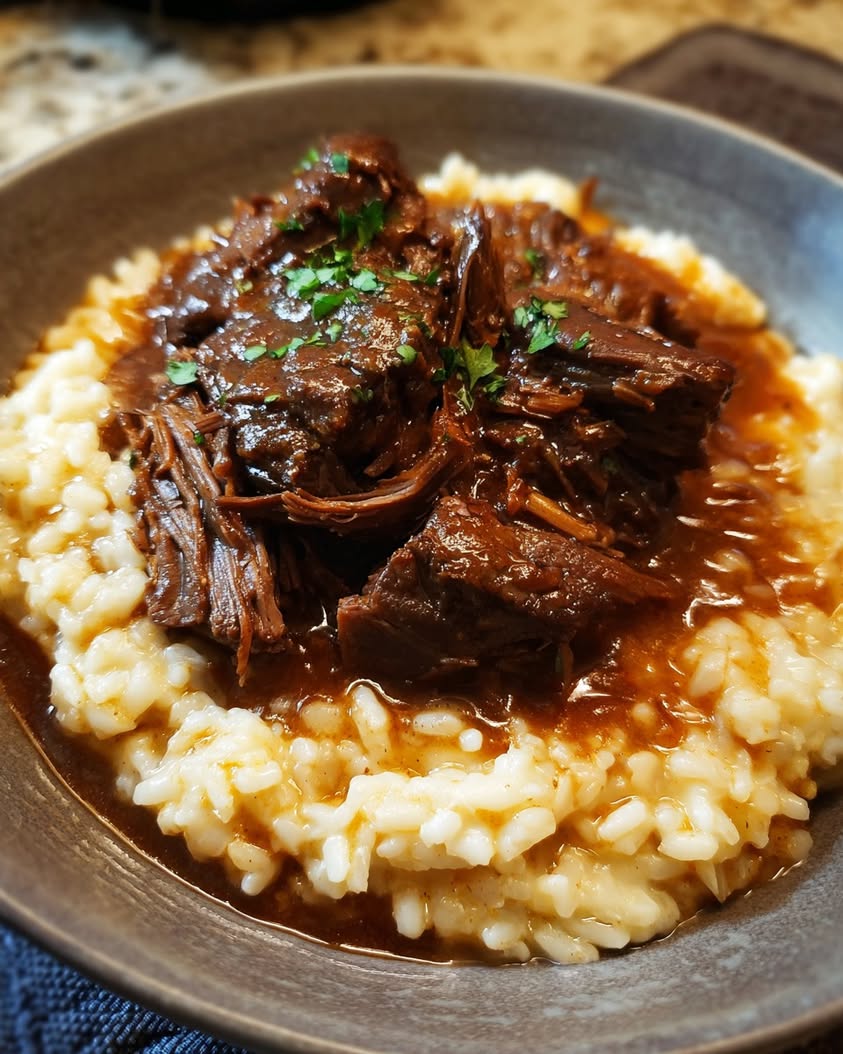
Fork-Tender Herb-Braised Pot Roast with Creamy Parmesan Risotto: The Ultimate Comfort Food Feast
Imagine a plate where a mountain of creamy, cheesy risotto meets a generous slice of pot roast so tender it falls apart at the touch of your fork. This is the soul-warming experience of our Fork-Tender Herb-Braised Pot Roast with Creamy Parmesan Risotto. Essentially, this dish transforms a classic Sunday supper into a restaurant-worthy masterpiece. The long, slow braise coaxes every ounce of flavor from a humble chuck roast, while the risotto provides a luxurious, velvety bed. Consequently, each bite delivers a perfect harmony of savory, rich, and comforting notes.
Furthermore, this recipe is a celebration of patience and technique. The pot roast simmers gently with aromatic herbs and vegetables, creating its own deeply flavorful cooking liquid. Meanwhile, the risotto demands your attention, rewarding you with its signature creamy texture. Together, they create a meal that feels both indulgent and deeply familiar. Ultimately, this Fork-Tender Herb-Braised Pot Roast with Creamy Parmesan Risotto is more than just dinner; it’s an event, a reason to gather, and a guaranteed way to create lasting memories around the table.
Quick Recipe Highlights
- Flavor Profile: This dish boasts a deeply savory and umami-rich foundation from the slow-braised beef. Fresh herbs like rosemary and thyme provide aromatic high notes, while the Parmesan risotto adds a salty, nutty, and creamy counterpoint. The result is a complex, layered taste that is both robust and comforting.
- Texture: The pot roast achieves a melt-in-your-mouth, fork-tender texture that contrasts beautifully with the creamy, yet slightly al dente, grains of Arborio rice. The vegetables in the braise soften and meld into the sauce, adding body without distinct crunch, creating a uniformly luxurious mouthfeel.
- Aroma: As it cooks, your kitchen will fill with the irresistible scent of roasting beef, caramelized onions, garlic, and woody herbs. Later, the fragrance of toasted rice and white wine from the risotto mingles with the savory braising liquid, creating an olfactory promise of the feast to come.
- Visual Appeal: The presentation is stunning. A pristine white plate showcases the pale gold, creamy risotto. On top, a slice of dark, glistening pot roast rests, draped with glossy, reduced sauce and sprinkled with fresh green herbs. The contrast in color and texture is immediately appetizing.
- Skill Level Needed: This recipe requires intermediate skills due to managing two primary cooking techniques simultaneously: braising and risotto-making. You need comfort with searing meat, building flavor in a Dutch oven, and the constant stirring and broth addition required for perfect risotto. Time management is also key.
- Special Equipment: A heavy-bottomed Dutch oven or braiser is non-negotiable for even heat distribution during the long braise. You will also need a sturdy wooden spoon for the risotto, a fine-mesh strainer for the broth, and a second saucepan to keep your broth warm, which is crucial for the risotto’s success.
Recipe Overview
- Difficulty Level: We rate this recipe as intermediate. While the individual steps are straightforward, success hinges on executing two foundational techniques well. The braise requires proper searing and patient, low-and-slow cooking. Simultaneously, the risotto demands attentive, rhythmic stirring and broth management. Coordinating their finish times is the final test of a confident home cook.
- Category: This is the ultimate main course for a special family dinner or an impressive meal for guests. It falls squarely into the category of hearty comfort food, weekend project cooking, and celebratory feasts. It’s a complete meal protein and starch, though a simple green salad or roasted vegetable makes a perfect accompaniment.
- Cuisine: The dish is a beautiful fusion of American and Italian culinary traditions. The pot roast is a classic of American home cooking, often associated with Midwest and Southern Sunday dinners. The Parmesan risotto, or “Risotto alla Parmigiana,” hails from Northern Italy, specifically the regions of Lombardy and Emilia-Romagna. Combining them creates a transatlantic comfort food masterpiece.
- Cost: This is a moderately priced meal that delivers exceptional value. A chuck roast is an affordable, flavorful cut perfect for braising. Arborio rice and a good wedge of Parmesan are the primary splurges. Overall, the cost per serving is far less than a comparable restaurant meal, making it an economical choice for a luxurious experience.
- Season: This Fork-Tender Herb-Braised Pot Roast with Creamy Parmesan Risotto is quintessential fall and winter cooking. It provides warmth and sustenance on cold, dark evenings. The rich, hearty nature of the dish aligns perfectly with the harvest season and holiday gatherings. That said, comfort food knows no season, and it can be enjoyed year-round, especially in air-conditioned comfort.
- Occasion: Perfect for Sunday family dinners, holiday meals like Christmas or Easter, birthday celebrations, or any time you want to show someone you care through food. It’s also an ideal make-ahead dish for potlucks or feeding a crowd, as both components reheat beautifully and the flavors often improve overnight.
Why You’ll Love This Fork-Tender Herb-Braised Pot Roast with Creamy Parmesan Risotto
First and foremost, the taste and texture are utterly irresistible. The pot roast, after its long, gentle braise, becomes impossibly tender, shredding with just a fork. Each fiber of meat soaks up the rich, herb-infused braising liquid, creating layers of savory flavor. Meanwhile, the risotto offers a creamy, luxurious contrast. Each grain of rice remains distinct yet bound in a velvety sauce enriched with butter and Parmesan. Together, they create a symphony of comfort in every single bite. The depth of flavor is profound, satisfying the most primal cravings for hearty, well-cooked food.
Additionally, the preparation, while requiring time, is remarkably convenient in its flow. You actively build layers of flavor in one pot. After the initial sear and sauté, the oven does the majority of the work for the roast. This hands-off time allows you to prep the risotto ingredients or simply relax. Furthermore, the braising liquid you create doubles as a deeply flavorful broth for the risotto, creating a beautiful synergy between the two components. This connection means every element on the plate tastes cohesive and intentional, a hallmark of great cooking.
From a nutritional perspective, this meal is a robust source of high-quality protein and energy. Chuck roast provides essential nutrients like iron, zinc, and B vitamins. Using the vegetable-infused braising liquid for the risotto also transfers vitamins and minerals into the rice. While indulgent, you control the ingredients. You can adjust the amount of butter or cheese in the risotto if desired. Ultimately, it’s a balanced, satisfying meal that fuels the body as much as it comforts the soul.
This Fork-Tender Herb-Braised Pot Roast with Creamy Parmesan Risotto also holds incredible social and entertaining value. Presenting this dish creates an instant “wow” factor. It communicates effort, care, and culinary skill. It’s a meal meant for sharing, encouraging people to slow down and savor both the food and the company. The process of making it can even be a social event itself, with friends or family helping to stir the risotto or set the table. It fosters connection and creates a memorable dining experience.
Finally, it is remarkably cost-effective and accessible. You transform an economical cut of beef into a luxurious feast through technique and time. Key ingredients like onions, carrots, celery, and garlic are pantry staples. The splurge on Arborio rice and a block of Parmesan Reggiano is well worth it for the authentic result. Compared to dining out, this meal feeds a family or a group of friends for a fraction of the cost. It proves that extraordinary, restaurant-quality food is absolutely achievable in your own kitchen.
Historical Background and Cultural Significance
The story of pot roast is deeply woven into the fabric of American home economics and ingenuity. It originated as a practical solution for tougher, less expensive cuts of meat from working animals. Before modern butchery, these cuts required long, moist cooking methods to become palatable. Immigrants from Europe brought their braising traditions with them. Consequently, the “Yankee Pot Roast,” often cooked with root vegetables in a heavy pot, became a Depression-era staple and a Sunday dinner tradition across the Midwest and South. It symbolized resourcefulness, family, and the warmth of home.
Conversely, risotto carries the cultural weight of Northern Italian agriculture and refinement. Its history in the Po Valley dates back to the introduction of rice in the 14th century. The specific technique of toasting rice and slowly adding broth likely developed in the 1800s in Milan. Parmesan cheese, from the nearby region of Emilia-Romagna, became a natural and iconic pairing. Therefore, risotto alla Parmigiana is not just a dish; it represents a regional pride in local ingredients like Carnaroli or Arborio rice and Parmigiano-Reggiano cheese. It is a testament to Italian culinary precision and the philosophy of “cucina povera” turning simple ingredients into gold.
The evolution of combining these two dishes is a modern tale of fusion cuisine. While both are classic comfort foods in their own right, pairing them is a contemporary innovation. It speaks to a global pantry where home cooks feel empowered to mix traditions. This fusion respects the core techniques of each culture while creating something new and exciting. The braising method honors American tradition, while the risotto technique pays homage to Italian culinary law. The result is a hybrid that feels both familiar and novel.
Regional variations of this concept abound. In the American South, you might find pot roast served over creamy stone-ground grits. In France, a similar daube de boeuf might be paired with aligot or creamy potatoes. The Italian influence might see the braise executed as a “stracotto” served over polenta. Our version, the Fork-Tender Herb-Braised Pot Roast with Creamy Parmesan Risotto, sits at a delicious crossroads. It borrows the best from both worlds, creating a universal language of comfort that transcends borders.
Ingredient Deep Dive
Chuck Roast: This cut comes from the shoulder of the cow, a well-exercised area rich in connective tissue and fat. During the long, slow braise, this collagen melts into gelatin, creating that signature fork-tender texture and luxurious mouthfeel. Historically, it was a butcher’s cut for the family, not for sale. Nutritionally, it’s an excellent source of protein, iron, and B vitamins. When selecting, look for a roast with good marbling (white fat streaks) throughout the red meat. Avoid roasts that are overly lean, as the fat is essential for flavor and tenderness. Store it in the coldest part of your refrigerator for up to 3 days before cooking, or freeze for several months.
Arborio Rice: This short-grain rice is the star of traditional risotto. Grown in the Po Valley of Italy, it has a high starch content (amylopectin) that is released slowly during cooking, creating risotto’s characteristic creaminess without the need for heavy cream. Its cultural significance in Northern Italy is immense. It provides a good source of carbohydrates and is naturally gluten-free. Always buy Arborio (or Carnaroli/Vialone Nano) specifically for risotto; long-grain rice will not work. Look for plump, pearly grains. Store it in an airtight container in a cool, dry pantry. There is no true substitute, though other short-grain rice like sushi rice will yield a different, stickier texture.
Parmigiano-Reggiano Cheese: This is the “King of Cheeses,” a protected designation of origin (PDO) product made from raw cow’s milk in specific provinces of Italy. Its history spans nearly nine centuries. The aging process (a minimum of 12 months) develops complex umami, nutty, and salty flavors. It’s rich in calcium and protein. Never use pre-grated cheese, as it contains anti-caking agents that will ruin your risotto’s texture. Instead, buy a wedge and grate it yourself just before use. Store the wedge tightly wrapped in parchment paper and then foil in the refrigerator. For a similar flavor profile in a pinch, a high-quality domestic Parmesan or Grana Padano can work, but the depth will differ.
Beef Broth & Dry Red Wine: The broth forms the liquid foundation for both the braise and the risotto. Using a high-quality, low-sodium broth allows you to control the salt level. The red wine, typically a dry variety like Cabernet Sauvignon or Merlot, serves two purposes. First, it deglazes the pot, lifting the flavorful browned bits (fond) after searing the meat. Second, its acidity helps tenderize the meat and balances the richness of the dish. The alcohol cooks off, leaving behind concentrated flavor. For a non-alcoholic version, substitute with additional beef broth mixed with a teaspoon of red wine vinegar for acidity.
Fresh Herbs (Rosemary & Thyme): These woody herbs are the aromatic soul of the braise. Rosemary, with its piney fragrance, and thyme, with its earthy, subtle notes, are classic partners for beef. They infuse the cooking liquid with their essential oils over the long cook time. Fresh herbs are non-negotiable here; dried herbs will turn bitter and dusty-tasting during the extended braise. If you must substitute, use only half the amount of dried, and add them later in the cooking process. Store fresh herbs stem-down in a glass of water in the fridge, loosely covered with a plastic bag.
Common Mistakes to Avoid
- Not Searing the Roast Properly: Skipping or rushing the sear is the biggest flavor mistake. Searing creates a deep, brown crust via the Maillard reaction, which adds immense savory depth to the entire dish. Pat the roast completely dry with paper towels before seasoning. Then, sear it in very hot oil until a dark golden crust forms on all sides. Don’t crowd the pot; work in batches if needed.
- Using Cold Broth for Risotto: Adding cold broth to your risotto pan shocks the rice, stopping the steady starch release and resulting in uneven cooking. Always keep your broth at a gentle simmer in a separate saucepan. This ensures each addition integrates smoothly, maintaining the cooking temperature and leading to a perfectly creamy texture.
- Overcrowding the Dutch Oven: When browning the roast or sautéing the vegetables, give them space. Overcrowding creates steam, which prevents proper browning and leads to boiled, not caramelized, flavors. Cook in batches if your pot is small. This patience pays off in foundational flavor that permeates the entire dish.
- Stirring the Risotto Incorrectly: Constant, aggressive stirring is a myth. You should stir often, but gently, to prevent sticking and encourage starch release. However, you also need to let the rice absorb the broth between additions. The rhythm is: add broth, stir gently until mostly absorbed, then add more. This process takes about 18-20 minutes total.
- Underseasoning in Layers: Seasoning only at the end results in a bland dish. Season the meat generously before searing. Season the vegetables as they sauté. Taste and adjust the braising liquid before it goes in the oven. Finally, season the risotto at the end, after adding the cheese. Building layers of salt is the secret to a fully seasoned, complex flavor profile.
- Rushing the Braise: Braising cannot be hurried. Cooking the roast at too high a temperature or for too short a time will leave it tough and chewy. The connective tissue needs time and low heat (around 300°F) to break down. The roast is done when a fork twists easily in the meat. Trust the process and the timer.
- Adding Cheese to Too-Hot Risotto: If you add the Parmesan and butter to a scorching hot risotto, the cheese can “break,” becoming greasy and clumpy. Remove the risotto from the heat first. Let it cool for a minute, then vigorously stir in the cold butter and grated cheese. This creates an emulsified, glossy, creamy sauce.
- Not Resting the Meat: Slicing the pot roast immediately after it comes out of the oven will cause all the precious juices to run out onto the cutting board. Instead, tent it loosely with foil and let it rest for 15-20 minutes. This allows the muscle fibers to relax and reabsorb the juices, ensuring every slice is moist and tender.
Essential Techniques
Searing (The Maillard Reaction): This is the non-negotiable first step for building deep flavor. It’s not just about browning; it’s a complex chemical reaction between amino acids and sugars that creates hundreds of new flavor compounds. To master it, ensure your meat is dry, your oil is hot, and you don’t move the roast until a crust releases naturally from the pot. The visual cue for success is a uniform, deep brown crust, not gray steam-cooked meat. The fond (browned bits) left in the pot is flavor gold.
Braising: This two-step cooking method combines dry heat (searing) and moist heat (simmering in liquid). The technique transforms tough cuts into tender masterpieces. The key is maintaining a low, steady oven temperature so the liquid barely simmers. A tight-fitting lid is crucial to trap steam and moisture. The success cue is meat that yields easily to a fork. If it resists, it needs more time. The braising liquid should reduce and intensify in flavor, becoming a sauce.
The Risotto Method: This technique is about coaxing starch from rice to create its own sauce. First, toast the rice in fat until the edges become translucent. This seals the grain. Next, deglaze with wine. Then, add warm broth in increments, stirring to encourage starch release. The rice should always be just covered with liquid, never swimming. The final texture should be creamy and flowing (all’onda), with each grain retaining a slight bite (al dente) at its core.
Deglazing: This is the act of adding liquid (wine, broth) to a hot pan to dissolve the flavorful fond left after searing. Use a wooden spoon to scrape all the browned bits off the bottom. This step incorporates the concentrated searing flavors back into your sauce or braising liquid. It’s a simple but essential technique for maximizing flavor and ensuring nothing goes to waste.
Pro Tips for Perfect Fork-Tender Herb-Braised Pot Roast with Creamy Parmesan Risotto
Use a digital probe thermometer for the pot roast. Aim for an internal temperature of 195-205°F for perfect shredding tenderness. This is more reliable than time alone, as roast sizes vary.
For the richest risotto, use the strained, defatted braising liquid as part of your warm broth. Supplement it with additional beef broth to reach the needed volume.
Let the pot roast cool slightly in its liquid before slicing. This helps it retain moisture and makes it easier to slice neatly against the grain.
When making risotto, have all your ingredients measured and within arm’s reach (mise en place). Once you start, you cannot walk away to search for the cheese or wine.
For a glossy, restaurant-quality finish on your sauce, whisk a tablespoon of cold butter into the reduced braising liquid just before serving. This is called “monter au beurre.”
If your risotto seems too thick after adding the cheese, loosen it with a small splash of warm broth or water. It should flow slowly when spooned.
Toast the Arborio rice until it is hot to the touch and makes a faint whispering sound. This ensures the grains are properly sealed to absorb broth evenly.
For the best flavor, sear the roast the day before, refrigerate it, and then braise it the next day. This also allows you to easily skim solidified fat from the braising liquid.
Variations and Adaptations
For regional variations, consider a French approach by using a Burgundy wine, adding pearl onions and mushrooms to the braise, and serving over creamy pommes purée. A Mexican-inspired version could use ancho chile powder and cumin in the rub, braise with tomatoes and orange juice, and serve over cilantro-lime rice. An Italian “Stracotto” variation would include porcini mushrooms and a splash of balsamic vinegar in the braise, served over polenta.
Seasonal adaptations are easy. In spring, add fresh peas and asparagus tips to the finished risotto. For summer, make a lighter braise with tomatoes and red wine, and finish the risotto with lemon zest and herbs. In fall, incorporate roasted squash or wild mushrooms into the risotto. Winter calls for the classic, hearty version as written, perhaps with a side of roasted root vegetables.
For dietary modifications, a gluten-free version requires no changes, as the recipe is naturally gluten-free (check your broth label). For dairy-free, omit the Parmesan and butter from the risotto; finish with a drizzle of high-quality olive oil instead. For a lower-carb option, serve the pot roast and its sauce over cauliflower puree instead of risotto.
Flavor variations can personalize the dish. Add a tablespoon of tomato paste when sautéing the vegetables for a richer, deeper sauce. Stir a teaspoon of Dijon mustard into the finished braising liquid for a bright tang. For an herbal twist, add a bay leaf and a few sprigs of fresh oregano to the braising pot along with the rosemary and thyme.
Texture modifications might include leaving the carrots and celery in larger chunks for a more rustic, stew-like presentation in the braise. For a silkier sauce, blend the strained braising vegetables with some of the liquid before reducing it. To add crunch, garnish the finished plate with toasted pine nuts or crispy fried shallots.
Presentation alternatives can elevate the meal. For individual servings, use ring molds to shape the risotto into neat cylinders. Place a slice of roast on top and sauce around. For a family-style feast, present the whole roast on a large platter surrounded by the risotto. Garnish with a large sprig of fresh rosemary for a dramatic effect.
Serving and Presentation Guide
For elegant plating, place a generous scoop of risotto slightly off-center on a warm, wide-rimmed plate or shallow bowl. Use the back of a spoon to create a slight well in the center. Slice the pot roast against the grain into ½-inch thick slices. Drape one or two slices over the risotto, allowing them to lean naturally. Spoon the glossy, reduced braising sauce over the meat and let some pool around the risotto. Finally, garnish with a sprinkle of finely chopped fresh parsley, chives, or a few tiny leaves of thyme.
Garnishing is key for visual pop and fresh flavor. Beyond herbs, consider a light dusting of microplaned Parmesan cheese over the entire plate. A few cracks of fresh black pepper add contrast. For a touch of color and acidity, a small pile of quick-pickled red onions or a drizzle of herb oil (parsley or rosemary) around the rim of the plate looks stunning.
Traditional accompaniments keep the focus on the main event. A simple arugula salad with a lemon vinaigrette cuts through the richness. Roasted seasonal vegetables like Brussels sprouts, carrots, or green beans add color and a different texture. For a true Italian touch, serve with a side of crusty bread to mop up every last bit of sauce and risotto.
Modern serving suggestions might include deconstructing the elements. Serve the shredded pot roast in a bowl with the risotto on the side, allowing guests to build their own bites. For a cocktail party, create elegant canapés by topping crispy polenta rounds with a small piece of shredded beef and a dollop of reduced sauce.
Temperature considerations are critical. Serve everything hot. Warm your serving plates before plating. The risotto should be loose and creamy, not stiffened from sitting. The pot roast and sauce should be piping hot. If either component cools, the fats will congeal and the experience will be diminished.
Portion control is easy with this rich dish. A standard serving is about 4-6 ounces of cooked meat and ¾ to 1 cup of risotto per person. Remember, the dish is very satisfying. It’s better to start with slightly smaller portions; guests can always ask for seconds. This also ensures you have delicious leftovers for the next day.
Wine and Beverage Pairing
For wine pairings, you need a bottle that can stand up to the rich, savory flavors. A medium to full-bodied red wine with good acidity is ideal. A classic Chianti Classico or Brunello di Montalcino from Italy complements the herbal notes and tomato (if used). A California Zinfandel or Syrah matches the boldness of the beef. For a French option, a Côtes du Rhône or a left-bank Bordeaux (Cabernet Sauvignon dominant) pairs beautifully with the braised meat and umami-rich sauce.
Non-alcoholic alternatives should also have body and character. A rich, non-alcoholic red wine alternative or a tart cherry juice spritzer (mixed with club soda) can mimic the acidity and fruit notes of wine. A high-quality beef bone broth served warm in a mug is a surprisingly satisfying and thematic pairing. For something different, try a chilled, unsweetened hibiscus tea (agua de jamaica) which offers a tart contrast.
Coffee and tea pairings work well after the meal. A dark roast coffee or a single-origin espresso can cut through the richness as a digestif. For tea, consider a smoky Lapsang Souchong, which echoes the savory notes, or a peppermint tea to cleanse the palate. Serve these beverages after a suitable pause, allowing guests to enjoy the fullness of the meal first.
Temperature is crucial for all beverages. Red wines should be served at a cool room temperature (60-65°F), not warm. Chill non-alcoholic spritzers and teas. Serve coffee hot. The right temperature ensures the drink refreshes the palate between bites rather than fighting with the temperature of the food.
Serving suggestions include decanting red wine an hour before serving to allow it to breathe and soften. For a crowd, offer both a red and a non-alcoholic option. Always provide plenty of fresh, cool water on the table to cleanse palates and aid digestion throughout this hearty meal.
Storage and Shelf Life
For storage, separate the pot roast (and its sauce) from the risotto for best results. Store both in airtight containers. The pot roast and sauce will keep in the refrigerator for 3-4 days. The risotto is best eaten within 2-3 days, as it continues to absorb moisture and can become stiff.
Temperature requirements are strict. Both components must be cooled to room temperature within two hours of cooking before refrigerating. Do not leave them out on the counter for extended periods. To cool the large mass of pot roast and liquid quickly, divide it into smaller, shallow containers.
Container recommendations include glass or BPA-free plastic containers with tight-fitting lids. For the sauce-heavy pot roast, a container with a good seal is essential to prevent leaks. You can also store the meat submerged in its sauce to prevent it from drying out.
Signs of spoilage include an off or sour smell, visible mold, or a slimy texture on the meat or sauce. If the risotto develops an unusual odor or shows signs of fermentation, discard it. When in doubt, throw it out.
Reheating instructions are gentle. For the pot roast, reheat it slowly in a covered saucepan with a splash of water or broth over low heat until warmed through. You can also reheat slices in the microwave with some sauce, covered, at 50% power. For risotto, the best method is to reheat it in a saucepan with a small amount of warm broth or water, stirring constantly until it becomes creamy again. The microwave can make it gummy.
Freezing guidelines: The pot roast and sauce freeze exceptionally well for up to 3 months. Freeze in portion-sized containers. The risotto does not freeze well; the texture becomes grainy and mushy upon thawing. It’s best to make risotto fresh or enjoy leftovers within a few days.
Make Ahead Strategies
You can prep this Fork-Tender Herb-Braised Pot Roast with Creamy Parmesan Risotto over a two-day timeline for stress-free entertaining. Day 1: Complete the entire braising process through step 7 (removing the roast and vegetables). Let the cooking liquid cool, then refrigerate the roast (whole or sliced) submerged in its defatted liquid. This resting period actually improves flavor. Also, measure out all your risotto ingredients.
For storage between steps, keep the cooked pot roast fully submerged in its strained and defatted braising liquid in an airtight container. Store the separated, cooked vegetables separately if you prefer a smoother sauce. Keep the Arborio rice, grated Parmesan, and prepped aromatics (onion, garlic) ready in containers in the fridge.
The quality impact is positive. Braised dishes like pot roast almost always taste better the next day as flavors meld and deepen. The risotto, however, should be made fresh for the best texture. The compromise is making the risotto component ahead is not recommended, but having everything prepped makes the final cooking quick and easy.
Assembly on serving day is simple. Skim any solidified fat from the braising liquid. Gently reheat the pot roast in its liquid in a covered Dutch oven at 300°F until hot throughout, about 45 minutes. Meanwhile, reduce the braising liquid on the stovetop to sauce consistency. Finally, cook your risotto using the warm, defatted braising liquid (supplemented with broth) for incredible flavor synergy.
Reheating guidelines for the make-ahead meat are gentle. Always reheat in the sauce to prevent drying. Use the oven or stovetop on low. Avoid the microwave for large pieces, as it can make the meat rubbery. For sliced meat, you can reheat it gently in the simmering sauce for just a few minutes.
Fresh element additions are key. Always finish the risotto with freshly grated Parmesan and butter right before serving. Use fresh herbs for garnish. If you cooked the vegetables with the roast, you can reheat them with the meat or choose to blend them into the sauce for body and serve the roast with just the silky sauce.
Scaling Instructions
Halving the recipe is straightforward for a smaller household. Use a 2-3 pound chuck roast and halve all other ingredients. Use a smaller Dutch oven. The braising time may reduce slightly; start checking for fork-tenderness at the 2.5-hour mark. For the risotto, halve all ingredients and use a medium saucepan. The technique remains identical, and the cooking time will be roughly the same.
Doubling or tripling for a crowd requires planning. You will likely need to braise the roasts in batches or use two large Dutch ovens. Do not overcrowd the pot when searing; sear each roast individually for proper browning. The oven time may increase slightly for multiple roasts. For the risotto, do not attempt to make a double batch in one pot. The rice-to-liquid ratio becomes unmanageable. Instead, cook two separate batches of risotto, keeping the first batch warm in a low oven covered with a damp towel while you make the second.
Equipment adjustments are necessary when scaling. For a larger roast, ensure your Dutch oven is large enough to hold it and the vegetables comfortably. When making multiple batches of risotto, have two heavy-bottomed saucepans and two pots for warming broth. You’ll also need more serving platters and ways to keep everything hot, like chafing dishes or warming trays.
Timing modifications are minimal for the braise. A larger roast may need an extra 30-60 minutes. Always rely on the fork-tenderness test, not just the clock. For the risotto, cooking time per batch remains consistent, but you must account for the time to make sequential batches. Start the first risotto batch about 45 minutes before you plan to serve.
Storage considerations for large batches are important. You will have more leftovers. Portion them into meal-sized containers for easy reheating during the week. Remember, the risotto is best fresh, so try to estimate how much you’ll need for the meal and maybe make a slight excess rather than a huge surplus.
Nutritional Deep Dive
A serving of this Fork-Tender Herb-Braised Pot Roast with Creamy Parmesan Risotto provides a balanced macronutrient profile. It is rich in high-quality protein from the beef and Parmesan, essential for muscle repair and satiety. The carbohydrates come primarily from the Arborio rice, offering sustained energy. Fats are present from the marbling in the chuck roast, cooking oils, butter, and cheese, contributing to flavor, mouthfeel, and the absorption of fat-soluble vitamins. This is a hearty, calorie-dense meal ideal for an active day or a special occasion.
The micronutrient analysis is impressive. The beef is an excellent source of heme iron, which is highly absorbable, along with zinc, selenium, and B vitamins (especially B12). The vegetables in the braise contribute vitamins A and C, potassium, and fiber. Parmesan cheese adds a significant amount of calcium and phosphorus for bone health. Using the vegetable-infused braising liquid for the risotto helps retain some of those water-soluble vitamins.
Health benefits include supporting muscle mass and metabolic function through high-quality protein. The iron content helps prevent anemia and supports energy levels. The dish is naturally gluten-free. The slow-cooking process may also make the collagen and nutrients in the meat more bioavailable. However, it is a rich dish, so it should be enjoyed as part of a varied and balanced diet.
Dietary considerations: For those monitoring sodium, use low-sodium broth and be mindful of added salt, as Parmesan is naturally salty. For{“success”:true,”message”:”Recipe created successfully”,”post_id”:8549,”tasty_recipe_id”:8549,”shortcode”:” Print
Fork-Tender Herb-Braised Pot Roast Over Luxurious Parmesan Risotto
Description
A comforting, elegant dish featuring slow-braised beef that falls apart with a fork, served atop creamy, cheesy risotto infused with fresh herbs and white wine.
Ingredients
For the Crust:
- 3 lbs chuck roast, trimmed and tied
- 2 tbsp olive oil
- 1 large onion, chopped
- 3 carrots, peeled and chopped
- 3 celery stalks, chopped
- 4 cloves garlic, minced
- 2 cups beef broth
- 1 cup dry red wine
- 2 tbsp tomato paste
- 2 sprigs fresh rosemary
- 3 sprigs fresh thyme
- 2 bay leaves
- Salt and black pepper to taste
- 1 1/2 cups Arborio rice
- 4 cups chicken broth, warmed
- 1/2 cup dry white wine
- 1/2 cup grated Parmesan cheese
- 2 tbsp unsalted butter
- 1/4 cup chopped fresh parsley
Instructions
1. Prepare the Crust:
- Preheat oven to 325°F (165°C). Season chuck roast generously with salt and pepper.
- Heat olive oil in a large Dutch oven over medium-high heat. Sear roast on all sides until browned, about 4-5 minutes per side. Remove and set aside.
- Add onion, carrots, and celery to the pot. Cook until softened, about 5 minutes. Stir in garlic and cook for 1 minute more.
- Pour in red wine to deglaze, scraping up browned bits. Add tomato paste, beef broth, rosemary, thyme, and bay leaves. Bring to a simmer.
- Return roast to pot, cover, and transfer to oven. Braise for 3-3.5 hours until meat is fork-tender.
- About 30 minutes before roast is done, start risotto. In a separate pot, heat 1 tbsp olive oil over medium. Add Arborio rice and toast for 2 minutes.
- Pour in white wine and stir until absorbed. Add warm chicken broth one ladle at a time, stirring constantly until absorbed before adding more, until rice is creamy and al dente (about 20 minutes).
- Remove risotto from heat. Stir in Parmesan, butter, and parsley. Season with salt and pepper.
- Shred pot roast with two forks, discarding herbs and bay leaves. Serve shredded beef and vegetables over risotto, spooning some braising liquid on top.
Notes
You can customize the seasonings to taste.

I’m Billy, a classically trained culinary school graduate from The Culinary Institute of America with over 12 years in the restaurant industry and over 19 years of cooking experience.