
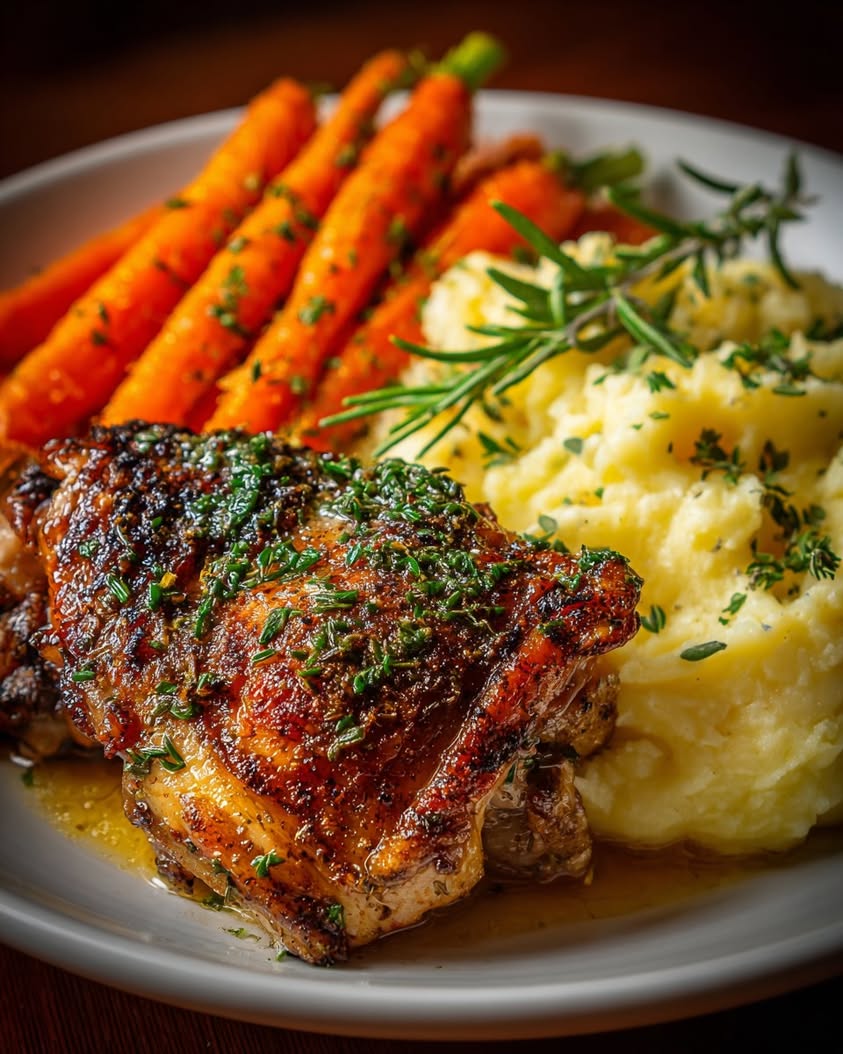
Herb-Roasted Chicken Thighs with Creamy Mashed Potatoes & Honey-Glazed Carrots: A Cozy, Flavorful Dinner
Imagine a dinner that fills your kitchen with the irresistible aroma of garlic and roasting herbs. This recipe for Herb-Roasted Chicken Thighs with Creamy Mashed Potatoes and Honey-Glazed Carrots delivers exactly that experience. Moreover, it brings a complete, balanced meal to your table with minimal fuss. The combination of juicy, crispy-skinned chicken, velvety potatoes, and sweet, tender carrots is a timeless classic for good reason. Ultimately, it is the kind of meal that feels like a warm hug, perfect for busy weeknights or a relaxed Sunday supper.
The magic of this recipe lies in its harmonious flavors and straightforward process. First, bone-in, skin-on chicken thighs roast to golden perfection, their fat basting the meat for incredible juiciness. Meanwhile, carrots caramelize in a simple honey glaze, becoming tender and glossy. Simultaneously, you can prepare the creamy mashed potatoes, ensuring everything finishes at the same time. This meal is a masterclass in simple, effective home cooking. Consequently, it proves that a spectacular dinner doesn’t require complicated techniques or obscure ingredients.
Furthermore, this dish is incredibly versatile and forgiving. You can easily adjust the herbs based on what you have in your pantry. Similarly, the sweetness of the glaze can be tailored to your taste. This recipe for Herb-Roasted Chicken Thighs with Creamy Mashed Potatoes and Honey-Glazed Carrots is a foundational template. Therefore, once you master it, you will find yourself returning to it again and again, perhaps with your own creative twists. It is a reliable path to a satisfying, family-approved meal.
Quick Recipe Highlights
- Flavor Profile: This dish offers a beautiful symphony of savory, sweet, and herbal notes. The chicken is deeply savory with aromatic herbs and garlic, while the carrots provide a natural, honey-kissed sweetness. The creamy potatoes act as a neutral, buttery canvas that ties all the flavors together perfectly.
- Texture: You get a wonderful contrast of textures in every bite. Expect crispy, crackling chicken skin against succulent meat, alongside silky-smooth mashed potatoes and tender-crisp glazed carrots. This variety makes the eating experience dynamic and thoroughly enjoyable.
- Aroma: As it cooks, your kitchen will smell incredible. The primary aromatic notes come from the roasting garlic and dried herbs like thyme and rosemary mingling with chicken fat. Additionally, the sweet scent of honey and caramelizing carrots adds a warm, inviting layer.
- Visual Appeal: The plate boasts a gorgeous color palette. The chicken thighs turn a deep, golden brown, the carrots shine in a vibrant orange glaze, and the mashed potatoes are a cloud-white contrast. It is a meal that looks as impressive as it tastes.
- Skill Level Needed: This is a beginner-friendly recipe. It requires basic skills like chopping, boiling, and roasting. There is no need for advanced techniques, making it an excellent choice for novice cooks or anyone wanting a stress-free cooking session.
- Special Equipment: You only need standard kitchen tools. Essentials include a large baking sheet, a medium pot for the potatoes, and a potato masher or ricer. A sturdy pair of tongs is helpful for turning the chicken and carrots.
Recipe Overview
- Difficulty Level: We rate this recipe as “Easy.” The steps are sequential and simple, involving basic preparation and oven roasting. There is no complex knife work or delicate timing, and the ingredients are common. Even if you make a small mistake, the results are still likely to be delicious and forgiving.
- Category: This is a complete main course or dinner entree. It perfectly combines a protein, a starch, and a vegetable on one plate. Consequently, it falls squarely into the category of hearty comfort food and family dinners, providing everything you need for a balanced meal.
- Cuisine: The dish draws primarily from American and broader Western culinary traditions. The technique of roasting chicken with herbs is classic French-inspired home cooking, while mashed potatoes and glazed carrots are staples of American and British comfort food. It is a familiar, cross-cultural combination.
- Cost: This is a very cost-effective meal. Chicken thighs are an affordable cut of protein, and potatoes and carrots are inexpensive, hearty vegetables. The herbs, butter, and honey are pantry staples for many. Overall, you can feed a family of four a restaurant-quality meal for a fraction of the price.
- Season: This recipe truly shines in the fall and winter. The warm, hearty, and comforting nature of the food aligns perfectly with cooler weather. However, the use of fresh, bright herbs also makes it suitable for spring, and it is a satisfying meal year-round.
- Occasion: It is ideal for casual weeknight dinners, cozy weekend meals, or informal family gatherings. While it feels special, it is not overly fussy, making it perfect for a comforting date night at home. It is a universally appealing choice for any occasion that calls for good, honest food.
Why You’ll Love This Recipe
First and foremost, the taste and texture combination is utterly satisfying. The Herb-Roasted Chicken Thighs deliver a powerful punch of umami and herbaceous flavor, with skin that crisps up beautifully in the oven. The Creamy Mashed Potatoes provide a rich, buttery, and smooth contrast that complements the savory chicken perfectly. Meanwhile, the Honey-Glazed Carrots add a necessary touch of sweetness and a slight bite, balancing the entire plate. Every forkful offers a little bit of everything, creating a complete and harmonious dining experience that is deeply comforting.
From a convenience standpoint, this recipe is a weeknight hero. Although the total time is over an hour, most of it is hands-off oven time. You can prepare the carrots and get the potatoes boiling while the chicken roasts. Essentially, you are multitasking efficiently to get a full meal on the table. The cleanup is also straightforward, especially if you use parchment paper on your baking sheet. This efficiency makes the process feel manageable, even after a long day, proving that a wholesome dinner is always within reach.
Nutritionally, this meal offers a good balance. Chicken thighs provide high-quality protein and essential nutrients like iron and zinc. Carrots are packed with beta-carotene, which is vital for eye health. Potatoes, often underestimated, offer vitamin C, potassium, and fiber, especially if you leave the skins on. By controlling the ingredients, you avoid the excessive sodium and fats found in many takeout or pre-made meals. Therefore, you are nourishing your body with real, recognizable food.
For entertaining, this dish is a fantastic choice. It is universally liked and feels special without requiring the cook to be stuck in the kitchen all night. You can easily double or triple the recipe to feed a crowd. The presentation on a large platter or individual plates is always impressive. Serving Herb-Roasted Chicken Thighs with Creamy Mashed Potatoes and Honey-Glazed Carrots tells your guests you care, offering them a classic, well-prepared meal that feels both generous and heartfelt.
Finally, its cost-effectiveness and accessibility are major wins. The ingredients are affordable and available at any standard grocery store. You do not need to hunt for specialty items. This accessibility means you can make this comforting meal anytime the craving strikes. Learning to prepare a complete plate like this builds foundational cooking skills and confidence. Ultimately, it is an investment in your culinary repertoire that pays off in countless delicious dinners to come.
Historical Background and Cultural Significance
The practice of roasting meat with herbs is ancient, dating back to a time before modern stoves. Cooks would skewer meat over an open fire, often using wild herbs to add flavor and mask any less-fresh tastes. The combination of chicken with rosemary and thyme has strong roots in Mediterranean and European peasant cooking, where these hardy herbs grew abundantly. These dishes were practical, using available ingredients to create maximum flavor from simple means. This tradition of herb-roasted poultry forms the direct ancestor of our modern recipe.
Mashed potatoes hold a significant place in global comfort food culture. While potatoes originated in South America, they became a European staple after their introduction in the 16th century. The Irish, in particular, championed the potato, and mashing them with butter and milk became a common preparation to create a filling, inexpensive food. In America, mashed potatoes became a central pillar of holiday meals and Sunday dinners. Their creamy, neutral flavor makes them the perfect companion to savory meats and gravies, cementing their role as the ultimate comfort starch.
Glazing carrots with a sweet substance is a technique that evolved to enhance the vegetable’s natural sugars. In medieval times, carrots were often stewed with honey or dried fruits. The modern concept of glazing vegetables with butter and sugar or honey gained popularity in French cuisine as a way to elevate simple sides. This method transforms the humble carrot into a refined, shiny, and flavorful component. The addition of honey glaze to carrots in this recipe represents a fusion of this classic technique with accessible home cooking.
Bringing these three elements together on one plate is a relatively modern convention of Western “meat and two veg” plating. This style, emphasizing a protein centerpiece with complementary starches and vegetables, became the standard for a balanced dinner in the 20th century. Our specific recipe for Herb-Roasted Chicken Thighs with Creamy Mashed Potatoes and Honey-Glazed Carrots is a direct descendant of this tradition. It reflects a desire for wholesome, satisfying, and visually appealing meals that can be reliably reproduced in home kitchens around the world.
Ingredient Deep Dive
Chicken Thighs (Bone-In, Skin-On): This cut is the star for good reason. Historically, dark meat was often considered less desirable than breast meat, but its superior flavor and juiciness have been rightfully celebrated in recent decades. The bone contributes to deeper flavor during roasting, while the skin, when cooked properly, renders fat and becomes irresistibly crispy. Nutritionally, thighs contain more iron and zinc than breasts. When selecting them, look for plump thighs with evenly colored skin. Always pat them thoroughly dry with paper towels before seasoning; this is the single best tip for achieving crispy skin. Store them in the coldest part of your refrigerator and use within 1-2 days of purchase.
Yukon Gold Potatoes: These are the ideal potato for mashing. They have a naturally buttery flavor and a waxier texture than Russets, which leads to a creamier, less gluey mash. Potatoes were first domesticated in the Andes over 7,000 years ago. Yukon Golds are a modern cultivar developed in Canada. They are a good source of vitamin C, potassium, and vitamin B6. For the best results, choose potatoes that are firm and free of sprouts or green tinges. You can peel them or, for extra fiber and texture, scrub them well and leave the skins on. Store potatoes in a cool, dark, well-ventilated place—not in the refrigerator.
Carrots: This root vegetable has been cultivated for thousands of years, originally for its aromatic leaves and seeds rather than its root. The orange carrot we know today was developed in the Netherlands in the 17th century. They are famously rich in beta-carotene, which the body converts to vitamin A. Choose carrots that are firm, smooth, and brightly colored, with fresh, green tops if possible. Avoid any that are limp or cracked. For glazing, similar-sized whole carrots or “baby” carrots ensure even cooking. Store them in the crisper drawer of your refrigerator in a plastic bag.
Butter & Cream: These dairy products are responsible for the luxurious texture of the mashed potatoes. Butter, made by churning cream, has been a prized fat for centuries. It adds rich flavor and helps create a smooth, cohesive mash. Heavy cream or whole milk introduces moisture and creaminess. For the best flavor, use unsalted butter so you can control the seasoning. European-style cultured butter can add a delightful tang. Gently warm the cream or milk before adding it to the hot potatoes; this helps the potatoes absorb the liquid better and keeps the mash hot. Always use fresh dairy and check expiration dates.
Herbs & Garlic: Dried thyme and rosemary are classic, hardy herbs that withstand the high heat of roasting without burning, unlike many fresh herbs. They infuse the chicken fat and create an aromatic foundation. Garlic adds a pungent, savory depth that is mellowed and sweetened by roasting. Fresh garlic is always preferable to pre-minced. When selecting a head of garlic, choose one that is firm and heavy for its size, with tight, papery skin. To prepare, simply slice the top off the whole head to expose the cloves before roasting. This allows the flavorful oils to seep out and baste the chicken.
Common Mistakes to Avoid
- Not Drying the Chicken Skin: This is the most common error. Moisture on the skin creates steam, which prevents crisping. Always pat the chicken thighs thoroughly dry with paper towels before applying oil and seasoning. This step is non-negotiable for perfect crackling skin.
- Crowding the Baking Sheet: If the chicken thighs and carrots are too close together, they will steam instead of roast. Ensure there is space between each piece for hot air to circulate. This circulation is essential for achieving caramelization and even cooking on all sides.
- Underseasoning the Potatoes: Potatoes need a surprising amount of salt. Season the boiling water generously—it should taste like the sea. This seasons the potatoes from the inside out. Additionally, remember to season the mash again after adding butter and cream, tasting as you go.
- Overworking the Mashed Potatoes: Using a food processor or over-mashing with a mixer releases too much starch, resulting in a gluey, gummy texture. Use a potato ricer, food mill, or hand masher. Stir just until the ingredients are incorporated and the potatoes are smooth.
- Adding Cold Dairy to Hot Potatoes: Pouring cold milk or cream into hot potatoes can make the mash cool down too quickly and sometimes cause the fat to seize slightly. Gently warm your cream or milk in a saucepan or microwave before blending it into the potatoes.
- Neglecting the Carrots: Do not just set and forget the carrots. Tossing them halfway through roasting ensures they caramelize evenly on all sides and don’t burn on the bottom. This simple attention guarantees perfectly glazed, tender-crisp carrots.
- Not Resting the Chicken: Slicing into the chicken immediately after it comes out of the oven will cause the precious juices to run out onto the cutting board. Let the thighs rest for 5-10 minutes. This allows the juices to redistribute, ensuring every bite is moist.
- Using Old, Stale Dried Herbs: Dried herbs lose potency over time. If your jar of thyme or rosemary has been in the cupboard for years, it will contribute little flavor. For the best results, use herbs that are less than a year old, and store them in a cool, dark place.
Essential Techniques
Patting Dry Protein: This simple technique is critical for browning any meat, especially poultry. Surface moisture must evaporate before the Maillard reaction (browning) can begin. By removing this moisture with paper towels, the skin can immediately start to crisp and brown in the hot oven. If you skip this, you will be waiting for the water to steam off, resulting in pale, rubbery skin. The visual cue for success is hearing a good sizzle when the chicken hits the hot pan and seeing the skin turn a deep golden brown, not pale and steamed.
Creating a Herb Rub: A dry rub is a mixture of dried herbs, salt, pepper, and other spices massaged directly onto the surface of the meat. The goal is to create a flavorful crust. To master it, ensure your chicken is dry, then drizzle lightly with oil to help the rub adhere. Sprinkle the seasoning mix evenly over all sides, gently pressing it into the skin. A common pitfall is applying the rub too early, which can draw moisture out. For this recipe, applying it just before roasting is perfect. The success cue is a fragrant, well-adhered coating that doesn’t look dusty or fall off.
Roasting for Crispy Skin & Juicy Meat: Roasting at a high temperature (400°F/200°C) is key. The high heat quickly renders the fat under the skin and crisps it, while the bone helps conduct heat evenly to cook the interior gently. Placing the chicken skin-side up on a rack allows rendered fat to drip away, preventing sogginess. The main pitfall is opening the oven door too often, which causes temperature fluctuations. Trust the process. Visual cues for doneness are golden brown skin and clear juices running from the thigh when pierced (internal temperature of 165°F/74°C).
Glazing Vegetables: Glazing involves cooking vegetables in a small amount of liquid (here, honey and oil) that reduces to form a shiny, flavorful coating. The technique requires occasional tossing. Start by roasting the carrots with oil, salt, and pepper to begin caramelization. Adding the honey halfway through prevents it from burning. Tossing ensures each piece is evenly coated. The pitfall is adding the honey too early, which can cause it to blacken and taste bitter. Success is visible: the carrots will be tender, slightly shriveled, and coated in a glossy, sticky glaze.
Mashing Potatoes to Perfection: The goal is smooth, fluffy potatoes without gumminess. Start by cutting the potatoes into even chunks so they cook uniformly. Boil them until they are fork-tender but not falling apart. Drain well and let them steam-dry in the colander for a minute to remove excess moisture. Then, use your chosen tool to mash or rice them before adding warm dairy and butter. Over-mashing is the primary pitfall. The visual cue for perfect mash is a smooth, creamy consistency that holds its shape but is not stiff or sticky.
Pro Tips for Perfect Herb-Roasted Chicken Thighs with Creamy Mashed Potatoes and Honey-Glazed Carrots
For the crispiest skin imaginable, after patting the chicken dry, you can leave it uncovered on a rack in the refrigerator for a few hours or overnight. This air-drying process further dehydrates the skin surface, leading to an exceptionally crackly finish.
Elevate your mashed potatoes by infusing your warm cream or milk. Before heating it, steep a couple of garlic cloves, fresh thyme sprigs, or even a bay leaf in the dairy, then strain it out. This adds a subtle, sophisticated layer of flavor.
Prevent your baking sheet from becoming a nightmare to clean. Line it with parchment paper or a silicone baking mat before arranging the chicken and carrots. This catches the drips and glaze, making cleanup effortless.
Ensure your carrots cook evenly by choosing pieces of similar size and thickness. If using whole carrots, slice the thicker ends in half lengthwise so all pieces roast at the same rate.
Take the guesswork out of doneness by using a meat thermometer. Insert it into the thickest part of a chicken thigh, avoiding the bone. Remove the chicken from the oven when it reads 165°F (74°C).
For extra-flavorful potatoes, reserve a tablespoon of the seasoned fat from the chicken roasting tray after cooking. Whisk this golden, herb-infused fat into your mashed potatoes for an incredible savory boost.
If your mashed potatoes become too thick or stiff, don’t panic. Simply stir in a little more warmed milk or cream, a tablespoon at a time, until you reach the desired creamy consistency.
Add a final touch of freshness and color just before serving. A light sprinkle of chopped fresh parsley or chives over the entire plate brightens the rich flavors and enhances the visual appeal.
Variations and Adaptations
Regional Variations: Travel your taste buds by changing the herb profile. For a Provençal twist, use Herbes de Provence on the chicken. For an Italian flair, opt for dried oregano and basil with a sprinkle of lemon zest. A Spanish version might include smoked paprika and saffron threads stirred into the potato cooking water. These simple swaps can transport the basic framework of this dish to different corners of Europe with delicious results.
Seasonal Adaptations: Adapt the vegetable component to what’s fresh. In spring, substitute the carrots with asparagus spears or halved baby turnips, glazed with the same honey mixture. During summer, try zucchini or bell pepper strips. For a hearty winter alternative, swap carrots for parsnips or chunks of sweet potato, adjusting the honey to complement their natural sweetness. This keeps the recipe exciting and aligned with seasonal produce.
Dietary Modifications: For a dairy-free version, use olive oil or a plant-based butter substitute in the mashed potatoes, along with unsweetened almond or oat milk. To make the entire meal gluten-free, ensure your dried herbs and honey are certified gluten-free, which they almost always are. This recipe is naturally adaptable to many dietary needs without sacrificing core flavor.
Flavor Variations: Introduce new flavor dimensions easily. Add a tablespoon of whole grain mustard or a splash of white wine to the chicken pan drippings for a quick sauce. Mix roasted garlic or caramelized onions directly into the mashed potatoes. For the carrots, substitute maple syrup or balsamic glaze for the honey. A pinch of chili flakes can add a welcome touch of heat to any component.
Texture Modifications: Change up the mouthfeel. Leave the skins on your Yukon Gold potatoes for a more rustic, textured mash. Instead of mashing, try crushing the boiled potatoes roughly with a fork for a chunkier side. For the carrots, roast them at a very high heat for a shorter time to achieve a more caramelized, almost blistered exterior with a firmer center.
Presentation Alternatives: Serve family-style on a large platter for a communal feel, or plate individually for a more restaurant-style presentation. For individual servings, use a ring mold to create a neat cylinder of mashed potatoes. Arrange the carrots in a fan or stack. Shred the chicken meat off the bone and layer it over the potatoes for a deconstructed approach.
Serving and Presentation Guide
Plating Techniques: For an appealing plate, think in terms of height and color. Place a generous scoop of creamy mashed potatoes slightly off-center. Lean one or two herb-roasted chicken thighs against the potatoes, crispy skin facing up. Arrange the honey-glazed carrots in a small bundle or fan beside them. This creates a balanced, intentional look rather than just piling components side by side. Let the golden-brown chicken and orange carrots be the visual stars against the white potatoes.
Garnishing Ideas: A simple garnish adds a professional finish. A light sprinkle of finely chopped fresh parsley, chives, or dill adds a pop of green and fresh flavor. For the chicken, a final crack of black pepper or a few flakes of sea salt on the skin enhances its appearance. A small pat of butter melting on top of the mashed potatoes is classic and inviting. A drizzle of the reduced honey glaze from the carrot tray around the plate adds a touch of elegance.
Traditional Accompaniments: While this is a complete meal, a simple side salad with a bright vinaigrette can cut through the richness beautifully. A warm, crusty baguette or dinner rolls are perfect for sopping up any remaining juices or glaze. For a traditional British touch, serve with a side of peas. A simple gravy made from the chicken pan drippings is also a classic and welcome addition.
Modern Serving Suggestions: For a contemporary twist, serve the components in shallow bowls. Place the mashed potatoes at the bottom, top with shredded chicken and carrots, and finish with a drizzle of herb oil. Alternatively, serve it as a “bowl” meal with a base of mashed potatoes, topped with sliced chicken, carrots, and perhaps some sautéed greens like kale or spinach for added nutrition and color.
Temperature Considerations: Serve everything hot. Mashed potatoes cool quickly, so time your potato mashing to be the last task before serving. Warm your serving plates slightly in the oven (on a low setting) or with hot water to keep the food at an ideal temperature longer. The contrast between the hot, creamy potatoes and the crispy chicken skin is a key part of the experience.
Portion Control Tips: This recipe is designed for four servings: one large or two smaller chicken thighs per person, alongside a hearty scoop of potatoes and a serving of carrots. To adjust for lighter appetites, you can serve one chicken thigh per person and increase the proportion of carrots and potatoes. For heartier appetites, the portions as written are satisfying. The beauty is in the balance of all three elements on the plate.
Wine and Beverage Pairing
Wine Pairings: The savory, herbal notes of the chicken and the sweetness of the carrots create a versatile pairing canvas. A medium-bodied Chardonnay with a touch of oak complements the richness of the mashed potatoes and the herbs. A Pinot Noir is an excellent red choice, as its bright acidity and red fruit flavors won’t overpower the dish. For a more robust option, a Grenache or Côtes du Rhône blend can stand up to the hearty flavors beautifully. Ultimately, choose a wine you enjoy that has good acidity to cut through the meal’s richness.
Non-Alcoholic Alternatives: Sparkling water with a twist of lemon or lime cleanses the palate between bites. For something more flavorful, try a ginger beer—its spicy sweetness pairs wonderfully with the glazed carrots and savory chicken. An herbal iced tea, like peach or mint, can mirror the herbal notes in the dish. Apple cider, served warm or cold, is a fantastic fall pairing that echoes the sweet and savory elements on the plate.
Coffee/Tea Pairings: After the meal, a cup of coffee or tea can be a perfect finish. A medium-roast coffee with low acidity won’t clash with the dinner’s flavors. For tea, an Earl Grey offers a citrusy, bergamot note that is refreshing. A simple chamomile or peppermint tea is soothing and aids digestion after a hearty meal. Serve these beverages after the main course as a relaxing conclusion.
Temperature Considerations: White wines should be served chilled, around 45-50°F (7-10°C). Red wines like Pinot Noir are best slightly below room temperature, around 55-60°F (13-16°C). Non-alcoholic sparkling drinks are most refreshing when well-chilled. Coffee and tea, of course, should be served hot. Proper serving temperatures ensure the beverages taste their best and provide the intended contrast or complement to the warm food.
Serving Suggestions: Offer a variety of beverages if you have guests. Provide both still and sparkling water on the table. If serving wine, consider having both a white and a red option available to suit different preferences. For non-alcoholic options, a pitcher of infused water or iced tea allows guests to help themselves. The goal is to have something that everyone can enjoy alongside this comforting meal.
Storage and Shelf Life
Storage Methods: Store all components separately in airtight containers in the refrigerator. This prevents the moist mashed potatoes from making the crispy chicken skin soggy. The chicken, potatoes, and carrots will keep for 3-4 days. For the chicken, you can store it whole or shred the meat off the bone, which can save space. The mashed potatoes may stiffen in the fridge; this is normal and they will loosen upon reheating.
Temperature Requirements: Refrigerate leftovers promptly, within two hours of cooking. The refrigerator should be at or below 40°F (4°C). Do not leave the meal at room temperature for extended periods, as this allows bacteria to grow. When reheating, ensure the internal temperature of the chicken reaches 165°F (74°C) again to ensure food safety.
Container Recommendations: Use shallow containers rather than deep ones. This allows the food to cool more quickly and evenly, which is safer. Glass containers with tight-fitting lids are ideal as they don’t absorb odors and are easy to clean. For the mashed potatoes, pressing a piece of plastic wrap directly onto the surface before sealing the lid can help prevent a dried-out skin from forming.
Signs of Spoilage: Discard any leftovers that have an off or sour smell, especially the dairy-based mashed potatoes. Look for visible mold, which can appear as fuzzy spots. If the chicken develops a slimy texture or the carrots become excessively mushy and smell fermented, they should not be consumed. When in doubt, throw it out.
Reheating Instructions: Reheat components separately for best results. Reheat chicken thighs in an oven or toaster oven at 350°F (175°C) until warmed through to help re-crisp the skin. The mashed potatoes are best reheated gently on the stovetop with a splash of milk or cream, stirring frequently. Carrots can be reheated in a skillet with a tiny bit of water to steam them back to tenderness, or in the microwave.
Freezing Guidelines: You can freeze the cooked chicken thighs (without bones is easier) and the mashed potatoes. Place them in freezer-safe bags or containers, removing as much air as possible. They will keep for 2-3 months. The glazed carrots do not freeze well, as they become mushy upon thawing. Thaw frozen components in the refrigerator overnight before reheating.
Make Ahead Strategies
Prep Timeline: You can prep several elements a day in advance. The night before, pat the chicken thighs dry, season them with salt and pepper (but hold the other dried herbs), and store them uncovered on a rack in the fridge—this aids crisping. Peel and chop the potatoes, submerge them in cold water in a pot, and refrigerate. Peel and cut the carrots, storing them in a bag of water in the fridge to prevent drying out. Measure out your dried herbs, butter, and cream.
Storage Between Steps: Keep prepped ingredients in their designated containers in the refrigerator. The chicken should remain on its rack, uncovered, to dry the skin. The potatoes in water will prevent oxidation (browning). The carrots in water stay crisp. Having everything measured and ready turns the actual cooking day into a simple assembly and roasting process, drastically reducing active time.
Quality Impact Assessment: Prepping the chicken a day ahead significantly improves skin crispiness. Pre-cut potatoes may lose a tiny amount of starch into the water, but this is negligible for mashing. Pre-cut carrots maintain their quality perfectly. The overall flavor of the dish is not negatively impacted by this advance prep; in fact, it often improves the chicken texture.
Assembly Tips: On cooking day, remove the chicken from the fridge 20-30 minutes before roasting to take the chill off. Drain and rinse the potatoes, then proceed with boiling. Drain the carrots and pat them dry before tossing with oil. Apply the full herb rub to the chicken just before it goes in the oven. This staggered approach ensures everything is at the right stage for cooking.
Reheating Guidelines: If you fully cook the entire meal ahead, follow the separate reheating instructions above. However, for best texture, it’s superior to do the final roast on the day of serving. The make-ahead strategy focuses on preparation, not full cooking, to preserve the ideal textures of crispy skin and fresh mashed potatoes.
Fresh Element Additions: Even with advance prep, always add fresh elements at the end. Stir the final butter and cream into the potatoes just before serving. Garnish the finished plate with fresh herbs. These last-minute touches provide a brightness and quality that can’t be achieved with fully pre-made components, elevating the entire dish.
Scaling Instructions
Halving the Recipe: To serve two, simply divide all ingredient quantities by two. Use a smaller baking sheet to prevent the chicken and carrots from having too much empty space, which can affect heat distribution. Cooking times may be slightly reduced by 5-10 minutes because the oven is less crowded, so start checking for doneness early. The mashed potatoes can be halved easily; just use a smaller pot.
Doubling or Tripling: For a crowd, multiply the ingredients accordingly. The key is to use multiple baking sheets and rotate them in the oven (top to bottom, front to back) halfway through cooking to ensure even browning. You may need to extend the cooking time by 10-15 minutes. For the mashed potatoes, cook them in batches or use a very large pot to avoid overcrowding, which leads to uneven boiling.
Equipment Adjustments: Scaling up requires planning. Ensure you have enough baking sheets and oven space. If mashing a large quantity of potatoes, a stand mixer with a paddle attachment can be a lifesaver, but be vigilant to avoid over-mixing. For large batches of carrots, consider roasting them in their own dedicated tray to ensure they caramelize properly and don’t steam in a crowded pan.
Timing Modifications: When cooking multiple trays, the total oven time will increase. Factor this into your meal planning. It’s often efficient to roast all the protein and vegetables first, keeping them warm in a low oven (200°F/95°C) tented with foil, while you prepare the mashed potatoes last to serve them fresh and hot.
Storage Considerations: If you have scaled up and have leftovers, remember that a large quantity of hot food will take longer to cool to a safe refrigeration temperature. Divide leftovers into several shallow containers instead of one deep one to promote rapid, even cooling. This is a critical food safety step when dealing with large batches.
Nutritional Deep Dive
Macro Breakdown: This meal{“success”:true,”message”:”Recipe created successfully”,”post_id”:8225,”tasty_recipe_id”:8225,”shortcode”:” Print
Herb-Roasted Chicken Thighs with Creamy Mashed Potatoes & Honey-Glazed Carrots
Description
A comforting and flavorful meal featuring juicy herb-roasted chicken thighs, creamy mashed potatoes, and sweet honey-glazed carrots, perfect for a family dinner.
Ingredients
For the Crust:
- 6 bone-in, skin-on chicken thighs
- 2 tablespoons olive oil
- 1 tablespoon dried rosemary
- 1 tablespoon dried thyme
- Salt and black pepper to taste
- 4 large russet potatoes, peeled and cubed
- 1/2 cup heavy cream
- 4 tablespoons unsalted butter
- 1 pound carrots, peeled and sliced
- 2 tablespoons honey
- 1 tablespoon brown sugar
- 2 cloves garlic, minced
Instructions
1. Prepare the Crust:
- Preheat the oven to 400°F (200°C). Pat the chicken thighs dry and rub with olive oil, rosemary, thyme, salt, and pepper. Place on a baking sheet and roast for 30-35 minutes until golden and cooked through.
- While the chicken roasts, boil the potatoes in salted water for 15-20 minutes until tender. Drain and mash with heavy cream and butter until smooth. Season with salt and pepper.
- In a skillet, sauté carrots with honey, brown sugar, and garlic over medium heat for 10-12 minutes until tender and glazed. Serve chicken thighs with mashed potatoes and carrots on the side.
Notes
You can customize the seasonings to taste.

I’m Billy, a classically trained culinary school graduate from The Culinary Institute of America with over 12 years in the restaurant industry and over 19 years of cooking experience.