
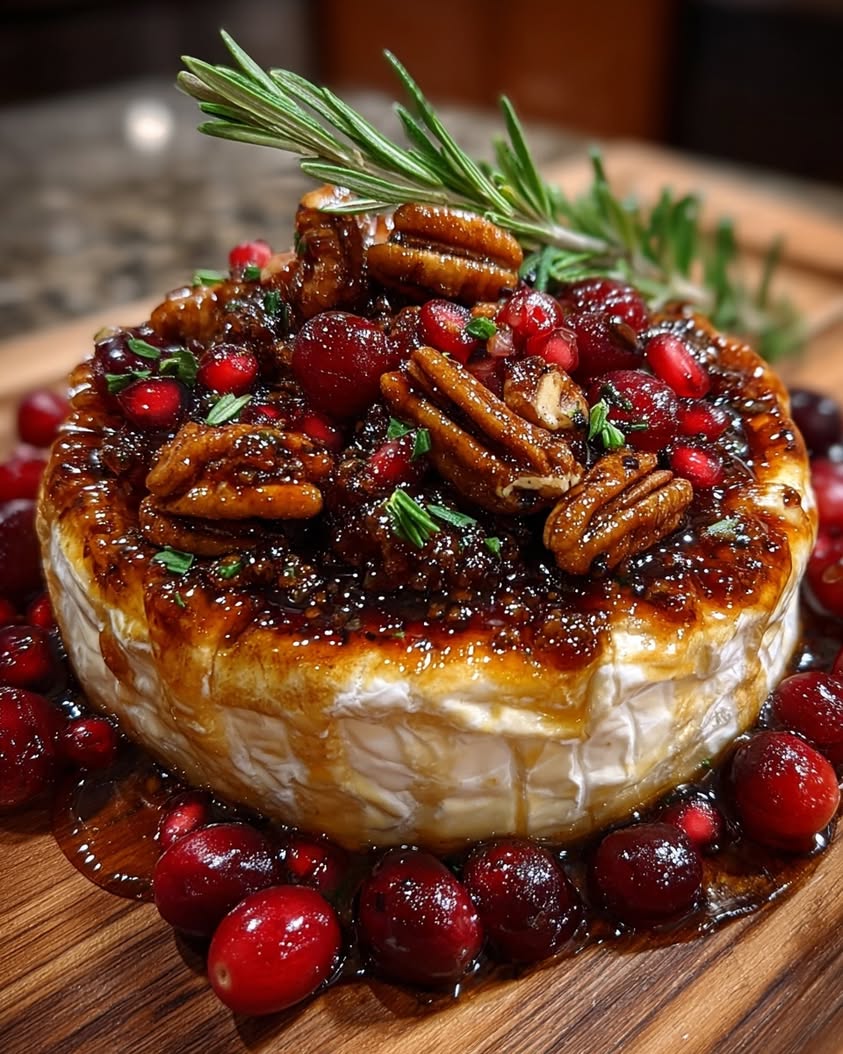
Holiday Baked Brie with Honey-Balsamic Cranberries, Crunchy Pecans & Pomegranate Jewels: The Ultimate Festive Appetizer
Imagine a warm, gooey wheel of brie cheese, its creamy center just begging to be scooped up with a cracker. Now picture it crowned with a glossy, ruby-red topping of honey-balsamic cranberries, studded with crunchy toasted pecans and sparkling pomegranate jewels. This is the show-stopping appetizer that will become the star of your holiday table. This recipe for Holiday Baked Brie with Honey-Balsamic Cranberries, Crunchy Pecans & Pomegranate Jewels delivers an unforgettable combination of sweet, tart, savory, and creamy in every single bite.
Furthermore, this dish is a true celebration of seasonal flavors. The tart cranberries simmer into a luxurious jam, perfectly balanced by the rich sweetness of honey and the complex tang of balsamic vinegar. Meanwhile, the pecans add a necessary earthy crunch, and the fresh pomegranate arils provide a juicy, bright pop that cuts through the richness. Consequently, this baked brie recipe is not just food; it’s an experience. It creates a warm, inviting centerpiece that encourages gathering, sharing, and savoring the moment.
Ultimately, this Holiday Baked Brie with Honey-Balsamic Cranberries, Crunchy Pecans & Pomegranate Jewels is deceptively simple to make. In fact, it requires minimal hands-on time for a maximum visual and flavorful payoff. Whether you’re hosting a festive cocktail party, a cozy family gathering, or bringing a dish to a potluck, this appetizer promises to impress every guest. It’s the perfect blend of elegance and comfort, making it a must-try recipe for your holiday entertaining repertoire.
Quick Recipe Highlights
- Flavor Profile: This dish masterfully balances sweet honey and tart cranberries with savory, creamy brie and the deep, acidic note of balsamic reduction. The flavor journey is complex yet harmonious, offering something delightful in every component.
- Texture: You experience a wonderful contrast: the luxuriously soft, melted cheese against the sticky-sweet cranberry compote, the satisfying crunch of toasted pecans, and the juicy burst of fresh pomegranate seeds. This variety makes every bite interesting.
- Aroma: As it bakes, the kitchen fills with the warm, nutty scent of toasting pecans and melting cheese, followed by the sweet-tart fragrance of simmering cranberries and balsamic. It’s an aroma that instantly signals the holidays.
- Visual Appeal: The presentation is stunning. The golden-brown brie wheel topped with glossy crimson cranberries, sprinkled with toasted pecans and vibrant pomegranate “jewels” creates a festive, colorful centerpiece that looks as good as it tastes.
- Skill Level Needed: This is a beginner-friendly recipe. Basic skills like simmering a sauce and using an oven are all that’s required. The steps are straightforward, and the result is incredibly forgiving, making it perfect for novice cooks.
- Special Equipment: You only need a small saucepan, a baking sheet or dish, and a sharp knife. A pastry brush can be helpful for applying honey, but a spoon works just as well. No fancy gadgets are necessary.
Recipe Overview
- Difficulty Level: We rate this Holiday Baked Brie as “Easy” because it involves simple techniques like simmering and baking. There’s no intricate pastry work or precise tempering required. The recipe is very forgiving; even if the cranberry topping is slightly too thick or thin, the final result will still be delicious and impressive.
- Category: This dish falls squarely into the appetizer or starter category. It’s ideal for finger food at parties, holiday gatherings, or as a luxurious pre-dinner bite. Additionally, it can serve as a fantastic addition to a festive cheese board or charcuterie spread.
- Cuisine: While brie cheese originates from France, this preparation is a modern, fusion-style American holiday recipe. It takes a classic French cheese and adorns it with quintessential North American ingredients like cranberries and pecans, creating a celebration of New World flavors.
- Cost: This is a moderately priced appetizer. A wheel of brie represents the main cost, while cranberries, pecans, and pomegranate are seasonal and affordable. Overall, it provides high perceived value for the cost, especially compared to store-bought gourmet appetizers.
- Season: This recipe is perfect for the fall and winter holidays, specifically from late October through December. Cranberries and pomegranates are at their peak, and the warm, rich flavors complement colder weather perfectly. It embodies the essence of Thanksgiving and Christmas entertaining.
- Occasion: It’s tailor-made for holiday parties, Friendsgiving, Christmas Eve gatherings, New Year’s Eve celebrations, and potlucks. It also makes a wonderful romantic appetizer for a cozy date night in during the festive season. Any event that calls for a special, shareable dish is ideal.
Why You’ll Love This Recipe
First and foremost, the taste and texture are absolutely divine. The first bite delivers an incredible symphony: the warm, decadent flow of melted brie coats your palate, immediately followed by the sweet-tart punch of the honey-balsamic cranberries. Then, you get the earthy, buttery crunch of the pecans, and finally, a refreshing, juicy pop from the pomegranate. This combination is addictive. Moreover, each element complements the others perfectly, ensuring there’s no single overwhelming flavor. Instead, you get a beautifully balanced appetizer that delights all your senses.
Secondly, the convenience factor is a huge win. This Holiday Baked Brie with Honey-Balsamic Cranberries, Crunchy Pecans & Pomegranate Jewels comes together in about 30 minutes with very little active effort. You can prepare the cranberry topping while the brie warms to room temperature, then simply assemble and bake. Consequently, it’s a lifesaver for hosts who want to spend time with guests rather than being stuck in the kitchen. The recipe is also incredibly flexible; you can prep components ahead of time for even easier assembly when you’re ready to serve.
From a nutritional perspective, this dish offers more than just indulgence. While rich, brie provides protein and calcium. Cranberries are packed with antioxidants and vitamin C, and the honey-balsamic glaze uses natural sweeteners. Pecans contribute healthy fats, fiber, and minerals like manganese. Pomegranate arils are another antioxidant powerhouse. Therefore, while it’s a treat, it incorporates whole, nutrient-dense ingredients that contribute to its complex flavor profile, making it a smarter choice than many processed appetizers.
Furthermore, the social and entertaining value is through the roof. A wheel of baked brie is inherently shareable and interactive. Placing it in the center of a table with an assortment of crackers, bread, and apple slices encourages conversation and connection. It becomes a focal point. This Holiday Baked Brie with Honey-Balsamic Cranberries, Crunchy Pecans & Pomegranate Jewels looks so professionally stunning that guests will think you spent hours on it, instantly elevating the perceived effort and care of your entire spread.
Finally, it is cost-effective and accessible. Compared to ordering a similar appetizer at a restaurant or buying a pre-made gourmet version, making it at home saves significant money. The ingredients are readily available in most grocery stores, especially during the holiday season. You control the quality of every component, and there are no artificial preservatives. This accessibility means anyone can create a restaurant-worthy holiday appetizer in their own kitchen, impressing friends and family without straining their budget.
Historical Background and Cultural Significance
The story of baked brie begins, of course, in France. Brie de Meaux, a soft cow’s-milk cheese named after the region east of Paris, has been produced since the early Middle Ages. Historically, it was known as the “King of Cheeses” and was famously served at the diplomatic Congress of Vienna in 1815. The act of baking cheese to soften it and alter its texture is an ancient practice found in many cultures, but applying it specifically to brie became a popular way to enjoy its creamy interior in a warm, spreadable form. The modern baked brie appetizer, often encased in pastry, gained massive popularity in American entertaining during the 1980s and 1990s.
Culturally, baked brie has become synonymous with casual yet sophisticated entertaining in North America. It bridges the gap between rustic comfort food and elegant party fare. The addition of sweet and tangy toppings, like the honey-balsamic cranberries in this recipe, is a distinctly New World twist. This fusion reflects a broader culinary trend of combining European cheese traditions with locally abundant fruits and nuts. Consequently, dishes like this Holiday Baked Brie with Honey-Balsamic Cranberries, Crunchy Pecans & Pomegranate Jewels represent a delicious cultural exchange on a plate.
The recipe has evolved significantly from simple baked cheese. Initially, it was often just a wheel of brie warmed until soft. Then came the era of wrapping it in puff pastry with jam. The current evolution, as seen here, focuses on artisanal toppings that create a “crown” or “chutney” on top of the naked, baked wheel. This allows the beautiful rind of the brie to remain visible and edible, while the topping adds layers of flavor and texture. The move away from pastry also makes the dish slightly lighter and highlights the quality of the cheese and topping ingredients themselves.
Regional variations are endless and often reflect local produce. In the Pacific Northwest, you might find baked brie with a topping of blackberry compote and hazelnuts. In the South, a pecan praline or peach ginger topping is popular. The version with cranberries and pecans has strong ties to New England and the Midwest, where these ingredients are native and plentiful. The addition of pomegranate adds a Mediterranean or Middle Eastern flair, showcasing how global our pantries have become. This adaptability is key to the recipe’s enduring popularity, allowing it to be reinvented for every season and taste preference.
Ingredient Deep Dive
Let’s start with the star: the brie cheese. Originating from the Île-de-France region, authentic Brie is a soft-ripened cheese with a bloomy, edible white rind of Penicillium candidum mold. This rind is essential; it protects the cheese and contributes a mild, mushroomy flavor that contrasts the interior. Nutritionally, brie is a good source of protein, calcium, and vitamin B12. When selecting brie for baking, choose a wheel that is ripe but not overripe. It should feel slightly soft when gently pressed at the center. Avoid any with an ammonia smell. Store it in the coldest part of your refrigerator and bring it to room temperature before baking for even melting.
Next, the cranberries. These native North American berries have a long history of use by Indigenous peoples, both as food and medicine. They are famously tart due to their high acid and tannin content, which is why they pair so well with sweeteners like honey. Cranberries are nutritional powerhouses, loaded with vitamin C, fiber, and unique antioxidants called proanthocyanidins, known for supporting urinary tract health. Select fresh cranberries that are firm, shiny, and deep red in color. They should bounce when dropped. You can store them in the refrigerator for weeks or freeze them for months without losing quality, making them a fantastic pantry staple for this holiday baked brie recipe.
Now, consider the honey and balsamic vinegar. Honey, one of humanity’s oldest sweeteners, brings a floral, complex sweetness that granulated sugar cannot match. Its flavor varies dramatically based on the flowers the bees visit. A mild clover or wildflower honey works perfectly here. Balsamic vinegar, from Modena, Italy, is made from cooked grape must aged in wooden barrels. The real “aceto balsamico tradizionale” is thick, sweet, and syrupy. For cooking, a good quality “condimento” grade is perfect. Together, they create a glaze that reduces to a sticky, sweet-tart syrup that clings beautifully to the cranberries and brie. This combination is a cornerstone of the flavor profile in this Holiday Baked Brie with Honey-Balsamic Cranberries.
Finally, the supporting actors: pecans and pomegranate. Pecans are the only major tree nut native to North America. They have a rich, buttery flavor and crisp texture that becomes even more pronounced when toasted. Toasting is non-negotiable; it deepens their flavor and adds the crucial crunchy element. Pomegranates, ancient symbols of abundance and fertility in many cultures, provide the “jewels.” Their sweet-tart juice bursts in the mouth, offering a refreshing contrast. To select a good pomegranate, choose one that feels heavy for its size with taut, unbroken skin. The arils can be stored in an airtight container in the fridge for several days or frozen for later use, making garnishing your baked brie a breeze.
Common Mistakes to Avoid
- Using Cold Brie Straight from the Fridge: This is the top mistake. Baking cold brie results in a melted exterior and a firm, cool center. Always let your brie sit at room temperature for at least 30 minutes before baking. This ensures it heats through evenly and becomes gloriously gooey all the way through.
- Overbaking the Brie: The goal is to warm and soften the cheese, not to cook it into a separated, oily puddle. Bake just until the wheel is soft to the touch and the center feels warm when a knife is inserted, about 12-15 minutes. Overbaking can cause the rind to become tough and the fat to separate.
- Skipping the Toasting of the Pecans: Raw pecans are bland and lack the deep, nutty flavor and crisp texture needed. Toasting them in a dry skillet or the oven for 5-7 minutes wakes up their oils and makes them infinitely more flavorful and crunchy, a vital contrast in the topping.
- Not Reducing the Cranberry Sauce Enough: If the honey-balsamic cranberry mixture is too thin, it will run off the brie wheel and make a mess. Simmer it until it thickens to a jam-like consistency that will mound on top of the cheese without immediately sliding off.
- Adding Pomegranate Seeds Before Baking: The fresh pomegranate arils are a garnish, not a cooking component. If you bake them, they will shrivel, lose their juicy pop, and can become bitter. Always scatter them over the baked brie with the pecans after it comes out of the oven.
- Choosing a Brie That’s Too Young or Too Old: An under-ripe brie will be firm and not melt properly. An overripe brie (with an ammonia smell and an overly soft, bulging rind) can have off-flavors and an unpleasant texture. Look for a wheel that yields slightly to gentle pressure.
- Cutting the Top Rind Off: Some recipes instruct you to cut the top rind off the brie before baking. This is unnecessary and can cause the cheese to ooze out uncontrollably. The rind is edible, adds flavor, and acts as a natural container for the molten cheese.
- Using a Baking Dish Without a Rim: While rare, a very ripe brie can potentially leak. Always bake your brie on a parchment-lined, rimmed baking sheet or in a shallow baking dish. This prevents any possible cheese lava from dripping onto your oven floor.
Essential Techniques
Simmering the Cranberry Glaze: This technique is crucial for developing flavor and texture. Combine the cranberries, honey, balsamic vinegar, and a pinch of salt in a saucepan. Bring to a simmer over medium heat, then reduce to low. As the cranberries heat, they will pop and release their pectin, a natural thickener. The liquid (honey and balsamic) will reduce, concentrating the sweetness and tang into a syrupy glaze. Stir occasionally to prevent sticking. You’ll know it’s done when the cranberries have broken down slightly and the sauce coats the back of a spoon. This process transforms simple ingredients into a complex, restaurant-quality topping for your holiday baked brie.
Toasting Nuts: Toasting pecans is a non-negotiable step for maximum flavor. Place raw pecan pieces in a single layer in a dry skillet over medium-low heat. Cook, shaking the pan or stirring frequently, for 5-7 minutes until they become fragrant and take on a slightly darker color. You can also toast them on a baking sheet in a 350°F oven for 7-10 minutes. The key is constant attention; nuts can go from perfectly toasted to burnt in seconds. Toasting drives off moisture, crisps the texture, and unlocks the nut’s natural oils, intensifying its rich, buttery taste. This added depth is essential for balancing the sweet and creamy elements of the dish.
Testing Brie for Doneness: Knowing when your brie is perfectly baked is more about feel than time. Oven temperatures vary, and the size/ripeness of the brie wheel affects cooking time. After about 12 minutes, carefully touch the top of the brie with a fingertip (it will be hot, so be quick). It should feel very soft, like a water balloon. Alternatively, insert a thin knife or skewer into the center. It should slide in with almost no resistance, and the knife should feel warm when pulled out. The brie will continue to soften slightly from residual heat after removal. This technique ensures a luxuriously melted interior without overbaking.
Pro Tips for Perfect Holiday Baked Brie
First, score the top rind of the brie lightly in a crosshatch pattern before baking. This simple step allows the heat to penetrate more evenly and gives the cranberry topping little crevices to settle into, preventing it from sliding off.
Second, let your baked brie rest for 5 minutes after removing it from the oven. This brief rest allows the molten cheese to settle slightly, making it easier to transfer to a serving plate without a catastrophic cheese slide.
Third, use a flexible, thin spatula to transfer the baked brie from the baking sheet to your serving board or plate. Slide it completely under the wheel for the best support. A fish spatula is the perfect tool for this job.
Fourth, if your cranberry sauce seems too tart after reducing, don’t add more honey directly. Instead, stir in a tiny pinch of salt. Salt is a flavor enhancer that can balance acidity and round out sweetness without making the topping cloying.
Fifth, for easier serving, provide a small cheese knife for cutting into the brie and a spreader or spoon for scooping the cheese and topping onto crackers. This prevents guests from struggling with just one utensil.
Sixth, consider doubling the cranberry-pecan topping recipe. Any leftovers are incredible spooned over goat cheese, spread on turkey sandwiches, or served alongside pork chops. It’s a versatile condiment.
Seventh, for a beautiful presentation, place your serving board on a larger tray or platter. This creates a “catch-all” space for crackers, apple slices, and bread, keeping your main presentation clean and contained.
Eighth, if you’re short on time, you can use a high-quality store-bought cranberry sauce or chutney as a base. Simply warm it in a pan, stir in a splash of balsamic vinegar and some toasted pecans, and use it to top your baked brie for a quick yet impressive version.
Variations and Adaptations
For regional variations, consider your local bounty. In the South, try a topping of chopped peaches, bourbon, and brown sugar with pecans. A Pacific Northwest version could feature blackberries, rosemary, and toasted hazelnuts. A Southwest twist might include a cranberry salsa with jalapeño, lime, and cilantro, using pepitas instead of pecans. These adaptations make the Holiday Baked Brie with Honey-Balsamic Cranberries uniquely yours while celebrating local flavors.
Seasonal adaptations are easy. In fall, use diced apples or pears simmered with cinnamon and maple syrup. For a winter citrus version, use orange zest and juice in the cranberry sauce and garnish with candied orange peel. In spring, a rhubarb-ginger compote with pistachios is delightful. Summer calls for a berry medley—raspberries, blueberries, and blackberries—with a hint of lemon verbena. The basic baked brie method remains constant; only the topping changes with the seasons.
Dietary modifications are straightforward. For a gluten-free appetizer, simply serve with gluten-free crackers, sliced gluten-free baguette, or vegetable crudités. To make it dairy-free is challenging due to the nature of brie, but you could experiment with a high-quality vegan cashew-based “brie” alternative, though melting properties will differ. For a nut-free version, substitute toasted sunflower seeds or pepitas for the pecans. Always check labels on ingredients like balsamic vinegar to ensure they meet specific dietary needs.
Flavor variations can take this recipe in exciting new directions. For a savory twist, top the brie with sautéed mushrooms, thyme, and a drizzle of truffle oil. A sweet and spicy option combines fig jam, chopped candied walnuts, and a sprinkle of crushed red pepper flakes. An herby version could feature a pesto made from sun-dried tomatoes and basil. The beauty of this holiday baked brie recipe is its adaptability; use the creamy cheese as a canvas for your favorite flavor combinations.
Serving and Presentation Guide
Plating is key for visual impact. Choose a beautiful wooden board, a slate slab, or a large, colorful ceramic plate as your canvas. Place the warm baked brie slightly off-center. Artfully spoon the warm cranberry-pecan mixture over the top, allowing some to cascade down the sides. Immediately sprinkle the toasted pecans and pomegranate arils over the topping, letting some fall onto the board around the cheese. This creates a rustic, abundant, and inviting look.
For garnishing, fresh herbs add a final touch of color and freshness. A few small sprigs of rosemary or thyme tucked beside the brie look festive and hint at the flavors within. You could also add a few whole cranberries or a drizzle of extra honey over the top just before serving for extra gloss. Keep garnishes edible and complementary to the dish’s flavor profile.
Traditional accompaniments include a variety of crackers: plain water crackers, seeded crisps, and sliced baguette. Also offer sliced crisp apples (like Honeycrisp or Granny Smith) and firm pears. The fruit’s freshness and crunch provide a perfect counterpoint to the rich, warm cheese. For a more substantial offering, include slices of cured meat like prosciutto or salami on the side.
Modern serving suggestions might include endive leaves for scooping, pretzel crisps for a salty contrast, or even sweet potato chips. For a completely different approach, serve small individual spoons alongside for guests to scoop a perfect bite of brie and topping directly. This can be elegant and minimize mess at a more formal gathering.
Temperature considerations are vital. The brie must be served warm, not hot. Let it rest for 5 minutes after baking so it’s spreadable but not lava-like. The cranberry topping should also be warm or at room temperature when added. Cold topping on hot cheese can cause the cheese to firm up too quickly. Have all your serving elements (crackers, fruit, board) ready before the brie goes into the oven for seamless assembly.
Portion control is built-in; guests serve themselves. A standard 8-ounce wheel of brie comfortably serves 6-8 people as part of a larger appetizer spread. If it’s the main appetizer, plan for a smaller group of 4-6. To stretch it further, add more substantial sides like a second cheese, olives, and nuts to the board. The visual appeal of a full, abundant board makes the brie itself go further.
Wine and Beverage Pairing
Wine pairings for this dish should balance its richness and sweetness. A sparkling wine like Champagne, Prosecco, or Cava is a classic and perfect choice. The bubbles cut through the creamy fat of the brie and refresh the palate. A slightly sweet white wine, such as a German Riesling (Kabinett or Spätlese) or a Vouvray, complements the honey and fruit without overpowering them. For red wine lovers, choose a light-bodied, low-tannin red like a Beaujolais Nouveau or a Pinot Noir. These wines have enough fruitiness to match the cranberries but won’t clash with the cheese.
Non-alcoholic alternatives can be just as sophisticated. Sparkling apple cider or a non-alcoholic sparkling wine provides the same palate-cleansing effervescence. A tart cranberry spritzer (cranberry juice mixed with club soda and a squeeze of lime) echoes the dish’s flavors. For a warm option, a mulled cider with cinnamon and orange pairs beautifully with the holiday spices and warm cheese. Iced herbal tea, like hibiscus or a berry blend, also works well.
While not traditional pairings for cheese, certain coffees and teas can work if this is served as a dessert course. A medium-roast coffee with low acidity won’t fight the flavors. A chai tea latte, with its warm spices of cinnamon and cardamom, would complement the seasonal notes beautifully. For tea, a bold Earl Grey or a fruity herbal infusion like “Christmas” or “Winterberry” tea could be delightful.
Temperature is crucial for beverages. Serve sparkling wines and ciders well-chilled. White wines should be chilled but not ice-cold. Red wines should be served slightly cooler than room temperature, around 60-65°F. Non-alcoholic sparkling drinks should be icy cold. Warm beverages like cider or tea should be served piping hot. Proper temperatures ensure the drinks perform their role of complementing and cleansing the palate between bites of rich holiday baked brie.
Finally, consider presentation. Serve wines in appropriate glassware to enhance the experience. Offer a carafe of water on the table to keep guests hydrated. If serving a signature cocktail or mocktail, consider one that incorporates cranberry, pomegranate, or apple to create a thematic link with the appetizer. This attention to detail in your beverage service elevates the entire entertaining experience.
Storage and Shelf Life
Storing leftovers requires careful handling. First, if possible, try to scrape any remaining topping off the cheese. Store the cranberry-pecan mixture and the brie separately in airtight containers in the refrigerator. The brie will solidify when cold. The topping will keep for up to 5 days. The brie itself is best consumed within 2-3 days after baking, as repeated heating and cooling can affect its texture.
For temperature requirements, always refrigerate leftovers promptly. Do not leave baked brie sitting at room temperature for more than 2 hours. When reheating, bring only the portion you plan to eat back to a warm temperature. Repeatedly warming and cooling the entire wheel will cause it to become grainy and separate.
Container recommendations are simple. Use shallow, airtight containers for both cheese and topping. For the brie, you can place it on a small plate and wrap the whole thing tightly with plastic wrap. Glass containers with lids are ideal for the cranberry mixture. This prevents odors from the refrigerator from being absorbed and keeps the topping from drying out.
Signs of spoilage are important to recognize. For the brie, look for any unusual mold growth (different from the white rind), a strong ammonia odor, or an excessively slimy texture. The cranberry topping may develop visible mold or an off smell if it spoils. When in doubt, throw it out. The pecans in the topping can also become rancid over time, giving off a stale, paint-like odor.
Reheating instructions are specific. To reheat a portion of brie, place it in a microwave-safe dish and heat in 10-second intervals at 50% power until just warm and soft. You can also warm it in a conventional oven at 300°F for 5-10 minutes. Reheat the topping separately in a small saucepan over low heat or in the microwave. Reassemble just before serving. Note that reheated brie will never be as perfectly creamy as the first bake, but it will still be tasty.
Freezing is not recommended for the assembled dish or the baked brie wheel. The high moisture content of the cheese causes it to become crumbly and separate when thawed. However, you can freeze the unbaked cranberry sauce (without pecans) in an airtight container for up to 3 months. Thaw in the refrigerator overnight before using. Toast fresh pecans and add fresh pomegranate when you assemble the dish.
Make Ahead Strategies
Creating a prep timeline reduces day-of stress. You can toast the pecans and store them in an airtight container at room temperature up to 3 days ahead. The honey-balsamic cranberry sauce can be made 2-3 days in advance and stored in the refrigerator. The pomegranate arils can be extracted 1-2 days ahead and stored in a sealed container in the fridge. On the day of your event, simply bring the brie to room temperature, gently re-warm the cranberry sauce, and assemble everything just before baking.
Storage between steps is simple. Keep toasted nuts at room temperature to maintain crunch. Refrigerate the cranberry sauce and pomegranate seeds. Keep the whole, uncut brie in its original wrapper in the fridge until you’re ready to let it come to room temperature. This staged prep ensures every component is at its peak when you need it.
Assessing quality impact is important. Pre-toasting nuts has no negative impact; in fact, it can deepen their flavor. The cranberry sauce may thicken in the fridge; simply warm it gently and stir in a teaspoon of water or orange juice to loosen it if needed. Pomegranate seeds stay perfectly fresh for days. The only component that must be done last-minute is the actual baking of the brie for that perfect warm, gooey texture.
Assembly tips for make-ahead are straightforward. Have your serving board or plate ready. Place the room-temperature brie on a parchment-lined baking sheet. Warm the cranberry sauce until it’s spreadable. After baking the brie, use your pre-prepped tools (spatula, spoon) to quickly transfer it to the board, top it with the warm sauce, and sprinkle with the nuts and pomegranate seeds from your pre-measured containers. This takes less than 2 minutes, allowing you to serve the Holiday Baked Brie with Honey-Balsamic Cranberries at its absolute peak.
If you must reheat a fully assembled dish, do so with caution. Place the topped brie on a baking sheet and warm in a 300°F oven for 5-8 minutes, just until the cheese softens again. Watch carefully to prevent the nuts from burning or the pomegranate from cooking. This is less ideal than fresh assembly but can work in a pinch.
For the freshest elements, always add the pomegranate arils and any fresh herb garnish after the final bake, just before serving. Their bright color, juicy texture, and fresh aroma are at their best when untouched by heat. This final touch makes the dish look and taste freshly made, even with several components prepared ahead.
Scaling Instructions
Halving the recipe is simple if you’re serving a smaller group. Use a 4-ounce “mini” brie wheel. Halve all the topping ingredients: 1/2 cup cranberries, 1.5 tablespoons honey, 1 tablespoon balsamic, etc. The cooking times will be slightly shorter for the smaller cheese; start checking for doneness at around 8 minutes. Use a smaller baking dish or a lined small skillet. This is perfect for a romantic dinner for two or a small family treat.
Doubling or tripling the recipe is excellent for a large party. You can bake multiple wheels of brie simultaneously. Ensure they are spaced evenly on a large baking sheet(s) to allow for proper air circulation. You may need to rotate the pans halfway through baking. Multiply the topping ingredients accordingly. Consider presenting the baked bries on separate boards or one very large platter to create an impressive, abundant centerpiece. This scaling works beautifully because the recipe components are proportional.
Equipment adjustments may be needed when scaling. For multiple bries, you’ll need a baking sheet large enough to hold them without touching. A half-sheet pan is ideal. You may also need a larger saucepan for making a big batch of cranberry topping. For serving, ensure you have adequate boards, platters, and serving utensils. Having multiple cheese knives and spreaders prevents a bottleneck around a single dish.
Timing modifications are minimal. The baking time for the brie itself remains roughly the same per wheel, whether you bake one or three, as long as they are the same size and your oven has good circulation. The cranberry topping will take slightly longer to reduce if you’re making a much larger batch. Stir it more frequently to prevent scorching on the bottom of a crowded pot.
Storage considerations change with scale. If you have leftover baked brie from a doubled recipe, it’s even more important to store the cheese and topping separately to maximize freshness. Large batches of cranberry topping can be frozen in smaller portions for future use. Label containers with the date and contents. Remember, the goal with scaling this Holiday Baked Brie recipe is to maintain the perfect ratio of creamy cheese to flavorful topping in every bite, regardless of quantity.
Nutritional Deep Dive
A macro breakdown for a serving (1/8 of the recipe) reveals a balance of fats, proteins, and carbohydrates. The brie contributes most of the fat (primarily saturated) and a good amount of protein. The cranberries, honey, and pomegranate provide the carbohydrates, including natural sugars and fiber. The pecans add healthy unsaturated fats, more protein, and fiber. This{“success”:true,”message”:”Recipe created successfully”,”post_id”:7980,”tasty_recipe_id”:7980,”shortcode”:” Print
Holiday Baked Brie with Honey-Balsamic Cranberries, Crunchy Pecans & Pomegranate Jewels
Description
A festive, gooey baked brie topped with sweet-tart cranberries, crunchy pecans, and vibrant pomegranate seeds, perfect for holiday gatherings.
Ingredients
For the Crust:
- 1 (8 oz) wheel of brie cheese
- 1 cup fresh or frozen cranberries
- 1/4 cup honey
- 2 tbsp balsamic vinegar
- 1/2 cup chopped pecans
- 1/4 cup pomegranate seeds
- 1 tbsp butter
- 1 tsp fresh thyme leaves
- Crackers or sliced baguette for serving
Instructions
1. Prepare the Crust:
- Preheat oven to 350°F (175°C). Place brie wheel on a parchment-lined baking sheet or in a small oven-safe dish.
- In a saucepan over medium heat, melt butter. Add cranberries, honey, and balsamic vinegar. Cook for 5-7 minutes until cranberries soften and sauce thickens slightly.
- Stir in chopped pecans and thyme, then spoon the cranberry-pecan mixture over the top of the brie wheel.
- Bake for 12-15 minutes until brie is soft and gooey. Remove from oven and let cool for 2-3 minutes.
- Sprinkle pomegranate seeds over the top. Serve warm with crackers or sliced baguette.
Notes
You can customize the seasonings to taste.

I’m Billy, a classically trained culinary school graduate from The Culinary Institute of America with over 12 years in the restaurant industry and over 19 years of cooking experience.