
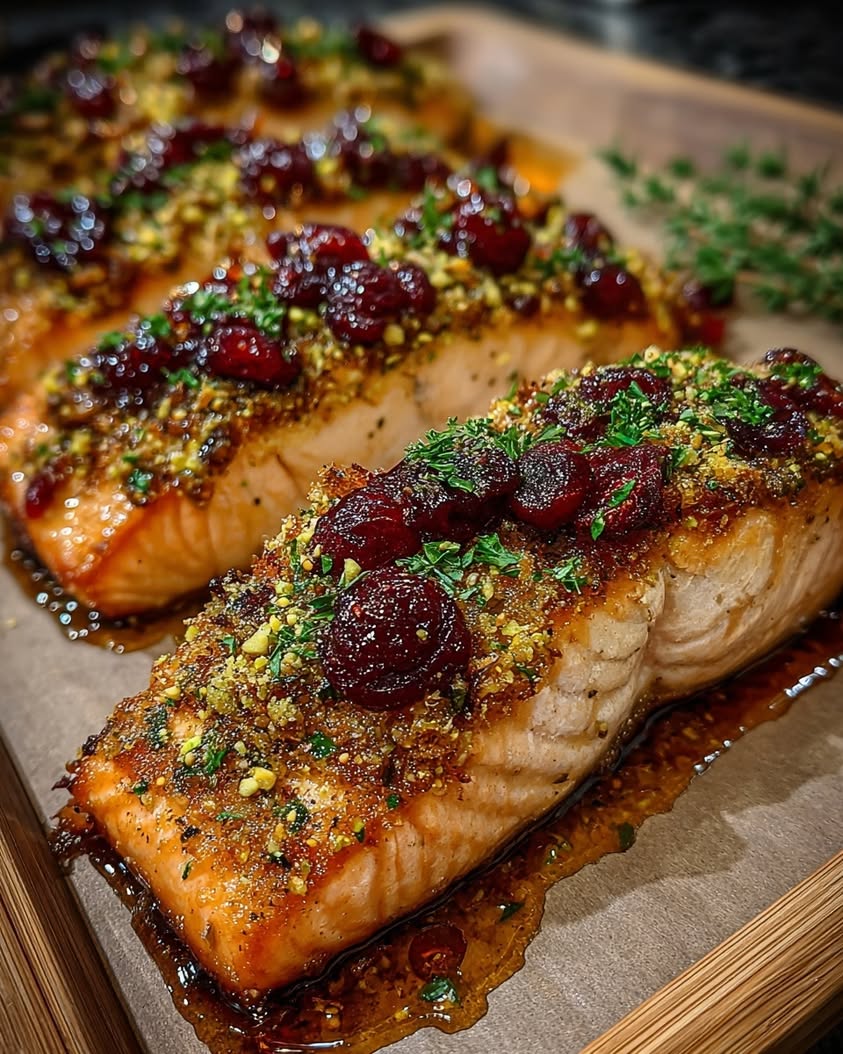
Holiday Salmon with Cranberry-Brie Crust & Pistachio Sprinkle: A Festive Main Course
Imagine a dish that captures the essence of the holiday season on a single plate. This Holiday Salmon with Cranberry-Brie Crust & Pistachio Sprinkle is exactly that. It is a stunning, restaurant-worthy main course designed to be the star of your festive table. Furthermore, it masterfully combines elegant presentation with surprisingly straightforward preparation. This recipe transforms a simple salmon fillet into a celebration of textures and flavors, making it perfect for a special Christmas dinner or an impressive New Year’s Eve feast.
The magic of this dish lies in its harmonious blend of savory, sweet, and nutty elements. A rich, creamy Brie cheese forms the base of the crust. Then, tart dried cranberries and aromatic fresh herbs are mixed in. Finally, a sprinkle of crunchy, salted pistachios adds the perfect finishing touch. As the salmon bakes, the crust melts into a golden, flavorful blanket that seals in the fish’s natural moisture. Consequently, every bite delivers flaky, tender salmon paired with a decadent, festive topping.
This Holiday Salmon with Cranberry-Brie Crust is not just about incredible taste. It is also a visually spectacular centerpiece. The vibrant red cranberries and green pistachios against the golden cheese create a beautiful color palette that screams celebration. Importantly, this recipe allows you to spend less time in the kitchen and more time with your guests. With a total time of just 40 minutes, you can achieve gourmet results without the stress. Ultimately, this dish proves that holiday cooking can be both luxurious and approachable.
Quick Recipe Highlights
- Flavor Profile: This dish offers a sophisticated balance. The rich, buttery Brie and savory salmon are beautifully cut by the tangy pop of dried cranberries. Meanwhile, the salted pistachios add a crucial savory crunch and depth that ties everything together.
- Texture: Expect a wonderful contrast in every mouthful. The salmon itself is incredibly moist and flaky. Conversely, the crust bakes into a slightly crisp, cheesy topping that gives way to the juicy cranberries and the satisfying crunch of the pistachio sprinkle.
- Aroma: As it bakes, your kitchen will fill with an irresistible fragrance. The nutty, melting cheese aroma blends with the earthy scent of fresh thyme and the sweet, festive note of cranberries. It is a scent that instantly feels like a holiday gathering.
- Visual Appeal: This dish is a feast for the eyes before the first bite. The golden-brown crust, studded with ruby-red cranberries and emerald-green pistachios, creates a stunning presentation. It looks elegant and complex, guaranteeing compliments from everyone at the table.
- Skill Level Needed: This recipe is accessible for most home cooks. While it appears gourmet, the techniques are simple: mixing, spreading, and baking. However, a confident hand with seasoning and a watchful eye on oven time are recommended for perfect results.
- Special Equipment: You need only basic kitchen tools. A baking sheet, parchment paper, a mixing bowl, and a sharp knife are essential. A small food processor can quickly chop the pistachios and cranberries, but a good chef’s knife works perfectly fine.
Recipe Overview
- Difficulty Level: We rate this Holiday Salmon recipe as medium. The steps are simple and sequential. However, achieving the perfect crust consistency and doneness on the salmon requires a bit of finesse. Properly softening the Brie and evenly distributing the crust are key skills that elevate the dish from good to exceptional.
- Category: This recipe firmly sits in the main course category. It is a protein-centric dish designed to be the centerpiece of a meal. Additionally, it can be classified as a festive or holiday recipe, a seafood entree, and an elegant dinner party dish suitable for special occasions.
- Cuisine: This is a modern fusion dish with roots in contemporary American cuisine. It draws inspiration from French techniques with the use of Brie and herbs. Meanwhile, it incorporates classic North American holiday ingredients like cranberries and pistachios, creating a uniquely celebratory profile.
- Cost: This is a moderately priced gourmet dish. A center-cut salmon fillet is the primary expense. High-quality Brie, dried cranberries, and pistachios are investment ingredients that yield high回报. Overall, the cost per serving is far less than a comparable restaurant meal, offering excellent value for a special dinner.
- Season: This Holiday Salmon with Cranberry-Brie Crust is quintessentially a winter recipe. It is perfect for the holiday season from late November through December. The ingredients evoke classic Christmas flavors and colors. However, its deliciousness makes it worthy of any formal dinner party year-round.
- Occasion: It is ideal for festive gatherings like Christmas dinner, Thanksgiving, New Year’s Eve, or a holiday potluck. Furthermore, it works beautifully for an intimate anniversary dinner or a sophisticated dinner party where you want to impress guests with minimal last-minute fuss.
Why You’ll Love This Recipe
First and foremost, the taste and texture combination is utterly divine. The fatty, rich salmon pairs flawlessly with the creamy, funky Brie. Then, the tart cranberries cut through the richness, preventing the dish from feeling too heavy. Finally, the salty, crunchy pistachios provide a necessary textural contrast that makes each bite exciting. This symphony of flavors feels both indulgent and balanced, satisfying sophisticated palates while remaining universally appealing. You will love how the ingredients complement each other so perfectly, creating a memorable dining experience.
From a convenience standpoint, this recipe is a game-changer for holiday hosting. The prep work is minimal and can be done in advance. You can prepare the crust mixture and chop the pistachios hours before your guests arrive. When it is time to cook, simply assemble and bake. The active hands-on time is short, freeing you to manage other dishes or socialize. Moreover, baking is a relatively hands-off cooking method, allowing the oven to do most of the work. This streamlined process reduces kitchen stress significantly during busy entertaining seasons.
Nutritionally, this Holiday Salmon offers substantial benefits alongside its decadent taste. Salmon is an excellent source of high-quality protein and omega-3 fatty acids, which are crucial for heart and brain health. Brie provides calcium and protein, while cranberries are packed with antioxidants and vitamin C. Pistachios contribute healthy fats, fiber, and protein. Therefore, this dish is a nutrient-dense choice that fuels your body beautifully. It proves that festive food can be both delicious and nourishing, allowing you to celebrate without compromising on well-being.
The social and entertaining value of this dish cannot be overstated. It serves as a spectacular conversation starter at any dinner party. Guests are always impressed by its beautiful presentation and complex flavor profile. Serving a show-stopping main course like this conveys care and effort, making your guests feel truly special. It elevates a simple meal into an event. Because it is so visually striking, it naturally becomes the focal point of the table, enhancing the entire dining atmosphere and creating a sense of occasion.
Finally, this recipe is cost-effective and accessible. While the ingredients sound gourmet, they are readily available in most supermarkets. Preparing a restaurant-quality salmon dish at home costs a fraction of what you would pay dining out. You control the quality of every component, from the freshness of the fish to the brand of cheese. This accessibility allows you to recreate a luxury dining experience in your own home. Ultimately, it empowers you to host an elegant gathering without an extravagant budget, making fine dining achievable for any special celebration.
Historical Background and Cultural Significance
The origin of topping salmon with crusts or stuffings is a culinary practice with global roots. In many Nordic countries, baking fish with simple butter and herb crusts is a centuries-old tradition. Meanwhile, French cuisine has long celebrated the pairing of rich fish with creamy cheeses and fruit compotes. This Holiday Salmon with Cranberry-Brie Crust is a modern fusion of these ideas. It specifically combines New World ingredients like cranberries, native to North America, with Old World techniques and cheeses. Consequently, it represents a beautiful blend of culinary heritages on a single plate.
Culturally, the ingredients themselves carry significant holiday weight. Cranberries have been a part of American Thanksgiving and Christmas celebrations since the colonial era. Pistachios, often dyed red in their shells, are a common sight in nut bowls during the winter holidays. Salmon, as a luxurious and special protein, is frequently chosen for celebratory meals across many cultures. By combining these elements, the recipe taps into a shared cultural language of festivity. It feels both familiar and novel, connecting us to tradition while offering a fresh, contemporary twist.
The evolution of this recipe follows the broader trend of “elevated home cooking.” Home cooks today have unprecedented access to gourmet ingredients and techniques through food media. Dishes that once seemed confined to white-tablecloth restaurants are now achievable in home kitchens. This Holiday Salmon recipe exemplifies that shift. It takes a classic, simple baked salmon and transforms it with a few thoughtful, high-impact additions. The evolution is towards maximizing flavor and presentation without requiring professional chef skills. This democratization of gourmet cooking allows everyone to create memorable holiday meals.
Regional variations of this concept are endless. In the Pacific Northwest, one might use local hazelnuts instead of pistachios and a dry Jack cheese. A Mediterranean version could feature olives, feta, and oregano. For a Nordic twist, substitute lingonberries for cranberries and a creamy Havarti for the Brie. The basic formula—flaky fish + creamy element + tart fruit + crunchy nut—is wonderfully adaptable. This flexibility is part of the recipe’s enduring appeal. Cooks can personalize it based on local ingredients, family traditions, or personal taste preferences, ensuring it never becomes boring or repetitive.
Ingredient Deep Dive
Salmon is the magnificent canvas for this dish. Culturally, salmon holds a sacred place in the traditions of Pacific Northwest Native American tribes and is a staple in Nordic diets. Nutritionally, it is a powerhouse, offering one of the best sources of EPA and DHA omega-3 fats, which fight inflammation and support brain health. When selecting, look for bright, firm flesh with a pleasant sea-breeze smell. For the best results, choose a center-cut fillet with even thickness. Store salmon in the coldest part of your refrigerator and cook it within a day of purchase for peak freshness. If salmon is not available, a thick arctic char fillet makes an excellent substitute.
Brie cheese brings luxurious creaminess and a distinct, earthy flavor. Originating from the Île-de-France region, Brie is known as the “Queen of Cheeses” and has been enjoyed since the Middle Ages. It provides calcium, protein, and vitamins A and B12. For this crust, you want a ripe but not runny Brie; it should yield slightly to pressure. Remove the rind for a smoother crust texture. Store Brie in its original wrapper in the cheese drawer of your refrigerator. If Brie is too strong, a milder Camembert works well. For a dairy-free version, a high-quality vegan cream cheese mixed with a pinch of nutritional yeast can mimic the richness.
Dried cranberries contribute the essential sweet-tart flavor and festive color. Native to North America, cranberries were used by Indigenous peoples for food, dye, and medicine. They are loaded with vitamin C, fiber, and unique antioxidants called proanthocyanidins. For this recipe, choose unsweetened or lightly sweetened dried cranberries to avoid an overly sugary crust. Plumping them in warm water or orange juice for 10 minutes before chopping can prevent them from burning. Store dried cranberries in a cool, dark pantry. If unavailable, chopped dried cherries or even chopped apricots offer a similar chewy, fruity contrast with a slightly different flavor profile.
Pistachios deliver the crucial crunch and a beautiful green accent. Historically, pistachios are one of the oldest flowering nut trees, beloved in Middle Eastern and Mediterranean cultures. They are rich in healthy fats, protein, fiber, and antioxidants like lutein. For the sprinkle, use roasted, salted pistachios for the best flavor; the salt balances the sweet cranberries and rich cheese. Chop them coarsely for optimal texture. Store shelled pistachios in an airtight container in the fridge to prevent rancidity. For a nut-free version, toasted pumpkin seeds (pepitas) or even crispy fried onions can provide a satisfying crunchy topping.
Common Mistakes to Avoid
- Using Overly Soft Brie: If your Brie is too runny, the crust will slide off the salmon during baking. Aim for cheese that is soft but still holds its shape when mixed. Chill it briefly if it has become too warm and gooey.
- Not Patting the Salmon Dry: Moisture on the surface of the fish creates steam, which prevents the crust from adhering properly and can make it soggy. Always use paper towels to thoroughly dry the salmon fillet before adding any topping.
- Chopping Ingredients Too Finely: The cranberries and pistachios should be chopped, not pulverized. You want distinct pieces for texture and visual appeal. A fine paste will lack the delightful contrast this recipe is known for.
- Overcrowding the Baking Sheet: Place the salmon on a parchment-lined sheet with plenty of space around it. Crowding leads to steaming instead of roasting, resulting in a pale, soft crust rather than a golden, crisp one.
- Underseasoning the Salmon: The crust is flavorful, but the salmon itself needs seasoning. Do not forget to sprinkle the fillet with salt and pepper before applying the Brie mixture. This ensures every layer of the dish is perfectly seasoned.
- Overbaking the Salmon: Salmon cooks quickly and continues to carryover cook after leaving the oven. Baking for the full 20 minutes on a thick fillet is usually perfect. Check for doneness by seeing if it flakes easily with a fork at the thickest part.
- Skipping the Pistachio Sprinkle: The pistachios are not just a garnish; they are a vital textural component. Adding them after baking preserves their crunch. If you mix them into the cheese, they will become soft and lose their defining characteristic.
- Using a Cold Baking Sheet: For the best sear and to prevent sticking, let your baking sheet preheat in the oven for 5-10 minutes before adding the parchment and salmon. A hot start helps the bottom of the fish cook evenly and develop a nice texture.
Essential Techniques
Properly Drying the Salmon is the first critical step. Surface moisture is the enemy of a good sear and a crust that sticks. Use several layers of paper towels and press firmly to absorb all liquid from the fish. This creates a dry surface that the cheese mixture can cling to. Furthermore, a dry surface promotes better Maillard browning on the bottom of the fillet. The common pitfall is rushing this step. Take your time to ensure the salmon is completely dry, paying special attention to any areas where moisture might collect. Success is visible when the paper towel comes away barely damp, not wet.
Creating the Right Crust Consistency is a technique that determines the final texture. The goal is a cohesive, spreadable paste that holds its shape. Start with room-temperature Brie for easy mixing. Combine it with the chopped cranberries and herbs until just incorporated; overmixing can make the cheese oily. The mixture should be thick enough to mound on a spoon but soft enough to spread easily with a spatula. If it is too stiff, it will not melt evenly. If it is too loose, it will run off the fish. The visual cue for success is a uniform, generous layer that completely covers the salmon’s surface without dripping over the sides.
Knowing When the Salmon is Done is crucial for perfect results. Overcooked salmon becomes dry and chalky. The FDA recommends an internal temperature of 145°F, but many chefs prefer 125-130°F for medium-rare, as carryover cooking will raise the temperature. The most reliable method is the flake test. Gently insert a fork at the thickest part and twist slightly; the flesh should separate into large, moist flakes. Additionally, the salmon will become opaque throughout. Another sign is white protein (albumin) appearing on the surface; a small amount is normal, but excessive amounts indicate overcooking. Remove the salmon from the oven just before it seems perfectly done, as it will continue to cook on the hot tray.
Pro Tips for Perfect Holiday Salmon
Bring all refrigerated ingredients to room temperature before starting. This ensures the Brie mixes smoothly and the salmon cooks more evenly from edge to center, preventing a raw middle and overcooked edges.
Score the skin side of the salmon lightly if it has skin. Making a few shallow slashes prevents the fillet from curling dramatically in the oven, leading to more even cooking and crust application.
Use an offset spatula for applying the crust. This tool gives you superior control to spread the Brie mixture into a smooth, even layer without disturbing the surface of the fish underneath.
Add a drizzle of flavor under the salmon. Before placing the fish on the parchment, sprinkle the spot with a little olive oil and a few fresh thyme sprigs. This infuses subtle flavor from the bottom up.
Let the baked salmon rest for 5 minutes before slicing. This allows the juices to redistribute throughout the fillet, ensuring every slice is moist and flavorful, not dry.
Toast the chopped pistachios lightly in a dry pan before sprinkling. This extra step deepens their nutty flavor and enhances their crunch, making the topping even more memorable.
For a glossy, professional finish, brush the baked crust very lightly with a warm honey or maple syrup glaze just before serving. This adds a subtle sheen and a hint of sweetness that complements the cranberries.
Variations and Adaptations
For regional variations, consider the ingredients local to your area. In the South, use pecans instead of pistachios and a pimento cheese base. A Coastal New England version could feature a crab and Ritz cracker stuffing with the Brie. These adaptations root the dish in your local culinary landscape while maintaining its festive spirit.
Seasonal adaptations are simple and effective. In spring, use fresh goat cheese, chopped asparagus tips, and lemon zest. For summer, try a basil pesto mixed into the Brie with sun-dried tomatoes and pine nuts. Autumn invites the use of wild mushrooms and Gruyère cheese. This flexibility keeps the recipe exciting throughout the year.
Dietary modifications are straightforward. For gluten-free needs, ensure all packaged ingredients are certified GF. A dairy-free version uses vegan cream cheese and nutritional yeast. For a nut-free topping, substitute toasted breadcrumbs or seeds. Each modification maintains the core concept of a flavorful, textured crust on tender salmon.
Flavor variations can tailor the dish to different palates. Add a teaspoon of Dijon mustard to the Brie for tang. Incorporate finely chopped shallots or a pinch of cayenne for heat. A splash of orange liqueur in the crust mixture adds a sophisticated citrus note. Experimenting with these small additions allows for endless personalization.
Texture modifications can change the eating experience. For a smoother crust, blend the Brie and cranberries into a nearly uniform spread. For more chunkiness, leave the cranberries and nuts in larger pieces. You can even create a “crumble” topping by mixing the Brie with panko breadcrumbs before adding the fruit and nuts.
Presentation alternatives offer creative serving options. Instead of one large fillet, portion individual salmon steaks or thick cuts and crown each with its own crust. For a family-style feast, bake a whole side of salmon. For appetizers, spread the crust on smaller salmon cubes and bake them on skewers for festive holiday bites.
Serving and Presentation Guide
Plating techniques elevate this dish from simple to stunning. For individual servings, slice the salmon at a slight angle into wide portions. Use a wide, fish spatula to transfer each piece carefully to the center of a warm plate, ensuring the crust stays intact. Wipe any stray crumbs or cheese from the plate rim for a clean look. Alternatively, present the whole fillet on a large wooden board or elegant platter for a dramatic family-style presentation, allowing guests to serve themselves.
Garnishing ideas should complement without overwhelming. A final sprinkle of fresh, whole pistachios and a few whole dried cranberries adds visual pop. Fresh herb sprigs like dill, thyme, or parsley provide a touch of green. For a festive touch during the holidays, a few delicate edible gold flakes or pomegranate arils scattered around the plate make it truly celebratory. A light dusting of flaky sea salt over the whole dish just before serving enhances all the flavors.
Traditional accompaniments balance the richness of the dish. Creamy, buttery mashed potatoes or crispy roasted potatoes are classic choices. For a lighter side, a simple arugula salad with a lemon vinaigrette cuts through the fat beautifully. Roasted winter vegetables like Brussels sprouts, carrots, or asparagus provide color and earthy flavors that pair well with the salmon’s festive crust.
Modern serving suggestions include deconstructed elements. Serve the salmon alongside a cranberry relish rather than baked into the crust. Offer the pistachios in a small dish for guests to sprinkle themselves. Pair with farro or quinoa pilaf instead of potatoes for a whole-grain option. These approaches keep the core flavors while offering interactive or contemporary twists on the meal.
Temperature considerations are key for the best experience. Serve the salmon hot from the oven after its brief rest. Warm your serving platter or dinner plates to prevent the dish from cooling too quickly. If serving family-style, cover the platter loosely with foil during the rest period to retain heat. Side dishes should also be hot or at room temperature to complement the main event.
Portion control tips help with meal planning. A standard serving is about 6 ounces of salmon per person. When buying a whole fillet, aim for 1.5 pounds to comfortably serve four adults. If your guests are big eaters or you want generous leftovers, scale up to 2 pounds. Remember, a rich crust like this is satisfying, so people may eat slightly less protein than they would of a plain grilled fillet.
Wine and Beverage Pairing
Wine pairings should complement the dish’s richness, acidity, and subtle sweetness. A classic Chardonnay with balanced oak and good acidity, such as one from Burgundy or California, cuts through the Brie’s creaminess. A Pinot Noir is an excellent red choice; its bright red fruit notes and low tannins harmonize with the salmon and cranberries without overpowering. For a festive sparkling option, a dry Brut Champagne or Cremant offers cleansing bubbles that refresh the palate between bites of the rich crust.
Non-alcoholic alternatives can be just as sophisticated. A tart cranberry spritzer made with unsweetened cranberry juice, soda water, and a twist of lime mirrors the dish’s flavors. Sparkling apple cider provides a touch of autumnal sweetness. For a warmer option, a ginger-lemon tisane or a lightly sweetened hibiscus tea offers complexity and palate-cleansing properties that stand up to the bold flavors of the Holiday Salmon.
Coffee and tea pairings work well if serving the dish for a holiday brunch or lunch. A medium-roast coffee with low acidity and notes of nut or berry will not clash with the food. For tea, consider a smoky Lapsang Souchong to match the richness, or a delicate White Peony tea that will not compete with the salmon’s delicate flavor. Always serve these beverages after the meal as a digestif rather than alongside.
Temperature considerations are vital for beverages. White and sparkling wines should be well-chilled, around 45-50°F. Red wines like Pinot Noir are best served slightly cool, at about 55°F. Non-alcoholic sparkling drinks should be ice-cold. Warm teas should be served piping hot. Matching the beverage temperature to the dining experience ensures both the food and drink are enjoyed at their peak.
Serving suggestions include offering a choice. When entertaining, set out both a white and a red wine option to cater to different preferences. For non-alcoholic pairings, present a beautiful carafe of infused water or a punch bowl with the cranberry spritzer. Clearly label any non-alcoholic options so all guests can partake confidently. Thoughtful beverage service completes the holistic dining experience.
Storage and Shelf Life
Storage methods for leftovers are important for food safety and quality. Allow the cooked salmon to cool completely to room temperature within two hours of baking. Then, transfer it to an airtight container. You can store larger pieces whole or flake the salmon and mix it gently with the crust. Do not leave it sitting on the counter for extended periods, as the dairy-based crust is perishable.
Temperature requirements are strict for seafood and dairy. Refrigerate leftovers promptly and keep them at or below 40°F. The refrigerator is the best short-term storage solution. For longer storage, freezing is an option, though it will alter the texture of the salmon and the creaminess of the crust. Never refreeze salmon that has been previously frozen and thawed.
Container recommendations include glass containers with tight-fitting lids or heavy-duty freezer bags with the air pressed out. Glass is preferable as it does not absorb odors and allows you to see the contents. If using a bag, lay the salmon flat to freeze for quicker thawing and more efficient storage. Label the container with the date so you can track how long it has been stored.
Signs of spoilage are easy to identify. Look for a sour or unpleasant fishy smell—fresh cooked salmon should still smell pleasant. The texture of the fish may become slimy or mushy. The Brie crust may develop visible mold or an off-color. If you see any of these signs, discard the leftovers immediately. When in doubt, it is always safer to throw it out.
Reheating instructions aim to preserve moisture. The best method is to reheat gently in a 275°F oven until just warmed through, about 10-15 minutes. Cover loosely with foil to prevent further browning or drying. You can also reheat single portions in the microwave at 50% power in 30-second intervals. Avoid high heat, which will make the salmon rubbery and the crust oily.
Freezing guidelines can extend shelf life to about 2-3 months. Wrap the cooled salmon tightly in plastic wrap, then in aluminum foil or place in a freezer bag. Thaw overnight in the refrigerator before reheating. Note that the texture of the salmon will be less firm after freezing and thawing, and the crust may separate slightly. It is still safe and flavorful, but best used in salads or chowders rather than as a centerpiece.
Make Ahead Strategies
Prep timeline for stress-free entertaining can span two days. Day 1: Purchase all ingredients. Day 2 (Morning of or day before): Chop the cranberries and pistachios, store separately in airtight containers. Remove the rind from the Brie and let it come to room temperature, then mix with the herbs. Store the Brie mixture in a covered bowl in the fridge. Pat the salmon dry, place it on the parchment-lined sheet, cover loosely, and refrigerate. This leaves only assembly and baking for just before your meal.
Storage between steps is crucial for food safety. Keep the prepared crust mixture and the prepared salmon fillet in separate containers in the refrigerator. Do not assemble the crust on the salmon until you are ready to bake. If the crust mixture is too cold and firm to spread after refrigeration, let it sit at room temperature for 15-20 minutes to soften slightly before using.
Quality impact assessment of make-ahead steps is generally positive. Chopping nuts and fruit ahead saves time without compromising texture. The Brie mixture may firm up in the fridge but softens again when baked. The salmon itself is best prepared close to cooking time, but drying it and placing it on the pan hours ahead is perfectly fine. The key is to avoid letting the assembled, unbaked dish sit for more than 30 minutes, as the salt can begin to draw moisture from the fish.
Assembly tips for last-minute efficiency are simple. Have your prepped ingredients lined up. Take the salmon on its tray and the crust mixture from the fridge. Season the salmon, then use your offset spatula to quickly and evenly spread the crust over the top. Sprinkle with the pre-chopped pistachios. Then, immediately place it in the preheated oven. This streamlined process takes less than 5 minutes.
Reheating guidelines for a fully made-ahead dish are not recommended. This dish is at its peak when baked fresh. While you can reheat leftovers, baking it entirely in advance and then reheating will result in overcooked salmon and a crust that may become greasy or overly browned. The make-ahead strategy focuses on ingredient prep, not full cooking, for the best possible outcome.
Fresh element additions after baking are a pro move. If you prepped the pistachios a day ahead, consider giving them a quick refresh in a dry pan before sprinkling for maximum crunch. Garnish with a final sprinkle of flaky salt and a drizzle of high-quality olive oil or a squeeze of lemon juice just before serving to brighten all the pre-prepped flavors.
Scaling Instructions
Halving the recipe is simple for smaller gatherings. Use a ¾-pound salmon fillet. Halve all other ingredients precisely. Baking time may reduce slightly; start checking for doneness at 15 minutes. Use a smaller baking sheet so the oven space is appropriately filled. The same techniques apply, just on a more intimate scale. This is perfect for a romantic dinner for two with elegant leftovers for lunch.
Doubling or tripling the recipe for a crowd requires some adjustments. Use multiple baking sheets and rotate them top to bottom halfway through cooking. Ensure your oven has good air circulation; do not overcrowd the racks. You may need to add a few extra minutes to the baking time. Mix the crust in batches to ensure even distribution of ingredients. Consider baking in two batches to ensure perfect results, keeping the first batch warm in a low oven.
Equipment adjustments are necessary when scaling. For a double batch, you will need a very large baking sheet or two standard ones. Ensure you have a large enough mixing bowl for the crust ingredients. A kitchen scale becomes invaluable for accurately dividing or multiplying ingredients, especially the cheese. For a tripled recipe, you might even consider using a sheet pan with a wire rack to allow heat to circulate around multiple fillets.
Timing modifications are minimal but important. A single fillet bakes in about 20 minutes. Two fillets on the same large sheet may need 22-25 minutes. Always rely on the visual and textural doneness cues—flaking and opacity—rather than strictly adhering to time. Use an instant-read thermometer for absolute precision when cooking large quantities; aim for 135°F in the center before removing from the oven, accounting for carryover cooking.
Storage considerations for scaled-up recipes involve leftovers. If you are intentionally making extra for meals throughout the week, let portions cool completely before packing them individually. This makes for easy grab-and-go lunches. For a party, it is better to have a little extra than to run out. Leftover Holiday Salmon makes fantastic salads, pasta additions, or a luxurious filling for omelets the next day.
Nutritional Deep Dive
Macro breakdown of this dish is favorable. A 6-ounce serving provides approximately 35-40 grams of high-quality protein from the salmon and cheese. Healthy fats from the salmon (omega-3s), Brie, and pistachios contribute around 25-30 grams, primarily unsaturated. Carbohydrates are relatively low, coming mainly from the cranberries and a small amount from the nuts, totaling roughly 10-15 grams per serving. This balance makes it a satisfying meal that provides sustained energy without a heavy carb load.
Micronutrient analysis reveals a wealth of vitamins and minerals. Salmon is an exceptional source of Vitamin B12, selenium, and potassium. Brie contributes calcium and phosphorus for bone health. Cranberries provide Vitamin C and manganese. Pistachios offer significant amounts of Vitamin B6, copper, and thiamine. Together, this dish delivers a broad spectrum of essential nutrients that support metabolic function, immune health, and cellular repair.
Health benefits are extensive due to the synergistic ingredients. The omega-3 fatty acids in salmon are proven to reduce inflammation, lower triglyceride levels, and support cognitive function. The antioxidants in cranberries and pistachios combat oxidative stress. The protein promotes satiety and muscle maintenance. The monounsaturated fats in pistachios support heart health. Consuming this meal is a delicious way to invest in long-term wellness.
Dietary considerations are mostly positive. The dish is naturally gluten-free if you verify your ingredients. It is high in protein and healthy fats, aligning with low-carb and keto diets if you monitor the cranberry quantity. It is not suitable for dairy-free, vegan, or paleo diets in its standard form, but adaptations are possible. Those with nut allergies must omit the pistachios or use a seed-based substitute.
Portion analysis shows this is a nutrient-dense entree. A standard serving is very satisfying due to its high protein and fat content, which help regulate appetite. It is calorie-dense, so mindful portioning is key for weight management goals. Pairing it with a large side of non-starchy vegetables like a green salad or roasted broccoli creates a balanced, voluminous plate that is both filling and nutritious.
Weight management tips include being mindful of the crust portion. You can slightly reduce the amount of Brie mixture per serving to lower the calorie count while still enjoying the flavor. Ensure your side dishes are vegetable-forward. The high protein content is a major ally in weight management, as it increases thermogenesis and promotes feelings of fullness, helping to prevent overeating later.
Dietary Adaptations
For a gluten-free version, this recipe is naturally compliant. Simply double-check that your dried cranberries and any pre-shredded cheese you might use are certified gluten-free, as some processing facilities use wheat-based anti-caking agents. All other core ingredients—salmon, Brie, pistachios, herbs—are inherently gluten-free. This makes it an excellent safe choice for holiday gatherings where gluten intolerance is a concern.
A dairy-free adaptation replaces the Brie. Use a high-quality, firm vegan cream cheese as the base. Add a tablespoon of nutritional yeast to mimic the{“success”:true,”message”:”Recipe created successfully”,”post_id”:7965,”tasty_recipe_id”:7965,”shortcode”:” Print
Holiday Salmon with Cranberry-Brie Crust & Pistachio Sprinkle
Description
A festive, elegant salmon dish topped with a sweet-tangy cranberry and creamy brie crust, finished with a crunchy pistachio sprinkle for a holiday-worthy meal.
Ingredients
For the Crust:
- 1.5 lbs salmon fillet, skin-on
- 1/2 cup fresh cranberries, finely chopped
- 4 oz brie cheese, rind removed and cubed
- 1/4 cup breadcrumbs
- 2 tbsp honey
- 1 tbsp fresh thyme leaves
- 1/4 cup shelled pistachios, roughly chopped
- 2 tbsp olive oil
- Salt and black pepper to taste
- 1 lemon, sliced for garnish
Instructions
1. Prepare the Crust:
- Preheat oven to 400°F (200°C). Line a baking sheet with parchment paper and place salmon skin-side down. Drizzle with olive oil and season with salt and pepper.
- In a bowl, mix cranberries, brie, breadcrumbs, honey, and thyme until combined. Spread mixture evenly over the top of the salmon fillet.
- Sprinkle chopped pistachios over the crust. Bake for 20-25 minutes, or until salmon flakes easily and crust is golden.
- Remove from oven and let rest for 5 minutes. Garnish with lemon slices before serving.
Notes
You can customize the seasonings to taste.

I’m Billy, a classically trained culinary school graduate from The Culinary Institute of America with over 12 years in the restaurant industry and over 19 years of cooking experience.