
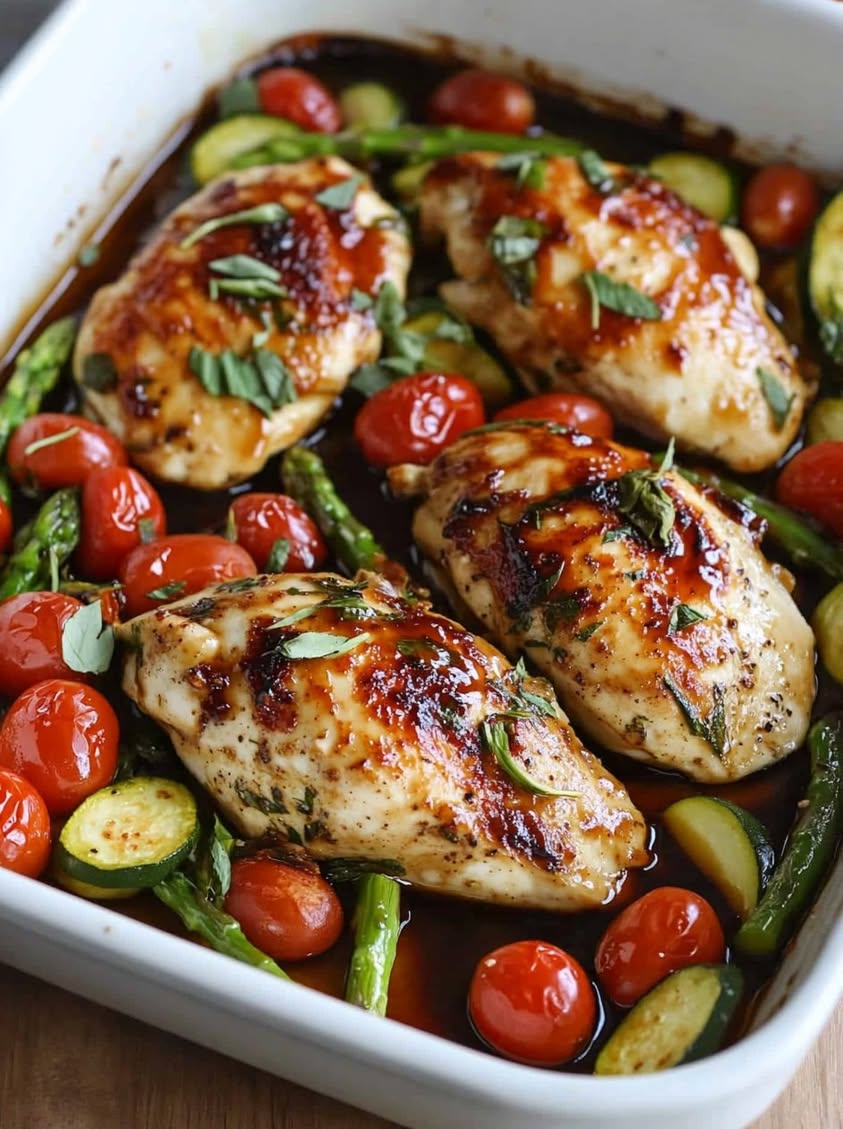
Honey-Balsamic Glazed Chicken with Roasted Vegetables Recipe: A Sweet and Savory One-Pan Wonder
Imagine a weeknight dinner that feels like a special occasion, yet comes together with minimal effort and cleanup. This Honey-Balsamic Glazed Chicken with Roasted Vegetables Recipe delivers exactly that. It transforms simple ingredients into a stunning, caramelized masterpiece. The dish features juicy chicken thighs bathed in a glossy, sticky glaze that perfectly balances sweet honey with tangy balsamic vinegar. Meanwhile, a colorful medley of garden vegetables roasts alongside, soaking up the flavorful pan juices. Ultimately, this recipe is a testament to how a few quality components can create a meal far greater than the sum of its parts.
The magic of this Honey-Balsamic Glazed Chicken with Roasted Vegetables Recipe lies in its harmonious flavors and simple technique. You will love the way the high heat of the oven concentrates the natural sugars in the vegetables, creating delicious caramelized edges. Simultaneously, the chicken skin crisps beautifully while the meat stays incredibly moist and tender. The glaze, a simple mixture you whisk together in minutes, reduces into a rich, syrupy coating that clings to every bite. This one-pan meal is not only a feast for the taste buds but also a visual delight, making it perfect for both busy families and casual entertaining.
Quick Recipe Highlights
- Flavor Profile: This dish masterfully balances sweet and savory notes. The honey provides a mellow sweetness that beautifully counters the sharp, acidic tang of the balsamic vinegar. Additionally, garlic and herbs add a savory depth, creating a complex and irresistible sauce.
- Texture: You will experience a wonderful contrast in textures. The chicken skin becomes delightfully crisp, while the meat underneath remains succulent and juicy. The roasted vegetables offer a tender interior with slightly charred, caramelized edges for a satisfying bite.
- Aroma: As it cooks, your kitchen will fill with an incredible aroma. The scent of roasting garlic and herbs mingles with the sweet, tangy notes of the reducing glaze. This fragrance is a sure sign that a delicious meal is moments away.
- Visual Appeal: The final plate is a vibrant mosaic of colors. The glossy, dark amber glaze on the chicken contrasts with the bright hues of the roasted carrots, zucchini, and bell peppers. It is a dish that looks as impressive as it tastes.
- Skill Level Needed: This is a fantastic recipe for cooks of all levels. It requires basic knife skills for chopping vegetables and simple mixing for the glaze. The oven does most of the work, making it very approachable for beginners.
- Special Equipment: You only need a reliable sheet pan or large roasting dish. A good chef’s knife and cutting board for prepping the vegetables are essential. A small bowl for mixing the glaze and a whisk or fork are also helpful.
Recipe Overview
- Difficulty Level: This Honey-Balsamic Glazed Chicken with Roasted Vegetables Recipe is rated easy for good reason. The steps are straightforward and logical. You simply prepare the glaze, season the chicken and vegetables, and roast everything together. There is no complicated technique or finicky timing involved, making it a very forgiving dish for home cooks.
- Category: This recipe falls squarely into the category of hearty main courses and one-pan dinners. It is a complete, balanced meal featuring protein and vegetables all cooked on a single sheet pan. Consequently, it is ideal for weeknight dinners, meal prep, or casual weekend lunches.
- Cuisine: While not tied to one specific tradition, the dish draws inspiration from modern American and Mediterranean cooking styles. The use of balsamic vinegar nods to Italian cuisine, and the technique of roasting vegetables with olive oil and herbs is a Mediterranean staple. The result is a fusion that feels both familiar and exciting.
- Cost: This is a very cost-effective meal to prepare. Chicken thighs are an affordable cut of protein, and the vegetables are common, inexpensive staples. The glaze ingredients—honey, balsamic vinegar, garlic, and herbs—are pantry items for many, keeping the overall cost per serving quite low.
- Season: This Honey-Balsamic Glazed Chicken with Roasted Vegetables Recipe is truly a year-round favorite. However, it shines brightest in the late summer and fall when garden vegetables like zucchini and bell peppers are at their peak freshness and flavor. The warm, hearty nature of the dish also makes it comforting during cooler months.
- Occasion: Its versatility makes it suitable for numerous occasions. It is quick enough for a simple Tuesday night family dinner yet elegant enough to serve to guests. You can easily double the recipe for a crowd, and the beautiful presentation always impresses.
Why You’ll Love This Recipe
First and foremost, the taste and texture of this dish are utterly irresistible. Each bite offers a symphony of flavors: the initial sweetness of the honey, the sharp tang of the balsamic reduction, the savory depth of garlic, and the earthy notes of roasted herbs. Texturally, you get the satisfying crispness of the chicken skin against the tender, flaky meat. The vegetables provide a soft, caramelized counterpoint that soaks up the delicious pan juices. This combination creates a dining experience that feels indulgent and deeply satisfying, hitting all the right notes for a perfect meal.
From a convenience standpoint, this Honey-Balsamic Glazed Chicken with Roasted Vegetables Recipe is a true weeknight hero. The preparation is remarkably simple, involving mostly chopping and mixing. Best of all, everything cooks together on one sheet pan, which means minimal active cooking time for you and dramatically easier cleanup afterward. You can prep the vegetables and make the glaze ahead of time to make the process even faster. This efficiency makes it possible to get a wholesome, home-cooked dinner on the table even on your busiest days, without resorting to less healthy takeout options.
Nutritionally, this meal is a well-rounded powerhouse. Chicken thighs provide high-quality protein and essential nutrients like iron and zinc. The colorful array of vegetables delivers a wide spectrum of vitamins, minerals, and dietary fiber. Using olive oil adds heart-healthy monounsaturated fats. Because you control the ingredients, you can limit added sodium and avoid the processed sugars and unhealthy fats often found in restaurant glazes. This balance makes the dish both nourishing and deeply satisfying, supporting your health goals without sacrificing flavor.
For social and entertaining value, this recipe is a fantastic choice. It presents beautifully on a platter, making it ideal for serving family-style at a dinner party. The familiar yet elevated flavors appeal to a wide range of palates. Since it’s largely hands-off once it’s in the oven, you can spend more time with your guests instead of being stuck at the stove. You can easily scale the recipe up to feed a larger group, and it pairs wonderfully with simple sides like crusty bread, rice, or a green salad.
Finally, the cost-effectiveness and accessibility of this Honey-Balsamic Glazed Chicken with Roasted Vegetables Recipe cannot be overstated. It utilizes affordable, easy-to-find ingredients available at any standard grocery store. There is no need for expensive or exotic components. The recipe is also highly adaptable; you can swap in different vegetables based on what’s on sale or in season. This flexibility ensures you can create a delicious, impressive meal without straining your grocery budget, proving that eating well does not have to be expensive.
Historical Background and Cultural Significance
The concept of glazing meat with a sweet and sour sauce has ancient roots across many cultures. In Europe, the practice of using vinegar and honey to preserve and flavor meats dates back centuries. Balsamic vinegar itself, from the Modena and Reggio Emilia regions of Italy, has a history spanning nearly a thousand years, originally prized as a medicinal tonic and luxury item. The technique of roasting vegetables alongside meat is a fundamental, global cooking method born from hearth and oven cooking. This recipe is a modern fusion that brings these timeless ideas together in a convenient, home-kitchen-friendly format.
Culturally, the dish reflects a contemporary shift towards simpler, ingredient-driven cooking. It embodies the “one-pan meal” trend that has gained massive popularity for its practicality and minimized cleanup. The emphasis on fresh garden vegetables connects it to the farm-to-table movement and a desire for wholesome, recognizable ingredients. While not tied to a specific holiday or tradition, its comforting, communal nature makes it a frequent feature at casual gatherings and family dinners, representing a modern ideal of relaxed, flavorful home cooking.
The evolution of this specific Honey-Balsamic Glazed Chicken with Roasted Vegetables Recipe is a story of culinary adaptation. Classic French cooking might use a reduction of vinegar and sugar (a gastrique) for glazing. American home cooks adapted this idea, substituting more accessible honey for sugar and incorporating robust garlic and dried herbs. The move to roasting everything on a single sheet pan is a relatively recent innovation, driven by the demand for faster, simpler weeknight solutions without compromising taste. This evolution shows how classic techniques are constantly being refined to fit modern lifestyles.
Regional variations of this concept are endless. In the American South, you might find a similar glaze made with sorghum or molasses. A Mediterranean version could include olives, lemon, and oregano. Asian-inspired adaptations often incorporate soy sauce or ginger into the glaze. The vegetable component is especially flexible, changing with geography and season—root vegetables in colder climates, summer squash and tomatoes in warmer ones. This adaptability is a key part of the recipe’s widespread appeal, allowing cooks to imprint their own local flavors and preferences onto the basic framework.
Ingredient Deep Dive
Chicken Thighs (Bone-in, Skin-on): This cut is the hero of the dish for good reason. Culturally, dark meat chicken is prized in many cuisines for its richer flavor and higher fat content. Nutritionally, thighs provide more iron and zinc than breast meat. The bone helps conduct heat evenly, keeping the meat incredibly juicy, while the skin renders and crisps, adding essential texture and flavor. Select thighs that are similar in size for even cooking. For storage, keep them refrigerated and use within 1-2 days of purchase, or freeze for longer storage. For a substitution, chicken legs (drumsticks) work well, though boneless, skinless thighs will cook faster and lack the crispy skin.
Balsamic Vinegar: True traditional balsamic vinegar (Aceto Balsamico Tradizionale) is a protected, aged product from Italy, often used sparingly as a finishing condiment. The more common “balsamic vinegar of Modena” used in cooking is a younger, more affordable product. It adds a complex sweetness and acidity. When reduced, it thickens naturally and intensifies in flavor. Nutritionally, it contains antioxidants. Always choose a vinegar that lists grape must as the first ingredient. Store it in a cool, dark place. For a substitution, a mix of red wine vinegar and a small amount of brown sugar or maple syrup can mimic the sweet-tangy profile in a pinch.
Honey: Honey is one of humanity’s oldest sweeteners, featured in Egyptian hieroglyphs and ancient Greek texts. Its floral notes vary dramatically based on the nectar source. In this glaze, honey provides a mellow, floral sweetness that balances the vinegar’s sharpness and promotes beautiful caramelization. It contains trace enzymes and antioxidants. For best results, use a mild, liquid honey like clover or wildflower. Store honey at room temperature to prevent crystallization. For a vegan substitution, maple syrup or agave nectar will work, though they will impart their own distinct flavors.
Mixed Garden Vegetables (Zucchini, Bell Peppers, Red Onion, Carrots): This colorful mix represents the bounty of a summer garden. Each vegetable brings its own history and nutritional profile. Zucchini, a summer squash, is hydrating and a source of vitamin C. Bell peppers, native to the Americas, are packed with vitamins A and C. Onions have been cultivated for over 5,000 years and add savory depth. Carrots provide beta-carotene. Select firm, brightly colored vegetables without soft spots. Store most in the refrigerator’s crisper drawer. The beauty of this Honey-Balsamic Glazed Chicken with Roasted Vegetables Recipe is its flexibility; you can substitute with broccoli, asparagus, sweet potatoes, or parsnips based on season and preference.
Common Mistakes to Avoid
- Crowding the Pan: This is the most common error. If the chicken and vegetables are packed too tightly, they will steam instead of roast. Steam prevents the caramelization and crisping that are essential to the dish’s texture and flavor. Always use a large enough sheet pan and arrange everything in a single layer with a little space between pieces.
- Using a Weak Balsamic Vinegar: A very cheap, overly acidic balsamic vinegar will not reduce to a nice syrup and can leave a harsh, unpleasant taste. Invest in a decent-quality balsamic vinegar of Modena for cooking. The ingredient list should start with “grape must,” not wine vinegar.
- Neglecting to Pat the Chicken Dry: Moisture on the surface of the chicken skin is the enemy of crispiness. Before seasoning, always pat the chicken thighs thoroughly dry with paper towels. This simple step ensures the skin will render and crisp up beautifully in the oven.
- Not Preheating the Oven: A properly hot oven is non-negotiable for successful roasting. Starting in a cold oven will cause the chicken to release its juices too early, resulting in steamed, soggy skin and less flavorful meat. Always allow your oven to fully preheat before adding the pan.
- Adding the Glaze Too Early: If you brush the honey-balsamic glaze onto the chicken at the beginning of cooking, the sugars will burn in the high heat. Instead, apply the glaze during the last 10-15 minutes of cooking. This allows it to caramelize and set without turning bitter or blackened.
- Underseasoning: Seasoning is not just about salt. Be generous with salt and pepper on both the chicken and the vegetables before they go into the oven. The vegetables, in particular, need adequate seasoning to elevate their natural flavors. Do not rely solely on the glaze for all the seasoning.
- Using a Dark-Colored or Non-Stick Pan for Roasting: Dark pans can cause the bottom of the vegetables to burn before they are fully tender. A light-colored, rimmed baking sheet (often called a half-sheet pan) is ideal for promoting even browning. Parchment paper can help, but may inhibit some browning on the vegetables.
- Not Letting the Chicken Rest: Slicing into the chicken immediately after it comes out of the oven will cause all the precious juices to run out onto the cutting board, leaving the meat dry. Let the chicken rest for 5-10 minutes after roasting. This allows the juices to redistribute throughout the meat.
Essential Techniques
Patting Chicken Dry: This is a critical first step for achieving crispy skin. Surface moisture creates steam, which prevents the skin from browning and crisping properly. Use clean paper towels and firmly pat the skin and all sides of the chicken thighs until they feel completely dry to the touch. This ensures direct contact between the fat in the skin and the hot pan or oven air, leading to perfect rendering and crunch.
Creating an Even Vegetable Chop: Uniformly sized vegetable pieces are essential for even cooking. If some pieces are much larger than others, the smaller ones will burn before the larger ones are tender. Aim for 1 to 1.5-inch chunks or slices. Take your time at the cutting board to ensure all your zucchini, peppers, onions, and carrots are roughly the same size. This attention to detail guarantees that every vegetable on the plate is perfectly cooked.
Whisking the Glaze: A properly emulsified glaze ensures every component is evenly distributed. In a small bowl, vigorously whisk the honey and balsamic vinegar together until they are fully combined and slightly thickened. Then whisk in the olive oil, garlic, and herbs until you have a homogeneous mixture. This prevents the oil from separating and ensures each bite of chicken gets a balanced taste of sweet, tangy, and savory elements.
High-Heat Roasting: Roasting at a high temperature (around 425°F) is what drives the Maillard reaction and caramelization. This chemical process creates complex, savory flavors and appealing brown color on both the chicken skin and vegetable surfaces. The high heat also quickly renders fat from the chicken skin and evaporates surface moisture, leading to that desirable crisp texture. Do not be tempted to lower the oven temperature to prevent burning; instead, ensure your pan is not overcrowded.
Glazing at the Right Time: Applying the honey-balsamic glaze is a timing-sensitive technique. Brush it on during the last 10-15 minutes of cooking. The oven is still hot enough to thicken and caramelize the sugars in the glaze, creating a sticky, shiny coating. However, the shortened exposure time prevents the sugars from burning and becoming bitter. Brush on a second, lighter coat in the final 5 minutes for an extra glossy finish.
Pro Tips for Perfect Honey-Balsamic Glazed Chicken with Roasted Vegetables
Use a Meat Thermometer: For perfectly cooked, juicy chicken every single time, use an instant-read thermometer. Insert it into the thickest part of a thigh, avoiding the bone. The chicken is done when it reaches an internal temperature of 165°F. This removes all guesswork and prevents overcooking.
Elevate the Chicken: Place the chicken thighs directly on the sheet pan, but arrange the vegetable chunks around them, not underneath. This allows hot air to circulate around the chicken skin, helping it crisp evenly. It also prevents the vegetables from stewing in the chicken drippings, though they will still absorb wonderful flavor.
Finish with Freshness: After roasting, a bright, fresh element can elevate the entire dish. Just before serving, sprinkle with a handful of chopped fresh parsley, basil, or thyme. A light drizzle of high-quality extra virgin olive oil or even a squeeze of fresh lemon juice can add a wonderful final layer of flavor.
Deglaze the Pan for Sauce: After removing the chicken and vegetables, place the hot sheet pan on the stovetop over low heat. Add a splash of chicken broth or water and use a wooden spoon to scrape up all the delicious browned bits (fond) stuck to the pan. This creates an incredible, impromptu pan sauce to drizzle over everything.
Let Vegetables Caramelize: Do not stir the vegetables too often while roasting. Let them sit undisturbed for at least 15-20 minutes to develop those desirable caramelized, slightly charred spots on one side before giving them a turn. This builds deep flavor.
Season in Stages: Season the chicken and vegetables with salt and pepper before roasting. Then, after applying the glaze, you may want a tiny extra pinch of flaky sea salt on the chicken skin to contrast the sweetness. Seasoning in layers creates a more complex flavor profile.
Variations and Adaptations
Regional Variations: Give this recipe a global twist with simple ingredient swaps. For a Mediterranean vibe, add kalamata olives and cherry tomatoes to the vegetables, and use oregano and lemon zest in the glaze. An Asian-inspired version could include soy sauce or tamari and grated ginger in the glaze, with broccoli and snap peas as the vegetables. A Southern adaptation might use a touch of smoked paprika in the rub and substitute sweet potatoes for the carrots.
Seasonal Adaptations: This recipe is a canvas for the seasons. In spring, use asparagus, new potatoes, and baby carrots. For summer, incorporate cherry tomatoes, eggplant, and yellow squash. Fall calls for hearty vegetables like Brussels sprouts, butternut squash, and parsnips. In winter, root vegetables like turnips, beets, and rutabaga hold up beautifully to the long roasting time.
Dietary Modifications: The recipe is naturally gluten-free. For a Whole30 or paleo version, substitute the honey with pure maple syrup (though not strictly Whole30) or omit the sweetener and rely on the natural sweetness of roasted vegetables and a high-quality aged balsamic. To make it dairy-free, ensure no butter is used (this recipe uses olive oil). For a lower-carb option, increase the non-starchy vegetables like zucchini and bell peppers and reduce or omit the carrots.
Flavor Variations: Experiment with the glaze base. Substitute the honey with pure maple syrup for a deeper, autumnal sweetness. Add a tablespoon of whole-grain mustard for a tangy kick. Incorporate a teaspoon of smoked paprika or chipotle powder for a smoky, spicy dimension. A splash of orange juice or a bit of orange zest can add a wonderful citrus note that brightens the entire dish.
Texture Modifications: If you prefer ultra-crispy skin, start the chicken skin-side down in a preheated oven-safe skillet on the stovetop to render the fat, then transfer the whole skillet to the oven. For softer vegetables that almost melt in your mouth, cover the sheet pan with foil for the first half of the cooking time, then uncover to finish roasting and browning.
Presentation Alternatives: Instead of serving everything mixed on a platter, present the glazed chicken thighs whole on a serving dish with the roasted vegetables piled artfully around them. Alternatively, slice the chicken off the bone and fan it over a bed of the vegetables for a more refined plate. For individual servings, compose each plate with a portion of vegetables and a chicken thigh, drizzling extra glaze around the plate.
Serving and Presentation Guide
Plating Techniques: For a family-style presentation, use a large, rustic platter. Pile the roasted vegetables in the center as a vibrant base. Arrange the glazed chicken thighs on top, leaning them against the vegetable mound. Drizzle any remaining pan juices or reduced glaze over everything. This approach looks abundant and inviting, encouraging guests to help themselves.
Garnishing Ideas: A simple garnish adds color and a final flavor accent. Fresh, soft herbs like chopped Italian parsley, basil, or chives are perfect. A sprinkle of flaky sea salt (like Maldon) on the chicken skin highlights the glaze’s sweetness. For a touch of richness, add a few crumbles of goat cheese or feta over the warm vegetables just before serving. A light zest of lemon over the entire plate adds brightness.
Traditional Accompaniments: This hearty dish stands well on its own, but a simple starch can round out the meal. Crusty bread is ideal for soaking up the delicious juices. Alternatively, serve it over a bed of creamy polenta, mashed potatoes, or couscous. A simple arugula salad with a lemon vinaigrette provides a fresh, peppery contrast that cleanses the palate between bites.
Modern Serving Suggestions: For a lighter meal, serve the sliced chicken and vegetables over a bowl of quinoa or farro. You can also chop everything up and turn it into a hearty grain bowl, adding a dollop of tzatziki or hummus. Leftovers make an incredible filling for wraps or sandwiches the next day, especially when paired with a little arugula and a smear of mayonnaise.
Temperature Considerations: This dish is best served hot, immediately after resting. However, the flavors remain excellent at room temperature, making it a good option for picnics or potlucks. If you need to hold it, tent the platter loosely with foil and keep it in a warm oven (around 200°F) for up to 20 minutes. Avoid sealing it tightly, as that will cause the crispy chicken skin to soften.
Portion Control Tips: A standard serving is one chicken thigh per person with a generous cup of roasted vegetables. For larger appetites or to ensure leftovers, plan for one and a half thighs per person. If you are adding a substantial side like potatoes or rice, you can comfortably serve one thigh per person. The vegetables are low in calories, so encourage larger portions of them to create a filling, balanced plate.
Wine and Beverage Pairing
Wine Pairings: The sweet and tangy glaze pairs beautifully with wines that have good acidity and a touch of fruitiness. A dry Riesling or a Pinot Gris handles the sweetness perfectly. For red wine lovers, a lighter-bodied red like a Pinot Noir or a Grenache won’t overpower the dish and complements the savory notes. If you prefer rosé, a dry Provençal style with its herbal notes is an excellent match, especially for a summer meal.
Non-Alcoholic Alternatives: Sparkling water with a twist of lemon or lime cleanses the palate between bites. For something more special, try a ginger beer—its spicy sweetness mirrors the glaze’s complexity. Iced herbal tea, like peach or mint, is also refreshing. A simple homemade lemonade, not too sweet, provides a bright, acidic counterpoint that cuts through the richness of the chicken.
Coffee/Tea Pairings: While not a typical pairing for the meal itself, a cup of herbal tea after dinner can be lovely. A chamomile or mint tea aids digestion. If serving this for a weekend brunch, a medium-roast coffee with low acidity would complement the caramelized flavors without clashing. Avoid very dark, bitter coffees that might conflict with the dish’s sweet notes.
Temperature Considerations: White and rosé wines should be served well-chilled, around 45-50°F. Light reds like Pinot Noir are best served slightly cooler than room temperature, about 55°F. For non-alcoholic options, iced beverages should be cold but not diluted; use large ice cubes. The contrast between the hot, savory food and a cool, crisp drink is part of the pleasure.
Serving Suggestions: Always offer water on the table alongside any other beverage. If serving wine, pour a small taste first to allow guests to experience how it pairs with the food. For a casual gathering, consider setting up a beverage station with a few options—a pitcher of infused water, a bottle of wine, and some sparkling lemonade—so guests can choose what suits them best.
Storage and Shelf Life
Storage Methods: Allow the Honey-Balsamic Glazed Chicken with Roasted Vegetables to cool completely before storing. Separate the chicken from the vegetables if possible, as the vegetables can become soggy from the chicken’s moisture. Place them in separate airtight containers. This helps maintain the best texture upon reheating.
Temperature Requirements: Refrigerate leftovers promptly, within two hours of cooking. The safe storage temperature for a refrigerator is 40°F or below. Do not leave the dish at room temperature for extended periods, as this allows bacteria to grow rapidly.
Container Recommendations: Use shallow, airtight containers. Shallow containers allow the food to cool quickly and evenly, which is safer. Glass containers are ideal as they do not absorb odors and are easy to clean. If using plastic, ensure it is BPA-free and designated for food storage.
Signs of Spoilage: Before consuming leftovers, check for any off odors—a sour or unpleasant smell is a clear indicator. Look for signs of mold, which can appear as fuzzy spots. If the texture of the chicken or vegetables has become slimy or unpleasantly mushy, it is best to discard it. When in doubt, throw it out.
Reheating Instructions: To preserve crispness, reheat the chicken in an air fryer or a conventional oven at 375°F until warmed through (about 5-10 minutes). For the vegetables, a skillet over medium heat works well to re-crisp them slightly. The microwave is convenient but will make the chicken skin rubbery and the vegetables soft. If using a microwave, cover with a damp paper towel and heat in short intervals.
Freezing Guidelines: This dish can be frozen, though the texture of the vegetables will soften upon thawing. Store in a freezer-safe, airtight container or heavy-duty freezer bag for up to 2-3 months. Thaw overnight in the refrigerator before reheating. Note that the glaze may separate slightly upon thawing, but it will still taste good.
Make Ahead Strategies
Prep Timeline: You can prep most components 1-2 days in advance. Chop all the vegetables and store them in a sealed bag or container in the refrigerator. Mix the honey-balsamic glaze and keep it in a jar or bowl, covered, in the fridge. Pat the chicken dry, season it with salt and pepper, and store it on a plate covered in the fridge. This advance work cuts your active prep time on cooking day to just minutes.
Storage Between Steps: Keep prepped vegetables and the glaze in separate containers. Store the seasoned chicken on a plate, loosely covered with plastic wrap or in a container, on a lower shelf in the refrigerator to prevent cross-contamination. Bringing the chicken to room temperature for 15-20 minutes before roasting promotes more even cooking.
Quality Impact Assessment: Prepping vegetables ahead has minimal impact on quality, though they may lose a tiny bit of moisture. The glaze actually benefits from sitting, as the flavors meld. The chicken skin may dry out slightly in the fridge, which can actually help it get crispier. Overall, make-ahead prep has a very positive impact by reducing stress and saving time.
Assembly Tips: On cooking day, simply toss the pre-chopped vegetables with oil, salt, and pepper on the sheet pan. Arrange the pre-seasoned chicken thighs among them. Give the glaze a good stir, then brush it on during the last part of cooking as directed. The assembly is incredibly quick and straightforward.
Reheating Guidelines: If you fully cook the dish ahead, follow the reheating instructions in the storage section. For the best texture, consider reheating components separately—chicken in the oven/air fryer and vegetables in a skillet.
Fresh Element Additions: If you make the entire dish ahead, add a fresh component upon serving to revive it. A sprinkle of freshly chopped herbs, a drizzle of new olive oil, or a squeeze of lemon juice just before eating will make the dish taste freshly made and bright.
Scaling Instructions
Halving the Recipe: To serve two, simply divide all ingredient quantities by two. Use a standard quarter-sheet pan or a smaller baking dish to maintain proper pan coverage and prevent the ingredients from drying out. Cooking time may be slightly reduced by 5-10 minutes, so start checking for doneness early. The glaze will also reduce faster, so watch it closely in the final minutes to prevent burning.
Doubling or Tripling: For a crowd, multiply all ingredients consistently. The key is to use multiple sheet pans. Do not pile everything onto one giant pan; overcrowding will lead to steaming. Rotate the pans from top to bottom and front to back halfway through the cooking time for even browning. You may need to extend the total cook time by 5-10 minutes due to the increased volume in the oven.
Equipment Adjustments: When scaling up, ensure you have enough large sheet pans and oven space. If your oven is small, cook in batches, keeping the first batch warm in a low oven (200°F) while the second cooks. Have a large mixing bowl ready for tossing the increased volume of vegetables with oil and seasoning. A pastry brush with a large head will make glazing many pieces of chicken quicker.
Timing Modifications: While the oven temperature remains the same, the cooking time may need adjustment. For a doubled recipe on two pans, the time is often very similar to the original. For a tripled recipe, a slight increase is likely. Always rely on visual cues (golden brown vegetables, crispy chicken skin) and the internal temperature of the chicken (165°F) rather than strictly following the clock.
Storage Considerations: When making a large batch, plan your storage in advance. Have enough airtight containers ready. Consider if you will freeze portions. It’s often helpful to divide the cooked meal into meal-sized portions before storing, making it easy to grab a single serving for lunch or a quick dinner later in the week.
Nutritional Deep Dive
Macro Breakdown: A typical serving provides a balanced macronutrient profile. The chicken thighs are an excellent source of high-quality protein, essential for muscle repair and satiety. The olive oil and fat from the chicken skin contribute healthy monounsaturated fats. The carbohydrates come primarily from the honey in the glaze and the vegetables, which provide complex carbs and fiber. This balance helps keep blood sugar levels stable and provides sustained energy.
Micronutrient Analysis: This dish is rich in essential vitamins and minerals. The colorful vegetables deliver vitamin A (from carrots and peppers), vitamin C (from peppers and zucchini), and various B vitamins. The chicken provides important minerals like iron, zinc, and selenium. Garlic adds a boost of allicin, a compound with noted health benefits. Using olive oil also contributes vitamin E, an antioxidant.
Health Benefits: The combination of lean protein, healthy fats, and fiber-rich vegetables supports overall health. Protein aids in feeling full and maintaining muscle mass. The fiber from the vegetables promotes digestive health. The antioxidants from the colorful veggies and balsamic vinegar help combat oxidative stress. This meal is inherently anti-inflammatory due to its whole-food ingredients and lack of processed elements.
Dietary Considerations: The recipe is naturally gluten-free and dairy-free as written. It can fit into a Mediterranean diet pattern perfectly. For those on a low-carb or keto diet, the honey and carrots are the primary carb sources; reducing or omitting the honey and substituting carrots with lower-carb vegetables like broccoli makes it suitable. It is not suitable for a vegan diet without significant modification.
Portion Analysis: One chicken thigh with a generous cup of vegetables is a satisfying and appropriate portion for most adults.{“success”:true,”message”:”Recipe created successfully”,”post_id”:8525,”tasty_recipe_id”:8525,”shortcode”:” Print
Honey-Balsamic Glazed Chicken with Roasted Garden Vegetables
Description
A savory and sweet dish featuring tender chicken breasts glazed with a honey-balsamic reduction, served alongside colorful roasted vegetables for a wholesome, flavorful meal.
Ingredients
For the Crust:
- 4 boneless, skinless chicken breasts
- 2 tablespoons olive oil
- 1/4 cup balsamic vinegar
- 3 tablespoons honey
- 2 cloves garlic, minced
- 1 teaspoon dried thyme
- 1 medium zucchini, sliced
- 1 medium yellow squash, sliced
- 1 red bell pepper, chopped
- 1 red onion, sliced
- Salt and black pepper to taste
Instructions
1. Prepare the Crust:
- Preheat oven to 400°F (200°C). In a small saucepan, combine balsamic vinegar, honey, garlic, and thyme. Simmer over medium heat for 5-7 minutes until slightly thickened, then set aside.
- Toss zucchini, yellow squash, bell pepper, and red onion with 1 tablespoon olive oil, salt, and pepper. Spread on a baking sheet and roast for 20-25 minutes until tender.
- Season chicken breasts with salt and pepper. Heat remaining olive oil in a skillet over medium-high heat. Cook chicken for 5-6 minutes per side until browned and cooked through.
- Brush chicken with the honey-balsamic glaze during the last 2 minutes of cooking. Serve chicken alongside roasted vegetables, drizzling with extra glaze if desired.
Notes
You can customize the seasonings to taste.

I’m Billy, a classically trained culinary school graduate from The Culinary Institute of America with over 12 years in the restaurant industry and over 19 years of cooking experience.