
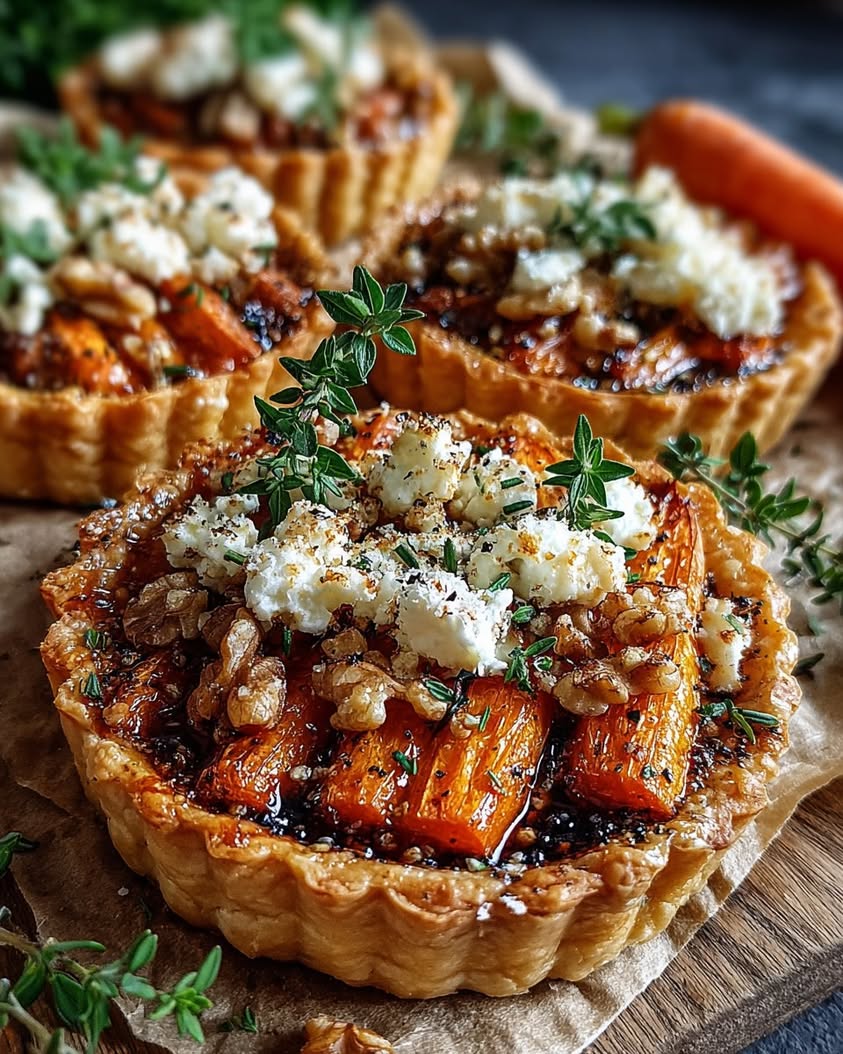
Honey-Glazed Carrot & Walnut Tartlets with Feta Snow: An Elegant Savory Bite
Imagine a bite that perfectly balances earthy sweetness with creamy tang and satisfying crunch. This recipe for Honey-Glazed Carrot & Walnut Tartlets with Feta Snow delivers exactly that experience. These elegant appetizers transform humble carrots into a sophisticated centerpiece, making them ideal for your next dinner party or holiday gathering. The combination of flavors and textures is nothing short of magical, creating a memorable impression on every guest.
Furthermore, these tartlets showcase how simple ingredients can achieve gourmet results. The process involves roasting carrots until they caramelize, then nestling them in a buttery, flaky crust. A final dusting of crumbled feta cheese, resembling a light snowfall, adds a salty contrast that ties everything together. Ultimately, this dish proves that vegetable-forward recipes can be both visually stunning and deeply satisfying.
Consequently, if you are searching for a show-stopping vegetarian appetizer that feels special yet approachable, these Honey-Glazed Carrot Tartlets with Feta Snow and Walnuts are your answer. They offer a beautiful play of colors from the vibrant orange carrots to the white feta and toasted walnuts. Each component serves a purpose, creating a harmonious and complete flavor profile in every single bite.
Quick Recipe Highlights
- Flavor Profile: These tartlets masterfully blend the natural sweetness of honey-roasted carrots with the sharp, salty punch of feta cheese. Meanwhile, toasted walnuts introduce a nutty depth that grounds the dish, and a hint of fresh thyme adds an aromatic, earthy note.
- Texture: You experience a delightful contrast starting with the crisp, buttery pastry shell. Then, the tender, almost jammy glazed carrots provide softness, while the walnuts contribute a crucial crunchy element. Finally, the light, crumbly “snow” of feta cheese melts slightly on the warm filling.
- Aroma: As the tartlets bake, your kitchen fills with the warm, comforting scent of caramelizing honey and roasting root vegetables. The fragrance of toasted nuts and fresh herbs weaves through, creating an inviting and complex aromatic profile that promises delicious results.
- Visual Appeal: The presentation is stunning, featuring bright orange carrot ribbons against a golden-brown pastry. A generous sprinkle of snowy white feta and rustic walnut pieces creates a beautiful, festive look that is perfect for special occasions and photography.
- Skill Level Needed: This recipe requires some foundational kitchen skills like working with puff pastry, knife work for julienning carrots, and managing a multi-step process. However, with clear instructions, a confident home cook can absolutely achieve impressive results.
- Special Equipment: You will need a standard muffin tin to shape the tartlet shells. Additionally, a vegetable peeler or mandoline is helpful for creating thin, uniform carrot ribbons, and a baking sheet is essential for toasting the walnuts.
Recipe Overview
- Difficulty Level: We rate this recipe as intermediate due to the coordination of several components. You must prepare the filling, shape the pastry, and assemble everything before baking. However, each step is straightforward, and the process is broken down into manageable stages for success.
- Category: These tartlets fit perfectly into the appetizer or hors d’oeuvre category. They also work wonderfully as a light lunch or brunch item when served with a simple side salad. Essentially, they are a versatile savory pastry suitable for many dining situations.
- Cuisine: The dish draws inspiration from modern fusion cuisine, blending Mediterranean elements like feta and walnuts with a French-inspired pastry technique. It is a contemporary take on vegetable tarts, focusing on elevated, seasonal produce.
- Cost: This is a relatively budget-friendly recipe, as carrots and walnuts are typically inexpensive. Using store-bought puff pastry saves time and keeps costs down, while a small amount of high-quality feta and honey provides maximum flavor impact without breaking the bank.
- Season: This recipe shines in the fall and winter when carrots are at their sweetest and heartier appetizers are desired. Nevertheless, it is a beautiful addition to a spring Easter brunch or a summer garden party, showcasing year-round appeal.
- Occasion: These tartlets are ideal for cocktail parties, holiday celebrations like Thanksgiving or Christmas, bridal showers, or any gathering where elegant finger food is required. They are impressive enough for formal events yet comforting enough for casual get-togethers.
Why You’ll Love This Recipe
First and foremost, the taste and texture combination is utterly irresistible. The honey glaze caramelizes on the carrots, creating a deep, rich sweetness that is perfectly balanced by the salty, tangy feta snow. Simultaneously, the walnuts add a necessary crunch that prevents the texture from becoming one-note. Every bite delivers a complex symphony of flavors that will have your guests asking for the recipe. Additionally, the visual appeal cannot be overstated; these tartlets look like they came from a professional bakery, with their vibrant colors and elegant presentation.
From a convenience standpoint, this recipe offers significant preparation benefits. For instance, you can roast the carrots and toast the walnuts ahead of time, streamlining the assembly process. Using pre-rolled puff pastry is a major time-saver that guarantees a flaky, professional crust with minimal effort. Consequently, you can focus your energy on the beautiful presentation rather than struggling with difficult dough. Moreover, the components are simple to scale up or down, making it easy to prepare a small batch for a family snack or a large tray for a crowd.
Nutritionally, these Honey-Glazed Carrot Tartlets with Feta Snow and Walnuts pack a wholesome punch. Carrots are famously rich in beta-carotene, which supports eye health and immunity. Walnuts provide healthy omega-3 fatty acids and plant-based protein, while feta cheese offers a good source of calcium. Compared to many heavy, cheese-laden appetizers, this recipe feels lighter and more vegetable-forward. Therefore, you can indulge in a few tartlets without the typical appetizer guilt, knowing you are feeding your body beneficial nutrients.
For social and entertaining value, this dish is a true superstar. It is inherently shareable and designed for finger food settings. The individual portions eliminate the need for messy slicing and ensure every guest gets a perfect, composed bite. Because they are served at room temperature or warm, you are not chained to the oven as guests arrive. This allows you to be present with your company, which is the ultimate goal of any good host. Furthermore, the recipe is vegetarian, making it suitable for a wide range of dietary preferences at your table.
Finally, the cost-effectiveness and accessibility of the ingredients make this a go-to recipe. Carrots and onions are pantry staples available year-round. A single block of feta and a bag of walnuts can be used for multiple recipes, minimizing waste. By utilizing store-bought pastry, you avoid the expense and specialty ingredients required for homemade dough. Essentially, you achieve a luxurious-tasting and looking appetizer without a luxurious grocery bill, proving that impressive cooking does not require exotic or expensive components.
Historical Background and Cultural Significance
The concept of savory tarts and pies dates back centuries, spanning numerous cultures as a practical way to encase and preserve fillings. Our modern tartlet, however, finds its more direct lineage in French cuisine, specifically the “tartelette” which gained popularity in the 19th century as a refined pastry for bourgeois dining. These small, single-serving pastries allowed chefs to showcase seasonal ingredients with precision and artistry. The adaptation of using carrots as a star filling, rather than a background vegetable, reflects a more contemporary, vegetable-centric culinary movement that celebrates produce.
Culturally, the combination of honey and carrots has roots in various European traditions, often appearing in sweet cakes like carrot cake or honey-glazed roasted vegetable sides common in Mediterranean and Middle Eastern cooking. Incorporating walnuts connects the dish to regions like France (Dordogne) and California, where walnuts are a significant crop. Feta cheese, with its briny tang, immediately evokes the flavors of Greece. Therefore, this recipe is a beautiful fusion, pulling elements from different culinary traditions to create something new and globally inspired.
The evolution of this specific recipe mirrors broader food trends focusing on “small plates” and elevated appetizers. As dining became more social and experiential, the demand for sophisticated, bite-sized foods grew. The idea of a “Feta Snow” – grating or finely crumbling cheese over a dish – is a modern plating technique that adds texture and visual drama. It transforms a simple crumble into an elegant garnish, showcasing how presentation has become integral to the home cooking experience in the age of social media and food photography.
Regional variations of this concept are endless. In the south of France, one might find a similar tartlet with goat cheese and Herbes de Provence. A Middle Eastern version could feature carrots with cumin and a yogurt sauce instead of feta. In North America, a maple glaze might replace honey, and pecans could stand in for walnuts. This adaptability is the hallmark of a great recipe foundation. Our version of Honey-Glazed Carrot Tartlets with Feta Snow and Walnuts sits comfortably within this global conversation, inviting cooks to appreciate the blend of sweet, savory, and textural contrasts celebrated in many world cuisines.
Ingredient Deep Dive
Carrots: Cultivated for over a thousand years, carrots originally were purple or yellow before Dutch growers developed the orange variety in the 17th century. They are nutritional powerhouses, packed with beta-carotene (which converts to Vitamin A), fiber, Vitamin K1, and potassium. For this recipe, select firm, smooth carrots without cracks; larger carrots are often easier to peel into long ribbons. Store them in the crisper drawer in a plastic bag. If you cannot find good carrots, parsnips or sweet potato would make interesting, albeit different, substitutions.
Walnuts: Among the oldest tree foods, walnuts have been prized since ancient Rome for their brain-like shape, leading to the belief they benefited the mind. Nutritionally, they are exceptional, providing high levels of omega-3 fatty acids, antioxidants, and minerals like manganese and copper. Always choose walnuts that feel heavy for their size and are not rubbery. Store them in an airtight container in the fridge or freezer to prevent their oils from turning rancid. For a different nutty flavor, pecans or hazelnuts would be excellent alternatives.
Feta Cheese: This brined curd cheese has Protected Designation of Origin (PDO) status in Greece, meaning authentic feta must be made from sheep’s milk or a sheep/goat blend in specific regions. It offers a good source of calcium, phosphorus, and beneficial bacteria. Look for feta stored in brine for the best flavor and texture. Keep it submerged in its brine in the refrigerator. For a dairy-free version, a firm, salted almond or tofu-based “feta” can work, though the flavor profile will change. For a different cheese profile, goat cheese or ricotta salata could be used.
Puff Pastry: A laminated dough invented in France, puff pastry rises into hundreds of flaky layers due to alternating sheets of dough and butter. While it is not a significant source of nutrients, it provides the essential buttery, crisp vessel for the filling. For best results, use an all-butter puff pastry if available, and always thaw it slowly in the refrigerator overnight. Keep the dough cold until the moment you work with it to ensure proper rise. For a gluten-free version, several brands offer gluten-free puff pastry sheets.
Honey: As one of humanity’s first sweeteners, honey has been used in cooking and medicine for millennia. It contains trace enzymes, minerals, and antioxidants, and its flavor varies dramatically based on the flowers foraged by bees. For glazing, a mild, liquid honey like clover or wildflower works perfectly. Store honey at room temperature in a sealed container. If you prefer, maple syrup or agave nectar can be used as a vegan-friendly substitute, though the flavor will be distinct.
Common Mistakes to Avoid
- Soggy Pastry Bottoms: This often happens if the filling is too wet or the pastry is not properly sealed. Always ensure your roasted carrot mixture has cooled slightly and is not dripping with glaze. Additionally, lightly pricking the pastry base with a fork before adding weight can help.
- Overcooking the Carrots: If you roast the carrots until they are mushy, they will lose their beautiful ribbon shape and turn into a puree in the tartlet. Aim for tender-crisp, caramelized strips that still hold their structure when folded into the pastry cup.
- Using Warm Filling in Pastry: Placing hot carrot filling into the cold pastry will begin to melt the butter layers prematurely, leading to poor rise and greasy texture. Always let your glazed carrots cool for at least 10-15 minutes before assembling the tartlets.
- Not Toasting the Walnuts: Raw walnuts can have a slightly bitter, tannic flavor. Toasting them is a non-negotiable step that unlocks their rich, nutty aroma and improves the overall depth of the dish. Simply watch them closely in the oven to prevent burning.
- Overfilling the Tartlet Cups: It is tempting to pack in as much filling as possible, but this leads to spillage, messy baking, and uneven cooking. The filling should sit just below the rim of the pastry cup to allow everything to cook evenly and neatly.
- Thawing Puff Pastry Incorrectly: Thawing puff pastry on the counter or in the microwave makes it sticky, difficult to handle, and prone to tearing. The only reliable method is to transfer it from the freezer to the refrigerator for several hours or overnight.
- Neglecting the Egg Wash: Skipping the egg wash on the pastry edges results in a pale, less appetizing crust. The egg wash promotes a deep golden-brown, glossy finish that is visually appealing and adds a subtle richness to the flavor.
- Adding Feta Before Baking: If you mix the feta into the hot filling or add it before baking, it will simply melt into a greasy pool. The “snow” effect relies on adding the cold, crumbled feta after the tartlets have baked and cooled slightly.
- Using a Dull Knife or Peeler: Attempting to julienne carrots with a dull tool is frustrating and dangerous, often resulting in uneven pieces or cuts. Ensure your vegetable peeler or mandoline blade is sharp for perfect, thin ribbons.
- Rushing the Process: This recipe has several components that require attention. Rushing through steps like rolling the pastry, cutting circles, or assembling leads to mistakes. Read the entire recipe first and allocate the proper time for each stage.
Essential Techniques
Julienning Carrots: This knife cut creates thin, matchstick-sized strips that cook evenly and look elegant. First, peel the carrot. Then, slice it into thin planks. Stack a few planks and slice them lengthwise into thin sticks. For this recipe, using a vegetable peeler to create long, wide ribbons is an excellent and faster alternative that works beautifully. The key is uniformity so all pieces roast at the same rate.
Working with Puff Pastry: The cardinal rule is to keep it cold. Warm pastry becomes sticky and the butter layers melt, ruining the flaky rise. Work on a lightly floured surface and handle the dough as little as possible. When cutting your circles, use a sharp cutter and press straight down without twisting, which can seal the edges and inhibit rising.
Blind Baking with Weights: This technique partially bakes the pastry shell before adding a wet filling to prevent a soggy bottom. After fitting the pastry into the muffin tin, line it with parchment paper or foil and fill with pie weights, dried beans, or rice. This weights the pastry down so it bakes into a defined cup shape instead of puffing up randomly.
Creating a Honey Glaze: A proper glaze should coat the carrots lightly without being syrupy or pooling. Toss the roasted carrots with honey while they are still warm from the oven; the residual heat helps the honey thin out and adhere evenly. If the honey is too thick, you can warm it slightly before tossing. The goal is a shiny, sticky coating, not a soup.
Pro Tips for Perfect Honey-Glazed Carrot & Walnut Tartlets
First, chill your muffin tin before assembling. A cold tin helps keep the pastry firm as you work, preventing the butter from softening too quickly.
Second, reserve a few perfect carrot ribbons and walnut halves for garnish after baking. This adds a professional, finished look to your presentation.
Third, use a small measuring cup or a shot glass to gently press the pastry circles into the muffin cups. This gives you uniform pressure and a neat shape.
Fourth, if your carrot ribbons are very long, loosely fold or coil them when placing them in the pastry cup. This creates height and visual interest in the finished tartlet.
Fifth, let the baked tartlets rest in the tin for 5 minutes before removing. This allows the pastry to set slightly, making them less likely to break when you transfer them to a rack.
Sixth, add a tiny pinch of flaky sea salt over the feta snow just before serving. This enhances all the flavors and adds another subtle layer of texture.
Seventh, for an extra flavor boost, toast the walnuts with a pinch of the thyme called for in the recipe. The heat will help release the herb’s oils onto the nuts.
Eighth, if you have fresh herbs like dill or chives, a very fine chop sprinkled with the feta adds a beautiful green accent and fresh flavor.
Variations and Adaptations
Regional Variations: For a French twist, substitute the feta for creamy goat cheese and add a sprinkle of Herbes de Provence to the carrots. A Middle Eastern version could include a drizzle of tahini mixed with lemon juice over the top and a sprinkle of za’atar. For a North American fall theme, use maple syrup instead of honey and toasted pecans instead of walnuts.
Seasonal Adaptations: In spring, try using thin asparagus spears or fresh peas alongside the carrots. Summer invites the use of yellow or purple carrots for color, or a base of roasted cherry tomatoes. For deep winter, incorporate roasted cubes of butternut squash or sweet potato with the carrots for a heartier filling.
Dietary Modifications: For a vegan version, use vegan puff pastry, substitute the honey with maple syrup, and replace the feta with a crumbled vegan cheese or a sprinkle of nutritional yeast and breadcrumbs. To make it gluten-free, ensure you use a certified gluten-free puff pastry brand.
Flavor Variations: Infuse the honey with a warm spice like cinnamon or cardamom before glazing the carrots. Add a teaspoon of Dijon mustard or balsamic vinegar to the honey for a sweet-and-sour note. For a savory edge, mix a little grated Parmesan cheese into the pastry scraps before re-rolling and cutting.
Texture Modifications: For a richer filling, mix a tablespoon of cream cheese or goat cheese into the cooled carrot mixture before assembling. For added crunch, sprinkle a few panko breadcrumbs mixed with melted butter into the bottom of the pastry cup before adding the carrots.
Presentation Alternatives: Instead of individual tartlets, press the pastry into a rectangular tart pan to create one large tart for easier slicing. For a rustic look, create free-form galettes on a baking sheet, piling the filling in the center and folding the edges over partially.
Serving and Presentation Guide
Plating Techniques: For a clean look, arrange the tartlets on a simple white or slate platter. Alternatively, place each tartlet on a small individual napkin or parchment square for easy handling by guests. If serving as a plated appetizer, a swipe of thinned Greek yogurt or a drizzle of reduced balsamic glaze on the plate adds a restaurant-quality touch.
Garnishing Ideas: Beyond the feta snow, consider microgreens, edible flowers, or a single small thyme sprig for a fresh, green contrast. A light drizzle of high-quality extra virgin olive oil just before serving adds shine and fruitiness. A final dusting of sweet paprika or sumac can provide a beautiful color pop and subtle flavor.
Traditional Accompaniments: These tartlets pair wonderfully with a simple, crisp green salad dressed with a lemon vinaigrette to cut through the richness. A bowl of olives or marinated artichoke hearts on the side continues the Mediterranean theme. For a heartier offering, serve alongside a bowl of roasted red pepper soup.
Modern Serving Suggestions: Incorporate them into a grazing board or charcuterie spread, nestled among cured meats, fruits, and crackers. For brunch, serve with a poached egg on the side for dipping. As a passed hors d’oeuvre, they are perfect on their own, requiring no utensils.
Temperature Considerations: These tartlets are best served warm or at room temperature. If they have cooled completely, a brief 5-minute warm-up in a 300°F oven will refresh the pastry. Avoid the microwave, as it will make the pastry soggy. The feta should be added after this final warm-up.
Portion Control Tips: As a pre-dinner appetizer, plan for 2-3 tartlets per person. If serving as part of a larger cocktail party spread with many other items, 1-2 per person is sufficient. For a light lunch or brunch entrée, 3-4 tartlets with a side salad makes a satisfying meal.
Wine and Beverage Pairing
Wine Pairings: The sweet carrots and salty feta create a versatile pairing profile. A crisp, unoaked white wine like Sauvignon Blanc or Pinot Grigio complements the tanginess and cuts through the richness. For a red option, a light-bodied, low-tannin Pinot Noir with its red fruit notes works beautifully without overpowering the carrots. A dry Rosé is another excellent choice, bridging the gap between red and white with its acidity and berry flavors.
Non-Alcoholic Alternatives: Sparkling water with a twist of lemon or a cucumber ribbon keeps the palate refreshed. A ginger beer or ginger ale provides a spicy-sweet counterpoint that highlights the honey glaze. For a more sophisticated mocktail, try a rosemary-infused lemonade or a sparkling apple cider.
Coffee/Tea Pairings: If serving these at a brunch, a medium-roast coffee with low acidity pairs nicely, as its nutty notes can echo the walnuts. For tea, a smoky Lapsang Souchong can stand up to the robust flavors, or a delicate chamomile tea can provide a soothing, floral contrast.
Temperature Considerations: White wines and non-alcoholic sparklers should be served well-chilled, around 45-50°F. Red wines like Pinot Noir are best slightly cooler than room temperature, around 55°F. This ensures the beverages refresh the palate between bites of the savory, rich tartlet.
Serving Suggestions: Always offer water alongside any beverage pairing to cleanse the palate. When serving wine, pour smaller tasting portions since guests will likely be standing and mingling. For non-alcoholic options, consider a self-serve station with garnishes so guests can customize their drinks.
Storage and Shelf Life
Storage Methods: Once completely cooled, store leftover tartlets in a single layer in an airtight container. If you need to stack them, place a sheet of parchment paper between layers to prevent sticking and sogginess. They are best kept in the refrigerator due to the dairy and vegetable filling.
Temperature Requirements: Always refrigerate leftovers within two hours of baking. The ideal refrigerator temperature is at or below 40°F (4°C). Do not leave them at room temperature for extended periods, as this can promote bacterial growth on the perishable ingredients.
Container Recommendations: A shallow, rectangular glass or plastic container with a tight-fitting lid is ideal. Alternatively, you can cover a plate tightly with plastic wrap. Avoid storing them in a deep bowl where condensation can accumulate and make the pastry lose its crispness.
Signs of Spoilage: Discard tartlets if you notice an off or sour smell, significant sogginess, or visible mold. The carrots may wilt slightly over time, but any sliminess or drastic color change indicates they are no longer safe to eat.
Reheating Instructions: To restore crispness, reheat in a preheated 350°F (175°C) oven for 5-8 minutes, or until warmed through. An air fryer at 325°F for 3-4 minutes also works excellently. Avoid the microwave, as it will steam the pastry and make it rubbery and soggy.
Freezing Guidelines: You can freeze unbaked assembled tartlets (without the feta snow). Arrange them on a baking sheet to freeze solid, then transfer to a freezer bag. Bake directly from frozen, adding a few extra minutes to the cooking time. Baked tartlets can be frozen but the pastry may lose some texture upon thawing and reheating.
Make Ahead Strategies
Prep Timeline: You can prepare almost every component 1-2 days in advance. Roast and glaze the carrots, then store them covered in the fridge. Toast and chop the walnuts, storing them at room temperature. Crumble the feta and keep it in a separate container in the fridge. Thaw the puff pastry in the fridge overnight.
Storage Between Steps: Keep all prepped components in separate, sealed containers. This prevents flavors from mingling prematurely and maintains optimal texture. The glazed carrots may release a little liquid in the fridge; simply drain it off or toss them again before using.
Quality Impact Assessment: Prepping the carrots ahead actually allows the honey glaze to penetrate and flavor them more deeply. The walnuts stay perfectly crunchy. The only element that must be done day-of is assembling and baking the pastry, as the filled, unbaked tartlets will become soggy if stored.
Assembly Tips: On the day of serving, take your chilled components from the fridge about 20 minutes before assembly to take the chill off (except the pastry, which should stay cold). Roll, cut, and shape your pastry cups, then fill and bake. This streamlined process makes entertaining stress-free.
Reheating Guidelines: If you must bake them ahead, let them cool completely, then store as directed. Reheat in a 350°F oven for 5-7 minutes to re-crisp the pastry. Always add the cold feta snow after reheating, just before serving, to maintain its texture and appearance.
Fresh Element Additions: Any fresh herb garnish, like thyme or chives, should be added at the very last moment to preserve their color and vibrant flavor. Similarly, a final drizzle of olive oil or honey should be done just before serving for the best visual appeal.
Scaling Instructions
Halving the Recipe: Halving this recipe for Honey-Glazed Carrot Tartlets with Feta Snow and Walnuts is straightforward. Use half a sheet of puff pastry (most packages come with two sheets). Reduce all other ingredients by half. A standard muffin tin will have empty cups, which is fine; you can fill them with a bit of water to promote even baking. Cooking time may be slightly reduced, so start checking for doneness a few minutes early.
Doubling or Tripling: For larger crowds, simply multiply all ingredients accordingly. You will need multiple muffin tins or to bake in batches. Ensure your oven racks are positioned to allow for proper air circulation. Rotate the tins halfway through baking for even browning. Consider staggering your assembly so you are not overwhelmed; prep all carrot filling first, then work in batches on the pastry.
Equipment Adjustments: When scaling up, ensure you have enough baking sheets and cooling racks. If you only have one muffin tin, you can bake in batches; keep the unbaked, filled tartlets in the refrigerator while the first batch cooks. For a single large tart, use a tart pan and increase the baking time by 10-15 minutes, watching for the pastry to turn golden brown.
Timing Modifications: The prep time will increase linearly as you scale up. However, the oven time may not double exactly. For multiple trays, you might need to add 2-4 minutes to the total bake time. Always rely on visual cues—golden-brown pastry and bubbling filling—rather than strictly following the multiplied time.
Storage Considerations: Scaling up means more leftovers. Plan your storage containers in advance. Baked tartlets are best consumed within 2 days. If making a very large batch for future use, consider freezing the unbaked, assembled tartlets (without feta) as described in the storage section.
Nutritional Deep Dive
Macro Breakdown: A typical tartlet provides a balance of carbohydrates from the pastry and carrots, healthy fats from the walnuts, olive oil, and pastry butter, and a modest amount of protein from the walnuts and feta. The honey adds simple sugars, but the fiber from the carrots and nuts helps moderate the blood sugar response. It is a energy-dense appetizer, so portion awareness is key.
Micronutrient Analysis: This dish is particularly rich in Vitamin A (from the beta-carotene in carrots), which is crucial for vision and immune function. Walnuts contribute manganese and copper, important for bone health and energy production. Feta provides calcium and phosphorus for bone strength. The olive oil and walnuts also offer beneficial polyphenols and antioxidants.
Health Benefits: The combination of ingredients supports heart health through the monounsaturated fats in olive oil and the omega-3s in walnuts. The fiber promotes digestive health and satiety. The antioxidants in carrots and walnuts combat oxidative stress. As part of a balanced diet, these tartlets contribute valuable nutrients beyond just calories.
Dietary Considerations: This recipe is vegetarian. It contains gluten (in puff pastry), dairy (feta, butter), and nuts. The honey makes it non-vegan. For those monitoring sodium, feta is a salty cheese, so you can reduce the amount used or seek out a lower-sodium variety.
Portion Analysis: One tartlet is a satisfying single bite. Consuming 2-3 as an appetizer is a reasonable portion that provides a mix of nutrients without excessive calories. Compared to fried appetizers or heavily processed options, this homemade choice offers more whole food ingredients and controlled additives.
Weight Management Tips: To lighten the dish slightly, you can use a lighter brushing of olive oil on the carrots and ensure the honey glaze is light and even, not pooled. You can also use a reduced-fat feta, though this may affect creaminess. Remember, the walnuts provide healthy fats that promote fullness, helping to prevent overeating later.
Dietary Adaptations
Gluten-free: Successfully adapting this recipe requires a reliable gluten-free puff pastry. Brands like Schär and GeeFree offer good options. Ensure all other ingredients, like your walnuts, are certified gluten-free to avoid cross-contamination. The method remains exactly the same, resulting in a celiac-friendly appetizer everyone can enjoy.
Dairy-free: Replace the feta snow with a dairy-free alternative. Many supermarkets carry vegan feta-style cheeses made from almond, tofu, or coconut. For the pastry, check that your puff pastry is made with vegetable oil instead of butter (many store-bought brands are, but always read the label). The result will be slightly different but still delicious.
Vegan: Follow the dairy-free guidelines and also substitute the honey with maple syrup or agave nectar. Use a certified vegan puff pastry. You can add a sprinkle of nutritional yeast with the walnuts for a cheesy, umami note in place of the feta. The carrots and walnuts will still be the flavorful stars of the show.
Low-carb/Keto: This recipe is challenging for strict keto due to the carrots and puff pastry. For a modification, use a fathead dough or a cheese-based crust for the cup. Reduce the carrot quantity significantly and mix with more walnuts. Use a sugar-free maple-flavored syrup for the glaze and increase the feta for fat content.
Paleo: Omit the grains and dairy. Create tartlet cups from thinly sliced sweet potato rounds baked until pliable, or use a grain-free pastry alternative. Use a compatible fat like ghee or coconut oil. Omit the feta or use a nut-based “cheese.” Ensure your honey is raw and unprocessed.
Low-FODMAP: Carrots are low-FODMAP in servings of about 1/2 cup per sitting, so portion control is key. Omit the onion or use only the green tops for flavor. Ensure the honey is not high-fructose; maple syrup is a suitable low-FODMAP substitute. Feta is typically low in lactose and should be tolerated in moderate amounts.
Troubleshooting Guide
Texture Issues (Soggy Bottom): If your pastry bottom is soggy, the likely culprit is excess moisture from the filling or under-baking. Next time, ensure the carrot mixture is well-drained and cooled. Also, ensure your oven is fully preheated and consider baking the tartlets on the lower oven rack to crisp the base. For salvage, you can briefly place soggy{“success”:true,”message”:”Recipe created successfully”,”post_id”:7998,”tasty_recipe_id”:7998,”shortcode”:” Print
Honey-Glazed Carrot & Walnut Tartlets with Feta Snow
Description
A savory-sweet appetizer featuring flaky tartlet shells filled with honey-glazed carrots and toasted walnuts, topped with a delicate sprinkle of crumbled feta for a creamy, tangy finish.
Ingredients
For the Crust:
- 1 package (12 count) pre-made mini tartlet shells
- 2 cups carrots, peeled and diced into small cubes
- 1/4 cup honey
- 2 tablespoons olive oil
- 1/2 cup walnuts, roughly chopped
- 1/2 teaspoon ground cumin
- Salt and black pepper to taste
- 1/2 cup feta cheese, crumbled
- Fresh thyme leaves for garnish
Instructions
1. Prepare the Crust:
- Preheat the oven to 375°F (190°C). Place the tartlet shells on a baking sheet and bake according to package instructions until golden, about 8-10 minutes. Set aside to cool.
- In a skillet over medium heat, warm the olive oil. Add the diced carrots and cook for 5-7 minutes until slightly tender. Stir in the honey, cumin, salt, and pepper, and cook for another 3-4 minutes until the carrots are glazed. Remove from heat and fold in the chopped walnuts.
- Spoon the honey-glazed carrot and walnut mixture evenly into the cooled tartlet shells.
- Crumble the feta cheese over the top of each tartlet, creating a light ‘snow’ effect. Garnish with fresh thyme leaves before serving.
Notes
You can customize the seasonings to taste.

I’m Billy, a classically trained culinary school graduate from The Culinary Institute of America with over 12 years in the restaurant industry and over 19 years of cooking experience.