
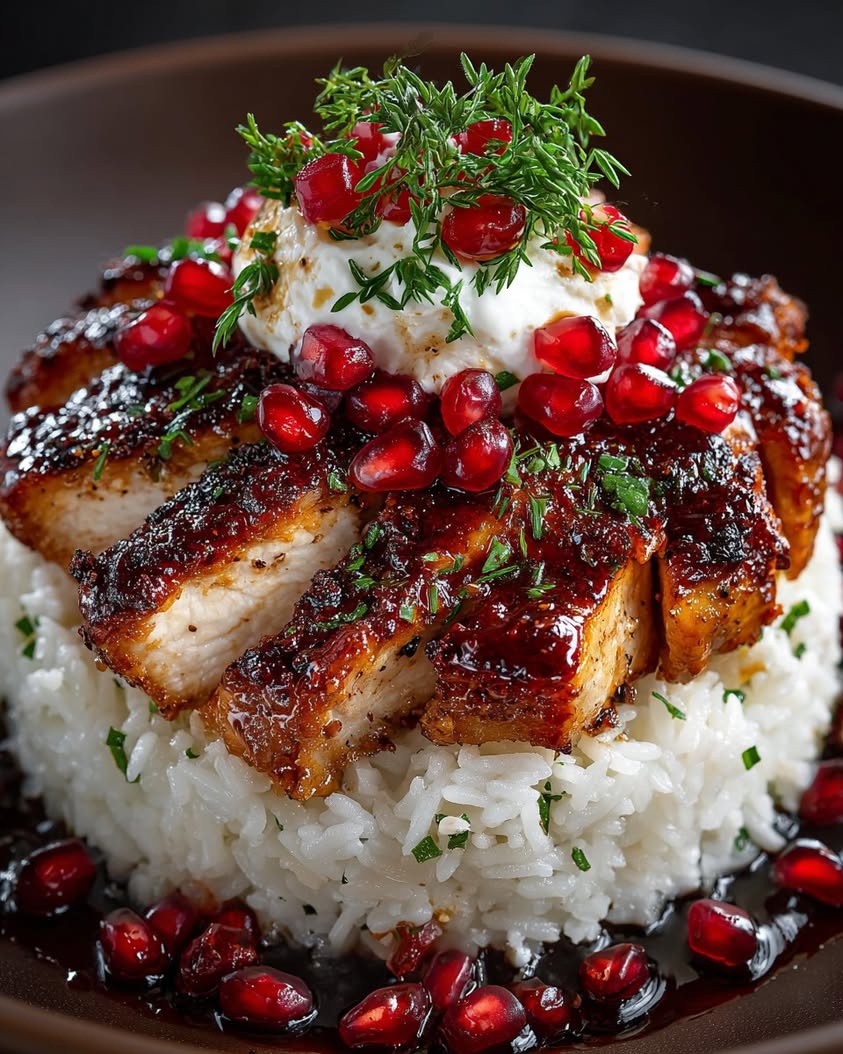
Honey-Glazed Chicken Stack with Burrata, Cranberry Rice & Pomegranate Jewels: A Festive Flavor Explosion
Imagine a dish that looks like a masterpiece and tastes like a celebration. This Honey-Glazed Chicken Stack with Burrata, Cranberry Rice & Pomegranate Jewels is exactly that. It is a stunning, restaurant-quality meal you can create in your own kitchen. The combination of savory, sweet, tangy, and creamy will make your taste buds dance. Ultimately, this recipe is perfect for a special dinner party or a holiday feast.
The star of the show is the perfectly cooked chicken breast. It gets a glossy, sticky honey glaze that caramelizes beautifully in the pan. Then, you layer it over a bed of vibrant cranberry rice. The rice is studded with dried cranberries for a chewy, tart surprise. Finally, a cloud of creamy burrata cheese crowns the stack. A shower of fresh pomegranate arils adds a burst of juicy crunch. Every single bite is a harmonious blend of textures and flavors.
This Honey-Glazed Chicken Burrata Stack is more than just food. It is an experience. The presentation is dramatic and elegant. Your guests will be impressed before they even take a bite. Moreover, the recipe balances sophisticated flavors with approachable cooking techniques. You do not need to be a professional chef to succeed. With a little care and attention, you can create a truly memorable meal. Let us dive into how to make this spectacular dish.
Quick Recipe Highlights
- Flavor Profile: This dish masterfully balances sweet and savory notes. The honey glaze on the chicken provides a rich sweetness. Meanwhile, the cranberry rice introduces a delightful tanginess. The burrata cheese adds a luxurious, milky creaminess that ties everything together.
- Texture: You will experience a wonderful contrast in every mouthful. The chicken is tender and juicy with a slightly sticky exterior. The rice is fluffy, and the cranberries offer a chewy bite. Consequently, the creamy burrata and the juicy pop of pomegranate seeds create a perfect finish.
- Aroma: As the chicken cooks, the kitchen fills with the warm, sweet scent of honey and herbs. The rice releases a comforting, toasty fragrance. Finally, the fresh, slightly floral note from the pomegranate brightens the entire aromatic profile.
- Visual Appeal: This plate is a feast for the eyes. The golden-brown chicken, red cranberry rice, white burrata, and ruby-red pomegranate jewels create a stunning color palette. The stacked presentation looks professional and incredibly inviting.
- Skill Level Needed: This is an intermediate-level recipe. It requires multitasking between components like the glaze, rice, and chicken. However, clear instructions make the process manageable for confident home cooks.
- Special Equipment: You will need a good skillet for the chicken and a saucepan with a lid for the rice. A sharp knife and a cutting board are essential. Additionally, a small bowl for mixing the glaze and a spoon for basting are helpful.
Recipe Overview
- Difficulty Level: We rate this recipe as intermediate. The challenge lies in coordinating three main components simultaneously. You must cook the rice perfectly, prepare a glaze that doesn’t burn, and cook the chicken to juicy perfection. Nevertheless, each step is straightforward when followed carefully.
- Category: This dish falls squarely into the main course category. It is a complete, protein-centric meal. The rice acts as a substantial base. Furthermore, the burrata adds a rich, dairy element that makes the dish feel decadent and satisfying.
- Cuisine: This recipe is a modern fusion creation. It draws inspiration from Italian cuisine with the use of burrata. Meanwhile, the sweet-and-savory glaze has hints of American comfort food. The use of cranberries and pomegranate gives it a festive, globally-inspired twist.
- Cost: The cost is moderate, largely due to the burrata cheese and fresh pomegranate. Chicken breast and rice are typically budget-friendly. Overall, you can expect to spend more than a simple weeknight meal but less than a restaurant entrée for four.
- Season: This Honey-Glazed Chicken Burrata Stack shines in the fall and winter. Cranberries and pomegranates are seasonal highlights during these colder months. The warm, comforting flavors are perfect for holiday gatherings and cozy dinners.
- Occasion: It is ideal for dinner parties, date nights, Thanksgiving, Christmas, or any celebratory meal. The impressive presentation makes it worthy of a special occasion. Conversely, you can also simplify it for a luxurious weekend family dinner.
Why You’ll Love This Recipe
First and foremost, the taste and texture are absolutely phenomenal. The honey-glazed chicken is succulent with a caramelized, flavorful crust. Each component complements the others perfectly. The tart cranberries cut through the richness of the cheese and glaze. Meanwhile, the pomegranate seeds provide a refreshing, juicy crunch. Every forkful delivers a complex and satisfying experience that feels both familiar and excitingly new.
From a convenience standpoint, this recipe is brilliantly designed. You can prepare several elements in advance. For instance, you can cook the cranberry rice ahead of time and gently reheat it. Similarly, you can make the honey glaze mixture and store it in the fridge. This strategic prep means you can assemble the final dish quickly when ready to serve. Consequently, you spend less time stressing in the kitchen and more time enjoying your company.
Nutritionally, this Honey-Glazed Chicken Burrata Stack offers a good balance. Chicken breast is an excellent source of lean protein. Brown rice provides complex carbohydrates and fiber, especially if you choose that variation. Pomegranate arils are packed with antioxidants and vitamin C. While burrata is indulgent, using it as a garnish rather than a base keeps portions sensible. You get a meal that feels decadent while still providing valuable nutrients.
The social and entertaining value of this dish is through the roof. Presenting a beautifully stacked plate instantly elevates any meal into an event. Your guests will be delighted by the thoughtful combination of flavors and the stunning visual appeal. It sparks conversation and shows you put care into the meal. This recipe turns a simple dinner into a memorable dining experience that people will talk about long after the plates are cleared.
Finally, considering cost-effectiveness, this meal delivers restaurant-quality results at a fraction of the price. While some ingredients like burrata are premium, you only need a small amount per serving. Chicken and rice are pantry staples that keep costs down. By cooking this impressive dish at home, you save significantly compared to ordering similar cuisine at a fine dining establishment. It is an accessible way to treat yourself and your loved ones.
Historical Background and Cultural Significance
The concept of stacking food has roots in modern culinary presentation, often associated with fine dining from the late 20th century. Chefs began building vertical plates to create visual drama and portion control. This Honey-Glazed Chicken Stack is a direct descendant of that trend. It takes the idea of a composed salad or protein dish and elevates it into an architectural presentation. The goal is to engage multiple senses before the first bite is even taken.
Culturally, the ingredients tell a story of fusion. Burrata cheese hails from the Apulia region of Italy, a product of cheesemaking tradition meant to use up leftover curds. Its creamy center is a relatively modern invention. Honey-glazing techniques for meats are ancient, found in culinary histories from Asia to Europe. Combining these with New World cranberries and Middle Eastern pomegranates creates a dish that is truly global. It reflects our modern, interconnected food culture.
The recipe has evolved to emphasize balance and seasonal produce. Early versions of glazed chicken might have been simpler. The addition of cranberry rice specifically nods to North American holiday traditions, where cranberry sauce is a staple. Incorporating pomegranate, a symbol of prosperity and abundance in many cultures, adds both meaning and a burst of freshness. This evolution shows how recipes adapt, integrating new ingredients and presentation styles over time.
Regional variations of this concept are endless. In the Mediterranean, one might find a stack with grilled eggplant, tomatoes, and halloumi. An Asian-inspired version could feature a teriyaki glaze and sticky rice. The core principle remains: layering complementary flavors and textures for maximum impact. This particular Honey-Glazed Chicken Burrata Stack with its festive red and white colors has become a popular choice for winter celebrations, carving out its own niche in holiday entertaining menus.
Ingredient Deep Dive
Chicken Breast: The chicken breast is the foundational protein. Opt for boneless, skinless breasts of even thickness for consistent cooking. You can pound them slightly to ensure they cook uniformly. From a nutritional standpoint, chicken breast is low in fat and high in protein, providing essential amino acids. For best results, pat the chicken dry before seasoning. This helps the sear and allows the glaze to adhere properly. If you need a substitute, chicken thighs offer more flavor and juiciness, though they will increase the fat content.
Burrata Cheese: Burrata is a fresh Italian cheese made from mozzarella and cream. The outer shell is solid mozzarella, while the inside contains stracciatella and cream, giving it an incredibly soft, almost liquid texture. It is best served at room temperature to maximize its creamy quality. Store it in its liquid in the refrigerator and use it within a day or two of opening. If you cannot find burrata, fresh mozzarella (bocconcini) or a high-quality ricotta can work, though you will lose the luxurious burst of cream.
Cranberries (Dried): Dried cranberries add a chewy texture and intense tart-sweet flavor to the rice. They are made by dehydrating fresh cranberries, often with added sugar to balance their natural bitterness. They provide antioxidants and dietary fiber. Look for fruit juice-sweetened varieties if you want to avoid refined sugar. For storage, keep them in a cool, dark pantry. You can substitute with dried cherries or chopped dried apricots for a different but equally delicious fruity note.
Pomegranate Seeds (Arils): These are the juicy, ruby-red jewels that garnish the dish. Pomegranates are one of the oldest known fruits, rich in history and symbolism. Nutritionally, they are a powerhouse of vitamin C, vitamin K, and potent antioxidants like punicalagins. To select a good fruit, choose one that feels heavy for its size with taut, unblemished skin. The seeds can be stored in an airtight container in the fridge for up to 5 days. For a substitute in a pinch, a few fresh raspberries or blood orange segments can provide a similar vibrant, tart finish.
Honey: Honey is the key to the sticky, flavorful glaze. Its natural sugars caramelize under heat, creating a beautiful coating on the chicken. Use a good-quality, mild honey like clover or wildflower so its flavor doesn’t overpower. Honey has natural preservative qualities and an indefinite shelf life. For a vegan adaptation, maple syrup or agave nectar can be used. However, note that the flavor profile will shift slightly, becoming more maple-forward or neutral.
Common Mistakes to Avoid
- Overcooking the Chicken: Chicken breast dries out quickly. Use a meat thermometer and pull it off the heat at 160-165°F. The residual heat will carry it to the safe temperature of 165°F while keeping it juicy. Slicing into it immediately will release all the precious juices, so always let it rest.
- Burning the Honey Glaze: Honey has a high sugar content and can burn easily over high heat. Cook the glaze over medium or medium-low heat. Stir it frequently until it just begins to bubble and thicken slightly. If it starts to smoke or smell acrid, it is likely burning.
- Using Cold Burrata: Serving burrata straight from the fridge mutes its flavor and hardens its creamy texture. Always take it out at least 30 minutes before serving. This allows it to come to room temperature, becoming perfectly soft and spreadable.
- Underseasoning the Rice: Rice acts as a bland canvas. Be sure to season the cooking water generously with salt. You can also add a bay leaf or a clove of garlic to the pot for an extra layer of flavor that will infuse the grains.
- Adding Pomegranate Too Early: Pomegranate seeds will bleed their color and become mushy if they sit on warm components for too long. Always add them as the very last garnish, just before serving, to maintain their jewel-like appearance and pop.
- Not Toasting the Rice: Skipping the step of toasting the rice in a little butter or oil before adding liquid is a missed opportunity. Toasting gives the rice a nuttier flavor and helps the grains stay separate and fluffy after cooking.
- Crowding the Pan with Chicken: If you put too many chicken breasts in the skillet at once, they will steam instead of sear. Cook in batches if necessary to ensure each piece has enough space to develop a beautiful golden-brown crust.
- Ignoring the Resting Time: Letting the chicken rest after cooking is non-negotiable. This allows the muscle fibers to relax and reabsorb the juices. If you slice it right away, those juices will run out onto the cutting board, leaving you with dry meat.
Essential Techniques
Creating a Perfect Glaze: A good glaze should be thick enough to coat the back of a spoon but still fluid. The technique involves reducing a mixture of liquids (honey, broth, vinegar) over heat. As water evaporates, the sugars concentrate and the glaze thickens. The key is patience; cook it over medium heat and stir frequently to prevent scorching. You will know it is ready when it leaves a clear trail when you drag a spoon through it. Let it cool slightly before brushing it on the chicken for the final bake or baste.
Cooking Fluffy, Flavorful Rice: The pilaf method is ideal here. First, toast the rice in fat to coat each grain. This step prevents clumping. Next, add hot liquid (broth or water) all at once. Bring it to a boil, then immediately reduce to the lowest simmer and cover tightly. Do not peek! The steam is cooking the rice. After the time is up, remove it from heat and let it sit, covered, for 10 minutes. Finally, fluff it with a fork to separate the grains before stirring in the cranberries.
Searing and Finishing Chicken: Searing creates the Maillard reaction, which builds complex flavor and an appealing color. Pat the chicken completely dry and season it well. Heat your pan with oil until it shimmers. Add the chicken and do not move it for several minutes to allow a crust to form. After searing both sides, you can finish cooking it in the oven or continue in the pan with a lower heat, adding the glaze in the last few minutes to avoid burning.
Pro Tips for Perfect Honey-Glazed Chicken Stack
First, brine your chicken breasts for 30 minutes in a simple saltwater solution. This guarantees incredibly juicy and seasoned meat from the inside out. Simply dissolve 1/4 cup of salt in 4 cups of water, submerge the chicken, and refrigerate.
Use a combination of honey and a touch of Dijon mustard in your glaze. The mustard adds a subtle sharpness that cuts the sweetness and helps emulsify the glaze, making it smoother and more cohesive.
Toast your dried cranberries lightly in a dry pan before adding them to the rice. This quick step revitalizes their flavor, making them plumper and more aromatic in the final dish.
When stacking, use a round cookie cutter or a wide-rimmed glass as a mold. Pack the cranberry rice into the bottom, top with a sliced chicken breast, then carefully lift the mold for a clean, professional-looking presentation.
Drizzle a little high-quality extra virgin olive oil and a sprinkle of flaky sea salt over the torn burrata at the very end. This simple addition enhances the cheese’s flavor and adds a lovely sheen.
If your pomegranate seeds are a bit tart, toss them with a tiny pinch of sugar or a drop of orange blossom water. This enhances their natural sweetness and perfume without making them syrupy.
Variations and Adaptations
For regional variations, consider a Mediterranean twist. Replace the honey glaze with a mixture of lemon, oregano, and olive oil. Use couscous or orzo instead of rice, and substitute the burrata with crumbled feta cheese. Top with chopped Kalamata olives and fresh mint. This creates a completely different but equally stunning flavor profile inspired by Greek and Italian coasts.
Seasonal adaptations are easy. In spring, use asparagus and pea risotto as the base with a lemon-herb glaze. For summer, try a peach or mango salsa on top of the chicken with cilantro-lime rice. The core stacking concept remains, but the ingredients shift with what is fresh and available, keeping the meal exciting year-round.
Dietary modifications are straightforward. For a gluten-free version, ensure your soy sauce or broth is certified gluten-free. To make it dairy-free, omit the burrata or use a vegan mozzarella-style cheese. A vegan adaptation can use thick slices of grilled cauliflower or tofu steaks as the “chicken,” with a maple-soy glaze.
Flavor variations can personalize the dish. Add a spicy kick by incorporating red pepper flakes or a dash of sriracha into the honey glaze. For an earthy note, stir sautéed wild mushrooms into the rice. You can also infuse the rice cooking liquid with saffron or turmeric for incredible color and a subtle, exotic flavor.
Serving and Presentation Guide
Plating is everything with this dish. Start by placing a generous scoop of cranberry rice slightly off-center on a warm plate. Slice the glazed chicken breast on a bias and fan it over the rice. Carefully tear the room-temperature burrata ball and place the pieces artfully on top of the chicken. Let some of the creamy center spill out. Finally, sprinkle a generous amount of pomegranate arils over everything, allowing some to fall onto the plate.
Garnishing adds the final touch. Beyond pomegranate, consider a few microgreens or fresh herb leaves like basil or parsley for a green accent. A light drizzle of reduced balsamic glaze around the plate edge adds visual drama and a tangy note. Always add fresh garnishes at the very last second to maintain their texture and color.
For traditional accompaniments, serve with a simple side salad of bitter greens like arugula with a lemon vinaigrette. The bitterness helps balance the dish’s sweetness and richness. Warm, crusty bread is also excellent for soaking up any leftover creamy burrata and glaze on the plate.
Wine and Beverage Pairing
Wine pairing for this dish should consider its sweet, savory, and creamy elements. A slightly off-dry Riesling or Gewürztraminer is a fantastic choice. Their hint of sweetness mirrors the honey glaze, while their acidity cuts through the richness of the burrata. Alternatively, a medium-bodied Pinot Noir with red fruit notes complements the cranberry and pomegranate beautifully without overpowering the chicken.
For non-alcoholic alternatives, sparkling water with a twist of orange or a few pomegranate seeds muddled in the glass is refreshing. A tart cranberry spritzer made with unsweetened cranberry juice and club soda balances the meal’s sweetness. Iced hibiscus tea also pairs wonderfully, offering a tangy, floral note that echoes the fruit components.
Storage and Shelf Life
Store components separately for best results. Place cooled chicken in an airtight container in the refrigerator for up to 3 days. Keep the cranberry rice in its own container for up to 4 days. Burrata must be consumed within 1-2 days of opening and should remain in its liquid. Pomegranate seeds can be stored in a small sealed container for up to 5 days.
Reheating requires care to prevent dryness. Gently reheat the chicken in a covered skillet with a splash of water or broth over low heat. Microwave the rice with a damp paper towel over it to reintroduce moisture. Assemble with fresh, room-temperature burrata and pomegranate seeds after reheating the hot components. The dish does not freeze well due to the dairy and fresh cheese elements.
Make Ahead Strategies
You can prep this Honey-Glazed Chicken Burrata Stack efficiently. The day before, cook the cranberry rice and let it cool completely before refrigerating. Prepare the honey glaze mixture and store it in a jar. You can also sear the chicken breasts until just cooked through, let them cool, and refrigerate. Finally, extract the pomegranate seeds.
On the day of serving, gently reheat the rice in the microwave or on the stovetop with a splash of water. Warm the chicken in a 325°F oven until heated through, then brush with the glaze and broil for 1-2 minutes to refresh the stickiness. Bring the burrata to room temperature. Assemble everything just before serving to ensure the burrata is creamy, the pomegranate is crisp, and the stack is warm.
Scaling Instructions
Scaling this recipe is simple for different group sizes. For two people, simply halve all the ingredients. Use a smaller skillet for the chicken. For a crowd of eight, double everything. You may need to cook the chicken in more batches to avoid overcrowding the pan. Consider using two pots for the rice or cooking it in a large Dutch oven.
Timing adjustments are minimal when scaling. The rice cooking time remains the same regardless of quantity, as long as the pot size is appropriate. The chicken cook time per batch remains constant. The primary adjustment is the hands-on time for searing multiple batches of chicken and making a larger volume of glaze.
Nutritional Deep Dive
This dish provides a balanced macronutrient profile. A serving offers a substantial amount of high-quality protein from the chicken, essential for muscle repair and satiety. The rice contributes complex carbohydrates for sustained energy. The fats come primarily from the burrata and cooking oils, offering a mix of saturated and unsaturated fats. While the honey adds simple sugars, it is used in moderation as a glaze rather than a sauce.
Micronutrients are plentiful. Pomegranate seeds are rich in vitamin C and K. Cranberries provide vitamin C and fiber. Chicken breast offers B vitamins, particularly niacin and B6. Using whole-grain brown rice instead of white would significantly increase the fiber, magnesium, and phosphorus content. Overall, it is a nutrient-dense meal when enjoyed as part of a varied diet.
Dietary Adaptations
For a gluten-free version, ensure all packaged ingredients like broth or soy sauce are certified gluten-free. The recipe is naturally gluten-free otherwise. For dairy-free, omit the burrata. A dollop of creamy, unsweetened coconut yogurt or a vegan “mozzarella” can provide a similar visual and textural element, though the flavor will differ.
A vegan adaptation is possible. Replace the chicken with extra-firm pressed tofu, tempeh steaks, or large portobello mushroom caps. Use maple syrup instead of honey for the glaze. Substitute the burrata with a vegan cashew-based cheese or simply use sliced avocado for creaminess. Vegetable broth will replace chicken broth in the rice.
For a lower-carb or keto approach, replace the rice with cauliflower rice. Sauté it until tender and mix in a few chopped cranberries for flavor. Ensure the honey glaze is used very sparingly, or make a sugar-free glaze using a monk fruit sweetener blend. The burrata and pomegranate (in small amounts) can still be included.
Troubleshooting Guide
If your glaze is too thin, continue simmering it over medium-low heat to reduce further. Conversely, if it becomes too thick and sticky, whisk in a tablespoon of warm water or broth to loosen it to a brushable consistency. Always adjust glazes off the direct heat to have more control.
If your rice is mushy, it was likely cooked with too much liquid or stirred during cooking. Unfortunately, this cannot be reversed. For next time, measure liquid carefully and resist the urge to lift the lid. If your rice is undercooked and crunchy, add a few more tablespoons of hot liquid, cover, and continue cooking on very low heat for another 5-10 minutes.
If the chicken is browning too quickly before cooking through, reduce the heat. You can finish cooking it in a preheated 375°F oven after searing. Transfer the skillet to the oven (if it is oven-safe) for 8-10 minutes, which allows for gentle, even cooking without burning the exterior.
Frequently Asked Questions
Can I use chicken thighs instead of breasts? Absolutely. Bone-in, skin-on thighs would add more flavor and be more forgiving regarding juiciness. Adjust cooking time accordingly, as thighs take longer to cook through. The skin will also get wonderfully crispy under the glaze.
What can I use instead of burrata? Fresh mozzarella (bocconcini) is the closest substitute. For a different profile, try a creamy goat cheese or even a dollop of whole-milk ricotta. The key is using a cheese that is soft and slightly tangy to balance the sweet glaze.
Can I make this with white rice? Yes, white jasmine or basmati rice works perfectly. Follow the package instructions for liquid ratios and cooking times, which are usually less than for brown rice. The toasting step in butter or oil still applies for added flavor.
How do I easily remove pomegranate seeds? Cut the pomegranate in half horizontally. Hold one half seed-side down over a bowl of water. Whack the back firmly with a wooden spoon. The seeds will fall into the water, and the white pith will float, making separation easy.
Is there a way to make the glaze less sweet? Definitely. Increase the ratio of acidic ingredients like vinegar or lemon juice. Adding a splash of soy sauce or Dijon mustard will introduce savory and sharp notes that counterbalance the honey’s sweetness effectively.
Can I prepare the entire stack ahead of time? It is not recommended to assemble the entire stack ahead, as the burrata will melt and the pomegranate will bleed. Prep components separately and assemble just before serving for the best texture and presentation.
What kind of honey is best? A mild, floral honey like clover, orange blossom, or wildflower is ideal. Avoid very strong, dark honeys like buckwheat, as they can overpower the other delicate flavors in the dish.
My glaze crystallized. How do I fix it? Gently reheat it over low heat with a teaspoon of water or lemon juice, stirring constantly until the sugar crystals dissolve. To prevent this, avoid boiling the glaze too vigorously.
Additional Resources
If you loved this Honey-Glazed Chicken Stack, explore other recipes that play with sweet and savory combinations. A maple-glazed salmon with a pear and arugula salad offers a similar balance. For another stunning stacked presentation, try a napoleon of grilled vegetables and herbed goat cheese.
To master the techniques used here, practice the pilaf method for rice with different grains like quinoa or farro. Work on your pan-searing skills with various proteins. Learning to make a simple pan sauce or glaze is a fundamental skill that will elevate countless weeknight dinners.
For seasonal variations, visit your local farmer’s market. Let the freshest produce inspire you. Swap cranberries for other dried fruits like figs or blueberries. Use different nuts for crunch. This recipe is a template for creativity, so have fun and make it your own.
{“success”:true,”message”:”Recipe created successfully”,”post_id”:8584,”tasty_recipe_id”:8584,”shortcode”:” Print
Honey-Glazed Chicken Stack with Burrata, Cranberry Rice & Pomegranate Jewels
Description
A stunning, layered dish featuring juicy honey-glazed chicken, creamy burrata, fragrant cranberry rice, and vibrant pomegranate seeds for a festive and elegant meal.
Ingredients
For the Crust:
- 4 boneless, skinless chicken breasts
- 1/4 cup honey
- 2 tablespoons soy sauce
- 2 cloves garlic, minced
- 1 tablespoon olive oil
- 1 cup jasmine rice
- 1 3/4 cups chicken broth
- 1/2 cup dried cranberries
- 1 ball burrata cheese
- 1/2 cup pomegranate seeds
- Fresh thyme for garnish
- Salt and black pepper to taste
Instructions
1. Prepare the Crust:
- Season chicken breasts with salt and pepper. In a bowl, mix honey, soy sauce, and minced garlic to create the glaze.
- Heat olive oil in a skillet over medium-high heat. Sear chicken for 5-6 minutes per side until golden, then brush with glaze and cook another 2 minutes until caramelized and cooked through.
- In a saucepan, combine jasmine rice and chicken broth. Bring to a boil, reduce to a simmer, cover, and cook for 15 minutes. Stir in dried cranberries and let sit covered for 5 minutes.
- To assemble, spoon cranberry rice onto plates. Slice chicken and layer over rice. Tear burrata and place on top, then sprinkle with pomegranate seeds and fresh thyme. Drizzle with any remaining glaze.
Notes
You can customize the seasonings to taste.

I’m Billy, a classically trained culinary school graduate from The Culinary Institute of America with over 12 years in the restaurant industry and over 19 years of cooking experience.