
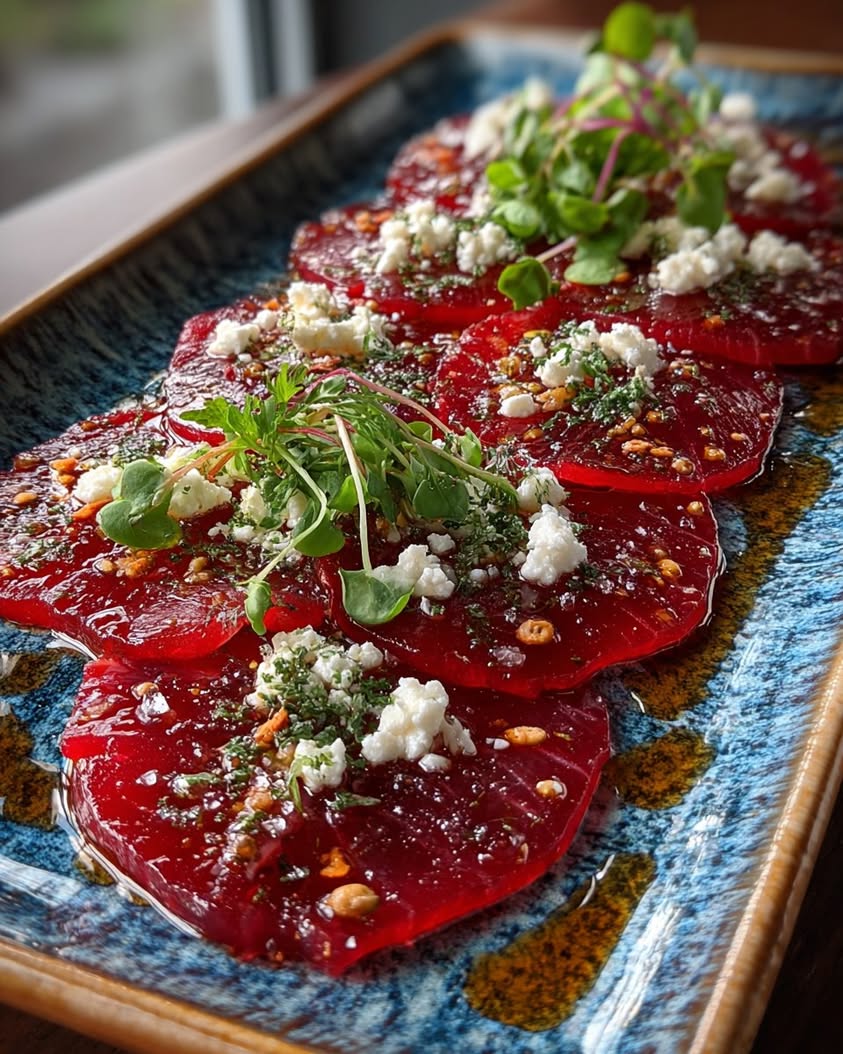
Hot Honey Beet Carpaccio with Feta Snowflakes: A Stunning Appetizer
Imagine a dish that transforms humble root vegetables into a masterpiece of color, flavor, and texture. This Hot Honey Beet Carpaccio with Feta Snowflakes does exactly that. Consequently, it turns roasted beets into a vibrant canvas. You then shave them into delicate, translucent slices that mimic the classic Italian carpaccio. Finally, you drizzle them with a spicy-sweet hot honey and scatter over crumbled feta that looks like delicate snow. Ultimately, this recipe creates an unforgettable appetizer that will wow your guests.
The beauty of this hot honey beet carpaccio lies in its stunning simplicity. For instance, you only need a handful of quality ingredients. Moreover, the process involves roasting, slicing, and assembling. The result, however, is a complex interplay of flavors. You get the earthy sweetness of the beets, the fiery kick of the chili-infused honey, the creamy saltiness of the feta, and the bright crunch of pistachios. This dish is a true celebration of seasonal produce, making it perfect for a dinner party starter or a special holiday meal.
Furthermore, this recipe is incredibly versatile. You can serve it as an elegant first course for a formal dinner. Alternatively, you can plate it as part of a larger mezze spread. The vibrant magenta and golden hues create a visual feast that is almost too beautiful to eat. However, one bite will convince you otherwise. The combination of warm, tender beets with cool, crisp toppings is a textural dream. This hot honey beet carpaccio with feta snowflakes is more than a recipe; it is an experience.
Quick Recipe Highlights
- Flavor Profile: This dish masterfully balances earthy, sweet, spicy, and salty notes. The natural sugar in the roasted beets pairs perfectly with the spicy honey. Meanwhile, the tangy feta cheese and fresh herbs cut through the richness.
- Texture: You achieve a wonderful contrast between the tender, almost silky slices of beet and the crunchy pistachios. Additionally, the crumbled feta adds a creamy, crumbly element that melts on the tongue.
- Aroma: The scent of roasted beets is warm and sweet. When you add the hot honey, it releases a gentle, spicy fragrance. Finally, the fresh thyme and orange zest provide a bright, citrusy top note.
- Visual Appeal: The deep ruby and golden yellow of the beets create a stunning base. The white feta snowflakes and green pistachios offer beautiful contrast. As a result, the plate looks like an abstract painting.
- Skill Level Needed: This is an accessible recipe for most home cooks. You need basic knife skills for safe slicing. However, a mandoline can make the carpaccio step much easier and more consistent.
- Special Equipment: A mandoline slicer is highly recommended for achieving paper-thin beet slices. You also need a baking sheet for roasting and a small saucepan for making the hot honey.
Recipe Overview
- Difficulty Level: We rate this hot honey beet carpaccio as easy. The active hands-on time is minimal. Most of the work involves roasting the beets, which is hands-off. The slicing requires a bit of care, but a mandoline simplifies the process dramatically.
- Category: This dish fits perfectly into the appetizer or starter category. It is light enough to begin a meal but flavorful enough to stand out. You could also serve it as a vibrant side salad alongside grilled meats or fish.
- Cuisine: While “carpaccio” is an Italian technique traditionally used for meat, this is a modern, plant-forward interpretation. The flavors draw from Mediterranean and contemporary American cuisine, focusing on bold, clean ingredients.
- Cost: This is a very cost-effective dish. Beets, honey, and lemons are typically inexpensive. Good quality feta and pistachios are the main splurges. Overall, you can create an impressive appetizer for four people without breaking the bank.
- Season: This recipe shines in the fall and winter when beets are at their peak. However, you can find good beets year-round. It is a wonderful way to add a burst of color and nutrition to colder-weather menus.
- Occasion: This hot honey beet carpaccio is ideal for dinner parties, holiday gatherings like Christmas or Thanksgiving, or a romantic date night at home. Its impressive presentation makes any meal feel special.
Why You’ll Love This Recipe
First and foremost, the taste and texture are absolutely divine. Each forkful delivers a symphony of sensations. You experience the soft, yielding beet, followed by the sticky-sweet heat of the honey. Then, you get the salty pop of feta and the satisfying crunch of pistachio. This combination is incredibly moreish. Furthermore, the balance of flavors is sophisticated yet approachable. The hot honey beet carpaccio manages to feel both rustic and refined at the same time.
From a convenience standpoint, this recipe is a winner. You can roast the beets up to two days in advance. Similarly, you can prepare the hot honey ahead of time. Therefore, when you are ready to serve, assembly takes just minutes. This make-ahead flexibility is a huge advantage for entertaining. You can focus on your guests instead of last-minute kitchen chaos. Moreover, the dish is served at room temperature, eliminating any stress about timing or keeping things hot.
Nutritionally, this hot honey beet carpaccio with feta snowflakes is a powerhouse. Beets are rich in fiber, folate, and essential minerals like potassium and manganese. They also contain beneficial compounds that support heart health and exercise performance. The honey provides natural antioxidants. Meanwhile, the feta offers a dose of calcium and protein. Consequently, you are serving a dish that is as good for the body as it is for the soul.
For social and entertaining value, this appetizer is unmatched. Its dramatic appearance guarantees it will be the talk of the table. It is a fantastic conversation starter. Additionally, it caters to various dietary preferences, being naturally vegetarian and gluten-free. You can easily adapt it for vegan guests with a plant-based cheese alternative. Serving a beautiful, thoughtful dish like this shows your guests you care about their experience.
Finally, this recipe is cost-effective and accessible. You do not need rare or expensive ingredients. The magic lies in the technique and combination. Even novice cooks can achieve restaurant-quality results at home. This hot honey beet carpaccio proves that impressive cooking does not require a professional kitchen or a limitless budget. It is about treating simple ingredients with respect and creativity.
Historical Background and Cultural Significance
The story of carpaccio begins in 1950s Venice. Chef Giuseppe Cipriani of Harry’s Bar invented the dish for a customer who required a raw meat diet. He named it after the Renaissance painter Vittore Carpaccio, known for his use of vibrant reds and whites. Traditionally, carpaccio features raw beef sliced paper-thin and dressed with a lemon-based sauce. The concept revolutionized appetizers, emphasizing the quality of the main ingredient through minimalistic preparation.
Over time, the term “carpaccio” evolved beyond its meaty origins. Chefs began applying the technique to other ingredients, like fish, vegetables, and even fruit. This vegetable carpaccio trend aligns with modern culinary movements that celebrate plant-based eating and artistic plating. Our hot honey beet carpaccio is a direct descendant of this innovation. It takes the core principle—thin slices of a central ingredient adorned with a simple, flavorful dressing—and applies it to the earthy beetroot.
The cultural significance of beets is deep and varied. They have been cultivated since ancient times in the Mediterranean region. Historically, people prized the beet greens more than the roots. However, by the Roman era, the sweet root became popular. Beets traveled across Europe and eventually to the Americas. In Eastern European cuisine, they are a cornerstone, appearing in iconic dishes like borscht. Using beets in a carpaccio format is a contemporary nod to their enduring versatility and vibrant color.
Meanwhile, the combination of honey and chili has ancient roots across many cultures, from Mexico to Asia. The modern “hot honey” trend, particularly popular in American food scenes, bridges sweet and heat in a craveable way. Incorporating this into a beet dish creates a fascinating fusion. It marries Old World technique with New World flavor sensibilities. This hot honey beet carpaccio with feta snowflakes is a testament to how cuisines continuously adapt and inspire each other.
Ingredient Deep Dive
Beets: Beets are the undeniable star of this carpaccio. These root vegetables have a history dating back thousands of years. Nutritionally, they are loaded with dietary nitrates, which can improve blood flow and lower blood pressure. They are also a great source of fiber and vitamin C. When selecting beets, choose firm, smooth bulbs with vibrant greens still attached if possible; this indicates freshness. Store them unwashed in the refrigerator’s crisper drawer. For this recipe, golden beets make a beautiful alternative or addition to red beets, creating a stunning color contrast.
Hot Honey: Hot honey is simply honey infused with chili peppers. Honey itself has been used as a sweetener and medicine since ancient times. It contains antioxidants and has natural antibacterial properties. For the hot element, you can use crushed red pepper flakes, fresh chopped chili, or even a dash of hot sauce. The key is to gently warm the honey with the chili to infuse the heat without cooking the honey aggressively. You can store homemade hot honey in a jar at room temperature for several weeks. For a shortcut, quality store-bought hot honey works perfectly.
Feta Cheese: Feta is a brined curd cheese with a tangy, salty flavor originating from Greece. Traditionally, it is made from sheep’s milk or a blend of sheep and goat’s milk. It provides a good amount of calcium and protein while being lower in fat than many hard cheeses. For the best flavor and texture in your hot honey beet carpaccio, seek out a block of feta stored in brine rather than pre-crumbled varieties. Crumble it with your fingers for irregular “snowflakes.” For a dairy-free version, a firm, salty almond or cashew-based “feta” works well.
Pistachios: Pistachios add essential crunch and a nutty, slightly sweet flavor. They are one of the oldest flowering nut trees, beloved in the Middle East and Mediterranean. They are rich in healthy fats, protein, and antioxidants like lutein. Always choose unsalted, raw pistachios for this recipe to control the salt level. You can lightly toast them in a dry pan for a minute to enhance their flavor before chopping. For a substitution, walnuts or hazelnuts would offer a similar textural contrast with a different flavor profile.
Fresh Herbs & Citrus: Fresh thyme and orange zest are not mere garnishes; they are vital aromatic components. Thyme has a subtle, earthy flavor that complements the beets beautifully. Orange zest adds a bright, citrusy perfume that cuts through the richness. Always use fresh herbs for the best impact. If you do not have thyme, fresh dill or chives would be lovely alternatives. The lemon juice in the dressing provides necessary acidity to balance the sweetness of the beets and honey.
Common Mistakes to Avoid
- Overcooking the Beets: You want the beets tender but still slightly firm. Overcooked beets become mushy and will not hold their shape when sliced thinly. They should yield easily to the tip of a knife but not be falling apart.
- Slicing Too Thick: The essence of carpaccio is paper-thin slices. If your beet slices are too thick, they will be chewy and the dish will lose its delicate appeal. A mandoline is the best tool to ensure consistent, translucent slices.
- Using Pre-Crumbled Feta: Pre-crumbled feta often contains anti-caking agents that make it dry and less flavorful. Always buy a block of feta in brine and crumble it yourself just before serving for the creamiest texture and best taste.
- Skipping the Resting Time: After roasting, let the beets cool until you can handle them. More importantly, let the wrapped beets steam in their own skin for 10-15 minutes after roasting; this makes peeling much easier.
- Adding Hot Honey While Too Hot: If your hot honey is boiling when you drizzle it, it can wilt the delicate beet slices and melt the feta. Let it cool to a warm, drizzle-able consistency before dressing the carpaccio.
- Assembling Too Far in Advance: Assemble the dish just before serving. If left to sit, the beets will start to bleed color into the feta and the nuts will lose their crunch from the moisture.
- Forgetting to Season Layers: Season each component lightly. Sprinkle a tiny pinch of salt on the beet slices themselves before adding toppings. This builds depth of flavor throughout the dish.
- Not Wearing Gloves for Red Beets: Red beet juice stains skin and cutting boards intensely. Wear disposable gloves while handling and slicing them to avoid pink hands for days.
Essential Techniques
Roasting Beets for Optimal Flavor: Roasting, as opposed to boiling, is crucial for this hot honey beet carpaccio. Roasting concentrates the beets’ natural sugars, creating a deeper, caramelized sweetness. The technique is simple: wrap scrubbed, dry beets individually in foil packets with a drizzle of oil. This creates a mini steaming oven that cooks them evenly and makes the skins slip off effortlessly. The key visual cue for doneness is a knife sliding into the center with just a slight resistance. Avoid piercing them multiple times, as this lets precious juices escape.
Creating Paper-Thin Carpaccio Slices: Mastering the thin slice is what defines this dish. Safety is paramount. Always use a mandoline’s hand guard. If using a knife, ensure it is very sharp and use a gentle rocking motion. The goal is slices so thin they are almost translucent, allowing the plate to show through. This maximizes surface area for the dressing to adhere and creates that delicate, melt-in-your-mouth texture. Practice on the flatter sides of the beet first for stability.
Infusing Hot Honey: The goal is to flavor the honey with chili heat without burning it or creating an overly aggressive spice. Use gentle, low heat. Combine honey and your chosen chili element (flakes, fresh slices) in a small saucepan. Warm it over low heat just until it becomes thin and runny and you can smell the chili aroma, about 3-5 minutes. Remove it from the heat and let it steep as it cools. This slow infusion allows the flavor to meld perfectly for your hot honey beet carpaccio.
Plating for Visual Impact: How you arrange the dish is part of the recipe. Overlap the beet slices slightly in a circular or linear pattern on a chilled plate. This creates a sense of movement and coverage. Drizzle the hot honey in zig-zags or swirls, not a solid pool. Crumble the feta with your fingers from a height for uneven distribution, like falling snow. Finally, sprinkle the nuts and herbs deliberately, avoiding clumps. The plate should look artful but not overly fussy.
Pro Tips for Perfect Hot Honey Beet Carpaccio
First, roast different colored beets in separate foil packets. This prevents the red beets from bleeding onto the golden ones and staining them. You want that beautiful color contrast.
Chill your serving plates before assembling. A cool plate keeps the room-temperature beets fresh and makes the presentation more professional.
Use a vegetable peeler to create long, thin ribbons of orange zest instead of fine grating. These ribbons make a beautiful, flavorful garnish that is easy to see.
If your hot honey becomes too thick as it cools, gently re-warm it for a few seconds. Alternatively, you can thin it with a teaspoon of warm water to reach the perfect drizzling consistency.
Toast your pistachios in a dry skillet for 2-3 minutes until fragrant. This simple step deepens their nutty flavor and adds an extra layer of aroma to the dish.
For an extra flavor boost, add a strip of orange peel or a sprig of thyme to the honey while it infuses. Remove it before drizzling.
If you do not have a mandoline, you can use a sharp vegetable peeler to create wide, thin ribbons of beet. The texture will be slightly different but still delicious.
Let the dressed carpaccio sit for exactly 5 minutes before serving. This allows the flavors to mingle slightly and the beets to absorb some of the dressing without becoming soggy.
Variations and Adaptations
For regional variations, consider a Middle Eastern twist. Swap the hot honey for a pomegranate molasses drizzle. Then, use toasted walnuts instead of pistachios and add a sprinkle of sumac and fresh mint. This variation plays on classic flavor combinations from that region.
Seasonal adaptations are easy. In the spring, use tender baby beets and roast them whole. In the summer, serve the carpaccio on a bed of peppery arugula for a heartier salad. For winter, add roasted slices of sweet potato or parsnip alongside the beets for a root vegetable medley.
Dietary modifications are straightforward. For a vegan hot honey beet carpaccio, use maple syrup infused with chili instead of honey and a vegan feta alternative. For a nut-free version, replace pistachios with toasted sunflower or pumpkin seeds for crunch.
Experiment with flavor variations by changing the infused honey. Try honey with smoked paprika for a smoky note, or with fresh ginger for a zingy kick. You could also replace the thyme with other soft herbs like tarragon, chervil, or basil, depending on the season.
Texture modifications can include adding creamy elements. A few small dollops of goat cheese or ricotta alongside the feta add extra richness. For more crunch, add some crispy fried shallots or capers on top just before serving.
Presentation alternatives can refresh the dish. Instead of plating on a flat dish, arrange the beet slices in a single layer on a long rectangular platter for a modern look. You can also stack them in a tower for a more structured presentation, drizzling between layers.
Serving and Presentation Guide
Plating techniques start with a clean, preferably white or neutral-colored plate to let the colors pop. Arrange the beet slices in a single, slightly overlapping layer. You can create a neat circle from the outside in, or a loose, organic spread. The goal is full coverage without gaps, creating a vibrant base for your hot honey beet carpaccio.
Garnishing should be the final, thoughtful step. After drizzling the honey, add the feta, then the nuts, then the herbs, and finally the citrus zest. This layered approach ensures each element is visible. Use microgreens like pea shoots or radish sprouts for an extra touch of green and freshness.
Traditional accompaniments might include crusty bread or grilled flatbread on the side to soak up the delicious honey and beet juices. A simple green salad with a lemon vinaigrette complements the dish well without competing for attention.
Modern serving suggestions include presenting it as part of a composed appetizer board. Place the carpaccio in the center surrounded by small bowls of olives, marinated artichokes, and prosciutto (if not serving vegetarians). This allows guests to create their own bites.
Temperature considerations are key. All components should be at room temperature when assembled. Cold beets straight from the fridge will mute the flavors. A slightly warm honey drizzle is ideal as it will gently wilt the beets just enough.
Portion control is simple. One medium beet per person is a standard appetizer portion. For a larger side dish or light lunch, plan for one and a half beets per person and consider adding a protein like grilled shrimp or chickpeas.
Wine and Beverage Pairing
Wine pairings for this hot honey beet carpaccio should consider the dish’s earthy sweetness and spicy kick. A dry Rosé from Provence is a fantastic choice. Its bright acidity cuts through the richness, and its berry notes complement the beets. Alternatively, a crisp, unoaked white like a Sauvignon Blanc or Grüner Veltliner handles the heat well. For red wine lovers, a light-bodied, low-tannin Pinot Noir with earthy notes can work if served slightly chilled.
Non-alcoholic alternatives can be just as sophisticated. A sparkling water with a twist of orange or a dash of bitters mimics the complexity of a cocktail. A cold-brewed hibiscus iced tea (agua de jamaica) mirrors the beet’s earthiness and color beautifully. For a creamy option, a turmeric or ginger golden milk latte offers a warming counterpoint.
While not a classic coffee dish, if serving this for a brunch appetizer, a light roast coffee with citrusy notes would not clash. A floral herbal tea, like chamomile or lavender, can be a soothing and aromatic companion to the sweet and spicy flavors on the plate.
Always consider serving temperature. White and rosé wines should be chilled, around 45-50°F. Non-alcoholic sparkling drinks should be very cold. This contrast between the cool beverage and the room-temperature dish is refreshing and palate-cleansing.
Ultimately, let the occasion guide you. For a casual gathering, a craft cider or a hoppy IPA beer can pair wonderfully, as the bitterness balances the honey’s sweetness. The goal is to choose a drink that refreshes the palate between bites of the flavorful hot honey beet carpaccio.
Storage and Shelf Life
Storage methods differ for components and the assembled dish. You can store roasted, unpeeled beets in an airtight container in the refrigerator for up to 4 days. Peel and slice them only when ready to assemble. The hot honey can be kept in a sealed jar at room temperature for several weeks. Store feta in its brine in the fridge.
Never store the fully assembled hot honey beet carpaccio. The beets will weep moisture, making the plate soggy, and the nuts and feta will lose their texture. Always assemble just before serving. If you have leftovers after serving, they are best consumed within a few hours but will keep, albeit with compromised texture, overnight in the fridge.
For container recommendations, use glass or BPA-free plastic for storing prepped components. If you must store a dressed portion, place it in a shallow container to minimize stacking and pressure on the delicate slices.
Signs of spoilage for the beets include a slimy texture, an off (sour or fermented) smell, or visible mold. The hot honey is very shelf-stable, but if you see crystallization, simply warm the jar in a bowl of hot water to liquefy it again.
This dish is not ideal for reheating or freezing. The texture of the beets will become unpleasantly mushy upon thawing. The beauty of the recipe is in its fresh, room-temperature presentation.
Make Ahead Strategies
A smart prep timeline makes entertaining stress-free. Up to 3 days ahead, roast the beets, let them cool, and refrigerate them whole and unpeeled. Also, prepare the hot honey and store it at room temperature. The day before, toast and chop the nuts, and zest the orange. Store nuts in a sealed container at room temperature and zest in the fridge.
Storage between steps is simple. Keep the roasted beets in one container. Keep the prepared toppings (nuts, zest, washed herbs) in separate small containers or bags. This modular approach keeps everything fresh and prevents cross-contamination of flavors and textures.
Assessing quality impact is important. Pre-roasting beets has no negative impact; it may even deepen their flavor. Pre-toasting nuts is beneficial. The only elements that must be done at the last minute are slicing the beets, crumbling the feta, and assembling the final plate.
Assembly tips for efficiency: Have all your prepped components lined up. Slice the beets directly onto the serving plate. Then, simply drizzle, sprinkle, and garnish in quick succession. This workflow ensures a beautiful, fresh presentation for your hot honey beet carpaccio every time.
If you need to hold the dish for a short period after assembly, you can loosely tent it with plastic wrap and keep it in a cool spot (not the fridge) for up to 30 minutes before guests arrive.
Scaling Instructions
Halving the recipe is straightforward for a smaller meal. Use one medium beet, and simply reduce all other ingredients by roughly half. Use your judgment on the hot honey—you will need less, but make a little extra as it stores well. A small skillet or toaster oven is perfect for roasting a single beet.
Doubling or tripling for a crowd requires some planning. You will need more baking sheet space for roasting the beets; roast them in batches if necessary. Mix a larger batch of hot honey in a saucepan. For assembly, consider creating multiple plates or one very large platter. A large platter makes a dramatic centerpiece.
Equipment adjustments may be needed when scaling up. If making a large platter, a full-size sheet pan might be necessary for roasting. Ensure you have a sharp mandoline and enough counter space for efficient slicing. Prep all toppings in separate bowls before you start assembling.
Timing modifications are minimal. Roasting time for beets remains the same per batch, not per quantity. The active assembly time will increase linearly with the number of servings. Enlist help for slicing and plating if you are preparing a large quantity.
Storage considerations for scaled-up prepped components are the same. Just use larger containers. Remember, you still should not assemble until the last possible moment to preserve the perfect texture of your hot honey beet carpaccio.
Nutritional Deep Dive
A macro breakdown of this hot honey beet carpaccio shows it is primarily a carbohydrate-based dish from the beets and honey, providing sustained energy. The feta and pistachios contribute healthy fats and a moderate amount of protein. This balance makes it a satisfying appetizer that will not spoil your appetite for the main course.
The micronutrient analysis is impressive. Beets are an excellent source of folate, essential for cell function, and manganese, important for bone health. They also provide potassium and vitamin C. The honey offers trace enzymes and antioxidants. Feta contributes calcium and phosphorus for bone strength, while pistachios provide B vitamins and magnesium.
Specific health benefits include supporting cardiovascular health due to the dietary nitrates in beets, which can help lower blood pressure. The fiber promotes digestive health. The antioxidants in the honey, beets, and nuts combat oxidative stress. This dish is a flavorful way to consume a variety of nutrients.
For dietary considerations, the recipe is naturally gluten-free and vegetarian. It can be adapted for many other diets as previously discussed. The sodium content is moderate and primarily comes from the feta, which you can control by rinsing the block briefly or using a lighter hand when crumbling.
Portion analysis for one serving (one medium beet with toppings) is relatively light, typically under 250 calories. This makes it an ideal starter. For weight management, it is a volume-rich, nutrient-dense option that satisfies the palate with bold flavors, helping to prevent overeating later in the meal.
Dietary Adaptations
For a gluten-free version, this hot honey beet carpaccio is already perfect. All ingredients are naturally gluten-free. Simply ensure that any store-bought hot honey does not contain additives with gluten.
A dairy-free adaptation is simple. Omit the feta cheese entirely, or use a high-quality vegan feta alternative made from almonds, tofu, or coconut. The dish will still be delicious with the sweet, spicy, and crunchy elements.
To make it vegan, implement the dairy-free change and also replace the honey. Use maple syrup, agave nectar, or vegan “bee-free” honey. Gently warm it with chili flakes just as you would with honey to create the infused syrup.
For a low-carb or keto adaptation, this dish is challenging due to the natural sugars in beets and honey. You could try using very thin slices of roasted radish or daikon as the base and make a sugar-free “hot syrup” with a keto-friendly sweetener like monk fruit and chili.
A Paleo version would omit the dairy (feta) and use raw honey. Ensure the pistachios are acceptable for your Paleo guidelines, as some versions exclude peanuts and sometimes other legumes (pistachios are technically a seed).
For a Low-FODMAP adaptation, beets are only low-FODMAP in servings of 2 slices (20g). This makes a traditional carpaccio portion too high. You could make a single-serving “taster” portion with 2-3 slices per person. Use maple syrup instead of honey (honey is high-FODMAP) and omit the pistachios, using pumpkin seeds instead.
Troubleshooting Guide
If your beet slices are tough or chewy, the beets were likely undercooked. Next time, roast them for an additional 10-15 minutes. For now, you can very briefly marinate the slices in a little of the dressing to help soften them slightly.
If the flavor balance is too sweet, add a squeeze of fresh lemon juice directly over the assembled plate to increase acidity. If it is too spicy, drizzle a little plain, high-quality olive oil over the top to mellow the heat.
Temperature problems usually involve beets that are too cold. If you assembled with cold beets, let the plate sit at room temperature for 15 minutes before serving to allow the flavors to wake up. The dish is best enjoyed not chilled.
For equipment challenges, if you lack a mandoline and knife slices are uneven, use a vegetable peeler to create ribbons. They will have a different, but still lovely, texture. If your honey crystallized, gently warm the jar in a bowl of hot water until it liquefies again.
If you need an ingredient substitution last minute, use apple cider vinegar mixed with a pinch of sugar instead of lemon juice. Use toasted almonds or walnuts instead of pistachios. Use goat cheese or even a salty ricotta salata instead of feta.
Timing concerns often arise when roasting takes longer than expected. If beets are not done and guests have arrived, you can serve the toppings in small bowls with bread and the hot honey as a dip, presenting the beets as a “coming soon” course, or pivot to a different appetizer.
Recipe Success Stories
Community feedback on this hot honey beet carpaccio has been overwhelmingly positive. Many home cooks report that it has become their go-to “impress the in-laws” dish. One reader mentioned serving it at a book club where several guests requested the recipe before they even took a bite, purely based on its stunning appearance.
Variation successes are fun to hear about. A reader from California added sliced avocado and a sprinkle of everything bagel seasoning for a brunch version. Another used a combination of candy-stripe chioggia beets and golden beets for a rainbow effect that was a huge hit at a birthday party.
Adaptation stories from those with dietary restrictions are inspiring. A vegan follower used a cashew feta and maple syrup, reporting that her omnivore family loved it just as much as the original. This demonstrates the recipe’s fantastic flexibility.
Reader suggestions have included adding a few drops of high-quality balsamic glaze along with the hot honey for a sweet-tart complexity. Another suggested serving it on individual slate boards for a rustic-chic presentation. These ideas only enhance the communal spirit of sharing recipes.
Photography tips from successful makers emphasize natural light. The deep reds and golds photograph beautifully near a window. Shooting from directly above highlights the artistic plating. Many note that this is one of the most photogenic dishes they have ever made, perfect for food blogs or social media.
Frequently Asked Questions
Q: Can I use canned or pre-cooked beets?
A: We do not recommend it. Canned or pre-cooked beets are often too soft and lack the deep, concentrated flavor of freshly roasted beets. The roasting step is essential for the caramelized sweetness and firm-tender texture needed for proper slicing.
Q: How do I prevent my hands from staining when handling red beets?
A: Wear disposable food-safe gloves while peeling and slicing. If you do get stained, rubbing your hands with lemon juice or a paste of baking soda and water can help lighten the stains. They will fade in a day or two.
Q: Can I make this with raw beets?
A: Traditional meat carpaccio is raw, but raw beets are extremely hard and difficult to slice thinly enough to be palatable. Roasting is necessary to achieve the right tender texture for this vegetable version.
Q: My hot honey is too spicy! How can I fix it?
A> You can dilute it by gently warming it with additional plain honey until the desired heat level is reached. Strain out the chili flakes if necessary. For the future, remember you can always add more heat, but you cannot take it away.
Q: How far in advance can I slice the beets?
A> You can slice them up to a few hours ahead. Place the slices in a single layer between sheets of parchment paper in a sealed container in the fridge. This prevents them from drying out or sticking together.
Q: What can I use if I don’t have a mandoline?
A> A very sharp chef’s knife and patience is the first option. Alternatively, a wide vegetable peeler can{“success”:true,”message”:”Recipe created successfully”,”post_id”:7842,”tasty_recipe_id”:7842,”shortcode”:” Print
Hot Honey Beet Carpaccio with Feta Snowflakes
Description
A vibrant and elegant appetizer featuring thinly sliced roasted beets drizzled with spicy honey and topped with crumbled feta, creating a beautiful, flavorful dish.
Ingredients
For the Crust:
- 4 medium beets, roasted and peeled
- 3 tablespoons honey
- 1 teaspoon red pepper flakes
- 1/2 cup crumbled feta cheese
- 2 tablespoons extra virgin olive oil
- 1 tablespoon fresh lemon juice
- 1/4 cup fresh arugula
- Salt and black pepper to taste
- Fresh thyme leaves for garnish
Instructions
1. Prepare the Crust:
- Preheat oven to 400°F (200°C). Wrap each beet in foil and roast for 45-60 minutes until tender. Let cool, then peel and thinly slice into rounds.
- In a small saucepan, gently heat the honey and red pepper flakes over low heat for 3-4 minutes until fragrant. Remove from heat and let cool slightly.
- Arrange the beet slices in a single layer on a serving platter, overlapping slightly.
- Drizzle the beets with olive oil and lemon juice, then season with salt and pepper.
- Sprinkle the crumbled feta cheese over the beets to resemble snowflakes.
- Drizzle the hot honey mixture evenly over the top.
- Garnish with fresh arugula and thyme leaves. Serve immediately.
Notes
You can customize the seasonings to taste.

I’m Billy, a classically trained culinary school graduate from The Culinary Institute of America with over 12 years in the restaurant industry and over 19 years of cooking experience.