
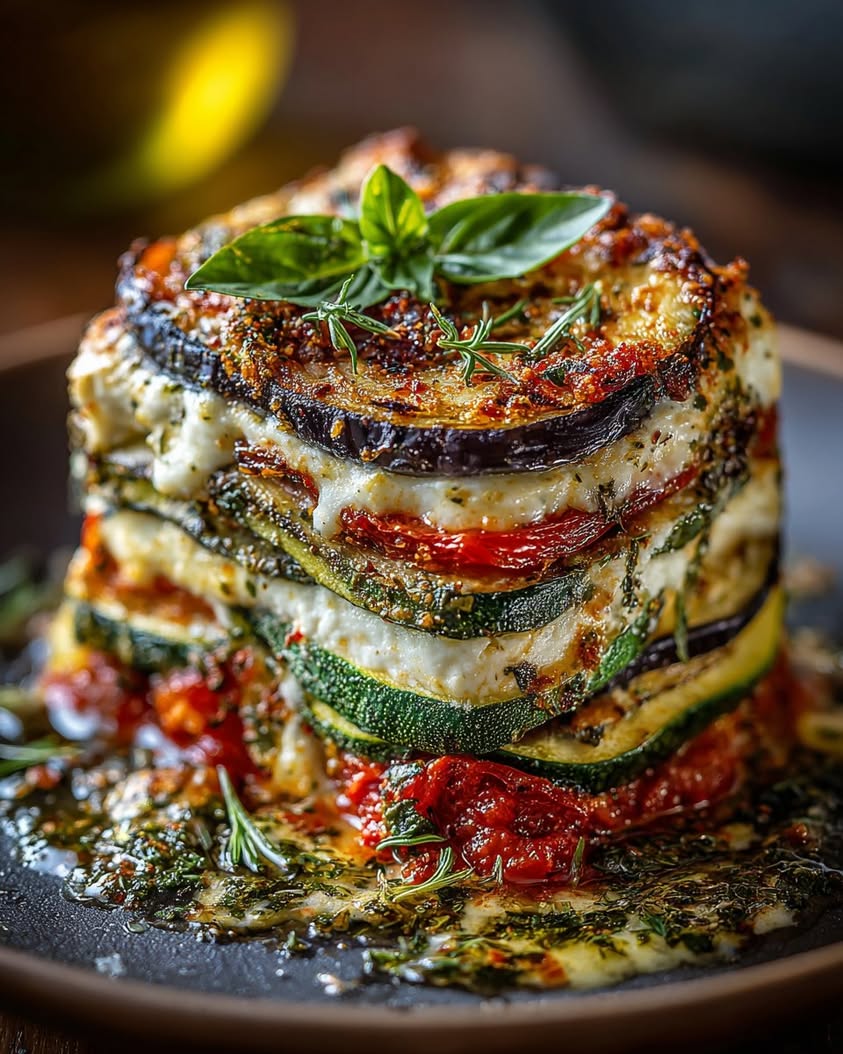
Layered Mediterranean Eggplant & Zucchini Lasagna with Whipped Ricotta Garlic Herb Drizzle: A Flavor-Packed Vegetarian Masterpiece
Imagine a lasagna that skips the heavy pasta and instead layers perfectly roasted vegetables with rich, savory fillings. This Mediterranean Vegetable Lasagna with Ricotta Drizzle is exactly that kind of culinary magic. It transforms humble eggplant and zucchini into a stunning, show-stopping centerpiece. Furthermore, it captures the bright, sun-drenched flavors of the Mediterranean coast in every single bite. This dish is a celebration of vegetables at their absolute finest.
This recipe is not just another vegetarian casserole. It is a carefully constructed masterpiece of textures and tastes. First, you have the tender, meaty slices of roasted eggplant. Next, you encounter the sweet, slightly crisp ribbons of zucchini. These layers are then bound together with a robust tomato sauce and a creamy, herbed ricotta mixture. Finally, the entire creation is crowned with a cloud-like whipped ricotta garlic herb drizzle. Consequently, each forkful delivers a complex and deeply satisfying experience that will delight everyone at your table.
Preparing this Mediterranean Vegetable Lasagna with Ricotta Drizzle is a rewarding kitchen project. It is perfect for a weekend dinner party or a special family meal. The process is meditative and the results are incredibly impressive. Importantly, this dish is naturally gluten-free and can be adapted for other dietary needs with ease. Ultimately, it proves that vegetable-forward cooking can be both luxurious and utterly delicious.
Quick Recipe Highlights
- Flavor Profile: This Mediterranean Vegetable Lasagna with Ricotta Drizzle offers a symphony of savory, tangy, and herbal notes. Expect the deep umami of roasted vegetables, the bright acidity of tomato sauce, and the fresh, aromatic punch of garlic and basil from the drizzle.
- Texture: The texture journey is exceptional. You get the melt-in-your-mouth softness of roasted eggplant, the slight bite of zucchini, the creamy richness of the cheese layers, and the light, airy finish of the whipped ricotta drizzle.
- Aroma: As it bakes, your kitchen will fill with the irresistible scent of roasting garlic, sweet tomatoes, and earthy herbs. The fresh drizzle adds a final, fragrant note of lemon and parsley that makes the dish sing.
- Visual Appeal: This lasagna is a feast for the eyes with its beautiful stripes of purple eggplant skin, green zucchini, red sauce, and white cheese. The artful drizzle on top adds a professional, restaurant-quality finish.
- Skill Level Needed: This recipe requires basic knife skills for slicing vegetables and comfort with multi-step assembly. It is ideal for a confident home cook looking to expand their vegetarian repertoire.
- Special Equipment: A mandoline slicer is highly recommended for achieving perfectly even vegetable slices. You will also need a good baking sheet, a 9×13 inch baking dish, and a hand mixer or food processor for the whipped ricotta drizzle.
Recipe Overview
- Difficulty Level: We rate this Mediterranean Vegetable Lasagna with Ricotta Drizzle as intermediate. The individual steps are simple, but managing the vegetable roasting, sauce simmering, and assembly requires organization. Timing is key to ensure all components are ready for layering. However, clear instructions make the process very manageable for any dedicated cook.
- Category: This dish proudly sits as a vegetarian main course. It is substantial enough to be the star of the meal. Additionally, it works beautifully as part of a larger Mediterranean-inspired feast with salads and appetizers.
- Cuisine: The recipe draws direct inspiration from the rustic, vegetable-centric cooking of countries like Italy and Greece. It uses classic Mediterranean ingredients such as eggplant, zucchini, tomatoes, olive oil, garlic, and fresh herbs to create authentic flavor.
- Cost: This is a cost-effective meal, especially when vegetables are in season. The main expenses are the cheeses and the fresh produce. Overall, it feeds a crowd for less than the price of a restaurant meal, making it excellent for entertaining on a budget.
- Season: Late summer and early fall are the prime seasons for this Mediterranean Vegetable Lasagna with Ricotta Drizzle. This is when eggplants, zucchini, and tomatoes are at their peak flavor and most affordable. Nevertheless, it brings sunshine to the table any time of year.
- Occasion: This lasagna is perfect for Sunday family dinners, potlucks, holiday gatherings for mixed-diet guests, or any time you want to serve an impressive yet comforting vegetarian centerpiece. It is a guaranteed crowd-pleaser.
Why You’ll Love This Recipe
First and foremost, the taste and texture of this Mediterranean Vegetable Lasagna with Ricotta Drizzle are simply unforgettable. The roasted vegetables develop a deep, caramelized sweetness that contrasts beautifully with the tangy tomato sauce. Meanwhile, the creamy ricotta layers provide a rich, soothing balance. Finally, the airy, garlicky drizzle cuts through the richness with a burst of freshness. Every bite is a harmonious blend of savory, creamy, and bright flavors that will have you reaching for seconds.
From a convenience standpoint, this recipe offers fantastic flexibility. You can roast the vegetables and prepare the sauce a day in advance. This makes the final assembly on the day you plan to serve remarkably quick and stress-free. Moreover, the lasagna itself reheats beautifully, meaning leftovers are just as delicious as the first serving. It is the ultimate make-ahead meal for busy weeks or planned entertaining.
Nutritionally, this Mediterranean Vegetable Lasagna with Ricotta Drizzle is a powerhouse. It is packed with vitamins, minerals, and fiber from the array of vegetables. Eggplant and zucchini are particularly low in calories but high in nutrients. Using part-skim ricotta and mozzarella provides a good dose of protein and calcium without excessive fat. Consequently, this is a meal that nourishes your body while delighting your taste buds.
For social gatherings, this dish is a superstar. It effortlessly caters to vegetarians and those avoiding gluten. Its stunning presentation makes it a natural centerpiece for a dinner party. Guests will be impressed by the beautiful layers and complex flavors. It sparks conversation and shows a level of care and culinary skill that is always appreciated.
Finally, this Mediterranean Vegetable Lasagna with Ricotta Drizzle is remarkably cost-effective. It transforms inexpensive, seasonal produce into a luxurious-feeling meal. Compared to meat-based lasagnas, the ingredient list is very affordable. You can feed a large group without straining your grocery budget. This accessibility, combined with its incredible flavor, makes it a recipe you will return to again and again.
Historical Background and Cultural Significance
The concept of layering ingredients is ancient, but the modern lasagna we know is deeply rooted in Italian culinary tradition, specifically from the Emilia-Romagna region. Traditionally, lasagna involves sheets of pasta, ragù, béchamel, and Parmigiano-Reggiano. This Mediterranean Vegetable Lasagna with Ricotta Drizzle represents a contemporary, vegetable-forward evolution of that classic form. It reflects a global shift towards plant-based eating while honoring the Italian love for layered, baked casseroles known as “pasta al forno.”
Culturally, dishes like this highlight the Mediterranean diet’s core principles. This diet, recognized by UNESCO as an intangible cultural heritage, emphasizes fresh vegetables, legumes, olive oil, and herbs. Our recipe is a direct homage to that lifestyle. It showcases how vegetable-centric meals can be deeply satisfying and celebratory. In many Mediterranean households, a large baked dish like this is the center of family gatherings, symbolizing abundance and shared nourishment.
The evolution of this recipe is a story of adaptation and creativity. As vegetarian and gluten-free diets gained popularity, home cooks and chefs began seeking alternatives to wheat pasta. Sliced vegetables, particularly eggplant and zucchini, emerged as perfect, flavorful substitutes. They hold their structure while becoming tender during baking. The use of ricotta, prevalent in Southern Italian cooking, provides the creamy element traditionally offered by béchamel. This innovation created an entirely new category of beloved “lasagna” dishes.
Regional variations of vegetable lasagna abound. In Greece, you might find a similar dish called “Moussaka,” which layers eggplant and potato with a meat sauce and béchamel. In Turkey, “Imam Bayildi” features stuffed eggplant. Our Mediterranean Vegetable Lasagna with Ricotta Drizzle borrows inspiration from these traditions but creates its own unique identity with the zucchini layers and the signature whipped drizzle. It is a beautiful fusion of Mediterranean flavors in a familiar, comforting format.
Ingredient Deep Dive
Eggplant (Aubergine): Originally cultivated in India over 4,000 years ago, eggplant traveled along trade routes to the Middle East and Mediterranean. It became a staple in these cuisines due to its meaty texture and ability to absorb flavors. Nutritionally, it is rich in fiber, antioxidants like nasunin (found in the skin), and vitamins B1 and B6. When selecting, choose firm, heavy eggplants with smooth, shiny skin and a bright green stem. Avoid those with wrinkles or soft spots. Store them at cool room temperature for a day or in the refrigerator’s crisper drawer for up to three days. For a less bitter result, you can salt and drain slices before roasting, though modern varieties are often mild.
Zucchini (Courgette): A summer squash native to the Americas, zucchini was brought to Italy in the late 19th century and embraced wholeheartedly. It is a low-calorie vegetable packed with vitamin C, manganese, and beneficial antioxidants like lutein. Look for small to medium-sized zucchini that feel firm and heavy for their size, with bright, unblemished skin. Larger zucchinis can be seedy and watery. Store them unwashed in a plastic bag in the refrigerator for up to a week. For this Mediterranean Vegetable Lasagna with Ricotta Drizzle, patting the salted slices dry is crucial to prevent a watery final dish.
Ricotta Cheese: Ricotta, meaning “recooked” in Italian, is a fresh whey cheese with a history dating back to the Bronze Age. It is made by reheating the whey leftover from making other cheeses. It provides a light, slightly grainy texture and a mild, milky flavor. It is an excellent source of protein and calcium. For the best texture in the drizzle, use whole-milk ricotta. Always drain any excess liquid from the ricotta before using it. If you cannot find ricotta, a good substitute for the filling is cottage cheese blended until smooth. For the drizzle, fresh goat cheese or labneh can provide a similar tangy creaminess.
San Marzano Tomatoes: These prized plum tomatoes are grown in the volcanic soil near Mount Vesuvius in Italy. They are renowned for their sweet flavor, low acidity, and fewer seeds. Their thick flesh makes for a superior, rich sauce. While canned San Marzanos are ideal, any high-quality canned crushed tomatoes will work. They are rich in lycopene, a powerful antioxidant. Always taste your canned tomatoes; if they are acidic, a pinch of sugar can balance the sauce beautifully.
Common Mistakes to Avoid
- Skipping the Salting Step for Vegetables: Salting eggplant and zucchini slices draws out excess moisture. If you skip this, the vegetables will steam in the oven and release water into your lasagna, resulting in a soggy, watery final product. Always salt, let them sit, and then pat them thoroughly dry.
- Not Roasting Vegetables Enough: Under-roasted vegetables will be tough and lack flavor. Roast them until they are truly tender and have developed some golden-brown spots. This caramelization is essential for building the deep, savory flavor profile of your Mediterranean Vegetable Lasagna with Ricotta Drizzle.
- Using Watery Ricotta: If your ricotta is swimming in liquid, your filling and drizzle will be runny. Always drain ricotta in a fine-mesh strainer for 15-30 minutes before using. Alternatively, you can wrap it in cheesecloth and gently squeeze out excess whey.
- Overloading the Layers: More is not always better. Applying too much sauce or cheese in each layer can overwhelm the delicate vegetables and make the lasagna difficult to slice neatly. Use a moderate hand for even, distinct layers.
- Not Letting it Rest After Baking: Cutting into the lasagna immediately after it comes out of the oven is a recipe for a sloppy mess. The structure needs time to set as it cools slightly. Let it rest for at least 20 minutes; this allows the layers to firm up for perfect slices.
- Using Dried Herbs in the Drizzle: The whipped ricotta garlic herb drizzle relies on the bright, fresh flavor of parsley and basil. Dried herbs will taste dusty and muted. Always use fresh herbs for this component to achieve that vibrant, restaurant-quality finish.
- Burning the Garlic: When sautéing garlic for the tomato sauce, cook it just until fragrant, about 30-60 seconds. Burnt garlic becomes bitter and can ruin the entire sauce. Use medium-low heat and watch it carefully.
- Forgetting to Adjust Oven Racks: For proper roasting and baking, you need space. Before you start, position one oven rack in the upper third and one in the lower third. This ensures even cooking and browning for both the vegetables and the final lasagna.
Essential Techniques
Salting and Sweating Vegetables: This technique is crucial for success. Salting sliced eggplant and zucchini draws out cellular moisture through osmosis. This process, called “sweating,” accomplishes two things. First, it concentrates the vegetable’s flavor. Second, and more importantly, it removes excess water that would otherwise be released during baking, preventing a soggy lasagna. After salting, let the slices rest on paper towels for 20-30 minutes. You will see beads of moisture form. Pat them firmly with more paper towels until completely dry before roasting.
Roasting for Flavor Concentration: Roasting is not just about cooking the vegetables; it is about transforming them. High, dry heat causes the natural sugars in the eggplant and zucchini to caramelize, creating complex, sweet, and savory flavors. Arrange the slices in a single layer on oiled baking sheets. Do not crowd them, or they will steam. Roast until they are pliable and have golden-brown edges. This step builds the foundational flavor of your Mediterranean Vegetable Lasagna with Ricotta Drizzle, so do not rush it.
Building Flavorful Tomato Sauce: A great sauce starts with sautéing aromatics. Cook onions until soft and translucent to develop a sweet base. Then add the garlic just until fragrant to avoid bitterness. The key next step is to cook the tomato paste for a minute or two. This “toasts” the paste, mellowing its raw flavor and deepening its umami character. Finally, simmer the sauce briefly to allow the flavors to marry. Taste and season thoughtfully with salt, pepper, and a pinch of sugar if needed to balance acidity.
Whipping Ricotta to Perfection: The drizzle is what sets this dish apart. The goal is a light, airy, spoonable consistency. Use room-temperature ricotta for best results. Whip it with a hand mixer or food processor until it becomes noticeably smoother and increases slightly in volume. Then, gently fold in the minced garlic, herbs, lemon zest, and seasoning. Over-mixing after adding the herbs can bruise them and turn the drizzle green. The final texture should be like a thick, cloud-like dressing.
Pro Tips for Perfect Mediterranean Vegetable Lasagna with Ricotta Drizzle
Invest in a mandoline slicer. This tool guarantees uniformly thin slices of eggplant and zucchini, which ensures even roasting and a beautiful, professional-looking layered finish. Always use the guard for safety.
After salting the vegetable slices, press them between layers of paper towels with a heavy baking sheet on top. This extra pressure removes even more moisture, leading to a perfectly structured lasagna.
Let all components cool to room temperature before assembly. Layering hot roasted vegetables into the dish will start cooking the cheese prematurely and can make the lasagna weepy.
Use a light hand when applying the whipped ricotta drizzle on the finished lasagna. Drizzle it back and forth in a zigzag pattern for an elegant look. You can also serve extra drizzle on the side.
For a golden, bubbly top, switch your oven to broil for the last 2-3 minutes of baking. Watch it closely to prevent burning. This gives the cheese a beautiful restaurant-quality finish.
If your tomato sauce seems too thin after simmering, let it reduce for a few more minutes. A thicker sauce will help bind the layers together without making the dish wet.
For the deepest flavor, use a high-quality extra virgin olive oil both for roasting the vegetables and in the tomato sauce. Its fruity, peppery notes are a hallmark of authentic Mediterranean cooking.
Variations and Adaptations
For regional variations, consider adding a layer of sautéed spinach or Swiss chard with a pinch of nutmeg, inspired by Northern Italian greens. A Greek-inspired version could include a sprinkle of crumbled feta cheese between the vegetable layers. For a Provençal twist, add a layer of sliced, roasted red peppers and use herbes de Provence in the tomato sauce.
Seasonal adaptations are easy. In the fall, incorporate thin slices of roasted butternut squash or sweet potato. In the spring, add layers of lightly sautéed asparagus or artichoke hearts. You can also use a hearty marinara sauce from your summer tomato harvest as the base.
Dietary modifications are straightforward. To make this Mediterranean Vegetable Lasagna with Ricotta Drizzle vegan, substitute the ricotta and mozzarella with a blend of cashew ricotta and vegan mozzarella shreds. For a dairy-free version, use the same vegan cheeses. The recipe is naturally gluten-free, but always check your tomato sauce labels to ensure no gluten-containing additives are present.
Flavor variations can personalize the dish. Add a pinch of red pepper flakes to the tomato sauce for heat. Stir a tablespoon of pesto into the ricotta filling for an herbal boost. For a smoky note, use fire-roasted canned tomatoes in your sauce.
Texture modifications can cater to different preferences. For a firmer, more defined bite, grill the vegetable slices instead of roasting them. For an even creamier interior, mix an egg into the ricotta filling to help it set like a custard during baking.
Presentation alternatives offer fun twists. Instead of a large rectangular lasagna, assemble individual portions in small oven-safe dishes or mason jars for a personalized touch. You can also deconstruct the elements and serve the roasted vegetables topped with the ricotta mixtures as a bowl-style meal.
Serving and Presentation Guide
Plating this lasagna beautifully is simple. Use a sharp, thin-bladed knife to cut clean portions. Wipe the knife clean between cuts. Slide a flat, wide spatula underneath a portion, lift firmly, and transfer to a warm plate. For a modern look, place the slice slightly off-center.
Garnishing adds the final touch of color and freshness. A small sprinkle of chopped fresh parsley, basil, or microgreens right on top of the drizzle looks lovely. A few cracks of black pepper, a light drizzle of your best extra virgin olive oil, or a few edible flowers can elevate the presentation dramatically.
Traditional accompaniments keep the meal Mediterranean. Serve with a simple arugula salad dressed with lemon vinaigrette, a side of crusty gluten-free bread or focaccia to soak up sauce, and a bowl of marinated olives. These sides complement the lasagna without competing with it.
Modern serving suggestions might include a dollop of spicy Calabrian chili paste on the side for adventurous eaters. You could also serve it with a chilled glass of rosé or a non-alcoholic sparkling lemonade. For a family-style meal, place the baking dish directly on the table with a large serving spoon.
Temperature considerations are key. The lasagna should be served warm, not piping hot, to allow the flavors to be fully appreciated. The whipped ricotta drizzle can be at cool room temperature. Ensure your dinner plates are warmed to keep the serving at the ideal temperature longer.
Portion control is easy with this nutrient-dense dish. A single slice is very satisfying. Given its richness from the cheeses and vegetables, a standard 9×13 inch pan typically yields 8 generous servings. For a lighter meal or as part of a larger buffet, you can cut it into 12 smaller squares.
Wine and Beverage Pairing
Wine pairings should complement the savory vegetables and creamy cheese. A medium-bodied Italian red like Chianti Classico or Barbera works wonderfully. Their bright acidity cuts through the richness and pairs well with the tomato sauce. Alternatively, a crisp, dry white wine like Vermentino or Pinot Grigio from Italy highlights the herbal notes and feels refreshing. For a rosé, choose a dry Provençal style with enough body to stand up to the layered flavors.
Non-alcoholic alternatives are just as important. Sparkling water with a twist of lemon or lime cleanses the palate between bites. A homemade basil lemonade mirrors the herbal notes in the dish beautifully. For a more complex option, try a chilled, non-alcoholic ginger beer; its spice plays nicely against the creamy ricotta.
While not a classic coffee dish, if serving this for a late lunch, a post-meal espresso or macchiato is a very authentic Mediterranean way to finish. The bitterness of the coffee provides a pleasant contrast to the meal’s richness. For tea, a light, floral herbal tea like chamomile or mint would be a soothing end to the dining experience.
Always serve white wines and rosés well-chilled, around 45-50°F. Red wines should be served slightly cooler than room temperature, around 60-65°F, to keep their acidity perceptible. Non-alcoholic beverages should be served cold to provide a refreshing counterpoint to the warm, baked lasagna.
Presentation of beverages matters. Pour wines into appropriate glassware to enhance their aroma. Serve sparkling waters in tall glasses with ice. Present homemade lemonade in a pretty pitcher with fresh herb sprigs. These small touches make the entire meal feel more special and considered.
Storage and Shelf Life
For storage, cool the lasagna completely to room temperature before covering. This prevents condensation from forming inside the container, which would make the top soggy. Transfer individual slices or the entire portion to an airtight container. You can also cover the baking dish tightly with a layer of plastic wrap and then aluminum foil.
Refrigerate the Mediterranean Vegetable Lasagna with Ricotta Drizzle promptly. It will keep well in the refrigerator for 3-4 days. The flavors often meld and improve after a day. Store any extra whipped ricotta drizzle in a separate airtight container for up to 3 days.
For freezing, this lasagna freezes exceptionally well. Wrap cooled, uncut portions or individual slices tightly in plastic wrap and then in aluminum foil. Label with the date. Freeze for up to 3 months. Freeze the drizzle separately. The texture of the vegetables may become slightly softer upon thawing, but the flavor remains excellent.
Signs of spoilage include an off or sour smell, visible mold (often fuzzy spots in white, green, or blue), or a significant change in texture becoming unpleasantly slimy. If you see any of these signs, discard the entire portion immediately.
Reheating instructions are simple. For the best texture, reheat refrigerated portions in a 350°F oven, covered with foil, until warmed through (about 20 minutes for a large piece). You can also use a microwave for a single slice, but the oven method preserves the layered texture better. Reheat frozen lasagna by thawing it overnight in the refrigerator and then baking as above, or bake from frozen, covered, adding extra time.
Make Ahead Strategies
You can prep this entire dish over a two-day timeline with excellent results. On Day 1, slice and salt the eggplant and zucchini. After patting them dry, you can roast them all. Let the roasted sheets cool completely, then store them stacked between layers of parchment paper in an airtight container in the fridge. On the same day, prepare the tomato sauce and let it cool before refrigerating.
Storage between steps is simple. Keep the cooled, roasted vegetables and the cooled tomato sauce in separate airtight containers in the refrigerator for up to 24 hours. You can also prepare the ricotta filling mixture (without the egg, if using) and store it covered. The whipped ricotta drizzle is best made the day you serve it for maximum freshness and brightness.
The quality impact of make-ahead prep is minimal and often positive. Allowing the tomato sauce to sit overnight lets the flavors deepen and meld. The roasted vegetables hold up perfectly. The only component that suffers from being made too far in advance is the fresh herb drizzle, as the herbs can wilt and discolor.
Assembly tips for a make-ahead lasagna are straightforward. On the day of serving, take all components out of the fridge about 30 minutes before assembly to take the chill off. Then, layer as directed. If you want to assemble the entire lasagna a day ahead, cover it tightly and refrigerate. You may need to add 5-10 minutes to the baking time since it will be going into the oven cold.
Reheating a fully assembled, chilled lasagna requires a covered bake. Tent the baking dish with foil and bake at 375°F for 30-40 minutes, until bubbly at the edges. Then, remove the foil, add the mozzarella, and bake uncovered for the final 15-20 minutes to brown the top.
Always add the fresh element—the whipped ricotta garlic herb drizzle—just before serving. This ensures its vibrant color, fluffy texture, and potent garlic and herb flavor are at their peak, providing the perfect finishing touch to your make-ahead masterpiece.
Scaling Instructions
Halving the recipe is easy for smaller households. Use an 8×8 inch baking dish. Simply divide all ingredient quantities by two. The roasting time for the vegetables may be slightly less due to fewer trays in the oven, so check for doneness a few minutes early. The baking time for the smaller lasagna will also be reduced; start checking for doneness around the 35-minute mark.
Doubling or tripling the recipe is perfect for large gatherings or meal prep. For doubling, you will need two 9×13 inch baking dishes. Be mindful of your oven capacity for roasting all the vegetable slices; you may need to roast in batches. When tripling, consider using disposable aluminum pans for easy transport and cleanup. Ensure your sauté pan is large enough to hold the doubled or tripled amount of tomato sauce, or make it in batches.
Equipment adjustments are necessary when scaling. A very large mixing bowl will be needed for the ricotta filling. You may need additional baking sheets for roasting. If making a very large batch, a commercial-sized food processor or stand mixer will make whipping the ricotta for the drizzle much easier than using a hand mixer.
Timing modifications are crucial. When making multiple lasagnas, factor in the extra time for vegetable prep and batch roasting. Assembly will also take longer. Stagger the assembly if you are working alone: roast all vegetables, make the sauce, then assemble one pan while the other ingredients wait. The baking time for multiple dishes may increase slightly if the oven is very full, as air circulation is reduced.
Storage considerations for scaled-up recipes are important. If making multiple lasagnas to freeze, ensure you have adequate freezer space and proper wrapping materials. Label each pan clearly with the contents and date. For refrigerated storage of large batches, ensure your refrigerator is not overcrowded, as proper air circulation is needed to keep food at a safe temperature.
Nutritional Deep Dive
This Mediterranean Vegetable Lasagna with Ricotta Drizzle provides a well-balanced macronutrient profile. A serving offers a good amount of plant-based protein from the ricotta and mozzarella, complex carbohydrates and fiber from the eggplant, zucchini, and tomatoes, and healthy fats primarily from the olive oil. It is a satiating meal that provides sustained energy without the heavy feeling of a traditional pasta-based lasagna.
The micronutrient analysis is impressive. Eggplant provides nasunin, an antioxidant in the skin, and fiber. Zucchini contributes vitamin C and manganese. Tomatoes are famous for their lycopene content, which is enhanced by cooking. The ricotta and mozzarella offer calcium and phosphorus for bone health. The olive oil and herbs add a range of beneficial phytonutrients and anti-inflammatory compounds.
Health benefits are aligned with the Mediterranean diet, which is associated with improved heart health, better weight management, and reduced risk of chronic diseases. The high fiber content supports digestive health, while the array of antioxidants helps combat oxidative stress. The meal is also naturally lower in saturated fat compared to meat-based lasagnas.
Dietary considerations are favorable. The recipe is naturally gluten-free and vegetarian. It can be modified for other needs like vegan or dairy-free. For those monitoring sodium, you can control the amount of added salt and use low-sodium canned tomatoes. The dish is not inherently low-carb, but the carbohydrates come from nutrient-dense vegetables rather than refined grains.
Portion analysis shows that one serving from an 8-serving pan is substantial and satisfying. It is a complete meal on its own. For those strictly counting calories or macros, using a kitchen scale to divide the finished lasagna into equal portions provides the most accurate serving size.
Weight management tips include being mindful of the cheese quantities if you are watching calories. You can use part-skim ricotta and reduce the amount of mozzarella on top slightly. The high fiber and protein content promote feelings of fullness, which can help prevent overeating. Pairing a slice with a large side salad filled with leafy greens adds volume and nutrients with minimal calories.
Dietary Adaptations
For a gluten-free adaptation, this Mediterranean Vegetable Lasagna with Ricotta Drizzle is already perfect. The vegetable slices replace traditional pasta noodles. Always double-check that your canned tomato products and any store-bought broth used in the sauce are certified gluten-free, as some brands may include additives containing gluten.
A dairy-free version requires substituting the cheeses. For the ricotta filling, use a well-drained cashew ricotta or a store-bought vegan ricotta alternative. For the mozzarella layer, use a vegan mozzarella shred that melts well. For the drizzle, blend soaked cashews with lemon juice, garlic, water, and herbs until very smooth and creamy. Nutritional yeast can add a cheesy flavor.
To make this recipe vegan, follow the dairy-free adaptations above. Additionally, if your ricotta filling recipe uses an egg as a binder (optional in the main recipe), use a flax egg (1 tbsp ground flaxseed mixed with 2.5 tbsp water) or simply omit it. Ensure all other ingredients, like the tomato sauce, are vegan-friendly.
A low-carb or keto adaptation focuses on reducing the carb count from the tomatoes and onions. Use a no-sugar-added tomato sauce and reduce the amount of onion in the sauce or omit it. You can also increase the proportion of eggplant and zucchini layers. Be mindful that while vegetables have carbs, they are primarily fiber, which nets out lower on a keto diet.
For a Paleo adaptation, you must eliminate all dairy. Use the dairy-free/vegan cheese substitutions mentioned. Also, ensure that any canned tomatoes do not contain citric acid or other non-Paleo additives (though some Paleo followers allow them). The rest of the ingredients—vegetables, olive oil, herbs—are Paleo-friendly.
A Low-FODMAP adaptation requires modifying the alliums. Replace the onion in the sauce with the green tops of scallions (green parts only). Use garlic-infused olive oil instead of sautéing fresh garlic to impart the flavor without the high-FODMAP fructans. The ricotta cheese is low-FODMAP in servings of about ½ cup, so the amount per serving in this recipe should be suitable for many.
Troubleshooting Guide
If your lasagna is watery, the most common cause is insufficient removal of moisture from the vegetables. Next time, salt the slices generously and let them sit for the full time, then press them firmly between towels. Also, ensure your tomato sauce is thick before assembling. For a salvage operation, you can carefully spoon out excess liquid from the edges of the baked dish, then let it rest longer before slicing.
If the flavor seems bland, it is likely an under-seasoning issue. Remember to season each component well: the vegetables before roasting, the tomato sauce to taste, and the ricotta mixtures. The salt draws out the natural flavors. Before serving, a final sprinkle of flaky sea salt and a drizzle of good olive oil can often revive a dish that tastes flat.
If the vegetables are still tough after baking, they were under-roasted. They need to be completely tender before layering, as the baking time in the assembled dish is mainly to heat everything through and melt the cheese. As a fix, you can return the whole lasagna to the oven, covered, and bake for an additional 10-15 minutes until the vegetables soften.
If the top is browning too quickly but the inside is not hot, you have an oven that runs hot or the rack is too high. Immediately cover the lasagna loosely with a sheet of aluminum foil to shield the top. Continue baking until the center is bubbly. Next time, bake on a center rack and consider lowering your oven temperature by 25 degrees Fahrenheit.
If you need an ingredient substitution in a pinch, remember these principles. For ricotta, small-curd cottage cheese (drained) works in the filling. For eggplant, portobello mushroom caps sliced can provide a meaty texture. For fresh herbs in the drizzle, in absolute desperation, use 1/3 the amount of dried herbs, but rehydrate them in a teaspoon of lemon juice first to wake them up.
If your timing is off and components are ready at different times, do not panic. The roasted vegetables, sauce, and ricotta filling can all{“success”:true,”message”:”Recipe created successfully”,”post_id”:8892,”tasty_recipe_id”:8892,”shortcode”:” Print
Layered Mediterranean Eggplant & Zucchini Lasagna with Whipped Ricotta Garlic Herb Drizzle
Description
A vibrant, veggie-packed lasagna featuring roasted eggplant and zucchini layered with marinara, spinach, and mozzarella, topped with a creamy whipped ricotta drizzle infused with garlic and fresh herbs.
Ingredients
For the Crust:
- 2 medium eggplants, sliced lengthwise into 1/4-inch strips
- 2 medium zucchinis, sliced lengthwise into 1/4-inch strips
- 3 tablespoons olive oil, divided
- Salt and black pepper to taste
- 1 (24-ounce) jar marinara sauce
- 2 cups fresh spinach leaves
- 2 cups shredded mozzarella cheese
- 1 cup ricotta cheese
- 1/4 cup grated Parmesan cheese
- 2 cloves garlic, minced
- 2 tablespoons fresh basil, chopped
- 1 tablespoon fresh oregano, chopped
- 1/2 teaspoon red pepper flakes (optional)
Instructions
1. Prepare the Crust:
- Preheat oven to 400°F (200°C). Arrange eggplant and zucchini slices on baking sheets, brush with 2 tablespoons olive oil, and season with salt and pepper. Roast for 15-20 minutes until tender and lightly browned.
- In a bowl, combine ricotta, Parmesan, 1 minced garlic clove, half the basil, half the oregano, and remaining 1 tablespoon olive oil. Whip with a fork until smooth. Set aside.
- Reduce oven to 375°F (190°C). In a 9×13-inch baking dish, spread a thin layer of marinara. Layer half the roasted eggplant and zucchini, then half the spinach, half the marinara, and half the mozzarella. Repeat layers.
- Cover with foil and bake for 25 minutes. Remove foil, bake uncovered for 10 minutes until cheese is bubbly.
- Let cool for 10 minutes. Drizzle with whipped ricotta mixture, sprinkle with remaining herbs, red pepper flakes (if using), and serve warm.
Notes
You can customize the seasonings to taste.

I’m Billy, a classically trained culinary school graduate from The Culinary Institute of America with over 12 years in the restaurant industry and over 19 years of cooking experience.