
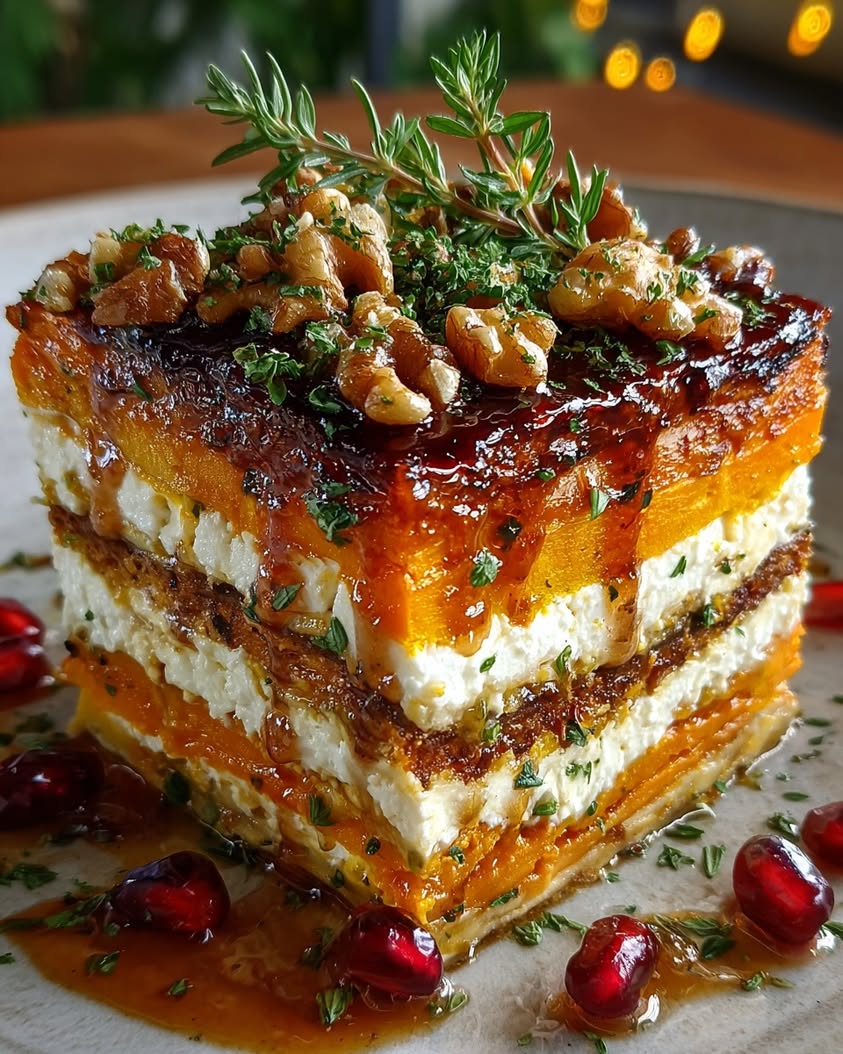
Layered Sweet Potato Lasagna with Pumpkin, Carrot, and Pomegranate Glaze: A Festive Fall Masterpiece
Imagine a dish that captures the very essence of autumn in every single bite. This layered sweet potato lasagna with pumpkin, carrot, and pomegranate glaze is exactly that kind of showstopper. Consequently, it transforms humble root vegetables and seasonal squash into an elegant, layered casserole that will become the star of your holiday table. Moreover, it is a celebration of texture and flavor, featuring creamy layers, crunchy walnuts, tangy feta, and a glossy, sweet-tart pomegranate-honey glaze that ties everything together beautifully.
This recipe is not your traditional pasta-based lasagna. Instead, it uses thinly sliced sweet potatoes and carrots as the “noodles,” creating a naturally gluten-free and nutrient-dense foundation. The filling is a luxurious blend of roasted pumpkin and aromatic spices, while the toppings provide a symphony of contrasting textures. Ultimately, this dish is perfect for anyone seeking a stunning vegetarian main course that feels both comforting and incredibly special. Furthermore, its vibrant colors and complex flavors are guaranteed to impress even the most discerning guests.
Quick Recipe Highlights
- Flavor Profile: This dish masterfully balances sweet, savory, and tangy notes. The natural sweetness of the roasted vegetables plays perfectly against the salty, briny feta cheese. Meanwhile, the pomegranate-honey glaze adds a bright, fruity acidity that cuts through the richness.
- Texture: You get a wonderful contrast in every forkful. The layers of sweet potato and carrot become tender yet hold their shape, while the pumpkin filling is luxuriously smooth. Additionally, the toasted walnuts offer a satisfying crunch, and the pomegranate arils provide a juicy burst.
- Aroma: As it bakes, your kitchen will fill with the warm, inviting scents of cinnamon, nutmeg, and roasting vegetables. The fragrance is deeply autumnal, reminiscent of pumpkin pie and cozy evenings, making the entire cooking experience a delight.
- Visual Appeal: This lasagna is a feast for the eyes with its stunning layers of orange, gold, and deep red. The final drizzle of the ruby-red pomegranate glaze and the sprinkle of fresh herbs and seeds creates a restaurant-worthy presentation that is perfect for photography.
- Skill Level Needed: This is an intermediate recipe due to the multiple components and layering technique. However, clear instructions make it very achievable for a confident home cook. Importantly, patience with slicing and assembly is key to a beautiful final product.
- Special Equipment: A mandoline slicer is highly recommended for achieving uniformly thin sweet potato and carrot slices, which ensures even cooking. Otherwise, you will need a sharp knife, a good baking dish, and parchment paper for easy removal and serving.
Recipe Overview
- Difficulty Level: We rate this layered sweet potato lasagna as intermediate. The process involves several distinct steps: preparing and slicing vegetables, making a filling, creating a glaze, and careful assembly. However, each step is straightforward on its own. The key challenge is achieving even, thin slices for the vegetable layers, which a mandoline makes simple.
- Category: This dish proudly sits as a spectacular vegetarian main course. It is substantial enough to be the centerpiece of a holiday meal. Alternatively, it can serve as a luxurious side dish alongside a roast or other protein for a larger gathering.
- Cuisine: This recipe draws inspiration from Mediterranean and Middle Eastern flavors, evident in the use of feta, walnuts, pomegranate, and honey. It is a modern, fusion-style dish that celebrates seasonal produce with a global pantry approach, resulting in a uniquely delicious experience.
- Cost: The cost is moderate, largely dependent on seasonal produce. Sweet potatoes, carrots, and pumpkin are typically affordable, especially in autumn. Feta, walnuts, and pomegranate molasses might be considered splurge items, but they are used purposefully and create immense flavor impact for the investment.
- Season: This is the ultimate fall and winter recipe. It utilizes the best of the harvest season when root vegetables and squash are at their peak of flavor and affordability. The warm spices and hearty nature make it ideal for cooler weather, providing comfort and nourishment.
- Occasion: This lasagna is perfect for festive occasions like Thanksgiving, Christmas, or a Friendsgiving dinner. It also makes an impressive dish for a dinner party or a special weekend family meal. Essentially, it is designed for times when you want to serve something truly memorable.
Why You’ll Love This Recipe
First and foremost, the taste and texture of this layered sweet potato lasagna are simply unforgettable. Each bite delivers a complex harmony of flavors that evolves on your palate. You experience the earthy sweetness of the vegetables, the creamy tang of the feta, the rich spice of the pumpkin filling, and the final pop of freshness from the pomegranate. Consequently, it is a dish that keeps you coming back for another forkful, discovering new nuances each time. The contrast between the soft layers and the crunchy toppings adds a delightful dimension that standard lasagna often lacks.
From a convenience standpoint, this recipe offers significant preparation benefits. You can roast the pumpkin and prepare the vegetable slices ahead of time, breaking the work into manageable stages. The assembly, while requiring attention, is a meditative and rewarding process. Furthermore, once assembled, the lasagna bakes hands-off in the oven, allowing you to focus on other meal components or simply relax. The final result is a complete, all-in-one dish that requires minimal last-minute fuss, making entertaining much less stressful.
Nutritionally, this dish is a powerhouse. Sweet potatoes and carrots are loaded with beta-carotene, vitamin A, and fiber. Pumpkin adds additional vitamins and antioxidants. Using vegetables as the pasta layers significantly increases the nutrient density and reduces empty carbohydrates compared to traditional lasagna. The walnuts contribute healthy fats and protein, while the feta offers a calcium boost. Therefore, you can feel good about serving a meal that is as nourishing as it is delicious, catering to health-conscious guests without compromising on indulgence.
For social and entertaining value, this lasagna is a guaranteed conversation starter. Its stunning visual appeal immediately signals that a special meal is underway. Serving a beautiful, homemade vegetarian centerpiece shows thoughtfulness and culinary skill. It accommodates various dietary preferences seamlessly, being naturally gluten-free and vegetarian. Guests will be impressed by the effort and creativity, making any gathering feel more elevated and special. It is a recipe that builds wonderful memories around the dining table.
Finally, this dish is cost-effective and accessible. The core ingredients are humble vegetables, making it an economical choice for feeding a crowd. While a few specialty items like pomegranate molasses elevate the dish, common substitutions are available. You can adapt it based on what is in season or on sale at your market. Ultimately, it delivers restaurant-quality presentation and flavor from a relatively modest list of ingredients, offering incredible value for your time and money.
Historical Background and Cultural Significance
The concept of layering ingredients is ancient and spans countless cultures, from Greek pastitsio to Middle Eastern moussaka. However, using vegetables as the layered element is a more modern culinary innovation, often born from dietary necessity and creativity. This layered sweet potato lasagna with pumpkin, carrot, and pomegranate glaze is a contemporary fusion dish that doesn’t have a single origin story. Instead, it is a brilliant amalgamation of techniques and flavors from different food traditions, reflecting today’s global pantry and the desire for vegetable-forward, gluten-free meals.
Culturally, the ingredients tell their own rich stories. The sweet potato has roots in Central and South America but is now a global staple. The pomegranate is a symbol of abundance and fertility in many cultures, from ancient Persia to Greece. Walnuts have been prized for millennia in the Mediterranean and Caucasus regions. Feta cheese is protected by EU law, denoting its specific origin in Greece. By combining these elements, the recipe pays homage to diverse culinary heritages while creating something entirely new and exciting for the modern table.
The evolution of this recipe follows the broader trend of “vegetable lasagnas” or “vegetable tians” that gained popularity with the rise of low-carb and gluten-free diets. Cooks began experimenting with thinly sliced zucchini, eggplant, and yes, sweet potatoes, as substitutes for pasta. The addition of a pumpkin filling leans into the autumn harvest tradition, while the pomegranate glaze is a nod to Middle Eastern cuisine, where pomegranate molasses is a cherished condiment. This evolution showcases how home cooks and chefs continuously adapt and blend traditions to suit contemporary tastes and needs.
Regional variations of this concept are endless. In the American South, you might find a similar dish with pecans and a bourbon glaze. A Mediterranean version could feature layers of eggplant and a tomato-based sauce with Kefalotyri cheese. In a Nordic interpretation, perhaps parsnips and rutabaga form the layers with a lingonberry reduction. The beauty of this layered sweet potato lasagna framework is its incredible adaptability. It invites you to explore different spice blends, cheeses, nuts, and fruit-based glazes based on your local produce and cultural preferences.
Ingredient Deep Dive
Sweet potatoes are the foundational “noodle” in this lasagna. Native to the Americas, they were a staple for indigenous peoples long before European contact. Nutritionally, they are superstar sources of beta-carotene (which converts to Vitamin A), Vitamin C, manganese, and fiber. Their natural sweetness caramelizes beautifully when baked. For this recipe, choose firm, medium-sized sweet potatoes with smooth skin. Avoid any with soft spots or sprouts. Store them in a cool, dark, well-ventilated place—not the refrigerator. For a substitution, try butternut squash or golden beets, though the cooking time may vary slightly.
Pumpkin puree forms the creamy heart of the filling. While pumpkins are synonymous with North American fall traditions, they are cultivated worldwide. The puree provides a velvety texture and a mild, sweet flavor that carries spices wonderfully. It is rich in Vitamin A, potassium, and antioxidants. For best results, use canned pure pumpkin puree, not pumpkin pie filling. Alternatively, you can roast and puree a sugar pumpkin yourself for a deeper flavor. Store unused canned puree in an airtight container in the refrigerator for up to a week. Squash purees like butternut or kabocha make excellent substitutes.
Pomegranate molasses is the key to the signature glaze. This reduced, tangy-sweet syrup is a cornerstone of Persian, Turkish, and Middle Eastern cooking. It is made by slowly reducing pomegranate juice until it becomes a thick, dark, flavorful syrup. It adds a complex fruity acidity that balances the dish’s richness. If you cannot find it, you can make a substitute by simmering two cups of pomegranate juice with a tablespoon of lemon juice and a tablespoon of honey or sugar until reduced to about 1/3 cup. It will keep for months in the pantry. A small bottle is a worthwhile investment for dressings, marinades, and glazes.
Common Mistakes to Avoid
- Cutting Vegetable Slices Too Thick: This is the most common error. Thick slices will not soften properly during baking, leaving you with a crunchy, undercooked texture in the layers. Always aim for 1/8-inch thickness using a mandoline or a very sharp knife and steady hand.
- Not Salting the Vegetable Layers: Sweet potatoes and carrots release moisture as they cook. Lightly salting each layer as you assemble draws out some of this moisture and seasons the vegetables from within, preventing a bland or watery final dish.
- Skipping the Toasting Step for Walnuts: Raw walnuts can have a slightly bitter flavor. Toasting them in a dry pan for a few minutes until fragrant unlocks their nutty sweetness and gives them a superior crunch. This simple step adds significant depth.
- Using Runny Feta: Pre-crumbled feta is often drier and less flavorful. For the best taste and texture, buy a block of feta in brine and crumble it yourself. The creamier texture distributes more evenly and melts subtly into the layers.
- Overloading the Layers: While it is tempting to pile on the filling, restraint is key. Too much pumpkin filling between layers can make the lasagna heavy and difficult to slice neatly. Aim for thin, even layers of each component for the best structure.
- Neglecting to Let it Rest: Pulling the lasagna from the oven and slicing immediately will cause it to fall apart. Let it rest for at least 20 minutes. This allows the layers to set, the starches to firm up, and makes for clean, beautiful servings.
- Applying the Glaze Before Baking: The pomegranate-honey glaze should always be applied after baking. If added before, the honey can burn in the hot oven, creating bitter notes. Drizzle it over the warm lasagna just before serving for a glossy, fresh finish.
- Forgetting to Grease the Pan: Even with parchment paper, greasing the baking dish ensures the lasagna releases easily without sticking. Use butter or a neutral oil on the sides and bottom of the dish before lining it with parchment.
Essential Techniques
Mandoline Slicing is crucial for this recipe. A mandoline ensures uniform, paper-thin slices of sweet potato and carrot, which is non-negotiable for even cooking and proper layering. To master it, always use the hand guard to protect your fingers. Move the vegetable in a steady, consistent motion against the blade. For safety, consider wearing a cut-resistant glove. A common pitfall is applying uneven pressure, resulting in slices of varying thickness. The visual cue for success is a stack of translucent, evenly sized rounds that are flexible but not tearing.
Layering Technique determines the structural integrity of your lasagna. Start with a thin base layer of the pumpkin mixture to prevent sticking. Then, create shingled, slightly overlapping rows of sweet potato and carrot slices. The goal is full coverage without huge gaps or excessive overlap. Lightly season each vegetable layer. Spread the pumpkin filling thinly and evenly with an offset spatula. Repeat the process patiently. The pitfall is rushing and creating sloppy, uneven layers that cook inconsistently. A successful assembly looks like a neat, colorful mosaic before it goes into the oven.
Creating the Pomegranate-Honey Glaze requires careful reduction. Combine pomegranate molasses, honey, and a pinch of salt in a small saucepan. Simmer gently over low heat until the mixture thickens slightly and becomes syrupy. It is important to watch it closely, as honey can burn. The technique is about achieving a coating consistency that will drizzle beautifully, not a hard candy. A common mistake is boiling it too vigorously, which can create a bitter taste. The visual cue is when the glaze coats the back of a spoon and leaves a clear trail when you run your finger through it.
Pro Tips for Perfect Layered Sweet Potato Lasagna
Par-cook your vegetable slices for guaranteed tenderness. If you are worried about the slices being too firm, you can blanch them in boiling salted water for 2-3 minutes, then pat them thoroughly dry before assembling. This extra step ensures they will be perfectly soft after baking.
Roast your own pumpkin for deeper flavor. While canned is convenient, roasting a small sugar pumpkin, scooping out the flesh, and pureeing it will give your filling a richer, caramelized taste that is superior to canned puree.
Add a layer of greens for extra nutrition and color. Briefly sauté some spinach or Swiss chard with garlic, squeeze out the excess liquid, and add a thin layer between the vegetable and pumpkin layers for a pop of green and added vitamins.
Infuse your oil for brushing. Before brushing the top layer, warm some olive oil with a sprig of rosemary or thyme. Let it steep, then brush it on for a subtle, herby fragrance that permeates the top crust.
Use a serrated knife for clean slices. When serving, a gentle sawing motion with a serrated knife will cut through the tender vegetable layers without squashing the beautiful structure you have created.
Reserve some toppings for garnish. Do not mix all the walnuts and pomegranate arils into the layers. Save a handful of each to scatter over the top after adding the glaze for maximum visual impact and textural contrast in every bite.
Variations and Adaptations
For regional variations, consider a Mexican-inspired twist. Add layers of roasted poblano peppers, use a filling spiced with cumin and chipotle, and top with queso fresco and a cilantro-lime crema instead of the pomegranate glaze. Alternatively, a Greek version could incorporate layers of sautéed spinach, use a filling with oregano and mint, and top with Kalamata olives and crumbled feta.
Seasonal adaptations are simple and rewarding. In winter, use parsnips and celery root as part of your vegetable layers. For a spring version, incorporate thin slices of asparagus and leeks, and use a ricotta-herb filling. Summer might call for zucchini and yellow squash layers with a fresh tomato and basil sauce.
Dietary modifications are straightforward. For a vegan layered sweet potato lasagna, omit the feta or use a vegan feta alternative, and replace the honey in the glaze with maple syrup or agave. Ensure your pomegranate molasses is vegan-friendly. For a nut-free version, substitute toasted sunflower or pumpkin seeds for the walnuts.
Flavor variations can personalize the dish immensely. Add a layer of caramelized onions for sweetness. Mix blue cheese or goat cheese into the filling for a tangier profile. Incorporate a tablespoon of harissa or smoked paprika into the pumpkin filling for a warm, smoky kick that complements the sweet vegetables beautifully.
Serving and Presentation Guide
Plating this lasagna is part of the joy. After the resting period, use the parchment paper overhang to lift the entire lasagna slightly. Slice it directly in the pan with a sharp knife. For individual servings, use a flat spatula to transfer each square to the center of a warm plate. Wipe the spatula clean between servings to keep the plates neat. Consider pre-warming your serving plates to keep the dish at an ideal temperature throughout the meal.
Garnishing is the final flourish. After drizzling with the pomegranate-honey glaze, sprinkle the reserved toasted walnuts and pomegranate arils generously. Add a scattering of fresh, delicate herbs like microgreens, chopped parsley, or thyme leaves. A final dusting of flaky sea salt, such as Maldon, adds a delightful crunch and enhances all the flavors. For a creamy element, small dollops of Greek yogurt or a drizzle of tahini sauce on the plate around the lasagna looks stunning.
Traditional accompaniments keep the meal balanced. A simple, bitter green salad with a lemony vinaigrette cuts through the richness perfectly. For a heartier meal, serve with roasted Brussels sprouts or sautéed green beans. Crusty bread is also welcome for soaking up any delicious bits left on the plate.
Wine and Beverage Pairing
Wine pairings should complement the sweet, savory, and earthy notes. A dry Riesling or Gewürztraminer works wonderfully, as their slight sweetness and acidity match the vegetables and cut through the richness. For red wine lovers, a light-bodied, low-tannin red like a Pinot Noir or a Grenache will not overpower the dish. An amber ale or a dry hard cider are also fantastic beer and cider choices, echoing the autumnal themes.
Non-alcoholic alternatives can be just as thoughtful. A sparkling pomegranate juice or a ginger beer provides festive fizz and flavor synergy. A warm mug of spiced apple cider is a cozy companion. For a more sophisticated option, brew a pot of Moroccan mint tea; its refreshing quality cleanses the palate between bites beautifully.
Storage and Shelf Life
Store leftovers properly to maintain quality. Cool the lasagna completely, then cover the baking dish tightly with plastic wrap or transfer individual portions to airtight containers. It will keep in the refrigerator for up to 4 days. The flavors often meld and improve on the second day. For longer storage, you can freeze it. Wrap the entire cooled lasagna or individual portions tightly in plastic wrap and then in foil. Label and freeze for up to 2 months.
Reheating requires care to prevent drying out. For refrigerated portions, reheat in a 350°F oven, covered with foil, for 15-20 minutes until warmed through. You can also microwave single servings on medium power, but the texture of the vegetables may soften slightly. For frozen lasagna, thaw overnight in the refrigerator before reheating using the oven method. Always add fresh garnishes and a new drizzle of glaze after reheating to revive the bright flavors and textures.
Make Ahead Strategies
You can break this recipe into stages over two days. On Day 1, slice all your sweet potatoes and carrots. Store them submerged in water in the refrigerator to prevent browning. Prepare the pumpkin filling and store it in a separate container. Toast and chop the walnuts, and make the pomegranate-honey glaze. On Day 2, drain and thoroughly pat dry the vegetable slices, then assemble and bake. This strategy makes the process feel much more manageable for a special occasion.
For full make-ahead assembly, you can assemble the entire lasagna (without the glaze and fresh toppings) up to 24 hours in advance. Cover it tightly with plastic wrap and refrigerate. When ready to bake, let it sit at room temperature for 30 minutes, then bake as directed, adding a few extra minutes to the cooking time if it is still cold from the fridge. The resting step is even more critical for a make-ahead lasagna to allow the layers to set properly.
Scaling Instructions
Halving the recipe is simple for a smaller household. Use an 8×8 inch baking dish. Halve all ingredient quantities precisely. The baking time may be slightly reduced, so start checking for doneness around the 50-minute mark. The vegetable slices will still need to be the same thickness for proper layering, so a mandoline remains essential even for a smaller batch.
Doubling or tripling for a crowd requires planning. Double all ingredients and use two separate 9×13 dishes, as one overly deep lasagna will not cook evenly. You may need to roast the vegetable slices in batches if your mandoline and baking sheets cannot accommodate the volume at once. Stagger the baking dishes on different oven racks and rotate them halfway through cooking to ensure even browning. Consider the increased assembly time and ensure you have enough workspace.
Nutritional Deep Dive
This layered sweet potato lasagna is a nutrient-dense meal. A serving provides a substantial amount of Vitamin A (over 300% of the RDA) from the sweet potatoes, pumpkin, and carrots, which is vital for vision and immune health. It is also a good source of fiber, promoting digestive wellness and satiety. The walnuts contribute heart-healthy omega-3 fatty acids and plant-based protein, while the feta offers calcium and protein. The dish is naturally lower in saturated fat compared to meat-based lasagnas and contains no refined grains, making it a wholesome choice.
For portion analysis and weight management, one serving of this lasagna is satisfying and filling due to its high fiber and water content from the vegetables. It can easily be the center of a balanced meal paired with a large salad. To lighten it further, you can reduce the amount of feta slightly or use a light feta. Remember, the primary ingredients are vegetables, which are low in calorie density, meaning you can enjoy a generous portion that is visually and physically satisfying without excessive calories.
Dietary Adaptations
For a gluten-free diet, this recipe is naturally perfect, as it uses no wheat-based pasta. Always check labels on packaged ingredients like pomegranate molasses to ensure no gluten-containing additives were used.
For a dairy-free or vegan adaptation, omit the feta cheese. You can substitute it with a vegan feta alternative or simply leave it out for a lighter version. In the glaze, replace honey with maple syrup or agave nectar. The result will still be creamy, flavorful, and entirely plant-based.
For a Paleo adaptation, ensure you use a high-quality, additive-free pomegranate molasses and replace the honey with raw honey if desired. Omit the feta cheese, as dairy is not typically included in strict Paleo diets. The dish then consists entirely of vegetables, nuts, and natural sweeteners.
For a Low-FODMAP version, this recipe requires careful modification. Use only the green parts of leeks instead of onions or garlic in the filling (if added). Limit the sweet potato portion to a 1/2 cup serving per person, as they contain moderate FODMAPs in larger quantities. Omit the honey in the glaze and use maple syrup instead, and ensure the pomegranate molasses does not contain high-fructose corn syrup.
Troubleshooting Guide
If your lasagna is watery, the likely causes are vegetables that were not patted dry or slices that were too thick, preventing proper evaporation. Next time, ensure slices are paper-thin and thoroughly dried. Salting the layers also helps draw out moisture. If it happens, let the baked lasagna rest longer so the liquid can be reabsorbed, and serve it with a slotted spatula.
If the top is browning too quickly but the center is not done, you have an oven that runs hot or a rack placed too high. Immediately cover the lasagna loosely with a sheet of aluminum foil to shield the top. Continue baking until a knife inserts easily into the center. Next time, bake on a middle rack and consider starting with foil for the first half of baking, then removing it to brown.
If the vegetable layers are still firm after baking, the slices were definitely too thick. Unfortunately, you cannot fix this after baking. For future attempts, a mandoline is the best solution. If you encounter this, you can return the lasagna to the oven, covered, and bake for an additional 15-20 minutes, checking frequently until tender.
Frequently Asked Questions
Can I use butternut squash instead of sweet potato? Absolutely. Butternut squash makes an excellent substitute. Peel it and slice it thinly on a mandoline just like the sweet potato. The flavor and texture will be very similar, and it will bake in approximately the same amount of time.
I can’t find pomegranate molasses. What can I use? You can make a quick substitute by simmering 2 cups of pure pomegranate juice with a tablespoon of lemon juice and a tablespoon of honey or sugar until it reduces to about 1/3 cup of a thick, syrupy consistency. Alternatively, a balsamic glaze can provide a different but delicious sweet-tart note.
Is it necessary to peel the sweet potatoes and carrots? Yes, for this recipe, peeling is recommended. The skins can be tough and may not soften enough during baking, creating unpleasant texture contrasts in the delicate layers. Peeling ensures a uniformly tender bite throughout.
Can I assemble and freeze this lasagna before baking? Yes, you can. Assemble the lasagna completely (without the fresh toppings and glaze), wrap it very tightly in plastic wrap and then foil, and freeze. Thaw in the refrigerator for 24 hours before baking as directed, adding a few extra minutes if needed.
What can I use instead of walnuts for a nut allergy? Toasted pumpkin seeds (pepitas) or sunflower seeds are fantastic alternatives. They provide the necessary crunch and a slightly different but still complementary flavor that works well with the other ingredients.
How do I know when the lasagna is fully cooked? The top should be golden brown in spots, and the edges will be bubbling slightly. The most reliable test is to insert a sharp knife or a skewer into the center. It should slide through all the vegetable layers with little to no resistance.
Can I make this in a slow cooker or Instant Pot? This recipe is not ideal for a slow cooker as it would steam rather than bake, resulting in a soggy texture. An Instant Pot could be used on the “Slow Cook” function, but the top will not brown. The conventional oven method is strongly recommended for the best results.
My glaze is too thick. How can I fix it? Simply place the saucepan back on low heat and whisk in a teaspoon of warm water at a time until it reaches a drizzle-able consistency. Be careful not to add too much liquid at once.
Additional Resources
If you loved the flavors in this layered sweet potato lasagna, explore other recipes that use pomegranate molasses, such as Muhammara (a red pepper and walnut dip) or Fesenjan (a Persian pomegranate-walnut stew). These dishes share ingredient DNA and offer a deeper dive into the cuisine that inspired your glaze.
For mastering vegetable prep, consider investing in a good quality mandoline slicer with multiple thickness settings and a secure hand guard. A sharp chef’s knife and a Y-peeler are also essential tools for any cook looking to tackle more vegetable-centric recipes with confidence and ease.
To explore seasonal variations, bookmark recipes for root vegetable gratins, vegetable tians, and other layered casseroles. Understanding the basic principles of layering, moisture control, and baking times for vegetables will empower you to create your own unique versions based on what is fresh at your farmers’ market each week.
{“success”:true,”message”:”Recipe created successfully”,”post_id”:8122,”tasty_recipe_id”:8122,”shortcode”:” Print
Layered Sweet Potato, Pumpkin, Carrot Lasagna with Feta, Walnuts & Pomegranate-Honey Glaze
Description
A vibrant, savory-sweet vegetarian lasagna featuring layers of roasted root vegetables, creamy feta, crunchy walnuts, and a tangy pomegranate-honey glaze.
Ingredients
For the Crust:
- 2 medium sweet potatoes, thinly sliced
- 1 small pumpkin, peeled and thinly sliced
- 3 large carrots, thinly sliced
- 1 cup crumbled feta cheese
- 1/2 cup chopped walnuts
- 1/4 cup olive oil
- 1 teaspoon dried thyme
- Salt and black pepper to taste
- 1/2 cup pomegranate juice
- 2 tablespoons honey
- 1 tablespoon balsamic vinegar
- Fresh parsley for garnish
Instructions
1. Prepare the Crust:
- Preheat oven to 375°F (190°C). Toss sweet potato, pumpkin, and carrot slices with olive oil, thyme, salt, and pepper. Roast on a baking sheet for 20 minutes until tender.
- In a small saucepan, combine pomegranate juice, honey, and balsamic vinegar. Simmer over medium heat for 10 minutes until reduced to a syrupy glaze.
- In a baking dish, layer half the roasted vegetables, sprinkle with half the feta and walnuts. Repeat with remaining vegetables, feta, and walnuts.
- Drizzle half the pomegranate-honey glaze over the top layer. Bake for 15 minutes until cheese is slightly melted.
- Remove from oven, drizzle with remaining glaze, and garnish with fresh parsley before serving.
Notes
You can customize the seasonings to taste.

I’m Billy, a classically trained culinary school graduate from The Culinary Institute of America with over 12 years in the restaurant industry and over 19 years of cooking experience.