
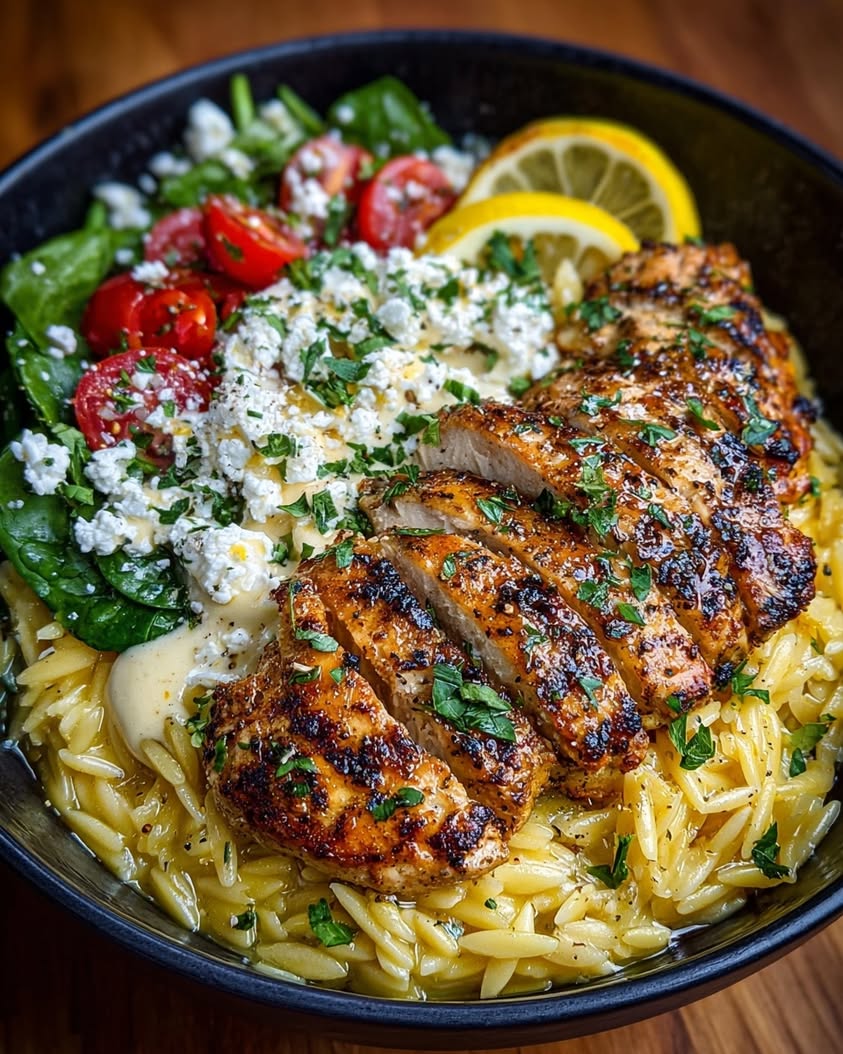
Lemon Dijon Chicken Orzo Bowl with Creamy Feta: A Bright and Comforting One-Pan Wonder
Imagine a dinner that delivers the cozy comfort of a pasta dish but feels fresh, vibrant, and effortlessly elegant. This Lemon Dijon Chicken Orzo Bowl with Creamy Feta is exactly that kind of magic. It combines tender, pan-seared chicken with orzo pasta, all simmered in a luxuriously creamy sauce bursting with bright lemon and savory Dijon mustard. Ultimately, the tangy, crumbled feta cheese melts into the warm orzo, creating pockets of creamy, salty perfection in every single bite.
Furthermore, this recipe is a true weeknight hero. It comes together in one pan, meaning minimal cleanup and maximum flavor. The process is straightforward: you cook the chicken, then use the same pan to toast the orzo and build the sauce. Consequently, every ingredient soaks up the delicious fond from the chicken, creating layers of deep, savory flavor. This Lemon Dijon Chicken Orzo Bowl is the perfect answer when you crave something satisfying yet not heavy, familiar yet exciting.
Additionally, the beauty of this dish lies in its balance. The sharpness of the Dijon and lemon cuts through the richness of the cream and cheese, preventing the meal from feeling overly decadent. Meanwhile, the orzo, a rice-shaped pasta, cooks directly in the sauce, absorbing all those wonderful flavors and becoming incredibly creamy. The result is a complete, restaurant-quality meal that you can proudly serve to guests or enjoy as a special treat for your family.
Quick Recipe Highlights
- Flavor Profile: This dish masterfully balances tangy, savory, and creamy notes. The lemon provides a bright, citrusy zing, while the Dijon mustard adds a sharp, sophisticated depth. Finally, the creamy feta cheese brings a salty, tangy richness that ties everything together beautifully.
- Texture: You get a wonderful contrast of textures in every forkful. The chicken is juicy and tender, the orzo is plump and pleasantly chewy, and the creamy sauce is luxuriously smooth. Additionally, the fresh herbs add a slight crispness for a perfect finish.
- Aroma: As it cooks, your kitchen will fill with an irresistible aroma. First, you’ll smell the savory scent of browning chicken and garlic. Then, the bright, fresh notes of lemon zest and herbs will bloom, creating a mouthwatering fragrance that promises a delicious meal.
- Visual Appeal: This bowl is a feast for the eyes with its appealing color palette. The golden-brown chicken rests on a bed of creamy, pale yellow orzo, speckled with green herbs and vibrant red cherry tomatoes. The white crumbles of feta cheese add the perfect finishing touch.
- Skill Level Needed: This is an accessible recipe for most home cooks. The techniques involved—searing chicken, making a simple pan sauce, and cooking pasta—are fundamental. Therefore, even beginners can achieve fantastic results by following the clear, step-by-step instructions.
- Special Equipment: You only need one large skillet or braiser with a lid. A good, heavy-bottomed pan is ideal for even cooking and developing a nice sear on the chicken. Otherwise, standard kitchen tools like a cutting board, knife, and measuring cups are all you require.
Recipe Overview
- Difficulty Level: We rate this Lemon Dijon Chicken Orzo Bowl as “Easy.” The steps are sequential and logical, with no advanced techniques required. You simply cook components in one pan, building layers of flavor. The most important skill is managing heat to cook the chicken through without burning the sauce, which is clearly guided.
- Category: This recipe falls perfectly into the categories of a one-pan meal, a pasta dish, and a creamy chicken dinner. It’s a complete, balanced meal featuring protein, starch, and vegetables all cooked together. Consequently, it’s ideal for busy weeknights, casual weekend dinners, or even meal prep.
- Cuisine: While not strictly traditional to one region, this dish draws inspiration from Mediterranean and modern American comfort food. The use of lemon, garlic, and feta cheese nods to Greek flavors, while the creamy mustard sauce and one-pan method reflect contemporary, efficient home cooking trends.
- Cost: This is a very cost-effective meal to prepare. Chicken thighs are typically an affordable cut of protein, and pantry staples like orzo, chicken broth, and Dijon mustard keep costs low. Fresh lemons, herbs, and block feta are the only fresh ingredients, making this a budget-friendly gourmet experience.
- Season: This Lemon Dijon Chicken Orzo Bowl is truly a year-round champion. Its bright lemon makes it feel light and perfect for spring and summer. Conversely, the creamy, comforting nature of the orzo and chicken makes it equally wonderful for cozy fall and winter evenings.
- Occasion: It’s incredibly versatile for different occasions. It’s quick enough for a Tuesday family dinner yet impressive enough for a casual dinner party with friends. You can easily double the recipe for a crowd, and its all-in-one nature makes serving and cleanup a breeze.
Why You’ll Love This Recipe
First and foremost, the taste and texture of this Lemon Dijon Chicken Orzo Bowl are utterly captivating. Each bite delivers a symphony of flavors: the initial tang of lemon and Dijon, followed by the savory, umami depth from the chicken and broth, all rounded out by the creamy, salty feta. The orzo, cooked directly in the sauce, becomes incredibly flavorful and has a delightful, tender-yet-firm bite. This combination is both comforting and exciting, satisfying cravings for something rich and something fresh simultaneously.
Next, the convenience factor is a major win. This entire meal cooks in one single pan. You sear the chicken, then build the sauce and cook the orzo right in the same delicious drippings. This method not only maximizes flavor but also minimizes your cleanup time. There’s no need to boil a separate pot of water for the pasta or dirty multiple dishes. From start to finish, you can have a gourmet-tasting dinner on the table in about 40 minutes, with very little active hands-on time required.
Moreover, this dish offers several nutritional advantages when prepared thoughtfully. Chicken thighs provide high-quality protein and essential B vitamins. Using a whole-grain orzo option can increase the fiber content significantly. The sauce is cream-based, but you control the amount, and the primary flavor comes from lemon and mustard, which are very low in calories. Adding spinach or other greens at the end is an easy way to boost vitamins and minerals, making it a well-rounded meal.
Additionally, the social and entertaining value of this Lemon Dijon Chicken Orzo Bowl is high. It presents beautifully in the skillet for a rustic, family-style serving option that always impresses guests. The flavors are universally appealing but just unique enough to feel special. Because it’s a complete meal in one dish, you can focus on your company instead of juggling multiple side dishes in the kitchen. It pairs wonderfully with a simple green salad and a glass of white wine for an effortless yet elegant dinner party.
Finally, its cost-effectiveness and accessibility make it a staple-worthy recipe. The ingredients are common and easy to find at any standard grocery store. Chicken thighs are often more affordable and forgiving to cook than breasts. Orzo is an inexpensive pasta, and the other components are pantry basics. This recipe allows you to create a restaurant-quality meal at a fraction of the cost, proving that eating well doesn’t require expensive or hard-to-find ingredients.
Historical Background and Cultural Significance
The origin story of this specific recipe is modern, born from the contemporary desire for flavorful, one-pan meals. However, its components have deep, ancient roots. Orzo, meaning “barley” in Italian, is a pasta shaped like a large grain of rice. Pasta-making itself dates back centuries across Mediterranean cultures. The technique of cooking pasta directly in its sauce, known as “risottare” in Italian, is a traditional method for creating incredibly creamy and cohesive dishes, much like a risotto. This Lemon Dijon Chicken Orzo Bowl adapts that timeless technique for a quick, Americanized weeknight dinner.
Cultural importance is woven through the key flavor agents. Lemon and olive oil are cornerstones of Mediterranean cuisine, celebrated from Greece to Southern Italy for their ability to brighten and enhance dishes. Feta cheese, a brined curd cheese, is a protected designation of origin (PDO) product of Greece, with a history spanning thousands of years. Dijon mustard hails from the Burgundy region of France. Therefore, this recipe is a delicious fusion of culinary traditions from across Southern Europe, unified by a modern cooking method.
The evolution of the recipe follows broader food trends. The move towards one-pan or “skillet” meals has gained massive popularity in recent decades, driven by busy lifestyles and the appeal of easier cleanup. Combining a protein, starch, and sauce in a single vessel is a practical evolution from more complex, multi-pot recipes. The use of Dijon mustard as a flavor base in creamy sauces is a classic French technique that has been warmly adopted into global home cooking for the depth and complexity it adds without fuss.
Regional variations of this concept are endless. In Greece, you might find a similar dish called “youvetsi,” often featuring orzo baked with tomatoes, meat, and cheese. In Italy, “orzo al limone” is a simple, elegant side. The American twist is the incorporation of the pan-seared chicken directly into the pasta, creating a hearty, all-in-one meal. You could easily adapt this Lemon Dijon Chicken Orzo Bowl by using different herbs, adding artichokes or olives for a more Greek profile, or incorporating sun-dried tomatoes for an Italian flair.
Ingredient Deep Dive
Chicken Thighs: We recommend bone-in, skin-on chicken thighs for maximum flavor and juiciness. The skin renders fat for cooking and becomes beautifully crispy, while the bone adds depth to the sauce as it simmers. Chicken thighs are more forgiving than breasts; they stay moist even if slightly overcooked. From a nutritional standpoint, they contain more iron and zinc than white meat. For a leaner option, you can use boneless, skinless thighs or even chicken breasts, but adjust cooking time to prevent dryness.
Orzo: This rice-shaped pasta is key to the dish’s creamy texture. As it cooks, it releases starch directly into the sauce, thickening it naturally. Orzo is traditionally made from semolina flour. For a healthier twist, seek out whole-wheat orzo, which offers more fiber and nutrients. You cannot substitute it with actual rice in this recipe, as the cooking liquid and time are calibrated for pasta. Other small pastas like ditalini or acini di pepe could work in a pinch, but the unique texture of orzo is ideal.
Dijon Mustard: True Dijon mustard from France is made from brown mustard seeds, white wine, and verjuice. It provides a sharp, clean, and complex tang that is less vinegary than yellow mustard. In this Lemon Dijon Chicken Orzo Bowl, it acts as both a flavor layer and an emulsifier, helping to create a smooth, stable sauce. Its acidity balances the richness of the cream. Do not substitute with yellow mustard, as the flavor profile is completely different. A good whole-grain mustard could be used for a more textured, rustic result.
Feta Cheese: For the best flavor and texture, always buy feta in a block, packed in brine. Pre-crumbled feta often contains anti-caking agents that can make it dry and less creamy when melted. Authentic Greek feta is made from at least 70% sheep’s milk, sometimes blended with goat’s milk, giving it a tangy, salty, and slightly earthy flavor. It’s a good source of calcium and protein. The brine itself is a treasure; you can use a splash in the sauce or in dressings for an extra salty punch.
Fresh Lemon: Both zest and juice are crucial. The zest contains potent aromatic oils that deliver intense lemon fragrance without acidity. The juice provides the necessary bright, tangy flavor that defines the dish. Always zest your lemon before juicing it, as it’s much harder to do the reverse. For the best yield and flavor, roll the lemon firmly on the counter before cutting and juicing. This simple step helps break down the internal membranes for more juice.
Common Mistakes to Avoid
- Not Browning the Chicken Properly: Avoid moving the chicken too soon after placing it in the pan. Let it sear undisturbed for several minutes to develop a golden-brown crust. This crust, called the Maillard reaction, adds immense flavor to both the chicken and the subsequent sauce. If you try to flip it too early, the skin will stick and tear.
- Using Pre-Crumbled Feta: This is a common shortcut that compromises texture. Pre-crumbled feta is coated to prevent clumping, which also prevents it from melting properly into the warm orzo. For a beautifully creamy result, always buy a block of feta in brine and crumble it yourself just before serving.
- Overcooking the Orzo: Orzo continues to cook and absorb liquid even after you turn off the heat. Therefore, aim for an al dente texture—slightly firm to the bite—while it’s still on the stove. It will become perfectly tender as it rests in the residual heat, preventing a mushy Lemon Dijon Chicken Orzo Bowl.
- Adding Lemon Juice Too Early: The bright, fresh flavor of lemon juice can diminish and turn bitter if cooked for too long. Always add the lemon juice at the very end of the cooking process, off the heat or during the final simmer. This preserves its vibrant acidity and aroma.
- Not Toasting the Orzo: Before adding the liquid, take a minute to sauté the orzo in the pan drippings. This light toasting step adds a nutty depth to the pasta’s flavor and helps it maintain a better texture during cooking. Skipping it results in a more one-dimensional taste.
- Using Cold Broth or Cream: Adding cold liquids to a hot pan can shock the ingredients and disrupt the cooking process. It can also cause the cream to potentially curdle. For a smooth integration and even cooking, try to use liquids that are at least at room temperature.
- Overcrowding the Pan: When searing the chicken, give each piece plenty of space. If the pan is too crowded, the chicken will steam instead of sear, resulting in pale, rubbery skin. Cook in batches if necessary to ensure each thigh gets proper contact with the hot pan.
- Forgetting to Season in Layers: Seasoning only at the end leads to a bland dish. Remember to season the chicken before searing, taste and adjust the sauce before adding the orzo, and do a final seasoning check before serving. This builds a complete and well-rounded flavor profile.
Essential Techniques
Pan Searing for Flavor: This technique is foundational for building the dish’s flavor base. The goal is to create a deep, brown crust on the chicken through the Maillard reaction. To master it, ensure your pan is properly preheated and your chicken skin is patted very dry. Then, place the chicken skin-side down and do not move it for a good 5-7 minutes. A common pitfall is impatience; lifting the chicken too early will tear the skin. The visual cue for success is a golden-brown, crispy skin that releases easily from the pan.
Deglazing and Building a Pan Sauce: After removing the chicken, you’ll see browned bits stuck to the pan. These are flavor gold. Deglazing involves adding a liquid (like broth or wine) to the hot pan and using a wooden spoon to scrape those bits up. This process dissolves the fond into your sauce, creating incredible depth. The key is to do this over medium heat, ensuring you scrape thoroughly. The sauce is ready for the next step when the bottom of the pan is clean and the liquid has reduced slightly.
Toasting the Orzo: Before simmering in liquid, toasting dry orzo in the fat for a minute or two is a simple but transformative step. It coats each grain in flavor and lightly toasts the exterior, which helps the pasta maintain a firmer texture and prevents it from becoming gummy. Stir constantly over medium heat until the orzo becomes fragrant and turns a light golden color. Be careful not to burn it, as this will introduce a bitter taste.
Finishing with Acid and Fat: Adding fresh lemon juice and cold butter or cream at the end of cooking is a classic French technique called “monter au beurre.” It finishes the sauce, giving it a glossy sheen, a velvety texture, and a bright, rounded flavor. Always do this off the direct heat to prevent the sauce from breaking. Stir vigorously until fully incorporated. This final touch elevates the Lemon Dijon Chicken Orzo Bowl from good to restaurant-quality.
Pro Tips for Perfect Lemon Dijon Chicken Orzo Bowl
First, pat your chicken thighs extremely dry with paper towels before seasoning. Any surface moisture will create steam and prevent that crucial, crispy sear you’re after. Dry skin is the single most important factor for achieving perfect browning.
Second, let your chicken rest for a few minutes after cooking and before serving. This allows the juices to redistribute throughout the meat. If you cut into it immediately, all those flavorful juices will run out onto the plate instead of staying in the chicken.
Third, use a microplane to zest your lemon. It creates fine, fluffy zest without any bitter white pith. You’ll get more aromatic oil and a better distribution of flavor throughout the entire Lemon Dijon Chicken Orzo Bowl.
Fourth, reserve about a quarter cup of the pasta cooking water if you boil the orzo separately. The starchy water is a magical tool for adjusting your sauce consistency at the end. It helps the sauce cling to the pasta beautifully.
Fifth, if your sauce seems too thin after the orzo is cooked, let it simmer uncovered for an extra minute or two. The excess liquid will evaporate, naturally thickening the sauce to a creamy, coating consistency.
Sixth, add delicate greens like baby spinach or arugula at the very end. Simply stir them into the hot orzo off the heat. The residual warmth will wilt them perfectly without turning them to mush.
Seventh, for an extra flavor boost, add a tablespoon of the feta brine to the sauce when you add the broth. It adds a wonderful salty, tangy depth that complements the cheese perfectly.
Eighth, always do a final taste and season just before serving. The flavors meld as they sit, and you may find it needs another pinch of salt, a crack of pepper, or a tiny extra squeeze of lemon to make everything pop.
Variations and Adaptations
Regional Variations: For a Greek-inspired twist, add kalamata olives and artichoke hearts when you add the orzo. Swap the thyme for oregano, and use a splash of white wine for deglazing. For an Italian flair, use sun-dried tomatoes and fresh basil. Substitute the feta for freshly grated Parmesan or Pecorino Romano for a different kind of salty, umami kick.
Seasonal Adaptations: In spring, add fresh peas and asparagus tips during the last few minutes of cooking. For summer, incorporate roasted corn and cherry tomatoes. In autumn, stir in roasted cubes of butternut squash and sage. Winter calls for hearty greens like chopped kale or Swiss chard, which need a minute longer to wilt into the hot orzo.
Dietary Modifications: For a gluten-free Lemon Dijon Chicken Orzo Bowl, simply use a certified gluten-free orzo made from rice or corn. To make it dairy-free, omit the cream and use full-fat coconut milk, and substitute the feta with a dairy-free alternative or nutritional yeast for a cheesy flavor. The recipe is quite adaptable.
Flavor Variations: Love heat? Add a pinch of red pepper flakes when you cook the garlic. For a richer, deeper flavor, use a combination of chicken broth and a splash of dry white wine for deglazing. You can also add a teaspoon of honey or maple syrup to the sauce to balance the acidity with a touch of sweetness.
Texture Modifications: If you prefer a brothier dish, like a soup, simply increase the amount of chicken broth by one to two cups. For a thicker, almost risotto-like consistency, use slightly less broth and stir more frequently as the orzo cooks to release its starch.
Presentation Alternatives: Serve the orzo in wide, shallow bowls with the chicken placed on top for an elegant restaurant-style presentation. Alternatively, shred the cooked chicken and mix it directly into the orzo for a hearty, cohesive bowl. Garnish with fresh herbs, lemon wedges, and extra crumbled feta for a beautiful finish.
Serving and Presentation Guide
Plating this dish beautifully is simple and effective. For individual servings, use a wide, shallow bowl. Spoon a generous portion of the creamy orzo into the center. Place a seared chicken thigh directly on top, skin-side up to showcase its crispy texture. This creates height and visual interest. Drizzle a little extra sauce around the edges if desired.
Garnishing is key to elevating the visual appeal. A final sprinkle of freshly crumbled feta cheese adds a pop of white. Scatter finely chopped fresh parsley, dill, or chives over everything for a touch of green. Place a thin lemon wheel or wedge on the side of the bowl. For color, add a few halved, roasted cherry tomatoes or a sprinkle of paprika over the chicken.
Traditional accompaniments are light and simple to complement the rich bowl. A crisp green salad with a lemony vinaigrette is perfect. Garlic bread or a crusty baguette is ideal for soaking up any remaining sauce. For a vegetable side, roasted asparagus, green beans, or a simple sauté of zucchini work wonderfully.
Modern serving suggestions include family-style presentation. Bring the entire skillet to the table, allowing guests to serve themselves. This creates a warm, communal dining experience. You can also deconstruct the elements for a buffet, serving the orzo, chicken, and garnishes separately for a build-your-own-bowl setup.
Temperature considerations are important. Serve the Lemon Dijon Chicken Orzo Bowl immediately after finishing it. The orzo is best when hot and creamy, and the chicken skin is at its crispiest right out of the pan. If you must hold it, keep it covered in a warm oven, but note the orzo will continue to thicken.
Portion control is easy with this recipe. One chicken thigh and about one cup of the orzo mixture per person is a standard, satisfying serving. Since it’s a complete meal, you don’t need large portions. The dish is rich and filling, so moderate servings are often perfectly adequate.
Wine and Beverage Pairing
Wine pairings for this dish should complement its creamy, tangy, and savory notes. A crisp, acidic white wine like Sauvignon Blanc or Pinot Grigio is an excellent choice. Their citrus and herbal notes mirror the lemon and herbs in the bowl. Alternatively, a light-bodied, unoaked Chardonnay can handle the creaminess without overwhelming the palate. For red wine lovers, a light Pinot Noir with its bright red fruit and low tannins can work surprisingly well, especially if the dish has earthier elements like mushrooms.
Non-alcoholic alternatives are just as important. Sparkling water with a twist of lemon or lime cleanses the palate between bites. For something more flavorful, a homemade lemonade or a minty iced tea provides a refreshing contrast to the rich, creamy orzo. A tart cherry or pomegranate spritzer can also offer a nice balance of sweetness and acidity.
While not typical for dinner, coffee or tea pairings could follow the meal. After enjoying the Lemon Dijon Chicken Orzo Bowl, a cup of herbal tea like lemon ginger or peppermint would be soothing and aid digestion. A light, bright coffee without heavy roast notes could also be a pleasant finish, especially if served with a simple biscotti.
Temperature considerations are straightforward. White wines and non-alcoholic spritzers should be served well-chilled, around 45-50°F. This coolness provides a refreshing counterpoint to the warm, comforting bowl. Red wine, if chosen, should be served slightly cooler than room temperature, around 55°F, to keep its fruit flavors vibrant.
Serving suggestions include offering both wine and non-alcoholic options to guests. Always serve water alongside to cleanse the palate. If serving wine, pour a modest amount to start, allowing the complex flavors of the food and drink to be appreciated without overwhelming the senses.
Storage and Shelf Life
Proper storage methods are essential for maintaining quality. Allow the Lemon Dijon Chicken Orzo Bowl to cool completely before storing. Separate the chicken from the orzo if possible, as the pasta will continue to absorb liquid and can become mushy when stored together. Place each component in separate airtight containers.
Temperature requirements are strict for food safety. Refrigerate the leftovers within two hours of cooking. The ideal refrigerator temperature is 40°F or below. Do not leave the dish at room temperature for extended periods, as the creamy sauce creates an environment where bacteria can grow rapidly.
Container recommendations include glass or BPA-free plastic containers with tight-fitting lids. Glass is preferable as it doesn’t absorb odors and allows you to see the contents. Ensure the containers are the right size to minimize empty air space, which can lead to faster spoilage and drying out.
Signs of spoilage are important to recognize. Discard the food if you notice an off or sour smell, visible mold, or significant changes in texture (like excessive sliminess). The orzo may dry out a bit in the fridge, but it should not develop an unpleasant odor. When in doubt, throw it out.
Reheating instructions are key to enjoying leftovers. For the best texture, reheat the orzo in a skillet over medium-low heat with a splash of broth, water, or milk to loosen the sauce. Reheat the chicken separately in the oven or toaster oven at 350°F until warmed through to help re-crisp the skin. Microwave reheating is possible but will soften the chicken skin.
Freezing guidelines are not generally recommended for this dish. The creamy sauce may separate upon thawing, and the orzo can become very soft and grainy. The chicken may also become tough. For best quality, enjoy this Lemon Dijon Chicken Orzo Bowl fresh or within 3-4 days of refrigeration.
Make Ahead Strategies
A practical prep timeline can save you valuable time on a busy night. The day before, you can season the chicken thighs and store them covered in the fridge. You can also measure out your dry orzo, grate your garlic, zest and juice your lemon, and crumble your feta cheese. Store each prepped ingredient in its own small container in the refrigerator.
Storage between steps is simple with proper planning. Keep prepped vegetables and herbs in airtight containers or sealed bags. Keep dairy products like cream and feta well-chilled until the moment you need them. Having everything measured and ready (mise en place) turns the cooking process into a smooth, enjoyable assembly.
Quality impact assessment is important. Pre-cooking the chicken fully a day ahead is not ideal, as reheating can dry it out. However, pre-searing is possible: you could brown the chicken, let it cool, and refrigerate it. Then, when ready to cook, proceed with the recipe, adding the par-cooked chicken back to the pan a few minutes earlier to finish heating through.
Assembly tips for a make-ahead meal involve partially cooking the orzo. You can cook the orzo in the sauce until it is just under al dente, then quickly cool the mixture and refrigerate. When ready to serve, reheat it gently on the stove with a little extra broth, finishing the cooking process. This helps maintain a better texture than fully cooking and reheating.
Reheating guidelines for make-ahead components are gentle. Always reheat over medium-low heat and stir frequently to prevent scorching on the bottom of the pan. Add liquid as needed to return the sauce to a creamy consistency. The chicken is best reheated in an oven or air fryer to restore some crispness to the skin.
Fresh element additions are your secret weapon. Even if you make the orzo base ahead, always add the final lemon juice, fresh herbs, and crumbled feta just before serving. This ensures the brightest flavors and best textures, making the dish taste freshly made even if parts were prepared in advance.
Scaling Instructions
Halving the recipe is straightforward for smaller households. Simply divide all ingredient quantities by two. Use a medium-sized skillet instead of a large one. The cooking times will remain roughly the same, but keep a close eye as smaller volumes can cook slightly faster. This is a great way to test the recipe or make a cozy dinner for two.
Doubling or tripling the recipe for a crowd requires some adjustments. Use the largest Dutch oven or braiser you have to ensure even cooking. You may need to sear the chicken in batches to avoid overcrowding. When adding the broth and cream, the volume will be large, so allow extra time for the liquid to come to a simmer. The orzo may also take a few minutes longer to cook through due to the increased volume.
Equipment adjustments are necessary when scaling. For a double batch, a 5-6 quart Dutch oven is ideal. For a triple batch, you may need to use two large skillets or a very large stockpot. Ensure you have a lid that fits properly. Using a wider, shallower pan is better than a tall, narrow one for even evaporation and cooking.
Timing modifications are minimal when scaling up. The initial searing of the chicken will take longer if done in batches. The simmering time for the orzo might increase by 3-5 minutes for a double batch. Always rely on the doneness cues (orzo tender, sauce thickened) rather than strictly following the original timer.
Storage considerations change with volume. A large batch will take longer to cool down, which is a food safety concern. To cool it quickly for refrigeration, divide the hot Lemon Dijon Chicken Orzo Bowl into several smaller, shallow containers. This allows it to cool to a safe temperature much faster than leaving it in one large, deep pot.
Nutritional Deep Dive
A macro breakdown of this dish provides a balanced profile. The chicken thighs offer a substantial amount of high-quality protein, essential for muscle repair and satiety. The orzo contributes complex carbohydrates, providing sustained energy. The cream, olive oil, and chicken skin add healthy fats, which aid in nutrient absorption and contribute to the feeling of fullness. The exact numbers will vary based on specific ingredients and portions, but it’s a well-rounded meal.
The micronutrient analysis reveals several benefits. Chicken is a good source of B vitamins, particularly B6 and B12, which are crucial for energy metabolism and nervous system health. Lemon juice provides a dose of vitamin C, an antioxidant. If you add spinach, you get iron, vitamin K, and folate. Using whole-grain orzo increases the fiber, magnesium, and zinc content significantly compared to regular semolina orzo.
Health benefits extend beyond basic nutrition. The protein and fat content help regulate blood sugar by slowing the absorption of carbohydrates from the orzo. The herbs and garlic contain beneficial plant compounds with anti-inflammatory properties. Using olive oil as the cooking fat contributes heart-healthy monounsaturated fats. This Lemon Dijon Chicken Orzo Bowl, when made with mindful ingredients, supports a balanced diet.
Dietary considerations are important to note. The dish contains gluten (from standard orzo), dairy (cream and feta), and is not suitable for vegetarians. However, as discussed, it can be adapted for many dietary needs. For those monitoring sodium, be mindful of the salt content in the broth, Dijon mustard, and feta cheese. You can use low-sodium broth and reduce added salt.
Portion analysis shows that a standard serving (one thigh + ~1 cup orzo) is quite satisfying due to its balance of macronutrients. It’s a calorie-dense meal, so if you are managing weight, you can adjust portions slightly—perhaps use one thigh between two people with extra orzo and vegetables. The key is the balance; it’s a complete meal that discourages mindless snacking later.
Weight management tips include focusing on the vegetable component. Bulk up the dish with extra non-starchy vegetables like spinach, zucchini, or mushrooms. This increases volume and nutrients without adding many calories. You can also use a lighter cream or half-and-half, and be judicious with the amount of feta cheese sprinkled on top. These small tweaks make the dish fit into various health goals.
Dietary Adaptations
Gluten-Free: Adapting this recipe is simple. Replace the standard wheat-based orzo with a certified gluten-free orzo, which is typically made from rice or corn flour. Ensure your Dijon mustard is gluten-free (most are, but check labels, as some brands may use wheat-based vinegar). All other ingredients are naturally gluten-free, making this an easy switch for those with celiac disease or gluten sensitivity.
Dairy-Free: To create a dairy-free Lemon Dijon Chicken Orzo Bowl, substitute the heavy cream with full-fat canned coconut milk for a similar richness. For the feta cheese, use a store-bought vegan feta alternative made from tofu or nuts, or simply omit it and finish with nutritional yeast for a cheesy flavor. The result will be different but still deliciously creamy and tangy.
Vegan: A vegan version requires more significant changes. Replace the chicken with hearty vegetables like large portobello mushroom caps or chickpeas.{“success”:true,”message”:”Recipe created successfully”,”post_id”:8877,”tasty_recipe_id”:8877,”shortcode”:” Print
Lemon Dijon Chicken Orzo Bowl with Creamy Feta
Description
A vibrant, one-pan meal featuring tender chicken, orzo pasta, and a tangy lemon-Dijon sauce, all topped with creamy feta cheese for a satisfying bowl.
Ingredients
For the Crust:
- 1 lb boneless, skinless chicken breasts, cubed
- 1 cup orzo pasta
- 2 tbsp olive oil
- 3 cloves garlic, minced
- 1 cup chicken broth
- 1/2 cup heavy cream
- 2 tbsp Dijon mustard
- Juice and zest of 1 lemon
- 1/2 cup crumbled feta cheese
- 1/4 cup chopped fresh parsley
- Salt and black pepper to taste
Instructions
1. Prepare the Crust:
- Heat olive oil in a large skillet over medium-high heat. Season chicken with salt and pepper, then cook until browned and cooked through, about 6-8 minutes. Remove and set aside.
- In the same skillet, add orzo and garlic. Cook for 1-2 minutes until fragrant. Pour in chicken broth, heavy cream, Dijon mustard, lemon juice, and zest. Stir to combine.
- Bring to a simmer, then reduce heat to medium-low. Cover and cook for 10-12 minutes, stirring occasionally, until orzo is tender and sauce has thickened. Stir in cooked chicken and half the feta. Garnish with remaining feta and parsley before serving.
Notes
You can customize the seasonings to taste.

I’m Billy, a classically trained culinary school graduate from The Culinary Institute of America with over 12 years in the restaurant industry and over 19 years of cooking experience.