
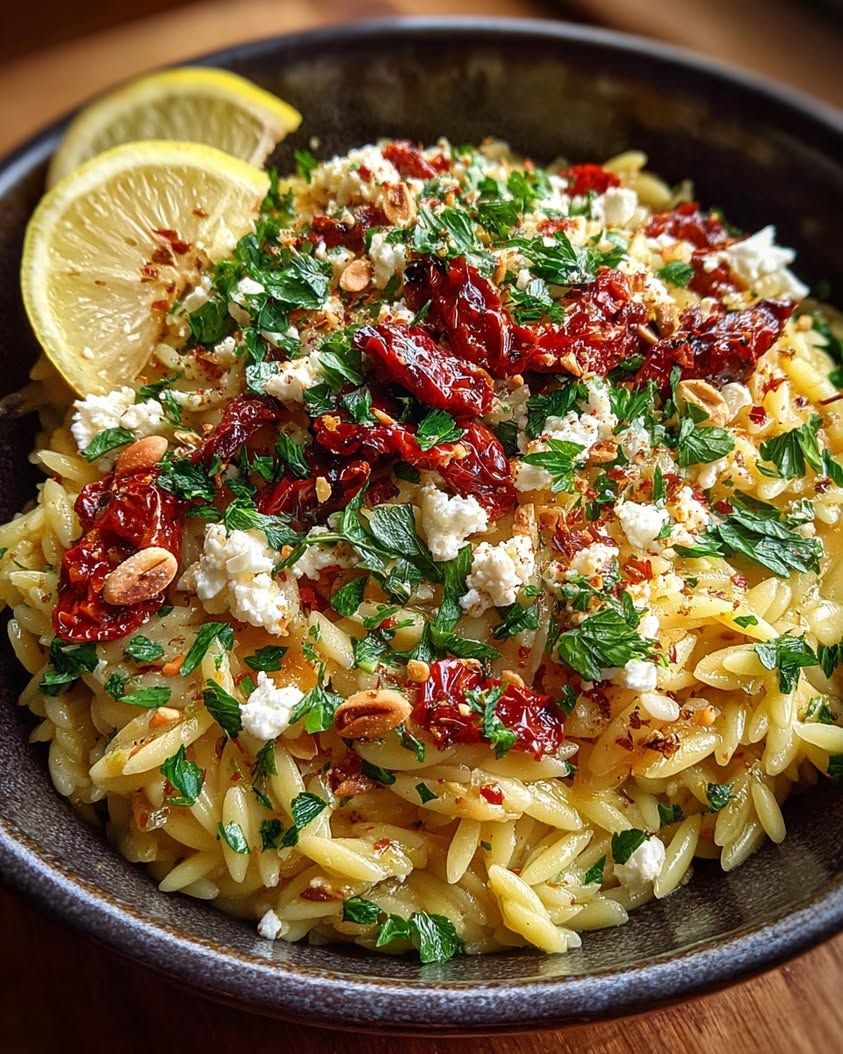
Lemon Feta Orzo Pasta Recipe: A Bright and Creamy Mediterranean Dream
Imagine a dish that captures the essence of a sun-drenched Mediterranean coastline in a single, comforting bowl. This Lemon Feta Orzo Pasta Recipe does exactly that, combining creamy, tangy, and savory flavors with delightful textures. It is a vibrant one-pot wonder that feels both elegant and utterly simple to prepare. Moreover, it transforms basic pantry staples into a meal that will impress at a dinner party or satisfy a quick weeknight craving.
The star of this show is undoubtedly the harmonious blend of bright lemon and rich, salty feta. These ingredients create a luscious, no-cook sauce that clings perfectly to each tiny piece of orzo pasta. Consequently, every bite is a perfect balance. Sun-dried tomatoes add a chewy sweetness and deep umami flavor, while toasted pine nuts provide a crucial crunch. Ultimately, this Lemon Feta Orzo Pasta Recipe is a masterclass in building complex flavor with minimal effort.
Quick Recipe Highlights
- Flavor Profile: This dish is a brilliant symphony of tangy, salty, and savory notes. Fresh lemon juice and zest provide a vibrant acidity that cuts through the creamy, briny feta cheese. Meanwhile, the sun-dried tomatoes contribute a concentrated sweetness and deep umami flavor that grounds the entire dish.
- Texture: You will enjoy a wonderful contrast of textures in every forkful. The orzo pasta is tender and pleasantly chewy, while the toasted pine nuts add a satisfying, buttery crunch. Additionally, the sun-dried tomatoes offer a pleasantly chewy bite, creating a multi-dimensional eating experience.
- Aroma: As you cook, the kitchen fills with the irresistible scent of toasting pine nuts and garlic. Then, the bright, citrusy fragrance of fresh lemon zest cuts through, promising a fresh and lively meal. Finally, the herbal scent of fresh basil ties all the aromatic elements together beautifully.
- Visual Appeal: This dish is a feast for the eyes with its stunning color palette. The vibrant yellow of the lemon sauce coats the creamy orzo, dotted with the deep red of sun-dried tomatoes and the green flecks of fresh herbs. The toasted pine nuts add a final touch of golden-brown elegance.
- Skill Level Needed: This is a fantastic recipe for cooks of all levels. It requires only fundamental skills like boiling pasta, toasting nuts, and whisking a simple sauce. Therefore, even a beginner can achieve restaurant-quality results with confidence and ease.
- Special Equipment: You need only standard kitchen tools. A large pot for boiling the orzo, a small skillet for toasting the pine nuts, and a mixing bowl for the sauce are perfectly sufficient. A microplane or fine grater for the lemon zest is helpful but not strictly mandatory.
Recipe Overview
- Difficulty Level: We classify this Lemon Feta Orzo Pasta Recipe as easy because it involves straightforward techniques. The steps are sequential and simple, with minimal multitasking required. Furthermore, the sauce requires no cooking, which eliminates a common point of stress. Essentially, if you can boil water and stir, you can master this dish.
- Category: This versatile dish fits multiple meal categories beautifully. It serves wonderfully as a hearty vegetarian main course, a substantial side dish for grilled proteins, or a standout pasta salad for picnics. Its adaptability makes it a valuable addition to any home cook’s repertoire for various occasions.
- Cuisine: The recipe draws clear inspiration from the sunny flavors of the Eastern Mediterranean. Ingredients like feta, lemon, olive oil, and pine nuts are hallmarks of Greek and Italian coastal cooking. However, the specific combination is a modern fusion, celebrating the best of the region’s pantry in a quick, contemporary format.
- Cost: This is a reasonably economical dish to prepare, especially considering its impressive flavor. Orzo and basic aromatics are very affordable. Sun-dried tomatoes and pine nuts are the pricier components, but a little goes a long way. You can often find them in bulk sections to buy just what you need, keeping costs down.
- Season: While truly delicious year-round, this Lemon Feta Orzo Pasta Recipe shines brightest in the spring and summer. Its bright, fresh flavors pair perfectly with warmer weather and seasonal produce. It is also an excellent make-ahead option for potlucks and barbecues when you want something that travels well and serves a crowd.
- Occasion: This dish is perfect for almost any gathering. It is elegant enough for a casual dinner party yet simple enough for a busy Tuesday night. Additionally, it travels well for potlucks, and it can be served warm, at room temperature, or chilled, making it incredibly flexible for any event on your calendar.
Why You’ll Love This Recipe
First and foremost, the taste and texture combination is utterly addictive. The creamy, tangy sauce from the feta and lemon coats each grain of orzo perfectly. Each bite delivers a burst of bright citrus, followed by the salty richness of the cheese and the sweet chew of the tomatoes. Finally, the buttery crunch of pine nuts completes the experience, ensuring your palate is never bored. This Lemon Feta Orzo Pasta Recipe is a true celebration of contrasting flavors and textures that work in perfect harmony.
Secondly, the convenience factor is a major win. This entire dish comes together in about thirty minutes, using primarily pantry staples. You essentially cook the orzo, toast the nuts, and whisk the sauce. There is no need for a separate pan to make a complicated roux or sauce. Consequently, cleanup is a breeze, especially if you use the same pot for toasting the nuts before boiling the pasta. It is the definition of a minimalist recipe with maximum flavor impact.
From a nutritional standpoint, this dish offers several benefits. Orzo provides carbohydrates for energy, while feta cheese offers a good source of protein and calcium. Olive oil and pine nuts contribute healthy monounsaturated fats. Furthermore, the lemon juice is rich in vitamin C, and the herbs add beneficial phytonutrients. While it is a hearty dish, the portions are satisfying without being overly heavy, making it a balanced meal choice.
For entertaining, this Lemon Feta Orzo Pasta Recipe is a true superstar. It is visually stunning, universally appealing, and can be prepared entirely in advance. You can easily double or triple the recipe to feed a crowd without much extra work. Guests will be impressed by the sophisticated flavors, never guessing how simple it was to prepare. It pairs wonderfully with a variety of wines and other dishes, making it a versatile centerpiece for your menu.
Finally, it is cost-effective and accessible. The ingredients are not exotic or hard to find. Most supermarkets carry all the components. You can make smart substitutions if needed, such as using walnuts instead of pine nuts or crumbled goat cheese instead of feta. This flexibility means you can almost always whip it up with what you have on hand. Ultimately, it delivers gourmet taste on a very reasonable budget.
Historical Background and Cultural Significance
Orzo, the star pasta in this Lemon Feta Orzo Pasta Recipe, has a rich history rooted in Mediterranean and Middle Eastern cuisines. Although its name is Italian for “barley,” due to its grain-like shape, its origins are often traced to Greece and surrounding regions. Traditionally, it was used in soups, pilafs, and baked dishes. The small, rice-shaped pasta was a practical choice, cooking quickly and absorbing flavors beautifully. Over centuries, it became a staple pantry item, valued for its versatility and comforting texture.
The combination of lemon and feta is a cornerstone of Greek culinary tradition. Feta cheese, a brined curd cheese made from sheep’s milk or a sheep-goat blend, has been produced in Greece for thousands of years. Its tangy, salty profile is a perfect counterpoint to the sharp acidity of fresh lemon. This pairing appears in countless classic dishes, from simple Greek salads to baked seafood. Our recipe modernizes this timeless duo by turning it into a quick, creamy pasta sauce.
The evolution of this specific recipe is a testament to modern fusion cooking. It takes the ancient Greek pairing of lemon and feta and combines it with Italian sun-dried tomatoes and pine nuts, which are common in pesto and other Ligurian dishes. The use of orzo, a pasta shape beloved across cultures, acts as the perfect canvas. This blend creates a dish that feels both familiar and new, honoring traditional flavors while adapting to contemporary, fast-paced cooking styles.
Regional variations of this concept abound. In some parts of Italy, you might find a similar dish with ricotta salata and capers. In the Middle East, a version might include sumac instead of lemon and toasted almonds instead of pine nuts. The adaptability of the core formula—starchy base, creamy/tangy cheese, acid, and crunch—is its greatest strength. Our Lemon Feta Orzo Pasta Recipe sits comfortably within this global family of bright, textured, and satisfying meals.
Ingredient Deep Dive
Orzo pasta is the foundation of this Lemon Feta Orzo Pasta Recipe. This small, rice-shaped pasta is traditionally made from semolina flour. It originates from Italy but is popular across the Mediterranean. Nutritionally, it provides carbohydrates for energy and typically contains some protein and iron, especially if made from whole-wheat semolina. When selecting orzo, look for a reputable brand to ensure it cooks evenly and doesn’t become mushy. You can store dried orzo in your pantry for over a year. For a gluten-free version, several brands offer orzo made from rice or corn flour.
Feta cheese is the source of the creamy, tangy sauce. Authentic Greek feta is a Protected Designation of Origin (PDO) product, meaning it must come from specific regions and be made primarily from sheep’s milk. It is rich in calcium, phosphorus, and beneficial bacteria due to its brining process. For the best flavor in your Lemon Feta Orzo Pasta Recipe, seek out a block of feta packed in brine, not pre-crumbled. Store it in its brine in the refrigerator. If you need a dairy-free substitute, a firm, salted tofu crumbled with a bit of lemon juice can mimic the texture, though the flavor profile will differ.
Fresh lemon is non-negotiable for the vibrant zip in this dish. Both the zest and juice are used, providing a powerful one-two punch of citrus oil and acidity. Lemons are an excellent source of vitamin C and antioxidants. Always choose lemons that are heavy for their size with bright, smooth skin, as they tend to be juicier. To get the most juice, roll the lemon firmly on the counter before cutting and juicing. You can store lemons at room temperature for a week or in the fridge for a month. Do not substitute bottled lemon juice; the fresh flavor is essential.
Sun-dried tomatoes pack an intense sweet-tart umami punch. Originally a preservation method from Southern Italy, they concentrate the tomato’s flavor. They are a good source of lycopene, an antioxidant. You can find them dry-packed or oil-packed; for this recipe, oil-packed are easier to use and chop. If using dry-packed, simply rehydrate them in hot water for 10 minutes before using. Store opened sun-dried tomatoes in their oil in the refrigerator. A good substitute would be slow-roasted cherry tomatoes or a tablespoon of high-quality tomato paste for depth.
Toasted pine nuts provide the essential buttery crunch. These edible seeds from certain pine trees are a classic ingredient in Mediterranean and Middle Eastern cooking. They are high in healthy fats, magnesium, and vitamin E. Always toast them lightly in a dry pan to unlock their full flavor and aroma. Due to their high oil content, store pine nuts in the freezer to prevent rancidity. If they are cost-prohibitive, toasted slivered almonds or chopped walnuts make excellent, more affordable substitutes in this Lemon Feta Orzo Pasta Recipe.
Common Mistakes to Avoid
- Overcooking the Orzo: This is the most common pitfall. Orzo cooks quickly, often in 8-10 minutes. You want it al dente, with a slight bite, as it will continue to absorb the sauce and soften slightly off the heat. Mushy orzo will ruin the texture of the entire dish.
- Not Toasting the Pine Nuts: Skipping the toasting step is a major flavor miss. Toasting transforms pine nuts from bland and soft to fragrant, golden, and crunchy. It only takes a few minutes in a dry pan, but it adds a crucial layer of depth and texture to the final Lemon Feta Orzo Pasta Recipe.
- Using Pre-Crumbled Feta: Pre-crumbled feta is often coated in anti-caking agents and can be dry and less flavorful. For a creamier, more luxurious sauce, always buy a block of feta in brine and crumble it yourself just before using. The difference in taste and texture is significant.
- Adding the Feta to Hot Pasta Immediately: If you add the crumbled feta directly to very hot orzo, it can melt into a sticky, stringy mess rather than creating a creamy sauce. The key is to let the pasta cool for a minute or two, or to temper the feta with some pasta water and olive oil first.
- Forgetting to Reserve Pasta Water: The starchy pasta water is liquid gold for creating a silky, emulsified sauce. Before draining the orzo, always scoop out at least a cup of the cooking water. You will use it to loosen the sauce to the perfect consistency.
- Using Bottled Lemon Juice: The bright, fresh flavor of this dish hinges on real lemon. Bottled juice lacks the vibrant acidity and can have a stale, metallic taste. Always use freshly squeezed lemon juice and freshly grated zest for the best results in your Lemon Feta Orzo Pasta Recipe.
- Not Seasoning in Layers: Do not rely solely on the salt from the feta and pasta water. Season the pasta water generously with salt—it should taste like the sea. Then, taste and adjust the seasoning again after combining all the ingredients, as the flavors need to meld.
- Skipping the Fresh Herbs: While dried basil or oregano can work in a pinch, fresh herbs like basil, dill, or parsley add a burst of color and a bright, clean flavor that dried herbs cannot replicate. They are the final, fresh garnish that lifts the entire dish.
Essential Techniques
Toasting nuts correctly is a simple but transformative technique. Place pine nuts in a single layer in a dry skillet over medium-low heat. Swirl the pan frequently to ensure even toasting. Watch them closely, as they can burn in seconds. They are done when they become fragrant and turn a light golden brown. Immediately transfer them to a plate to stop the cooking. This process unlocks their natural oils, intensifying their flavor and creating the perfect crunchy contrast for your Lemon Feta Orzo Pasta Recipe.
Creating an emulsion with the sauce is the secret to its creaminess. Start by whisking the crumbled feta with lemon zest, juice, and olive oil. The goal is to break down the feta slightly and encourage it to blend with the liquids. When you add the hot pasta and a splash of starchy pasta water, whisk vigorously. The starch in the water acts as a binder, helping the fat from the oil and cheese emulsify with the acidic lemon juice into a smooth, cohesive sauce that clings to the orzo.
Cooking orzo to al dente perfection requires attention. Use a large pot of well-salted boiling water. Add the orzo and stir immediately to prevent sticking. Follow the package instructions but start tasting a minute or two before the suggested time. The pasta should be tender but still have a slight firmness at the center. Remember, it will continue to cook a bit from residual heat when mixed with the sauce. Properly cooked pasta is the essential foundation of a great Lemon Feta Orzo Pasta Recipe.
Pro Tips for Perfect Lemon Feta Orzo Pasta
Grate your lemon zest directly into the bowl with the feta. This captures all the precious citrus oils that are released during grating, ensuring maximum flavor infusion into the cheese and sauce.
Use the pasta water wisely. Start by adding just a quarter cup to the feta mixture with the hot pasta. You can always add more to reach your desired sauciness, but you cannot take it away if the dish becomes too wet.
Let the dish rest for five minutes before serving. This allows the orzo to fully absorb the flavors of the sauce and for the consistency to settle. It will taste even better slightly warm or at room temperature.
If your sun-dried tomatoes are very oily, pat them dry with a paper towel before chopping. This prevents the dish from becoming greasy and allows their sweet flavor to shine without excess oil.
For an extra flavor boost, consider adding a pinch of red pepper flakes to the feta mixture or toasting a clove of garlic in the oil before mixing it into the sauce.
Always add the fresh herbs and toasted pine nuts just before serving. This preserves their texture, color, and fresh aroma, giving the final presentation and bite a perfect finish.
Variations and Adaptations
For regional variations, consider a French twist by using herbes de Provence and swapping feta for goat cheese. A Middle Eastern version could feature sumac instead of lemon, toasted almonds, and a sprinkle of za’atar. An Italian-inspired adaptation might include chopped artichoke hearts and kalamata olives, leaning into an antipasto flavor profile.
Seasonal adaptations are easy. In spring, add fresh peas and asparagus tips. For summer, fold in grilled zucchini or corn kernels. In autumn, roasted butternut squash cubes are a wonderful addition. Winter calls for heartier greens like chopped kale or spinach wilted into the hot pasta.
Dietary modifications are straightforward. For a gluten-free Lemon Feta Orzo Pasta Recipe, use certified gluten-free orzo or substitute with cooked quinoa or rice. To make it vegan, use a firm, brined vegan feta alternative and ensure your pasta is egg-free. For a dairy-free version, a cashew cream with lemon and nutritional yeast can mimic the creamy tang.
Flavor variations can take this dish in new directions. Add capers or chopped olives for more brine. Incorporate a tablespoon of pesto into the sauce for an herbal depth. For a richer profile, stir in a couple tablespoons of cream or Greek yogurt. A dash of white wine in the sauce can add another layer of acidity.
Serving and Presentation Guide
Plating techniques matter for visual appeal. For a family-style presentation, serve the Lemon Feta Orzo Pasta Recipe in a wide, shallow bowl or on a large platter. Use a spoon to create a gentle swirl or mound, allowing the colorful ingredients to be visible on top. For individual servings, use a ring mold for a neat, restaurant-style presentation, then carefully lift the mold away.
Garnishing is the final touch. Beyond the reserved pine nuts and herbs, consider a light drizzle of high-quality extra virgin olive oil. A final grating of lemon zest over the top adds a fresh pop of color. A few whole basil leaves or edible flowers can make the dish look exceptionally elegant for a special occasion.
Traditional accompaniments include simple grilled proteins. Lemon-herb chicken, shrimp, or a firm white fish like cod or halibut pair beautifully. For a vegetarian spread, serve it alongside a large Greek salad, roasted vegetables, or grilled halloumi cheese. It also stands well next to other Mediterranean mezze like hummus and pita.
Wine and Beverage Pairing
Wine pairings should complement the dish’s bright acidity and creamy saltiness. A crisp, dry white wine like a Greek Assyrtiko, a Sauvignon Blanc, or a Pinot Grigio is an excellent choice. Their citrus notes will mirror the lemon, while their acidity will cut through the richness of the feta. For a rosé option, a dry Provençal rosé with its subtle red fruit and herbal notes works wonderfully.
Non-alcoholic alternatives can be just as thoughtful. A sparkling lemonade or limeade echoes the citrus theme. For something more complex, try an iced herbal tea infused with mint or basil. A simple club soda with a twist of lemon is always a refreshing and palate-cleansing option alongside this flavorful Lemon Feta Orzo Pasta Recipe.
Storage and Shelf Life
Store leftovers in an airtight container in the refrigerator for up to 3 days. The pasta will continue to absorb moisture, so it may become drier. To refresh it, add a small splash of water, broth, or olive oil when reheating. You can reheat it gently in the microwave or in a saucepan over low heat, stirring frequently to prevent sticking.
Freezing is not generally recommended for this Lemon Feta Orzo Pasta Recipe. The dairy-based sauce can separate and become grainy upon thawing, and the texture of the orzo can become mushy. The fresh herbs and pine nuts will also lose their texture. It is best enjoyed fresh or stored in the fridge for a few days.
Make Ahead Strategies
You can prep nearly all components ahead of time to assemble in minutes. Cook the orzo, drain it, toss it with a tiny bit of oil to prevent sticking, and refrigerate it. Toast the pine nuts and store them at room temperature. Crumble the feta, chop the sun-dried tomatoes and herbs, and make the lemon-oil mixture. Store each component separately. When ready to serve, gently reheat the orzo, then combine everything while the pasta is warm. This keeps textures perfect and flavors bright.
Scaling Instructions
This Lemon Feta Orzo Pasta Recipe scales beautifully. To halve it, simply divide all ingredients by two. Use a slightly smaller pot for cooking the pasta. To double or triple for a crowd, use a very large pot or cook the orzo in batches to ensure it has enough room to cook evenly. Multiply all other ingredients proportionally. When toasting large batches of pine nuts, do it in multiple batches in the skillet to ensure even toasting without burning.
Nutritional Deep Dive
This dish offers a balanced macronutrient profile. The orzo provides complex carbohydrates for sustained energy. Feta cheese contributes protein and fat, promoting satiety. Olive oil and pine nuts add heart-healthy monounsaturated fats. Micronutrients include calcium from the feta, vitamin C from the lemon, and lycopene from the sun-dried tomatoes. For a lighter version, you can reduce the olive oil slightly and increase the proportion of vegetables, like adding spinach. Remember, portion control is key; a serving is typically about one to one and a half cups.
Dietary Adaptations
For a gluten-free version, use certified gluten-free orzo made from rice or corn flour. Ensure all other ingredients, like sun-dried tomatoes, are gluten-free certified. For a dairy-free or vegan adaptation, substitute the feta with a store-bought vegan feta alternative or a homemade version using crumbled firm tofu marinated in lemon juice, nutritional yeast, and salt. Use a vegan pasta. For a lower-carb option, you could try substituting the orzo with cooked cauliflower rice, though the texture and cooking method will differ significantly.
Troubleshooting Guide
If your sauce is too thick and clumpy, the pasta has absorbed all the liquid. Fix this by adding more warm pasta water or a bit of vegetable broth, one tablespoon at a time, while stirring over low heat until it reaches a creamy consistency. If the sauce is too thin and runny, let the dish sit for a few minutes; the orzo will absorb excess moisture. Alternatively, you can stir in a little extra crumbled feta to thicken it. If the dish tastes bland, it likely needs more salt or acid. Add a pinch of salt and a fresh squeeze of lemon juice, then taste again.
Recipe Success Stories
Readers love the adaptability of this Lemon Feta Orzo Pasta Recipe. One home cook reported adding grilled chicken and calling it a “weekly staple.” Another successfully made it for a potluck, doubling the recipe and receiving multiple requests for the instructions. Many appreciate that their kids enjoy it, often sneaking in extra vegetables like peas without complaint. The common thread in feedback is surprise at how such simple ingredients create a dish that feels special and sophisticated.
Frequently Asked Questions
Can I use a different pasta? Absolutely. Small pasta shapes like ditalini, small shells, or even couscous work well. Just adjust the cooking time according to the package directions for your chosen pasta.
My feta isn’t getting creamy. What did I do wrong? You may have added it to pasta that was too hot, causing it to seize. Next time, let the pasta cool for a minute. Also, ensure you are vigorously whisking the feta with the lemon juice and oil before adding the pasta to start the emulsion.
Can I make this without nuts for an allergy? Yes, simply omit the pine nuts. For crunch, you could use toasted breadcrumbs (panko) or seeds like sunflower or pumpkin seeds, ensuring they are safe for your dietary needs.
Is this served hot or cold? It is fantastic all ways! Serve it warm right after making, at room temperature as a pasta salad, or chilled. The flavors develop beautifully as it sits.
How can I add protein to make it a full meal? Stir in cooked, shredded chicken, chickpeas, white beans, or flaked salmon after combining everything. Grilled shrimp or sliced steak on top are also excellent additions.
What can I use instead of sun-dried tomatoes? Try roasted red peppers, chopped artichoke hearts, or pitted and chopped kalamata olives for a different savory element.
Why is my orzo sticky? You may not have used enough boiling water or forgot to stir it immediately after adding it to the pot. Always use a large pot of water and give it a good stir at the beginning of cooking.
Can I use dried herbs instead of fresh? You can, but use about one-third the amount (since dried herbs are more concentrated). Add them to the feta mixture so they have time to rehydrate a bit. The flavor will be different but still good.
Additional Resources
If you loved this Lemon Feta Orzo Pasta Recipe, explore other Mediterranean-inspired dishes on our site. Try our Greek Lemon Chicken Soup (Avgolemono) or a classic Spanakopita for more flavors from the region. For mastering pasta techniques, see our guide on cooking pasta perfectly every time. To learn more about selecting and storing cheese, check out our cheese primer. Finally, for seasonal twists, browse our summer pasta salad collection for more bright and easy meal ideas.
{“success”:true,”message”:”Recipe created successfully”,”post_id”:8961,”tasty_recipe_id”:8961,”shortcode”:” Print
Lemon Feta Orzo with Sun-Dried Tomatoes & Toasted Pine Nuts
Description
A vibrant, tangy pasta dish featuring orzo tossed with lemon, creamy feta, sweet sun-dried tomatoes, and crunchy pine nuts for a quick and flavorful meal.
Ingredients
For the Crust:
- 1 cup orzo pasta
- 2 tablespoons olive oil
- 1/4 cup sun-dried tomatoes, chopped
- 1/4 cup pine nuts, toasted
- 1/2 cup crumbled feta cheese
- Zest and juice of 1 lemon
- 2 cloves garlic, minced
- 1/4 cup fresh parsley, chopped
- Salt and black pepper to taste
- 1/4 cup vegetable broth or water
Instructions
1. Prepare the Crust:
- Cook the orzo according to package instructions until al dente, then drain and set aside.
- In a large skillet, heat olive oil over medium heat. Add garlic and sun-dried tomatoes, sautéing for 2-3 minutes until fragrant.
- Add the cooked orzo to the skillet, stirring to combine. Pour in vegetable broth or water to moisten if needed.
- Remove from heat and stir in lemon zest, lemon juice, feta cheese, toasted pine nuts, and parsley. Season with salt and pepper.
- Toss everything together until well mixed. Serve warm or at room temperature.
Notes
You can customize the seasonings to taste.

I’m Billy, a classically trained culinary school graduate from The Culinary Institute of America with over 12 years in the restaurant industry and over 19 years of cooking experience.