
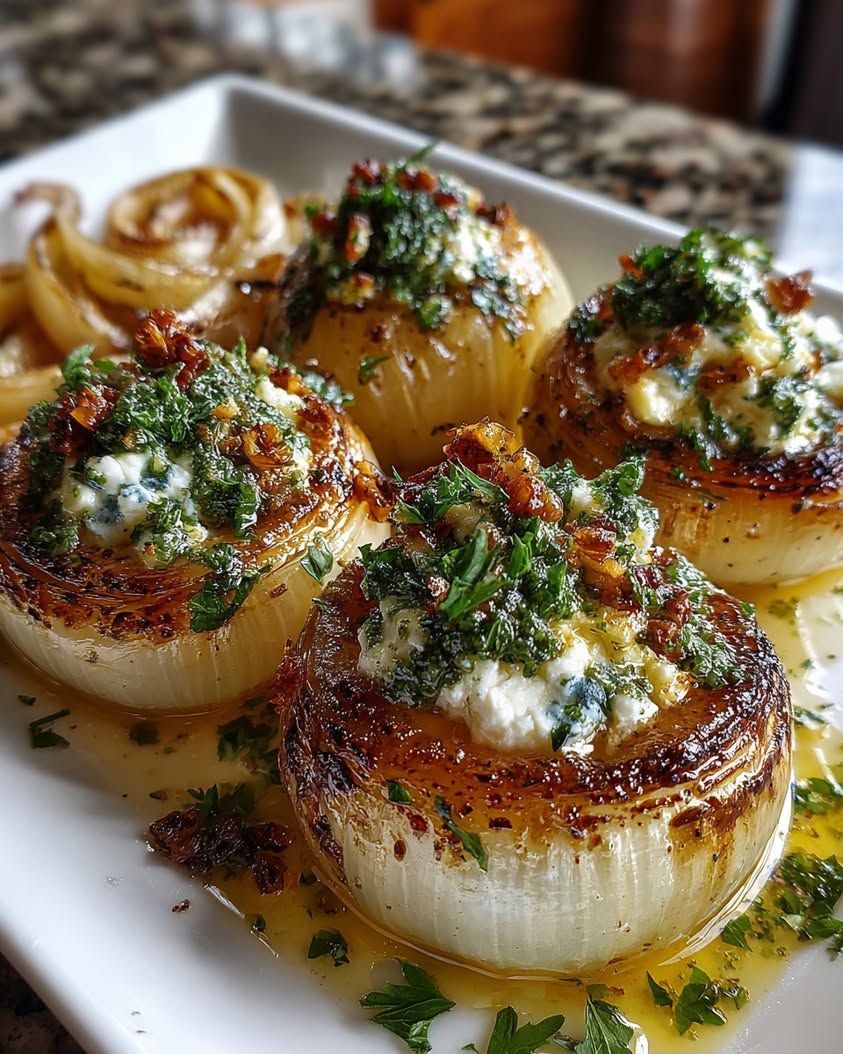
Lemon Feta Stuffed Onions with Walnut Parsley Pesto: A Show-Stopping Vegetarian Main
Imagine a dish that transforms a humble onion into a stunning, flavor-packed centerpiece. This Lemon Feta Stuffed Onion Recipe does exactly that, creating a memorable vegetarian meal perfect for special dinners or impressive entertaining. The process involves roasting whole onions until they become sweet and tender, then filling them with a vibrant mixture of tangy feta, fresh herbs, and bright lemon zest. Finally, a drizzle of rich walnut parsley pesto adds a nutty, herbal finish that ties everything together beautifully.
Consequently, this recipe is a celebration of contrasting textures and harmonious flavors. The soft, caramelized onion layers provide a sweet base that perfectly complements the salty, crumbly feta filling. Meanwhile, the pesto introduces a fresh, garlicky element with a satisfying crunch from the walnuts. Every bite offers a complex symphony of sweet, savory, tangy, and herbal notes. Ultimately, this Lemon Feta Stuffed Onion Recipe proves that plant-based cooking can be both elegant and deeply satisfying.
Furthermore, this dish is surprisingly versatile. You can serve it as a substantial main course alongside a simple grain or salad, or present it as a standout side dish for a holiday feast. The visual appeal is undeniable, with the golden-brown onions and vibrant green pesto creating a plate that looks as good as it tastes. Whether you are a seasoned cook or an adventurous beginner looking for a rewarding project, this recipe delivers impressive results.
Quick Recipe Highlights
- Flavor Profile: This Lemon Feta Stuffed Onion Recipe masterfully balances sweet caramelized onion, salty feta cheese, and zesty lemon. The walnut parsley pesto adds a deep, nutty, and garlicky layer that enhances every component.
- Texture: Enjoy a wonderful contrast between the soft, almost melting layers of roasted onion and the creamy, crumbly feta filling. The pesto contributes a coarse, textured finish with little bites of walnut for a satisfying crunch.
- Aroma: As the onions roast, your kitchen will fill with a sweet, savory scent. Meanwhile, the fresh parsley, garlic, and lemon zest in the filling and pesto create an incredibly bright and inviting fragrance.
- Visual Appeal: The presentation is stunning, with whole onions holding their shape, topped with a golden filling and a generous swirl of emerald-green pesto. It is a rustic yet elegant dish that commands attention on any table.
- Skill Level Needed: This recipe requires some patience and basic knife skills for prepping the onions and making the pesto. However, the steps are straightforward and well-explained, making it accessible for confident home cooks.
- Special Equipment: You will need a good baking dish, a food processor or blender for the pesto, and a sharp paring knife. A melon baller or small spoon is very helpful for hollowing out the onion centers neatly.
Recipe Overview
- Difficulty Level: We rate this Lemon Feta Stuffed Onion Recipe as intermediate. The challenge lies in properly hollowing the onions without breaking them and achieving the perfect roast. Additionally, balancing the flavors in the filling and pesto requires a thoughtful touch. However, each step is simple on its own, and the instructions guide you through the entire process.
- Category: This dish proudly sits as a vegetarian main course but can easily double as a spectacular side dish. It fits beautifully into a Mediterranean-inspired meal, a holiday spread, or a fancy weekend dinner.
- Cuisine: The recipe draws clear inspiration from Mediterranean and Middle Eastern cuisines, where stuffed vegetables are a cherished tradition. Ingredients like feta, lemon, walnuts, and parsley are staples in these regions, creating an authentic flavor profile.
- Cost: This is a moderately priced recipe. Onions and parsley are very affordable, while feta cheese and walnuts represent the main cost. You can control expenses by buying block feta and chopping it yourself and by purchasing walnuts in bulk.
- Season: This Lemon Feta Stuffed Onion Recipe is fantastic year-round but shines in spring and summer when fresh herbs are at their peak. It also makes a wonderful autumnal dish, as roasted vegetables feel cozy and comforting.
- Occasion: Perfect for dinner parties, holiday meals like Easter or Thanksgiving, date nights, or any time you want to elevate a weekday dinner. It is a guaranteed conversation starter and a dish that shows you care.
Why You’ll Love This Recipe
First and foremost, the taste and texture appeal of this Lemon Feta Stuffed Onion Recipe is extraordinary. The slow roasting transforms the onion’s natural sugars, creating a foundational sweetness that is simply irresistible. Paired with the sharp, salty punch of feta and the bright acidity of lemon, each mouthful is a delightful surprise. Moreover, the walnut parsley pesto adds a luxurious, savory depth that makes the dish feel complete and complex. You will love the interplay between the soft onion, creamy filling, and crunchy pesto.
Secondly, the convenience and preparation benefits are significant. While the recipe has several components, much of the work is hands-off roasting time. You can prepare the filling and pesto while the onions cook. Furthermore, the dish is largely make-ahead friendly. You can roast the onions and mix the filling a day in advance, then simply assemble and bake before serving. This makes it an ideal choice for stress-free entertaining.
Next, consider the nutritional advantages. Onions are rich in antioxidants and prebiotic fibers that support gut health. Walnuts provide heart-healthy omega-3 fatty acids, and parsley is a powerhouse of vitamins K, C, and A. Feta cheese offers a good source of calcium and protein. Together, they create a meal that is not only delicious but also nourishing. This Lemon Feta Stuffed Onion Recipe is a fantastic way to enjoy a satisfying vegetarian meal packed with wholesome ingredients.
Additionally, the social and entertaining value of this dish is incredibly high. Presenting a whole, beautifully stuffed vegetable as a centerpiece creates a memorable dining experience. It encourages sharing and conversation. Guests are always impressed by the effort and artistry, making you feel like a culinary star. Consequently, this recipe is perfect for creating special moments around the dinner table.
Finally, the cost-effectiveness and accessibility are major wins. The main ingredient, onions, is one of the most affordable vegetables available. While feta and walnuts are pricier, a little goes a long way in providing big flavor. You likely have many of the other ingredients, like olive oil, garlic, and lemon, already in your pantry. This Lemon Feta Stuffed Onion Recipe delivers restaurant-quality elegance without the restaurant price tag, making gourmet vegetarian cooking accessible to everyone.
Historical Background and Cultural Significance
The tradition of stuffing vegetables is ancient and spans countless cultures around the Mediterranean and Middle East. Dishes like dolmas (stuffed grape leaves), stuffed peppers, and stuffed zucchini have been family staples for generations. They represent a practical and delicious way to extend precious ingredients like grains, meats, and cheeses. This Lemon Feta Stuffed Onion Recipe is a modern twist on that enduring tradition, using the onion as a natural edible vessel. Historically, these dishes were often prepared for festivals and large family gatherings, symbolizing abundance and hospitality.
Culturally, the onion itself holds significant meaning in many societies. It has been cultivated for over 5,000 years and was revered by ancient Egyptians, who saw its concentric layers as a symbol of eternity. In Greek and Roman cuisine, onions were a fundamental flavoring agent. The use of feta cheese directly roots this recipe in Greek culinary heritage, where feta, a protected designation of origin product, is a cornerstone of the diet. Combining these elements creates a dish with deep historical resonance.
The evolution of this specific recipe likely comes from contemporary vegetarian and plant-forward cooking trends. Chefs and home cooks began looking for impressive centerpieces that did not rely on meat. The sweet, sturdy onion proved to be a perfect candidate for stuffing. The addition of a nut-based pesto is a more recent innovation, adding richness and texture that makes the dish feel complete and luxurious. This Lemon Feta Stuffed Onion Recipe is a beautiful example of how traditional techniques can be adapted with modern ingredients and dietary preferences.
Regional variations of stuffed onions are plentiful. In Turkish cuisine, they might be filled with spiced rice and ground meat (soğan dolması). In Persian cooking, a sweet and sour sauce often accompanies them. Our version leans into the flavors of the Eastern Mediterranean, emphasizing lemon, parsley, and tangy cheese. This flexibility is part of the recipe’s charm; you can adapt the filling to reflect your own taste or what you have available, keeping the spirit of resourcefulness and flavor alive.
Ingredient Deep Dive
Yellow Onions: The foundation of this Lemon Feta Stuffed Onion Recipe, yellow onions are chosen for their perfect balance of sharpness and high sugar content, which caramelizes beautifully. Historically a staple crop due to their long shelf life, onions are rich in quercetin, a flavonoid with anti-inflammatory properties. When selecting, choose large, firm onions with tight, papery skins and no soft spots. Store them in a cool, dark, well-ventilated place—not in the plastic bag from the store. For a variation, try sweet Vidalia or red onions for a slightly different flavor profile.
Feta Cheese: Authentic Greek feta, made from sheep’s milk or a sheep-goat blend, provides a tangy, salty crumble that is essential to the filling. This cheese has been produced in Greece for centuries and is a protected product. Nutritionally, feta is lower in fat than many hard cheeses and is a good source of calcium and protein. For the best texture and flavor in your Lemon Feta Stuffed Onion Recipe, buy a block of feta in brine and crumble it yourself. Store leftover feta submerged in its brine in the refrigerator. For a dairy-free version, a firm, salty tofu or a vegan feta alternative can work.
Walnuts: Walnuts add a earthy, rich crunch to the pesto and are one of the oldest tree foods, cultivated since 7000 B.C. They are an excellent plant-based source of omega-3 fatty acids, which support heart and brain health. Always taste a walnut before using to ensure it is not rancid. For the freshest flavor, store walnuts in an airtight container in the freezer. In a pinch, pine nuts, almonds, or even sunflower seeds can be substituted in the pesto for a different but delicious result.
Fresh Parsley: Flat-leaf (Italian) parsley is preferred for its robust, slightly peppery flavor that stands up to cooking better than curly parsley. It has been used both culinarily and medicinally since ancient times, prized for its high vitamin K, C, and A content. Choose bunches with vibrant green leaves and firm stems, avoiding any that are wilted or yellowing. Store it like a bouquet of flowers: trim the stems and place in a glass of water in the fridge, loosely covered with a bag. For a twist, you could blend in other soft herbs like mint or dill with the parsley.
Lemon (Zest and Juice): The lemon provides the essential bright, acidic note that cuts through the richness of the cheese and nuts. Citrus fruits were spread throughout the Mediterranean by Arab traders and became integral to the region’s cuisine. Lemon zest contains potent aromatic oils, while the juice adds sharpness. Always use unwaxed, organic lemons if zesting, and roll them on the counter before juicing to get more yield. A good, ripe lemon should feel heavy for its size and have a bright, fragrant skin. In an emergency, a combination of white wine vinegar and a little orange zest can mimic the effect.
Common Mistakes to Avoid
- Choosing the Wrong Onions: Do not use small or overly pungent onions. Large yellow onions have the ideal structure and sugar content for roasting and stuffing. Using white or red onions can result in a different texture and flavor balance that may not work as well for this specific recipe.
- Over-Hollowing the Onions: A common error is scooping out too much of the onion layers, leaving a fragile shell that collapses during baking. You only need to remove the tough, inner core to create a cavity. The remaining layers will soften and become part of the edible vessel.
- Underseasoning the Filling: Remember that the onion itself is quite mild and sweet. The filling needs to be well-seasoned to stand up to it. Taste your feta mixture before stuffing; it should be vibrant with lemon and herbs. Do not rely on salt alone, as the feta provides plenty.
- Using Stale or Rancid Nuts: Walnuts have a high oil content and can go rancid quickly, imparting a bitter, off flavor to your beautiful pesto. Always taste one before blending. For the best flavor in your Lemon Feta Stuffed Onion Recipe, store nuts in the freezer and toast them lightly before use.
- Skipping the Onion Roasting Step: Attempting to stuff and bake raw onions will lead to disaster. The initial roast is crucial for softening the onions and developing their sweetness. Rushing this step results in tough, undercooked onions and an unbalanced final dish.
- Overprocessing the Pesto: Blitzing the pesto into a completely smooth paste can make it bitter and lose its appealing texture. Pulse the ingredients until they are finely chopped and combined but still have some small, distinct pieces of walnut and parsley.
- Not Letting the Dish Rest: Pulling the stuffed onions from the oven and serving them immediately can lead to a burned mouth and filling that falls apart. Let them rest for 5-10 minutes. This allows the filling to set slightly and the flavors to meld perfectly.
- Forgetting to Reserve Pesto for Serving: If you mix all the pesto into the filling or use it all for basting, you will miss the vibrant, fresh garnish on top. Always reserve a portion of the walnut parsley pesto to drizzle over the finished dish for maximum visual and flavor impact.
Essential Techniques
Hollowing the Onions: This technique is key to the Lemon Feta Stuffed Onion Recipe. After roasting, let the onions cool just enough to handle. Use a small paring knife to cut around the inner core, about an inch in diameter. Then, employ a melon baller or a small teaspoon to gently scoop out the center layers, leaving a shell about 1/2-inch thick. The goal is to create a sturdy cup, not a thin, fragile bowl. Work carefully to avoid puncturing the bottom, which would let the filling leak out during the final bake.
Making a Textured Pesto: A great pesto for this dish should be coarse, not smooth. Start by pulsing the walnuts and garlic in your food processor until coarsely chopped. Next, add the parsley and pulse until the leaves are broken down. Finally, with the motor running, slowly drizzle in the olive oil until the mixture just comes together. You want to see flecks of green and bits of nut. Over-processing releases bitter compounds from the parsley and makes the walnuts oily.
Roasting for Caramelization: Proper roasting transforms the onions. Place them in a baking dish with a splash of water or broth to create steam, which helps them soften before browning. Cover tightly with foil for the first half of cooking to trap steam. Then, remove the foil to allow the exterior to caramelize and develop deep, sweet flavors. This two-stage method ensures tender, fully cooked onions with a beautiful color, which is the essential base for your stuffed onion recipe.
Pro Tips for Perfect Lemon Feta Stuffed Onions
First, select onions that are uniform in size to ensure even cooking. This simple step prevents having some onions perfectly tender while others are still firm. Second, do not discard the onion centers you scoop out. Chop them finely and sauté them to add to the feta filling, maximizing flavor and minimizing waste. Third, lightly toast your walnuts in a dry pan before making the pesto. This deepens their nutty flavor and removes any raw taste, elevating the entire dish.
Fourth, when mixing the feta filling, use your hands if possible. This allows you to crumble the feta to the perfect texture and evenly distribute the lemon zest and herbs without overworking the mixture. Fifth, baste the stuffed onions with a little of the pan juices or olive oil halfway through the final bake. This keeps the exposed tops moist and helps them develop an appealing golden color. Finally, let the onions rest after baking. A brief 10-minute rest allows the filling to set, making them easier to serve and ensuring the flavors have melded beautifully.
Variations and Adaptations
For regional variations, consider a Turkish-inspired version by adding cooked rice, currants, and pine nuts to the feta filling. A French twist might include herbes de Provence and a splash of white wine in the roasting pan. For seasonal adaptations, in summer, add chopped fresh tomatoes or roasted corn to the filling. In fall, incorporate chopped roasted mushrooms or a pinch of smoked paprika for warmth.
Dietary modifications are straightforward. For a vegan Lemon Feta Stuffed Onion Recipe, use a firm, marinated tofu or commercial vegan feta. Ensure the pesto is made with nutritional yeast instead of cheese. For a gluten-free version, the recipe is naturally compliant—just check any pre-made broth used for roasting. For a lower-carb or keto adaptation, you can increase the feta and add cream cheese to the filling for richness, omitting any grain-based additions.
Flavor variations are endless. Add heat with a finely chopped jalapeño in the filling or a pinch of red pepper flakes in the pesto. For an umami boost, mix a tablespoon of sun-dried tomato paste into the feta. Texture modifications could include adding cooked quinoa or breadcrumbs to the filling for more body. For presentation alternatives, instead of whole onions, use large shallots or even bell peppers as your edible vessel, adjusting cooking times accordingly.
Serving and Presentation Guide
Plating techniques matter for this show-stopping dish. Place one whole stuffed onion in the center of each warm dinner plate. Alternatively, for a family-style presentation, arrange them snugly in a beautiful ceramic baking dish or on a large platter. Drizzle the reserved walnut parsley pesto in an artistic swirl around and over the onions. The contrast of the green pesto against the golden-brown onion is visually stunning.
Garnishing ideas include a final sprinkle of chopped fresh parsley, a few extra walnut pieces for crunch, or a light dusting of sumac or smoked paprika for color. A wedge of lemon on the side allows guests to add an extra bright note. For traditional accompaniments, serve with a simple pilaf, couscous, or crusty bread to soak up the delicious juices. A crisp green salad with a lemony vinaigrette provides a refreshing counterpoint.
Modern serving suggestions might include placing the onion on a bed of lemony yogurt or whipped feta sauce. For temperature considerations, serve the onions hot or very warm. The pesto can be at room temperature, which helps its flavors shine. Portion control is simple: one large stuffed onion per person is a generous and satisfying main course. If serving as a side dish alongside a protein, half an onion per person is sufficient.
Wine and Beverage Pairing
Wine pairings for this Lemon Feta Stuffed Onion Recipe should complement its tangy, savory, and slightly sweet profile. A crisp, high-acid white wine like a Greek Assyrtiko, a Sauvignon Blanc, or a Vermentino works beautifully. They cut through the richness of the feta and mirror the lemon notes. For red wine lovers, a light-bodied, low-tannin red like a Pinot Noir or a Beaujolais will not overpower the dish. An orange wine, with its oxidative notes and texture, can also be a fascinating and delicious match.
Non-alcoholic alternatives are just as important. A sparkling lemonade or limeade echoes the citrus in the dish. For something more complex, try a mint and cucumber infused water or a tart cherry spritzer. Herbal iced teas, like mint or verbena, are refreshing companions. Coffee and tea pairings are less traditional but consider a light, citrusy herbal tea after the meal. Always serve white wines and non-alcoholic spritzers well-chilled to refresh the palate between bites of the rich, savory onion.
Storage and Shelf Life
Storage methods are straightforward. Cool any leftovers completely before storing. Place stuffed onions in an airtight container and refrigerate for up to 3 days. Store any remaining pesto separately in its own container, with a thin layer of olive oil on top to prevent browning. For temperature requirements, always keep the dish refrigerated at or below 40°F (4°C).
Container recommendations include glass containers with tight-fitting lids, which are best for preventing odor transfer. For signs of spoilage, look for an off smell, significant discoloration, or mold. The pesto may darken naturally due to oxidation; this is normal if it has been stored for a day or two. Reheating instructions: Warm leftovers in a covered baking dish in a 350°F (175°C) oven until heated through, about 15-20 minutes. You can also microwave individual portions, though the onion may soften further. Freezing is not recommended for the assembled dish, as the texture of the onion and pesto will suffer significantly upon thawing.
Make Ahead Strategies
A smart prep timeline makes entertaining easy. You can roast and hollow the onions up to two days in advance. Simply let them cool, cover tightly, and refrigerate. Similarly, mix the feta filling (without the fresh herbs if you prefer) and store it separately. The walnut parsley pesto can be made 1-2 days ahead; store it with a layer of oil on top. This advance work dramatically cuts down on day-of effort.
Consider the quality impact of each step. Pre-roasted onions hold up very well. The filling may release a little moisture, but it will re-absorb during the final bake. Pesto may darken slightly but the flavor improves. For assembly tips, fill the cold onions with the cold filling just before the final bake. You may need to add 5-10 minutes to the baking time since you are starting with chilled components. Reheating guidelines are simple: bake until the filling is hot and the top is lightly golden. Add the fresh pesto garnish just before serving to preserve its vibrant color and fresh flavor.
Scaling Instructions
Halving the recipe is simple for a smaller meal. Use two large onions and simply divide all other ingredient quantities in half. The cooking times will remain roughly the same, though you may use a smaller baking dish. Doubling or tripling the recipe is perfect for a crowd. Use multiple baking dishes or large sheet pans to ensure the onions are not overcrowded, which would cause them to steam instead of roast properly.
Equipment adjustments may be needed when scaling. For a large batch, you might need a high-powered blender or food processor to make a bigger quantity of pesto in batches. Timing modifications are minimal for scaling up; the initial roasting time may need a slight increase if the oven is very full. Storage considerations are key for large batches; ensure you have enough refrigerator space for prepped components. Leftovers will also increase, so plan accordingly with adequate storage containers.
Nutritional Deep Dive
A macro breakdown for one serving shows a good balance: it provides protein from the feta and walnuts, healthy fats from the olive oil and nuts, and complex carbohydrates from the onion. It is a satisfying meal that provides sustained energy. The micronutrient analysis is impressive: onions offer quercetin and vitamin C, parsley is loaded with vitamins K, A, and C, and walnuts contribute manganese and copper.
Health benefits include support for heart health from the monounsaturated fats and omega-3s, anti-inflammatory properties from the antioxidants, and gut health support from the prebiotic fibers in the onion. Dietary considerations: the recipe is naturally vegetarian and can be adapted for other needs as discussed. For portion analysis, one onion is a substantial main. For weight management tips, this dish is filling and nutrient-dense, helping to control hunger. The fiber and protein promote satiety, making it an excellent choice for a balanced diet.
Dietary Adaptations
For a gluten-free Lemon Feta Stuffed Onion Recipe, the standard version is already compliant. Just verify that any broth used for roasting is certified gluten-free. For a dairy-free or vegan adaptation, replace the feta with a firm, marinated tofu crumble or a store-bought vegan feta alternative. For the pesto, omit any Parmesan (if added) and consider adding a teaspoon of white miso or nutritional yeast for a savory, cheesy note.
A low-carb or keto version would increase the fat and protein. Add full-fat cream cheese to the feta filling for richness and stability. Ensure the pesto is made with approved ingredients. A Paleo adaptation would omit the dairy entirely, using a nut-based “cheese” filling, and ensure all ingredients are whole-food based. For a Low-FODMAP version, this recipe is challenging due to the onions. A potential adaptation would be to use large bell peppers as the vessel instead and use only the green tops of scallions in the filling, consulting a Monash University app for precise quantities.
Troubleshooting Guide
For texture issues, if your onions are tough, they were under-roasted initially. Next time, roast them covered longer until a knife inserts easily. If the filling is dry, you may have over-baked the final dish or used a very dry feta. Next time, add a tablespoon of olive oil or yogurt to the filling mixture. If the pesto is too bitter, you likely over-processed it or used older parsley stems. Always pulse, don’t puree, and use mostly leaves.
For flavor balance, if the dish tastes bland, you likely underseasoned the filling. Remember to taste it before stuffing. If it’s too salty, your feta may have been exceptionally salty. Balance it with a squeeze of lemon and serve with a plain grain like rice to dilute the saltiness per bite. For temperature problems, if the outside is burning but the inside is cold, your oven temperature may be off. Use an oven thermometer and consider tenting the onions with foil if they brown too quickly.
For equipment challenges, if you don’t have a food processor, make the pesto by very finely chopping the walnuts, parsley, and garlic with a knife, then stirring in the oil and lemon juice. It will be more rustic but just as delicious. For ingredient substitutions, if out of walnuts, pine nuts, almonds, or even pepitas make a great pesto. If out of fresh parsley, a combination of fresh basil and a little spinach can work in a pinch, though the flavor will change.
Recipe Success Stories
Community feedback on this Lemon Feta Stuffed Onion Recipe has been overwhelmingly positive. Many home cooks report that it has become their go-to “wow” dish for vegetarian guests. One reader shared that she made it for a dinner party where half the guests were meat-eaters, and they all requested the recipe, saying it was the most memorable part of the meal. Another found that her kids, who usually avoid onions, loved the sweet, soft texture and cheesy filling.
Variation successes abound. A reader from California added roasted cherry tomatoes to the baking dish in the last 10 minutes, creating a delicious sauce. Another used a mix of mint and parsley in the pesto for a brighter flavor. Adaptation stories include a successful vegan version using almond feta and a gluten-free guest who was thrilled to have such a substantial and safe main course. Reader suggestions often highlight serving it with a dollop of tzatziki or over a bed of lentils. Photography tips from pros suggest shooting in natural light, capturing the steam rising from a freshly cut onion, and highlighting the contrast between the green pesto and golden-brown top.
Frequently Asked Questions
Q: Can I use a different type of onion?
A: While large yellow onions are ideal for their size and sweetness, you can use sweet Vidalia or Walla Walla onions. Avoid red onions as their color can bleed and their flavor is sharper. White onions can work but may be more pungent.
Q: My onions are burning on the outside before they soften inside. What happened?
A: Your oven temperature is likely too high, or you skipped the initial covered roasting step. Always start covered with foil to steam and soften the onions, then uncover to caramelize. Using an oven thermometer ensures accurate temperature.
Q: Can I make this entirely ahead of time and reheat it?
A: Yes, you can assemble the stuffed onions a few hours ahead, cover, and refrigerate. Add 10-15 minutes to the final bake time since you are starting cold. Add the fresh pesto garnish after reheating.
Q: Is there a substitute for walnuts in the pesto?
A: Absolutely. Pine nuts are a classic pesto choice. Toasted almonds, hazelnuts, or even sunflower seeds (for a nut-free version) work well. Each will impart a slightly different but delicious flavor.
Q: How do I prevent the feta filling from drying out during baking?
A: Ensure your baking dish has a little liquid (water or broth) in the bottom to create steam. You can also brush the tops of the stuffed onions with olive oil before baking, and avoid over-baking them.
Q: Can I freeze the leftovers?
A: Freezing is not recommended for the assembled dish. The texture of the onion becomes mushy and the pesto separates. It’s best enjoyed fresh or refrigerated for up to 3 days.
Q: What can I serve with this as a main course?
A: A simple grain like quinoa, farro, or crusty bread is perfect to soak up juices. A light salad, such as an arugula salad with a lemon vinaigrette, complements the rich flavors beautifully.
Q: Can I add meat to the filling?
A: Certainly. Cooked ground lamb, sausage, or beef can be mixed with the feta. Reduce the amount of feta slightly to balance the flavors. Ensure any added meat is fully cooked before stuffing.
Q: Why is my pesto turning brown?
A: Parsley oxidizes when exposed to air, much like an avocado. It’s normal for pesto to darken slightly. Pressing a piece of plastic wrap directly onto the surface of the pesto before refrigerating minimizes this.
Q: I’m short on time. Can I speed up the recipe?
A: You can par-boil the peeled, whole onions for 15-20 minutes until slightly tender before roasting, which will reduce the oven time. However, you may sacrifice some of the deep caramelized flavor.
Additional Resources
For related recipes, explore other stuffed vegetable dishes like bell peppers with quinoa and black beans, or zucchini boats with Italian sausage. Mastering a basic risotto or a simple pilaf will give you perfect side dishes. Technique guides on knife skills for chopping herbs or how to properly zest a lemon are invaluable for this and many other recipes. Understanding the science of caramelization can also improve your roasting results.
For ingredient information, learn more about the different types of feta cheese or the health benefits of various nuts and seeds. Equipment recommendations for this recipe include a good quality baking dish, a sharp paring knife, and a reliable food processor. A microplane zester is also a fantastic tool for getting fine lemon zest without the bitter pith. For seasonal variations, think about incorporating roasted autumn squash into the filling in the fall or fresh peas and mint in the spring, keeping the core technique of this wonderful Lemon Feta Stuffed Onion Recipe as your guide.
{“success”:true,”message”:”Recipe created successfully”,”post_id”:8850,”tasty_recipe_id”:8850,”shortcode”:” Print
Lemon Feta Stuffed Onions with Walnut Parsley Pesto
Description
Tender roasted onions stuffed with a zesty lemon and feta cheese mixture, topped with a vibrant walnut parsley pesto for a flavorful and elegant side dish.
Ingredients
For the Crust:
- 4 large yellow onions, peeled and halved
- 1 cup crumbled feta cheese
- Zest and juice of 1 lemon
- 2 cloves garlic, minced
- 2 tablespoons olive oil
- 1/2 teaspoon dried oregano
- Salt and black pepper to taste
- 1 cup fresh parsley leaves
- 1/2 cup walnuts, toasted
- 1/4 cup grated Parmesan cheese
- 1/4 cup olive oil (for pesto)
- 1 tablespoon lemon juice (for pesto)
Instructions
1. Prepare the Crust:
- Preheat oven to 375°F (190°C). Scoop out the centers of each onion half to create a cavity, leaving about 1/2-inch shell.
- In a bowl, mix feta cheese, lemon zest, lemon juice, minced garlic, olive oil, oregano, salt, and pepper until well combined.
- Spoon the feta mixture into the onion cavities, pressing gently to fill. Place onions in a baking dish.
- Bake for 25-30 minutes until onions are tender and filling is lightly golden.
- While onions bake, make the pesto: In a food processor, combine parsley, toasted walnuts, Parmesan, olive oil, and lemon juice. Blend until smooth, adding salt to taste.
- Remove onions from oven and let cool slightly. Drizzle with walnut parsley pesto before serving.
Notes
You can customize the seasonings to taste.

I’m Billy, a classically trained culinary school graduate from The Culinary Institute of America with over 12 years in the restaurant industry and over 19 years of cooking experience.