
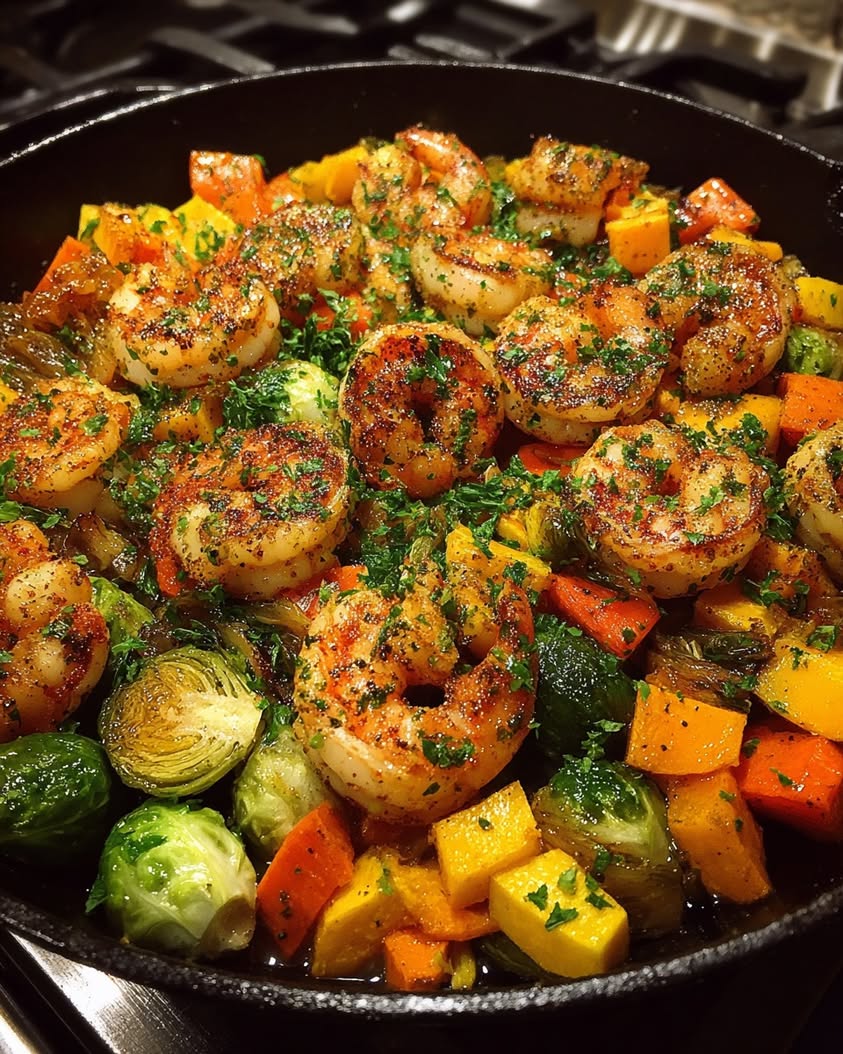
Lemon Herb Shrimp Skillet with Roasted Autumn Vegetables: A One-Pan Harvest Feast
Imagine a single skillet filled with the vibrant colors and rich flavors of the harvest season. This Lemon Herb Shrimp Skillet with Roasted Autumn Vegetables delivers exactly that. It combines succulent, quick-cooking shrimp with a medley of caramelized Brussels sprouts, sweet potato, butternut squash, and carrots. The result is a stunning, nutritious, and incredibly flavorful one-pan meal that feels both rustic and elegant. Furthermore, it brings the cozy essence of fall directly to your dinner table with minimal effort and cleanup.
The magic of this Lemon Herb Shrimp Skillet lies in its layered cooking technique. First, the hearty root vegetables roast to tender, caramelized perfection. Then, the shrimp join the party, bathing in a bright, aromatic sauce of lemon, garlic, and fresh herbs. Consequently, every bite offers a delightful contrast: the sweet, earthy depth of the roasted vegetables against the zesty, briny pop of the shrimp. Ultimately, this dish is a celebration of seasonal produce and smart, efficient cooking.
This recipe is perfect for busy weeknights yet impressive enough for weekend entertaining. It naturally caters to various dietary preferences, being naturally gluten-free and packed with lean protein and fiber. Additionally, the entire meal comes together in one pan, meaning you spend less time washing dishes and more time enjoying a beautiful, home-cooked dinner. Let’s dive into how to create this spectacular Lemon Herb Shrimp Skillet with Roasted Autumn Vegetables.
Quick Recipe Highlights
- Flavor Profile: This dish masterfully balances bright, citrusy notes from fresh lemon and herbs with the deep, natural sweetness of caramelized autumn vegetables. The garlic and herbs create a savory foundation that ties all the elements together harmoniously.
- Texture: You get a wonderful textural play between the tender, juicy shrimp and the firm, slightly crisp-tender roasted vegetables. The edges of the Brussels sprouts and sweet potatoes caramelize beautifully, adding delightful crispy bits.
- Aroma: As it cooks, your kitchen will fill with the irresistible scent of roasting garlic and herbs, followed by the bright, fresh aroma of lemon zest and juice. It’s a truly mouthwatering olfactory experience.
- Visual Appeal: The skillet presents a stunning array of colors: deep green Brussels sprouts, orange sweet potatoes and squash, bright orange carrots, and pink shrimp, all glistening with herb-infused oil. It’s a feast for the eyes.
- Skill Level Needed: This is an accessible recipe for most home cooks. The techniques involve simple chopping, roasting, and sautéing. Following the step-by-step instructions ensures perfect results every time.
- Special Equipment: You only need one large, oven-safe skillet or cast-iron pan. A good chef’s knife for prepping the vegetables is the other essential tool. No fancy gadgets are required.
Recipe Overview
- Difficulty Level: We rate this Lemon Herb Shrimp Skillet as easy. The steps are sequential and logical: prep vegetables, roast them, then quickly cook the shrimp in the same pan. There’s no complex sauce reduction or advanced techniques. However, timing is important to avoid overcooking the shrimp, which is a simple skill to master.
- Category: This dish fits perfectly into the categories of main course, one-pan meal, and healthy dinner. It’s a complete, balanced plate featuring protein, complex carbohydrates, and a wealth of vitamins from the vegetables.
- Cuisine: While not tied to one specific tradition, the recipe draws inspiration from coastal Mediterranean and American farm-to-table cuisines. The use of lemon, garlic, and herbs with seafood is classic Mediterranean, while the focus on roasted autumn vegetables is very much in the modern American style.
- Cost: This is a moderately priced meal. Shrimp can be the most expensive component, but using frozen, peeled, and deveined shrimp is a cost-effective choice. The vegetables are very affordable, especially in the fall. Overall, it’s cheaper and healthier than dining out.
- Season: This Lemon Herb Shrimp Skillet is ideal for autumn and winter when Brussels sprouts, sweet potatoes, and squash are at their peak. Their natural sugars concentrate when roasted in cooler weather, yielding the best flavor. It’s a wonderful way to enjoy seasonal produce.
- Occasion: Serve it for a cozy family weeknight dinner, a casual dinner party with friends, or even as a special holiday meal side or main. Its vibrant presentation makes it feel celebratory without requiring excessive work.
Why You’ll Love This Recipe
First and foremost, the taste of this Lemon Herb Shrimp Skillet is absolutely phenomenal. Each component brings its unique flavor, and they combine to create something greater than the sum of its parts. The shrimp soak up the lemon and herb marinade, becoming incredibly flavorful and tender. Meanwhile, the high-heat roasting process caramelizes the natural sugars in the vegetables, giving them a deep, almost nutty sweetness that contrasts perfectly with the bright, acidic shrimp. Every forkful is a dynamic mix of savory, sweet, and tangy notes that will have everyone asking for seconds.
From a practical standpoint, the convenience of this one-pan wonder cannot be overstated. You complete all the cooking in a single oven-safe skillet, which means dramatically less cleanup. The workflow is also very efficient: while the vegetables are roasting in the oven, you have time to prepare the shrimp and make a simple side salad or slice some crusty bread. This streamlined process makes getting a healthy, impressive dinner on the table surprisingly simple, even on the busiest of evenings. Consequently, it becomes a reliable go-to recipe in your regular rotation.
Nutritionally, this dish is a powerhouse. Shrimp provides high-quality, lean protein and important nutrients like iodine and selenium. The combination of Brussels sprouts, sweet potato, butternut squash, and carrots delivers a massive dose of vitamins A and C, fiber, and antioxidants. Cooking everything in one pan with olive oil also means you retain the fat-soluble vitamins from the vegetables. Therefore, you’re enjoying a meal that is as good for your body as it is for your taste buds, supporting overall health and wellness.
For entertaining, this Lemon Herb Shrimp Skillet offers tremendous social value. You can prepare most of it ahead of time, minimizing last-minute stress. Bringing the sizzling, colorful skillet directly to the table creates a dramatic and inviting presentation that encourages sharing and conversation. It feels rustic, generous, and thoughtfully prepared. Your guests will be impressed by the beautiful colors and complex flavors, never guessing how straightforward the preparation truly was. It’s a surefire way to become known as a fantastic host.
Finally, this recipe is remarkably cost-effective and accessible. While shrimp can be a splurge, using a moderate amount stretched with abundant, inexpensive seasonal vegetables makes the meal budget-friendly. All the ingredients are readily available at any standard grocery store. Moreover, the recipe is easily adaptable based on what you have on hand, reducing food waste. You get restaurant-quality presentation and flavor for a fraction of the price, making it an excellent value for your weekly meal planning.
Historical Background and Cultural Significance
The concept of cooking seafood with citrus and herbs has ancient roots, particularly in coastal regions around the Mediterranean Sea. For centuries, cultures from Italy to Greece have utilized the bright acidity of lemon to complement the delicate flavor of fresh-caught fish and shellfish. This practice not only enhanced taste but also, in some historical contexts, helped mask any less-than-fresh odors before modern refrigeration. The combination became a cornerstone of coastal cuisine, symbolizing simplicity, freshness, and a direct connection to the sea and local citrus groves.
Conversely, the tradition of roasting hearty root vegetables is deeply embedded in cooler climate agricultural societies. In Europe and North America, autumn harvests yielded vegetables like Brussels sprouts, carrots, and later, New World additions like sweet potatoes and squash. Roasting these vegetables over an open fire or in hearth ovens was a practical way to cook them, concentrating their flavors and providing essential warmth and sustenance during colder months. This method celebrated preservation and the hearty, earthy flavors of the harvest.
The modern fusion seen in this Lemon Herb Shrimp Skillet is a relatively recent evolution, emblematic of contemporary “bowl” culture and one-pan meals. It represents a desire for global flavor fusion, nutritional balance, and cooking efficiency. By marrying the quick-cooking, protein-focused technique of sautéing shrimp with the slower, caramelization-focused process of roasting vegetables, this recipe creates a complete meal that respects both traditions. It reflects today’s culinary trends that prioritize whole foods, vibrant colors, and minimizing kitchen cleanup without sacrificing depth of flavor.
Regional variations of this concept abound. In the American South, you might find shrimp paired with roasted okra and sweet potatoes with a Cajun spice blend. A Spanish version could feature paprika and sherry vinegar with the shrimp, served over roasted peppers and potatoes. An Asian-inspired take might use ginger, soy, and sesame with the shrimp alongside roasted bok choy and kabocha squash. This adaptability showcases the recipe’s core strength: it’s a versatile template that welcomes cultural interpretation while maintaining its identity as a harmonious, one-pan seafood and vegetable dish.
Ingredient Deep Dive
Shrimp: Shrimp is one of the most popular seafoods worldwide, with a history of cultivation dating back centuries in Asia. Nutritionally, it’s a superstar: low in calories and saturated fat but high in protein, selenium, vitamin B12, and iodine, which supports thyroid function. When selecting shrimp, look for firm, translucent flesh with a mild sea smell. Avoid any with black spots or a strong ammonia odor. For convenience and value, buy frozen raw shrimp that are already peeled and deveined; thaw them overnight in the refrigerator. Pat them very dry before cooking to ensure a good sear.
Brussels Sprouts: These miniature cabbages originated in Brussels, Belgium, in the 16th century. They are packed with nutrients, including vitamin K for bone health, vitamin C for immunity, and fiber for digestion. Choose firm, bright green sprouts that are similar in size for even cooking. Avoid yellowing or loose leaves. Store them unwashed in an open bag in your refrigerator’s crisper drawer. For this Lemon Herb Shrimp Skillet, halving them creates flat surfaces that caramelize beautifully in the hot skillet, developing a wonderful nutty flavor that balances their slight bitterness.
Sweet Potato & Butternut Squash: Both are New World vegetables, staples for Indigenous peoples of the Americas for thousands of years. They are incredible sources of beta-carotene, which the body converts to vitamin A, crucial for vision and immune health. Butternut squash also provides a good amount of vitamin E. Select sweet potatoes that are firm with smooth skin, and butternut squash that feels heavy for its size with a hard, matte rind. Their natural sugars intensify when roasted, providing the foundational sweetness in this skillet dish. They can be used interchangeably with other hard squash like acorn or kabocha.
Carrots: Carrots have a long history, originally cultivated for their aromatic leaves and seeds rather than their roots. The orange carrot we know today was developed in the Netherlands in the 17th century. They are famously rich in beta-carotene and also provide biotin, vitamin K, and potassium. Choose firm, smooth carrots without cracks. In this recipe, they add a pop of color and an extra layer of earthy sweetness. Cutting them into similar-sized pieces as the other vegetables ensures they all finish roasting at the same time.
Lemon & Fresh Herbs: Lemon juice and zest provide the essential bright, acidic counterpoint to the rich, sweet vegetables and savory shrimp. Herbs like thyme, rosemary, or parsley have been used since antiquity both for flavor and medicinal purposes. Fresh herbs offer volatile oils that dried herbs lack, contributing vibrant top notes. Always zest your lemon before juicing it, and add fresh herbs toward the end of cooking to preserve their delicate flavor. This combination is what transforms the dish from simply roasted ingredients into a cohesive, restaurant-worthy Lemon Herb Shrimp Skillet.
Common Mistakes to Avoid
- Overcrowding the Skillet: Adding all the vegetables at once in a pile will steam them instead of roasting them. They need space for the oven’s hot air to circulate and create caramelization. If your skillet isn’t large enough, roast the vegetables on a sheet pan instead for the first step.
- Not Drying the Shrimp Thoroughly: Wet shrimp will steam and boil in their own liquid, preventing a nice sear and making them rubbery. Always pat shrimp completely dry with paper towels after thawing and before seasoning. This step is crucial for achieving perfect texture.
- Overcooking the Shrimp: Shrimp cook incredibly fast, often in just 2-3 minutes per side. Adding them to the skillet too early, or leaving them in the hot pan off the heat for too long, will result in tough, rubbery shrimp. They should be opaque and just curled into a “C” shape.
- Using Old or Dried Herbs: The “herb” in Lemon Herb Shrimp Skillet is key. Using dried herbs that have lost their potency, or adding fresh herbs at the beginning so they burn, will result in muted flavor. Use fresh herbs and stir them in during the last minute of cooking.
- Skipping the Preheating Step: Adding vegetables to a cold skillet or a not-fully-preheated oven will cause them to stew and become soggy. Always ensure your skillet is hot on the stovetop and your oven is fully preheated before adding the vegetables for roasting.
- Cutting Vegetables Inconsistently: If your vegetable pieces are wildly different sizes, some will burn while others remain hard. Take the time to cut the sweet potato, squash, and carrots into roughly ¾-inch cubes and halve the Brussels sprouts uniformly.
- Forgetting to Season in Layers: Seasoning only at the end leads to bland food. Season the vegetables generously with salt and pepper before roasting. Then, season the shrimp separately before adding them to the pan. This builds depth of flavor in every component.
- Using Bottled Lemon Juice: The fresh, bright flavor of real lemon juice and zest is irreplaceable in this recipe. Bottled juice often has preservatives and a flat, sometimes bitter taste. Always use a fresh lemon for both its zest and juice for the best Lemon Herb Shrimp Skillet.
Essential Techniques
Caramelization: This is the chemical process where sugars in food brown, creating complex, rich flavors and aromas. For the vegetables in this skillet, high heat is essential. Tossing them in oil and ensuring they have space in the pan allows their natural sugars to concentrate and brown on the surface. The visual cue for success is golden-brown, slightly crispy edges on the Brussels sprouts and sweet potatoes. Avoid stirring too frequently; let them sit in contact with the hot pan to develop that color.
Searing Shrimp: Searing creates a flavorful crust via the Maillard reaction while keeping the interior tender. The key is high heat and dry shrimp. Preheat your skillet until it’s very hot before adding the shrimp in a single layer. Do not move them for the first minute to allow a crust to form. The shrimp will release easily from the pan when properly seared. They are done when they turn pink and opaque and curl into a loose “C” shape, which typically takes only 2-3 minutes total.
Deglazing: After cooking the shrimp, you’ll likely have delicious browned bits (fond) stuck to the bottom of the skillet. Adding the lemon juice and a splash of broth or water and scraping with a wooden spoon lifts these bits back into the sauce. This technique incorporates all the concentrated flavor from both the roasted vegetables and the shrimp into the final sauce, making it incredibly rich and complex. It’s a simple step that maximizes flavor with no extra effort.
Pro Tips for Perfect Lemon Herb Shrimp Skillet
1. Prep Everything First: Since the cooking moves quickly once the vegetables are roasted, have your shrimp thawed, dried, and seasoned, and your lemon zested and juiced before you start the final stovetop step. This “mise en place” prevents scrambling and overcooking.
2. Use an Oven Thermometer: Oven temperatures can be inaccurate. An inexpensive oven thermometer ensures your oven is truly at 425°F, which is critical for proper roasting and caramelization of the vegetables.
3. Don’t Skimp on Oil for the Veggies: A sufficient coating of olive oil helps conduct heat, promotes browning, and prevents sticking. It also helps the seasonings adhere to the vegetables.
4. Let the Skillet Reheat: After removing the roasted vegetables, return the empty skillet to the stovetop over medium-high heat for a minute before adding the shrimp. A hot pan is non-negotiable for a good sear.
5. Finish with Freshness: Stir in half of your fresh herbs with the shrimp at the end, then sprinkle the rest on top just before serving. This gives you both cooked-in herb flavor and a bright, fresh garnish.
6. Taste and Adjust at the End: After combining everything, taste the dish. You may need an extra pinch of salt, a squeeze of lemon, or a crack of black pepper to balance the flavors perfectly.
Variations and Adaptations
Regional Variations: For a Spanish twist, add smoked paprika and a pinch of saffron to the vegetables, and use sherry vinegar instead of lemon. A Cajun-inspired version would involve tossing the vegetables and shrimp in Cajun seasoning and serving with a remoulade drizzle. An Asian fusion take could use ginger, garlic, soy sauce, and a touch of honey, finishing with sesame oil and green onions.
Seasonal Adaptations: In spring, swap the root vegetables for asparagus, peas, and new potatoes. For summer, use zucchini, bell peppers, and cherry tomatoes, roasting them for a shorter time. The Lemon Herb Shrimp Skillet framework is wonderfully adaptable to whatever produce is freshest.
Dietary Modifications: To make it dairy-free, ensure no butter is used. For a Whole30 or Paleo version, use ghee or avocado oil and check that your broth is compliant. To lower the carbs slightly, reduce the sweet potato and increase the Brussels sprouts and squash.
Flavor Variations: Experiment with different herb combinations: try tarragon and chives, or cilantro and lime for a different citrus profile. Add heat with red pepper flakes or a diced fresh chili. A tablespoon of capers or chopped olives added with the shrimp introduces a briny, savory punch.
Texture Modifications: For extra crunch, sprinkle toasted nuts like pecans or almonds or seeds like pepitas over the finished dish. For a creamier element, dollop with garlic aioli or herbed yogurt after plating.
Presentation Alternatives: Serve the skillet mixture over a bed of creamy polenta, quinoa, or cauliflower rice to soak up the delicious juices. Alternatively, stuff the mixture into hollowed-out sweet potato halves or bell peppers for a fun, contained presentation.
Serving and Presentation Guide
Plating Techniques: For individual servings, use a wide, shallow bowl. Place a scoop of the vegetable mixture first, then arrange the shrimp on top, spooning any pan sauce over everything. For family style, bring the entire sizzling skillet to the table on a trivet—it’s dramatic and inviting. Ensure you have a large serving spoon or spatula for guests to help themselves.
Garnishing Ideas: Fresh herb sprigs (parsley, thyme, or dill) add color and aroma. A final grating of lemon zest right over the top brightens the dish visually and flavorfully. A light drizzle of high-quality extra virgin olive oil just before serving adds a lovely sheen. For color contrast, add a sprinkle of microgreens or pomegranate arils in the winter.
Traditional Accompaniments: Crusty, warmed bread like a baguette or focaccia is perfect for sopping up the flavorful juices. A simple green salad with a light vinaigrette provides a fresh, crisp contrast to the warm, roasted skillet. For a heartier meal, serve alongside mashed potatoes or rice.
Modern Serving Suggestions: Consider deconstructing the dish for a stylish appetizer: serve a roasted vegetable puree on a plate, topped with two or three perfectly seared shrimp and a herb salad. For a brunch option, top the skillet mixture with a few poached or fried eggs.
Temperature Considerations: This Lemon Herb Shrimp Skillet is best served immediately, while the shrimp are tender and the vegetables are hot. If you must hold it, keep the skillet in a warm oven (200°F) for no more than 10-15 minutes, but be aware the shrimp may continue to cook slightly and toughen.
Portion Control Tips: This recipe is designed to serve four as a main course. To stretch it to serve six, increase the vegetable quantities by half and serve it over a grain like farro or rice. The shrimp portion will be smaller, but the meal will still be satisfying and balanced.
Wine and Beverage Pairing
Wine Pairings: A crisp, high-acid white wine is the classic choice for this Lemon Herb Shrimp Skillet. A Sauvignon Blanc, with its grassy and citrus notes, mirrors the lemon and herbs beautifully. A Pinot Gris or a dry Riesling also works well, complementing the sweetness of the vegetables. For a red wine lover, choose a light-bodied, low-tannin red like a Beaujolais or Pinot Noir served slightly chilled; it won’t overpower the delicate shrimp.
Non-Alcoholic Alternatives: Sparkling water with a twist of lemon or lime keeps the palate refreshed. A homemade herbal iced tea, like lemon verbena or mint, echoes the herbal notes in the dish. For something more special, a ginger beer mocktail with muddled basil provides a spicy, aromatic counterpoint.
Coffee/Tea Pairings: While not a traditional pairing for the meal itself, a light herbal tea like chamomile or lemon ginger would be lovely after dinner. A medium-roast coffee with low acidity could also be served as a digestif if desired.
Temperature Considerations: White wines and non-alcoholic sparklers should be served well-chilled, around 45-50°F. Light reds should be slightly cooler than room temperature, about 55°F. Iced beverages should be cold but not diluted; use large ice cubes to prevent watering down.
Storage and Shelf Life
Storage Methods: Allow leftovers to cool completely to room temperature, then transfer to an airtight container. Store in the refrigerator. Do not leave the Lemon Herb Shrimp Skillet at room temperature for more than two hours to prevent bacterial growth.
Temperature Requirements: Refrigerate at 40°F or below. For longer storage, freeze portions in freezer-safe containers or heavy-duty bags, removing as much air as possible.
Container Recommendations: Glass containers with tight-fitting lids are ideal as they don’t absorb odors and allow you to see the contents. If using plastic, ensure it’s BPA-free and designed for food storage.
Signs of Spoilage: Discard if you notice a sour or off odor, a slimy texture on the shrimp or vegetables, or any mold growth. When in doubt, throw it out.
Reheating Instructions: Reheat gently to avoid overcooking the shrimp. The best method is in a skillet over medium-low heat with a splash of water or broth to create steam. You can also microwave in 30-second intervals, stirring between each, until just heated through.
Freezing Guidelines: Freeze for up to 2 months. Note that the texture of the shrimp may become slightly rubbery upon thawing and reheating. The vegetables hold up better. Thaw overnight in the refrigerator before reheating.
Make Ahead Strategies
Prep Timeline: You can prep all vegetables 1-2 days in advance. Wash, peel, and chop the sweet potato, squash, carrots, and Brussels sprouts. Store them in separate airtight containers or a large bag in the refrigerator. The herb mixture (minced garlic, lemon zest, chopped herbs) can also be prepared a day ahead and stored covered in the fridge.
Storage Between Steps: Keep prepped vegetables cold until ready to roast. Keep seasoned shrimp on a plate covered in the fridge. Do not combine raw shrimp with raw vegetables for storage.
Quality Impact Assessment: Pre-chopping vegetables has minimal impact on quality. The shrimp should be seasoned no more than 30 minutes before cooking to prevent them from becoming mushy. The lemon juice should always be fresh, not pre-squeezed, to maintain its bright acidity.
Assembly Tips: On cooking day, simply toss the pre-chopped vegetables with oil and seasoning, then roast. While they roast, you can pat your pre-seasoned shrimp dry if needed. This cuts active prep time down to just a few minutes.
Reheating Guidelines: This dish is best served fresh. If you must make it fully ahead, undercook the shrimp slightly and store the components separately. Recombine and warm gently in the skillet just before serving.
Fresh Element Additions: Always add a final squeeze of fresh lemon juice and a sprinkle of fresh herbs just before serving, even if you used some in the make-ahead prep. This restores the vibrant top notes that can fade during storage.
Scaling Instructions
Halving the Recipe: To serve two, simply halve all ingredient quantities. Use a medium oven-safe skillet. The roasting time for the vegetables may be slightly shorter, so check for tenderness after 20 minutes. The shrimp cooking time will remain roughly the same.
Doubling or Tripling: For a crowd, do not attempt to cook all the vegetables in one giant skillet; they will steam. Instead, divide the vegetables between two or three large sheet pans for roasting, ensuring they are in a single layer. You may need to cook the shrimp in batches in your largest skillet to avoid overcrowding. Keep the first batch warm in a low oven while you cook the second.
Equipment Adjustments: Scaling up requires more pan space. Ensure you have enough sheet pans and a large enough stovetop cooking vessel. A large roasting pan can work for the vegetables if you don’t have multiple sheet pans.
Timing Modifications: When doubling, the vegetable roasting time may increase by 5-10 minutes due to the increased volume in the oven. Stir them halfway through for even cooking. Cooking shrimp in batches adds to the total active cook time.
Storage Considerations: Leftovers from a scaled-up batch will be plentiful. Portion them out into meal-sized containers for easy lunches or future dinners throughout the week.
Nutritional Deep Dive
Macro Breakdown: This Lemon Herb Shrimp Skillet provides a balanced macronutrient profile. The shrimp offer high-quality, complete protein essential for muscle repair and satiety. The vegetables contribute complex carbohydrates and fiber, which provide sustained energy and support digestive health. The olive oil adds healthy monounsaturated fats, which are beneficial for heart health and help absorb the fat-soluble vitamins (A, E, K) present in the vegetables.
Micronutrient Analysis: This dish is a micronutrient powerhouse. Sweet potatoes and carrots are loaded with beta-carotene (vitamin A). Brussels sprouts provide a huge dose of vitamin C and vitamin K. Butternut squash adds vitamin E and potassium. Shrimp contribute selenium, a powerful antioxidant, and iodine, crucial for thyroid function. Together, they support vision, immunity, bone health, and metabolic function.
Health Benefits: The combination of lean protein, high fiber, and healthy fats makes this meal excellent for blood sugar regulation and sustained energy. The antioxidants combat inflammation, while the nutrients support overall cellular health. It’s a heart-healthy, anti-inflammatory meal that also promotes gut health due to its high fiber content.
Dietary Considerations: This recipe is naturally gluten-free and dairy-free (if no butter is used). It can fit into Mediterranean, Paleo, and Whole30 dietary patterns with minor verification of ingredients like broth. It’s also low in saturated fat and cholesterol, despite containing shrimp.
Portion Analysis: One serving provides a generous amount of vegetables, meeting several daily recommended servings. The shrimp portion provides about 20-25 grams of protein, which is sufficient for a main meal. The portion size is satisfying without being overly heavy, making it a great choice for weight management.
Dietary Adaptations
Gluten-Free: This recipe is naturally gluten-free as written. Simply ensure that any broth used is certified gluten-free, as some brands may contain additives derived from wheat.
Dairy-Free: The recipe is easily dairy-free. Use olive oil or avocado oil for roasting and sautéing instead of butter. Check labels on pre-made broth if used.
Vegan: For a vegan Lemon Herb Skillet, omit the shrimp. Increase the variety and quantity of vegetables, or add a plant-based protein like cubed extra-firm tofu or chickpeas. Toss the protein in the same lemon-herb marinade and roast with the vegetables or pan-sear separately.
Low-Carb/Keto: Reduce or omit the sweet potato, as it is higher in carbs. Increase the Brussels sprouts and add low-carb vegetables like cauliflower florets or broccoli. Ensure the cooking oil is keto-approved (olive oil, avocado oil). The shrimp are perfectly keto-friendly.
Paleo/Whole30: Use ghee or avocado oil instead of regular butter or vegetable oil. Ensure the broth is compliant (no sugar, soy, or MSG). All other ingredients are naturally Paleo and Whole30-friendly.
Low-FODMAP: Shrimp are low-FODMAP. Replace the butternut squash with an equal amount of carrots or sweet potato (limit to ½ cup per serving). Omit the garlic or use garlic-infused oil for flavor. Use only the green tops of green onions as a garnish instead of other alliums.
Troubleshooting Guide
Vegetables Are Soggy, Not Caramelized: This usually means the skillet was overcrowded, the oven wasn’t hot enough, or the vegetables were too wet. Next time, ensure vegetables are patted dry, spread in a single layer, and that your oven is fully preheated. Roast on a sheet pan if your skillet is too small.
Shrimp Are Tough and Rubbery: You overcooked them. Shrimp cook in just 2-4 minutes total. They are done when opaque and curled into a “C” shape. Remove them from the heat immediately. Remember, they will continue to cook slightly from residual heat after being removed from the pan.
Dish Tastes Bland: You likely underseasoned. Remember to season in layers: salt the vegetables before roasting, and season the shrimp before sautéing. The final sauce also needs seasoning. Taste at the end and adjust with salt, pepper, and an extra squeeze of lemon juice to brighten it up.
Everything Stuck to the Pan: This can happen if the pan wasn’t properly preheated or if there wasn’t enough fat. Ensure your skillet is hot before adding vegetables or shrimp, and use enough oil. A well-seasoned cast iron or non-stick skillet is ideal for this recipe.
Lemon Flavor Is Too Sharp or Bitter: If you added the lemon juice too early and cooked it down excessively, it can become bitter. Add the lemon juice at the very end, just to warm through and deglaze the pan. Also, avoid getting the white pith when zesting, as it is bitter.
Recipe Success Stories
Home cooks everywhere have embraced this Lemon Herb Shrimp Skillet. One reader, Sarah from Colorado, shared that it’s now her go-to dish for potlucks because it’s always the first to disappear. She loves that it’s gluten-free, so it accommodates several of her friends’ dietary needs without feeling like a “special” diet food. Another, Mike from Florida, reported that his teenage kids, who usually turn their noses up at Brussels sprouts, devoured them when prepared this way. He credits the caramelization for transforming the vegetable into something sweet and irresistible.
Many have also shared their clever adaptations. A home cook in Oregon added diced apples with the vegetables in the fall for an extra layer of sweetness. A couple in Texas substituted the shrimp for sliced chicken sausage for a different twist, maintaining the one-pan ease. Photographers love this dish for its visual appeal, noting that shooting it in the cast iron skillet with natural light highlights the gorgeous colors. The consistent feedback is that the recipe is reliable, flavorful, and far easier to make than it looks, leading to many confident cooks and happy diners.
Frequently Asked Questions
Q: Can I use frozen vegetables?
A: While fresh is ideal for texture and caramelization, you can use frozen. Thaw and pat them very dry to remove excess moisture. Expect slightly softer results, as frozen vegetables release more water{“success”:true,”message”:”Recipe created successfully”,”post_id”:7779,”tasty_recipe_id”:7779,”shortcode”:” Print
Lemon Herb Shrimp and Caramelized Brussels Sprouts, Sweet Potato, Butternut Squash & Carrot Skillet
Description
A vibrant, one-pan meal featuring succulent lemon herb shrimp paired with caramelized Brussels sprouts, sweet potatoes, butternut squash, and carrots for a hearty, flavorful dish.
Ingredients
For the Crust:
- 1 lb large shrimp, peeled and deveined
- 1 lb Brussels sprouts, halved
- 1 medium sweet potato, cubed
- 1 cup butternut squash, cubed
- 2 carrots, sliced
- 3 tbsp olive oil, divided
- 2 cloves garlic, minced
- 1 lemon, juiced and zested
- 1 tsp dried thyme
- 1 tsp dried oregano
- Salt and black pepper to taste
- 2 tbsp fresh parsley, chopped
Instructions
1. Prepare the Crust:
- Preheat oven to 400°F (200°C). Toss Brussels sprouts, sweet potato, butternut squash, and carrots with 2 tbsp olive oil, salt, and pepper. Spread on a baking sheet and roast for 20-25 minutes until caramelized and tender.
- In a bowl, combine shrimp with remaining 1 tbsp olive oil, garlic, lemon juice, lemon zest, thyme, oregano, salt, and pepper. Let marinate for 10 minutes.
- Heat a large skillet over medium-high heat. Add shrimp and cook for 2-3 minutes per side until pink and cooked through. Remove from heat.
- Add roasted vegetables to the skillet with the shrimp, tossing gently to combine. Garnish with fresh parsley and serve immediately.
Notes
You can customize the seasonings to taste.

I’m Billy, a classically trained culinary school graduate from The Culinary Institute of America with over 12 years in the restaurant industry and over 19 years of cooking experience.